History is messy How do historians organize and


- Slides: 7
History… is messy…
How do historians organize and make sense of historical data?
Chronology… • Enables historians to arrange events and trends in history to see patterns of continuity and change in history • More than just exact dates, overly detailed timelines and long exercises putting events in order… • Means understanding (why and how) that one event may or may not lead to subsequent events
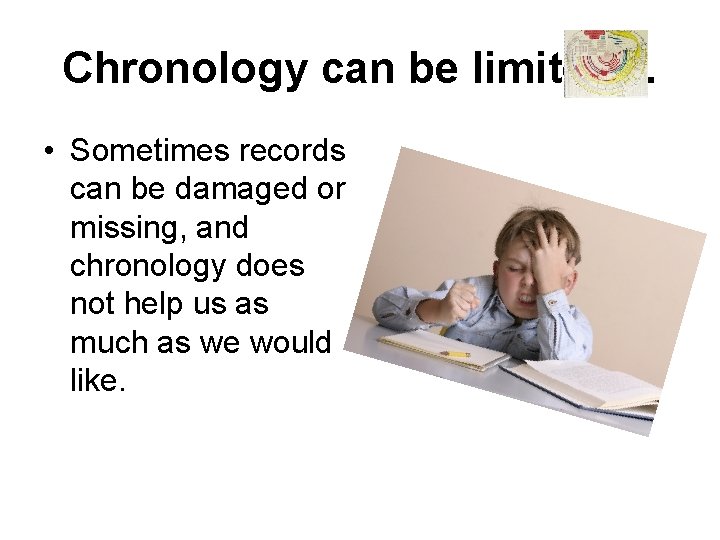
Chronology can be limited… • Sometimes records can be damaged or missing, and chronology does not help us as much as we would like.
For example… Mail service between the colonies and Europe was not very dependable. Shipwrecks were fairly common, and many letters never arrived. A historian using correspondence between the colonies and England needs to be aware that the surviving letters probably are not all the letters that were sent.
Think, Pair, Share Look at the yearbook picture with the “Future Homemakers Club. ” – Would you find this type of club today? – Why or why not? – What historical event(s) can you use to explain your answer?
History Standard One 9 -12 a Students will analyze historical materials to trace the development of an idea or trend across space or over a prolonged period of time in order to explain patterns of historical continuity and change.