Future Challenges in Risk Mitigation for Saint Lucia
- Slides: 9
Future Challenges in Risk Mitigation for Saint Lucia Workshop on Natural Disaster Mitigation in the Caribbean Barbados - December 4 & 5, 2008 Presented by A. L. Dawn French Director NEMO – Saint Lucia
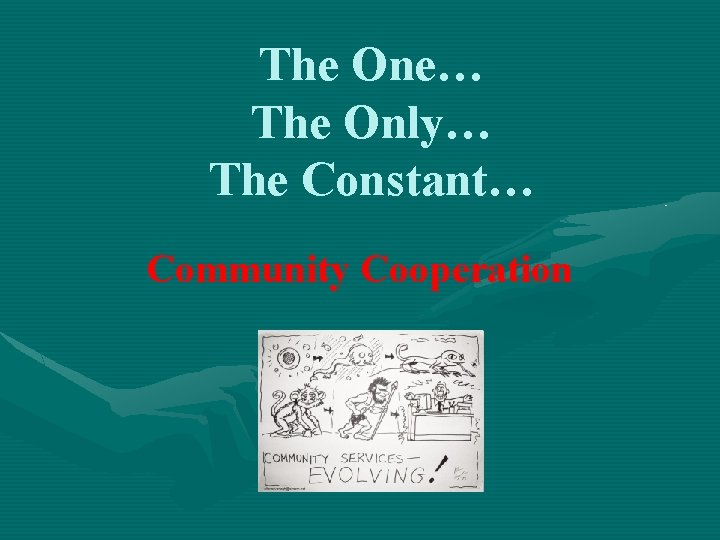
The One… The Only… The Constant… Community Cooperation
Timing is everything… 2005: Tree Assistance Program [TAP] conceived 2006: Local Mitigation Plans [LMP] conceived 2007: National Hazard Mitigation Policy and Plan approved by the GOSL 2008: Hazard Mitigation National Action Plan developed and consultations began [June – December] “There will be a need for an island wide mitigation program to reduce the impacts of hazards. ” Prime Minister Stephenson King of Saint Lucia [October 2008]
Hazard Mitigation NAP Forestry Department for Urban Forest Project Bio Diversity for species protection Ministry of Works for small structural works Saint Lucia Red Cross for 2, 000 trees project BUT! Must be community driven!
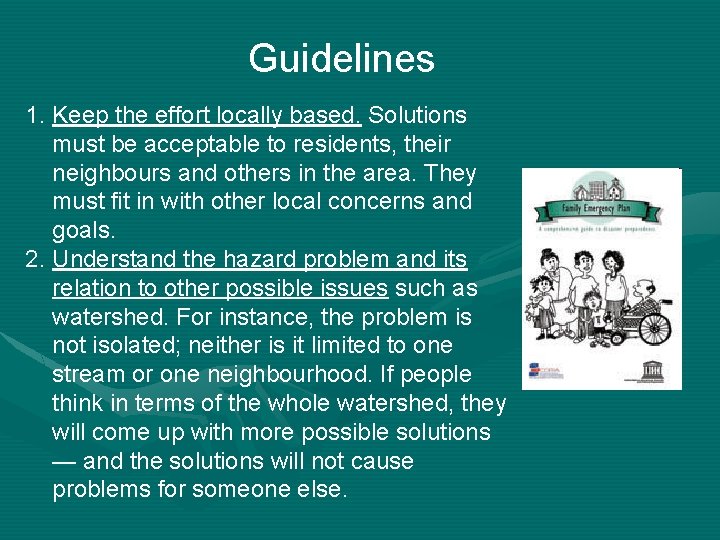
Guidelines 1. Keep the effort locally based. Solutions must be acceptable to residents, their neighbours and others in the area. They must fit in with other local concerns and goals. 2. Understand the hazard problem and its relation to other possible issues such as watershed. For instance, the problem is not isolated; neither is it limited to one stream or one neighbourhood. If people think in terms of the whole watershed, they will come up with more possible solutions — and the solutions will not cause problems for someone else.
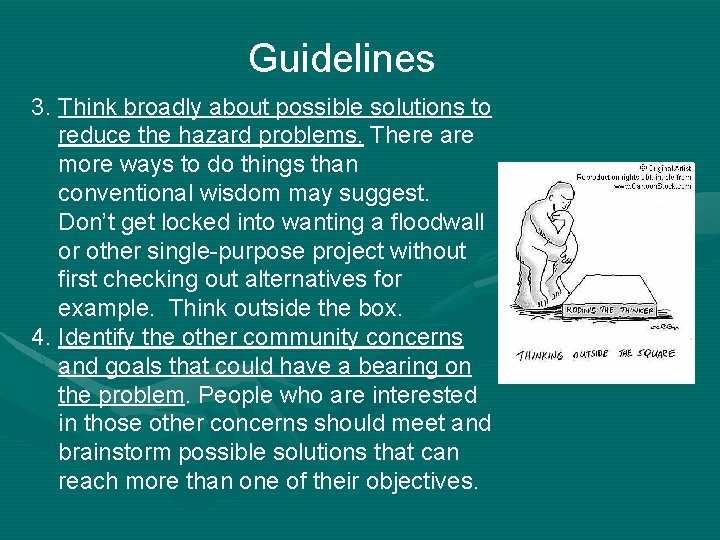
Guidelines 3. Think broadly about possible solutions to reduce the hazard problems. There are more ways to do things than conventional wisdom may suggest. Don’t get locked into wanting a floodwall or other single-purpose project without first checking out alternatives for example. Think outside the box. 4. Identify the other community concerns and goals that could have a bearing on the problem. People who are interested in those other concerns should meet and brainstorm possible solutions that can reach more than one of their objectives.
Guidelines 5. Obtain expert advice and assistance from government agencies and private organizations, e. g. , NEMO, Planning Dept, Solid Waste Authority, etc… 6. Build a partnership among the private and public groups and individuals that can be enlisted to work on the objectives. More minds and hands mean that better ideas will result, people will be more likely to follow through, and more people will be available to do the work.
“The good news is that a natural hazard does not automatically have to lead to a disaster, ” Mr. Ban said. “Countries such as Bangladesh, Cuba, Jamaica, Madagascar and the Philippines have shown that good building designs, proper land-use planning, public education, community preparedness and effective early warning systems can reduce the impact of severe weather events. ” UN Secretary-General Ban Ki-moon 30 September 2008