Family Partnerships in Early Childhood Continued Jennifer Sturgeon

- Slides: 21
Family Partnerships in Early Childhood Continued Jennifer Sturgeon February 8, 2017 February 15, 2017
The Plan for Tonight: � Share inclusion articles � PTI (Parent Training Information—Nebraska) Connie Shockley will be here to speak to the group today. Part of her job is to answer questions and provide emotional support to families � Please ask questions and take notes for your one page response � After the speaker practicum students will stay � Read Chapter 3 for next week and submit one page response to PTI speaker � Reminder – No class on February 22!
Family Involvement Legal Requirements: � Early Intervention (Part C): • Must consider family concerns and priorities • This is the heart of the IFSP—”FAMILY” plan • Services Coordination is a requirement • In Nebraska, Services Coordination is provided or contracted through the Department of Health and Human Services (if the family declines SC the District assumes responsibility for coordinating resources for families) � Part B: • IEP team must consider parent input— strengths and concerns
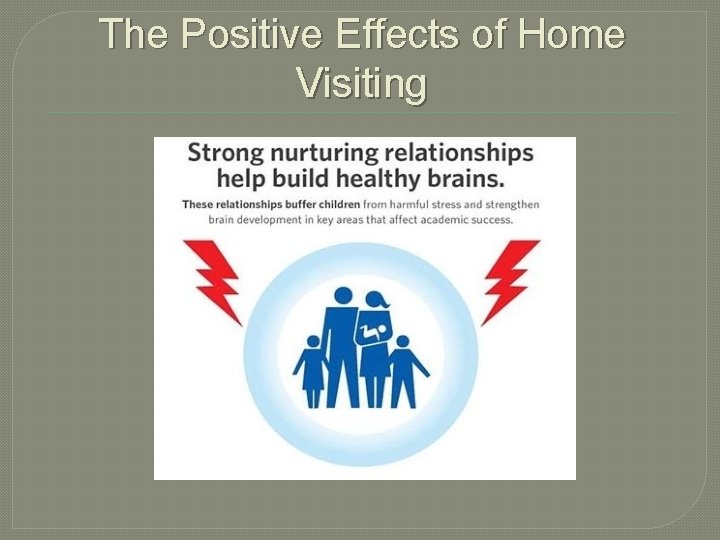
The Benefits of a Home Visiting Program – What Does the Research Show? � Families are more self sufficient are connected to the resources that they need � Children are better prepared for school � Families are healthier � Communication in the home is increased � Play in the home is increased � Families are often times connected to high quality childcare � Home Visits play a role in preventing child abuse and neglect � Parents feel more confident in raising their children
Trust and Home Visiting �If the home visitor jumps in too quickly and starts telling the parents they need to make changes without establishing a trusting relationship, the parent may not listen �See tips for home visiting
What If There is a Language Barrier? � Home visits allow people to challenge their own assumptions and learn from others � Establish a relationship of equality and respect from the start, setting the tone for future visits � Difficulties in communicating are felt more intimately by parents � Shift from the “expert” role to a “collaborator” role � The interpreter should be there primarily to interpret information in the background, but the home visitor should make eye contact and speak to the parent/caregiver � Eliminate side conversations among home visitors
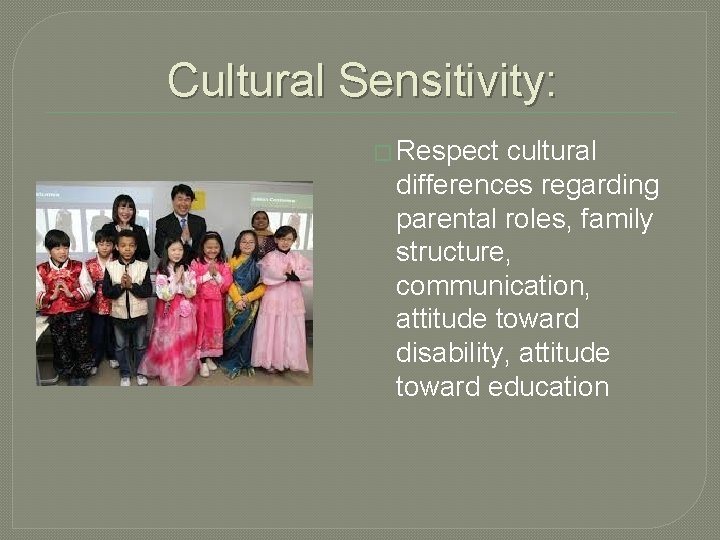
Cultural Sensitivity: � Respect cultural differences regarding parental roles, family structure, communication, attitude toward disability, attitude toward education
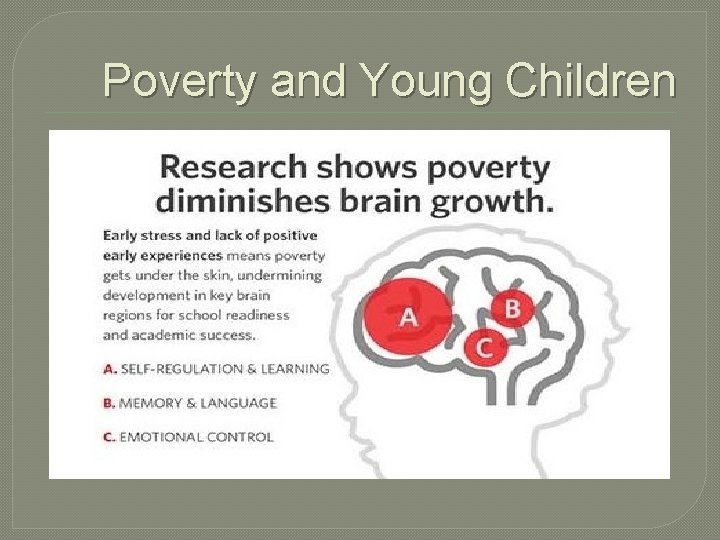
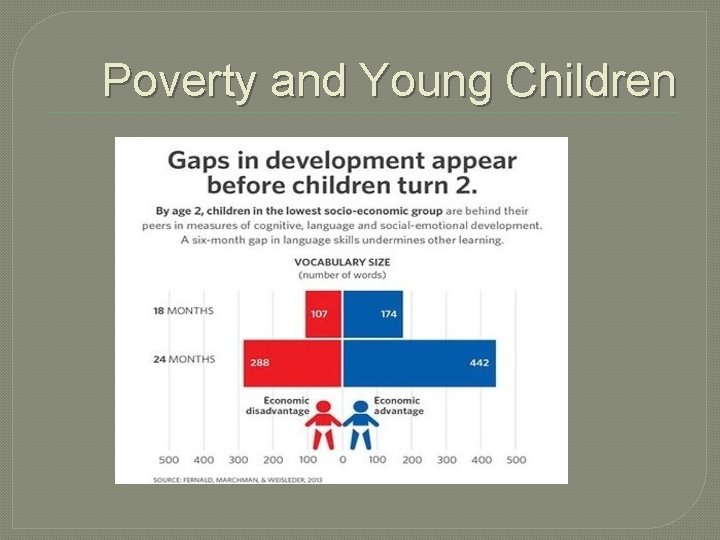
Special Family Populations: � Parents with a disability may have preconceived ideas regarding “special education” � Monitor your own language level—be sure to avoid “jargon” and technical descriptions � Teen Parents � Foster care (Child Abuse Protection and Treatment Act—CAPTA) • Federal Part C regulations and proposed Rule 52 include exposure to drugs/narcotics in utero, a diagnosed condition, attachment disorder as factors that could potentially lead to developmental delay—child is eligible for services even if they don’t manifest a “delay” at the time of referral � Poverty
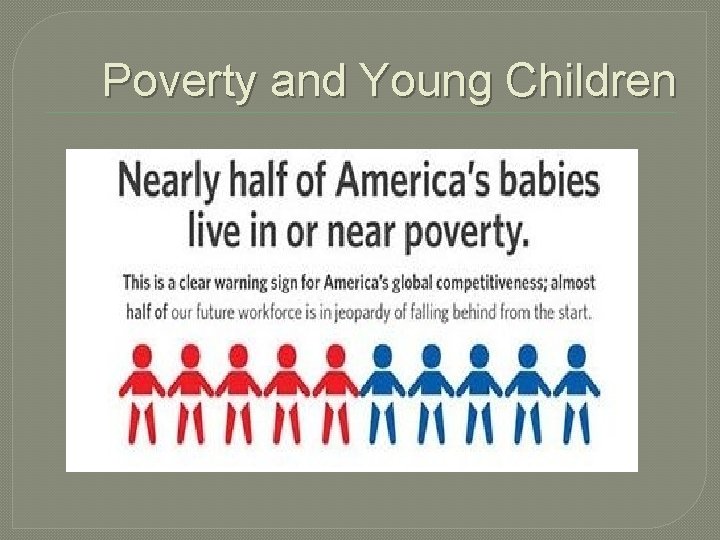
Poverty and Young Children
Poverty and Young Children
Poverty and Young Children
The Positive Effects of Home Visiting
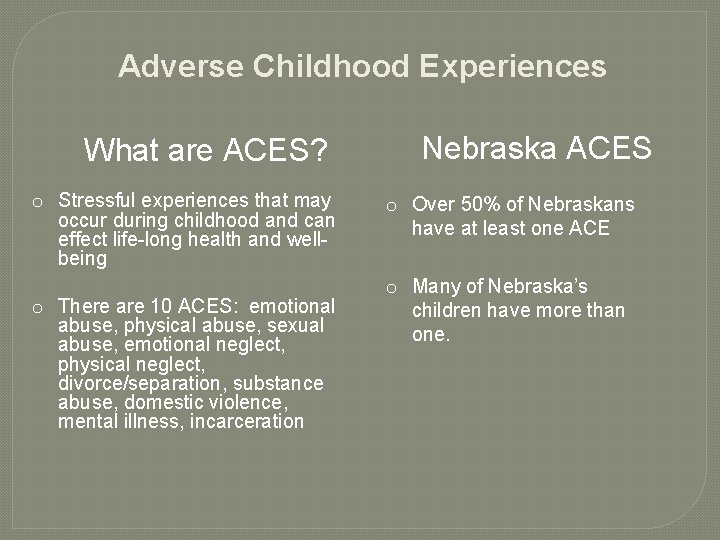
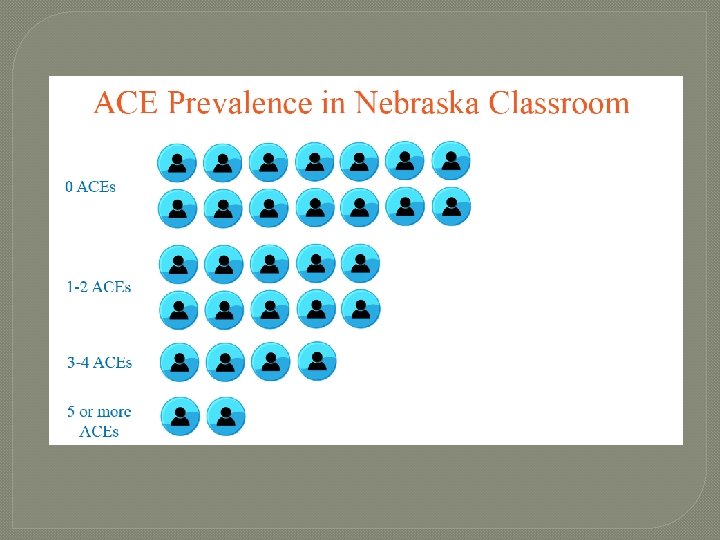
Adverse Childhood Experiences What are ACES? o Stressful experiences that may occur during childhood and can effect life-long health and wellbeing o There are 10 ACES: emotional abuse, physical abuse, sexual abuse, emotional neglect, physical neglect, divorce/separation, substance abuse, domestic violence, mental illness, incarceration Nebraska ACES o Over 50% of Nebraskans have at least one ACE o Many of Nebraska’s children have more than one.
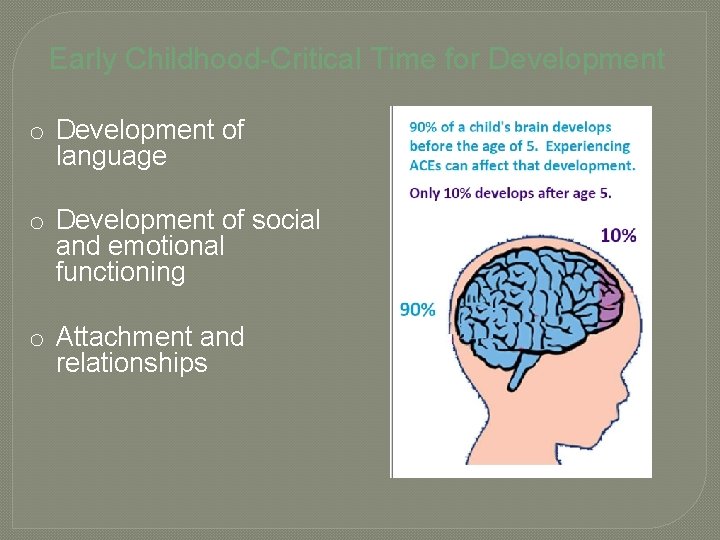
Early Childhood-Critical Time for Development of language o Development of social and emotional functioning o Attachment and relationships
ACES Questionnaire � Look at the ACEs Questionnaire. You are welcome to fill it out for yourself if you would like to. � Discuss with a partner or small group: � Do you think there are situations where the teacher makes assumptions of a child in his or her classroom without knowing the background? � If you know a child’s ACE score, how can that help you build relationships and teach that child, even if he or she is under the age of 5? � Are you surprised that 1 out of every 15 kids in Nebraska has 5 or more ACEs?
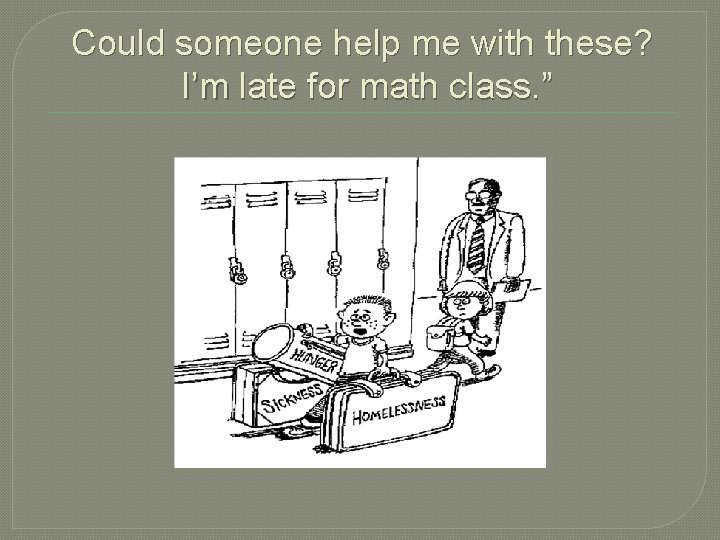
Could someone help me with these? I’m late for math class. ”
Video �https: //www. youtube. com/watch? v=e. S 13 o NQNAOg
Stay Hopeful! You can help a child who has been traumatized… • Understanding the impacts of childhood trauma assists us to develop compassion, patience and empathy. It is a key intervention itself. • Moving from asking “What is wrong with you? ” to asking “What happened to you? ” • Recovery from trauma will occur best in the context of healing relationships.
What does all of this tell us? � The children with special needs that we work with may have a variety of stressors going on in their lives � Whether you are home visiting or teaching in a classroom, we need to recognize those stressors and understand how they may impact a child’s behavior � Children with special needs and a history of trauma will need your understanding and patience � Children are resilient and can overcome this!
Summary � Sometimes there is a “values collision” between you and a family who lives in poverty, in a state of crisis, or is from a culture different from yours � Educators should not make assumptions or judgements about the child or family and should take into account and respect the differences in culture, socioeconomic status, and childhood experiences (positive or negative) � Respect the individuality of the families that you work with