Expressionism 1880 present day Germany 1905 1920s Van

- Slides: 19
Expressionism 1880– present day Germany 1905 -1920’s
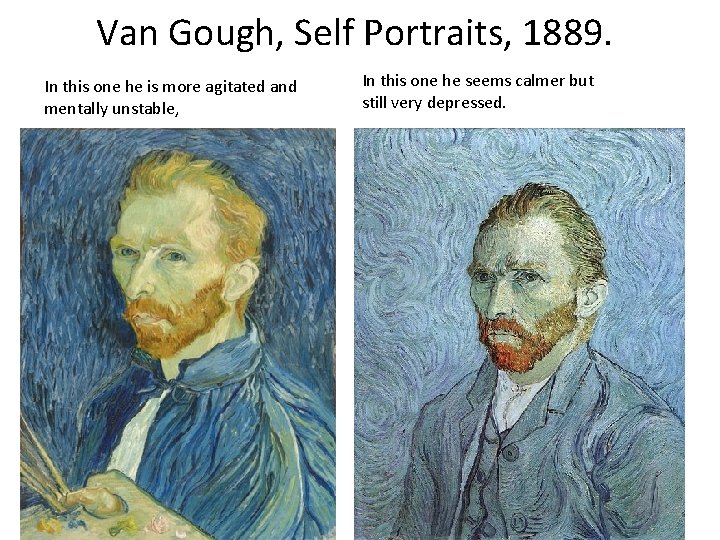
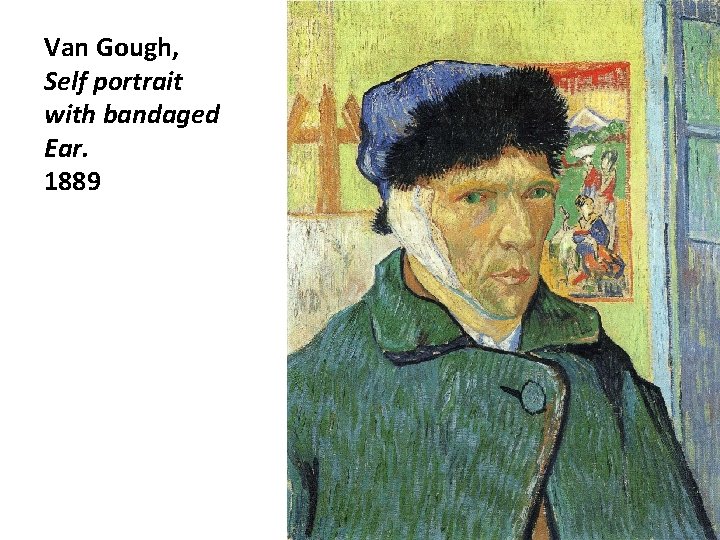
Van Gough, Self Portraits, 1889. In this one he is more agitated and mentally unstable, In this one he seems calmer but still very depressed.
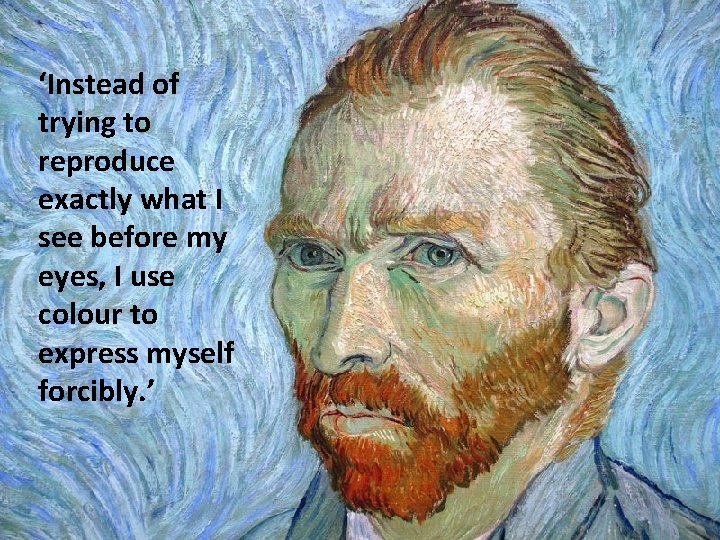
‘Instead of trying to reproduce exactly what I see before my eyes, I use colour to express myself forcibly. ’
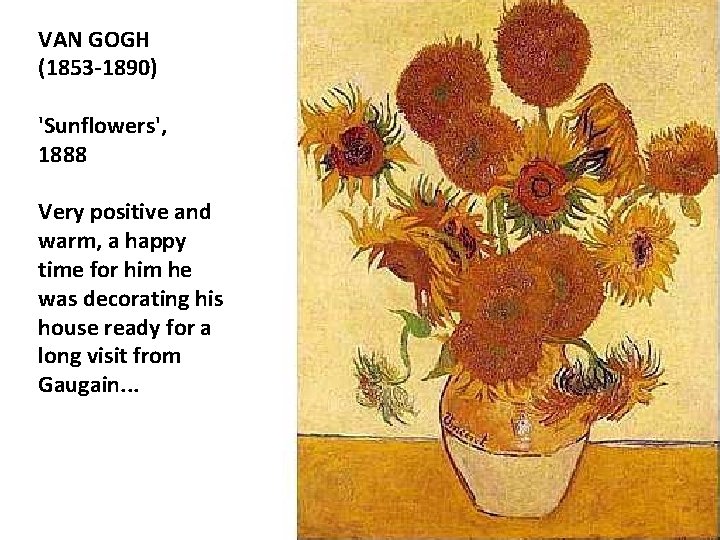
VAN GOGH (1853 -1890) 'Sunflowers', 1888 Very positive and warm, a happy time for him he was decorating his house ready for a long visit from Gaugain. . .
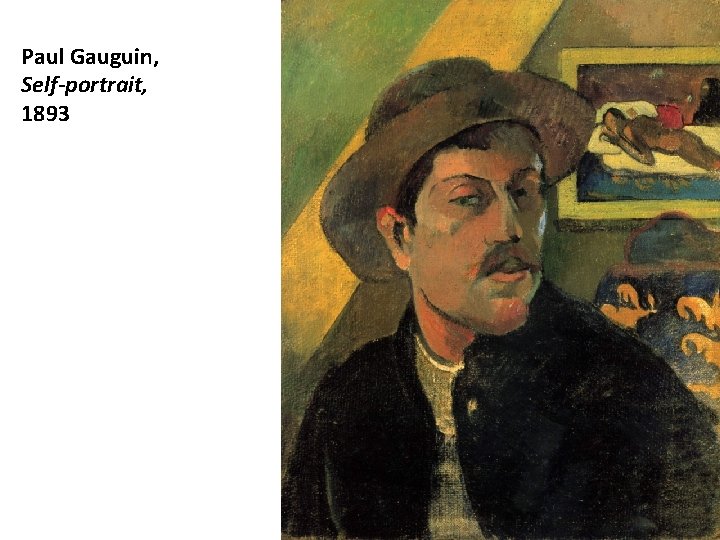
Paul Gauguin, Self-portrait, 1893
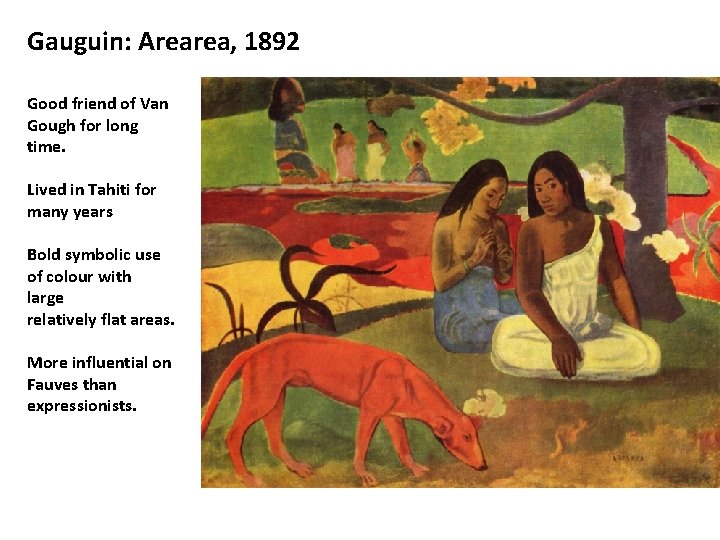
Gauguin: Arearea, 1892 Good friend of Van Gough for long time. Lived in Tahiti for many years Bold symbolic use of colour with large relatively flat areas. More influential on Fauves than expressionists.
Van Gough, Self portrait with bandaged Ear. 1889
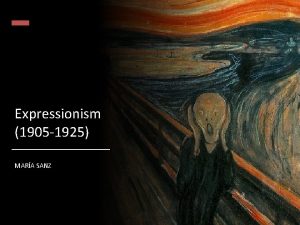
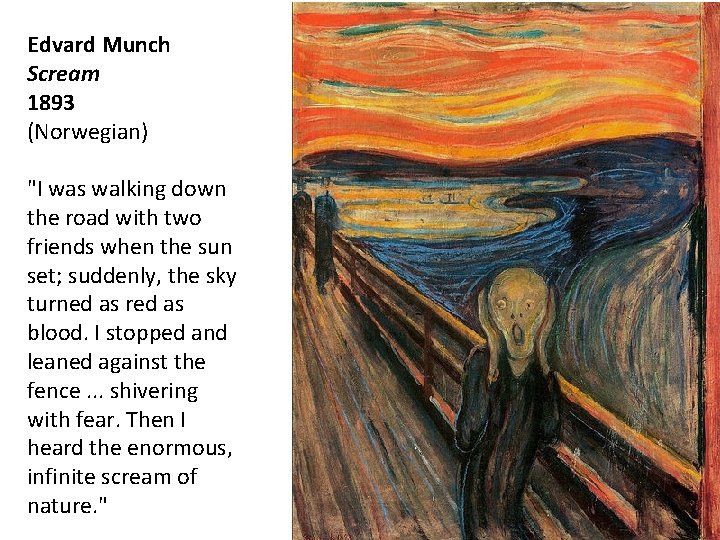
Edvard Munch Scream 1893 (Norwegian) "I was walking down the road with two friends when the sun set; suddenly, the sky turned as red as blood. I stopped and leaned against the fence. . . shivering with fear. Then I heard the enormous, infinite scream of nature. "
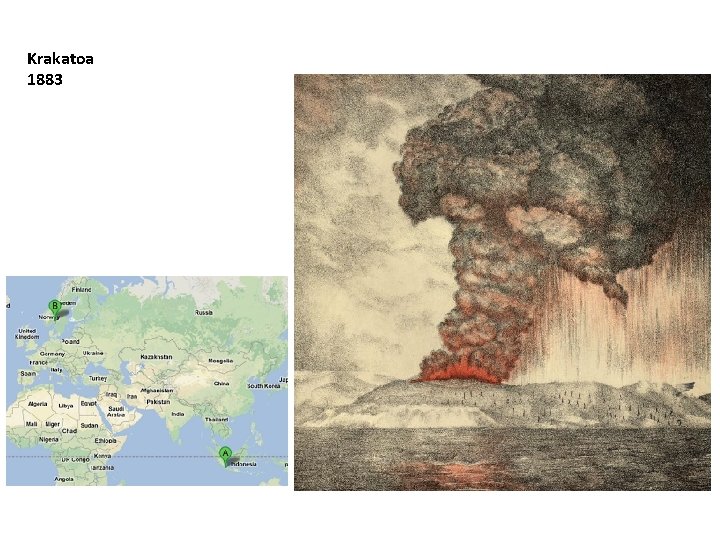
Krakatoa 1883
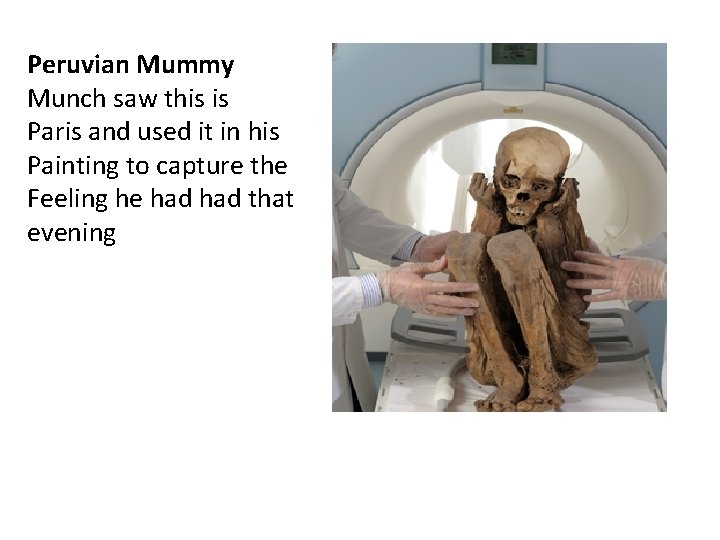
Peruvian Mummy Munch saw this is Paris and used it in his Painting to capture the Feeling he had that evening
Die Brücke (the Bridge) Wanted to overthrow the conservative traditions of German art with a 'bridge' to a new and better future.
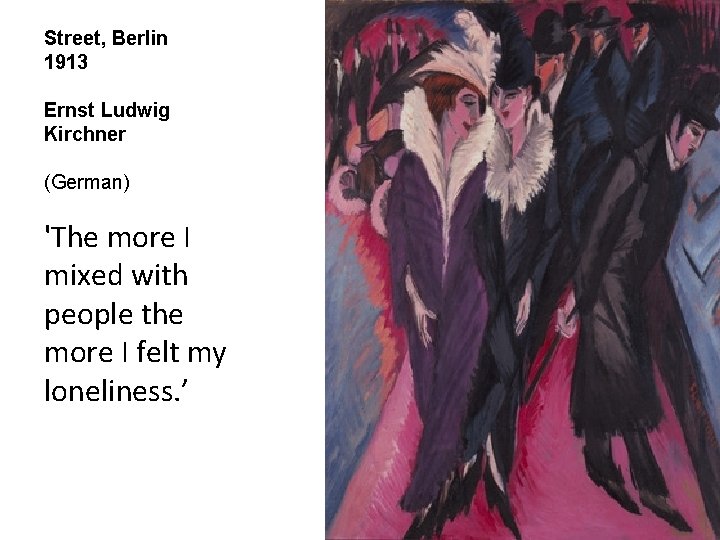
Street, Berlin 1913 Ernst Ludwig Kirchner (German) 'The more I mixed with people the more I felt my loneliness. ’
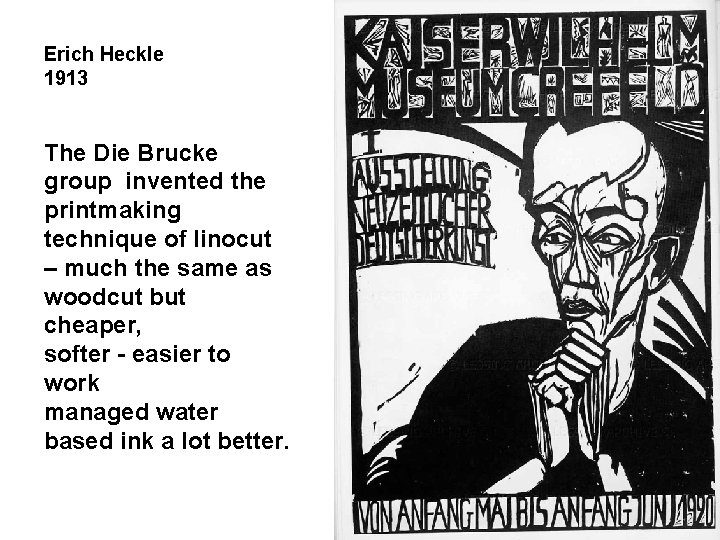
Erich Heckle 1913 The Die Brucke group invented the printmaking technique of linocut – much the same as woodcut but cheaper, softer - easier to work managed water based ink a lot better.
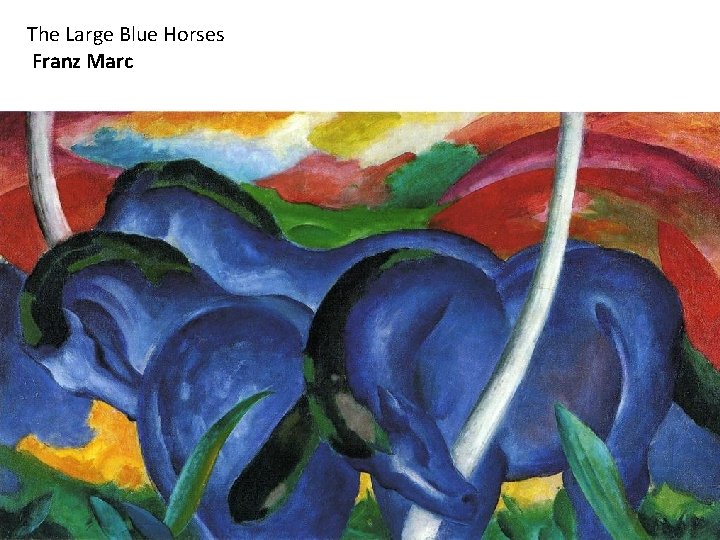
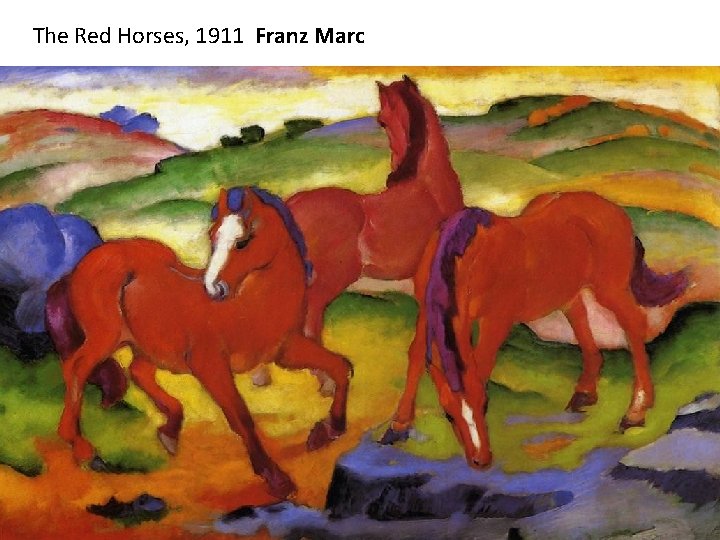
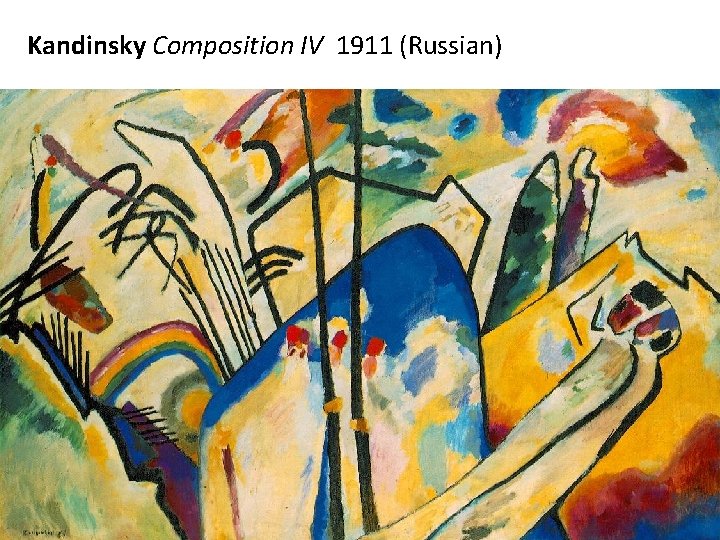
Der Blaue Reiter (The Blue Rider) The horse and rider - symbol for moving beyond realistic representation and rebirth. bright, subjective colours distorted, angular forms abstracted forms symbolism – colours and images
The Large Blue Horses Franz Marc
The Red Horses, 1911 Franz Marc
Kandinsky Composition IV 1911 (Russian)
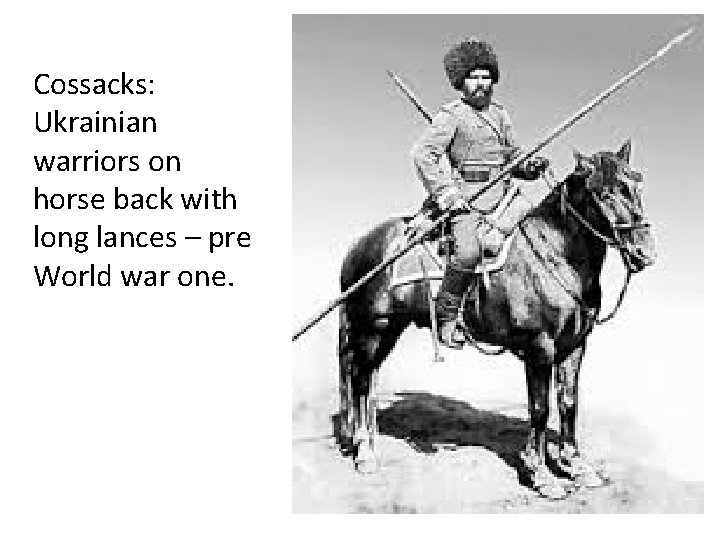
Cossacks: Ukrainian warriors on horse back with long lances – pre World war one.
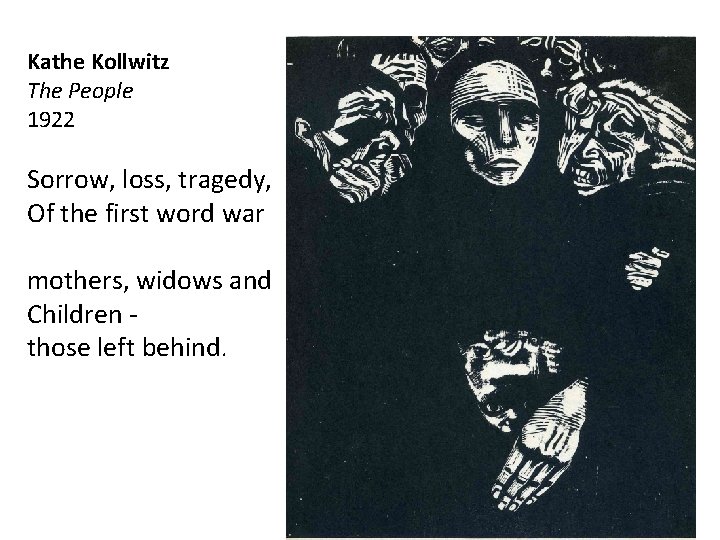
Kathe Kollwitz The People 1922 Sorrow, loss, tragedy, Of the first word war mothers, widows and Children those left behind.