ETHICS IN PSYCHOLOGY SESSION 3 COMPETENCE NANTAI UNIVERSITY
- Slides: 19
ETHICS IN PSYCHOLOGY SESSION 3 COMPETENCE NİŞANTAŞI UNIVERSITY
SESSION 3 v DAVID REIMER EXPERIMENT v COMPETENCE Boundaries of competence Maintaining competence Bases for scientific and professional judgments Personal problems and conflicts
DAVID REIMER EXPERIMENT https: //www. youtube. com/watch? v=SLFGMWo. Qa. CU He was 8 months old when he had circumcision in 1966. During the process his penis burned. His parents visited psychologist Dr. John Money. Dr. Money suggested a sex change. His parents eventually agreed to the procedure. David became Brenda after her vagina construction. He was given hormonal supplements for years. David was being raised as a girl, but he was acting like a boy.
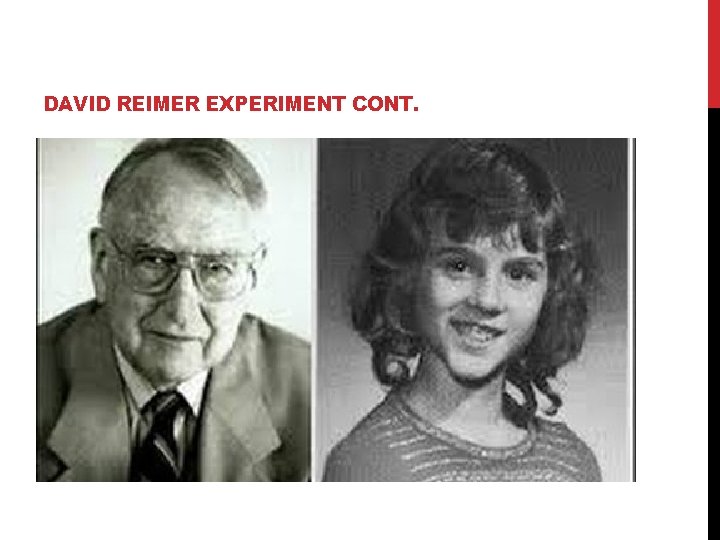
DAVID REIMER EXPERIMENT CONT. His parents informed him about his true gender when he was 14 years old. The incident affected the whole family. His father was alcoholic, mother was suicidal, twin brother was depressed. David committed suicide when he was 38 years old. The psychologist was actually conducting an experiment. He was trying to prove that instead of nature, nurture determined gender identity.
DAVID REIMER EXPERIMENT CONT.
DAVID REIMER EXPERIMENT CONT. Why this experiment was unethical? Psychologist violated all of the principles. For instance: He harmed the boy and his family for his experiment. He did not do good. (Beneficence-Nonmaleficence) Dr. Money did not explain his main purpose to David’s parents. He was not honest. (Integrity) Dr. did not foster self-determination and independent decisionmaking. (Respect for people’s right and dignity)
WHAT IS COMPETENCE? Competence requires: o Adequate skills, o Being properly qualified and trained, o Working ethically. Competence is only a minimum standard for acceptable practice. A psychologist should achieve many things between competence and excellence.
COMPETENCE The standards of competence are based on the general principles of Beneficence and Nonmaleficence. Specific skills that define competence: q Technical Knowledge (Ex: Theories(CBT), therapeutic and diagnostic skills, assessment methods etc. ) q Social skills q Emotional Well-being / Emotional Competence (Psychologist’s ability to deal with the emotional difficulties associated with professional practice. )
BOUNDARIES OF COMPETENCE APA (2017) Standard 2. 01 a and TPA*, Ethics Code say: ‘Psychologists provide services, teach and conduct research with populations and in areas only within the boundaries of their competence, based on their education, training, supervised experience, consultation, study, or professional experience. ’ Example: Do you provide family therapy, couple therapy, individual therapy, group therapy, or do you work with children, adolescents or adults etc. *TPA: Turkish Psychological Association
BOUNDARIES OF COMPETENCE CONT. Effective psychologists should consider the unique needs of each and every client. The clients have different strengths, concerns, attitudes, and backgrounds; ignorance of them could compromise the quality of the treatment provided.
BOUNDARIES OF COMPETENCE CONT. What is the level of education, awareness, or skills required/needed to be competent to treat a client from a Cultural Minority or Linguistic Minority or Sexual Minority or Religious Minority or An Ethnic Minority?
BOUNDARIES OF COMPETENCE CONT. For instance, for cultural competence, Besides basic therapeutic skills and diagnostic skills, a psychologist should be able to think in cultural terms. Some other conditions may be: u Background preparation about the culture (Ex: Compared to other cultures, American culture is more individualistic. ) u Assessment (Ex: Accurate diagnoses require culturally appropriate assessment instruments/ psychological tests) u Intervention (Ex: Individual, group or family psychotherapy. CBT, Problem-solving, interpersonal approach etc. You may use language preferred by the client, if not possible, refer him/her to those who can. ) u Consultation: Consultation with professionals, communities. .
BOUNDARIES OF COMPETENCE CONT. APA (2017) Standard 2. 01 c and TPA, Ethics Code say: ‘Psychologists planning to provide services, teach or conduct research involving populations, areas, techniques or technologies, new to them, undertake relevant education, training, supervised experience, consultation or study. ’ Every time a psychologist enters into a new area of practice, the cycle of learning starts from the beginning again, from not knowing to competence. Example: A psychologist who wants to develop proficiency in working with older adults, may read books and articles on geropsychology, subscribe to professional journals in geriatrics, take CE courses about geropsychology, hire a geropsychologist as a consultant etc. http: //www. apa. org/ed/graduate/specialize/gero. aspx
MAINTAINING COMPETENCE APA (2017) Standard 2. 03 & TPA, Ethics Code say: ‘Psychologists undertake ongoing efforts to develop and maintain their competence. ’ Example: Psychologists may maintain competence by • receiving consultation or • getting supervision or ongoing training • discussing with peers etc.
BASES FOR SCIENTIFIC AND PROFESSIONAL JUDGMENTS APA (2017) Standard 2. 04 and TPA, Ethics Code say: ‘Psychologists’ work is based upon established scientific and professional knowledge of the discipline. ’
PERSONAL PROBLEMS AND CONFLICTS APA (2017) Standard 2. 06 and TPA, Ethics Code say: a)‘Psychologists refrain from initiating an activity when they know or should know that there is a substantial likelihood that their personal problems will prevent them from performing their work-related activities in a competent manner. ’ b)‘When psychologists become aware of personal problems that may interfere with their performing work-related duties adequately, they take appropriate measures, such as obtaining professional consultation or assistance, and determine whether they should limit, suspend, or terminate their work-related duties. ’
PERSONAL PROBLEMS AND CONFLICTS CONT. Emotional Competence: The factors that can impair emotional competence of a psychologist are • Personal Stressors (Ex: illness of a loved one, divorce etc. ) • Professional Stressors. (Ex: Burnout, Client’s suicide etc. ) Example: A psychologist experienced very stressful life events within a 3 month period. Her mother died, her husband underwent cancer treatment, her daughter had a very serious traffic accident.
PERSONAL PROBLEMS AND CONFLICTS CONT. The psychologist reduces her workload, She enters personal therapy, She receives antianxiety medication from her doctor, Makes a list of obligations, prioritizes them, takes one step at a time, etc. Stress management steps are the same for psychologists who recommend these to their clients: Take regular vacations, separate professional life from private life, eat well, exercise, get medical care, etc. .
REFERENCE Knapp, S. J. , and Vande. Creek, L. D. (2006). Practical ethics for psychologists. A positive approach. Washington, D. C. : American Psychological Association. (2017). Ethical principles of psychologists and code of conduct. Washington, D. C. : APA. Bond, T. (2010). Standards and ethics for counseling in action. Third Edition. London: SAGE. http: //www. apa. org/ethics/code/ethics-code-2017. pdf https: //www. psikolog. org. tr/turkey-code-tr. pdf http: //www. apa. org/ed/graduate/specialize/gero. aspx