Essential Question Question How did the issue of
- Slides: 13
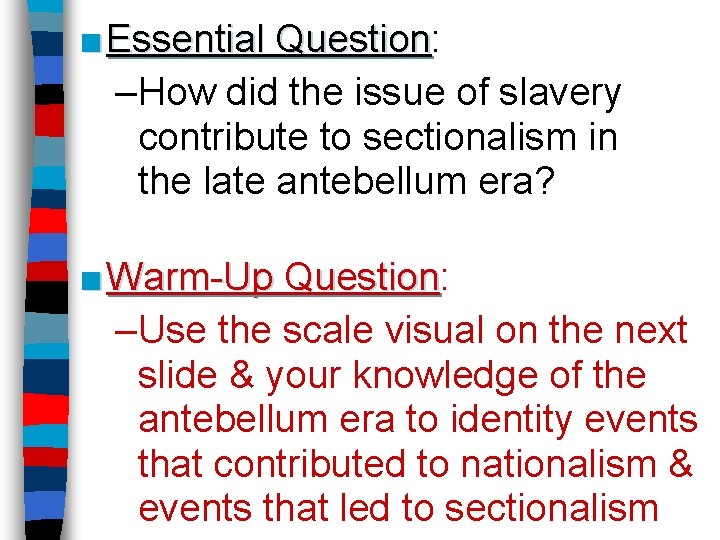
■ Essential Question: Question –How did the issue of slavery contribute to sectionalism in the late antebellum era? ■ Warm-Up Question: Question –Use the scale visual on the next slide & your knowledge of the antebellum era to identity events that contributed to nationalism & events that led to sectionalism
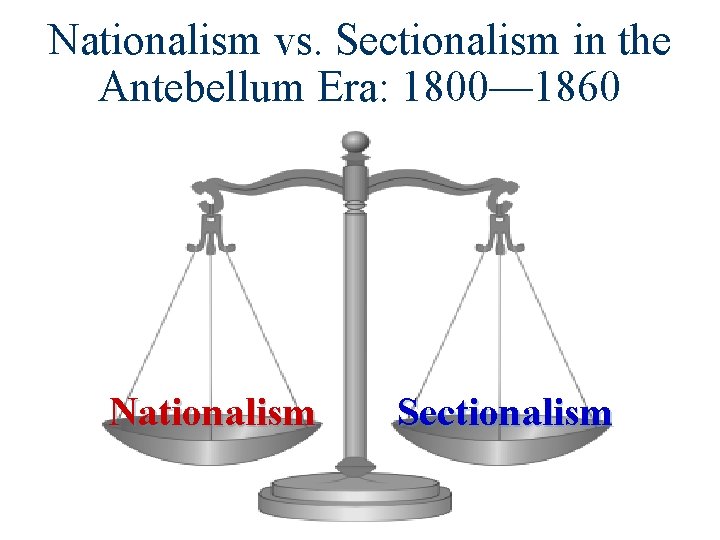
Nationalism vs. Sectionalism in the Antebellum Era: 1800— 1860 Nationalism Sectionalism
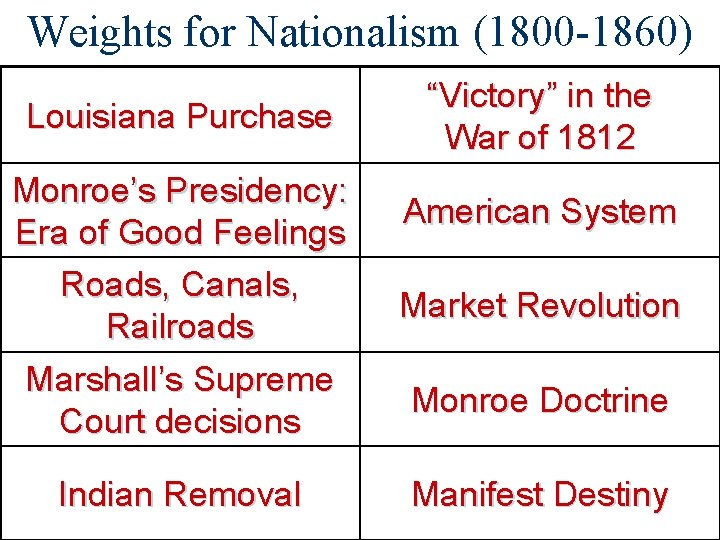
Weights for Nationalism (1800 -1860) Louisiana Purchase “Victory” in the War of 1812 Monroe’s Presidency: Era of Good Feelings Roads, Canals, Railroads Marshall’s Supreme Court decisions Market Revolution Indian Removal Manifest Destiny American System Monroe Doctrine
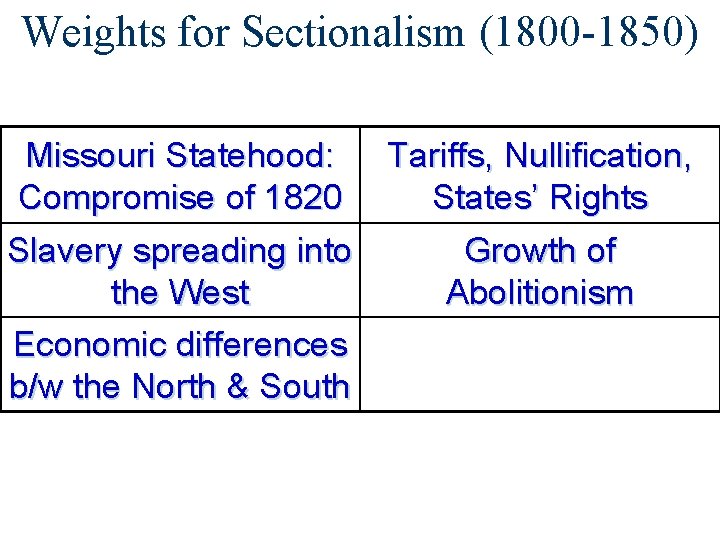
Weights for Sectionalism (1800 -1850) Missouri Statehood: Tariffs, Nullification, Compromise of 1820 States’ Rights Slavery spreading into Growth of the West Abolitionism Economic differences b/w the North & South
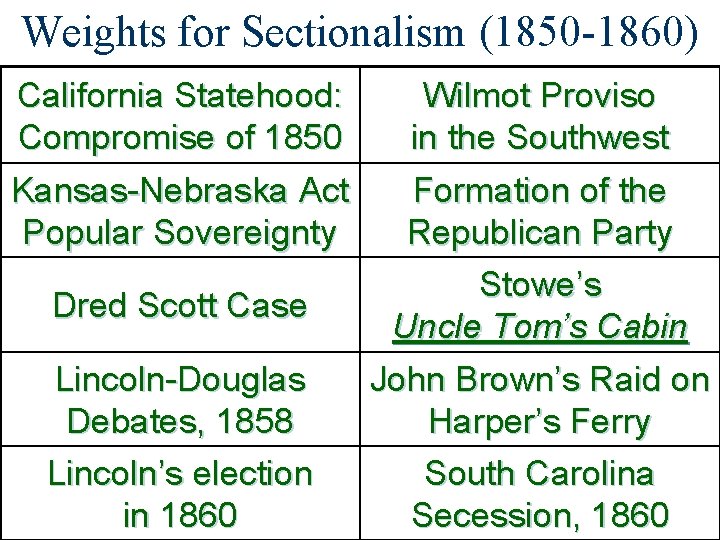
Weights for Sectionalism (1850 -1860) California Statehood: Compromise of 1850 Kansas-Nebraska Act Popular Sovereignty Dred Scott Case Lincoln-Douglas Debates, 1858 Lincoln’s election in 1860 Wilmot Proviso in the Southwest Formation of the Republican Party Stowe’s Uncle Tom’s Cabin John Brown’s Raid on Harper’s Ferry South Carolina Secession, 1860
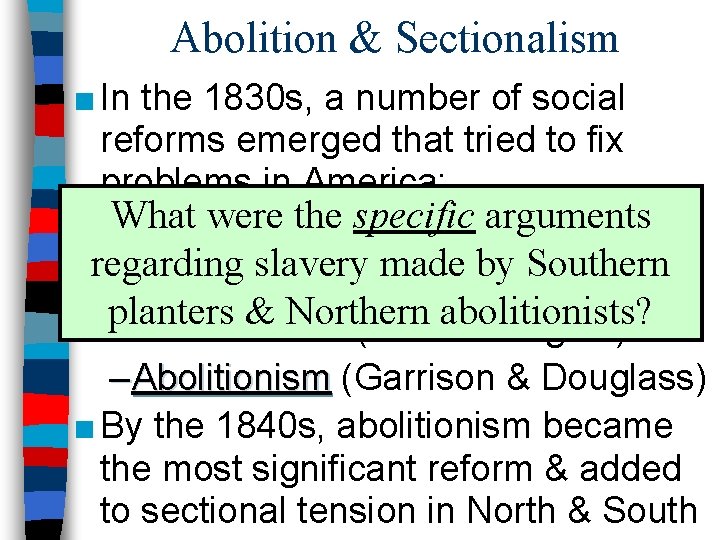
Abolition & Sectionalism ■ In the 1830 s, a number of social reforms emerged that tried to fix problems in America: What were the (end specific arguments – Temperance alcohol abuse) regarding by Southern – Horace slavery Mann &made education reform planters & Northern abolitionists? – Seneca Falls (women’s rights) – Abolitionism (Garrison & Douglass) ■ By the 1840 s, abolitionism became the most significant reform & added to sectional tension in North & South
Indentifying Multiple Perspectives on Slavery Activity ■ In pairs, examine each placard & complete the following tasks on the matrix provided: –Identify 3 details of the person’s view for or against slavery –Indentify what actions the person took in support of their viewpoint
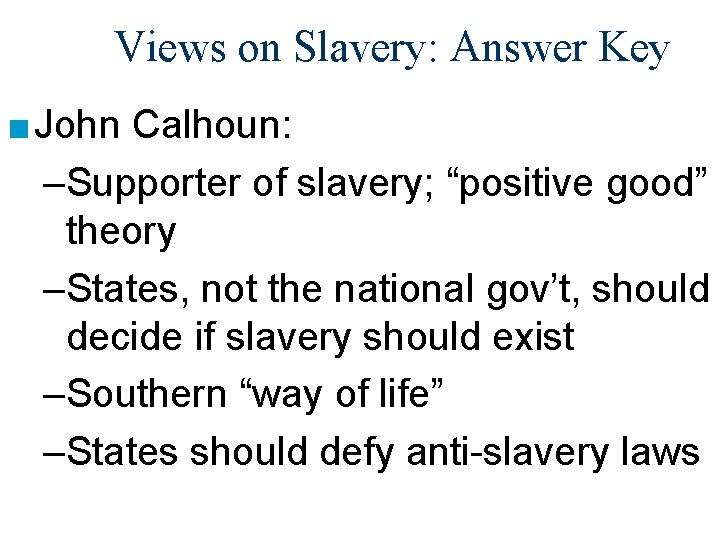
Views on Slavery: Answer Key ■ John Calhoun: –Supporter of slavery; “positive good” theory –States, not the national gov’t, should decide if slavery should exist –Southern “way of life” –States should defy anti-slavery laws
Views on Slavery: Answer Key ■ Frederick Douglass –Abolitionist, former slave –“Slavery is wicked, a sin, violates liberty” –Helped runaway slaves –Published North Star –Advised President Lincoln
Views on Slavery: Answer Key ■ William Lloyd Garrison –Most famous abolitionist –Published The Liberator & formed American Anti-Slavery Society –Immediate end to slavery –Burned Constitution; Argued for Northern secession
Views on Slavery: Answer Key ■ Grimke Sisters: –Southern women who moved North to become abolitionists –Slavery is morally wrong –First women to speak to audiences with men (unladylike) –Threatened with jail if ever returned to South
Views on Slavery: Answer Key ■ Hinton Helper: –White southerner who opposed slavery –Wrote Impending Crisis –Slavery is bad because it kept most whites poor & hurt the South –Racist against blacks; argued for segregation
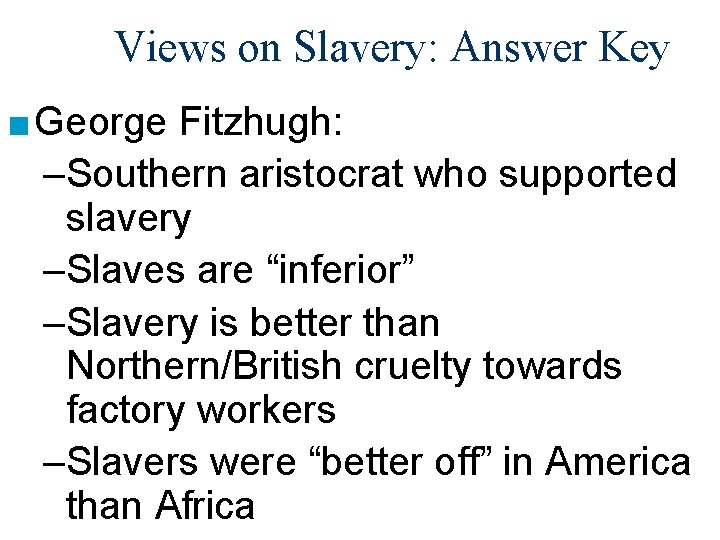
Views on Slavery: Answer Key ■ George Fitzhugh: –Southern aristocrat who supported slavery –Slaves are “inferior” –Slavery is better than Northern/British cruelty towards factory workers –Slavers were “better off” in America than Africa