EOSC 112 THE FLUID EARTH CORIOLIS EFFECT AND
- Slides: 17
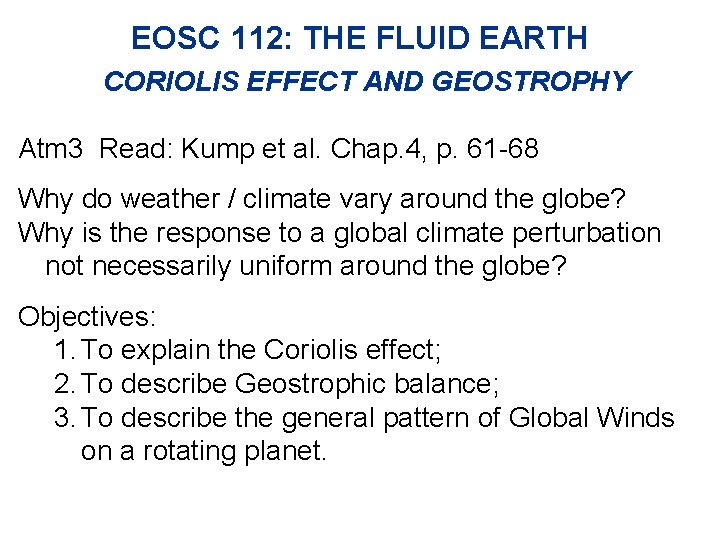
EOSC 112: THE FLUID EARTH CORIOLIS EFFECT AND GEOSTROPHY Atm 3 Read: Kump et al. Chap. 4, p. 61 -68 Why do weather / climate vary around the globe? Why is the response to a global climate perturbation not necessarily uniform around the globe? Objectives: 1. To explain the Coriolis effect; 2. To describe Geostrophic balance; 3. To describe the general pattern of Global Winds on a rotating planet.
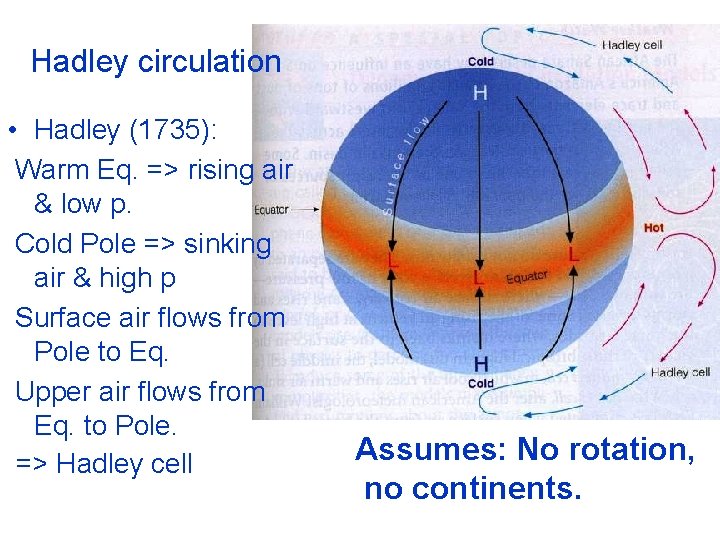
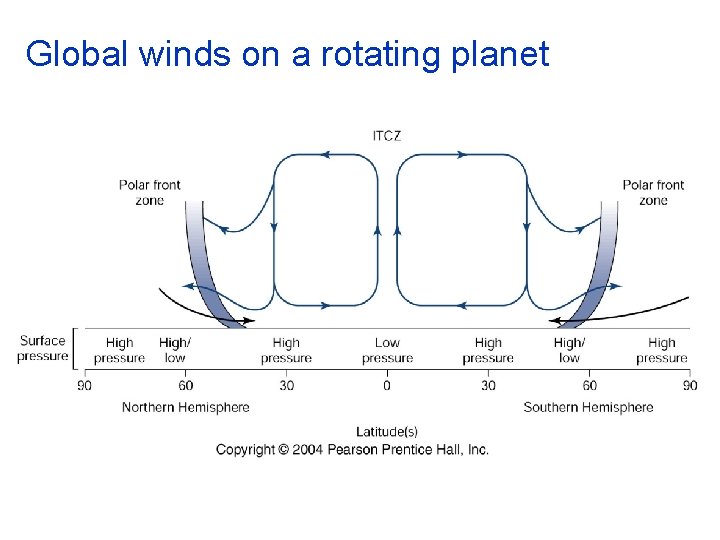
Hadley circulation • Hadley (1735): Warm Eq. => rising air & low p. Cold Pole => sinking air & high p Surface air flows from Pole to Eq. Upper air flows from Eq. to Pole. => Hadley cell Assumes: No rotation, no continents.
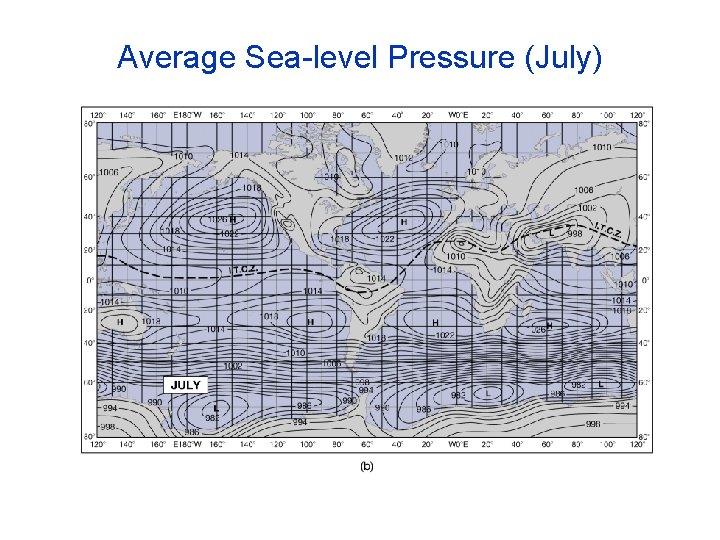
Average Sea-level Pressure (July)
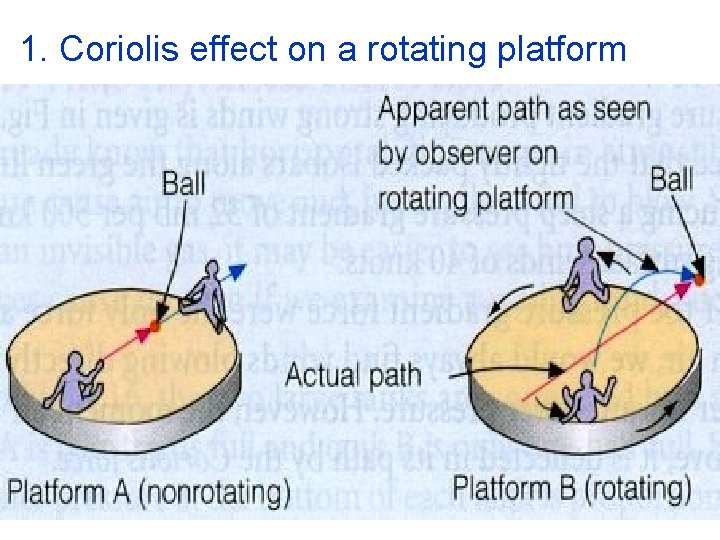
1. Coriolis effect on a rotating platform • Coriolis effect seen on a rotating platform, as 1 person throws a ball to another person.
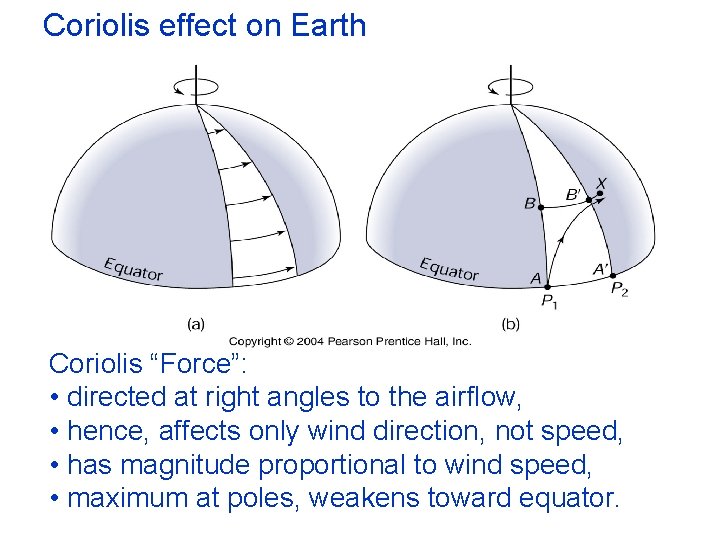
Coriolis effect on Earth Coriolis “Force”: • directed at right angles to the airflow, • hence, affects only wind direction, not speed, • has magnitude proportional to wind speed, • maximum at poles, weakens toward equator.
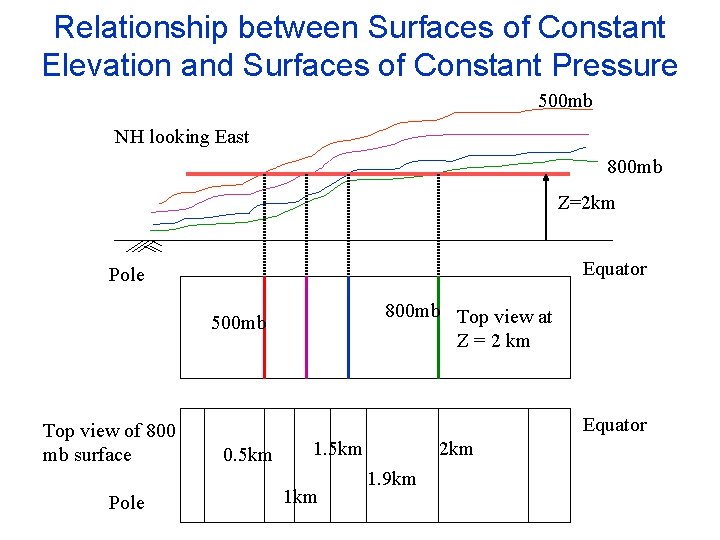
Relationship between Surfaces of Constant Elevation and Surfaces of Constant Pressure 500 mb NH looking East 800 mb Z=2 km Equator Pole 800 mb Top view at Z = 2 km 500 mb Top view of 800 mb surface Pole Equator 0. 5 km 1 km 2 km 1. 9 km
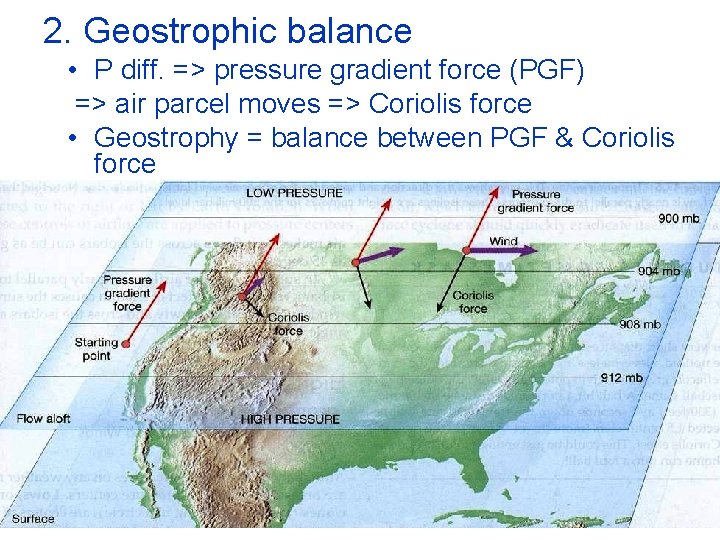
2. Geostrophic balance • P diff. => pressure gradient force (PGF) => air parcel moves => Coriolis force • Geostrophy = balance between PGF & Coriolis force
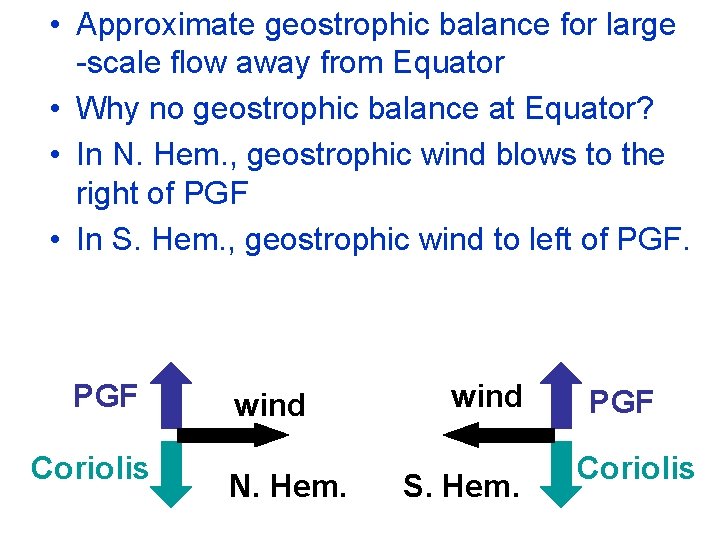
• Approximate geostrophic balance for large -scale flow away from Equator • Why no geostrophic balance at Equator? • In N. Hem. , geostrophic wind blows to the right of PGF • In S. Hem. , geostrophic wind to left of PGF Coriolis wind N. Hem. wind S. Hem. PGF Coriolis
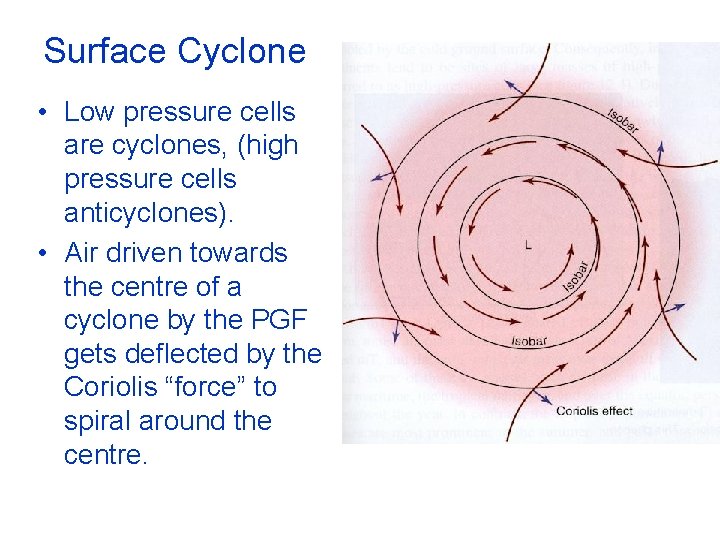
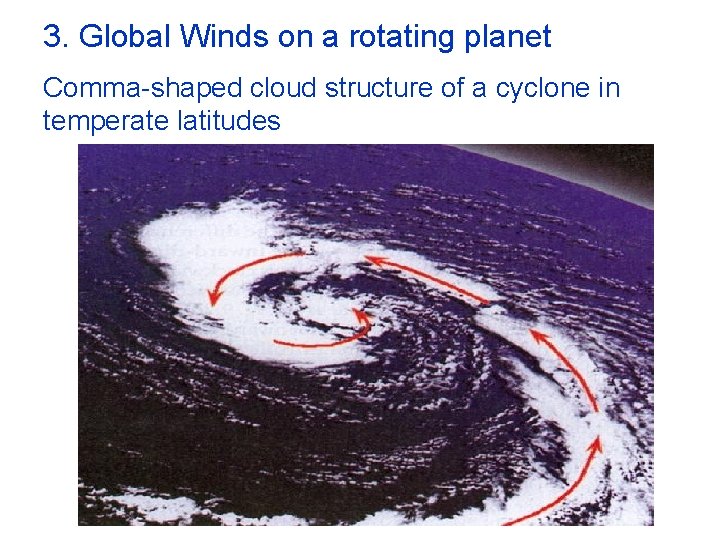
Surface Cyclone • Low pressure cells are cyclones, (high pressure cells anticyclones). • Air driven towards the centre of a cyclone by the PGF gets deflected by the Coriolis “force” to spiral around the centre.
3. Global Winds on a rotating planet Comma-shaped cloud structure of a cyclone in temperate latitudes
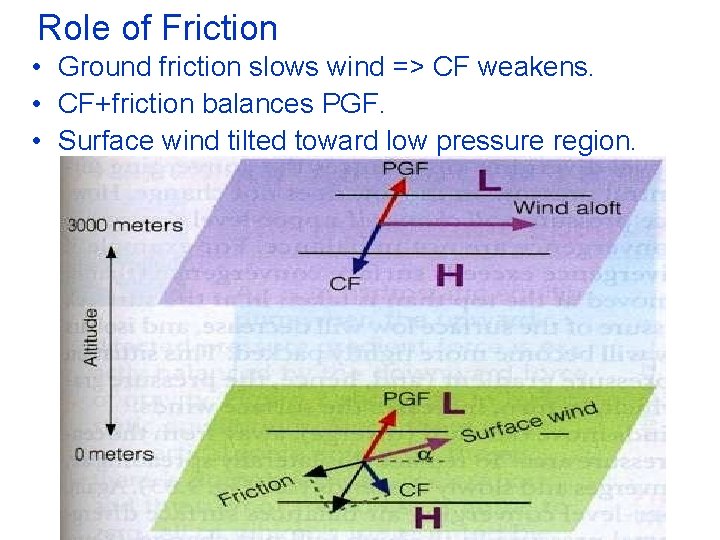
Role of Friction • Ground friction slows wind => CF weakens. • CF+friction balances PGF. • Surface wind tilted toward low pressure region.
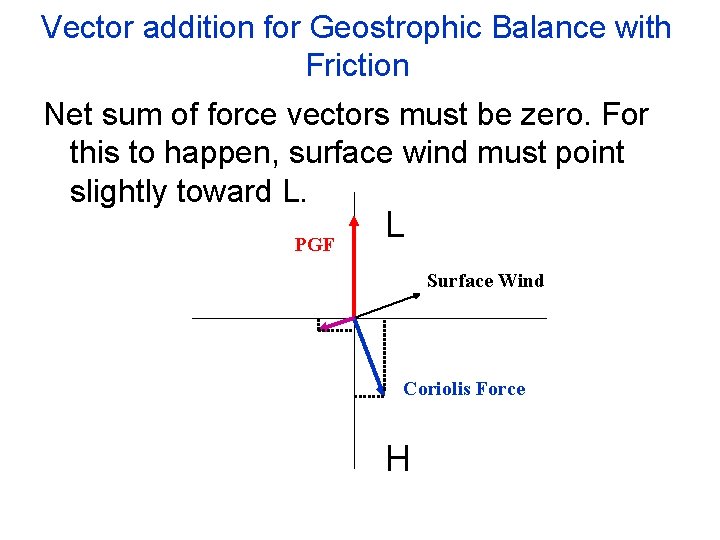
Vector addition for Geostrophic Balance with Friction Net sum of force vectors must be zero. For this to happen, surface wind must point slightly toward L. PGF L Surface Wind Coriolis Force H
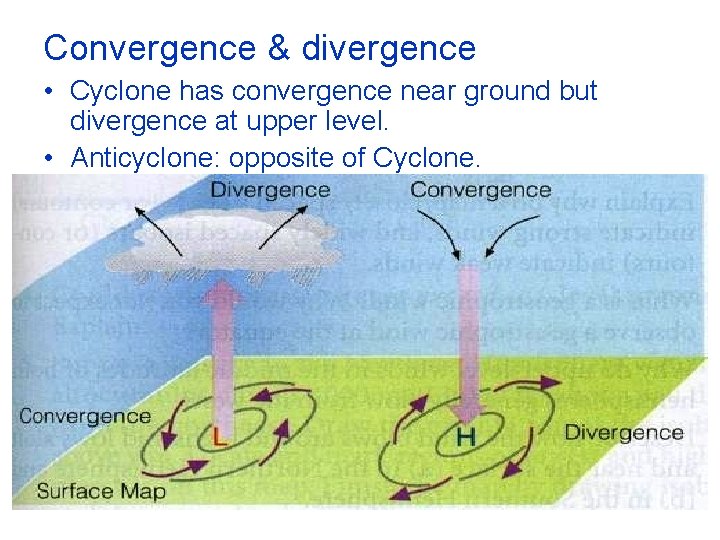
Convergence & divergence • Cyclone has convergence near ground but divergence at upper level. • Anticyclone: opposite of Cyclone.
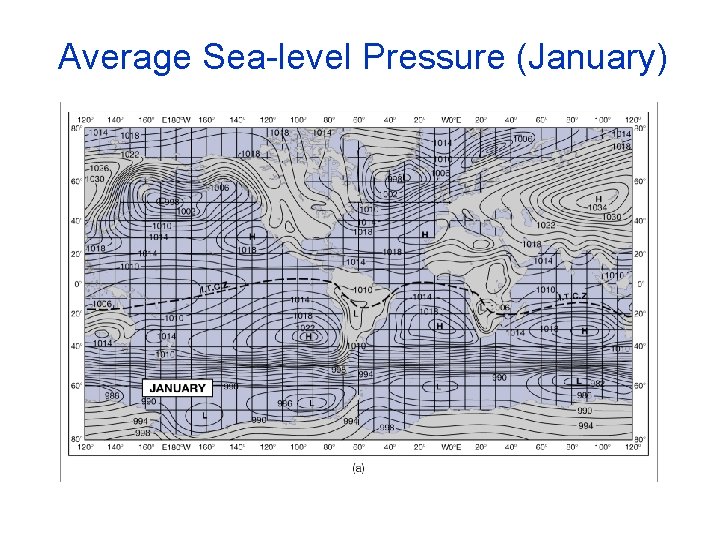
Average Sea-level Pressure (January)
Global winds on a rotating planet
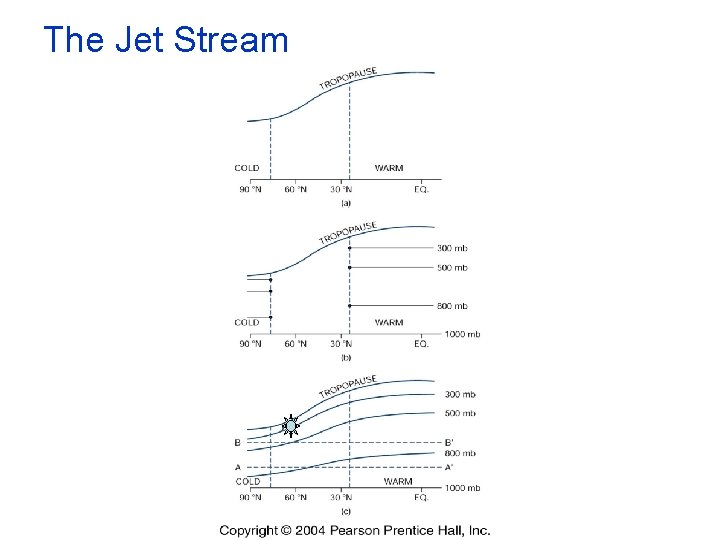
The Jet Stream
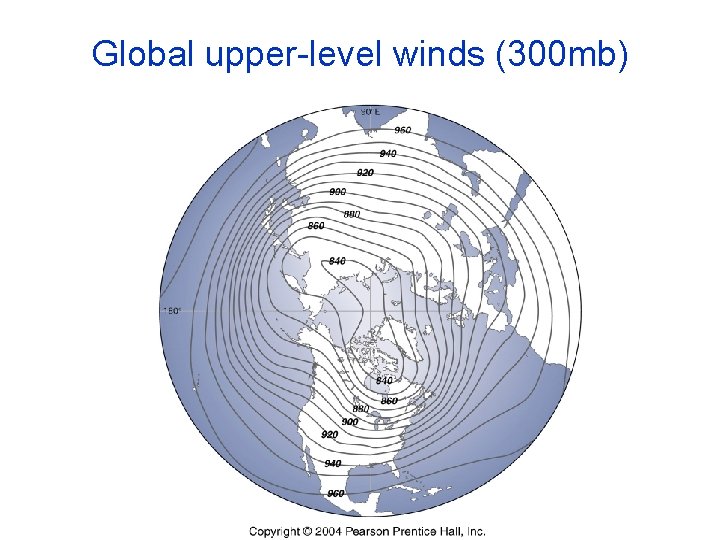
Global upper-level winds (300 mb)