ENDURANCE TRAINING David Zahradnk Ph D Projekt Zvyovn


- Slides: 16
ENDURANCE TRAINING David Zahradník, Ph. D. Projekt: Zvyšování jazykových kompetencí pracovníků FSp. S MU a inovace výuky v oblasti kinantropologie, reg. č. : CZ. 1. 07/2. 2. 00/15. 0199
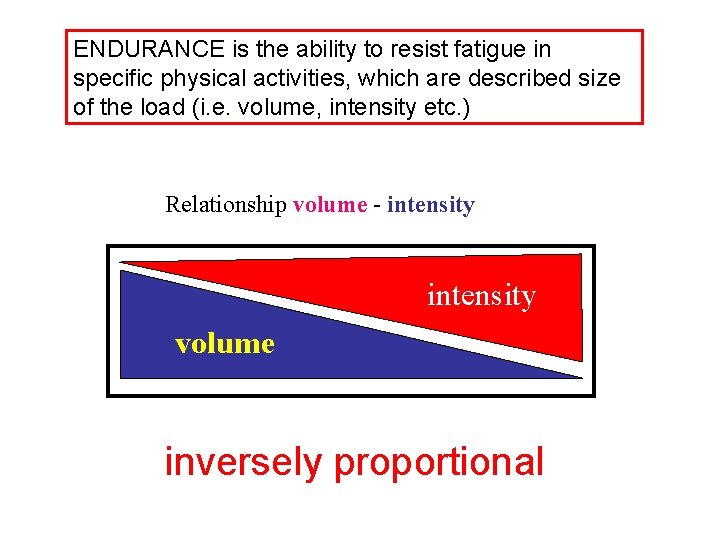
ENDURANCE is the ability to resist fatigue in specific physical activities, which are described size of the load (i. e. volume, intensity etc. ) Relationship volume - intensity volume inversely proportional
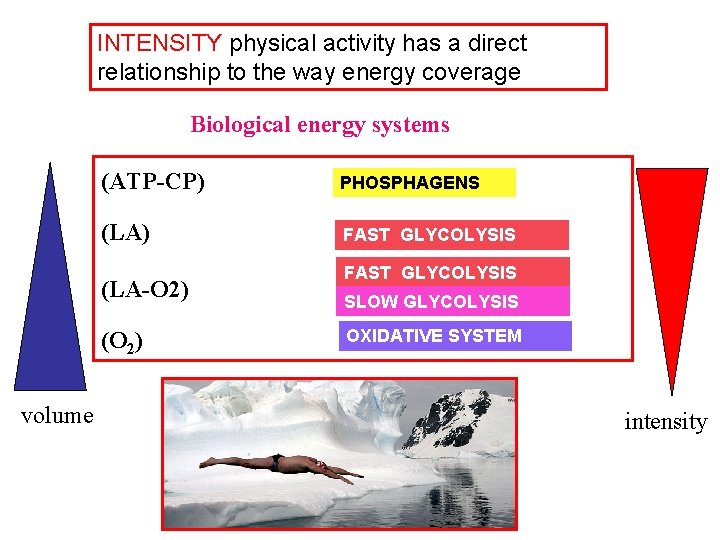
INTENSITY physical activity has a direct relationship to the way energy coverage Biological energy systems (ATP-CP) PHOSPHAGENS (LA) FAST GLYCOLYSIS (LA-O 2) (O 2) volume FAST GLYCOLYSIS SLOW GLYCOLYSIS OXIDATIVE SYSTEM intensity
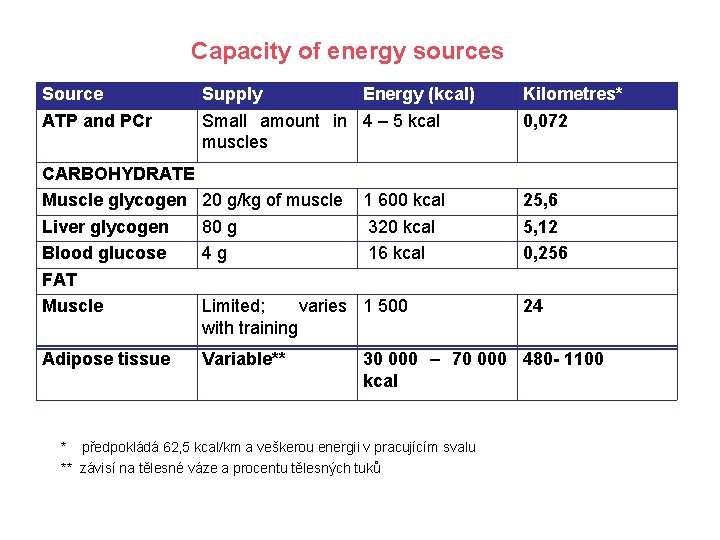
Capacity of energy sources Source ATP and PCr CARBOHYDRATE Muscle glycogen Liver glycogen Blood glucose FAT Muscle Adipose tissue Supply Energy (kcal) Small amount in 4 – 5 kcal muscles Kilometres* 0, 072 20 g/kg of muscle 80 g 4 g 25, 6 5, 12 0, 256 1 600 kcal 320 kcal 16 kcal Limited; varies 1 500 with training Variable** 24 30 000 – 70 000 480 - 1100 kcal * předpokládá 62, 5 kcal/km a veškerou energii v pracujícím svalu ** závisí na tělesné váze a procentu tělesných tuků
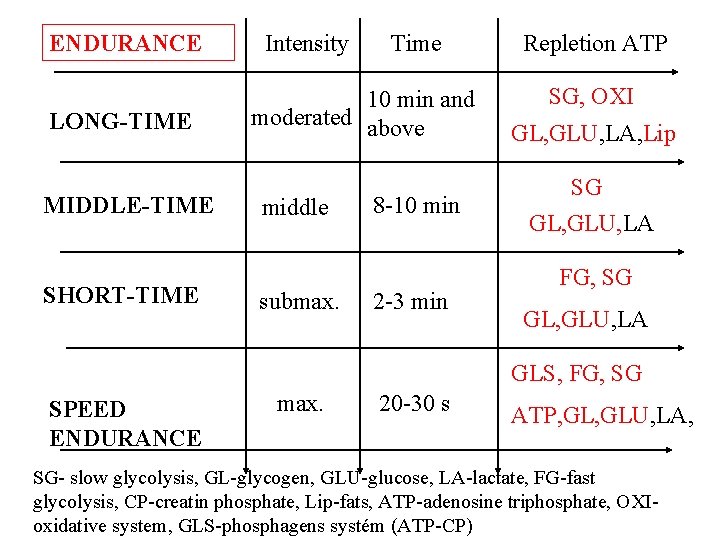
ENDURANCE LONG-TIME MIDDLE-TIME SHORT-TIME Intensity Time 10 min and moderated above middle submax. 8 -10 min 2 -3 min Repletion ATP SG, OXI GL, GLU, LA, Lip SG GL, GLU, LA FG, SG GL, GLU, LA GLS, FG, SG SPEED ENDURANCE max. 20 -30 s ATP, GLU, LA, SG- slow glycolysis, GL-glycogen, GLU-glucose, LA-lactate, FG-fast glycolysis, CP-creatin phosphate, Lip-fats, ATP-adenosine triphosphate, OXIoxidative system, GLS-phosphagens systém (ATP-CP)
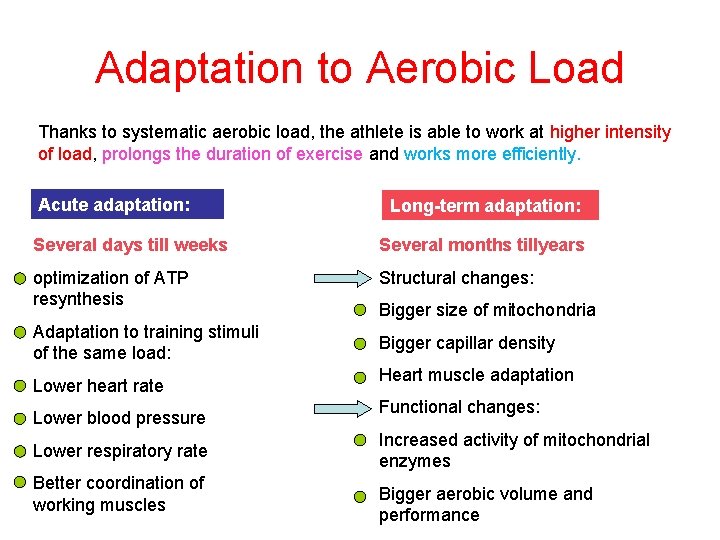
Adaptation to Aerobic Load Thanks to systematic aerobic load, the athlete is able to work at higher intensity of load, prolongs the duration of exercise and works more efficiently. Acute adaptation: Long-term adaptation: Several days till weeks Several months tillyears optimization of ATP resynthesis Structural changes: Adaptation to training stimuli of the same load: Lower heart rate Lower blood pressure Lower respiratory rate Better coordination of working muscles Bigger size of mitochondria Bigger capillar density Heart muscle adaptation Functional changes: Increased activity of mitochondrial enzymes Bigger aerobic volume and performance
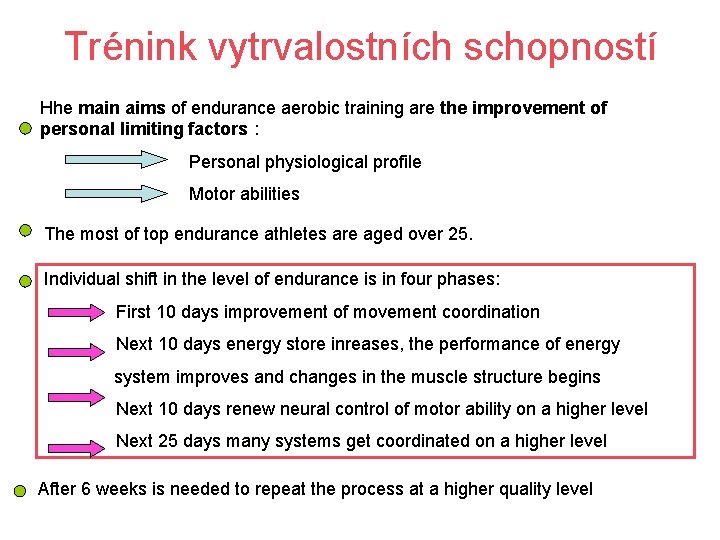
Trénink vytrvalostních schopností Hhe main aims of endurance aerobic training are the improvement of personal limiting factors : Personal physiological profile Motor abilities The most of top endurance athletes are aged over 25. Individual shift in the level of endurance is in four phases: First 10 days improvement of movement coordination Next 10 days energy store inreases, the performance of energy system improves and changes in the muscle structure begins Next 10 days renew neural control of motor ability on a higher level Next 25 days many systems get coordinated on a higher level After 6 weeks is needed to repeat the process at a higher quality level
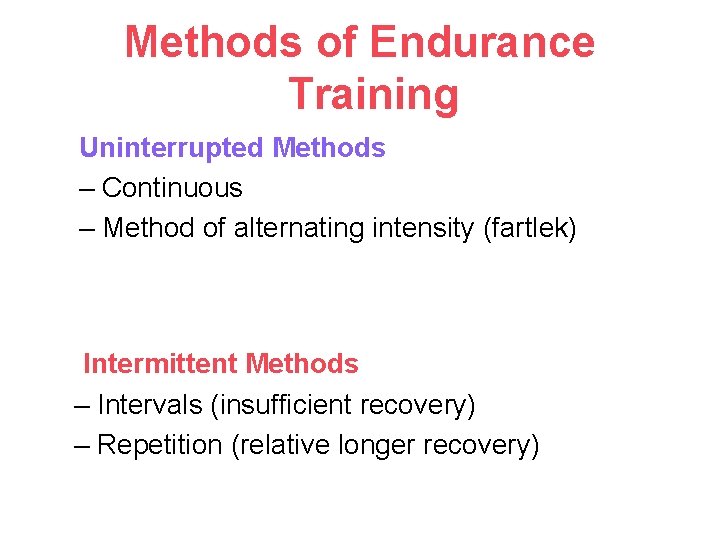
Methods of Endurance Training Uninterrupted Methods – Continuous – Method of alternating intensity (fartlek) Intermittent Methods – Intervals (insufficient recovery) – Repetition (relative longer recovery)
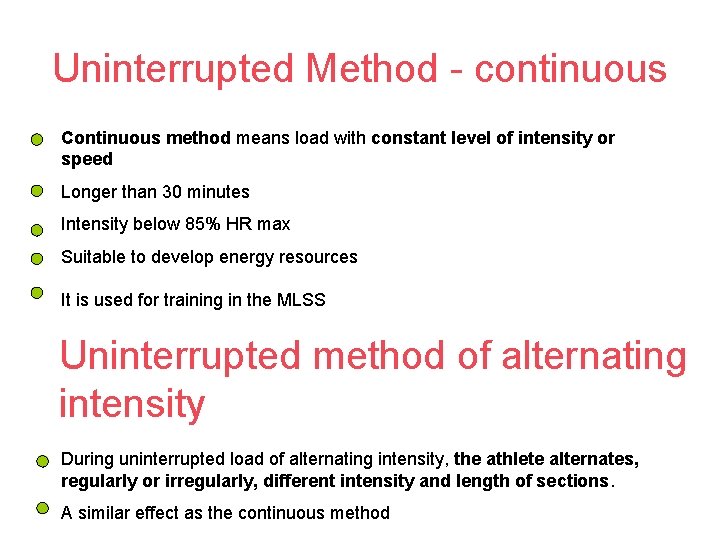
Uninterrupted Method - continuous Continuous method means load with constant level of intensity or speed Longer than 30 minutes Intensity below 85% HR max Suitable to develop energy resources It is used for training in the MLSS Uninterrupted method of alternating intensity During uninterrupted load of alternating intensity, the athlete alternates, regularly or irregularly, different intensity and length of sections. A similar effect as the continuous method
Intermittent Methods-interval Interval training contains several load units of high intensity (from submaximal to maximal). Short interval 45 -60 s, medium 1 -3 min, long 3 -5 min Next work cycle should begin to HR 120 -130 bpm Means for increasing values aerobic performance and capacity) Intermittent Methods-repetition The intensity of a repeated leg is most often at the competition pace level The aim of training is improving or maintaining race pace Resting period fasts from 5 to 15 (or 20) minutes
Zones of Training Intensity
Intensity Zone 1 Load intensity is under MLSS In sports, especially those in which oxygen consumption represents a limiting factor of performance. develops basic functional efficiency of the cardiorespiratory system and the economy of metabolic system and increases the capacity to resist stress during effort which lasts for a longer time. typical range of intensity is between 50 -70 % VO 2 max nebo 70 -75 % HRmax
Intensity Zone 2 It is training with intensity in the area of MLSS The main aim of the training is to improve the athlete’s ability to utilize higher LA production during long-term load, keep high intensity of load without accumulation of LA (for a period longer than 5 minutes) The range of load intensity is between 75 -85 % VO 2 max nebo 80 -93 % HRmax
Intensity Zone 3 The training of this intensity stimulates the increase of maximal oxygen consumption The rate of LA diffusion into the blood starts to exceed the rate of utilization the main physiological aim of training intensity zone 3 is to increase resistance to LA accumulation Load intensity within this zone should be between 85 –VOmax a 90 (93) - 100% of HRmax.
Intensity Zone 4 Trainig of this intensity can improve and maintain short-time speed-time endurance primarily for developing movement economy, technical and tactic skills which make use of ATP-CP system as the source of energy very short intervals (not exceeding 20 seconds) of short and explosive exercises of intensity over 100 % effort with resting period long enough to fully recover the source of energy Sufficient resting period
Thank you for your attention