Emergency Preparedness and Response in Iraq Kadhim A
- Slides: 1
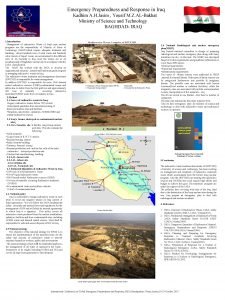
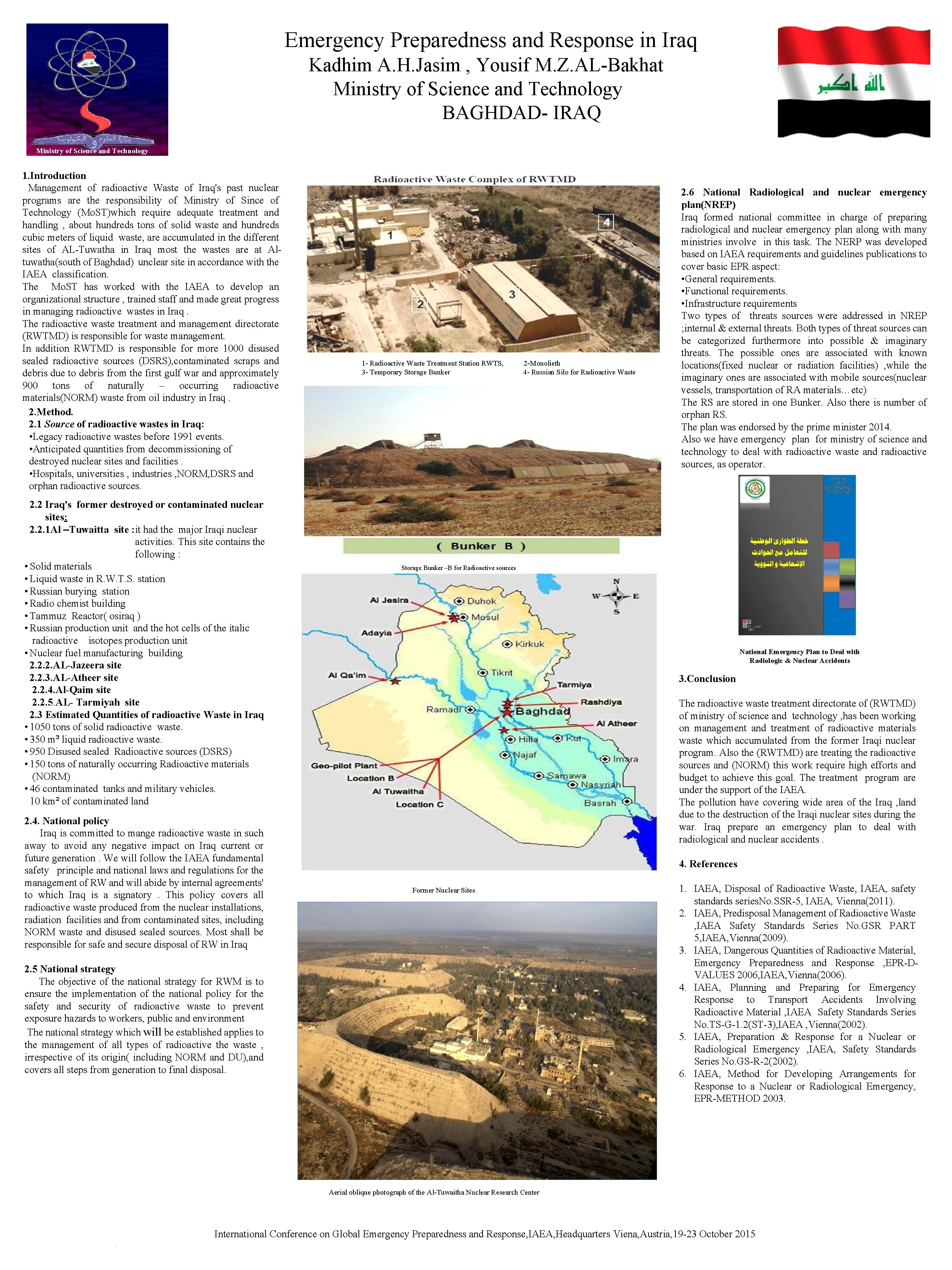
Emergency Preparedness and Response in Iraq Kadhim A. H. Jasim , Yousif M. Z. AL-Bakhat Ministry of Science and Technology BAGHDAD- IRAQ Ministry of Science and Technology 1. Introduction Management of radioactive Waste of Iraq's past nuclear programs are the responsibility of Ministry of Since of Technology (Mo. ST)which require adequate treatment and handling , about hundreds tons of solid waste and hundreds cubic meters of liquid waste, are accumulated in the different sites of AL-Tuwatha in Iraq most the wastes are at Altuwatha(south of Baghdad) unclear site in accordance with the IAEA classification. The Mo. ST has worked with the IAEA to develop an organizational structure , trained staff and made great progress in managing radioactive wastes in Iraq. The radioactive waste treatment and management directorate (RWTMD) is responsible for waste management. In addition RWTMD is responsible for more 1000 disused sealed radioactive sources (DSRS), contaminated scraps and debris due to debris from the first gulf war and approximately 900 tons of naturally – occurring radioactive materials(NORM) waste from oil industry in Iraq. 2. Method. 2. 1 Source of radioactive wastes in Iraq: • Legacy radioactive wastes before 1991 events. • Anticipated quantities from decommissioning of destroyed nuclear sites and facilities. • Hospitals, universities , industries , NORM, DSRS and orphan radioactive sources. 1 - Radioactive Waste Treatment Station RWTS, 3 - Temporary Storage Bunker 2. 2 Iraq's former destroyed or contaminated nuclear sites: 2. 2. 1 Al –Tuwaitta site : it had the major Iraqi nuclear activities. This site contains the following : • Solid materials • Liquid waste in R. W. T. S. station • Russian burying station • Radio chemist building • Tammuz Reactor( osiraq ) • Russian production unit and the hot cells of the italic radioactive isotopes production unit • Nuclear fuel manufacturing building 2. 2. 2. AL-Jazeera site 2. 2. 3. AL-Atheer site 2. 2. 4. Al-Qaim site 2. 2. 5. AL- Tarmiyah site 2. 3 Estimated Quantities of radioactive Waste in Iraq • 1050 tons of solid radioactive waste. • 350 m³ liquid radioactive waste. • 950 Disused sealed Radioactive sources (DSRS) • 150 tons of naturally occurring Radioactive materials (NORM) • 46 contaminated tanks and military vehicles. 10 km² of contaminated land 2. 4. National policy Iraq is committed to mange radioactive waste in such away to avoid any negative impact on Iraq current or future generation. We will follow the IAEA fundamental safety principle and national laws and regulations for the management of RW and will abide by internal agreements' to which Iraq is a signatory. This policy covers all radioactive waste produced from the nuclear installations, radiation facilities and from contaminated sites, including NORM waste and disused sealed sources. Most shall be responsible for safe and secure disposal of RW in Iraq 2 -Monolieth 4 - Russian Silo for Radioactive Waste 2. 6 National Radiological and nuclear emergency plan(NREP) Iraq formed national committee in charge of preparing radiological and nuclear emergency plan along with many ministries involve in this task. The NERP was developed based on IAEA requirements and guidelines publications to cover basic EPR aspect: • General requirements. • Functional requirements. • Infrastructure requirements Two types of threats sources were addressed in NREP ; internal & external threats. Both types of threat sources can be categorized furthermore into possible & imaginary threats. The possible ones are associated with known locations(fixed nuclear or radiation facilities) , while the imaginary ones are associated with mobile sources(nuclear vessels, transportation of RA materials…etc) The RS are stored in one Bunker. Also there is number of orphan RS. The plan was endorsed by the prime minister 2014. Also we have emergency plan for ministry of science and technology to deal with radioactive waste and radioactive sources, as operator. Storage Bunker –B for Radioactive sources . National Emergency Plan to Deal with Radiologic & Nuclear Accidents 3. Conclusion . The radioactive waste treatment directorate of (RWTMD) of ministry of science and technology , has been working on management and treatment of radioactive materials waste which accumulated from the former Iraqi nuclear program. Also the (RWTMD) are treating the radioactive sources and (NORM) this work require high efforts and budget to achieve this goal. The treatment program are under the support of the IAEA. The pollution have covering wide area of the Iraq , land due to the destruction of the Iraqi nuclear sites during the war. Iraq prepare an emergency plan to deal with radiological and nuclear accidents. 4. References . Former Nuclear Sites 2. 5 National strategy The objective of the national strategy for RWM is to ensure the implementation of the national policy. for the safety and security of radioactive waste to prevent exposure hazards to workers, public and environment The national strategy which will be established applies to the management of all types of radioactive the waste , irrespective of its origin( including NORM and DU), and covers all steps from generation to final disposal. 1. IAEA, Disposal of Radioactive Waste, IAEA, safety standards series. No. SSR-5, IAEA, Vienna(2011). 2. IAEA, Predisposal Management of Radioactive Waste , IAEA Safety Standards Series No. GSR PART 5, IAEA, Vienna(2009). 3. IAEA, Dangerous Quantities of Radioactive Material, Emergency Preparedness and Response , EPR-DVALUES 2006, IAEA, Vienna(2006). 4. IAEA, Planning and Preparing for Emergency Response to Transport Accidents Involving Radioactive Material , IAEA Safety Standards Series No. TS-G-1. 2(ST-3), IAEA , Vienna(2002). 5. IAEA, Preparation & Response for a Nuclear or Radiological Emergency , IAEA, Safety Standards Series No. GS-R-2(2002). 6. IAEA, Method for Developing Arrangements for Response to a Nuclear or Radiological Emergency, EPR-METHOD 2003. Aerial oblique photograph of the Al-Tuwaitha Nuclear Research Center International Conference on Global Emergency Preparedness and Response, IAEA, Headquarters Viena, Austria, 19 -23 October 2015.