Elements of Literature Short Story A work of
- Slides: 16
Elements of Literature
Short Story A work of fiction that can be read in one sitting Focused more tightly on a single event 10, 000 words or less
Novel A fictional prose narrative of significant length Bildungsroman A German term meaning “formation novel” A novel about a child or adolescent’s development into maturity, with a special focus on the protagonist’s quest for identity
Drama/Play A story meant to be performed in theater before an audience Most written dialogue Most are divided into several acts Many include stage directions and instructions for sets and costumes
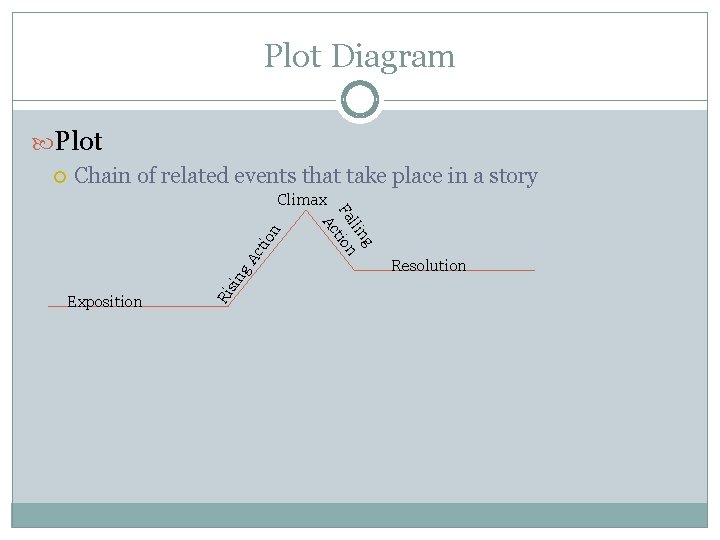
Plot Diagram Plot Chain of related events that take place in a story g. A sin Exposition ng lli Fa tion Ac cti on Climax Ri Resolution
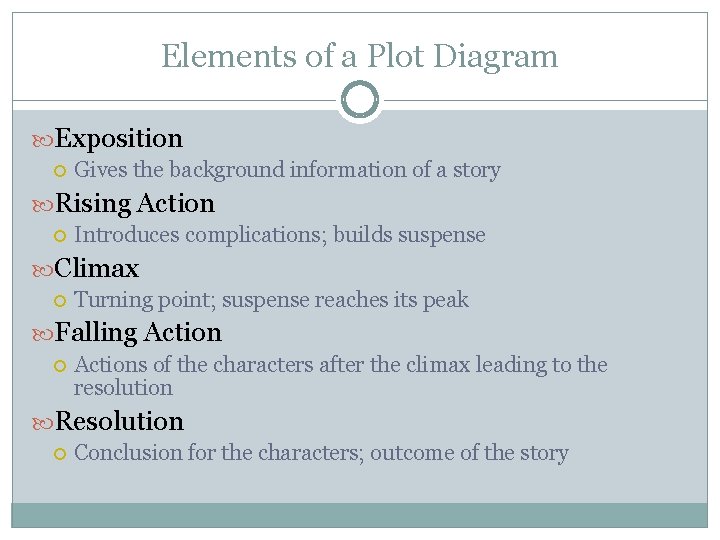
Elements of a Plot Diagram Exposition Gives the background information of a story Rising Action Introduces complications; builds suspense Climax Turning point; suspense reaches its peak Falling Actions of the characters after the climax leading to the resolution Resolution Conclusion for the characters; outcome of the story
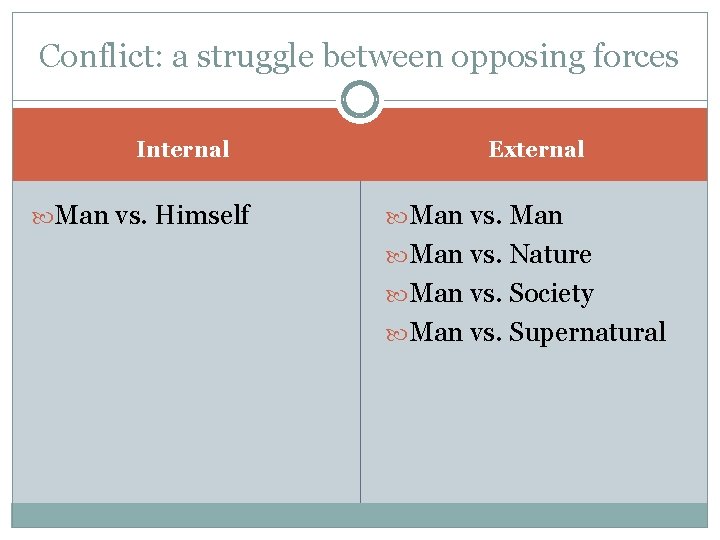
Conflict: a struggle between opposing forces Internal Man vs. Himself External Man vs. Nature Man vs. Society Man vs. Supernatural
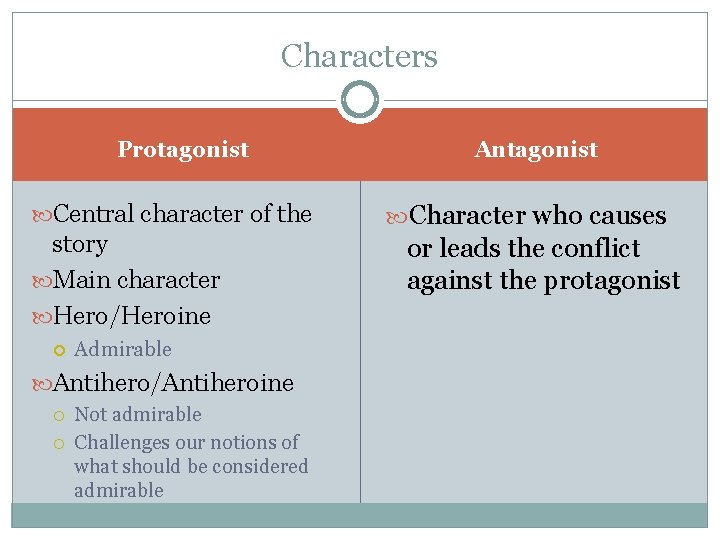
Characters Protagonist Central character of the story Main character Hero/Heroine Admirable Antihero/Antiheroine Not admirable Challenges our notions of what should be considered admirable Antagonist Character who causes or leads the conflict against the protagonist
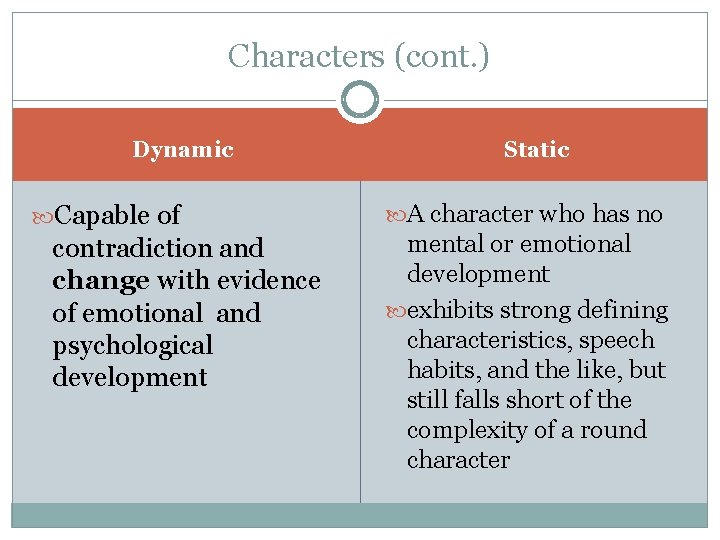
Characters (cont. ) Dynamic Capable of contradiction and change with evidence of emotional and psychological development Static A character who has no mental or emotional development exhibits strong defining characteristics, speech habits, and the like, but still falls short of the complexity of a round character
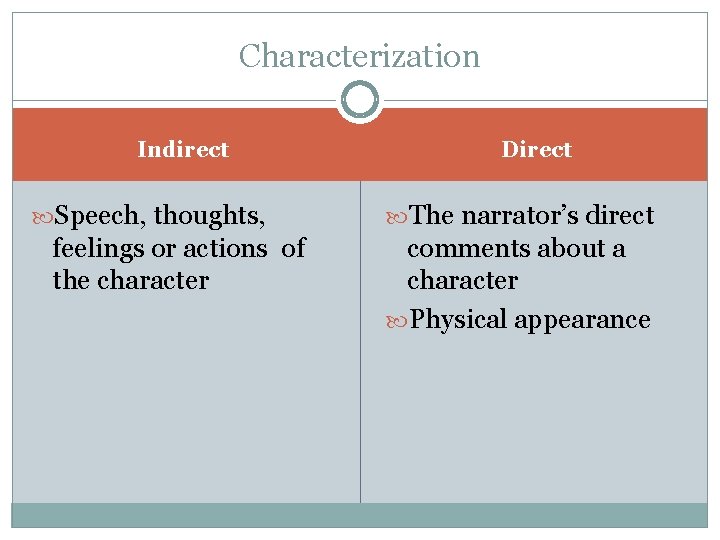
Characterization Indirect Speech, thoughts, feelings or actions of the character Direct The narrator’s direct comments about a character Physical appearance
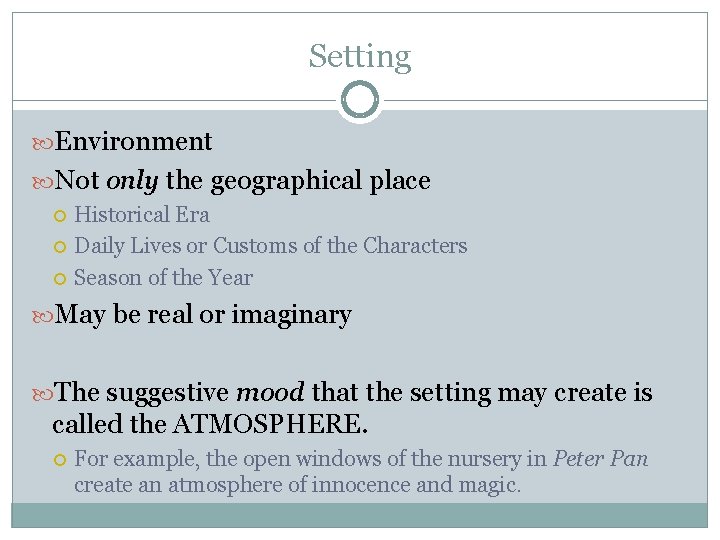
Setting Environment Not only the geographical place Historical Era Daily Lives or Customs of the Characters Season of the Year May be real or imaginary The suggestive mood that the setting may create is called the ATMOSPHERE. For example, the open windows of the nursery in Peter Pan create an atmosphere of innocence and magic.
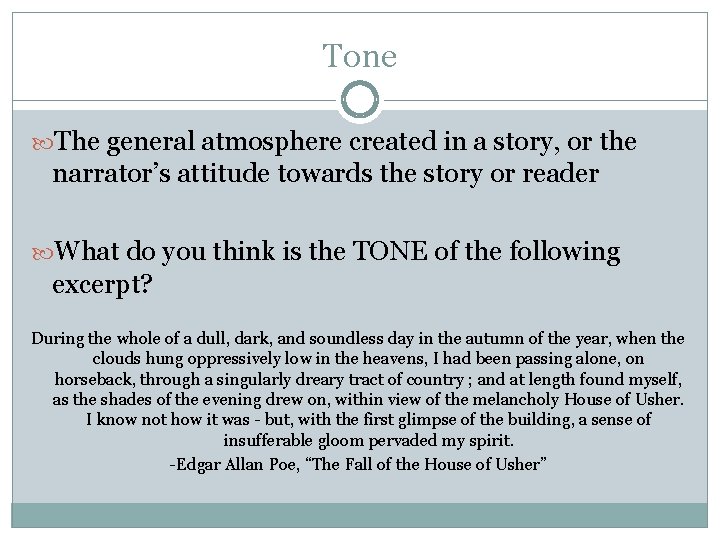
Tone The general atmosphere created in a story, or the narrator’s attitude towards the story or reader What do you think is the TONE of the following excerpt? During the whole of a dull, dark, and soundless day in the autumn of the year, when the clouds hung oppressively low in the heavens, I had been passing alone, on horseback, through a singularly dreary tract of country ; and at length found myself, as the shades of the evening drew on, within view of the melancholy House of Usher. I know not how it was - but, with the first glimpse of the building, a sense of insufferable gloom pervaded my spirit. -Edgar Allan Poe, “The Fall of the House of Usher”
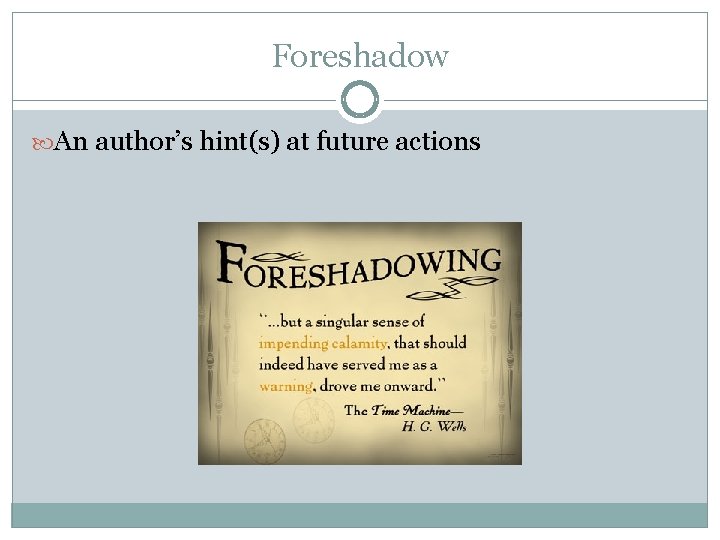
Foreshadow An author’s hint(s) at future actions
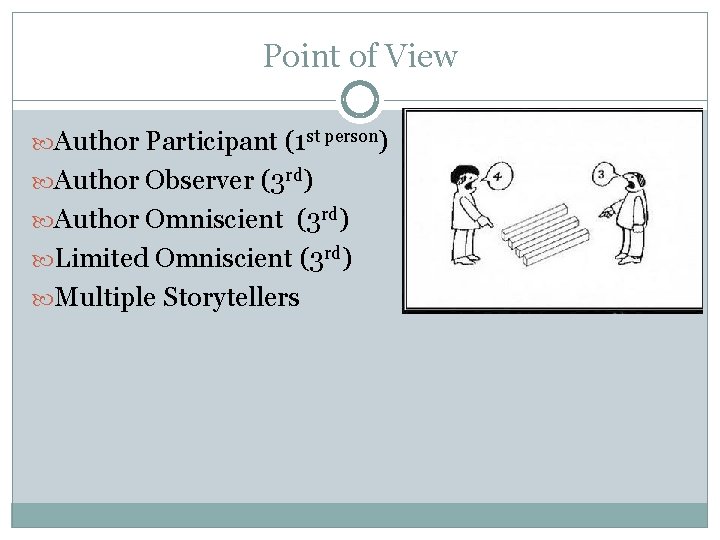
Point of View Author Participant (1 st person) Author Observer (3 rd) Author Omniscient (3 rd) Limited Omniscient (3 rd) Multiple Storytellers
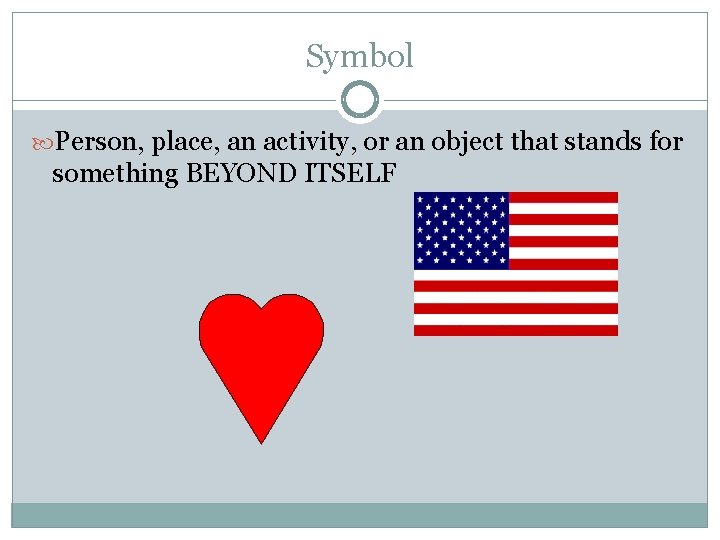
Symbol Person, place, an activity, or an object that stands for something BEYOND ITSELF
Theme In literature, theme is a perception about life or human nature that the writer wants to share with the reader. In most cases, theme is not stated directly but must be inferred. Themes can be revealed by a story’s title key phrases and statements about big ideas the ways the characters change and the lessons they learn about life