Elements of a Short Story Definition of a

- Slides: 19
Elements of a Short Story
Definition of a Short Story Tells about a single event or experience Fictional (not true) 500 to 15, 000 words in length It has a beginning, middle, and end Creates an impression on the reader
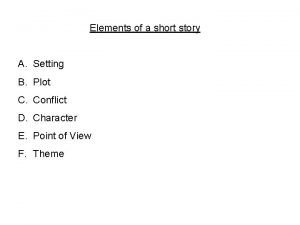
Elements of a Short Story Plot Setting Character Point of view Conflict Theme Mood
Short Story Vocabulary Plot: A series of events through which the writer reveals what is happening, to whom, and why.
Short Story Vocabulary Setting: Tells the reader where and when the story takes place.
Short Story Vocabulary Characterization: Creation of imaginary people who appear to be real to the reader. The writer gives information about the characters in the story.
Character • Protagonist – Main character in the story; central figure in a story’s conflict • Antagonist – Opposing force to the main character; can be a person or thing
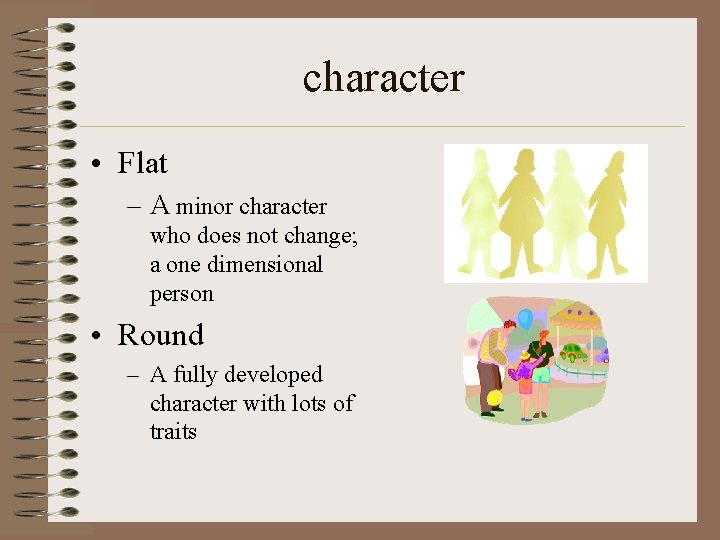
character • Flat – A minor character who does not change; a one dimensional person • Round – A fully developed character with lots of traits
Short Story Vocabulary Point of view: The position of the narrator of the story and what the writer sees from that vantage point.
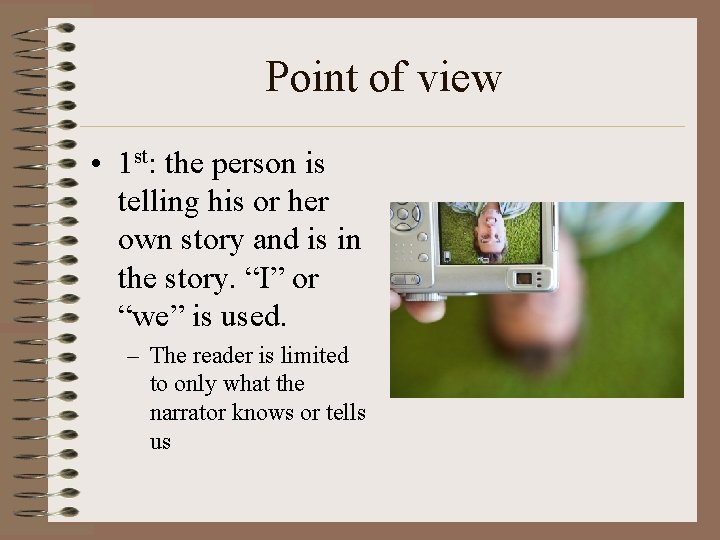
Point of view • 1 st: the person is telling his or her own story and is in the story. “I” or “we” is used. – The reader is limited to only what the narrator knows or tells us
Point of view • 3 rd omniscient: – We can see everything going on in everyone’s mind at any time.
Point of view • 3 rd limited: – We can see what’s going on only in one person’s mind (but we are still outside of it). “he” or “she” is used.
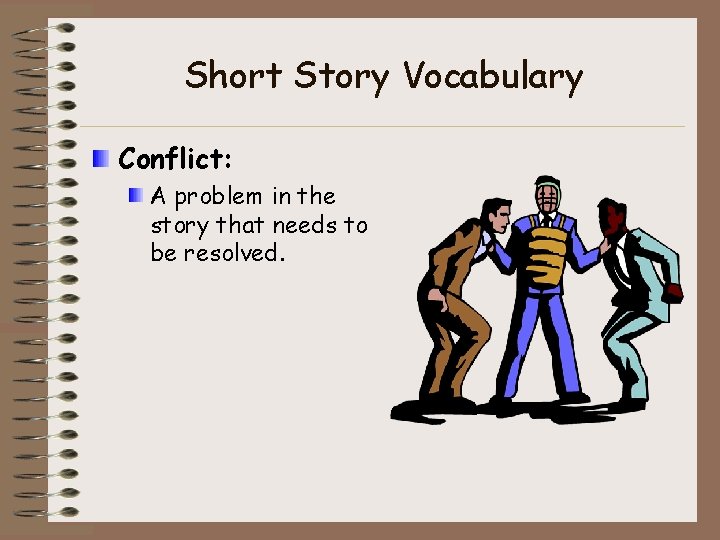
Short Story Vocabulary Conflict: A problem in the story that needs to be resolved.
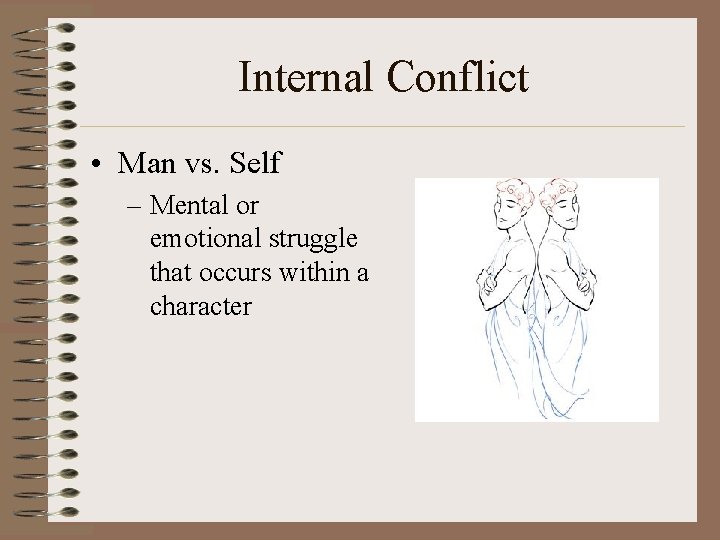
Internal Conflict • Man vs. Self – Mental or emotional struggle that occurs within a character
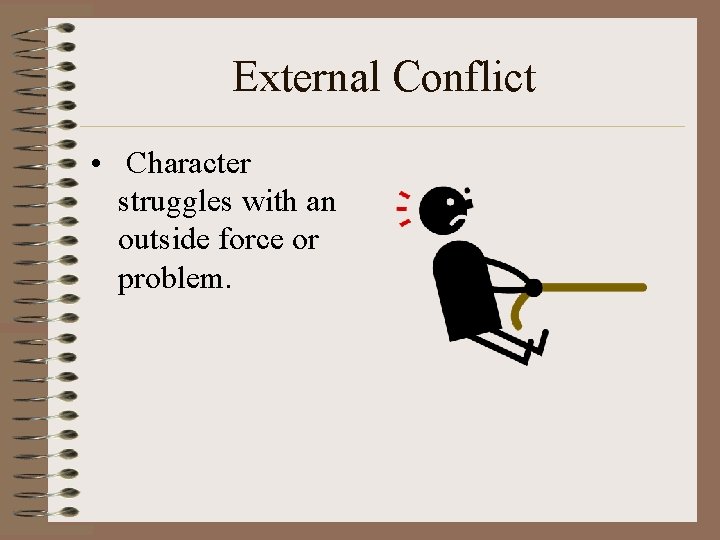
External Conflict • Character struggles with an outside force or problem.
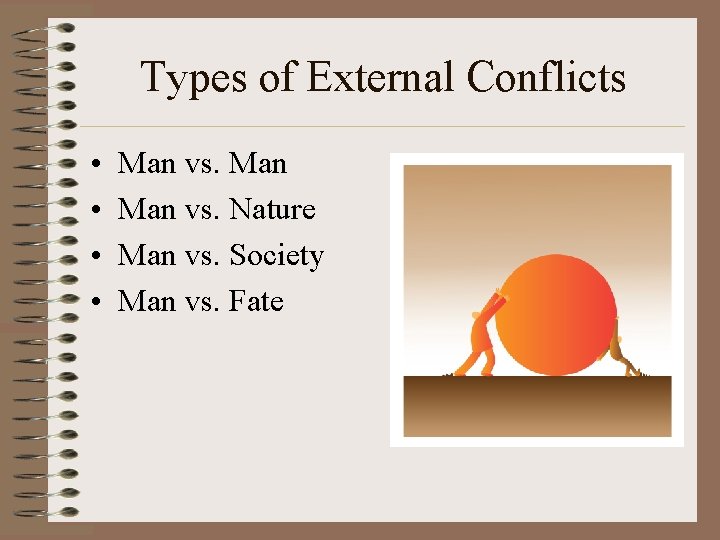
Types of External Conflicts • • Man vs. Nature Man vs. Society Man vs. Fate
Theme: The story’s main ideas. The “message” the writer intends to communicate by telling the story.
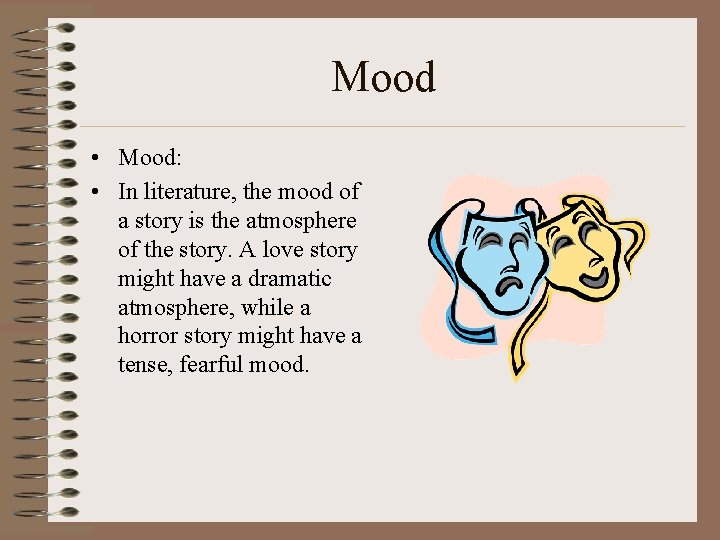
Mood • Mood: • In literature, the mood of a story is the atmosphere of the story. A love story might have a dramatic atmosphere, while a horror story might have a tense, fearful mood.
Great writers are able to use the elements of the short story with such precision that the reader is caught up in the action of the story. This is a mark of a good story and our goal as a writer.