Elasticity and its Application www lrjj cn Definition



- Slides: 27
Elasticity and its Application www. lrjj. cn
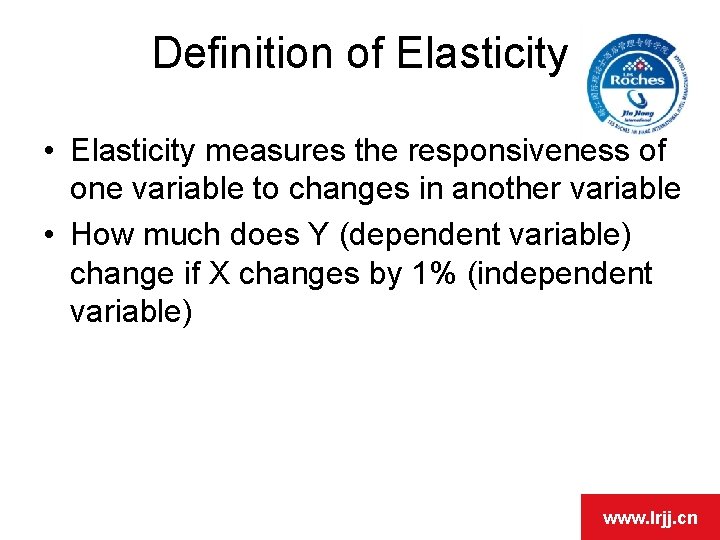
Definition of Elasticity • Elasticity measures the responsiveness of one variable to changes in another variable • How much does Y (dependent variable) change if X changes by 1% (independent variable) www. lrjj. cn
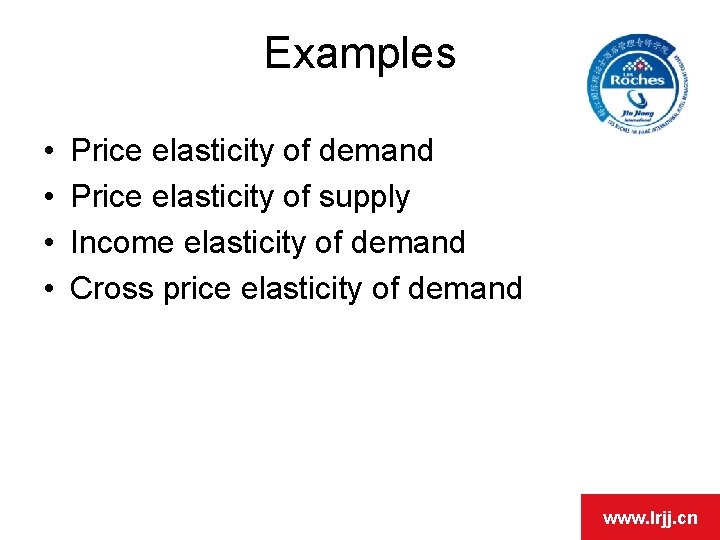
Examples • • Price elasticity of demand Price elasticity of supply Income elasticity of demand Cross price elasticity of demand www. lrjj. cn
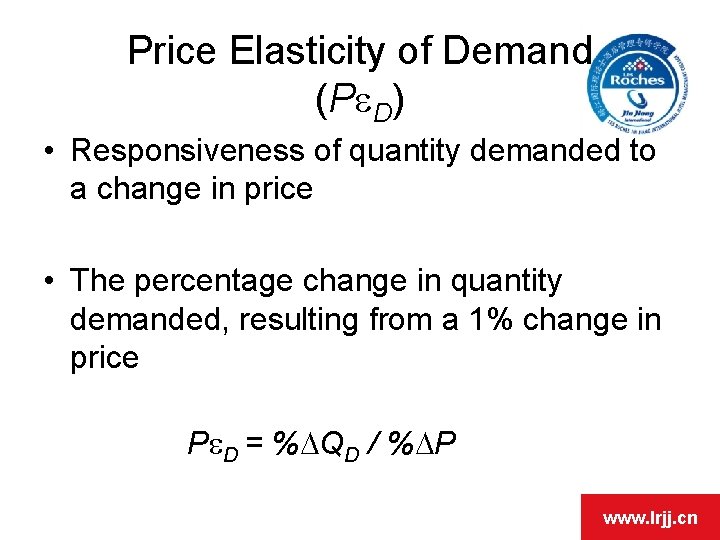
Price Elasticity of Demand (Pe. D) • Responsiveness of quantity demanded to a change in price • The percentage change in quantity demanded, resulting from a 1% change in price Pe. D = % QD / % P www. lrjj. cn
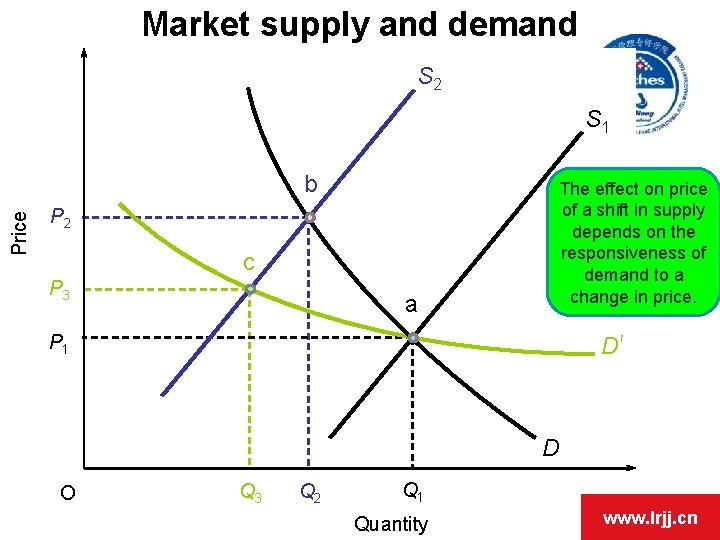
Market supply and demand S 2 S 1 Price b P 2 c P 3 a The effect on price of a shift in supply depends on the responsiveness of demand to a change in price. P 1 D' D O Q 3 Q 2 Q 1 Quantity www. lrjj. cn
Determinants of Pe. D • • Availability of close substitutes Necessities versus luxuries Definition of the market Time horizon www. lrjj. cn
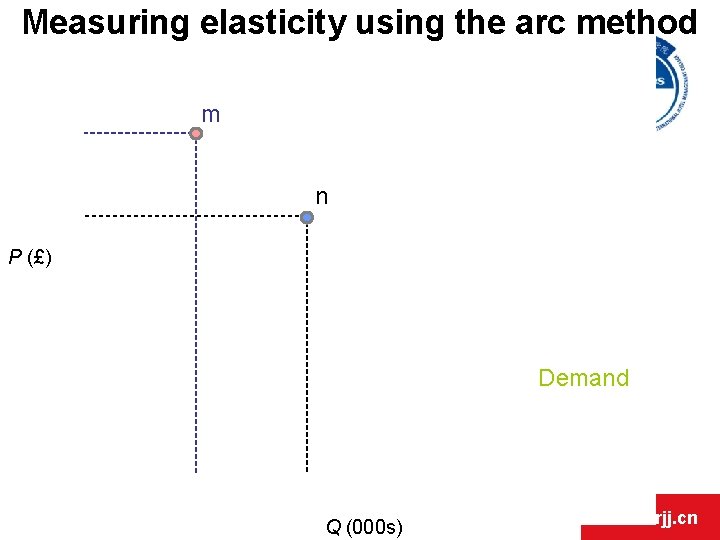
Measuring elasticity using the arc method m n P (£) Demand Q (000 s) www. lrjj. cn
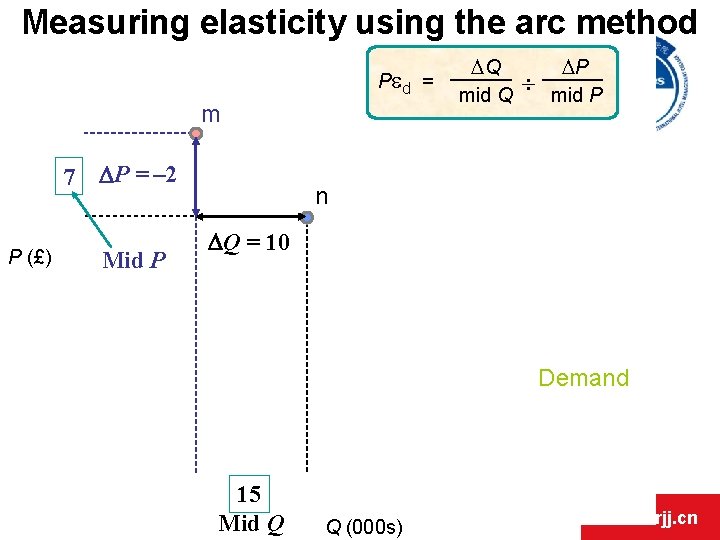
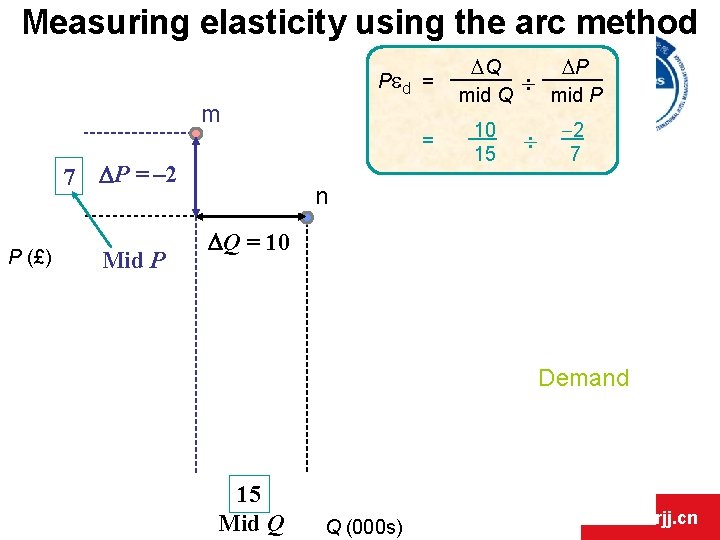
Measuring elasticity using the arc method Ped = m 7 P (£) P = – 2 Mid P Q mid Q P ¸ mid P n Q = 10 Demand 15 Mid Q Q (000 s) www. lrjj. cn
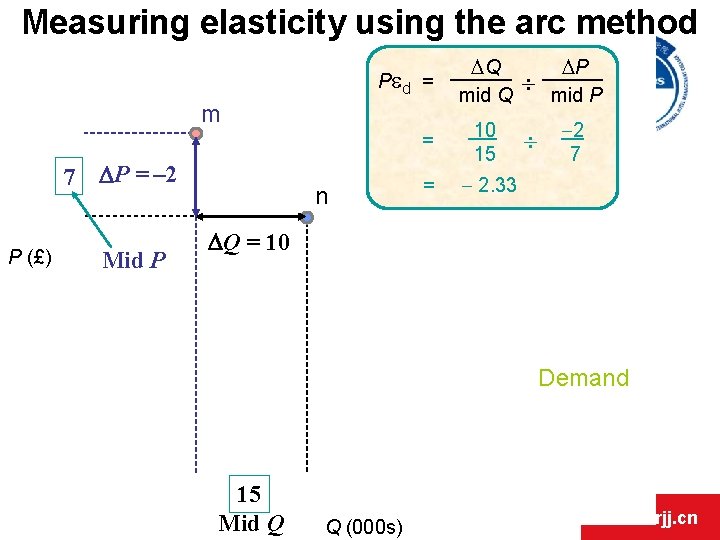
Measuring elasticity using the arc method Ped = m = 7 P (£) P = – 2 Mid P Q mid Q 10 15 P ¸ mid P ¸ -2 7 n Q = 10 Demand 15 Mid Q Q (000 s) www. lrjj. cn
Measuring elasticity using the arc method Ped = m 7 P (£) P = – 2 Mid P n Q mid Q = 10 15 = - 2. 33 P ¸ mid P ¸ -2 7 Q = 10 Demand 15 Mid Q Q (000 s) www. lrjj. cn
Pe. D & Consumer Expenditure • Total Consumer Expenditure / Firm’s total revenue TE (TR) = P x Q • Applications to pricing decisions www. lrjj. cn
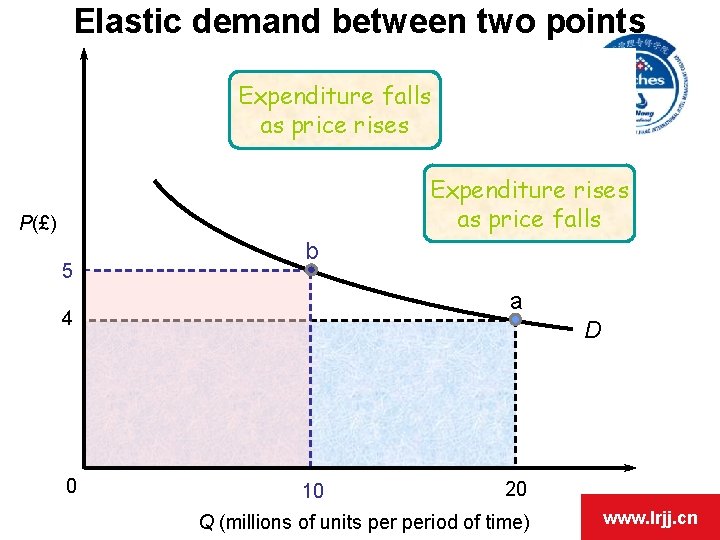
Elastic Demand • Elasticity greater than 1 (Pe. D > 1) • Effect of price change – P rises: TE falls – P falls: TE rises www. lrjj. cn
Elastic demand between two points Expenditure falls as price rises Expenditure rises as price falls P(£) 5 b a 4 0 D 10 20 Q (millions of units period of time) www. lrjj. cn
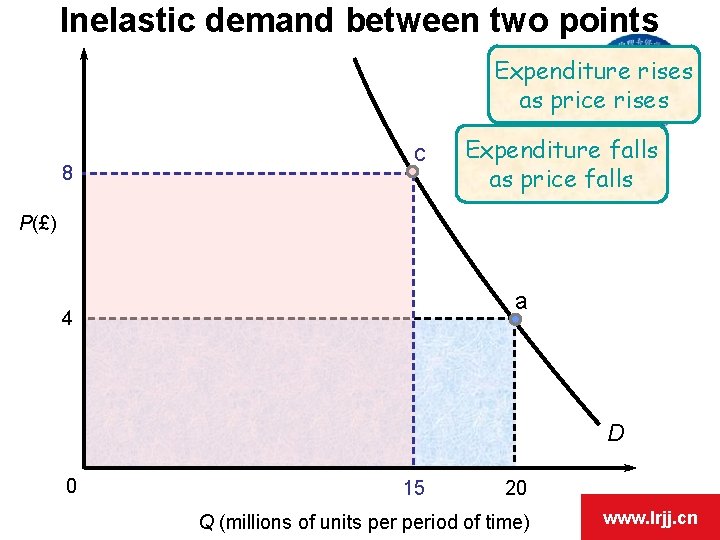
Inelastic Demand • Elasticity less than 1 (Pe. D < 1) • Effects of a price change – P rises: TE rises – P falls: TE falls www. lrjj. cn
Inelastic demand between two points Expenditure rises as price rises 8 c Expenditure falls as price falls P(£) a 4 D 0 15 20 Q (millions of units period of time) www. lrjj. cn
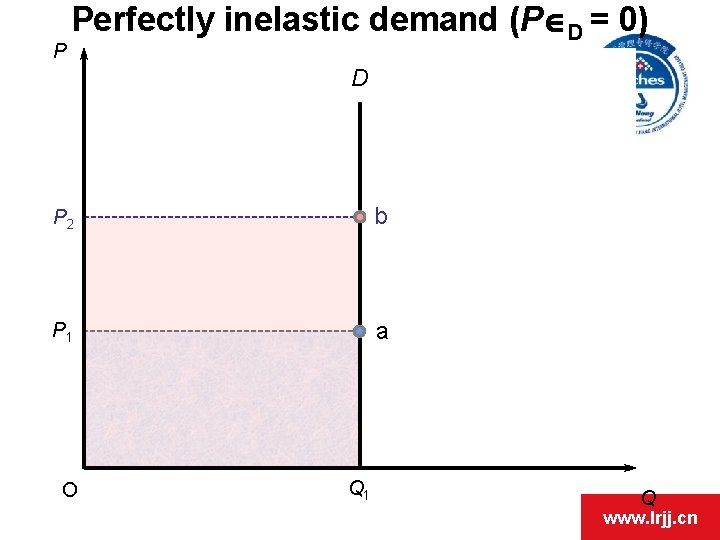
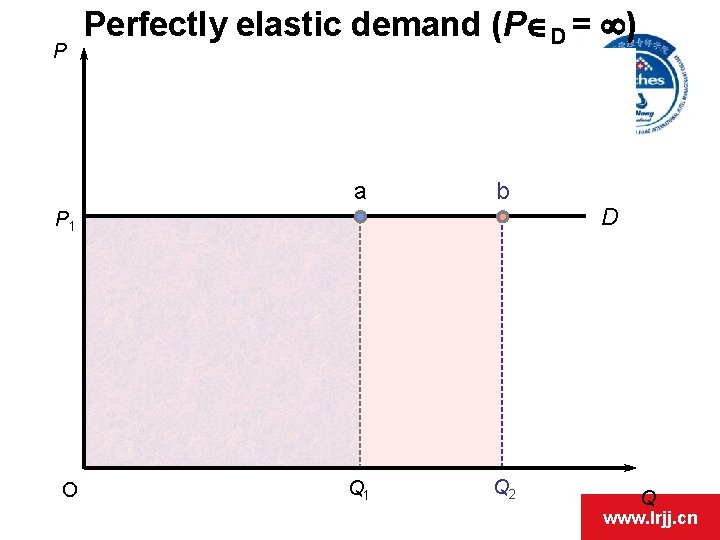
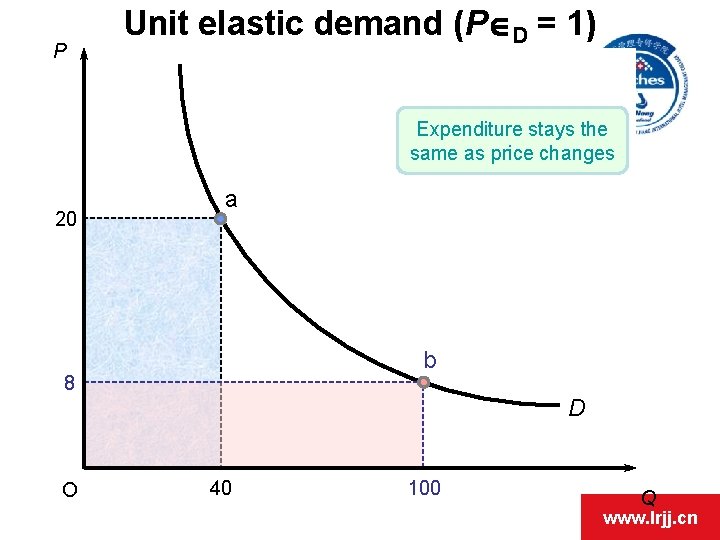
Special cases • Pe. D = 0 (Perfectly Inelastic Demand) • Pe. D = (Perfectly Elastic Demand) • Pe. D = 1 (Unit Elastic Demand) www. lrjj. cn
P Perfectly inelastic demand (PÎD = 0) D P 2 b P 1 a O Q 1 Q www. lrjj. cn
P Perfectly elastic demand (PÎD = ¥) a b Q 1 Q 2 P 1 O D Q www. lrjj. cn
P Unit elastic demand (PÎD = 1) Expenditure stays the same as price changes 20 a b 8 O D 40 100 Q www. lrjj. cn
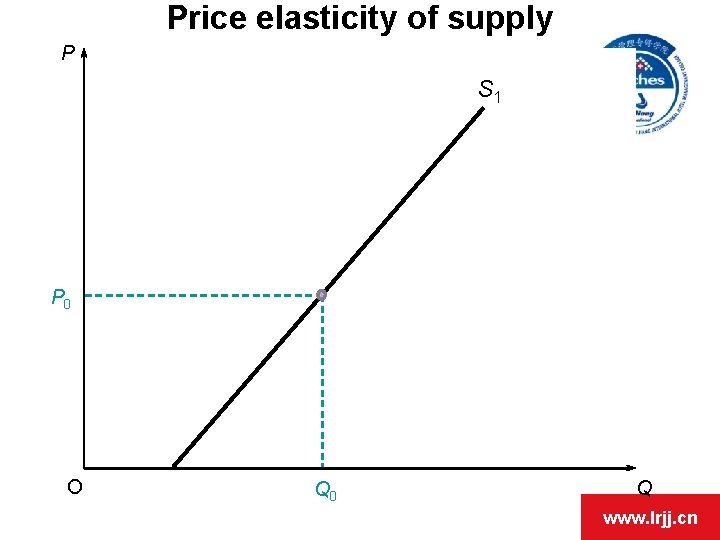
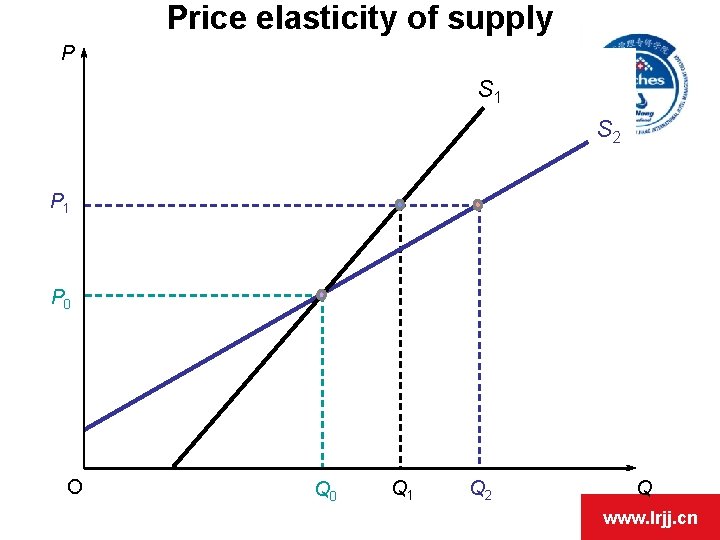
Price Elasticity of Supply (PÎS) • Responsiveness of quantity supplied to a change in price • The percentage change in quantity supplied, resulting from a 1% change in price Pe. S = % QS / % P www. lrjj. cn
Price elasticity of supply P S 1 P 0 O Q 0 Q www. lrjj. cn
Price elasticity of supply P S 1 S 2 P 1 P 0 O Q 0 Q 1 Q 2 Q www. lrjj. cn
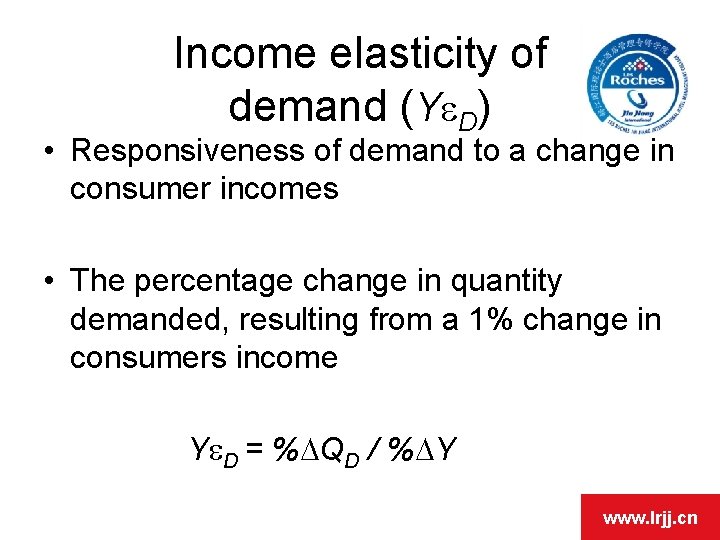
Income elasticity of demand (Ye. D) • Responsiveness of demand to a change in consumer incomes • The percentage change in quantity demanded, resulting from a 1% change in consumers income Ye. D = % QD / % Y www. lrjj. cn
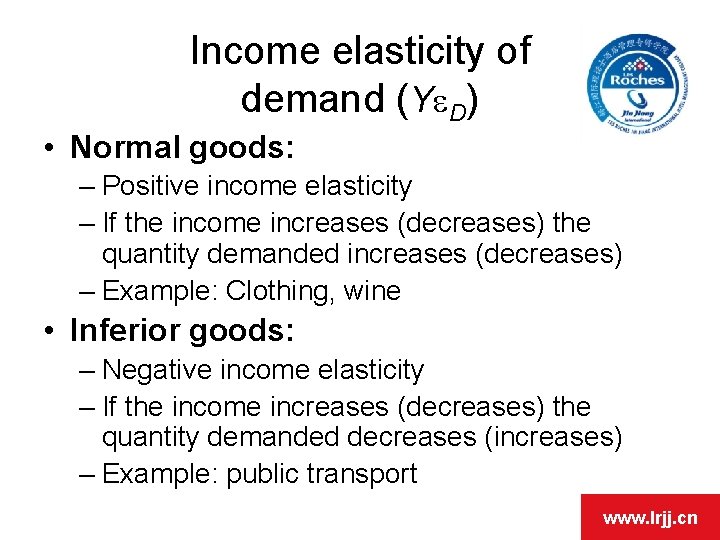
Income elasticity of demand (Ye. D) • Normal goods: – Positive income elasticity – If the income increases (decreases) the quantity demanded increases (decreases) – Example: Clothing, wine • Inferior goods: – Negative income elasticity – If the income increases (decreases) the quantity demanded decreases (increases) – Example: public transport www. lrjj. cn
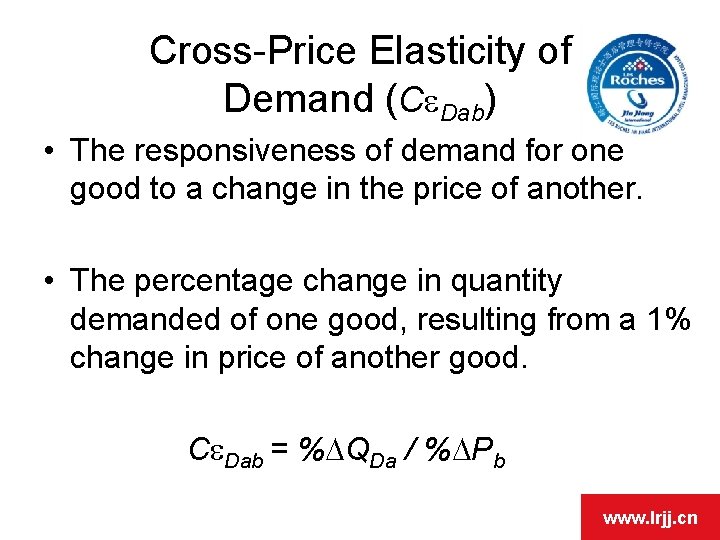
Cross-Price Elasticity of Demand (Ce. Dab) • The responsiveness of demand for one good to a change in the price of another. • The percentage change in quantity demanded of one good, resulting from a 1% change in price of another good. Ce. Dab = % QDa / % Pb www. lrjj. cn
Cross-Price Elasticity of Demand (Ce. Dab) • Substitutes: – Positive cross-price elasticity – If the price of good B increases the demand for good A increases – Example: hamburgers & burritos • Complements: – Negative income elasticity – If the price of good B increases the demand for good A decreases – Example: crude oil & cars www. lrjj. cn
Why are elasticity useful? • Managers – Price elasticity of demand: Pricing strategy – Cross-price elasticity of demand: Defining the company’s market, production plan – Income elasticity: Forecast long-term demand • Government policy – Price elasticity of demand: Decision on tax rate – Cross-price elasticity of demand: Competitive forces in a market (how a change in local prices impact the demand for export and import) www. lrjj. cn