Degrees Measuring Angles We measure the size of

- Slides: 17
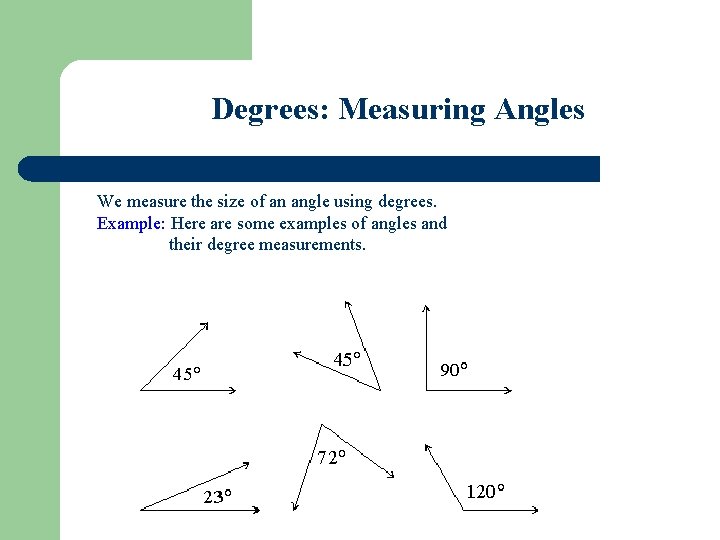
Degrees: Measuring Angles We measure the size of an angle using degrees. Example: Here are some examples of angles and their degree measurements.
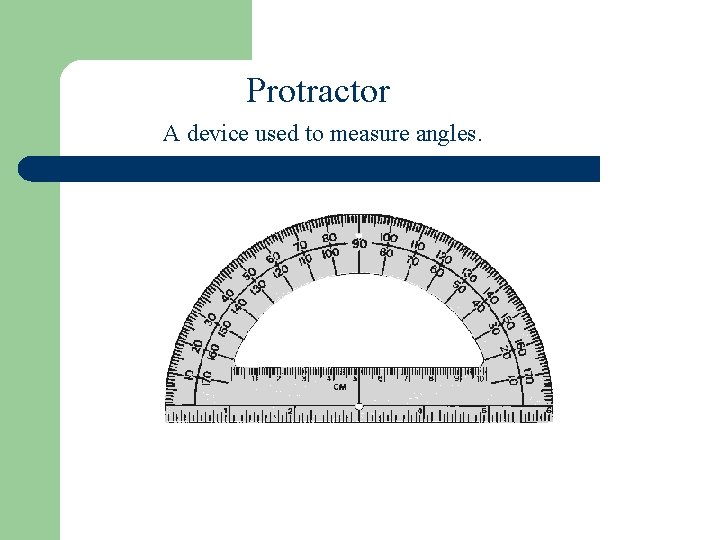
Protractor A device used to measure angles.
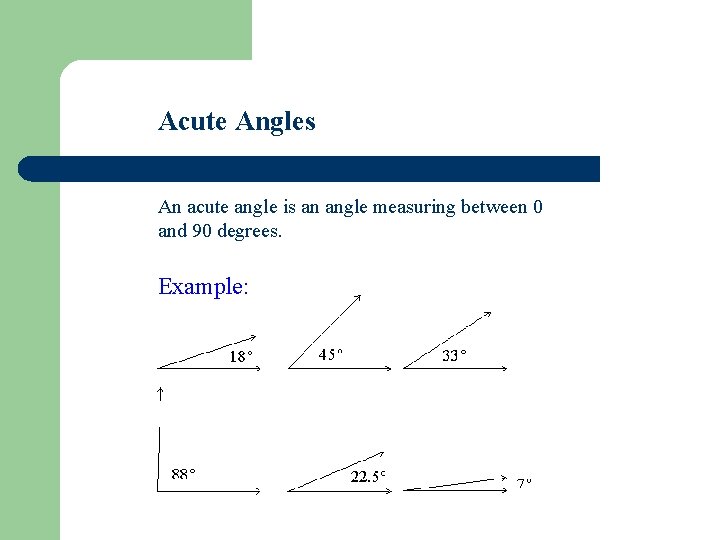
Acute Angles An acute angle is an angle measuring between 0 and 90 degrees. Example:
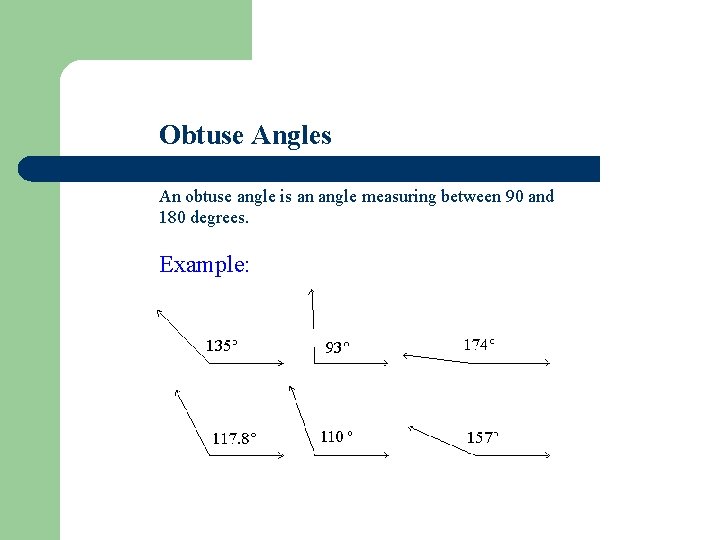
Obtuse Angles An obtuse angle is an angle measuring between 90 and 180 degrees. Example:
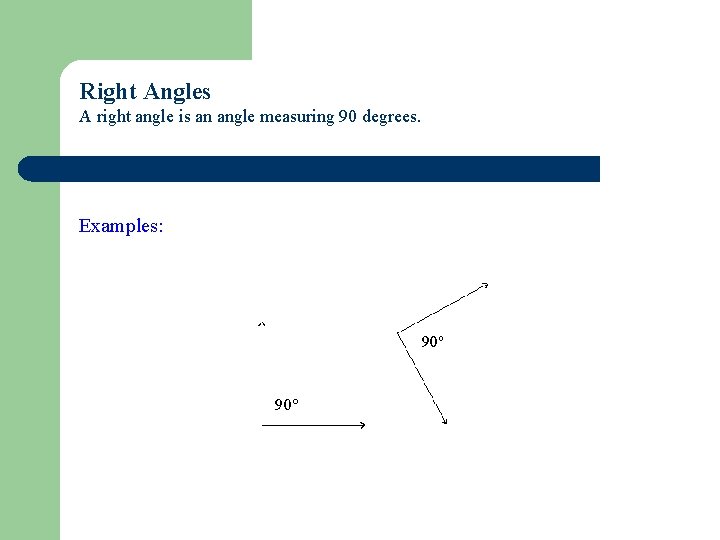
Right Angles A right angle is an angle measuring 90 degrees. Examples:
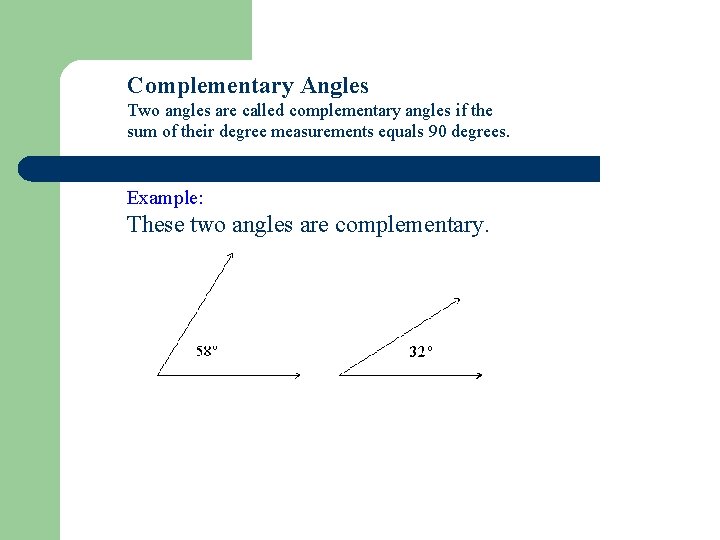
Complementary Angles Two angles are called complementary angles if the sum of their degree measurements equals 90 degrees. Example: These two angles are complementary.
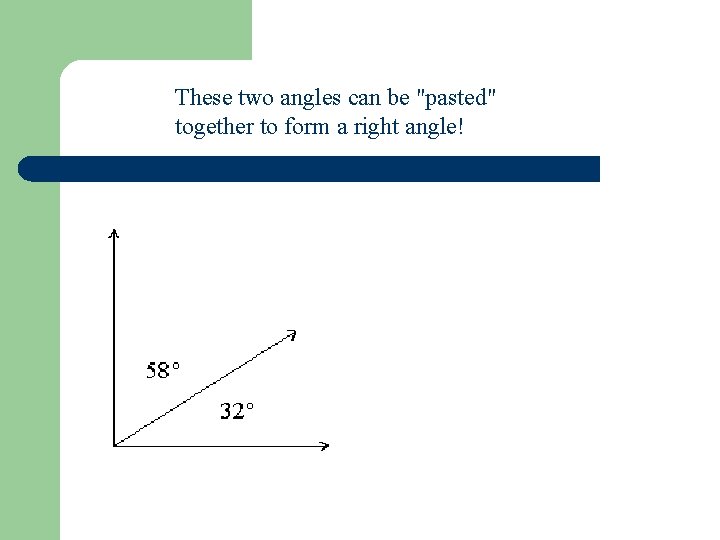
These two angles can be "pasted" together to form a right angle!
Supplementary Angles Two angles are called supplementary angles if the sum of their degree measurements equals 180 degrees. Example: These two angles are supplementary.
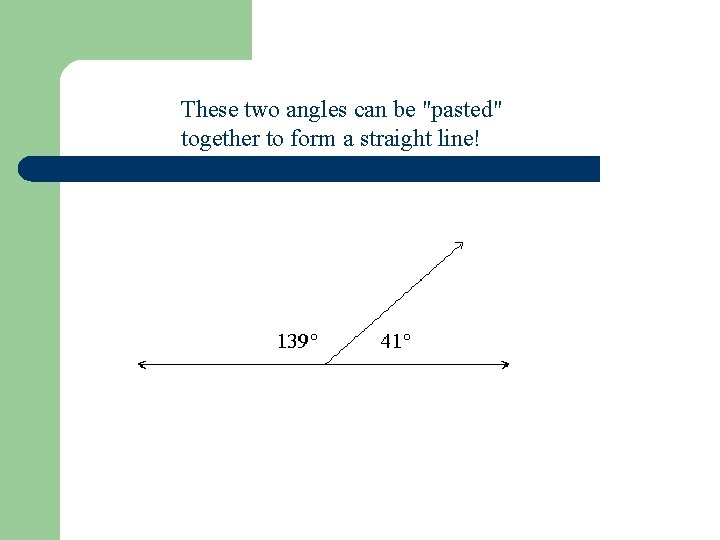
These two angles can be "pasted" together to form a straight line!
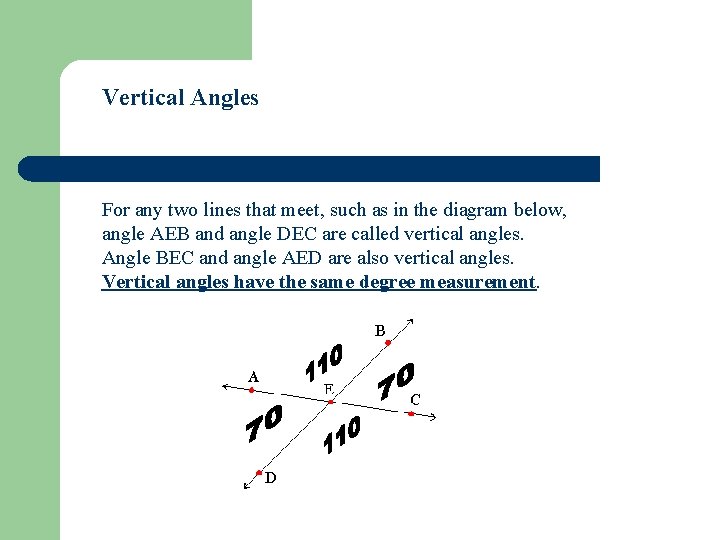
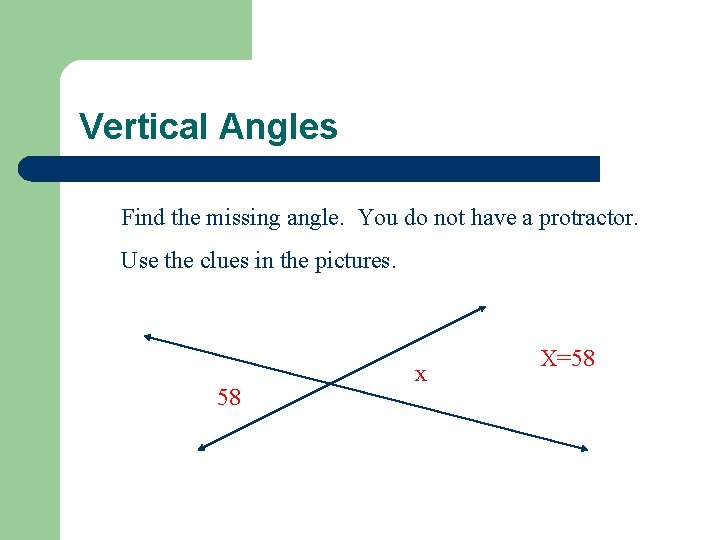
Vertical Angles For any two lines that meet, such as in the diagram below, angle AEB and angle DEC are called vertical angles. Angle BEC and angle AED are also vertical angles. Vertical angles have the same degree measurement.
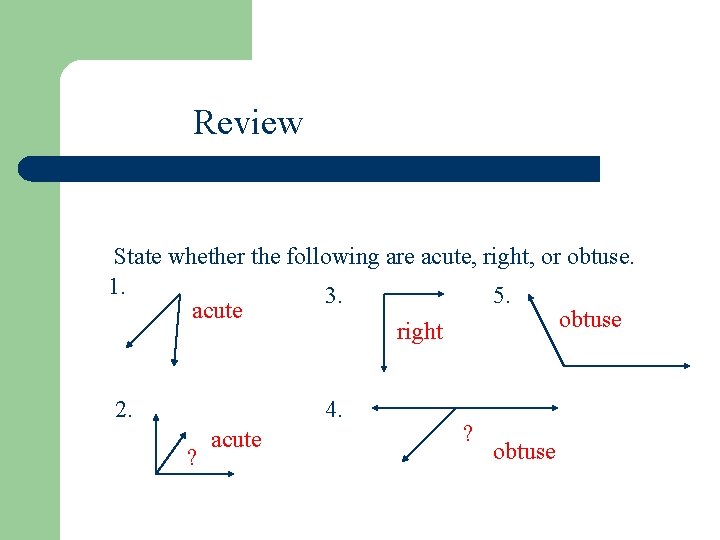
Review State whether the following are acute, right, or obtuse. 1. 3. 5. acute obtuse right 2. 4. ? acute ? obtuse
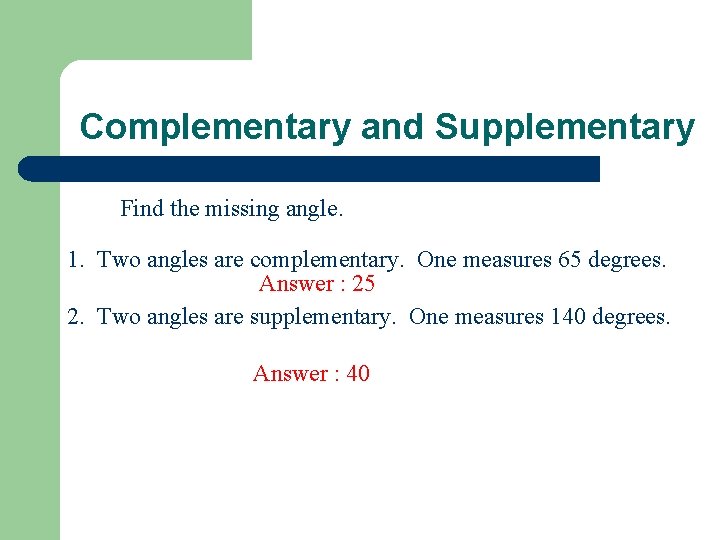
Complementary and Supplementary Find the missing angle. 1. Two angles are complementary. One measures 65 degrees. Answer : 25 2. Two angles are supplementary. One measures 140 degrees. Answer : 40
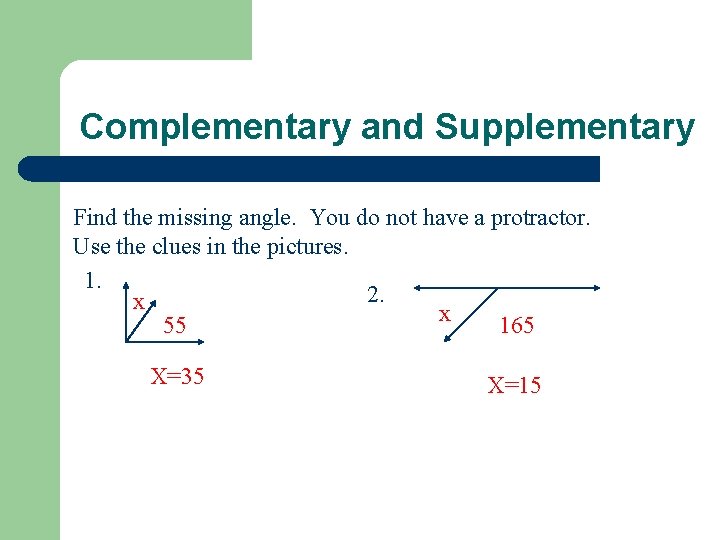
Complementary and Supplementary Find the missing angle. You do not have a protractor. Use the clues in the pictures. 1. 2. x x 55 165 X=35 X=15
Vertical Angles Find the missing angle. You do not have a protractor. Use the clues in the pictures. 58 x X=58
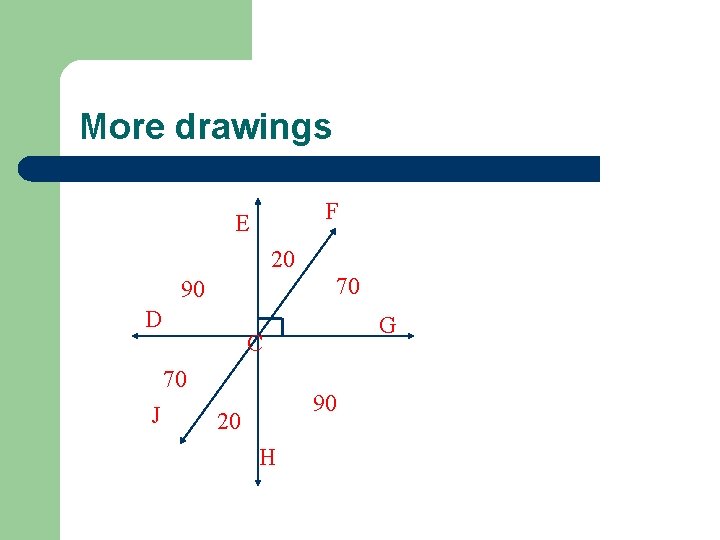
More drawings F E 20 70 90 D C 70 J G 90 20 H
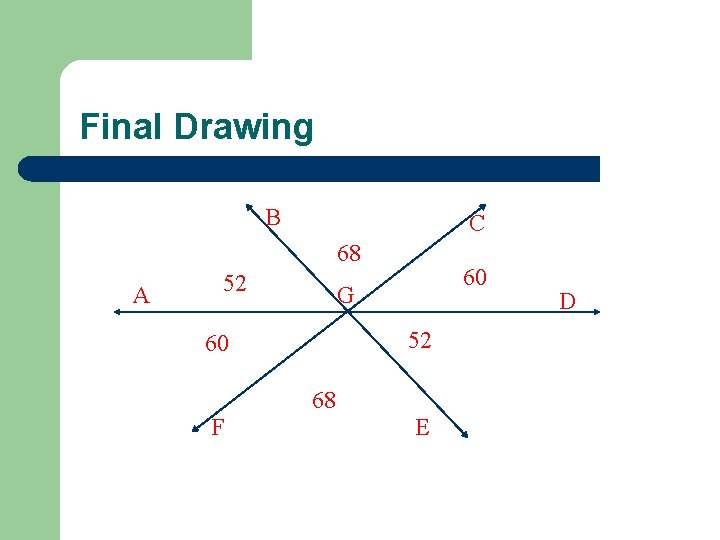
Final Drawing B C 68 A 52 60 G 52 60 68 F E D