
Criminal Law Criminal Trials Hearing Magistrates court Trial
- Slides: 9
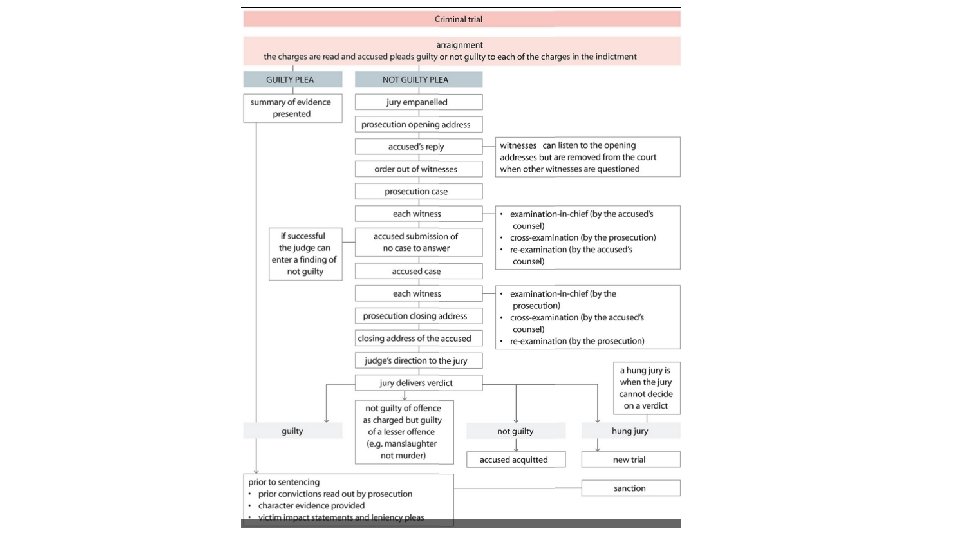
Criminal Law Criminal Trials
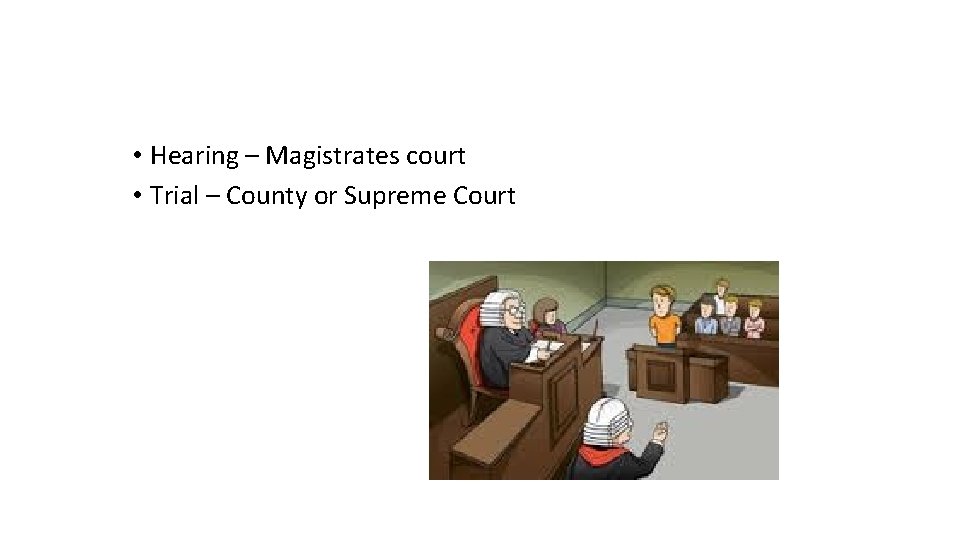
• Hearing – Magistrates court • Trial – County or Supreme Court
Double Jeopardy Rule • No person shall be tried twice for the same offence. • Criminal Proceudre Amendment (Double Jeopardy and Other Matters) Act 2011 created exceptions to this rule: • Allows DPP to apply to Court of Appeal for an order to set aside a previous acquittal and authorise the continuation of the prosecution of the charge • • Fresh and compelling evidence (DNA? ) Accused confesses to the crime Key witnesses found to have given false evidence Trial tainted (juror intimidated or bribed)
Criminal Sanctions • Purposes of criminal sanctions • Punishment • Retribution for society – revenge against the offender • Allows the victim and society to feel avenged • Deterrence • Discourage the offender (specific deterrence) or other people (general deterrence) from committing similar crimes • Rehabilitation • Assist offenders to change attitudes and be treated • Denunciation • Shows the disapproval of the court of the conduct • Protection • Care for the community/society by removing the offender or keeping them busy
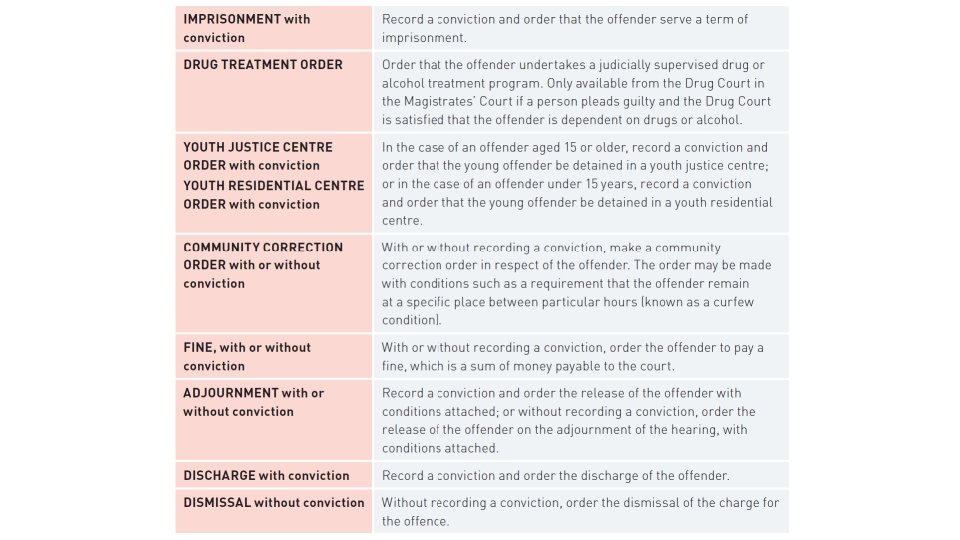
Types of Sanctions • You must know three types of sanctions and their specific purposes • Example: imprisonment • Detained in jail for a period of time, meaning loss of freedom and liberty • If term of imprisonment is two years or more, there must be also be imposed a minimum, non-parole period • Can be concurrent or cumulative • Aims of imprisonment • • • Punishment – loss of liberty and freedom Protection – removal from society Rehabilitation – various programs offered Denunciation – shows disapproval General and specific deterrence
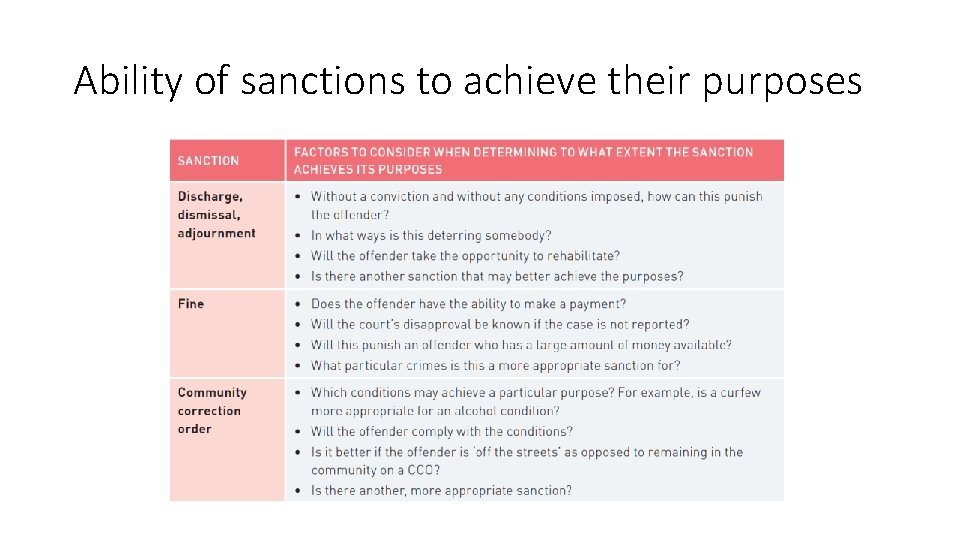
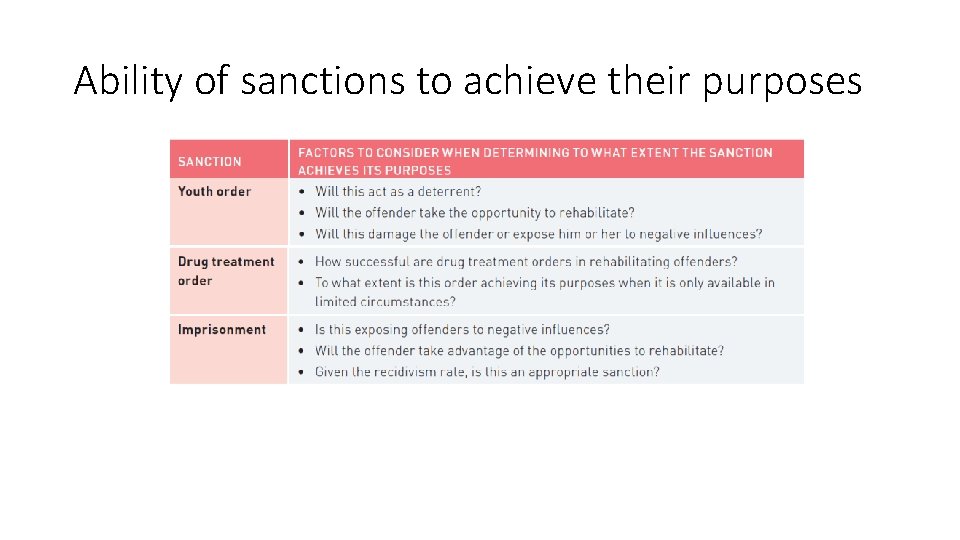
Ability of sanctions to achieve their purposes
Ability of sanctions to achieve their purposes