Comparative Performance Evaluation of CacheCoherent NUMA and COMA
- Slides: 16
Comparative Performance Evaluation of Cache-Coherent NUMA and COMA Architectures Per Stenstrom, Truman Joe and Anoop Gupta Presented by Colleen Lewis
Overview • • Common Features CC-NUMA COMA Cache Misses Performance Expectations Simulation & Results COMA-F
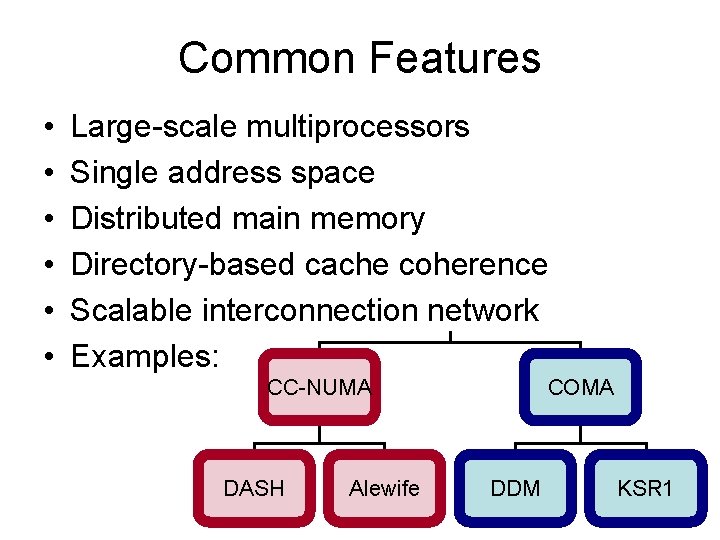
Common Features • • • Large-scale multiprocessors Single address space Distributed main memory Directory-based cache coherence Scalable interconnection network Examples: CC-NUMA DASH Alewife COMA DDM KSR 1
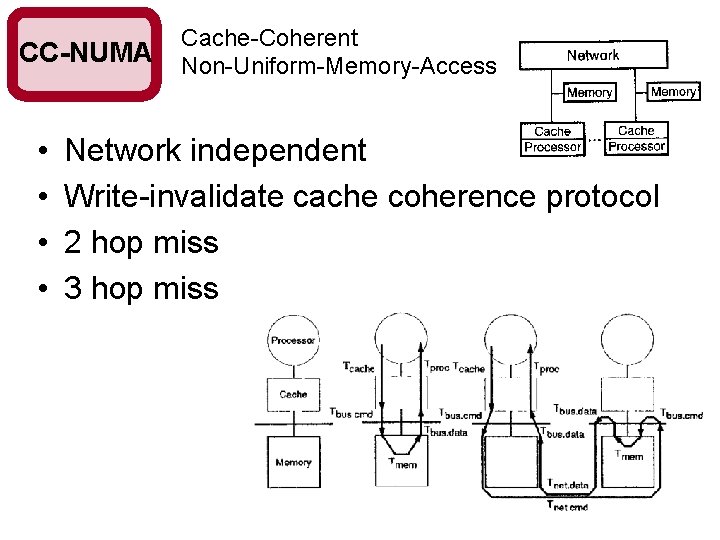
CC-NUMA • • Cache-Coherent Non-Uniform-Memory-Access Machines Network independent Write-invalidate cache coherence protocol 2 hop miss 3 hop miss
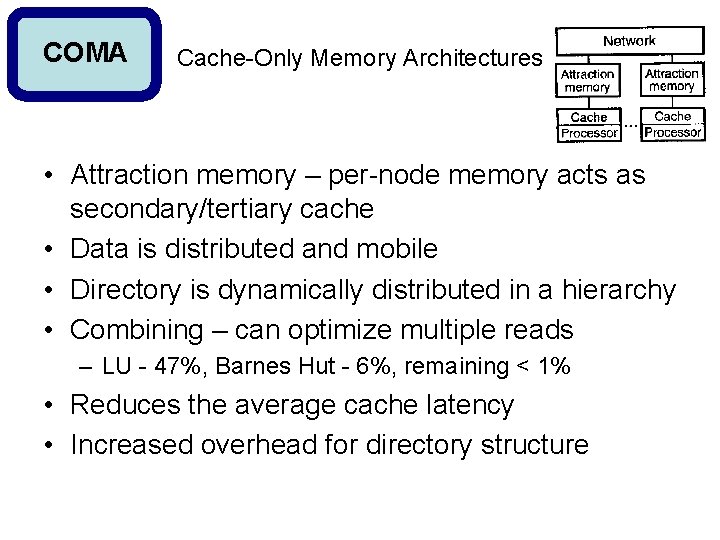
COMA Cache-Only Memory Architectures • Attraction memory – per-node memory acts as secondary/tertiary cache • Data is distributed and mobile • Directory is dynamically distributed in a hierarchy • Combining – can optimize multiple reads – LU - 47%, Barnes Hut - 6%, remaining < 1% • Reduces the average cache latency • Increased overhead for directory structure
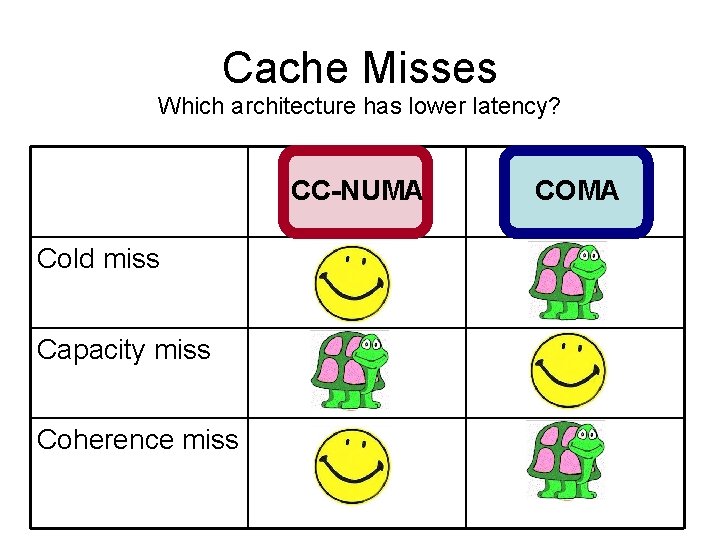
Cache Misses Which architecture has lower latency? CC-NUMA Cold miss Capacity miss Coherence miss COMA
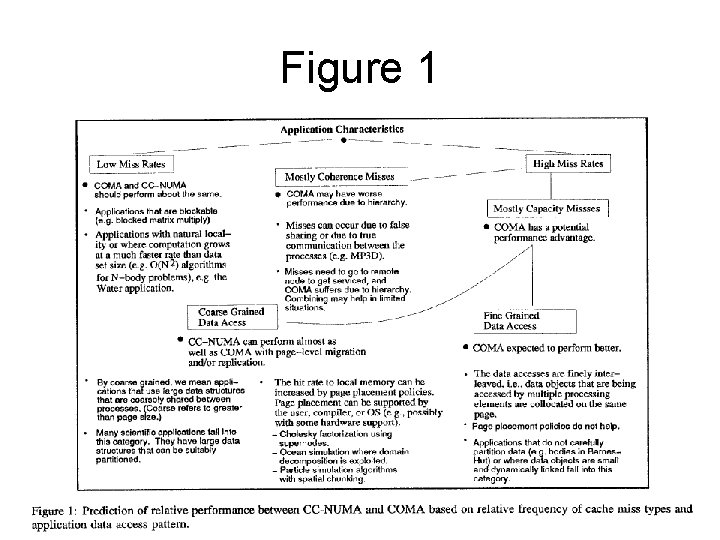
Figure 1
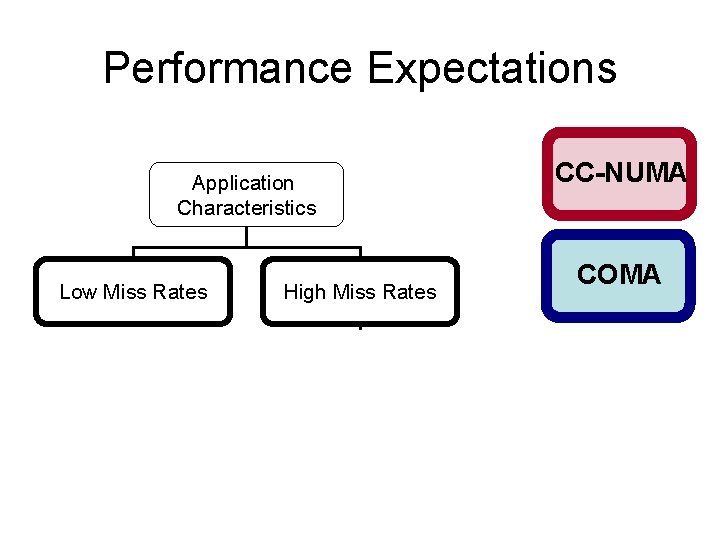
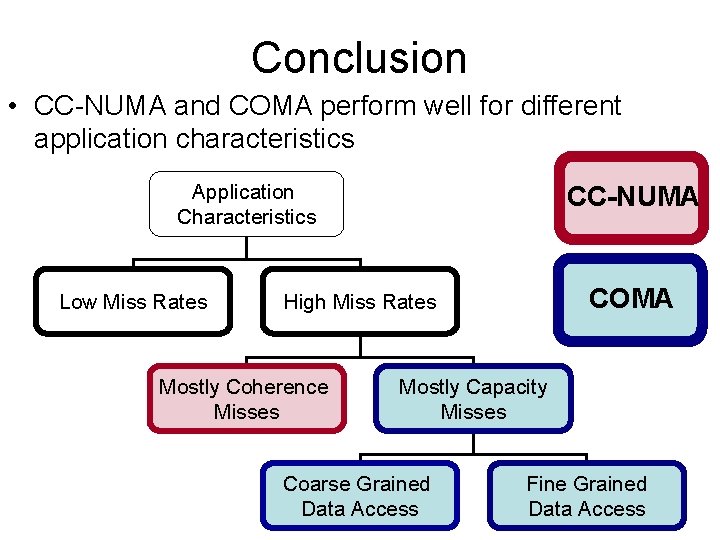
Performance Expectations CC-NUMA Application Characteristics Low Miss Rates COMA High Miss Rates Mostly Coherence Misses Mostly Capacity Misses Coarse Grained Data Access Fine Grained Data Access
Simulation • 16 processors • Cache lines = 16 bytes • Cache size of 4 Kbytes – (Small – to force capacity misses)
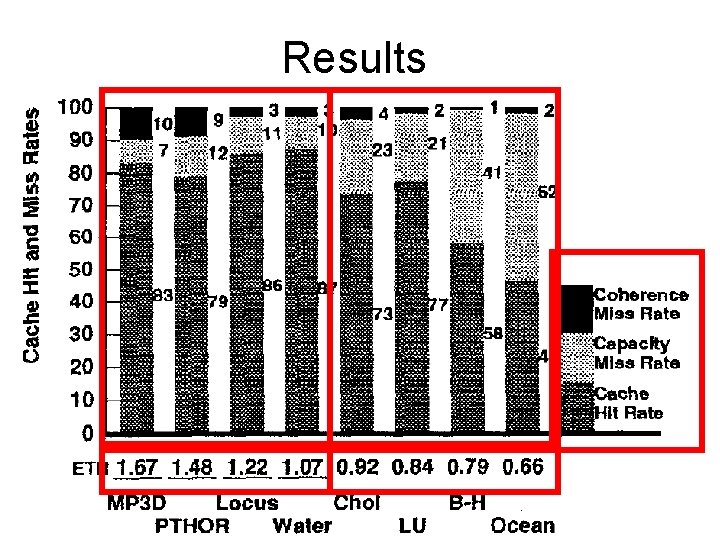
Results
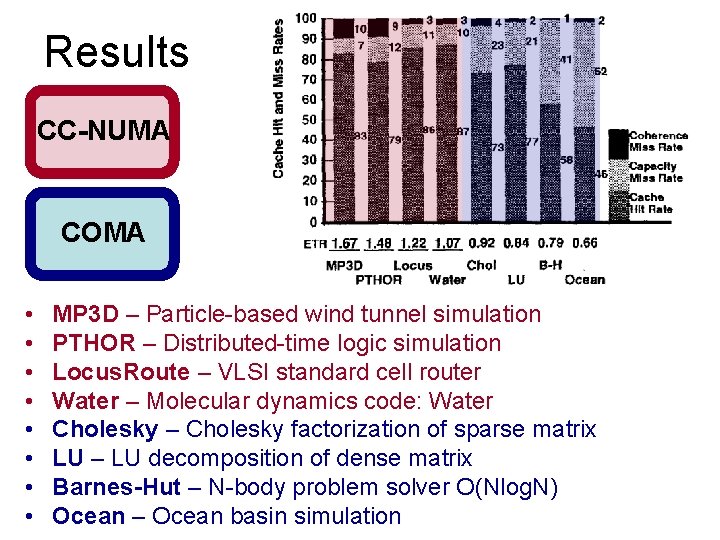
Results CC-NUMA COMA • • MP 3 D – Particle-based wind tunnel simulation PTHOR – Distributed-time logic simulation Locus. Route – VLSI standard cell router Water – Molecular dynamics code: Water Cholesky – Cholesky factorization of sparse matrix LU – LU decomposition of dense matrix Barnes-Hut – N-body problem solver O(Nlog. N) Ocean – Ocean basin simulation
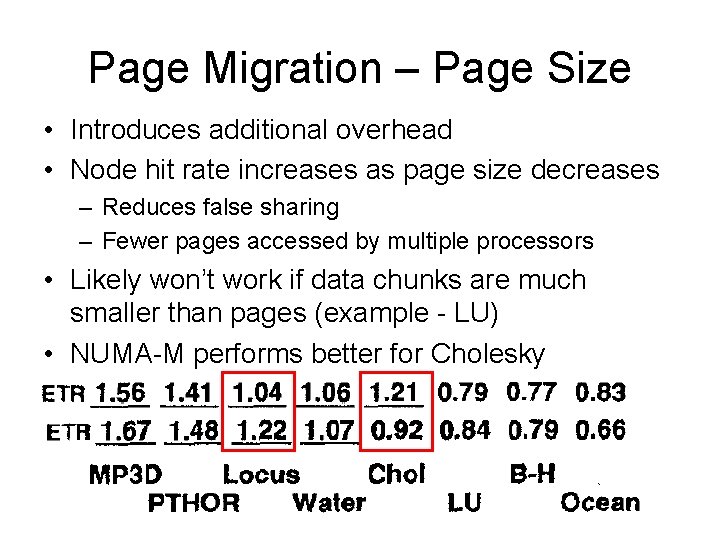
Page Migration – Page Size • Introduces additional overhead • Node hit rate increases as page size decreases – Reduces false sharing – Fewer pages accessed by multiple processors • Likely won’t work if data chunks are much smaller than pages (example - LU) • NUMA-M performs better for Cholesky
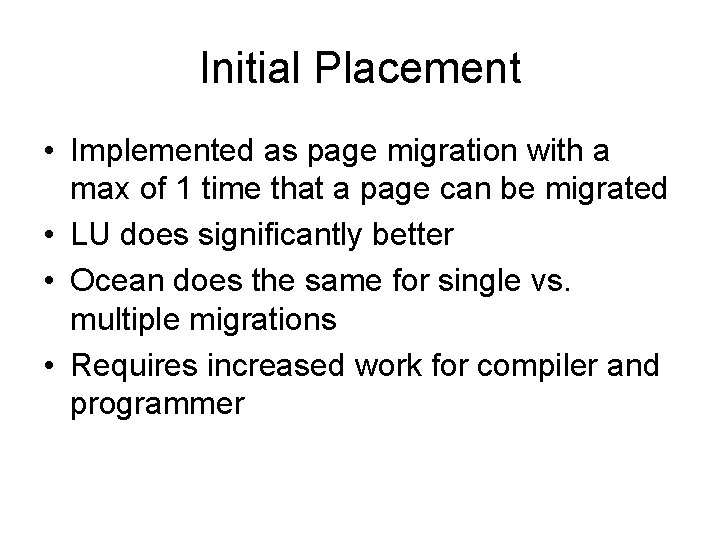
Initial Placement • Implemented as page migration with a max of 1 time that a page can be migrated • LU does significantly better • Ocean does the same for single vs. multiple migrations • Requires increased work for compiler and programmer
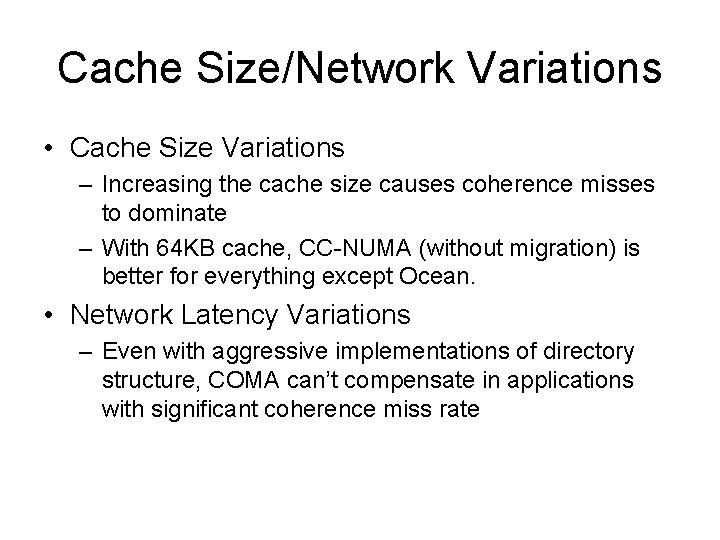
Cache Size/Network Variations • Cache Size Variations – Increasing the cache size causes coherence misses to dominate – With 64 KB cache, CC-NUMA (without migration) is better for everything except Ocean. • Network Latency Variations – Even with aggressive implementations of directory structure, COMA can’t compensate in applications with significant coherence miss rate
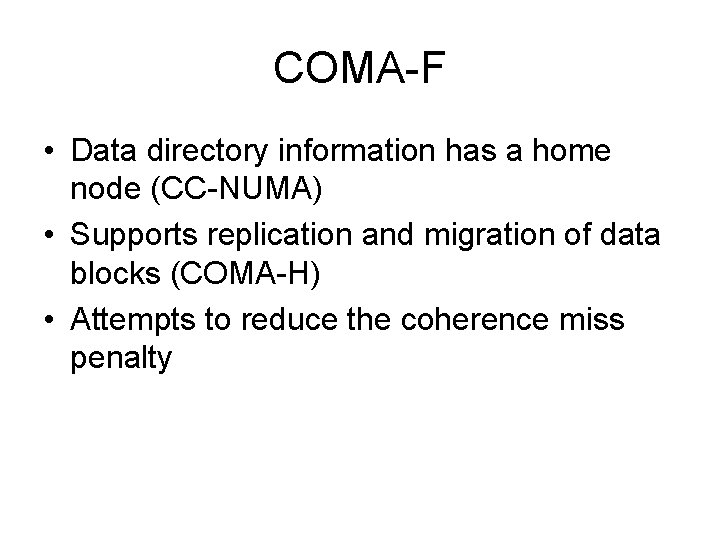
COMA-F • Data directory information has a home node (CC-NUMA) • Supports replication and migration of data blocks (COMA-H) • Attempts to reduce the coherence miss penalty
Conclusion • CC-NUMA and COMA perform well for different application characteristics Application Characteristics Low Miss Rates CC-NUMA COMA High Miss Rates Mostly Coherence Misses Mostly Capacity Misses Coarse Grained Data Access Fine Grained Data Access