Civilization in the Americas Hunters and Farmers in

- Slides: 16
Civilization in the Americas
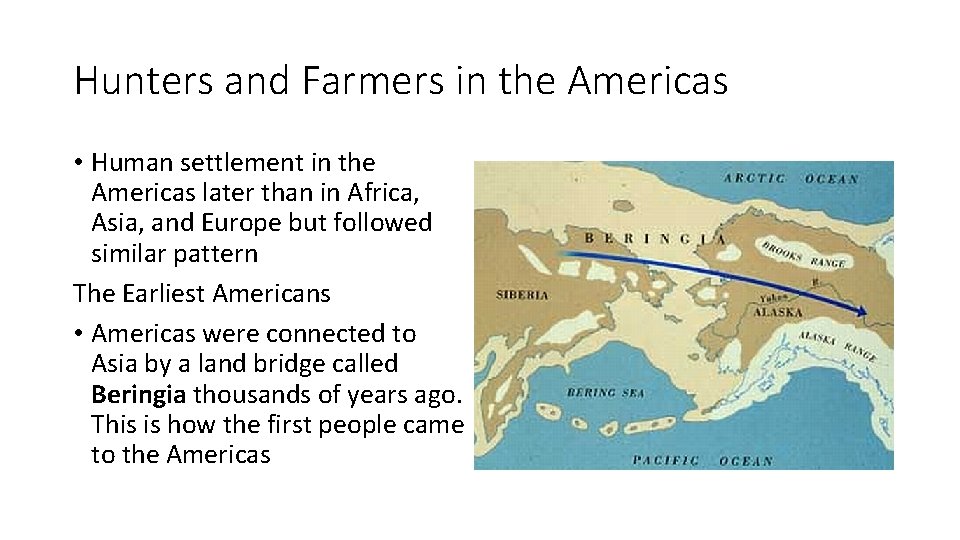
Hunters and Farmers in the Americas • Human settlement in the Americas later than in Africa, Asia, and Europe but followed similar pattern The Earliest Americans • Americas were connected to Asia by a land bridge called Beringia thousands of years ago. This is how the first people came to the Americas
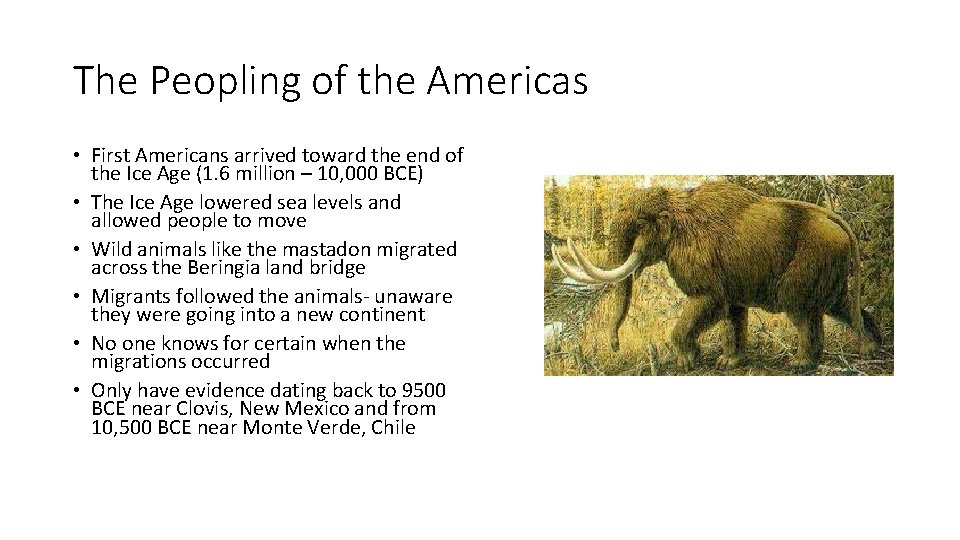
The Peopling of the Americas • First Americans arrived toward the end of the Ice Age (1. 6 million – 10, 000 BCE) • The Ice Age lowered sea levels and allowed people to move • Wild animals like the mastadon migrated across the Beringia land bridge • Migrants followed the animals- unaware they were going into a new continent • No one knows for certain when the migrations occurred • Only have evidence dating back to 9500 BCE near Clovis, New Mexico and from 10, 500 BCE near Monte Verde, Chile
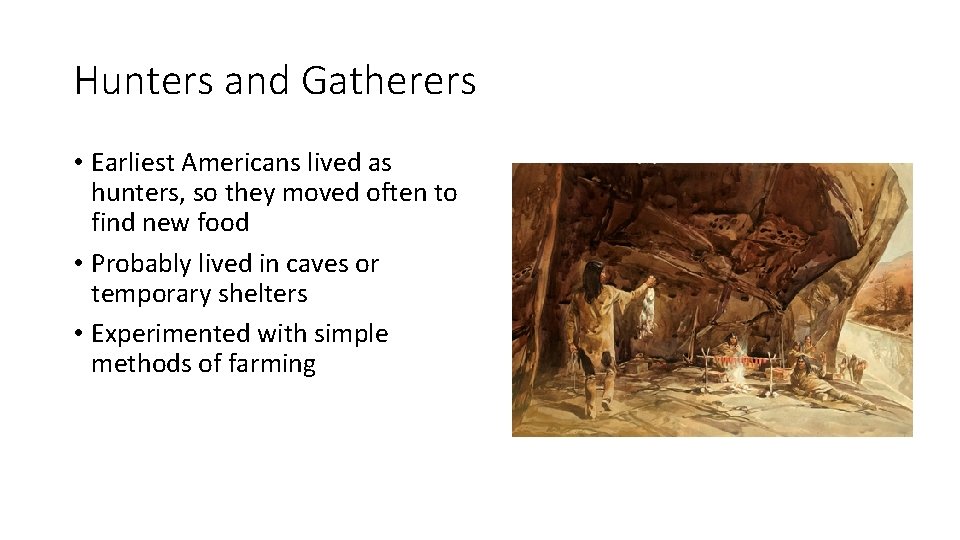
Hunters and Gatherers • Earliest Americans lived as hunters, so they moved often to find new food • Probably lived in caves or temporary shelters • Experimented with simple methods of farming
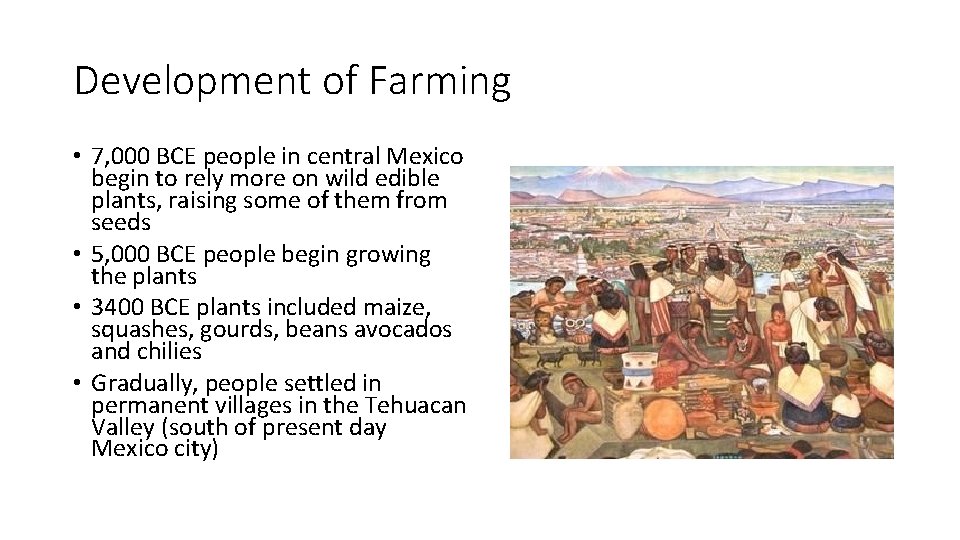
Development of Farming • 7, 000 BCE people in central Mexico begin to rely more on wild edible plants, raising some of them from seeds • 5, 000 BCE people begin growing the plants • 3400 BCE plants included maize, squashes, gourds, beans avocados and chilies • Gradually, people settled in permanent villages in the Tehuacan Valley (south of present day Mexico city)
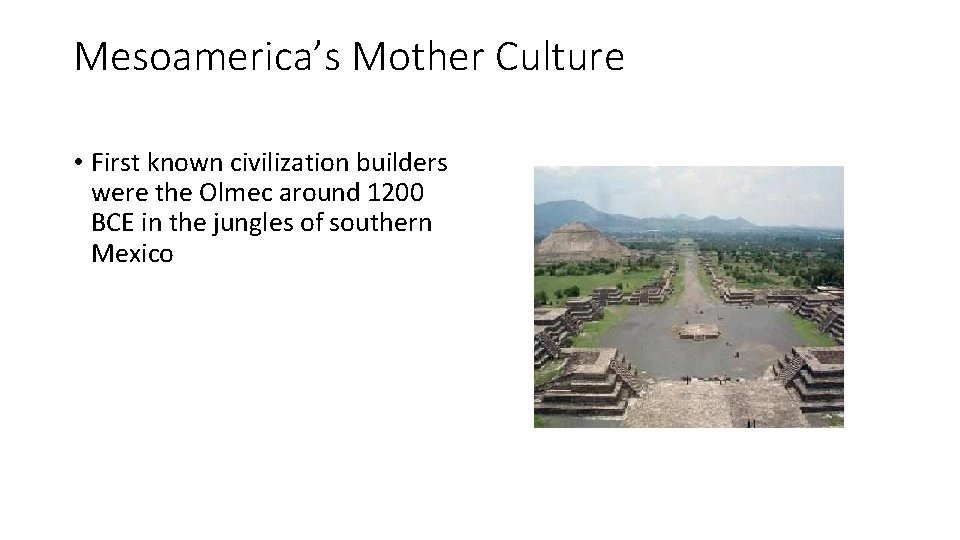
Mesoamerica’s Mother Culture • First known civilization builders were the Olmec around 1200 BCE in the jungles of southern Mexico
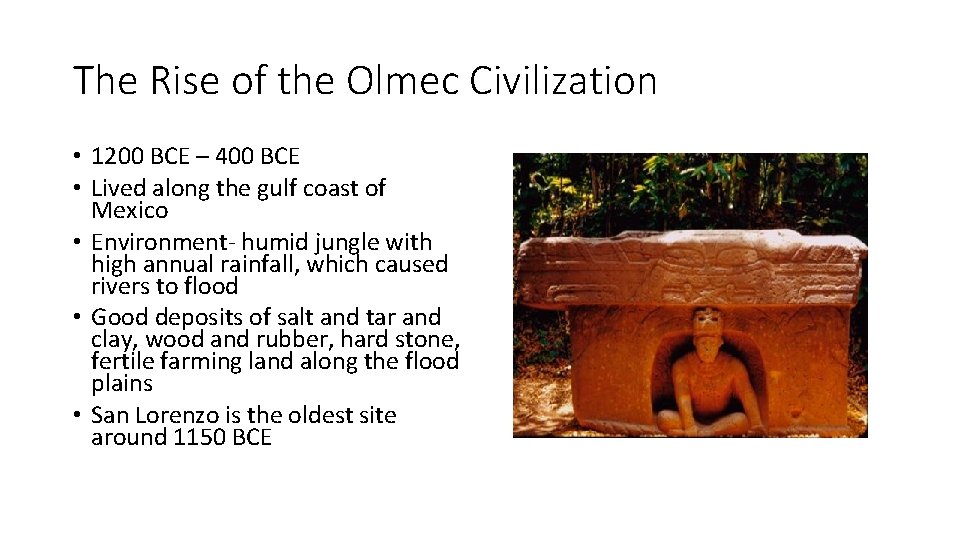
The Rise of the Olmec Civilization • 1200 BCE – 400 BCE • Lived along the gulf coast of Mexico • Environment- humid jungle with high annual rainfall, which caused rivers to flood • Good deposits of salt and tar and clay, wood and rubber, hard stone, fertile farming land along the flood plains • San Lorenzo is the oldest site around 1150 BCE
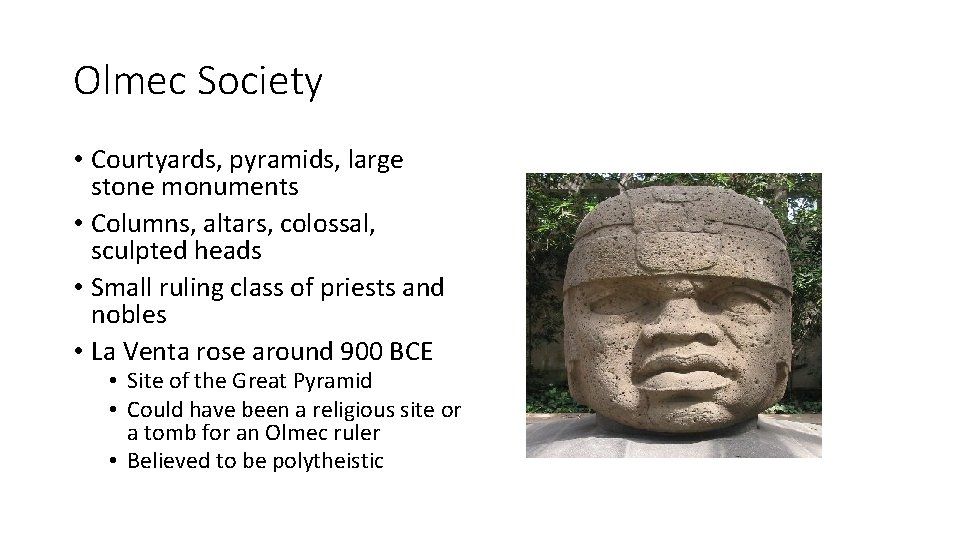
Olmec Society • Courtyards, pyramids, large stone monuments • Columns, altars, colossal, sculpted heads • Small ruling class of priests and nobles • La Venta rose around 900 BCE • Site of the Great Pyramid • Could have been a religious site or a tomb for an Olmec ruler • Believed to be polytheistic
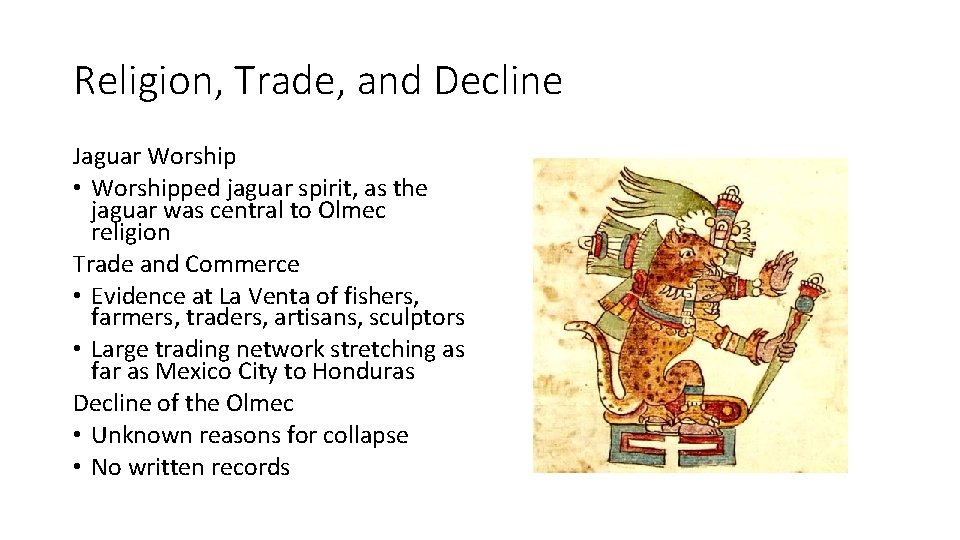
Religion, Trade, and Decline Jaguar Worship • Worshipped jaguar spirit, as the jaguar was central to Olmec religion Trade and Commerce • Evidence at La Venta of fishers, farmers, traders, artisans, sculptors • Large trading network stretching as far as Mexico City to Honduras Decline of the Olmec • Unknown reasons for collapse • No written records
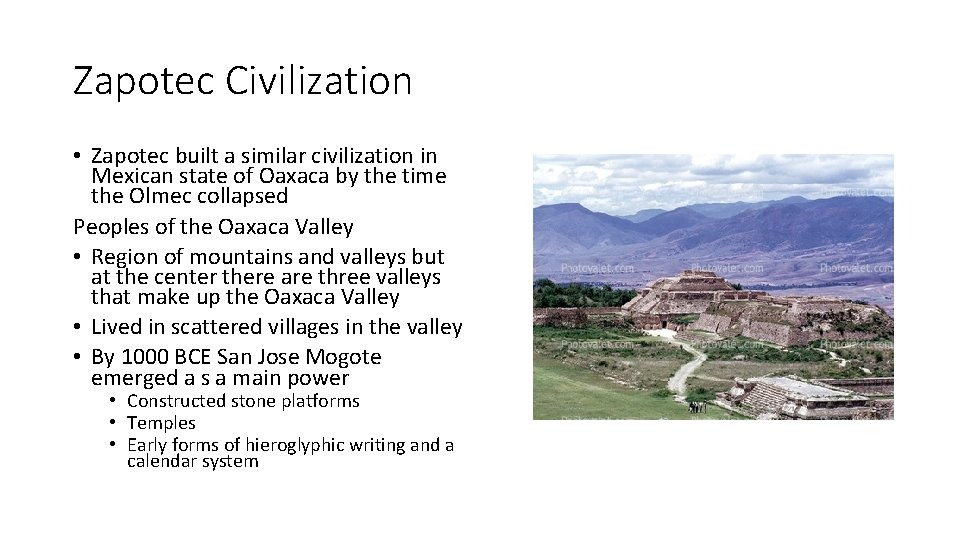
Zapotec Civilization • Zapotec built a similar civilization in Mexican state of Oaxaca by the time the Olmec collapsed Peoples of the Oaxaca Valley • Region of mountains and valleys but at the center there are three valleys that make up the Oaxaca Valley • Lived in scattered villages in the valley • By 1000 BCE San Jose Mogote emerged a s a main power • Constructed stone platforms • Temples • Early forms of hieroglyphic writing and a calendar system
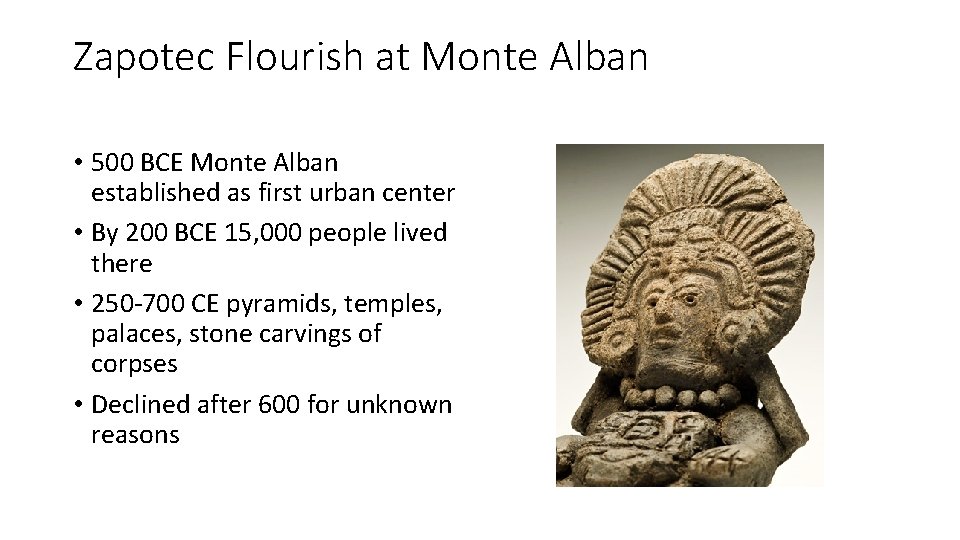
Zapotec Flourish at Monte Alban • 500 BCE Monte Alban established as first urban center • By 200 BCE 15, 000 people lived there • 250 -700 CE pyramids, temples, palaces, stone carvings of corpses • Declined after 600 for unknown reasons
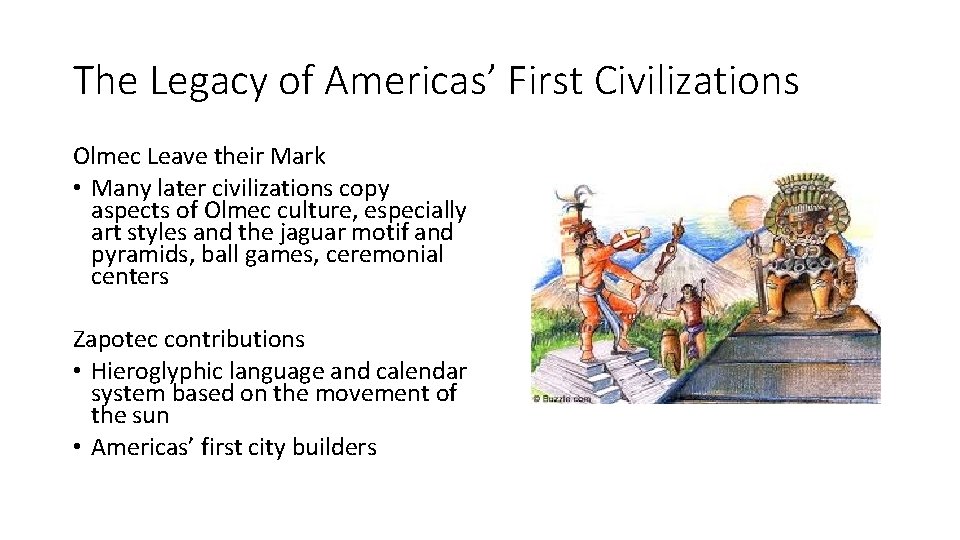
The Legacy of Americas’ First Civilizations Olmec Leave their Mark • Many later civilizations copy aspects of Olmec culture, especially art styles and the jaguar motif and pyramids, ball games, ceremonial centers Zapotec contributions • Hieroglyphic language and calendar system based on the movement of the sun • Americas’ first city builders
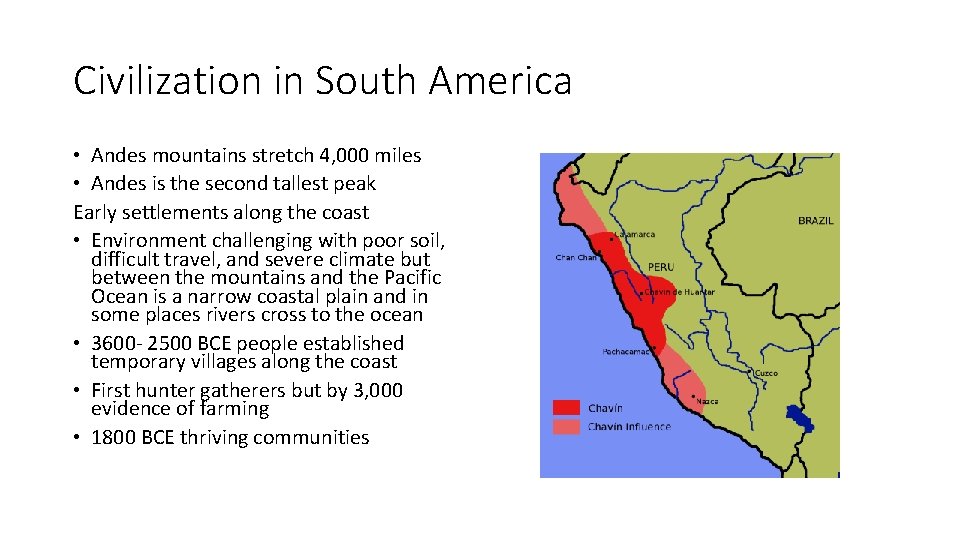
Civilization in South America • Andes mountains stretch 4, 000 miles • Andes is the second tallest peak Early settlements along the coast • Environment challenging with poor soil, difficult travel, and severe climate but between the mountains and the Pacific Ocean is a narrow coastal plain and in some places rivers cross to the ocean • 3600 - 2500 BCE people established temporary villages along the coast • First hunter gatherers but by 3, 000 evidence of farming • 1800 BCE thriving communities
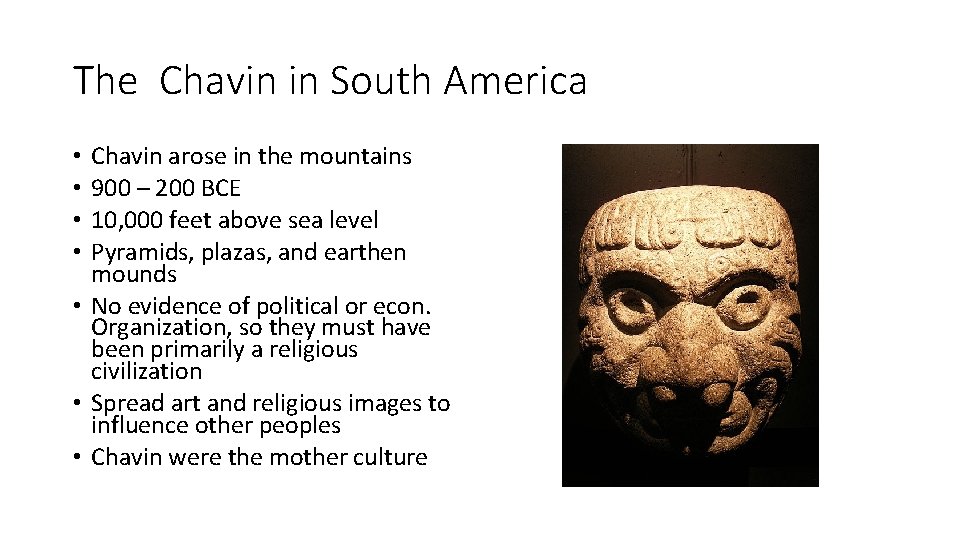
The Chavin in South America Chavin arose in the mountains 900 – 200 BCE 10, 000 feet above sea level Pyramids, plazas, and earthen mounds • No evidence of political or econ. Organization, so they must have been primarily a religious civilization • Spread art and religious images to influence other peoples • Chavin were the mother culture • •
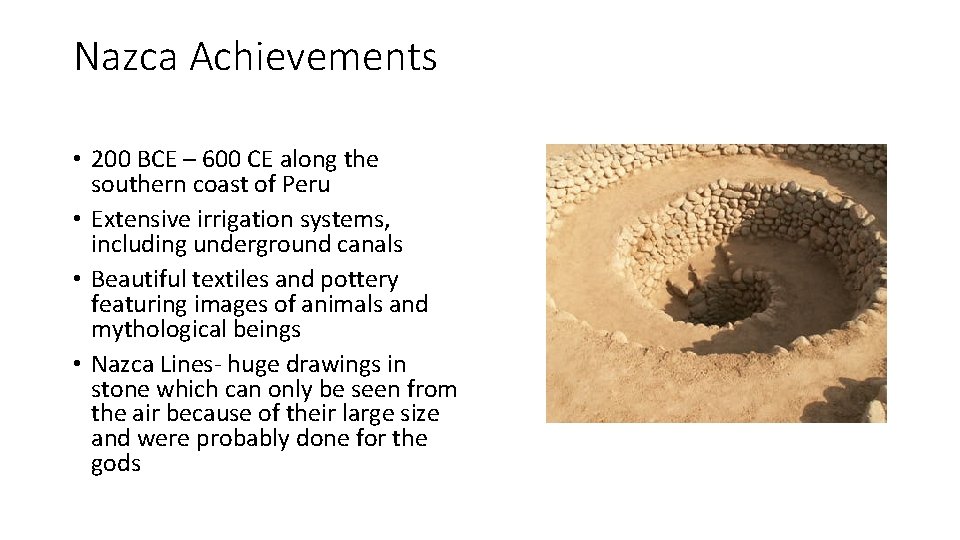
Nazca Achievements • 200 BCE – 600 CE along the southern coast of Peru • Extensive irrigation systems, including underground canals • Beautiful textiles and pottery featuring images of animals and mythological beings • Nazca Lines- huge drawings in stone which can only be seen from the air because of their large size and were probably done for the gods
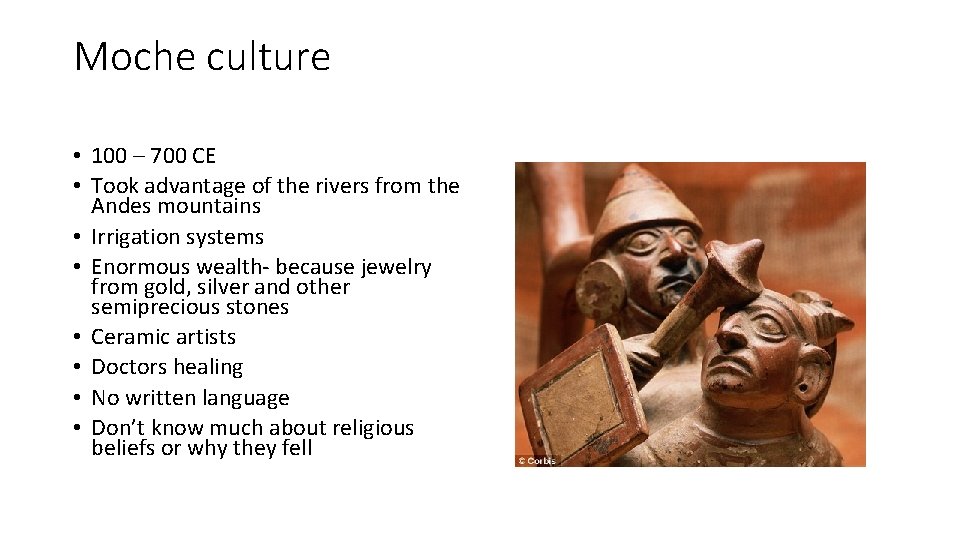
Moche culture • 100 – 700 CE • Took advantage of the rivers from the Andes mountains • Irrigation systems • Enormous wealth- because jewelry from gold, silver and other semiprecious stones • Ceramic artists • Doctors healing • No written language • Don’t know much about religious beliefs or why they fell