CIENCIAS DE LA NATURALEZA 1 DE E S
- Slides: 9
CIENCIAS DE LA NATURALEZA 1º DE E. S. O. PRIMER TRIMESTRE FIRST TERM Chapter 3: Life on Earth http: //www. ancientlifepublishing. com/
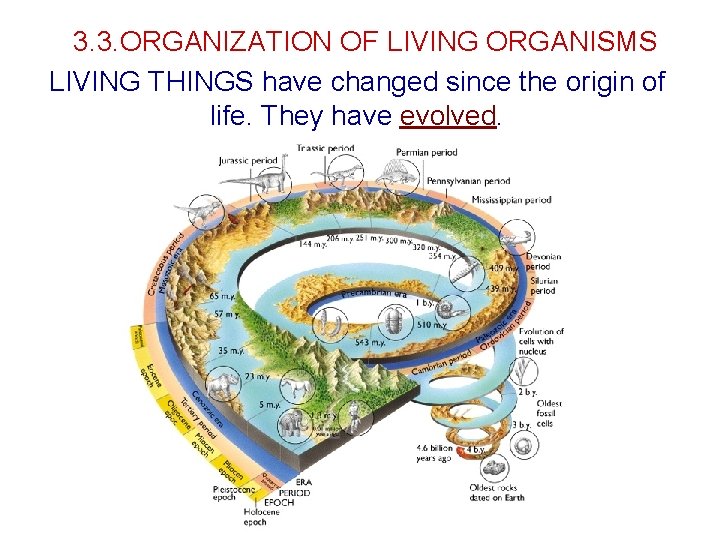
3. 3. ORGANIZATION OF LIVING ORGANISMS LIVING THINGS have changed since the origin of life. They have evolved.
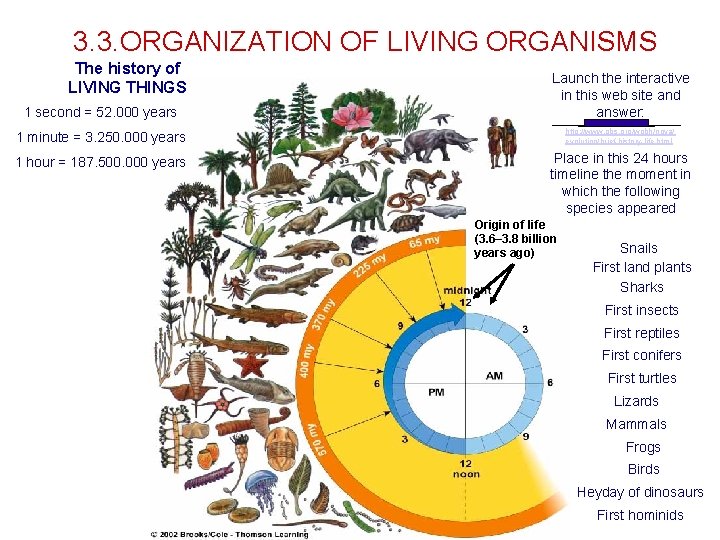
3. 3. ORGANIZATION OF LIVING ORGANISMS The history of LIVING THINGS 1 second = 52. 000 years Launch the interactive in this web site and answer: http: //www. pbs. org/wgbh/nova/ evolution/brief-history-life. html 1 minute = 3. 250. 000 years 1 hour = 187. 500. 000 years Place in this 24 hours timeline the moment in which the following species appeared Origin of life (3. 6– 3. 8 billion years ago) Snails First land plants Sharks First insects First reptiles First conifers First turtles Lizards Mammals Frogs Birds Heyday of dinosaurs First hominids
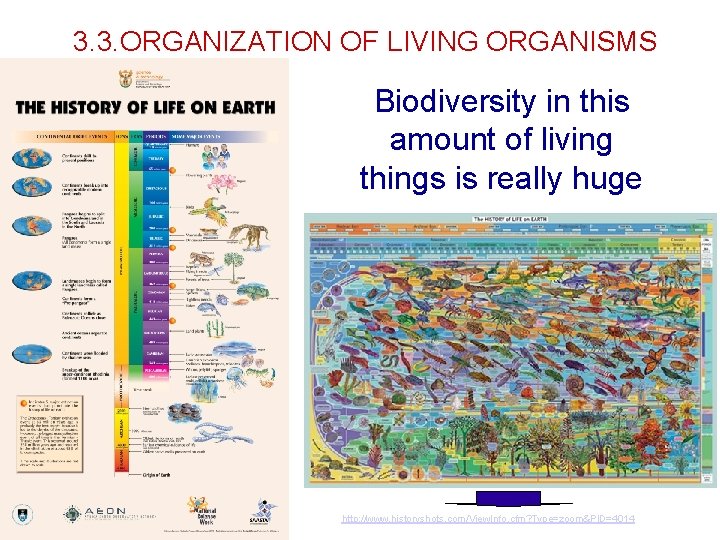
3. 3. ORGANIZATION OF LIVING ORGANISMS Biodiversity in this amount of living things is really huge http: //www. historyshots. com/View. Info. cfm? Type=zoom&PID=4014
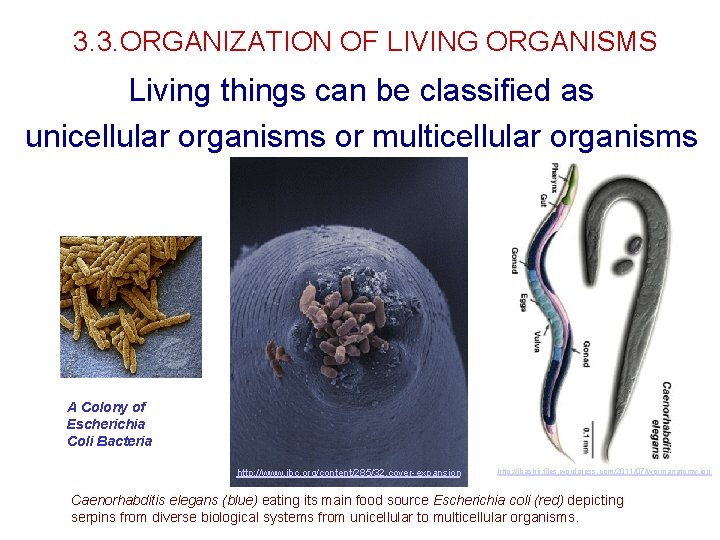
3. 3. ORGANIZATION OF LIVING ORGANISMS Living things can be classified as unicellular organisms or multicellular organisms A Colony of Escherichia Coli Bacteria http: //www. jbc. org/content/285/32. cover-expansion http: //jbashir. files. wordpress. com/2011/07/wormanatomy. jpg Caenorhabditis elegans (blue) eating its main food source Escherichia coli (red) depicting serpins from diverse biological systems from unicellular to multicellular organisms.
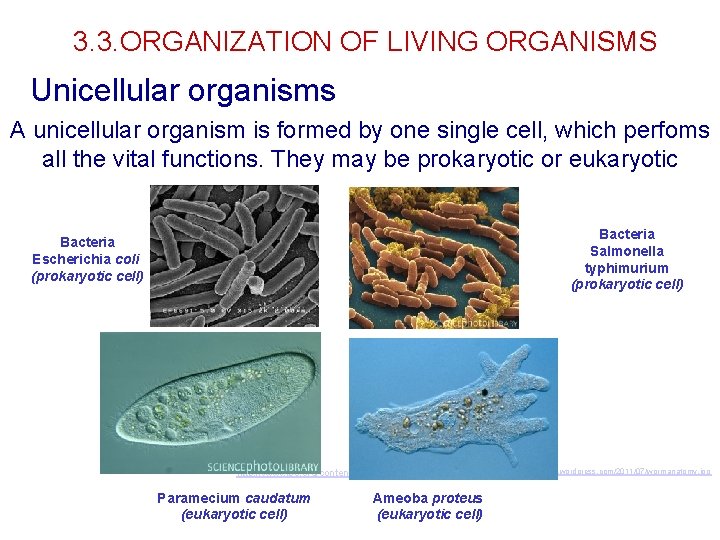
3. 3. ORGANIZATION OF LIVING ORGANISMS Unicellular organisms A unicellular organism is formed by one single cell, which perfoms all the vital functions. They may be prokaryotic or eukaryotic Bacteria Salmonella typhimurium (prokaryotic cell) Bacteria Escherichia coli (prokaryotic cell) http: //www. jbc. org/content/285/32. cover-expansion Paramecium caudatum (eukaryotic cell) Ameoba proteus (eukaryotic cell) http: //jbashir. files. wordpress. com/2011/07/wormanatomy. jpg
3. 3. ORGANIZATION OF LIVING ORGANISMS Unicellular organisms A unicellular organism is formed by one single cell, which perfoms all the vital functions. They may be prokaryotic or eukaryotic Nutrition http: //www. youtube. com/watch? v=a. WItglv. Ti. Lc Interaction Reproduction http: //www. youtube. com/watch? v=V 1644 o. Lsfas&feature=related http: //www. youtube. com/watch? v=Y GZP 0 ijukt 8&feature=related http: //www. youtube. com/watch? v=a 4 a. ZE 5 FQ 284&feature=related http: //www. youtube. com/ watch? v=DY 9 DNWcqx. I 4 &feature=related
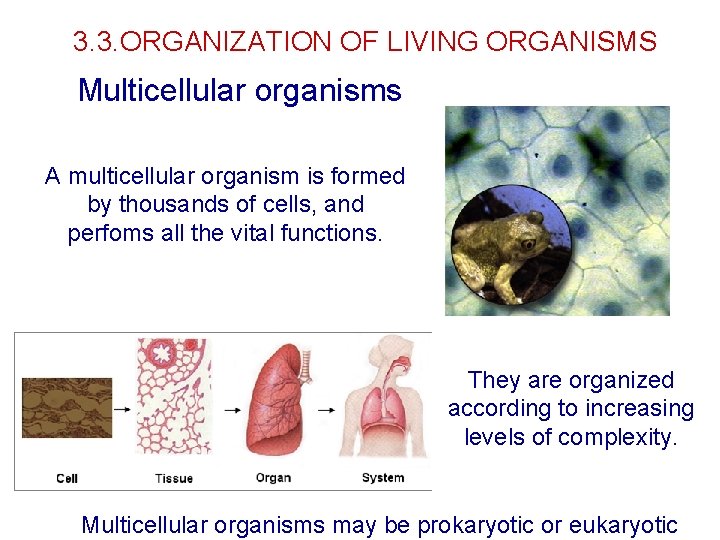
3. 3. ORGANIZATION OF LIVING ORGANISMS Multicellular organisms A multicellular organism is formed by thousands of cells, and perfoms all the vital functions. They are organized according to increasing levels of complexity. Multicellular organisms may be prokaryotic or eukaryotic
Unicell ular organis ms c hs ar y ot ic ro p ic t o ok ter ot Pr e. s volv ph ING S e He TH tro to Au LIV ING el ls 3. 3. ORGANIZATION OF LIVING ORGANISMS y r a E uk ls l e c r a ul l l e ms c i lt nis u M rga o