Choosing the Right Word Module Fifteen Mc GrawHillIrwin
- Slides: 14
Choosing the Right Word Module Fifteen Mc. Graw-Hill/Irwin Copyright © 2014 by The Mc. Graw-Hill Companies, Inc. All rights reserved.
Learning Objectives LO 15 -1 Recognize value in using the right words. LO 15 -2 Apply strategies for critical thinking in reading, writing, and beyond. LO 15 -3 Explain principles for word definition. LO 15 -4 Distinguish acceptable jargon from other types. LO 15 -5 Define words with similar sounds but different meanings. 15 -2
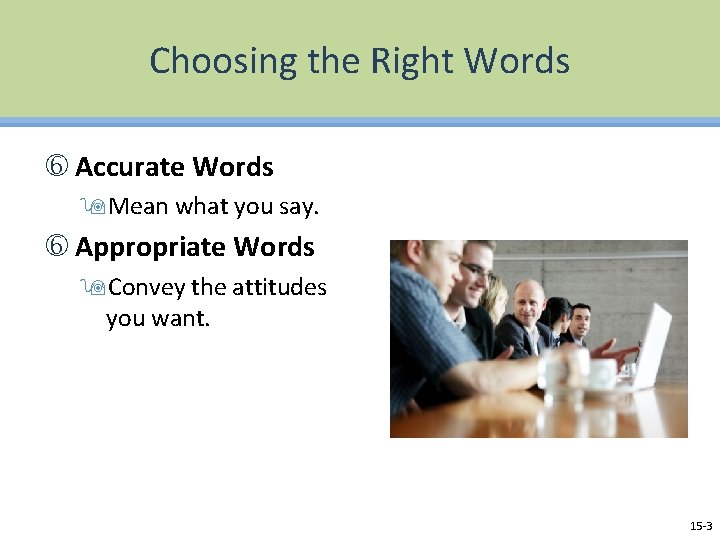
Choosing the Right Words Accurate Words 9 Mean what you say. Appropriate Words 9 Convey the attitudes you want. 15 -3
Choosing the Right Words Familiar Words 9 Are easy to read and understand. Technical Jargon 9 Should only be used when essential. 15 -4
Does using the right word really matter? Denotation 9 A word’s literal or dictionary meaning. 9 Pound denotes weight, an animal shelter, a unit of money, or to hit. 15 -5
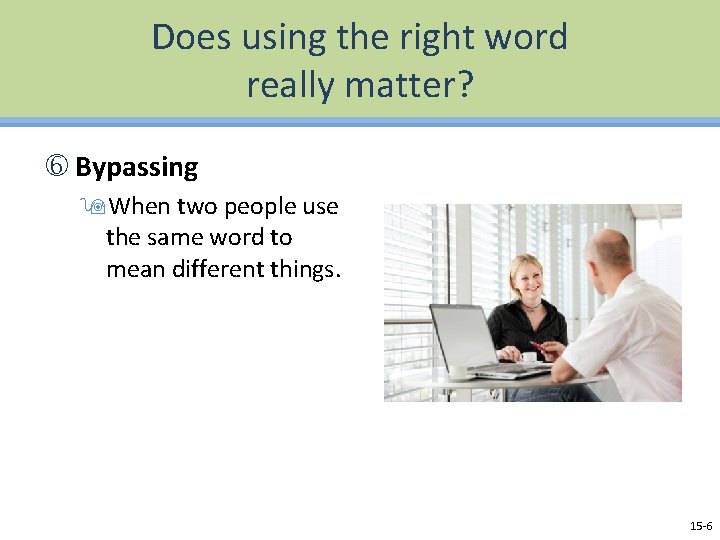
Does using the right word really matter? Bypassing 9 When two people use the same word to mean different things. 15 -6
Does using the right word really matter? Risk may be an efficiency issue at Amoco, but the Environmental Protection Agency may use risk to mean political peril or a health risk. Use accurate words to reduce bypassing or, where appropriate, a definition. 15 -7
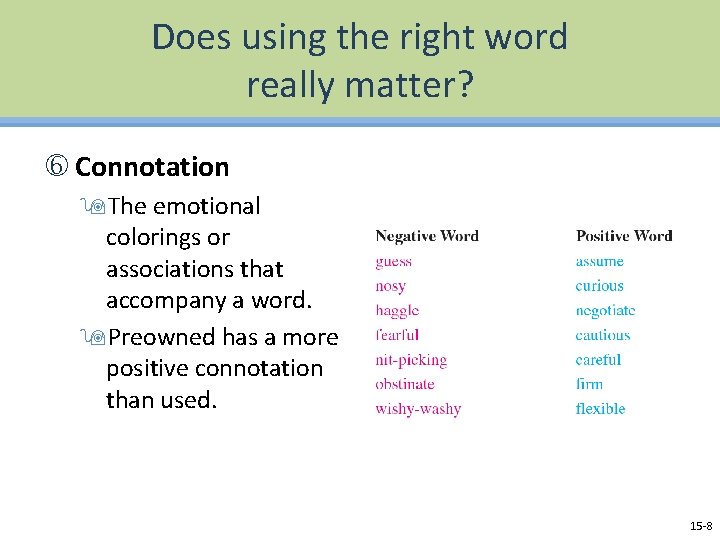
Does using the right word really matter? Connotation 9 The emotional colorings or associations that accompany a word. 9 Preowned has a more positive connotation than used. 15 -8
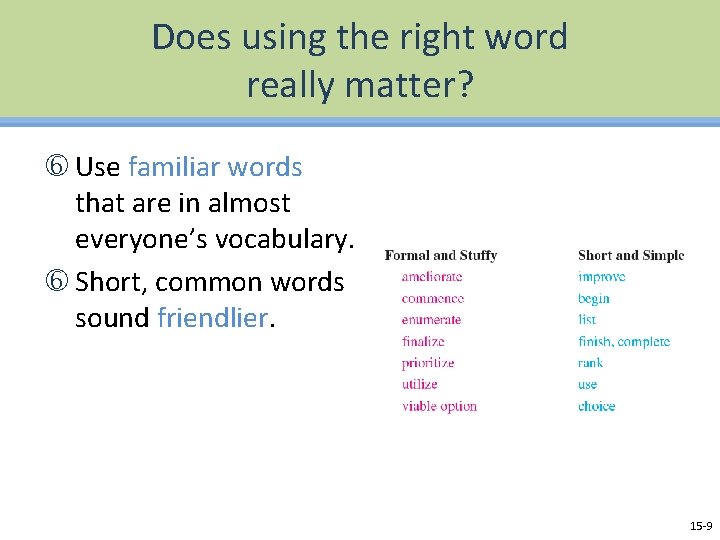
Does using the right word really matter? Use familiar words that are in almost everyone’s vocabulary. Short, common words sound friendlier. 15 -9
Does using the right word really matter? Four exceptions 1. Use a long word if it is the only word that expresses your meaning exactly 2. Use a long word or phrase if it is more familiar than a short word 3. Use a long word if its connotations are more appropriate 4. Use a long word if the discourse community prefers it. 15 -10
Thinking Critically In its most basic sense, critical thinking means using precise words and asking questions about what you read and hear. In its most advanced sense, critical thinking means asking about and challenging fundamental assumptions. 15 -11
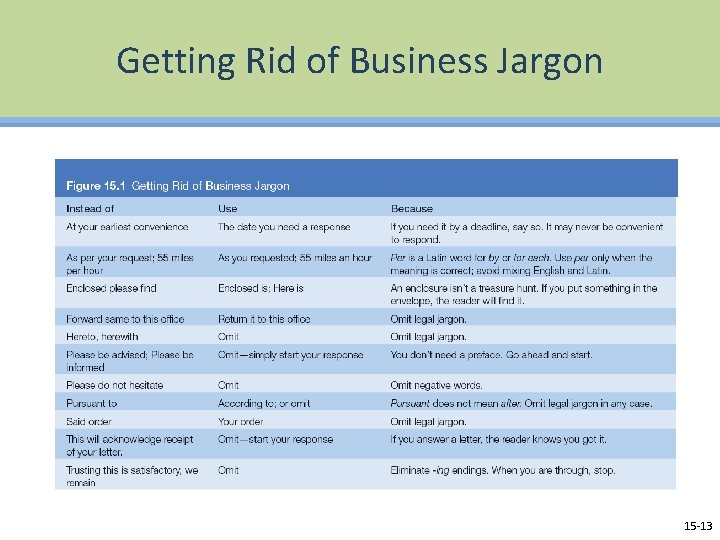
Is it OK to use jargon? The first kind of jargon is the specialized terminology of a technical field The second kind of jargon is business jargon 9 sometimes called businessese 9 as per your request, enclosed please find, please do not hesitate. 15 -12
Getting Rid of Business Jargon 15 -13
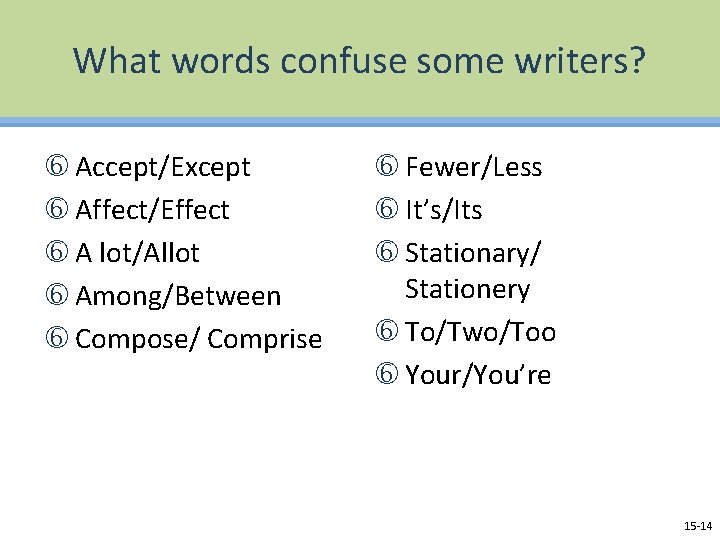
What words confuse some writers? Accept/Except Affect/Effect A lot/Allot Among/Between Compose/ Comprise Fewer/Less It’s/Its Stationary/ Stationery To/Two/Too Your/You’re 15 -14