Characterization in Literature Humorous Angry Compassionate Energetic Lazy

- Slides: 15
Characterization in Literature Humorous Angry Compassionate Energetic Lazy Vengeful Sad Happy
What is Characterization? • Characterization - the methods by which a writer creates people in a story so that they seem to actually exist. These methods bring characters to life and thus give the story depth and texture.
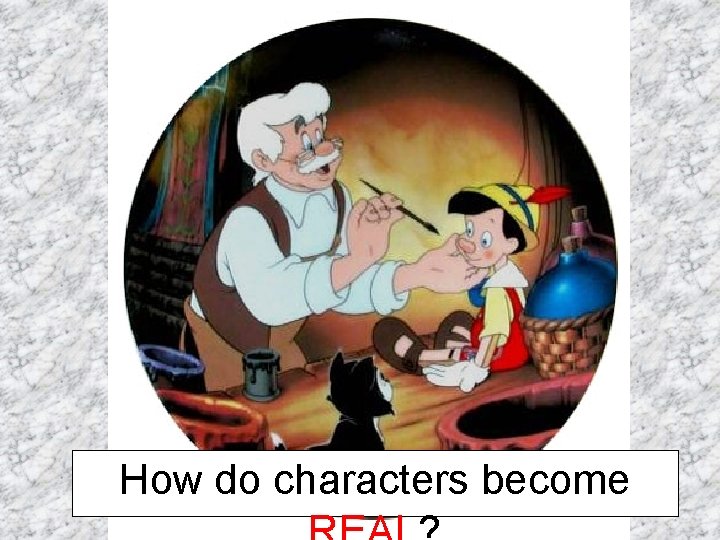
How do characters become
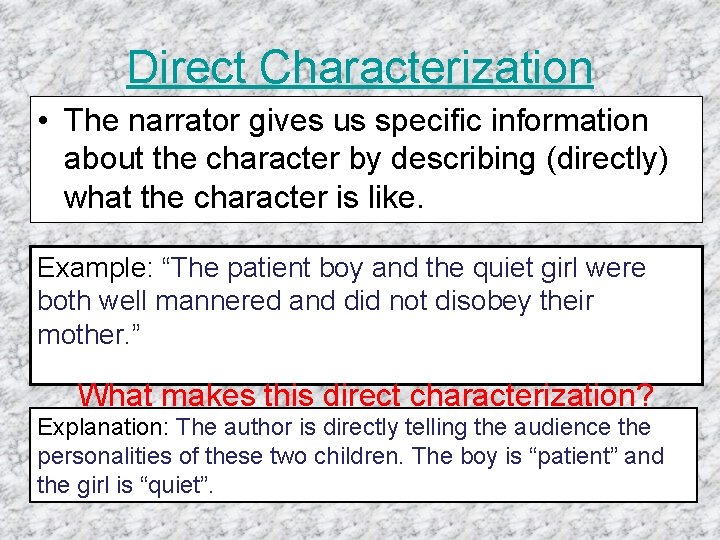
Direct Characterization • The narrator gives us specific information about the character by describing (directly) what the character is like. Example: “The patient boy and the quiet girl were both well mannered and did not disobey their mother. ” What makes this direct characterization? Explanation: The author is directly telling the audience the personalities of these two children. The boy is “patient” and the girl is “quiet”.
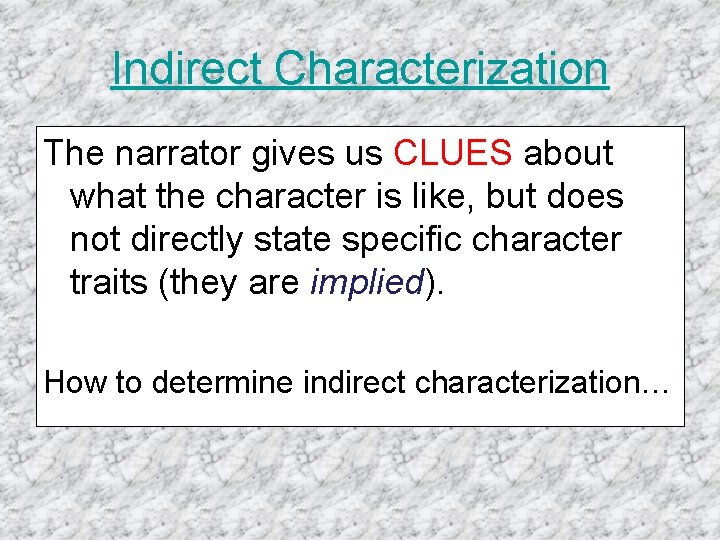
Indirect Characterization The narrator gives us CLUES about what the character is like, but does not directly state specific character traits (they are implied). How to determine indirect characterization…
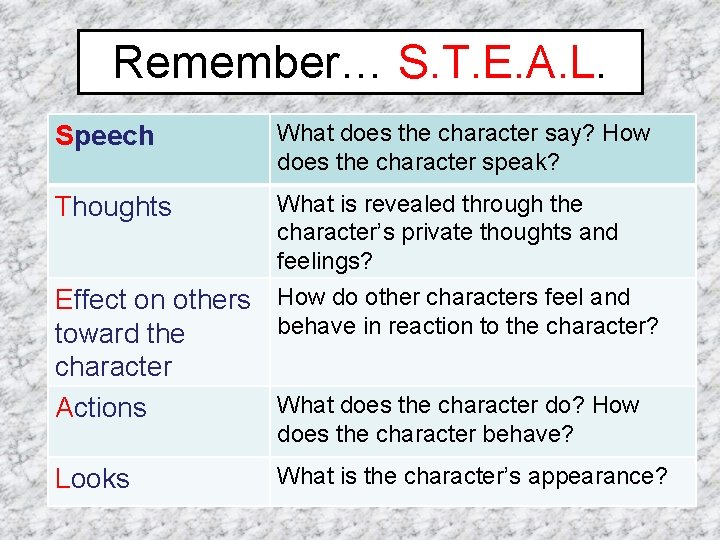
Remember… S. T. E. A. L. Speech What does the character say? How does the character speak? Thoughts What is revealed through the character’s private thoughts and feelings? Effect on others How do other characters feel and behave in reaction to the character? toward the character What does the character do? How Actions does the character behave? Looks What is the character’s appearance?
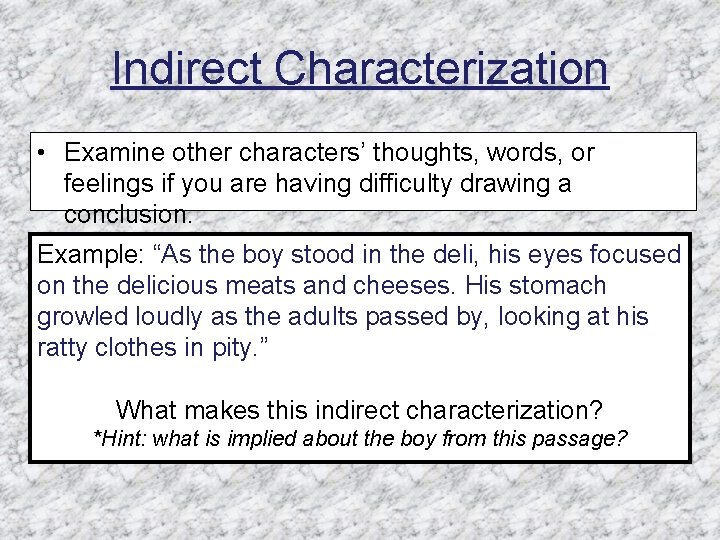
Indirect Characterization • Examine other characters’ thoughts, words, or feelings if you are having difficulty drawing a conclusion. Example: “As the boy stood in the deli, his eyes focused on the delicious meats and cheeses. His stomach growled loudly as the adults passed by, looking at his ratty clothes in pity. ” What makes this indirect characterization? *Hint: what is implied about the boy from this passage?
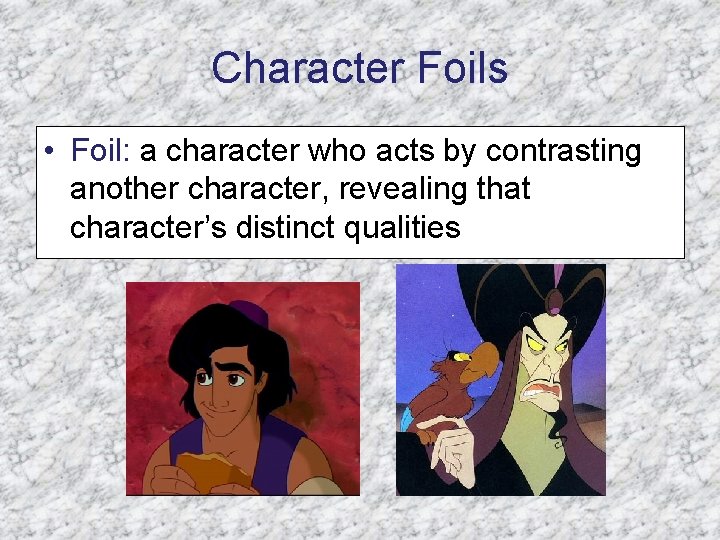
Character Foils • Foil: a character who acts by contrasting another character, revealing that character’s distinct qualities
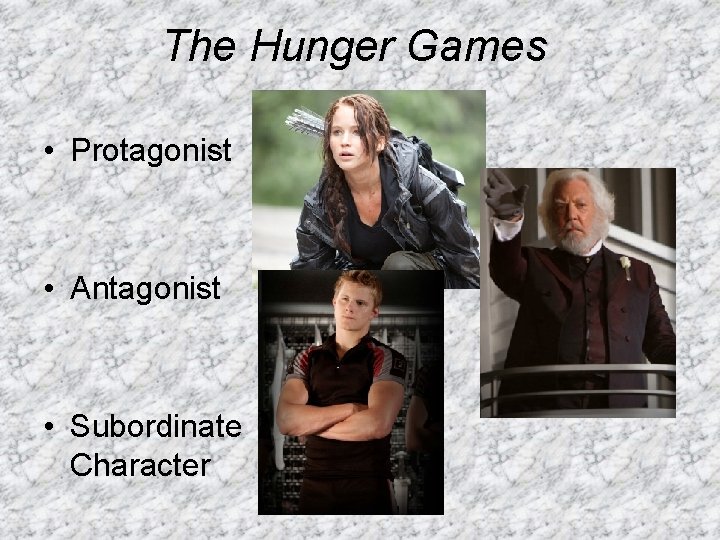
Types of Characters • Protagonist – the main character (usually the “good guy”); the focus of the reader’s attention • Antagonist – a person or force in conflict with the protagonist • Subordinate – minor characters
Practice • Think back to the movie The Hunger Games. List the protagonist, and at least 1 subordinate character.
The Hunger Games • Protagonist • Antagonist • Subordinate Character
Characters Round – some background; displays multifaceted personality; realistic Example: “a strong, silent soldier”; round because we learn about his childhood, his reasons for joining the Army, his fears and emotions – he becomes REAL. Flat – little or no personal history; one or two traits Example: “a strong, silent soldier”; flat because we never find out much about him.
Characters Dynamic – changes in the course of the story (often dramatically) Example: a murderer on death row who feels remorse over his actions, apologizes to the victim’s relatives, and seeks forgiveness. Static – remains the same throughout the story Example: a murderer on death row whose only regret is that he got caught.
Motivation • Why does the character do what he/she does? • What reasons are there for his/her actions?
Dialogue • Dialogue: conversations that characters have with each other. Dialogue is in quotes. • Example: Jenny approached Casey and said, “I can’t believe she’s acting like that. ” Casey responded by saying, “She’s just jealous. ”