
Longlasting solar energetic electron injection during the 26

- Slides: 30
Long-lasting solar energetic electron injection during the 26 Dec 2013 widespread SEP event N. 1 Dresing , A. 1 Klassen , 1 Heber , 2 Gómez-Herrero , B. R. 3 3 M. Temmer , A. Veronig 1 IEAP, University of Kiel, Germany 2 Space Research Group, University of Alcalá, Spain 3 Institute of Physics, University of Graz, Austria Collaboration Workshop - Potchefstroom - South Africa 26 Mar - 31 Mar 2017
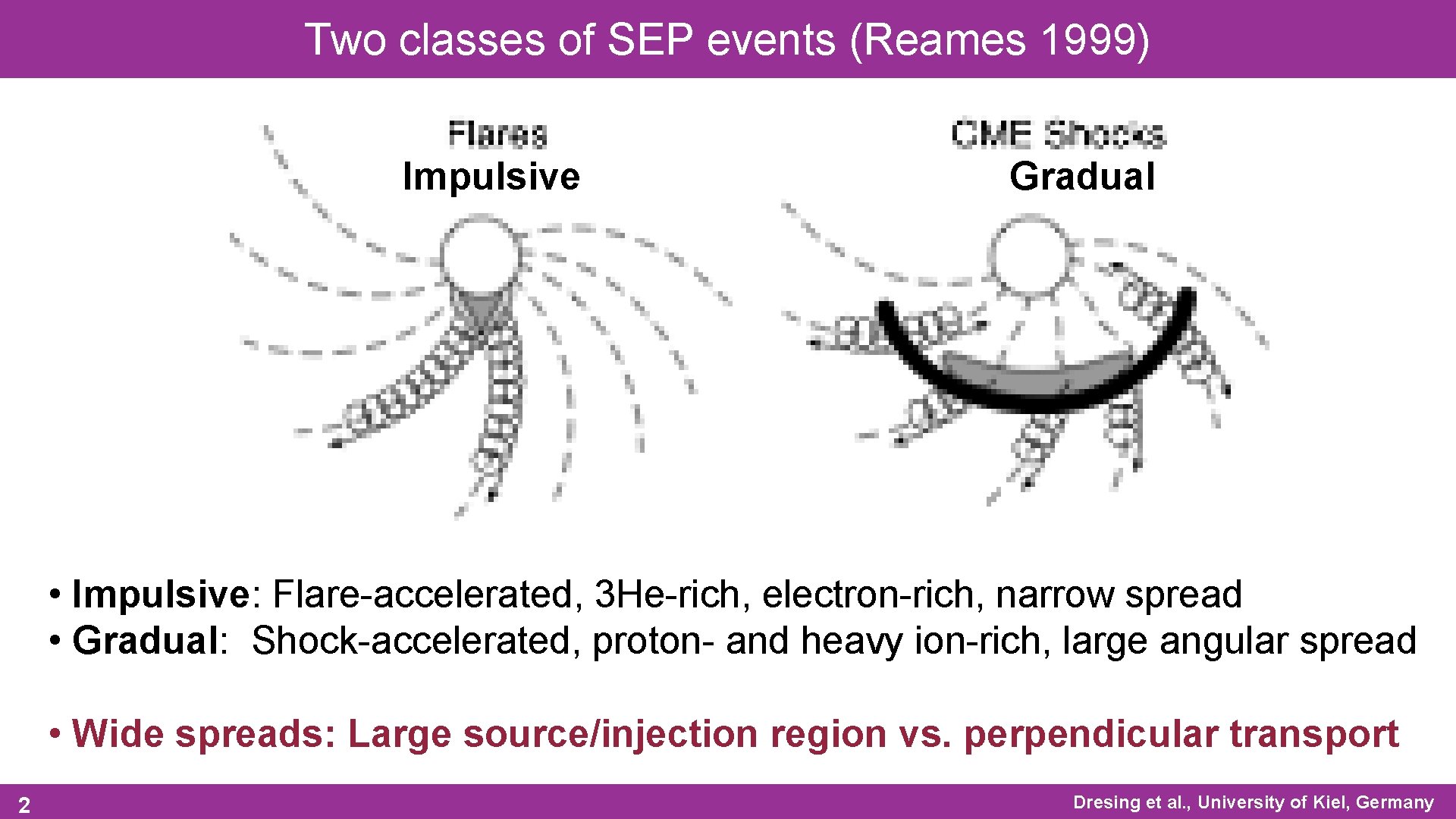
Two classes of SEP events (Reames 1999) Impulsive Gradual • Impulsive: Flare-accelerated, 3 He-rich, electron-rich, narrow spread • Gradual: Shock-accelerated, proton- and heavy ion-rich, large angular spread • Wide spreads: Large source/injection region vs. perpendicular transport 2 Dresing et al. , University of Kiel, Germany
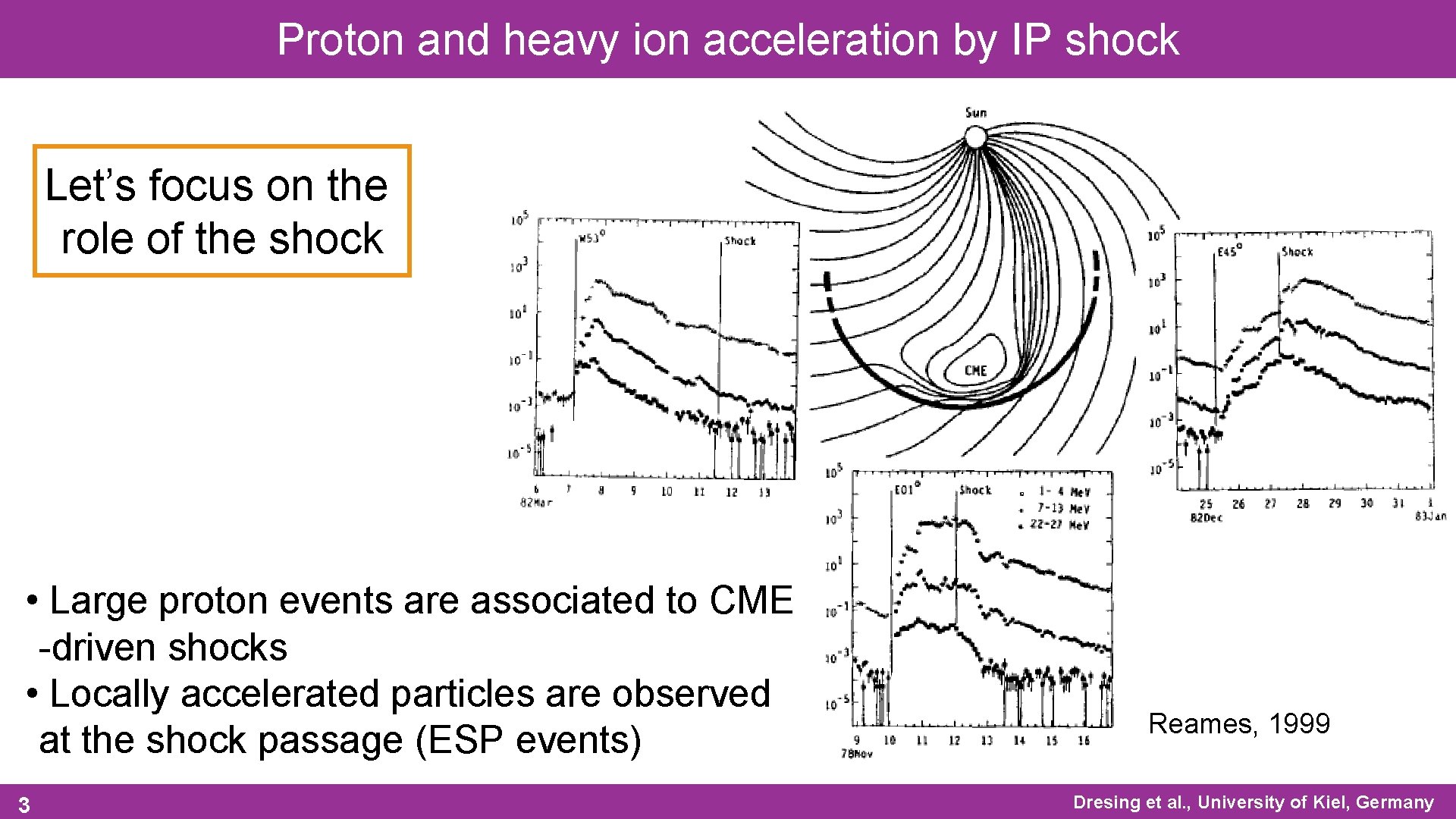
Proton and heavy ion acceleration by IP shock Let’s focus on the role of the shock • Large proton events are associated to CME -driven shocks • Locally accelerated particles are observed at the shock passage (ESP events) 3 Reames, 1999 Dresing et al. , University of Kiel, Germany
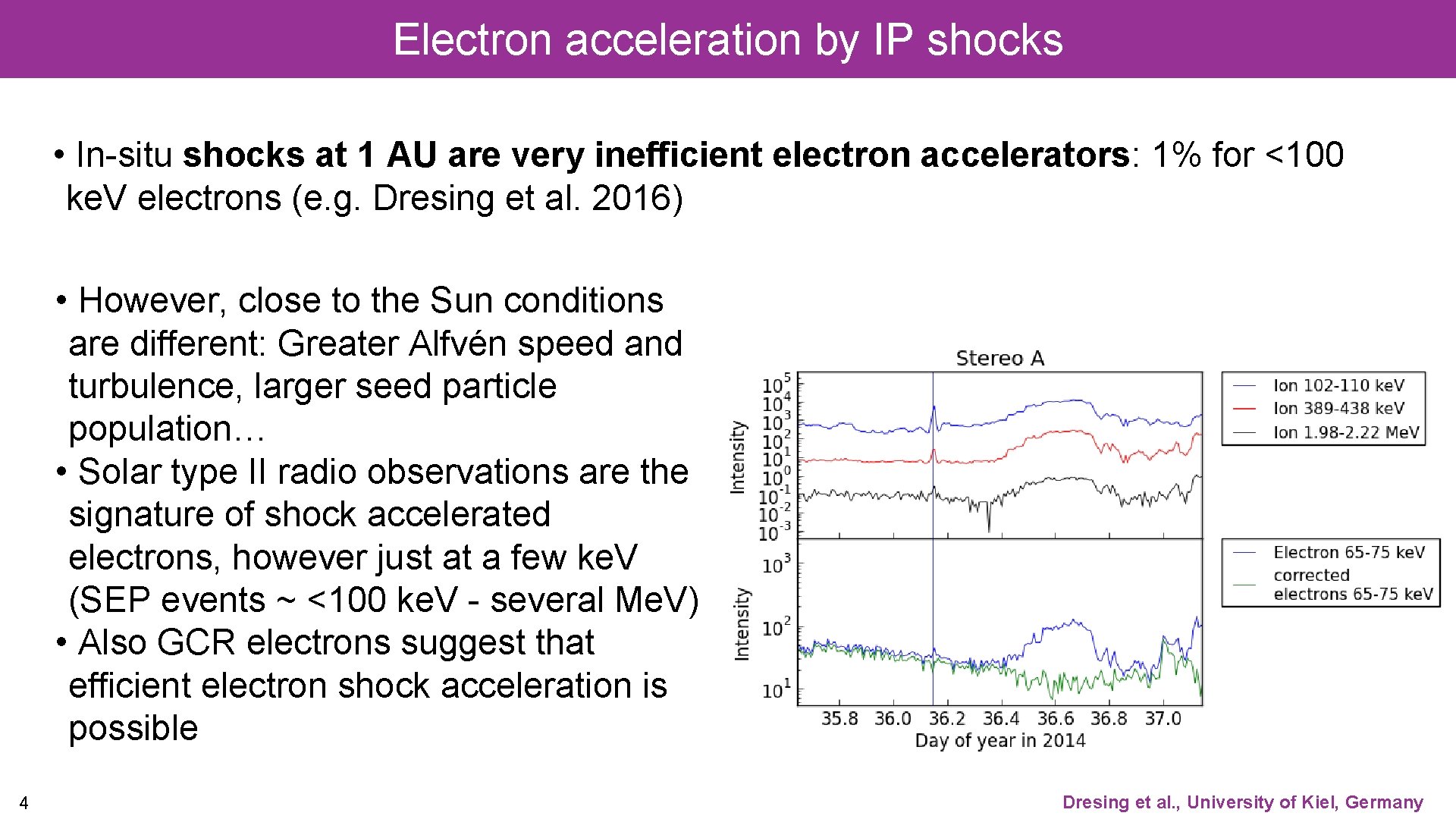
Electron acceleration by IP shocks • In-situ shocks at 1 AU are very inefficient electron accelerators: 1% for <100 ke. V electrons (e. g. Dresing et al. 2016) • However, close to the Sun conditions are different: Greater Alfvén speed and turbulence, larger seed particle population… • Solar type II radio observations are the signature of shock accelerated electrons, however just at a few ke. V (SEP events ~ <100 ke. V - several Me. V) • Also GCR electrons suggest that efficient electron shock acceleration is possible 4 Dresing et al. , University of Kiel, Germany
Can shocks produce SEP electron events? NO: • In-situ shocks at 1 AU are very inefficient in electron acceleration: 1% for <100 ke. V electrons (e. g. Dresing et al. 2016) • Further acceleration in the corona due to ongoing reconnection driven by the up lifting CME (Maja & Pick, 2004, Klein et al. 2005) 5 YES: • Flare particles may serve as seed particles for the shock (Kahler 2007) • Delayed onsets (Simnett et al. 2002) • Offset in Gaussian of peak distribution (Lario et al. 2014) • Correlation between electron peak intensities and CME speed (Simnett et al. 2002, Haggerty et al. 2003, Gopalswamy et al. 2004) Dresing et al. , University of Kiel, Germany
Can shocks produce SEP electron events? NO: • In-situ shocks at 1 AU are very inefficient in electron acceleration: 1% for <100 ke. V electrons (e. g. Dresing et al. 2016) • Further acceleration in the corona due to ongoing reconnection driven by the up lifting CME (Maja & Pick, 2004, Klein et al. 2005) 6 YES: • Flare particles may serve as seed particles for the shock (Kahler 2007) • Delayed onsets (Simnett et al. 2002) • Offset in Gaussian of peak distribution (Lario et al. 2014) • Correlation between electron peak intensities and CME speed (Simnett et al. 2002, Haggerty et al. 2003, Gopalswamy et al. 2004) Dresing et al. , University of Kiel, Germany
Can shocks produce SEP electron events? NO: • In-situ shocks at 1 AU are very inefficient in electron acceleration: 1% for <100 ke. V electrons (e. g. Dresing et al. 2016) • Further acceleration in the corona due to ongoing reconnection driven by the up lifting CME (Maja & Pick, 2004, Klein et al. 2005) 7 YES: • Flare particles may serve as seed particles for the shock (Kahler 2007) • Delayed onsets (Simnett et al. 2002) • Sometimes type III bursts later than type IIs suggesting that the type IIIs emanate from the shock • Offset in Gaussian of peak distribution (Lario et al. 2014) Dresing et al. , University of Kiel, Germany
Can shocks produce SEP electron events? NO: • In-situ shocks at 1 AU are very inefficient in electron acceleration: 1% for <100 ke. V electrons (e. g. Dresing et al. 2016) • Further acceleration in the corona due to ongoing reconnection driven by the up lifting CME (Maja & Pick, 2004, Klein et al. 2005) 8 YES: • Flare particles may serve as seed particles for the shock (Kahler 2007) • Delayed onsets (Simnett et al. 2002) • Sometimes type III bursts later than type IIs suggesting that the type IIIs emanate from the shock • Offset in Gaussian of peak distribution (Lario et al. 2014) Dresing et al. , University of Kiel, Germany
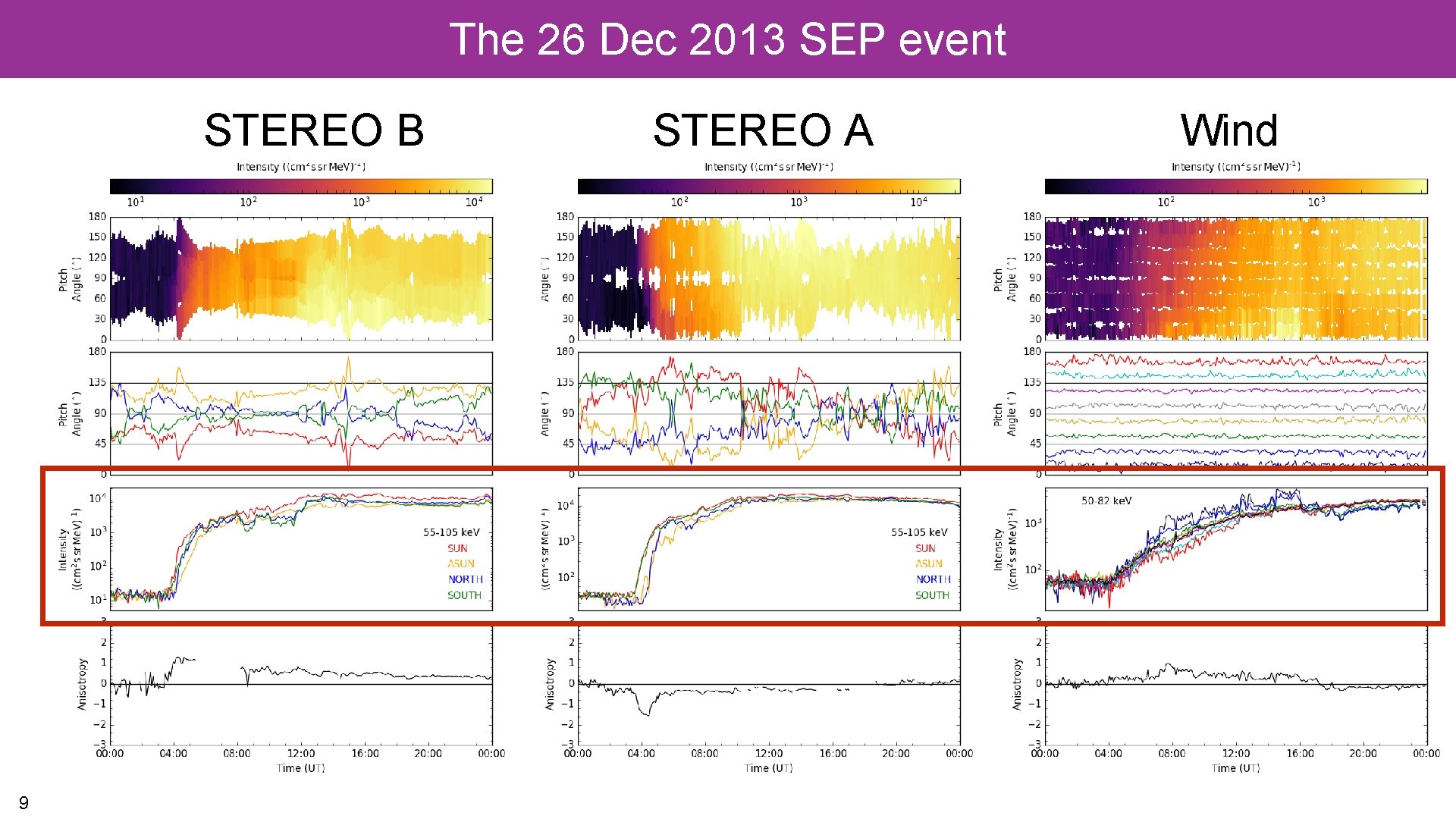
The 26 Dec 2013 SEP event STEREO B 9 STEREO A Wind Dresing et al. , University of Kiel, Germany
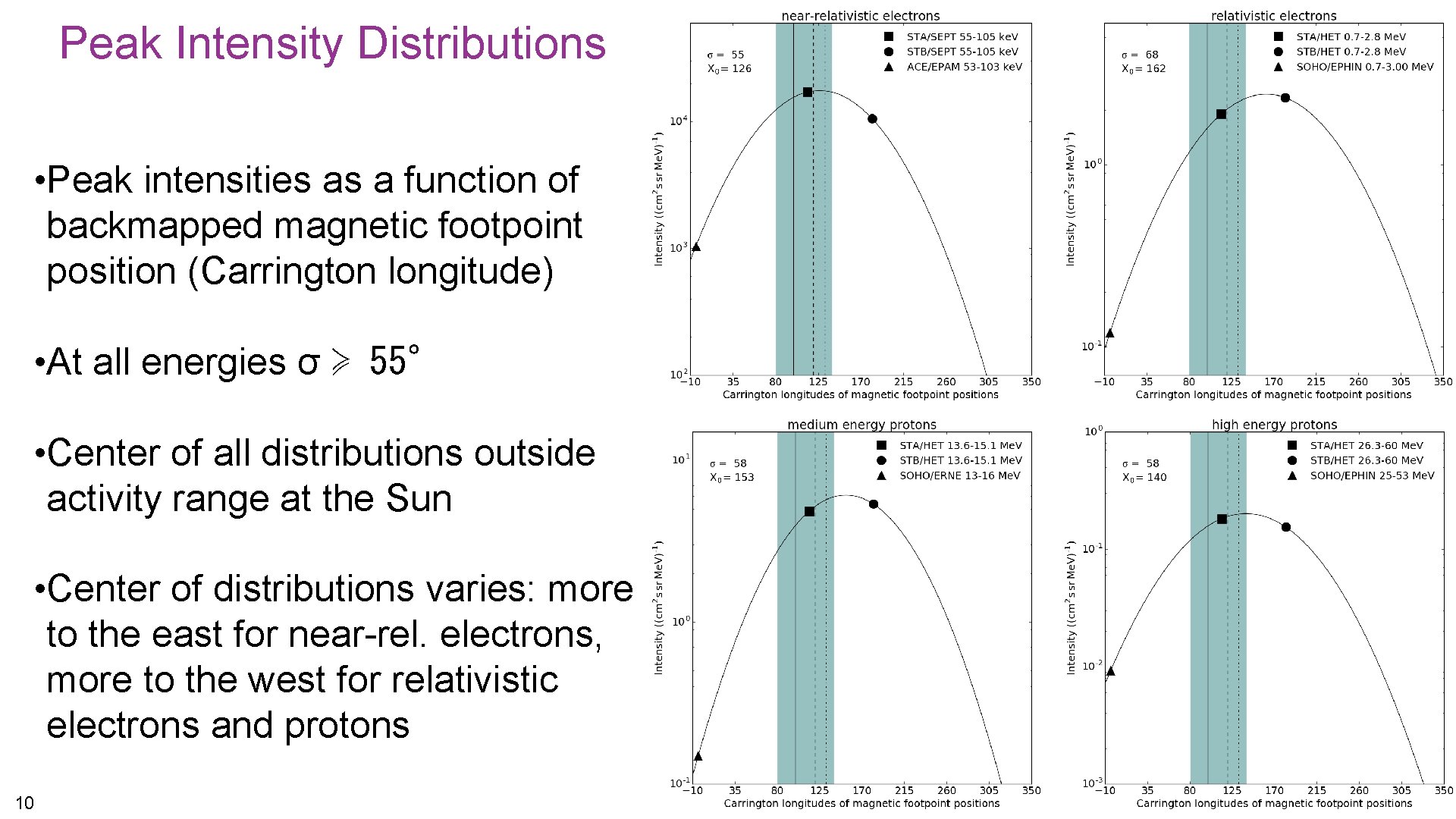
Peak Intensity Distributions • Peak intensities as a function of backmapped magnetic footpoint position (Carrington longitude) • At all energies σ ≽ 55° • Center of all distributions outside activity range at the Sun • Center of distributions varies: more to the east for near-rel. electrons, more to the west for relativistic electrons and protons 10 Dresing et al. , University of Kiel, Germany
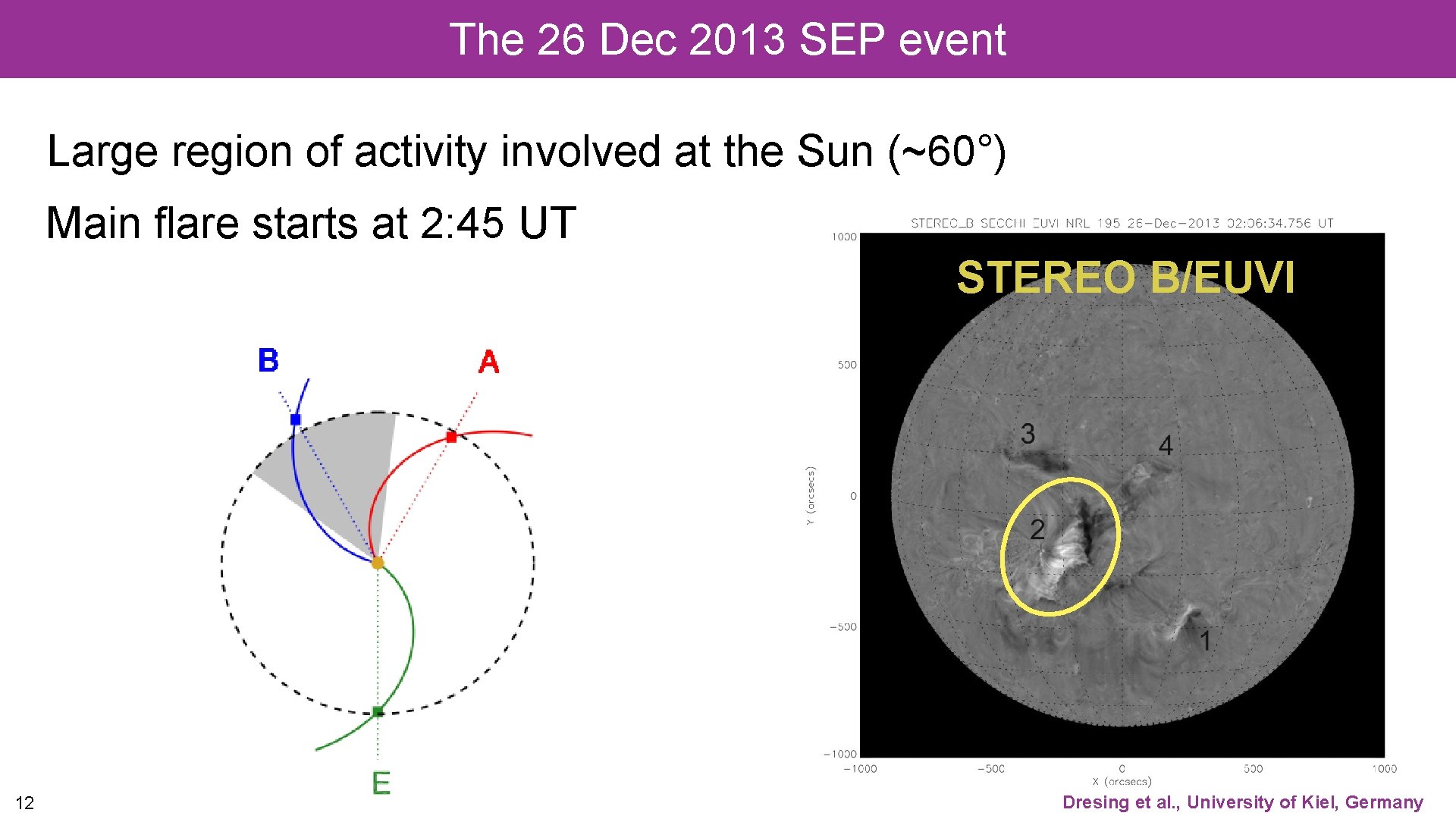
The 26 Dec 2013 SEP event Large region of activity involved at the Sun (~60°) Main flare starts at 2: 45 UT STEREO B/EUVI 12 Dresing et al. , University of Kiel, Germany
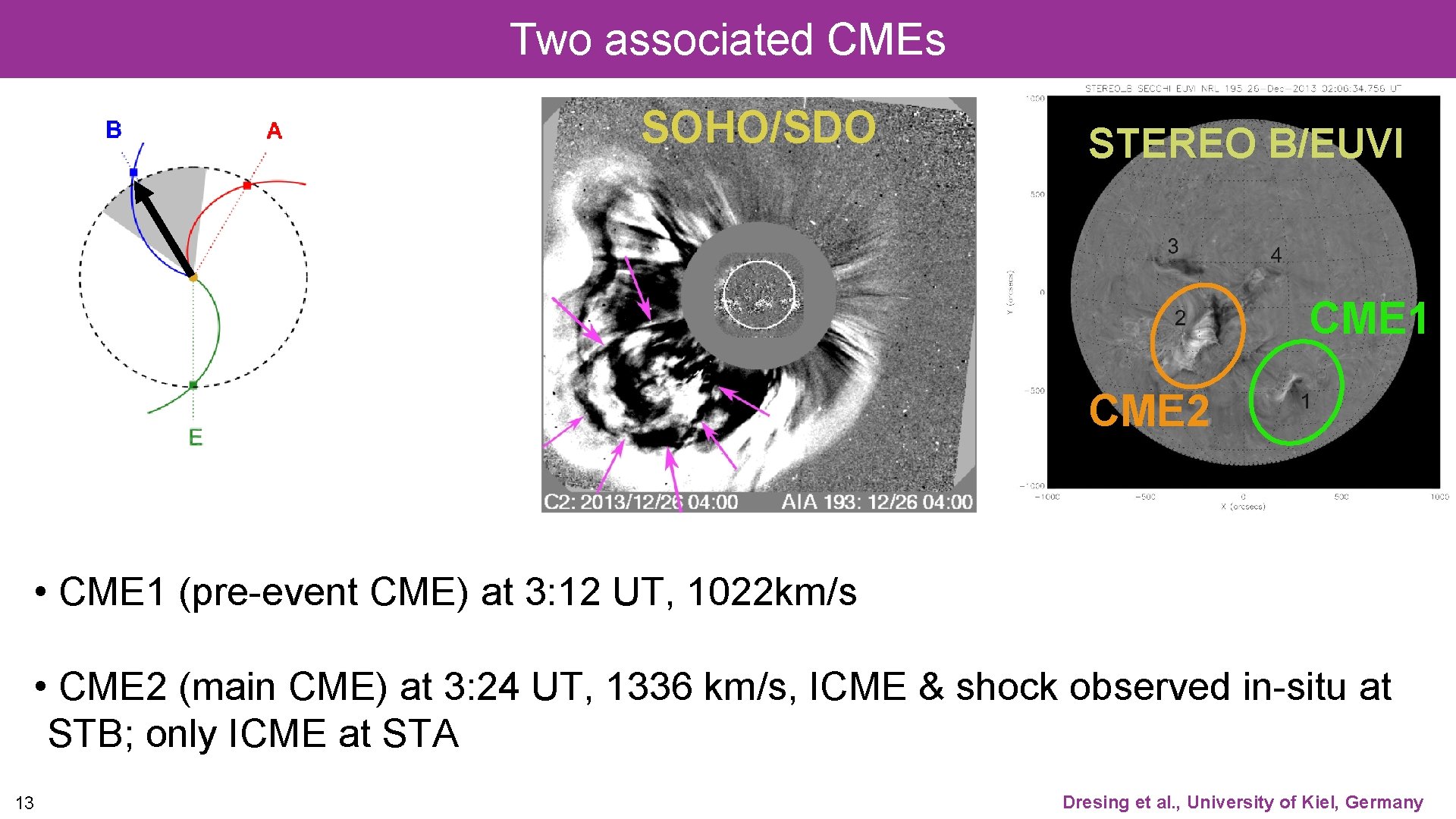
Two associated CMEs SOHO/SDO STEREO B/EUVI CME 1 CME 2 • CME 1 (pre-event CME) at 3: 12 UT, 1022 km/s • CME 2 (main CME) at 3: 24 UT, 1336 km/s, ICME & shock observed in-situ at STB; only ICME at STA 13 Dresing et al. , University of Kiel, Germany
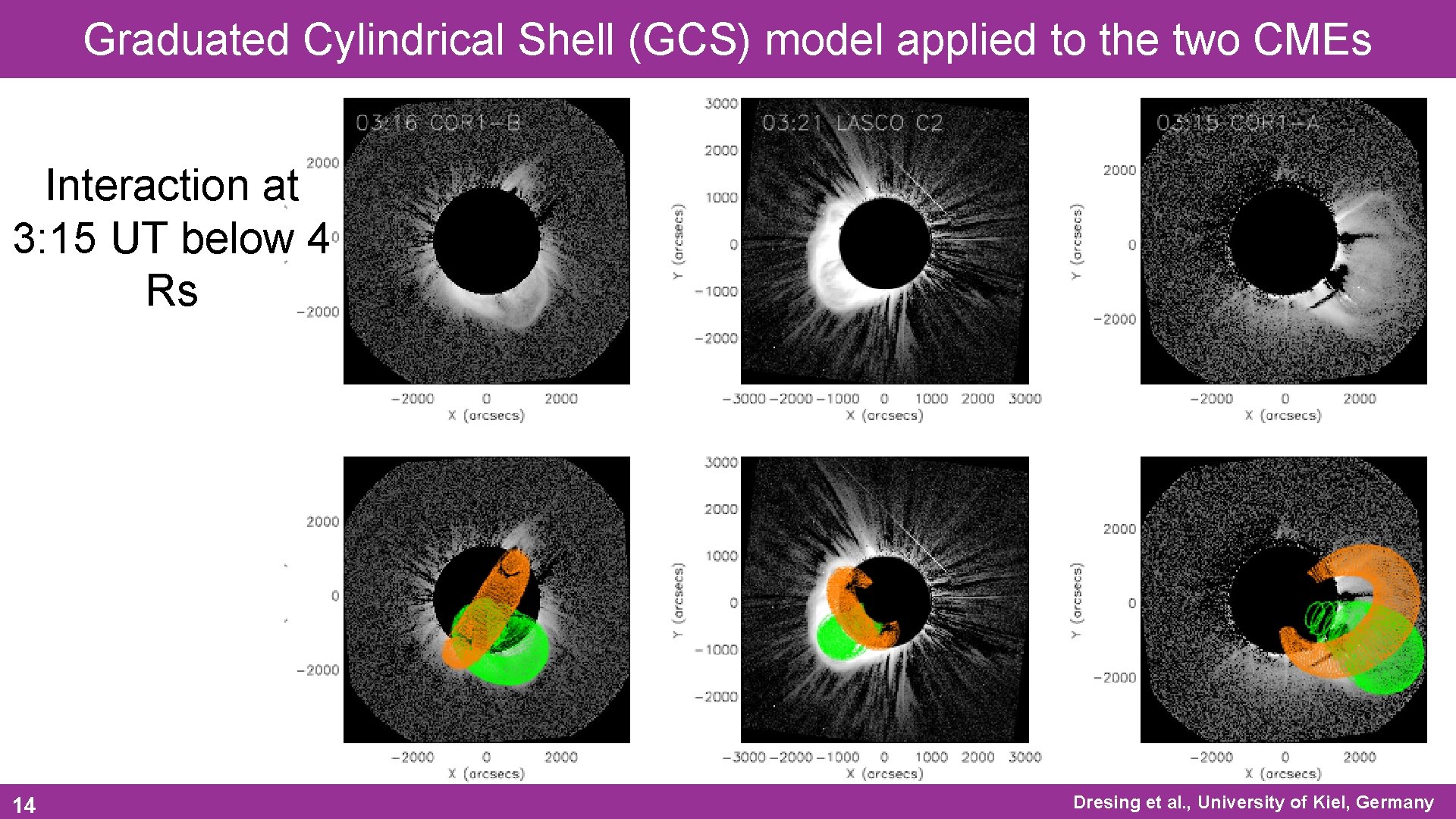
Graduated Cylindrical Shell (GCS) model applied to the two CMEs Interaction at 3: 15 UT below 4 Rs 14 Dresing et al. , University of Kiel, Germany
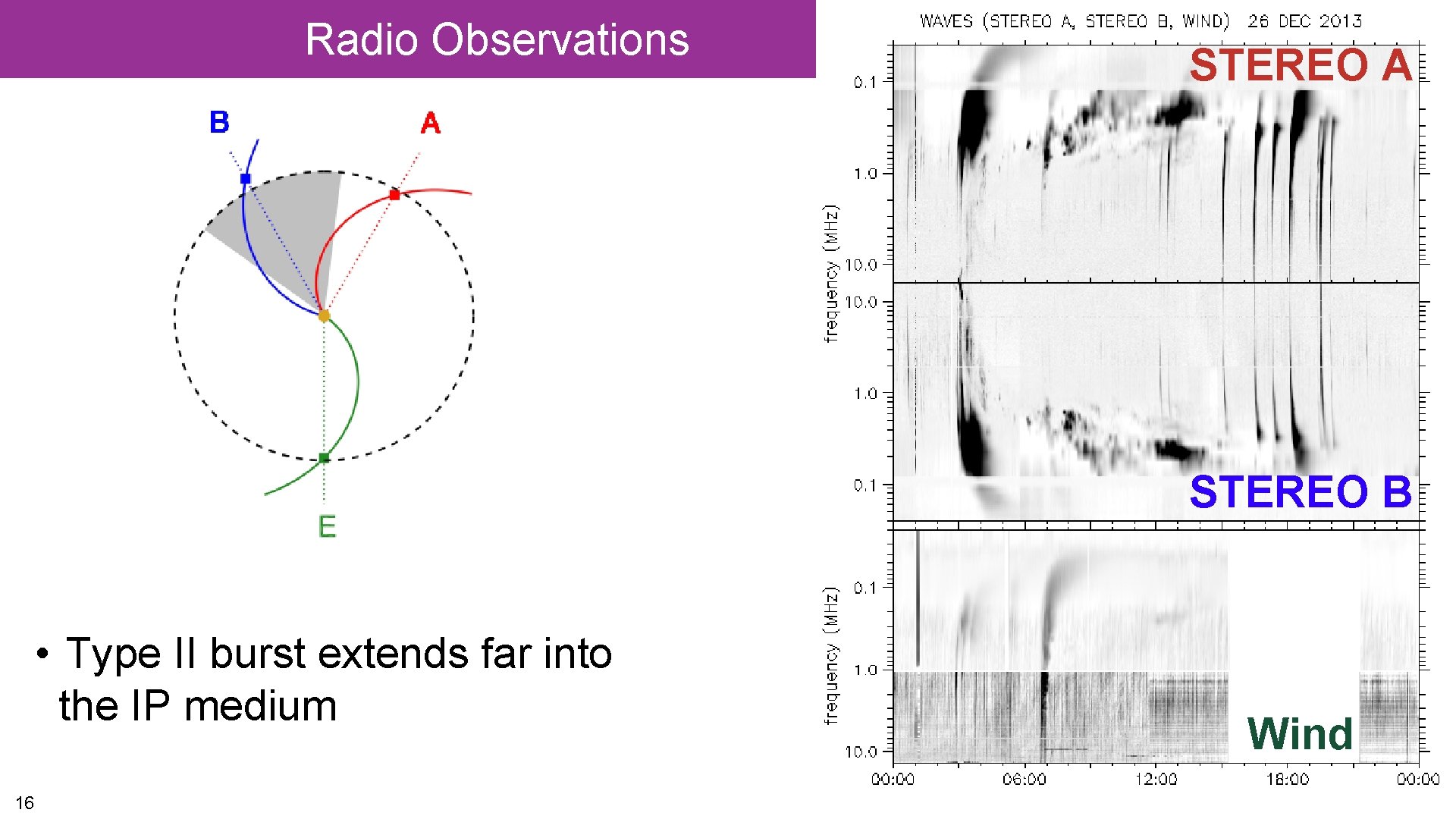
Radio Observations STEREO A STEREO B • Type II burst extends far into the IP medium 16 Wind Dresing et al. , University of Kiel, Germany
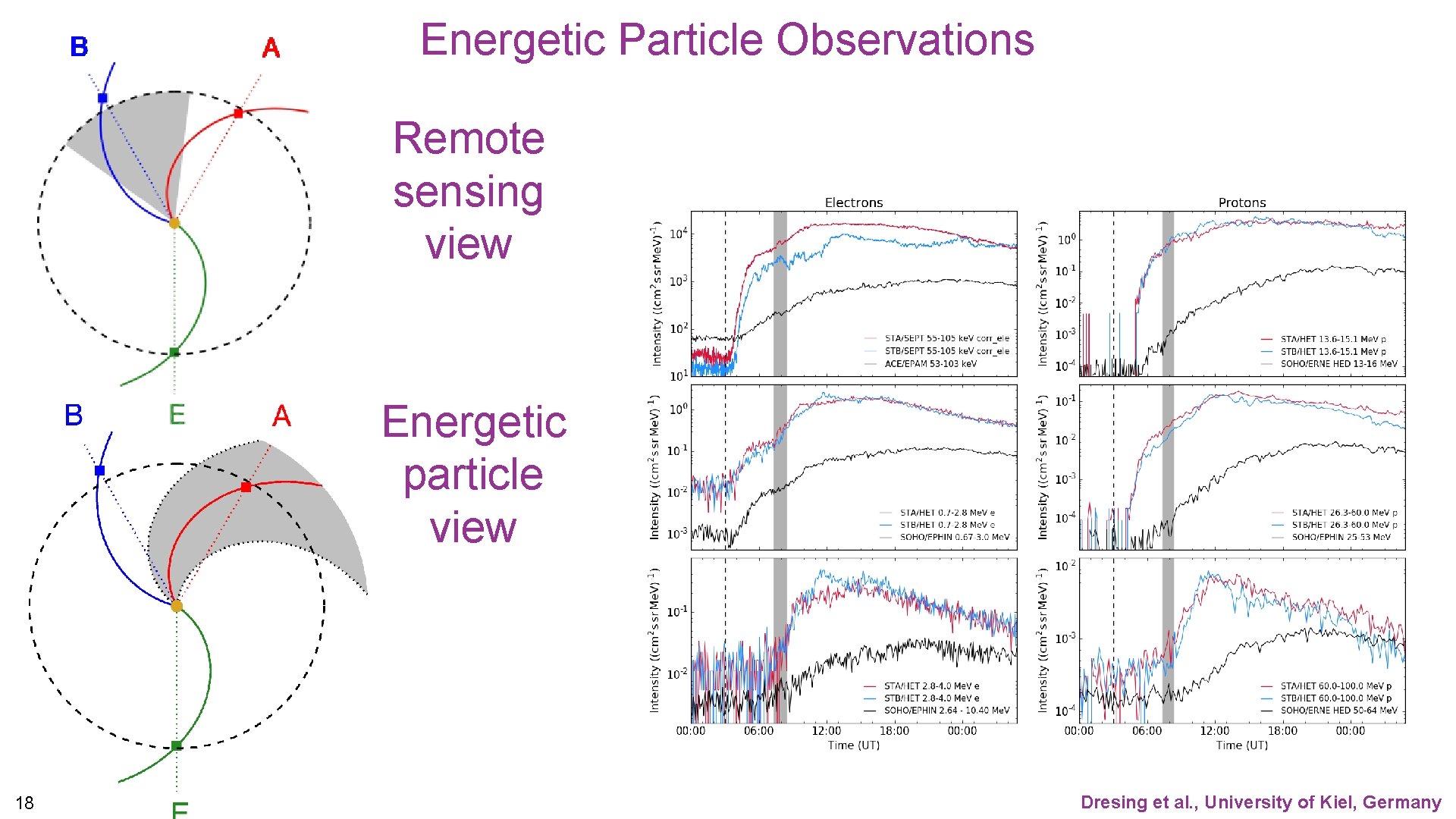
Energetic Particle Observations Remote sensing view Energetic particle view 18 Dresing et al. , University of Kiel, Germany
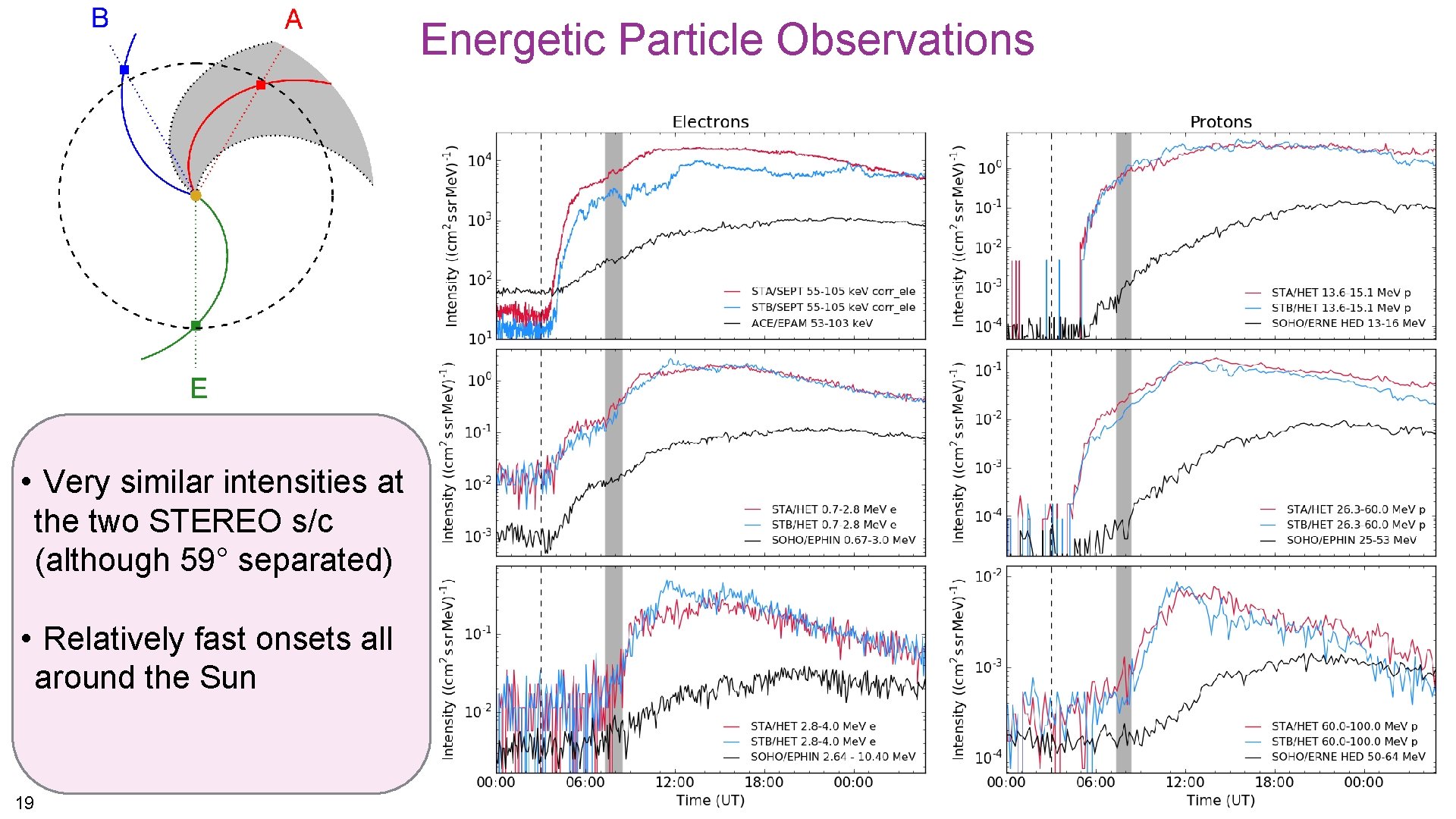
Energetic Particle Observations • Very similar intensities at the two STEREO s/c (although 59° separated) • Relatively fast onsets all around the Sun 19 Dresing et al. , University of Kiel, Germany
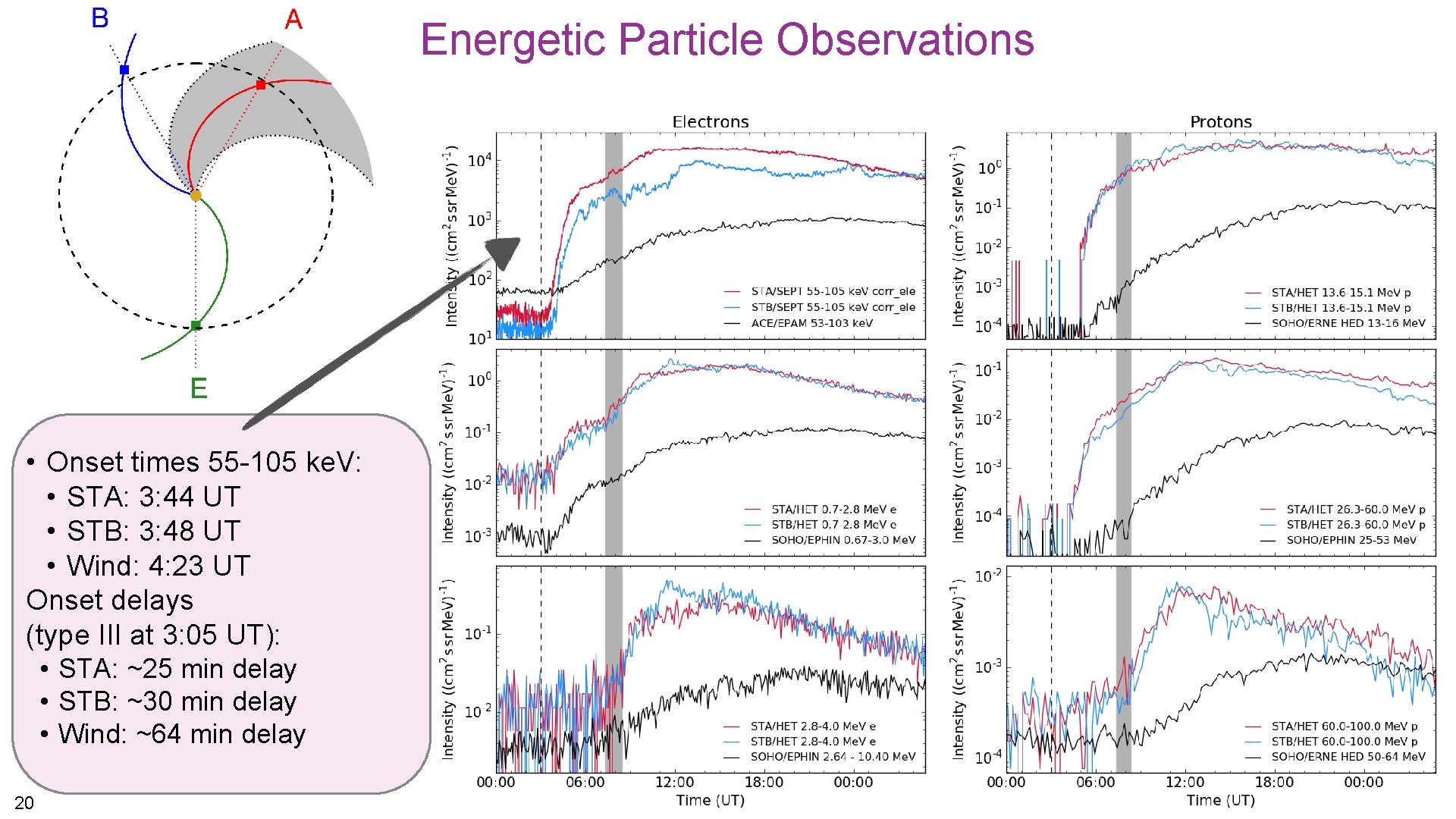
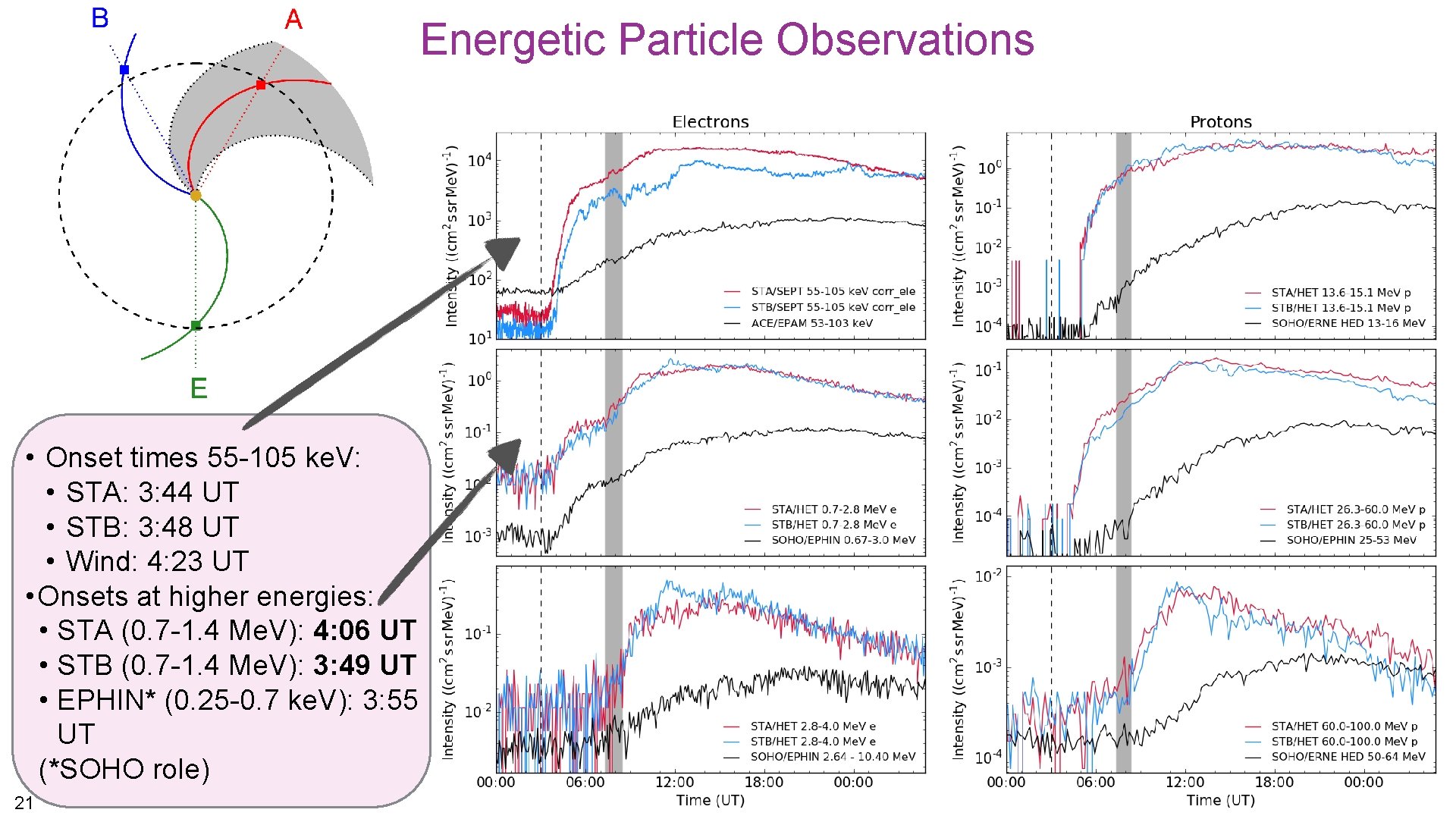
Energetic Particle Observations • Onset times 55 -105 ke. V: • STA: 3: 44 UT • STB: 3: 48 UT • Wind: 4: 23 UT Onset delays (type III at 3: 05 UT): • STA: ~25 min delay • STB: ~30 min delay • Wind: ~64 min delay 20 Dresing et al. , University of Kiel, Germany
Energetic Particle Observations • Onset times 55 -105 ke. V: • STA: 3: 44 UT • STB: 3: 48 UT • Wind: 4: 23 UT • Onsets at higher energies: • STA (0. 7 -1. 4 Me. V): 4: 06 UT • STB (0. 7 -1. 4 Me. V): 3: 49 UT • EPHIN* (0. 25 -0. 7 ke. V): 3: 55 UT (*SOHO role) 21 Dresing et al. , University of Kiel, Germany
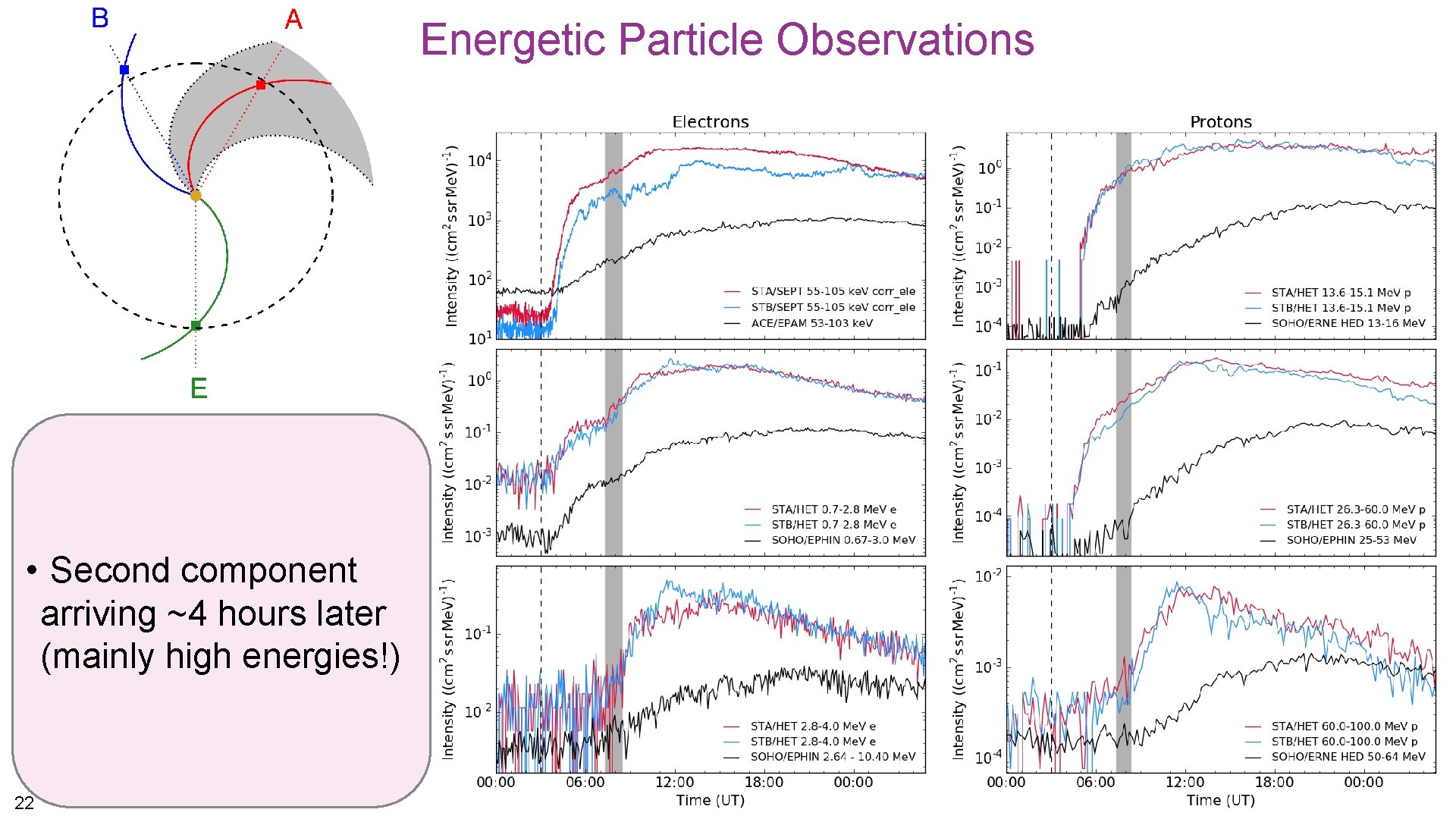
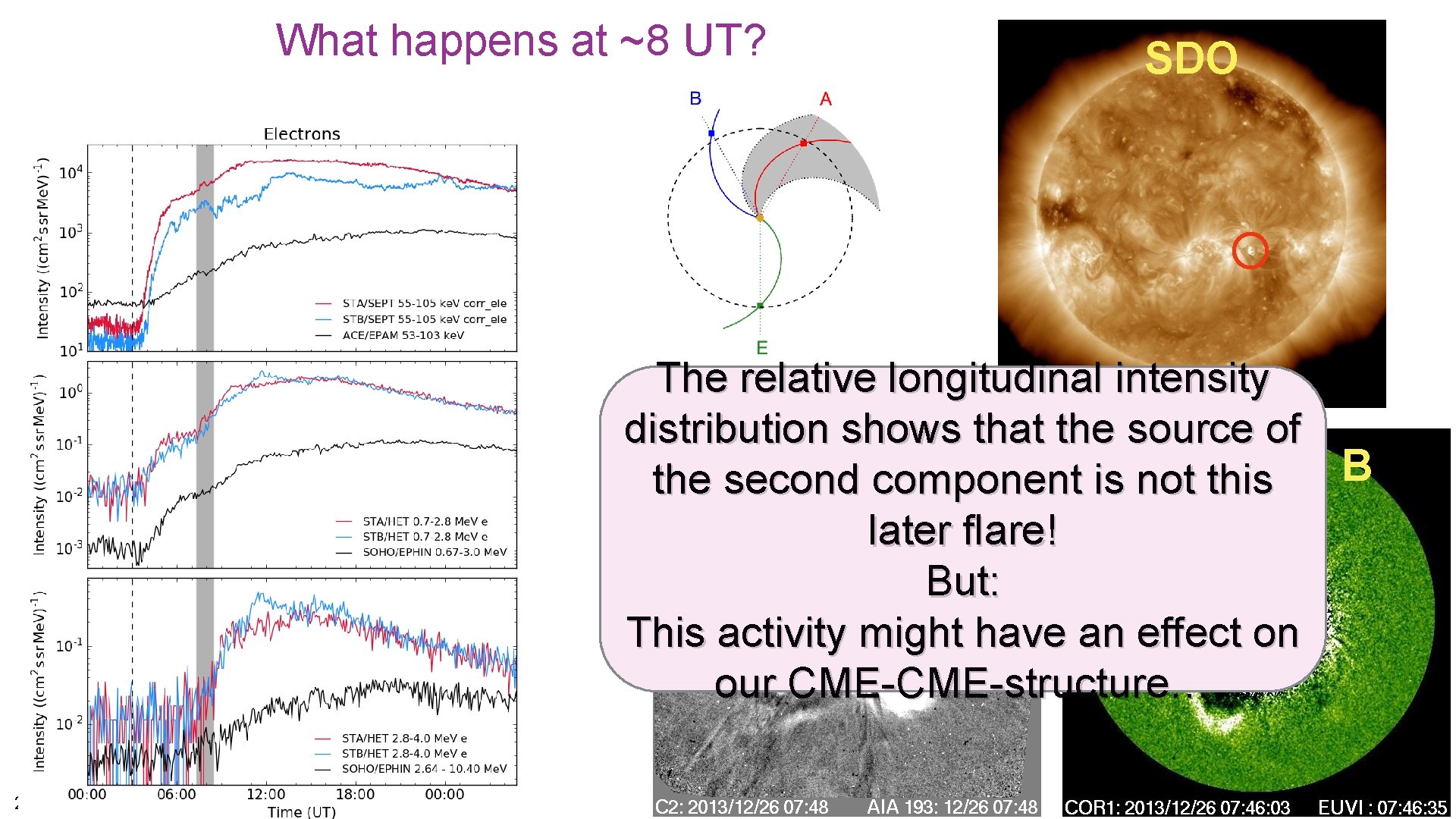
Energetic Particle Observations • Second component arriving ~4 hours later (mainly high energies!) 22 Dresing et al. , University of Kiel, Germany
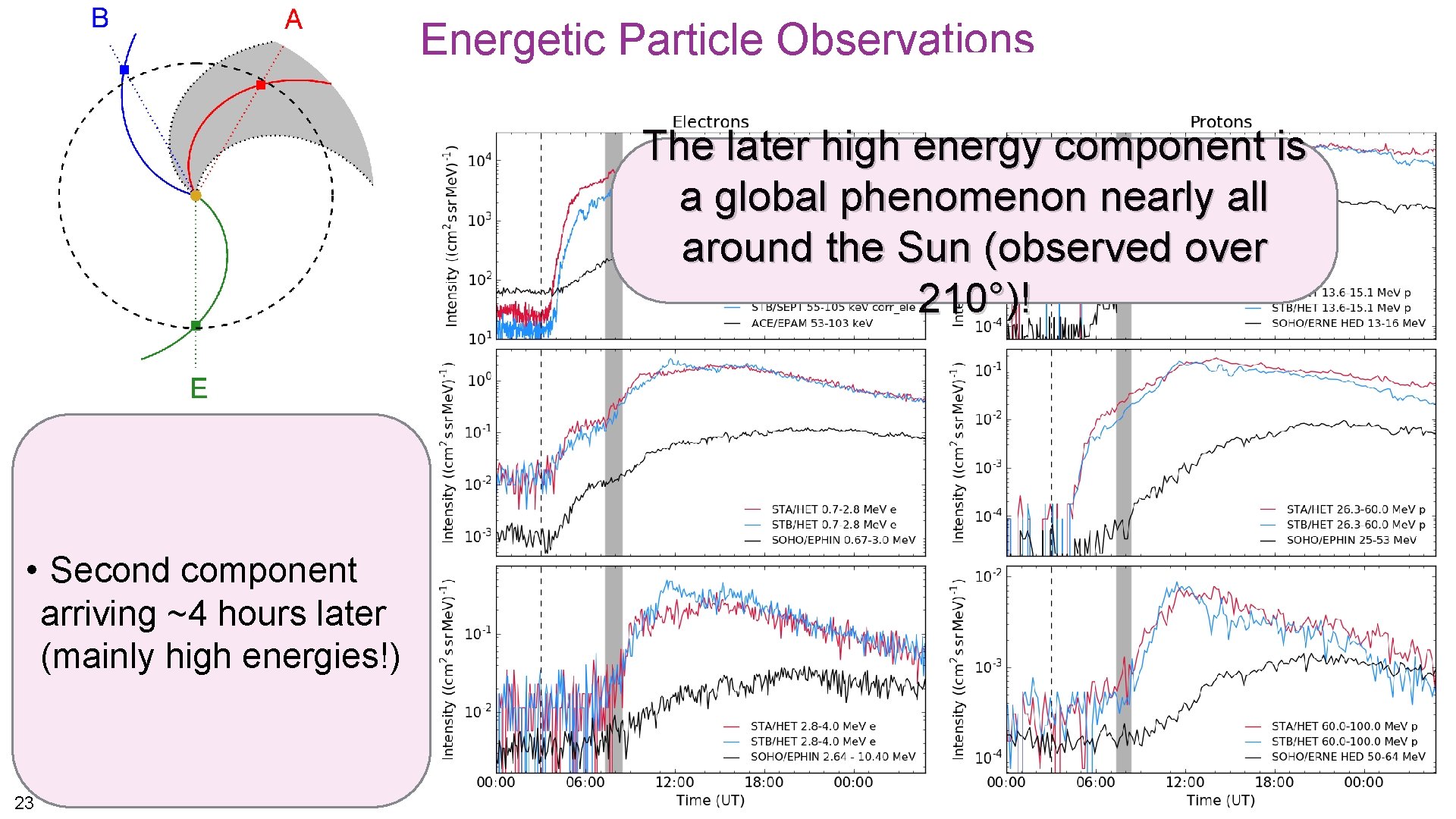
Energetic Particle Observations The later high energy component is a global phenomenon nearly all around the Sun (observed over 210°)! • Second component arriving ~4 hours later (mainly high energies!) 23 Dresing et al. , University of Kiel, Germany
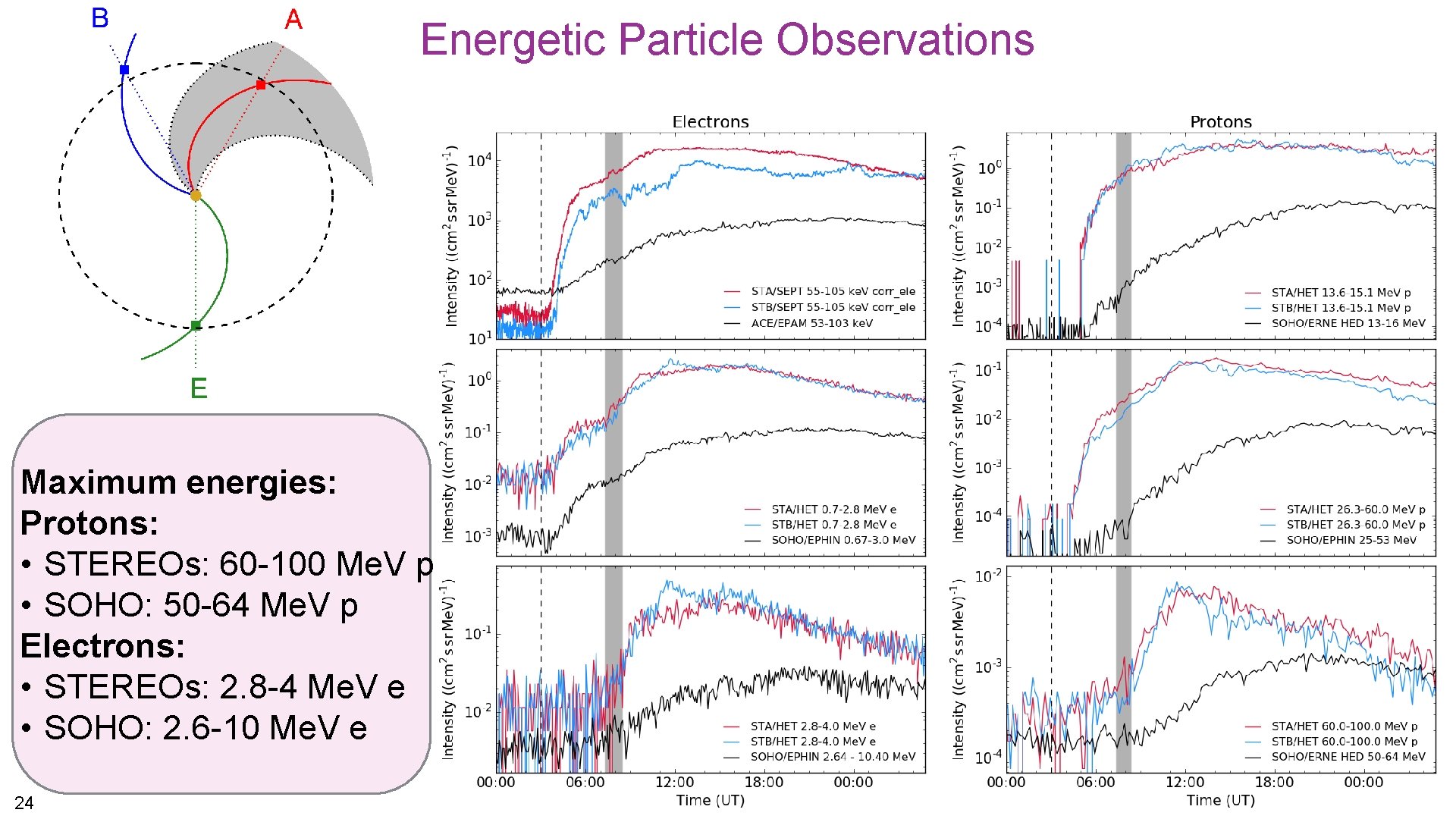
Energetic Particle Observations Maximum energies: Protons: • STEREOs: 60 -100 Me. V p • SOHO: 50 -64 Me. V p Electrons: • STEREOs: 2. 8 -4 Me. V e • SOHO: 2. 6 -10 Me. V e 24 Dresing et al. , University of Kiel, Germany
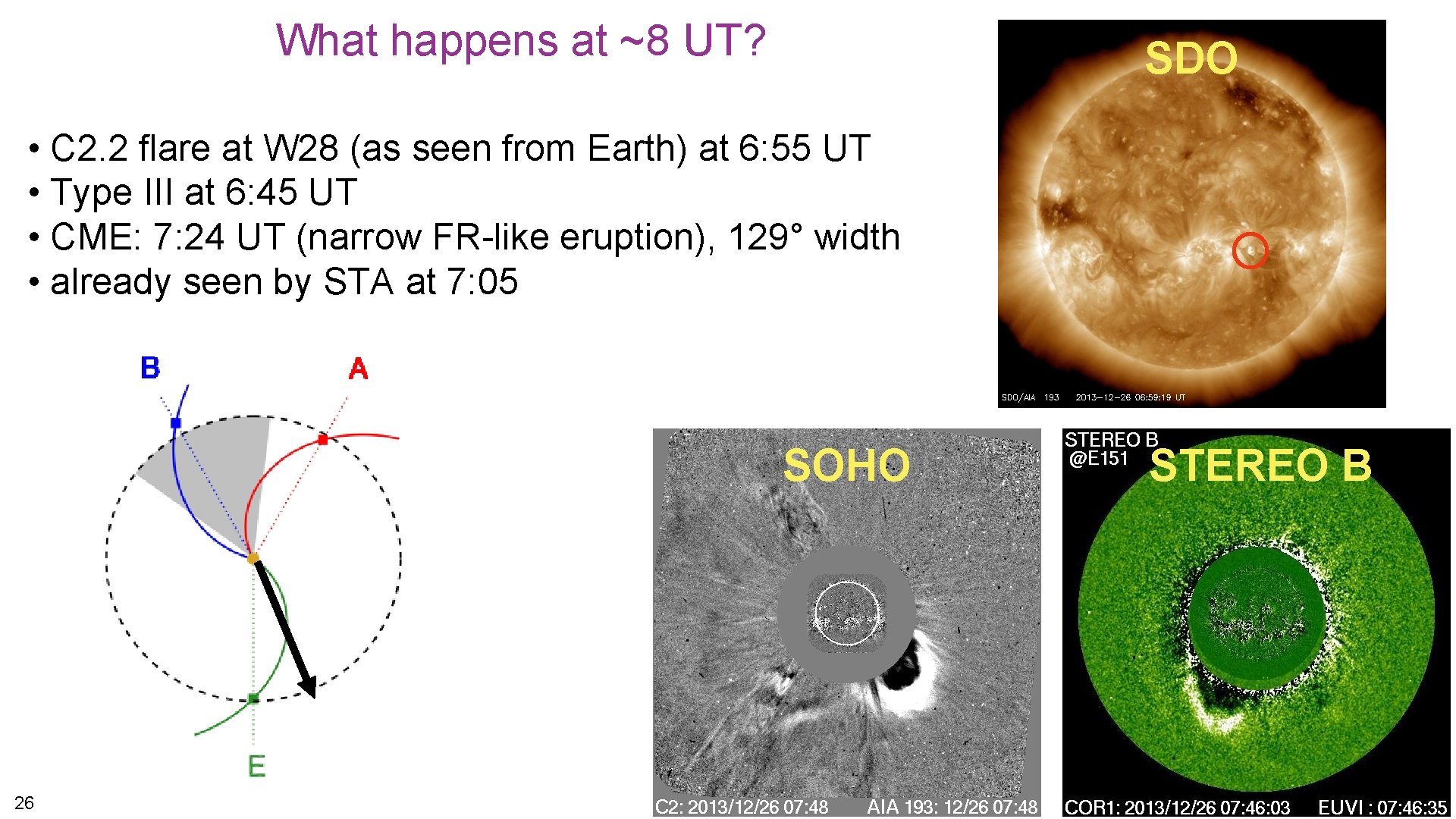
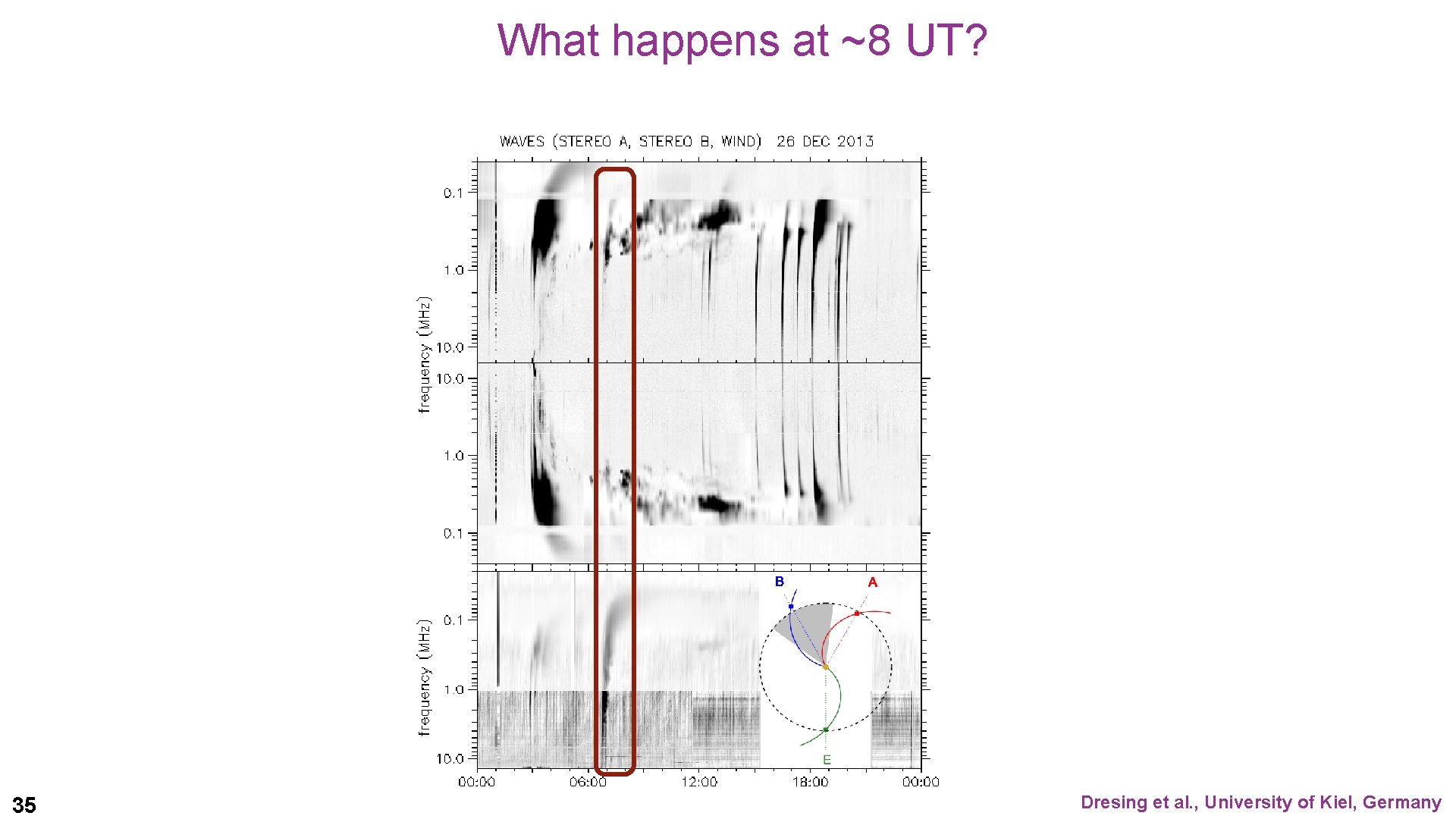
What happens at ~8 UT? SDO • C 2. 2 flare at W 28 (as seen from Earth) at 6: 55 UT • Type III at 6: 45 UT • CME: 7: 24 UT (narrow FR-like eruption), 129° width • already seen by STA at 7: 05 SOHO 26 STEREO B Dresing et al. , University of Kiel, Germany
What happens at ~8 UT? SDO The relative longitudinal intensity distribution shows that the source of SOHO STEREO B the second component is not this later flare! But: This activity might have an effect on our CME-structure… 27 Dresing et al. , University of Kiel, Germany
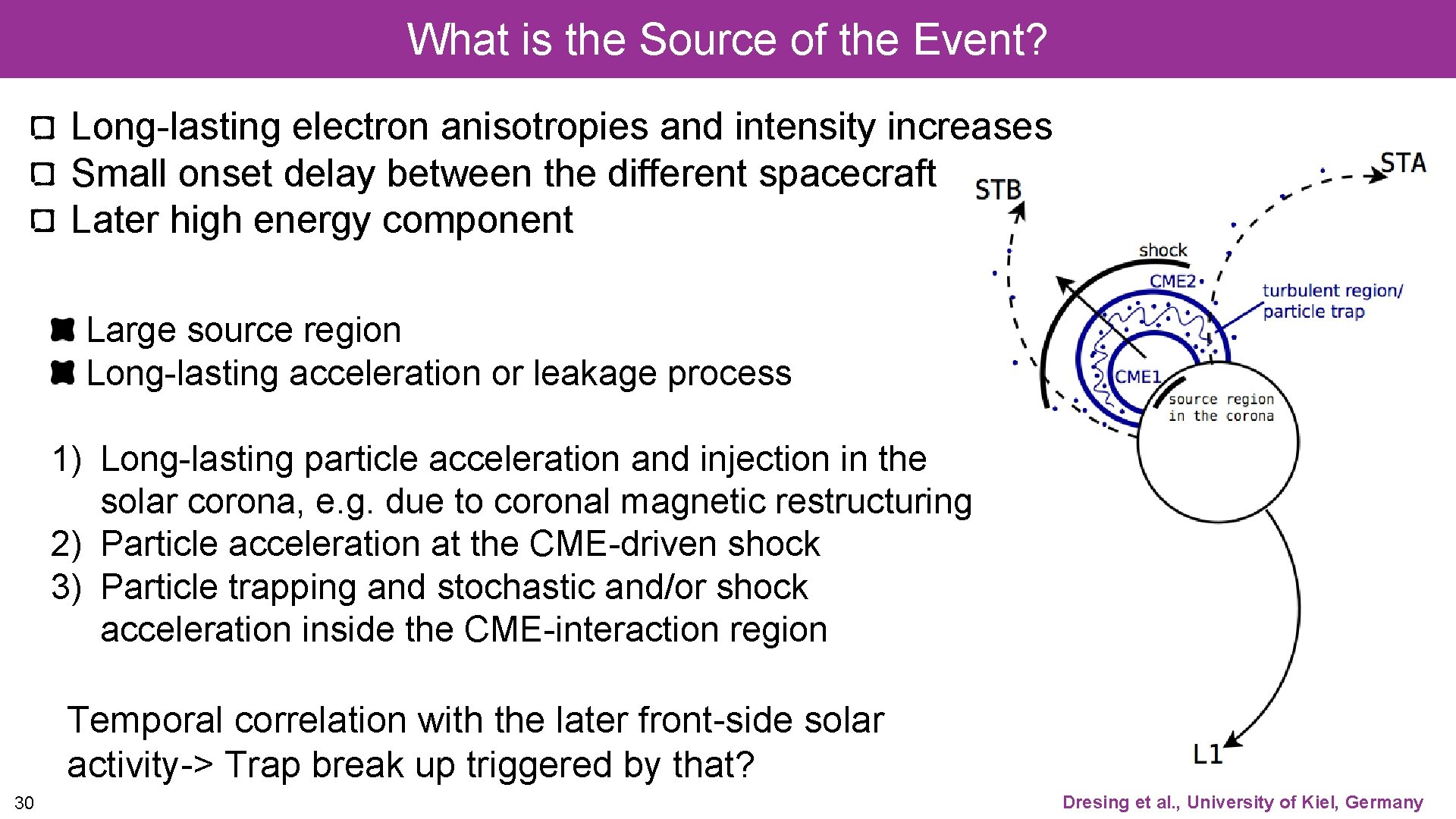
What is the Source of the Event? Long-lasting electron anisotropies and intensity increases Small onset delay between the different spacecraft Later high energy component Large source region Long-lasting acceleration or leakage process 1) Long-lasting particle acceleration and injection in the solar corona, e. g. due to coronal magnetic restructuring 2) Particle acceleration at the CME-driven shock 3) Particle trapping and stochastic and/or shock acceleration inside the CME-interaction region Temporal correlation with the later front-side solar activity-> Trap break up triggered by that? 30 Dresing et al. , University of Kiel, Germany
Summary • The 26 Dec 2013 SEP event is one of the widest events ever observed with STEREO • STEREO A & B observe very similar SEP intensities and time profiles although they are separated by 59° in longitude • Relatively fast onsets all around the Sun (even at Earth) • Near-relativistic electrons show unusual long-lasting anisotropies of up to a day at STEREO B • Two SEP components with the high energy component being injected ~4 hours later • Perpendicular diffusion is not the dominant process spreading the particles • The second (high energy) component is seen well by all three viewpoints suggesting that it is a global phenomenon • A scenario of trapped particles which are further accelerated to high energies and suddenly released into the IP medium could explain the observations 31 Dresing et al. , University of Kiel, Germany
Backup 32 Dresing et al. , University of Kiel, Germany
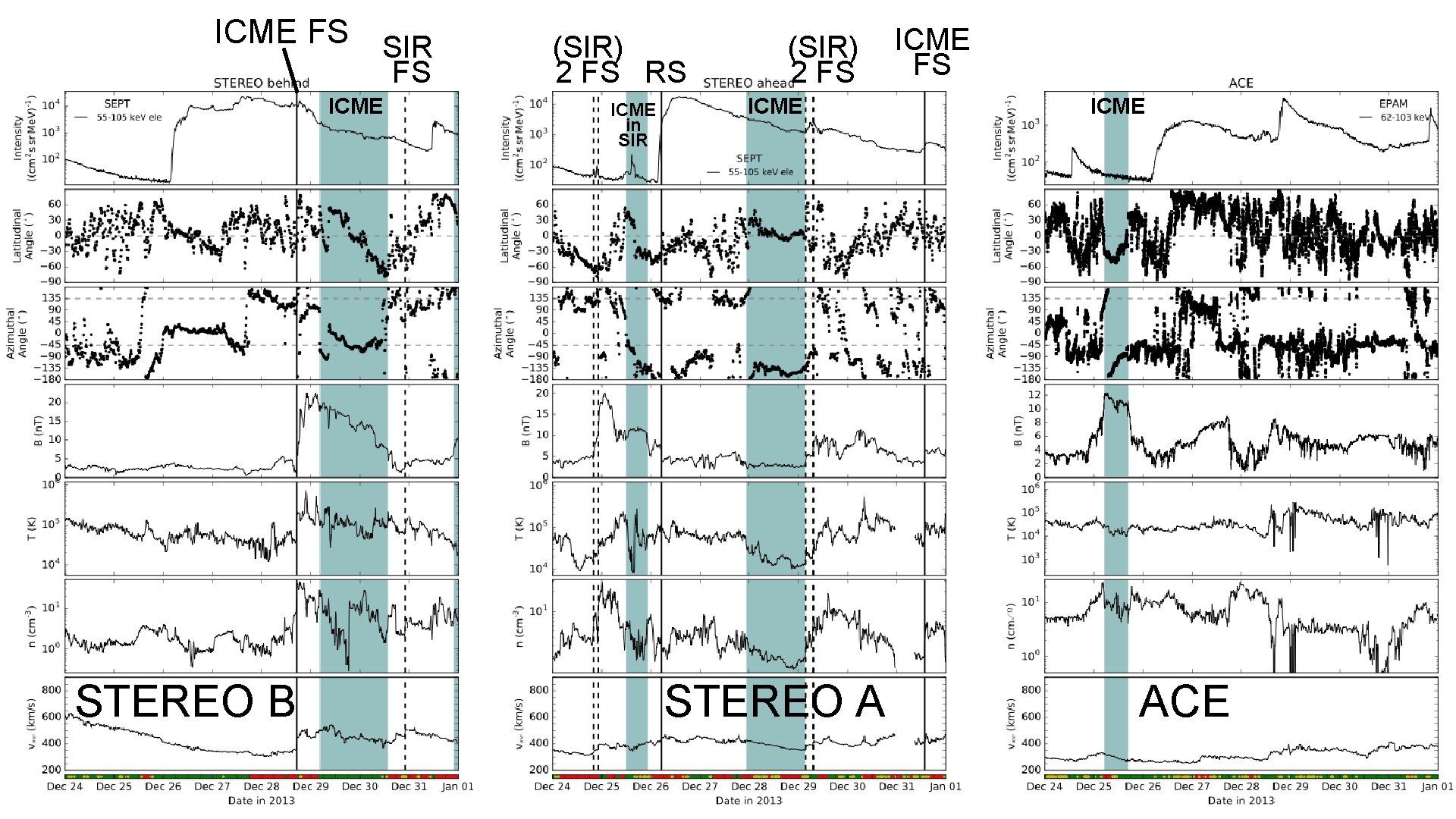
ICME FS SIR FS ICME STEREO B (SIR) 2 FS RS ICME in SIR (SIR) 2 FS ICME STEREO A ICME FS ICME ACE
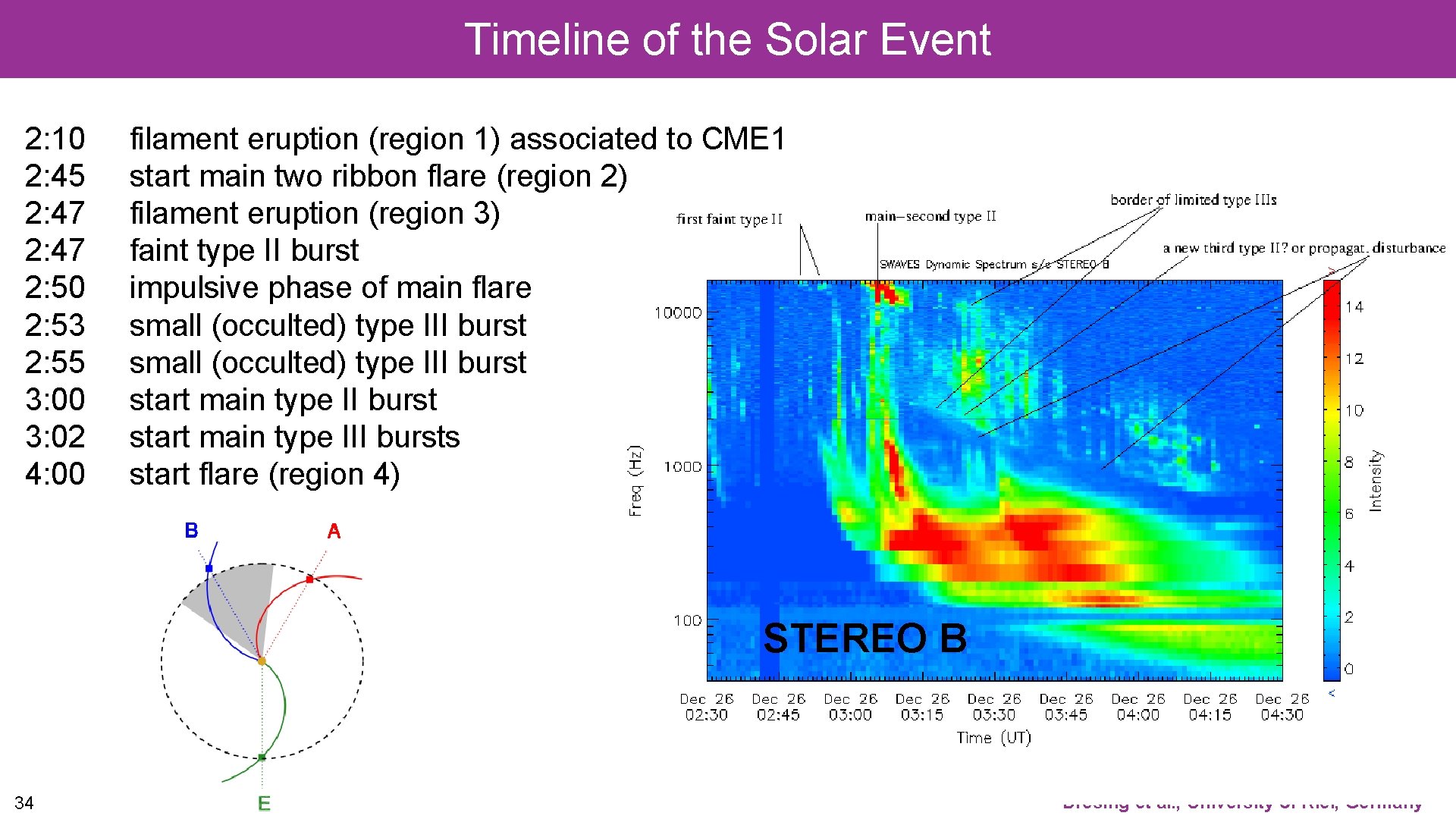
Timeline of the Solar Event 2: 10 2: 45 2: 47 2: 50 2: 53 2: 55 3: 00 3: 02 4: 00 filament eruption (region 1) associated to CME 1 start main two ribbon flare (region 2) filament eruption (region 3) faint type II burst impulsive phase of main flare small (occulted) type III burst start main type III bursts start flare (region 4) STEREO B 34 Dresing et al. , University of Kiel, Germany
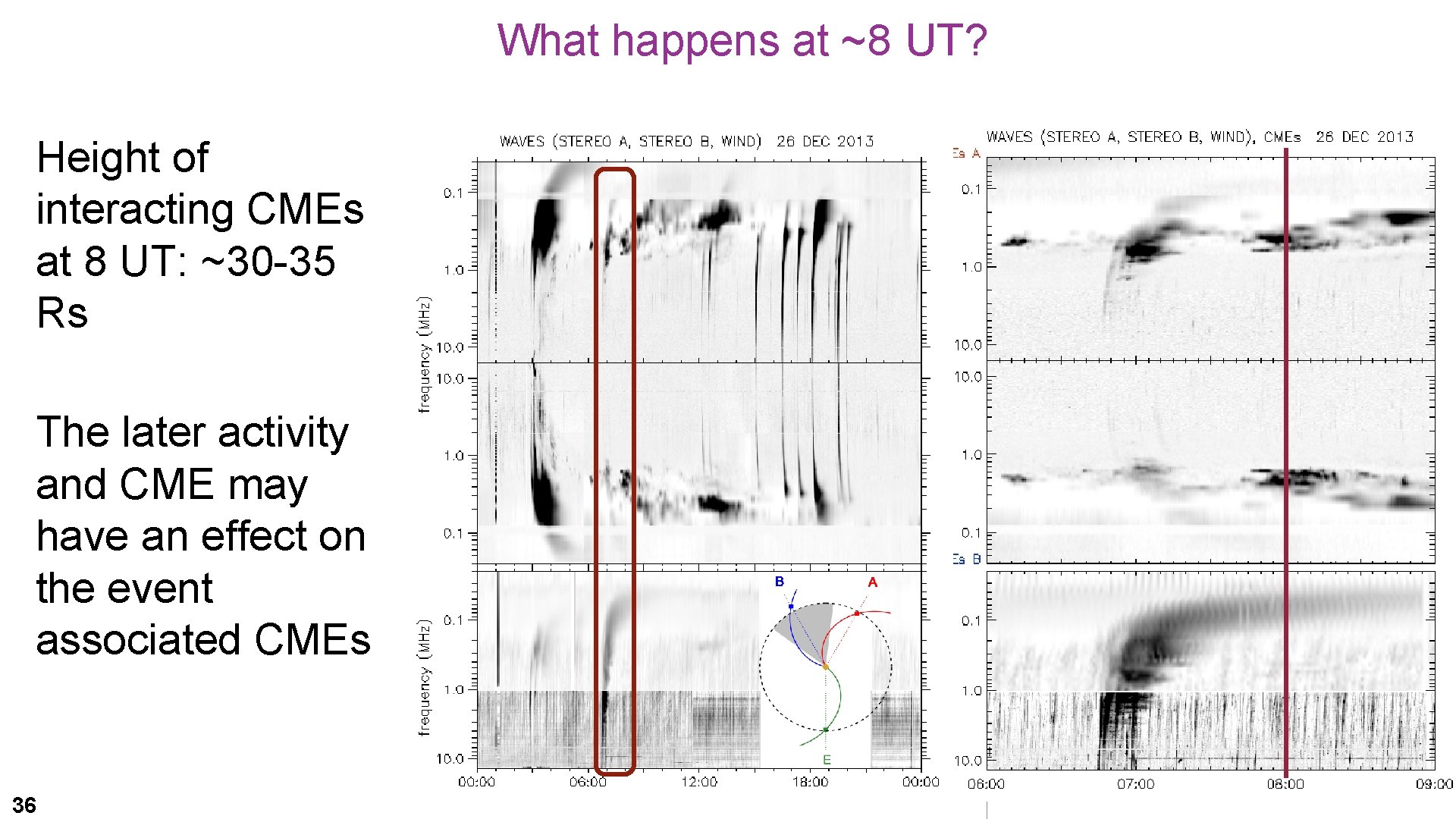
Radio Observations What happens at ~8 UT? 35 Dresing et al. , University of Kiel, Germany
Radio Observations What happens at ~8 UT? Height of interacting CMEs at 8 UT: ~30 -35 Rs The later activity and CME may have an effect on the event associated CMEs 36 Dresing et al. , University of Kiel, Germany