Chapter 6 4 Operating Systems Outline Functions of
- Slides: 24
Chapter 6. 4 : Operating Systems Outline: – Functions of an OS – Historical Overview – The Future CMPUT 101 (c) Vadim Bulitko, Jia You 1
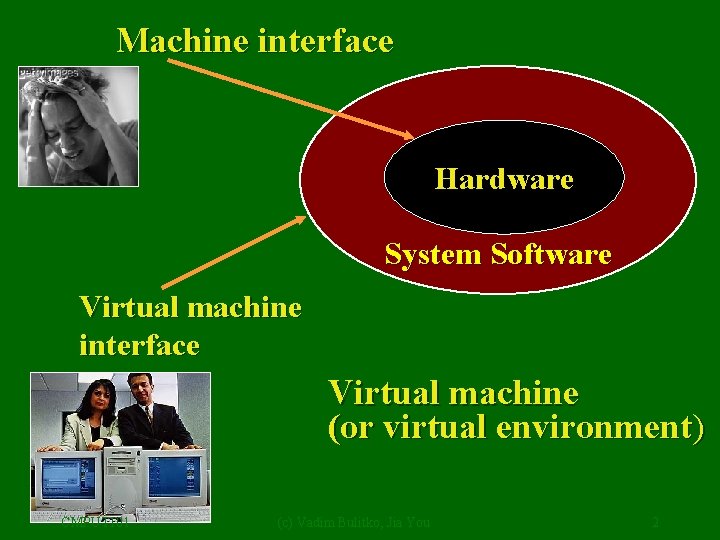
Machine interface Hardware System Software Virtual machine interface Virtual machine (or virtual environment) CMPUT 101 (c) Vadim Bulitko, Jia You 2
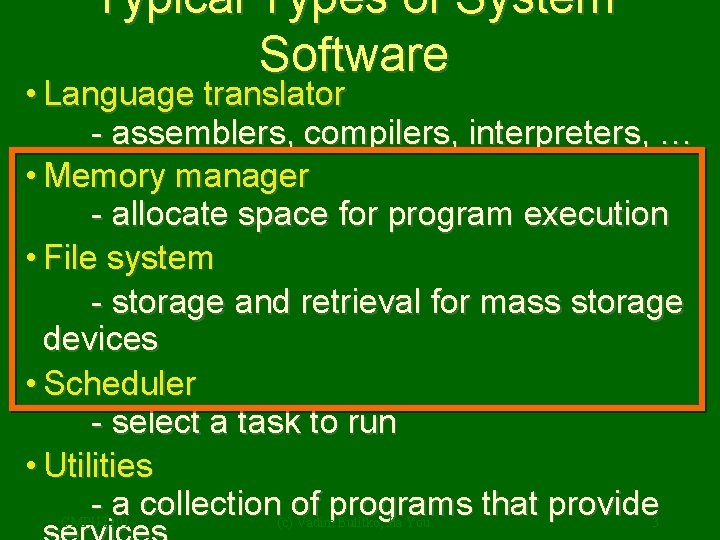
Typical Types of System Software • Language translator - assemblers, compilers, interpreters, … • Memory manager - allocate space for program execution • File system - storage and retrieval for mass storage devices • Scheduler - select a task to run • Utilities - a collection(c)of programs that provide 3 CMPUT 101 Vadim Bulitko, Jia You
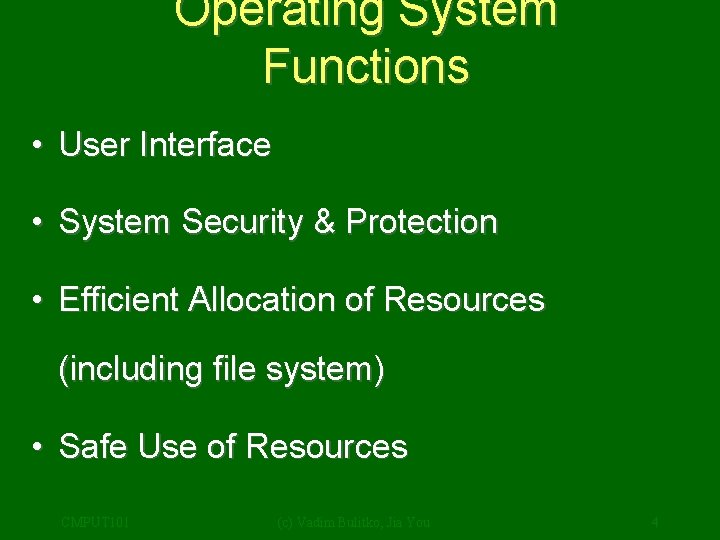
Operating System Functions • User Interface • System Security & Protection • Efficient Allocation of Resources (including file system) • Safe Use of Resources CMPUT 101 (c) Vadim Bulitko, Jia You 4
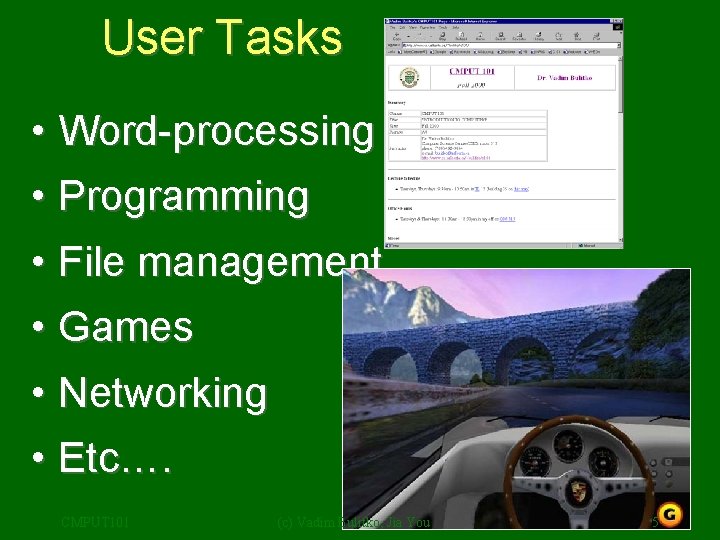
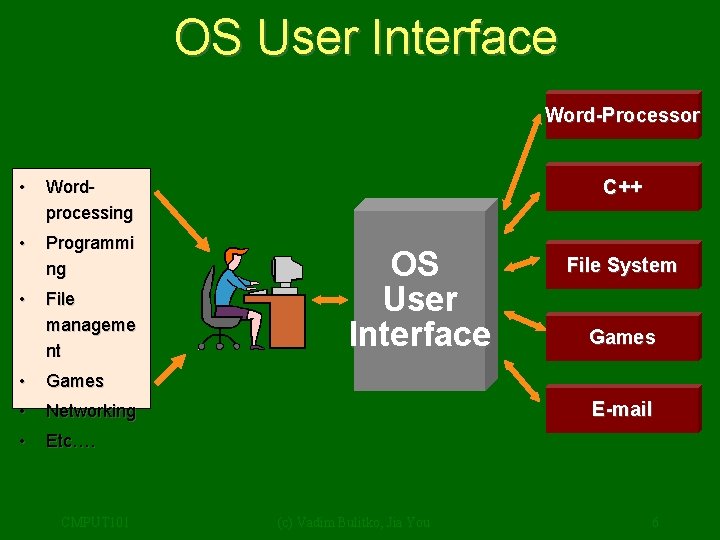
User Tasks • Word-processing • Programming • File management • Games • Networking • Etc…. CMPUT 101 (c) Vadim Bulitko, Jia You 5
OS User Interface Word-Processor • Wordprocessing • Programmi ng • File manageme nt • Games • Networking • Etc…. CMPUT 101 C++ OS User Interface File System Games E-mail (c) Vadim Bulitko, Jia You 6
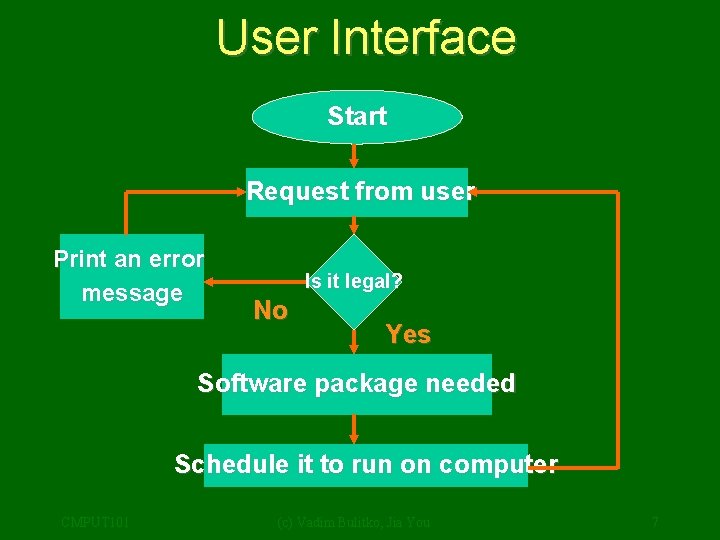
User Interface Start Request from user Print an error message Is it legal? No Yes Software package needed Schedule it to run on computer CMPUT 101 (c) Vadim Bulitko, Jia You 7
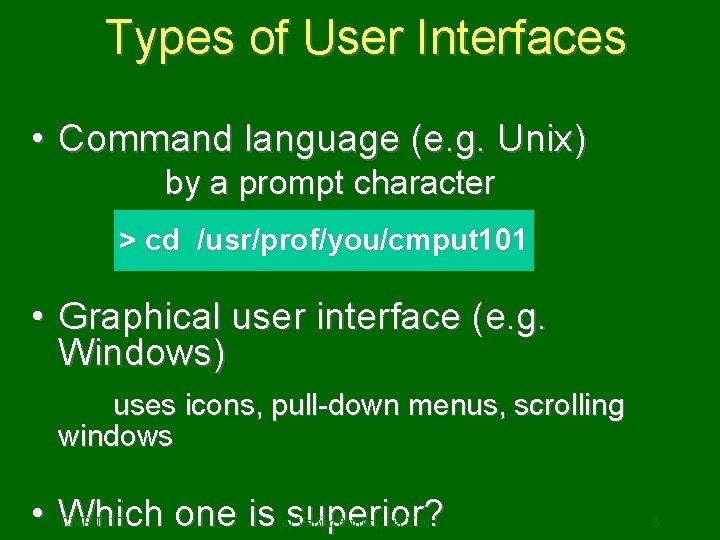
Types of User Interfaces • Command language (e. g. Unix) by a prompt character > cd /usr/prof/you/cmput 101 • Graphical user interface (e. g. Windows) uses icons, pull-down menus, scrolling windows • Which one is superior? CMPUT 101 (c) Vadim Bulitko, Jia You 8
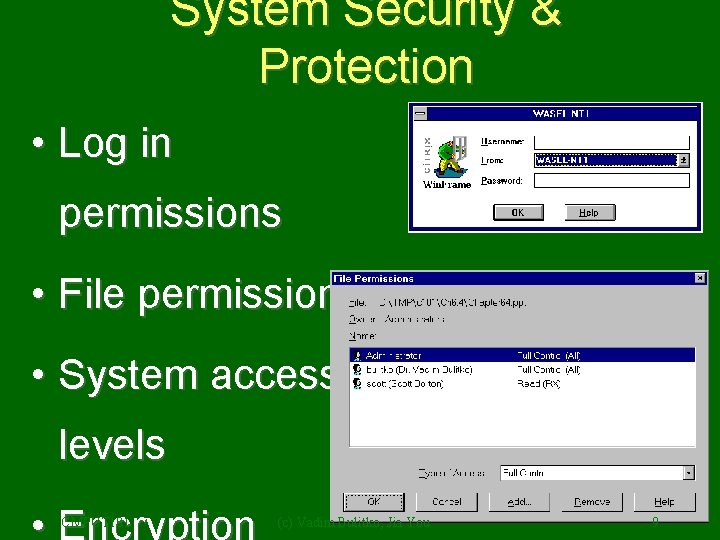
System Security & Protection • Log in permissions • File permissions • System access levels • Encryption CMPUT 101 (c) Vadim Bulitko, Jia You 9
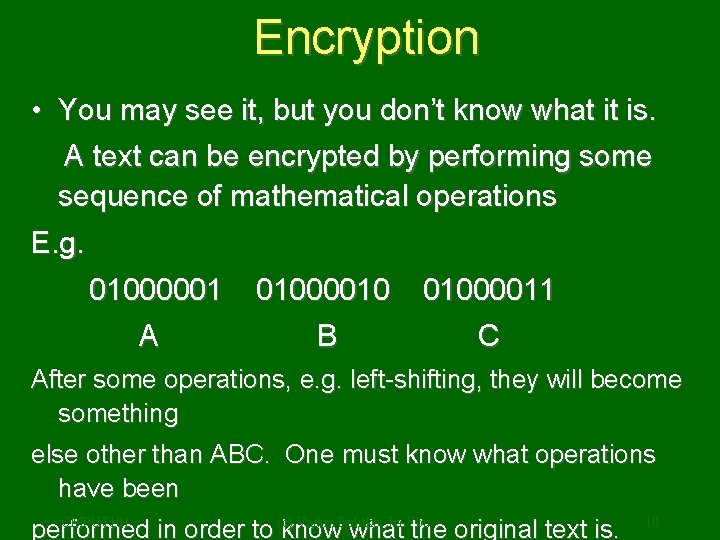
Encryption • You may see it, but you don’t know what it is. A text can be encrypted by performing some sequence of mathematical operations E. g. 01000001 01000010 01000011 A B C After some operations, e. g. left-shifting, they will become something else other than ABC. One must know what operations have been CMPUT 101 Vadim Bulitko, Jia You performed in order to (c)know what the original text is. 10
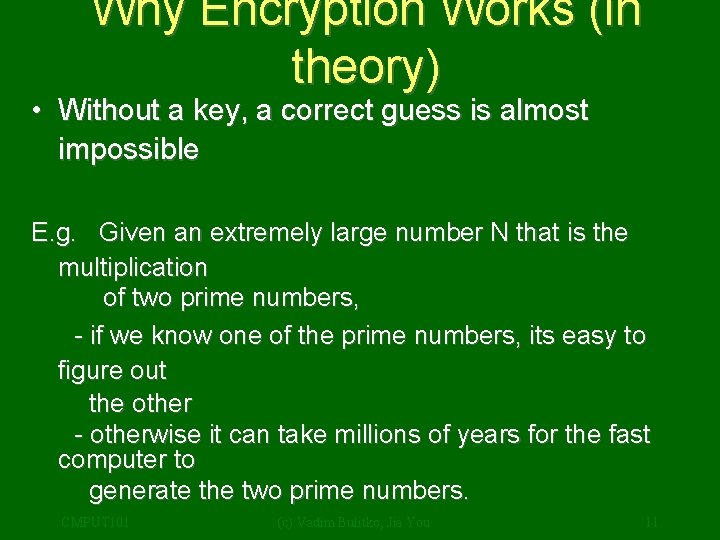
Why Encryption Works (in theory) • Without a key, a correct guess is almost impossible E. g. Given an extremely large number N that is the multiplication of two prime numbers, - if we know one of the prime numbers, its easy to figure out the other - otherwise it can take millions of years for the fast computer to generate the two prime numbers. CMPUT 101 (c) Vadim Bulitko, Jia You 11
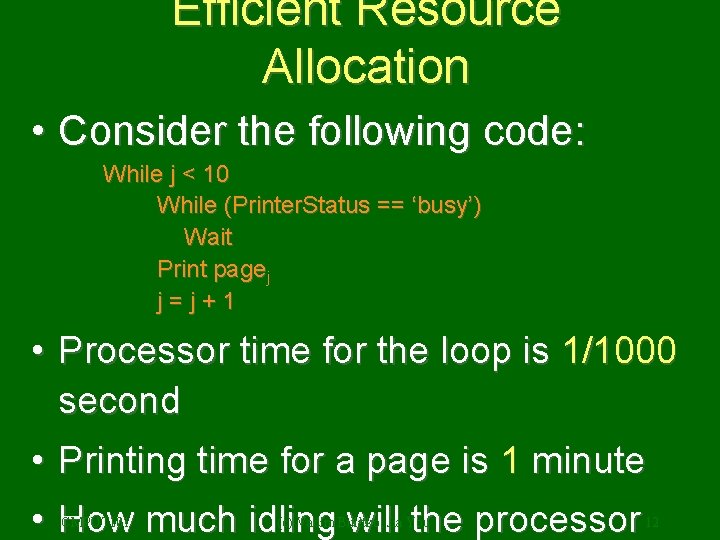
Efficient Resource Allocation • Consider the following code: While j < 10 While (Printer. Status == ‘busy’) Wait Print pagej j=j+1 • Processor time for the loop is 1/1000 second • Printing time for a page is 1 minute • How much idling will the processor CMPUT 101 (c) Vadim Bulitko, Jia You 12
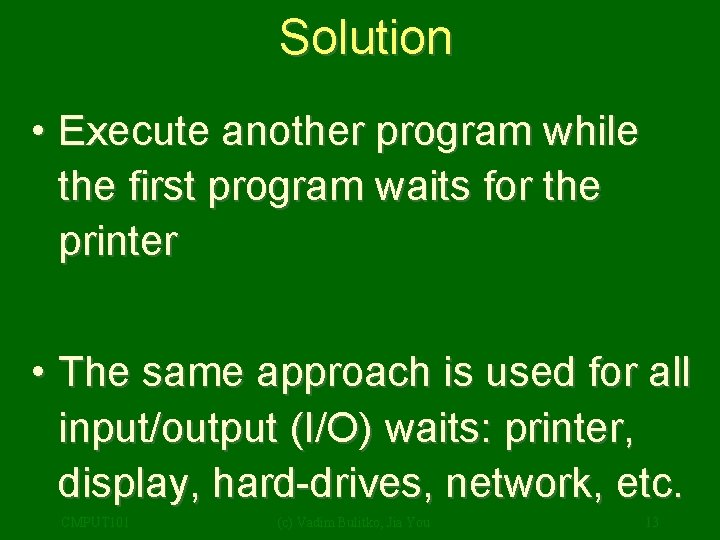
Solution • Execute another program while the first program waits for the printer • The same approach is used for all input/output (I/O) waits: printer, display, hard-drives, network, etc. CMPUT 101 (c) Vadim Bulitko, Jia You 13
Time Sharing There are many programs that need to run at a given time: E. g. Editing using Microsoft Word Surfing the net using a browser Compiling a C++ program But there is only one processor on a computer CMPUT 101 (c) Vadim Bulitko, Jia You 14
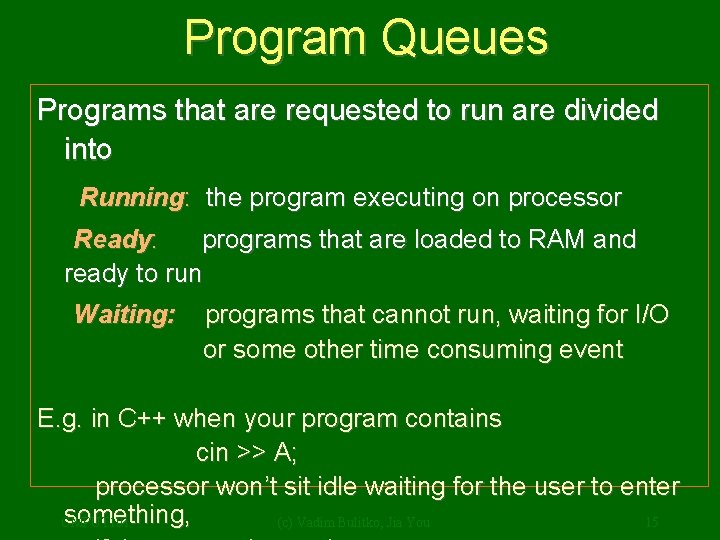
Program Queues Programs that are requested to run are divided into Running: the program executing on processor Ready: programs that are loaded to RAM and ready to run Waiting: programs that cannot run, waiting for I/O or some other time consuming event E. g. in C++ when your program contains cin >> A; processor won’t sit idle waiting for the user to enter something, CMPUT 101 (c) Vadim Bulitko, Jia You 15
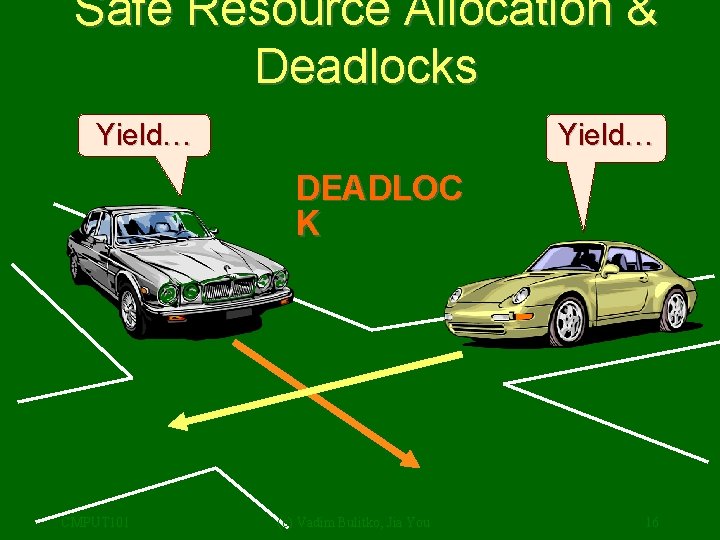
Safe Resource Allocation & Deadlocks Yield… DEADLOC K CMPUT 101 (c) Vadim Bulitko, Jia You 16
Deadlock: another example • John borrowed book A from the library. - John is holding book A but also needs book B to complete his assignment • Marry borrowed book B from the library. - Marry is holding book B but also needs book A to complete her homework This is a deadlock (c)situation. As a result, no one 17 CMPUT 101 Vadim Bulitko, Jia You
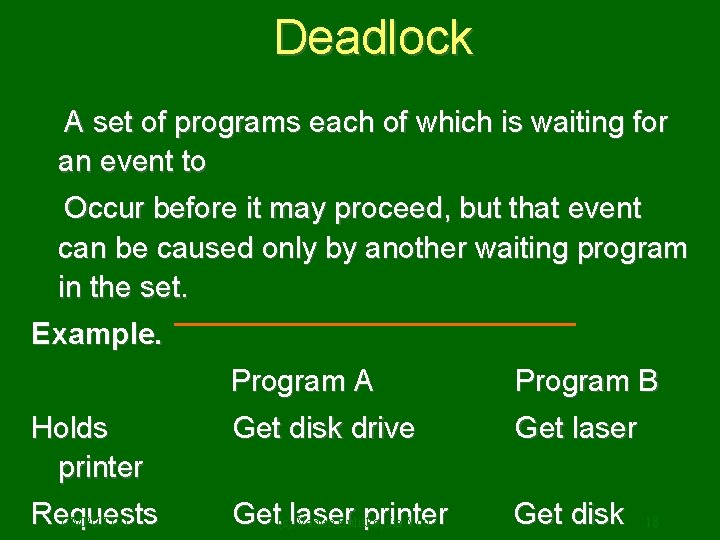
Deadlock A set of programs each of which is waiting for an event to Occur before it may proceed, but that event can be caused only by another waiting program in the set. Example. Program A Program B Holds printer Get disk drive Get laser Requests CMPUT 101 Get(c)laser printer Vadim Bulitko, Jia You Get disk 18
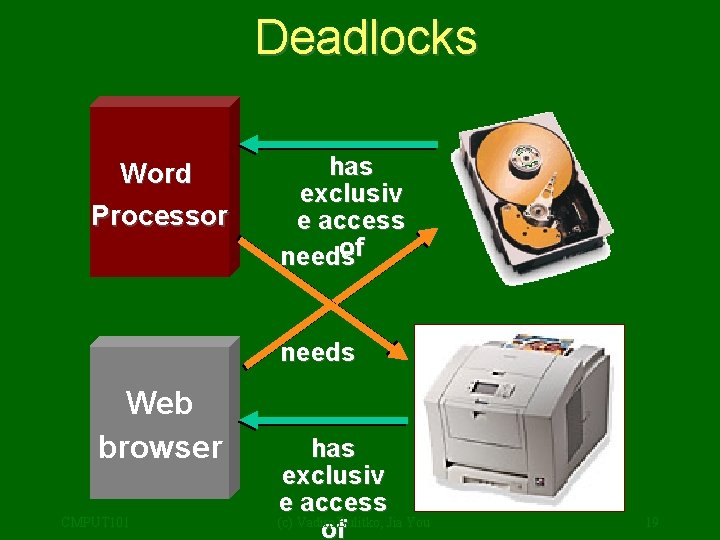
Deadlocks Word Processor has exclusiv e access of needs Web browser CMPUT 101 has exclusiv e access (c) Vadim Bulitko, Jia You of 19
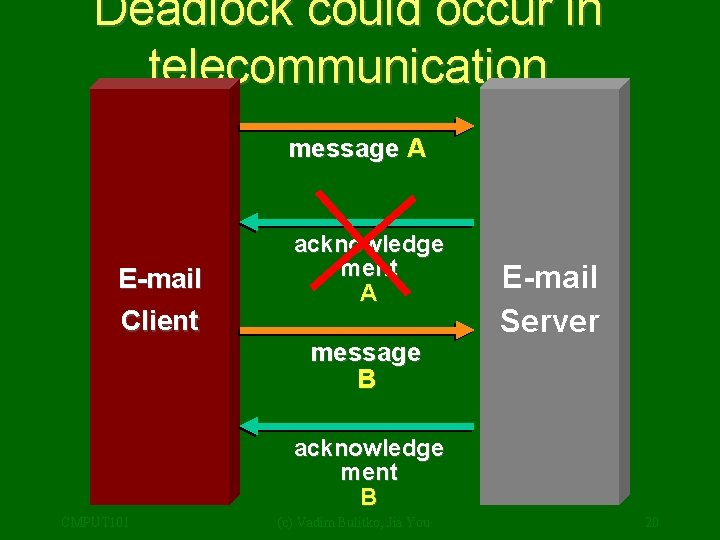
Deadlock could occur in telecommunication message A E-mail Client acknowledge ment A message B E-mail Server acknowledge ment B CMPUT 101 (c) Vadim Bulitko, Jia You 20
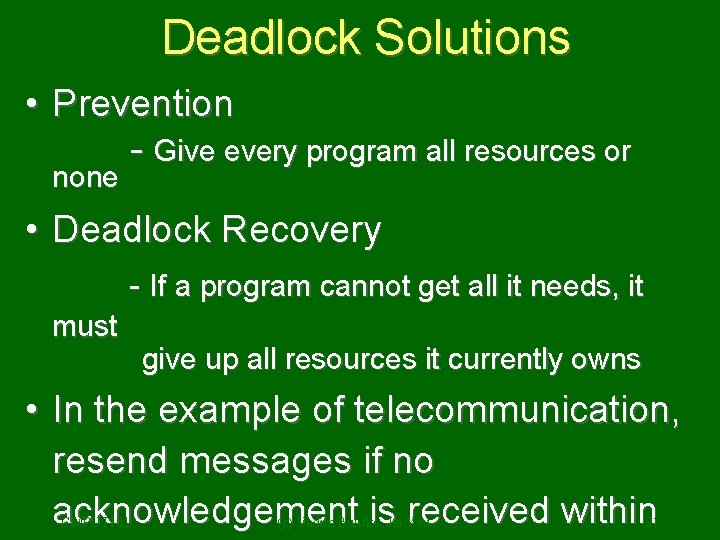
Deadlock Solutions • Prevention - Give every program all resources or none • Deadlock Recovery - If a program cannot get all it needs, it must give up all resources it currently owns • In the example of telecommunication, resend messages if no acknowledgement is received within CMPUT 101 (c) Vadim Bulitko, Jia You 21
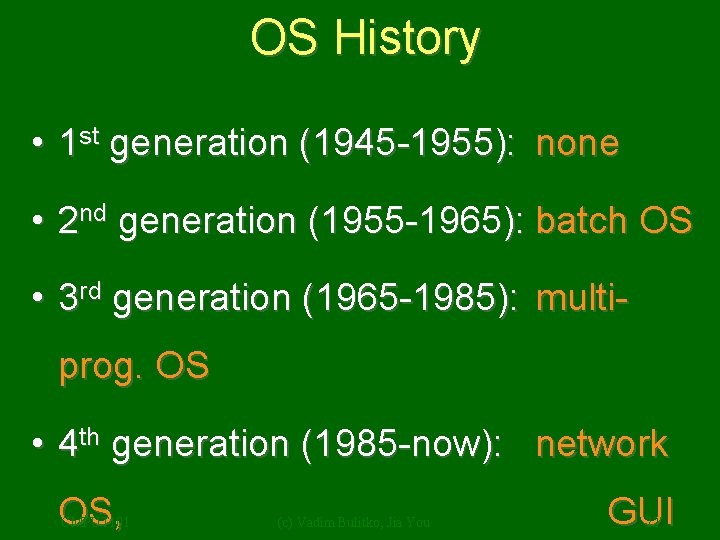
OS History • 1 st generation (1945 -1955): none • 2 nd generation (1955 -1965): batch OS • 3 rd generation (1965 -1985): multiprog. OS • 4 th generation (1985 -now): network OS, CMPUT 101 (c) Vadim Bulitko, Jia You GUI 22
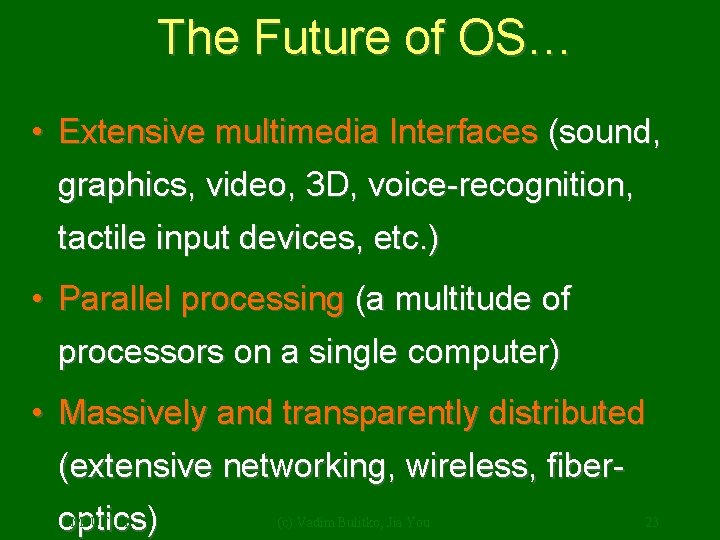
The Future of OS… • Extensive multimedia Interfaces (sound, graphics, video, 3 D, voice-recognition, tactile input devices, etc. ) • Parallel processing (a multitude of processors on a single computer) • Massively and transparently distributed (extensive networking, wireless, fiber. CMPUT 101 optics) (c) Vadim Bulitko, Jia You 23
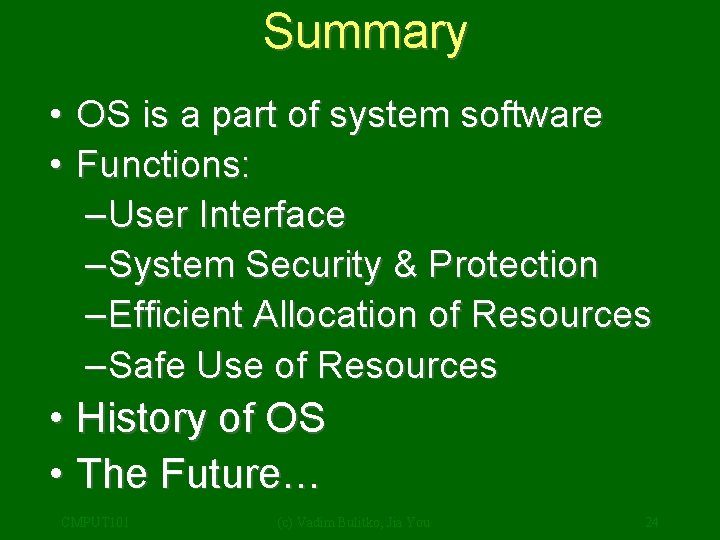
Summary • OS is a part of system software • Functions: –User Interface –System Security & Protection –Efficient Allocation of Resources –Safe Use of Resources • History of OS • The Future… CMPUT 101 (c) Vadim Bulitko, Jia You 24