Chapter 1 4 CHANGES IN COMMUNITIES Succession a
- Slides: 18
Chapter 1. 4 CHANGES IN COMMUNITIES
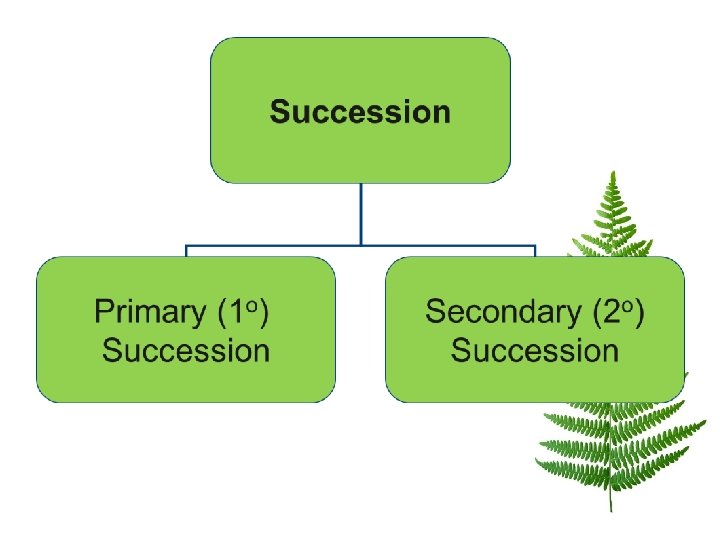
Succession: a gradual change in population of organisms that happens when the environment changes. The environment does not always stay the same. When an environment changes, its populations are slowly replaced by new populations.
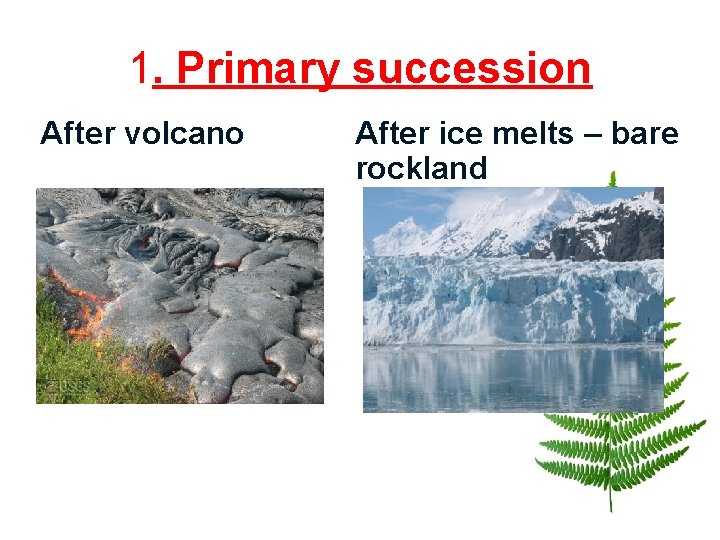
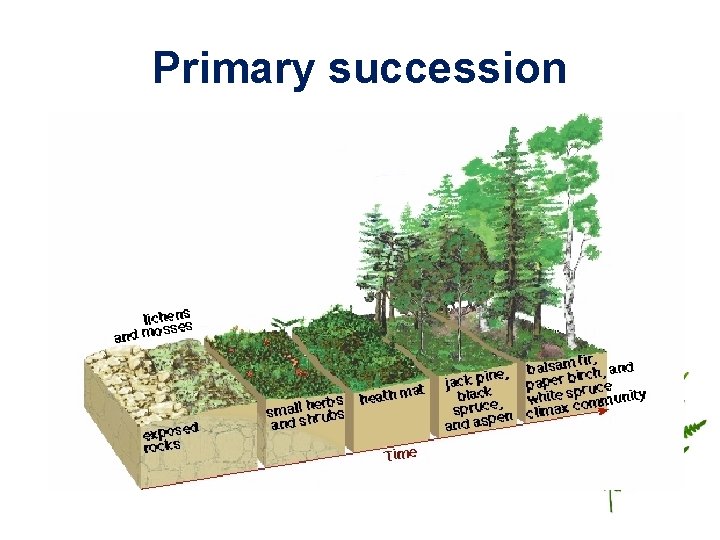
1. Primary succession - succession that occurs on surfaces where there is no soil (slow succession). Example: after volcanic eruptions, there is an empty land OR bare rock land when glaciers melt.
1. Primary succession After volcano After ice melts – bare rockland
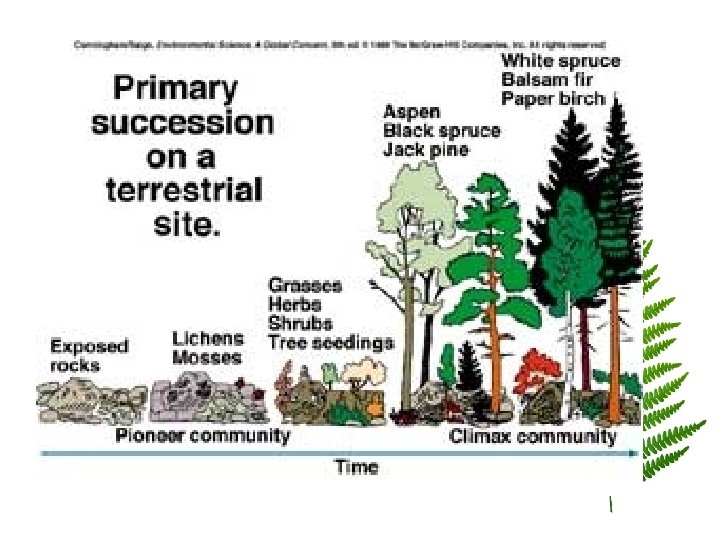
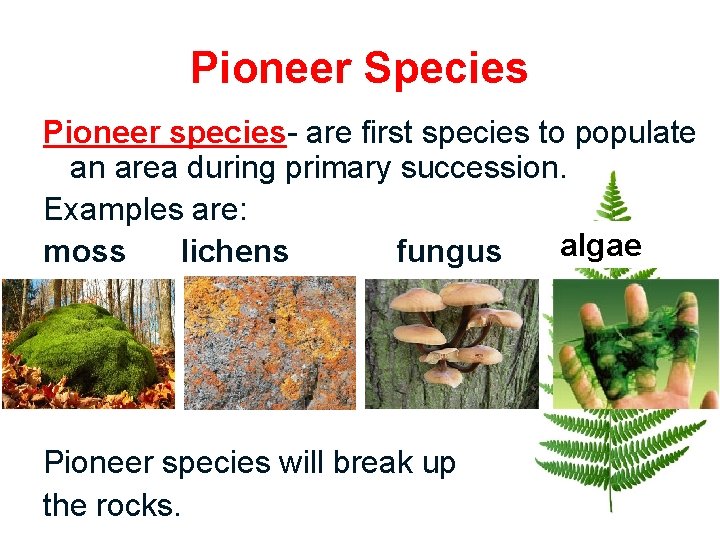
Pioneer Species Pioneer species- are first species to populate an area during primary succession. Examples are: algae moss lichens fungus Pioneer species will break up the rocks.
Primary succession
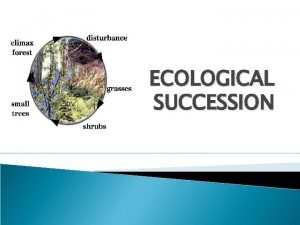
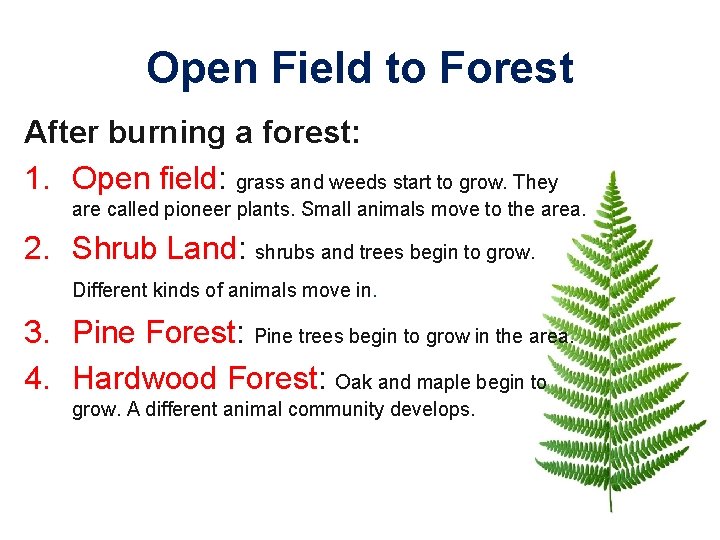
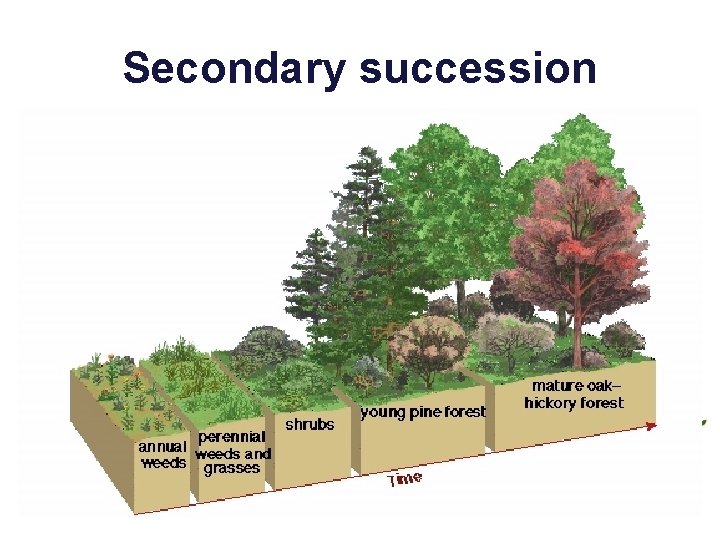
Open Field to Forest After burning a forest: 1. Open field: grass and weeds start to grow. They are called pioneer plants. Small animals move to the area. 2. Shrub Land: shrubs and trees begin to grow. Different kinds of animals move in. 3. Pine Forest: Pine trees begin to grow in the area. 4. Hardwood Forest: Oak and maple begin to grow. A different animal community develops.
2. Secondary succession: -succession following a disturbance that destroys a community without destroying the soil (the soil is still good; fast succession). Examples: -after fire -after hurricane -after tornado -abandoned farm
Secondary succession
What are some pioneer species?
What are two natural events that can disturb an ecosystem?
What is primary succession?
Why is 1 o succession slow?
In what area does 2 o happen?
Section 1. 4 Assessment 1 a. What is primary succession? What is secondary succession? 1 b. How do primary succession and secondary succession differ?
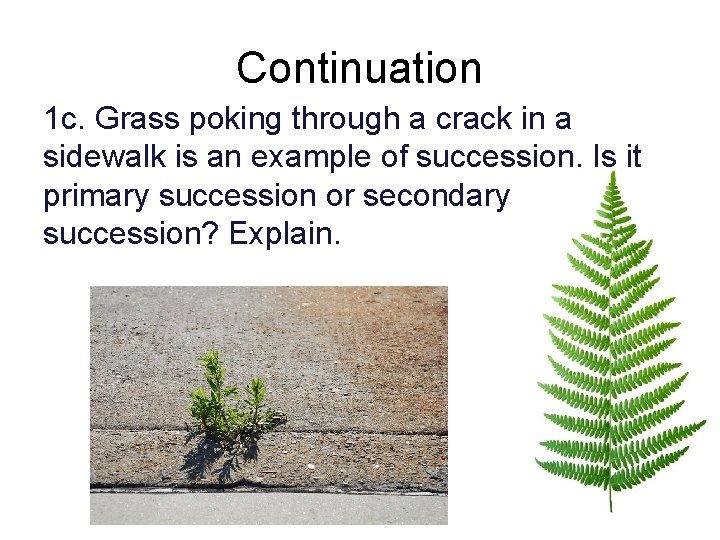
Continuation 1 c. Grass poking through a crack in a sidewalk is an example of succession. Is it primary succession or secondary succession? Explain.