Australian Livestock ID Systems What Can We Learn

- Slides: 18
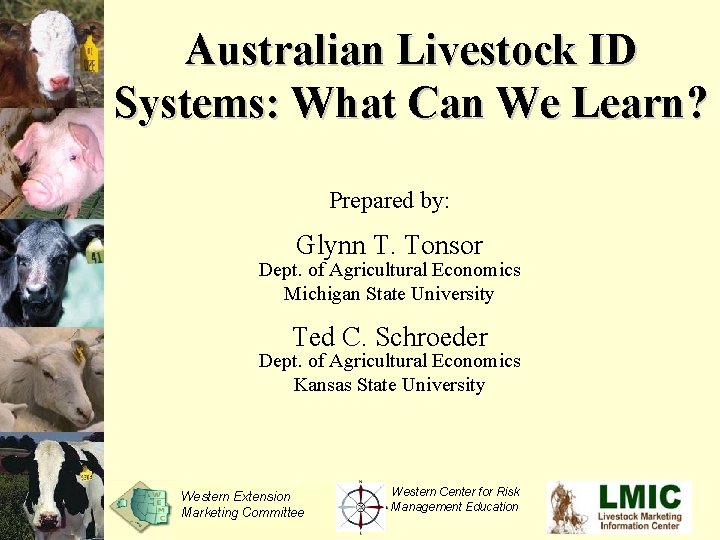
Australian Livestock ID Systems: What Can We Learn? Prepared by: Glynn T. Tonsor Dept. of Agricultural Economics Michigan State University Ted C. Schroeder Dept. of Agricultural Economics Kansas State University Western Extension Marketing Committee Western Center for Risk Management Education
Introduction and Overview • International meat market changes – Animal traceability emergence • Why study Australia’s National Livestock Identification System (NLIS)? • What we learned from examining the Australian system • What are the implications for U. S. producers?
Changing International Meat Market • What is animal traceability? • Economic incentives of traceability: – Animal health – Food safety concerns • Satisfying both foreign AND domestic consumers – Verifying credence attributes – Properly assign liability – Improving management
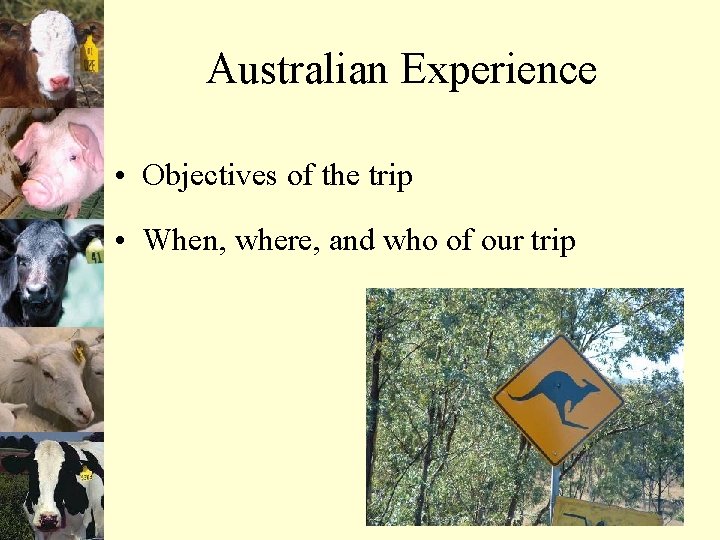
Australian Experience • Objectives of the trip • When, where, and who of our trip
Australia’s Beef Industry • One of the World’s largest beef exporters – Australia exports > 65% of their production, vs. U. S. , which exports <15% of production • Around 60% of Australian cattle are “grass-fed” • Around 80% of Australian “grain-fed” cattle are fed for less than 130 days – Primary market for “grain-fed” Aussie beef is Japan • Feedlot sector is much smaller and average operation size is much larger than in the U. S. • Total cattle herd is ¼ size of U. S. herd Source: Meat and Livestock Australia (MLA), 2006
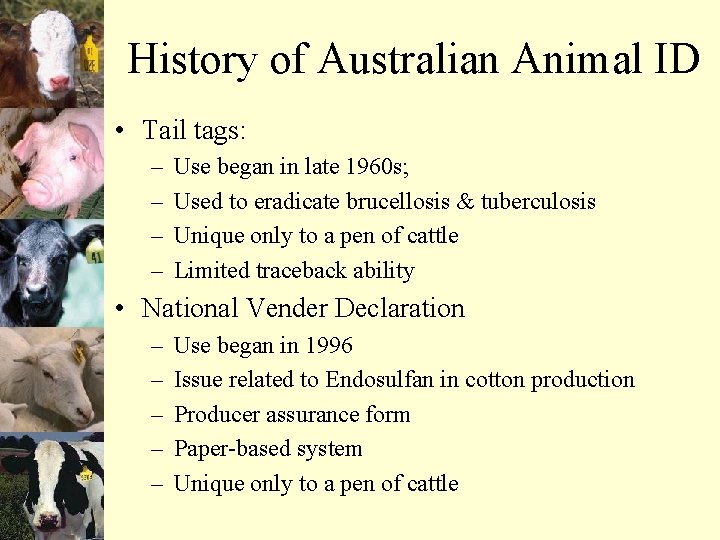
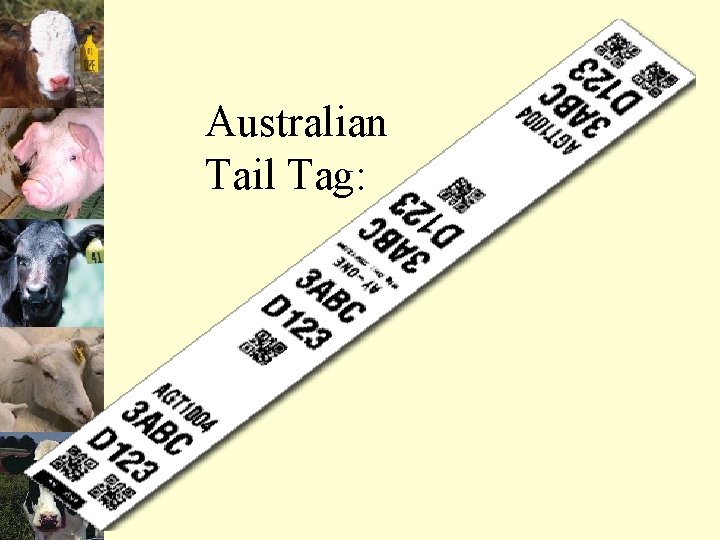
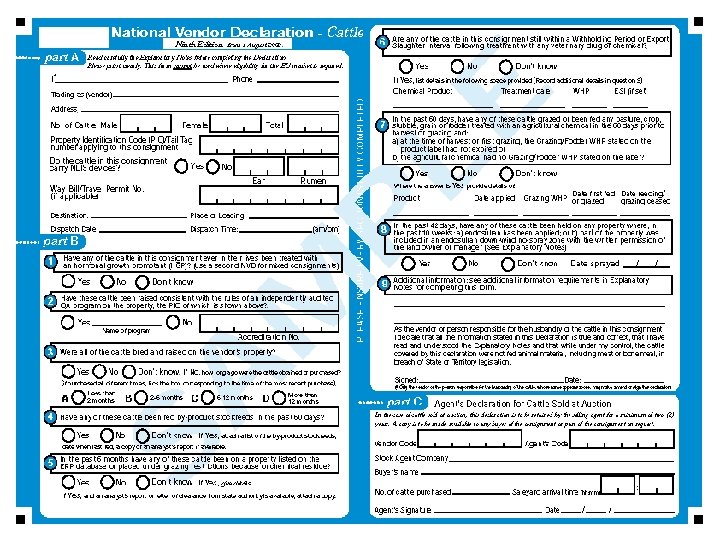
History of Australian Animal ID • Tail tags: – – Use began in late 1960 s; Used to eradicate brucellosis & tuberculosis Unique only to a pen of cattle Limited traceback ability • National Vender Declaration – – – Use began in 1996 Issue related to Endosulfan in cotton production Producer assurance form Paper-based system Unique only to a pen of cattle
Australian Tail Tag:
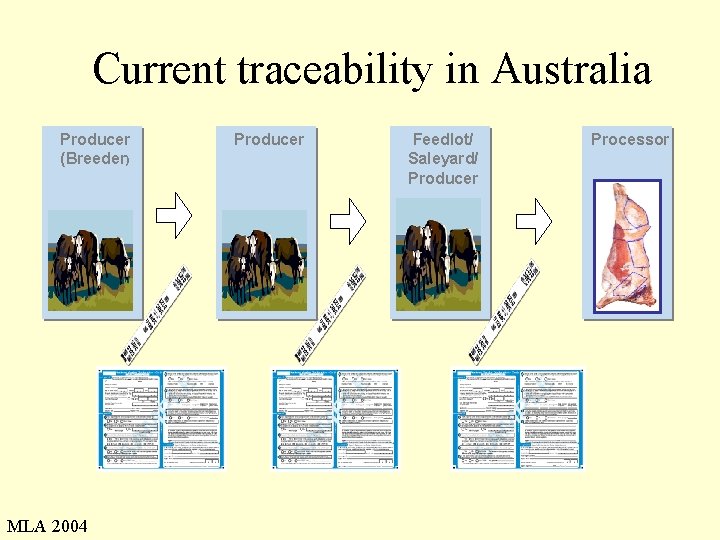
Current traceability in Australia Producer (Breeder) MLA 2004 Producer Feedlot/ Saleyard/ Producer Processor
Current Australian Individual ID • National Livestock Identification System – Whole-of-life individual ID system – Uses RFID technology – Database of animal movements – Implemented in phases by states – Compatible with other services • Meat traceability • Intensive on-farm management
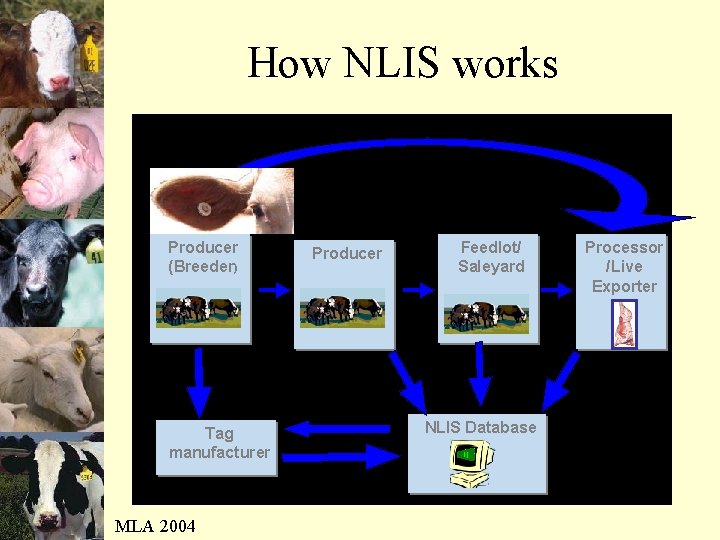
How NLIS works Producer (Breeder) Tag manufacturer MLA 2004 Producer Feedlot/ Saleyard NLIS Database Processor /Live Exporter
Current Australian Individual ID • NLIS Implementation – Various state schedules – First tag newborn calves – 1 yr later mandate reading RFID tags • Benefits of NLIS: – Advanced management capabilities – International trade – Food safety reassurance – Meat traceability and niche market development
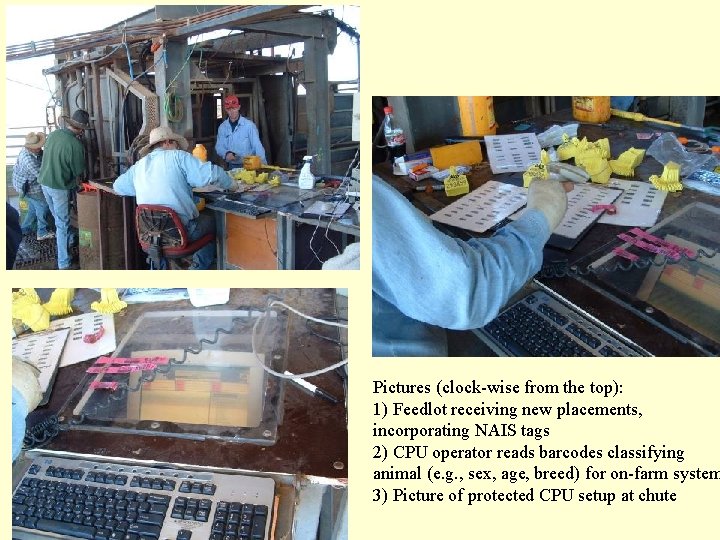
Pictures (clock-wise from the top): 1) Feedlot receiving new placements, incorporating NAIS tags 2) CPU operator reads barcodes classifying animal (e. g. , sex, age, breed) for on-farm system 3) Picture of protected CPU setup at chute
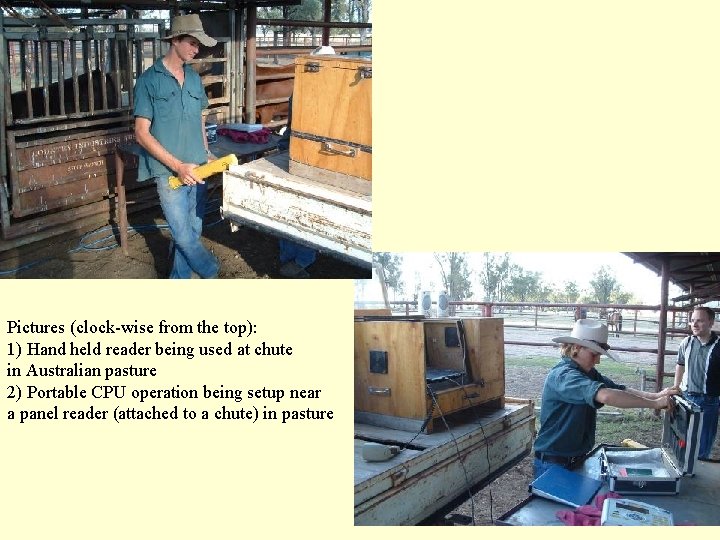
Pictures (clock-wise from the top): 1) Hand held reader being used at chute in Australian pasture 2) Portable CPU operation being setup near a panel reader (attached to a chute) in pasture
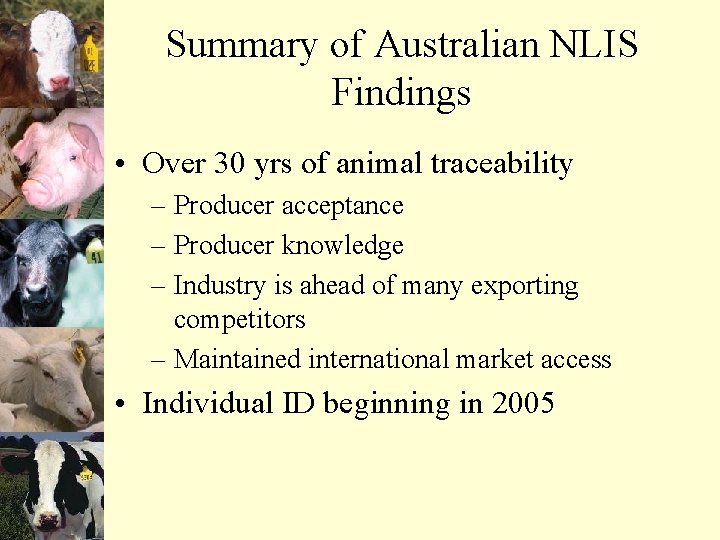
Summary of Australian NLIS Findings • Over 30 yrs of animal traceability – Producer acceptance – Producer knowledge – Industry is ahead of many exporting competitors – Maintained international market access • Individual ID beginning in 2005
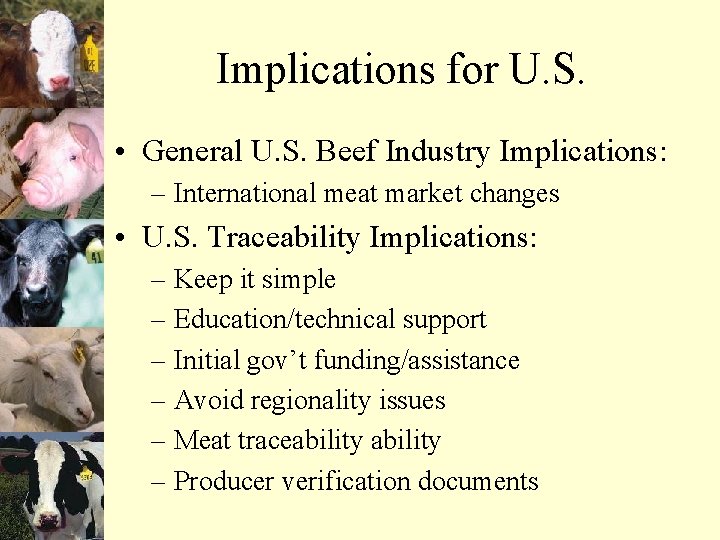
Implications for U. S. • General U. S. Beef Industry Implications: – International meat market changes • U. S. Traceability Implications: – Keep it simple – Education/technical support – Initial gov’t funding/assistance – Avoid regionality issues – Meat traceability – Producer verification documents
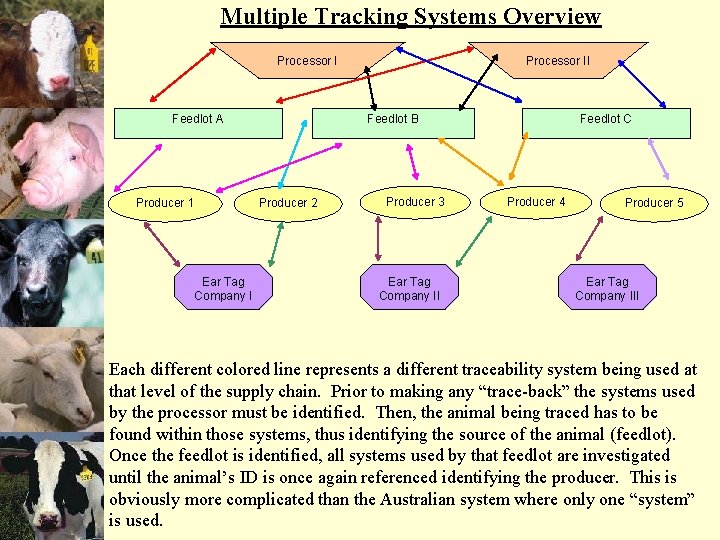
Multiple Tracking Systems Overview Processor I Feedlot A Producer 1 Ear Tag Company I Processor II Feedlot B Producer 2 Producer 3 Ear Tag Company II Feedlot C Producer 4 Producer 5 Ear Tag Company III Each different colored line represents a different traceability system being used at that level of the supply chain. Prior to making any “trace-back” the systems used by the processor must be identified. Then, the animal being traced has to be found within those systems, thus identifying the source of the animal (feedlot). Once the feedlot is identified, all systems used by that feedlot are investigated until the animal’s ID is once again referenced identifying the producer. This is obviously more complicated than the Australian system where only one “system” is used.