APTIMORES APPROACH TO EMOTIONAL INTELLIGENCE 1 The EQ

- Slides: 4
APTIMORE’S APPROACH TO EMOTIONAL INTELLIGENCE 1. The EQ 2 x 2 2. Traditional approaches to EQ 3. Aptimore’s approach to EQ
Learning Emotional Intelligence 2 x 2 EQ matrix Emotional Intelligence is normally represented in a 2 x 2 matrix. The elements of EQ are self-awareness, social awareness, relationship management and self-management. SELF RECOGNITION REGULATION OTHERS Self-Awareness Social Awareness Self-Management Relationship Management 2
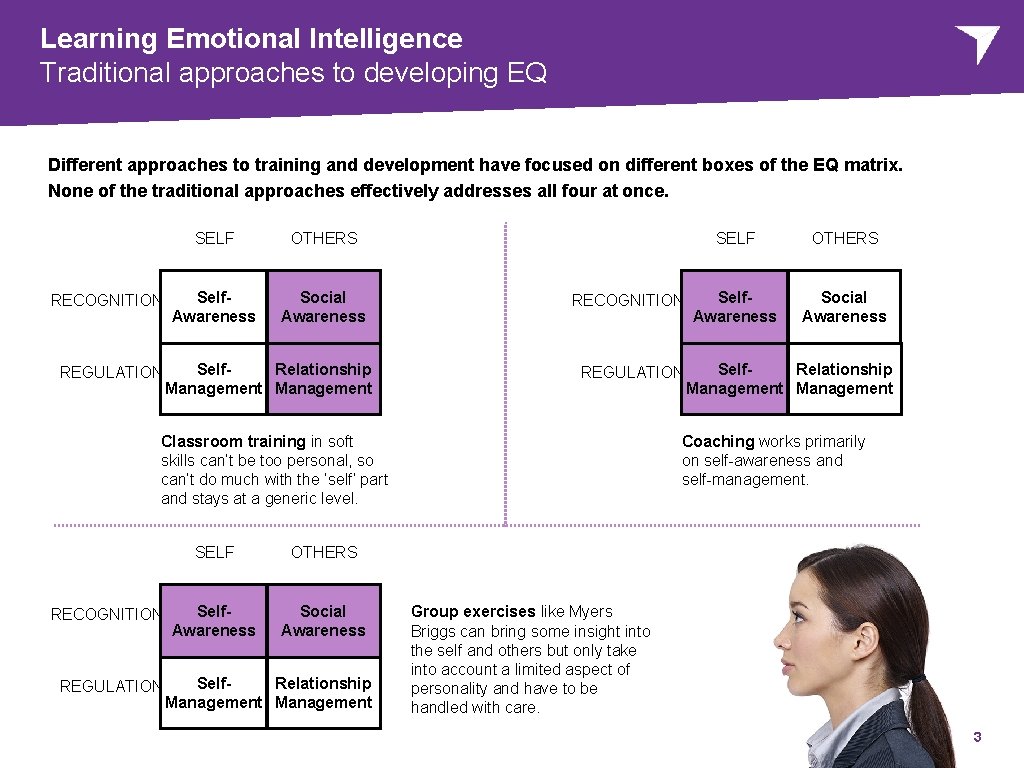
Learning Emotional Intelligence Traditional approaches to developing EQ Different approaches to training and development have focused on different boxes of the EQ matrix. None of the traditional approaches effectively addresses all four at once. RECOGNITION REGULATION SELF OTHERS Self. Awareness Social Awareness Self. Relationship Management RECOGNITION REGULATION Classroom training in soft skills can’t be too personal, so can’t do much with the ‘self’ part and stays at a generic level. RECOGNITION REGULATION SELF OTHERS Self. Awareness Social Awareness Self. Relationship Management Coaching works primarily on self-awareness and self-management. Group exercises like Myers Briggs can bring some insight into the self and others but only take into account a limited aspect of personality and have to be handled with care. 3
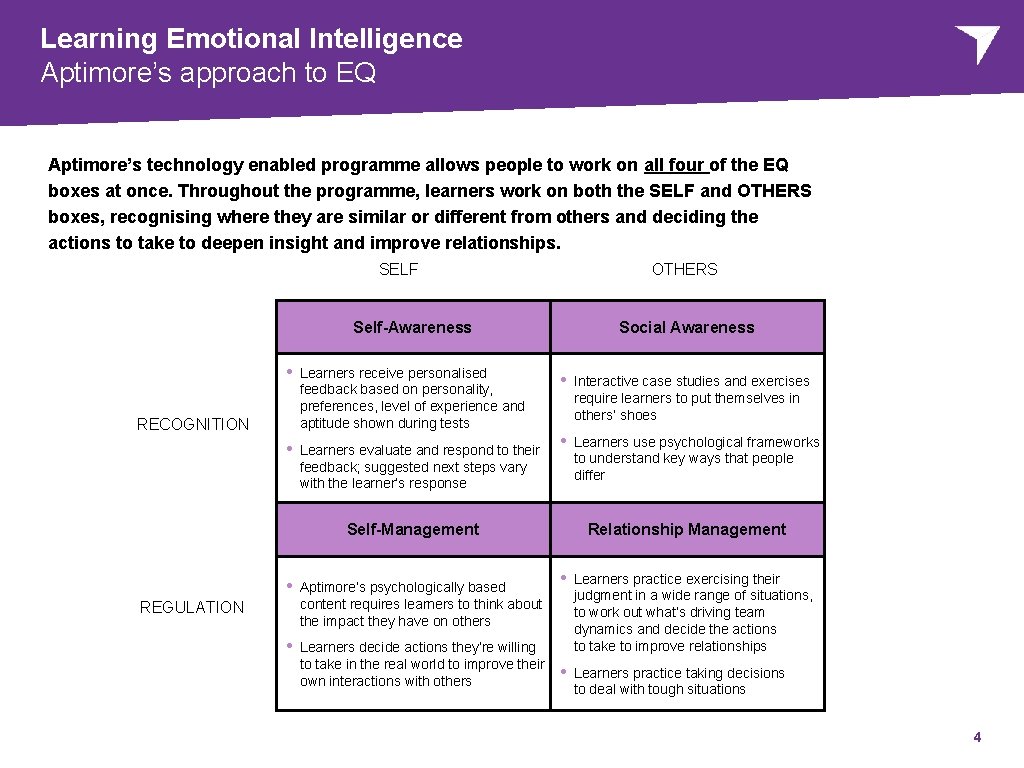
Learning Emotional Intelligence Aptimore’s approach to EQ Aptimore’s technology enabled programme allows people to work on all four of the EQ boxes at once. Throughout the programme, learners work on both the SELF and OTHERS boxes, recognising where they are similar or different from others and deciding the actions to take to deepen insight and improve relationships. SELF OTHERS Self-Awareness • Learners receive personalised feedback based on personality, preferences, level of experience and aptitude shown during tests • Learners evaluate and respond to their feedback; suggested next steps vary with the learner’s response RECOGNITION Social Awareness • Interactive case studies and exercises require learners to put themselves in others’ shoes • Learners use psychological frameworks to understand key ways that people differ Self-Management • Aptimore’s psychologically based content requires learners to think about the impact they have on others • Learners decide actions they’re willing to take in the real world to improve their own interactions with others REGULATION Relationship Management • Learners practice exercising their judgment in a wide range of situations, to work out what’s driving team dynamics and decide the actions to take to improve relationships • Learners practice taking decisions to deal with tough situations 4