Animal Reproduction Overview Asexual one parent no variation
- Slides: 23
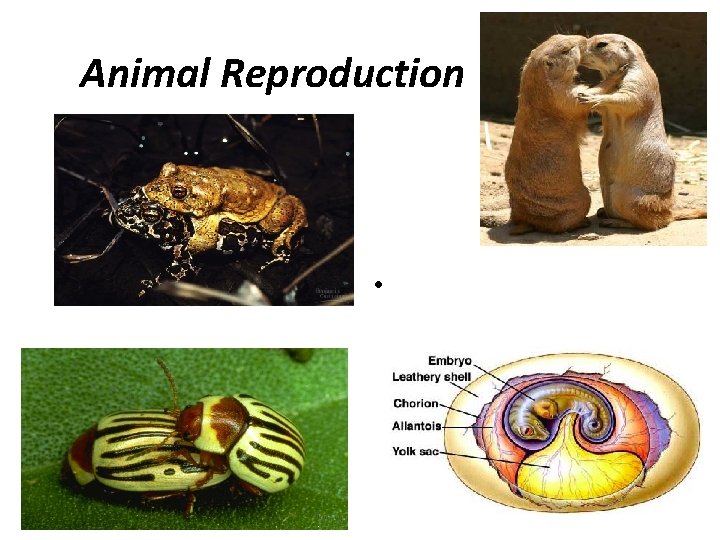
Animal Reproduction •
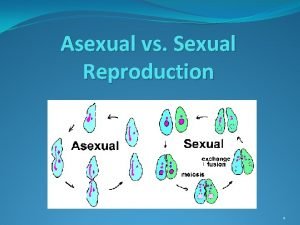
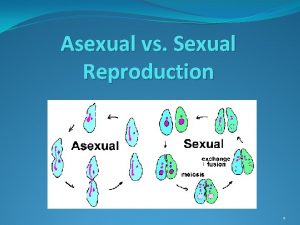
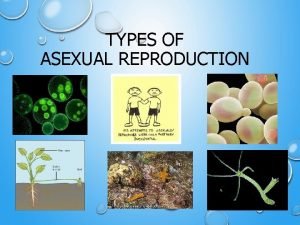
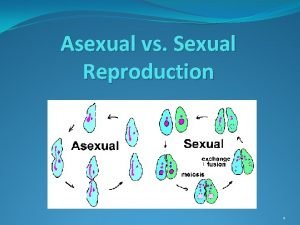
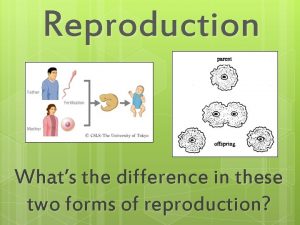
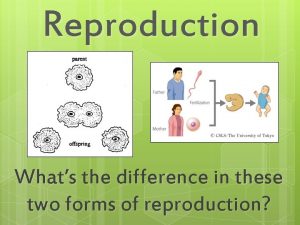
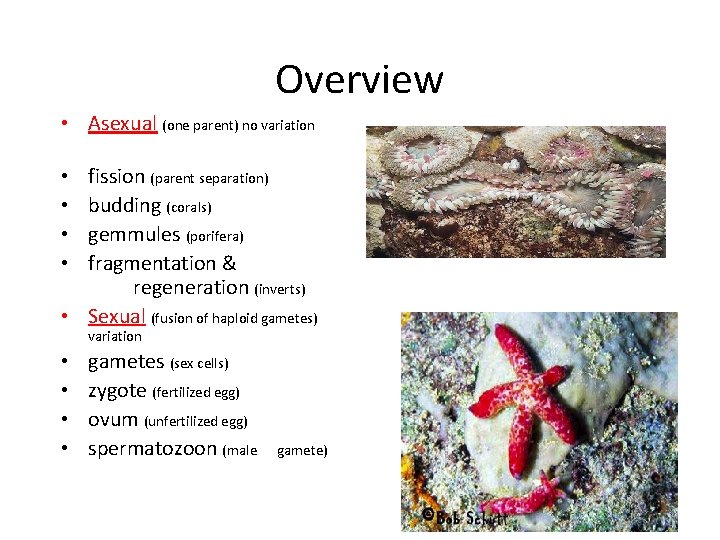
Overview • Asexual (one parent) no variation • fission (parent separation) • budding (corals) • gemmules (porifera) • fragmentation & regeneration (inverts) • Sexual (fusion of haploid gametes) variation • • gametes (sex cells) zygote (fertilized egg) ovum (unfertilized egg) spermatozoon (male gamete)
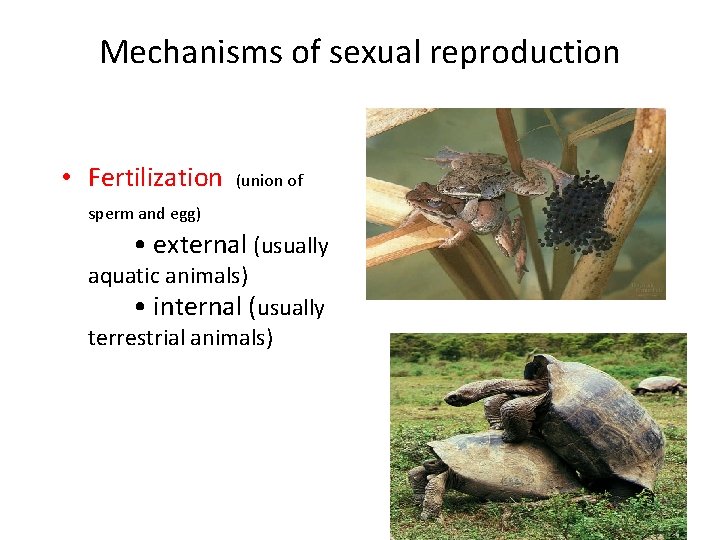
Mechanisms of sexual reproduction • Fertilization (union of sperm and egg) • external (usually aquatic animals) • internal (usually terrestrial animals)
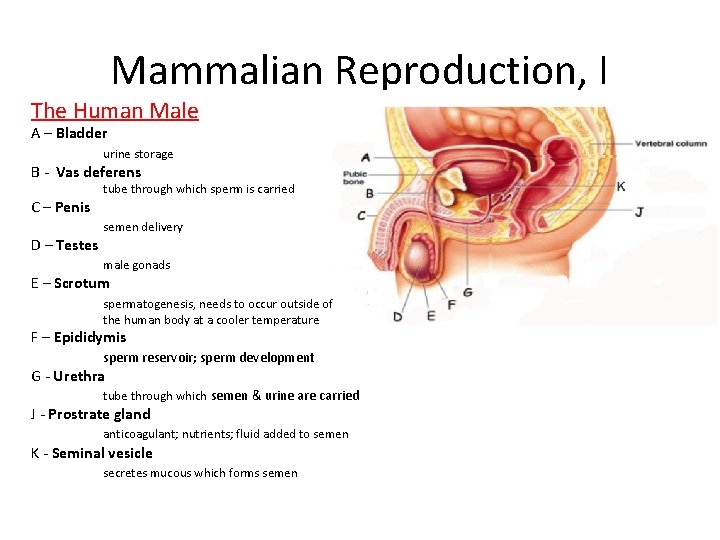
Mammalian Reproduction, I The Human Male A – Bladder urine storage B - Vas deferens C – Penis tube through which sperm is carried semen delivery D – Testes male gonads E – Scrotum spermatogenesis, needs to occur outside of the human body at a cooler temperature F – Epididymis sperm reservoir; sperm development G - Urethra tube through which semen & urine are carried J - Prostrate gland anticoagulant; nutrients; fluid added to semen K - Seminal vesicle secretes mucous which forms semen
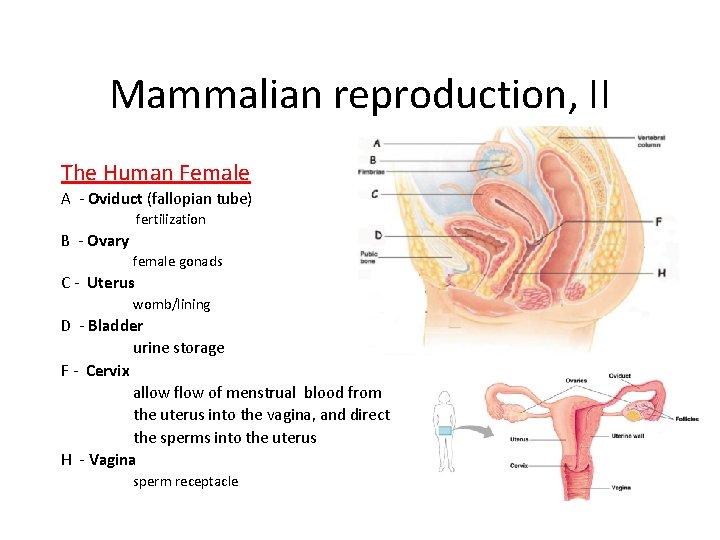
Mammalian reproduction, II The Human Female A - Oviduct (fallopian tube) fertilization B - Ovary female gonads C - Uterus womb/lining D - Bladder urine storage F - Cervix allow flow of menstrual blood from the uterus into the vagina, and direct the sperms into the uterus H - Vagina sperm receptacle
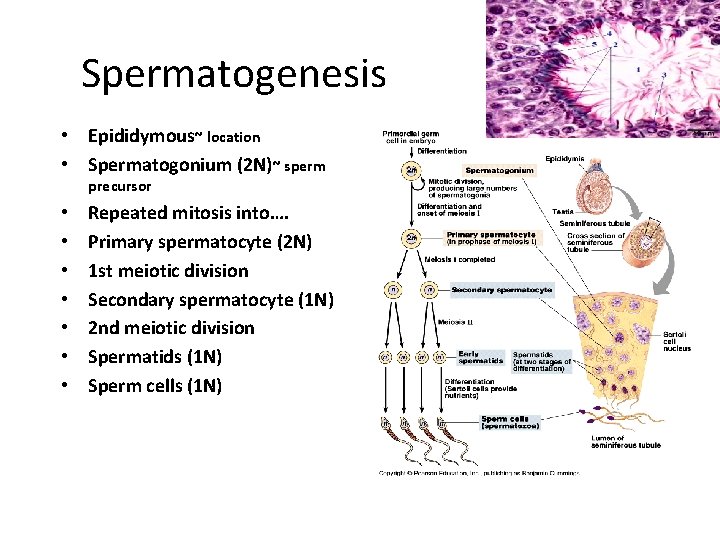
Spermatogenesis • Epididymous~ location • Spermatogonium (2 N)~ sperm precursor • • Repeated mitosis into…. Primary spermatocyte (2 N) 1 st meiotic division Secondary spermatocyte (1 N) 2 nd meiotic division Spermatids (1 N) Sperm cells (1 N)
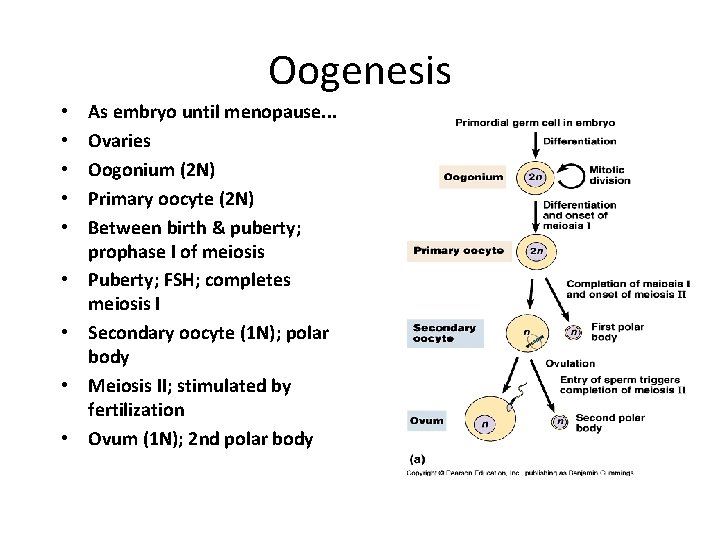
Oogenesis • • • As embryo until menopause. . . Ovaries Oogonium (2 N) Primary oocyte (2 N) Between birth & puberty; prophase I of meiosis Puberty; FSH; completes meiosis I Secondary oocyte (1 N); polar body Meiosis II; stimulated by fertilization Ovum (1 N); 2 nd polar body
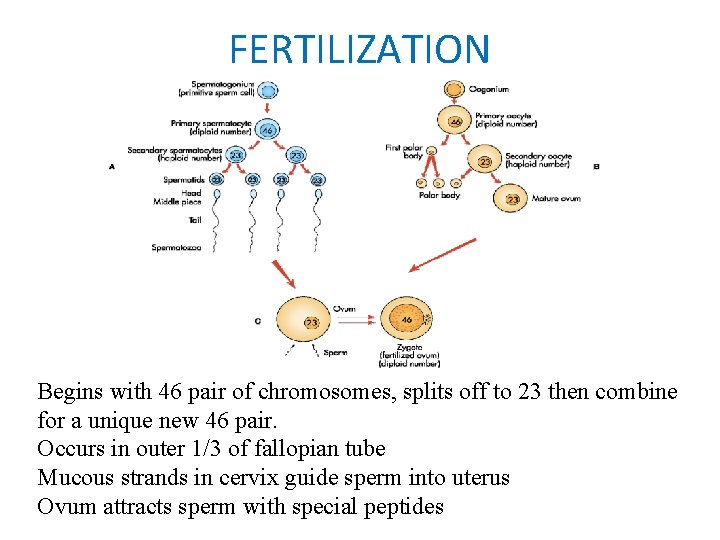
FERTILIZATION Begins with 46 pair of chromosomes, splits off to 23 then combine for a unique new 46 pair. Occurs in outer 1/3 of fallopian tube Mucous strands in cervix guide sperm into uterus Ovum attracts sperm with special peptides
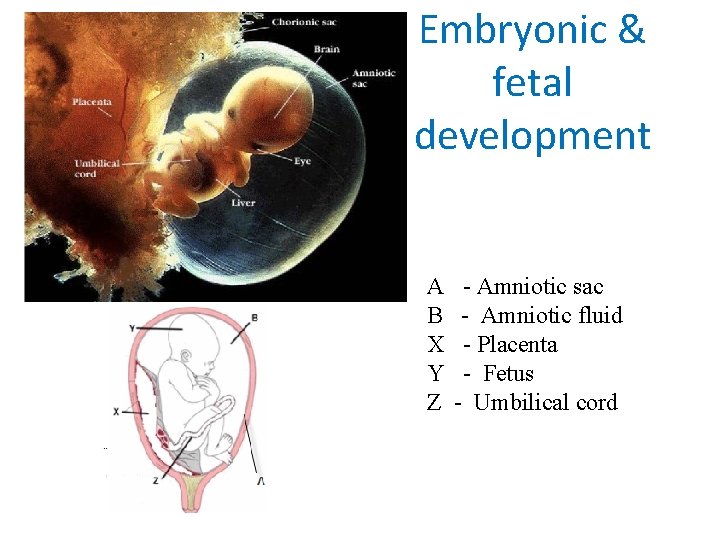
Embryonic & fetal development A B X Y Z - Amniotic sac - Amniotic fluid - Placenta - Fetus - Umbilical cord
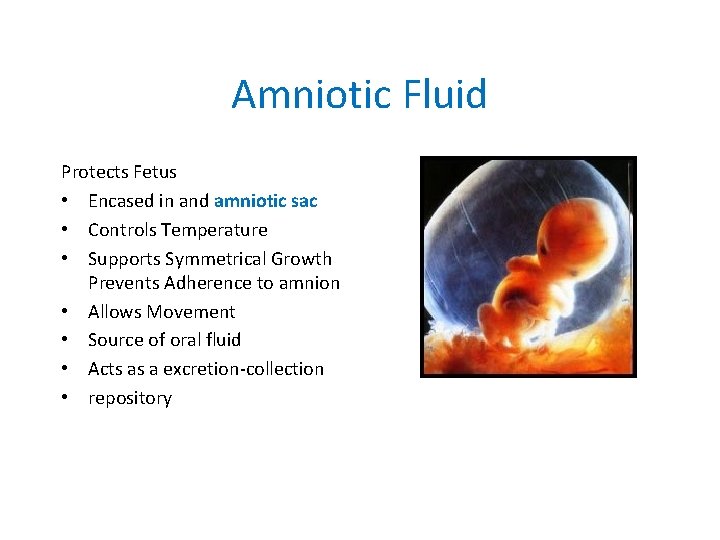
Amniotic Fluid Protects Fetus • Encased in and amniotic sac • Controls Temperature • Supports Symmetrical Growth Prevents Adherence to amnion • Allows Movement • Source of oral fluid • Acts as a excretion-collection • repository
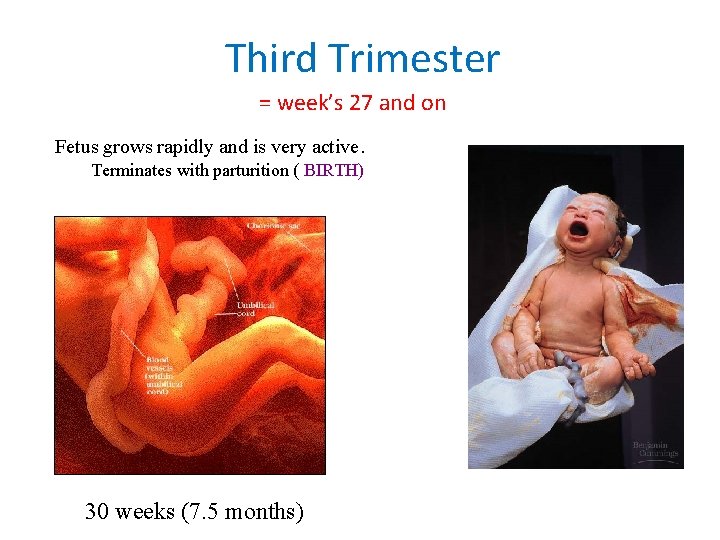
Umbilical Cord • Connecting link between fetus and placenta. • Transports oxygen and nutrients to fetus • from the placenta and returns waste products from the fetus to the placenta. • Contains: 2 arteries and 1 vein • supported by mucoid material (wharton’s jelly) to prevent kinking and knotting. • Contains NO pain receptors.
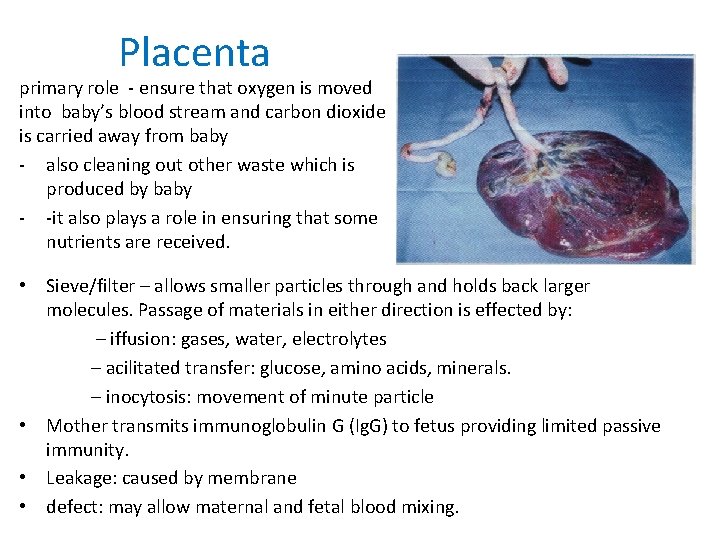
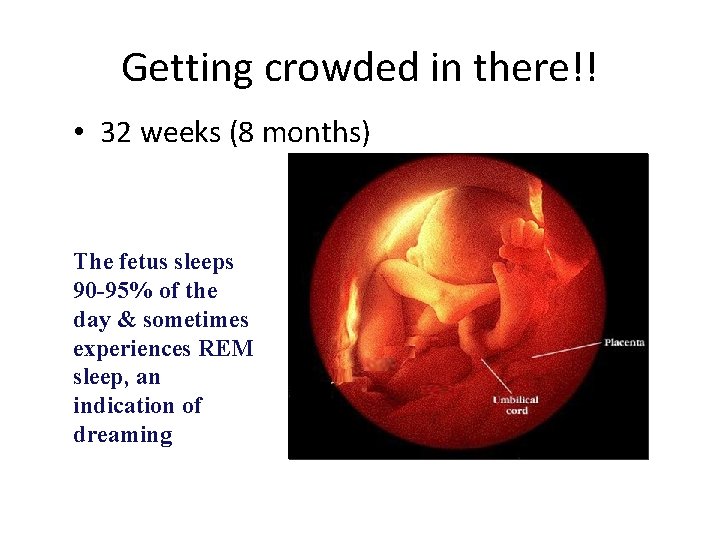
Placenta primary role - ensure that oxygen is moved into baby’s blood stream and carbon dioxide is carried away from baby - also cleaning out other waste which is produced by baby - -it also plays a role in ensuring that some nutrients are received. • Sieve/filter – allows smaller particles through and holds back larger molecules. Passage of materials in either direction is effected by: – iffusion: gases, water, electrolytes – acilitated transfer: glucose, amino acids, minerals. – inocytosis: movement of minute particle • Mother transmits immunoglobulin G (Ig. G) to fetus providing limited passive immunity. • Leakage: caused by membrane • defect: may allow maternal and fetal blood mixing.
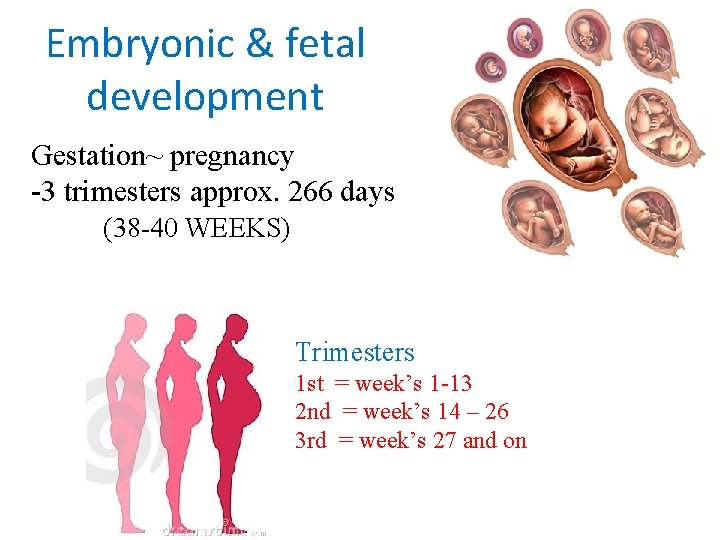
Embryonic & fetal development Gestation~ pregnancy -3 trimesters approx. 266 days (38 -40 WEEKS) Trimesters 1 st = week’s 1 -13 2 nd = week’s 14 – 26 3 rd = week’s 27 and on
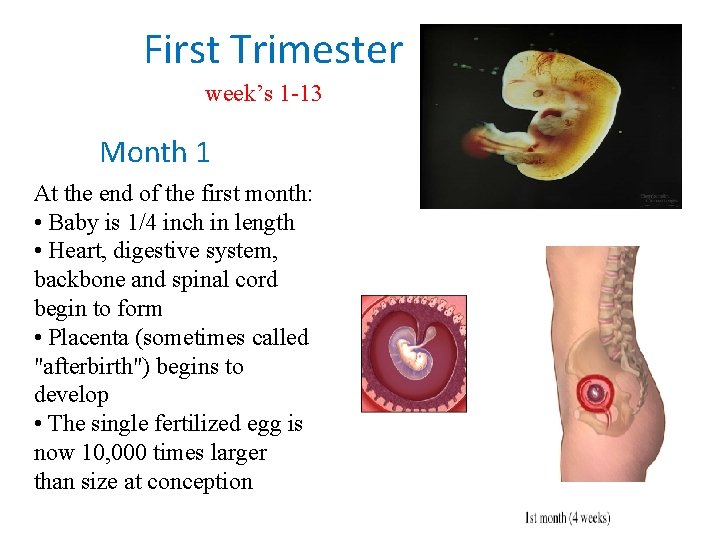
First Trimester week’s 1 -13 Month 1 At the end of the first month: • Baby is 1/4 inch in length • Heart, digestive system, backbone and spinal cord begin to form • Placenta (sometimes called "afterbirth") begins to develop • The single fertilized egg is now 10, 000 times larger than size at conception
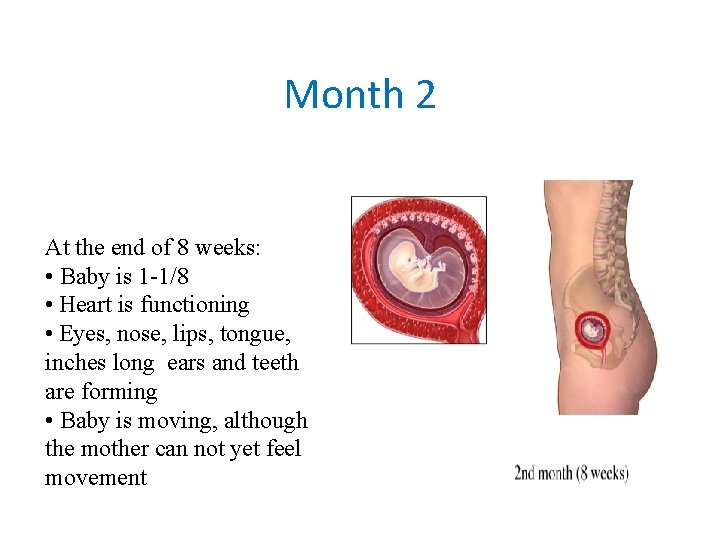
Month 2 At the end of 8 weeks: • Baby is 1 -1/8 • Heart is functioning • Eyes, nose, lips, tongue, inches long ears and teeth are forming • Baby is moving, although the mother can not yet feel movement
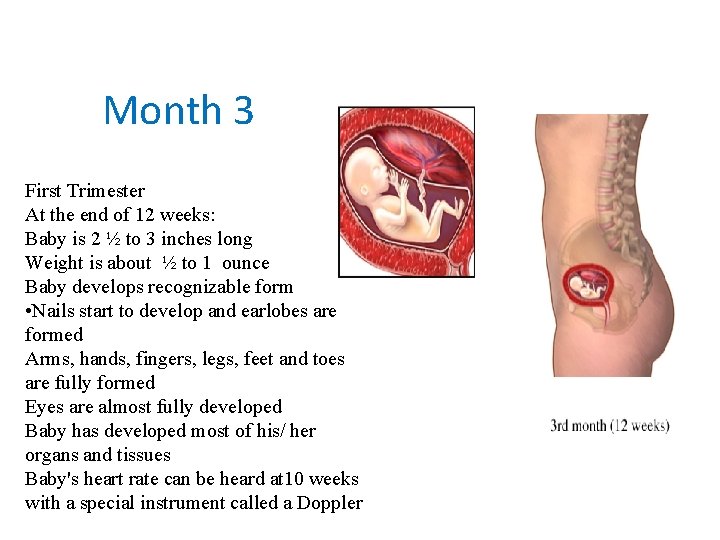
Month 3 First Trimester At the end of 12 weeks: Baby is 2 ½ to 3 inches long Weight is about ½ to 1 ounce Baby develops recognizable form • Nails start to develop and earlobes are formed Arms, hands, fingers, legs, feet and toes are fully formed Eyes are almost fully developed Baby has developed most of his/ her organs and tissues Baby's heart rate can be heard at 10 weeks with a special instrument called a Doppler
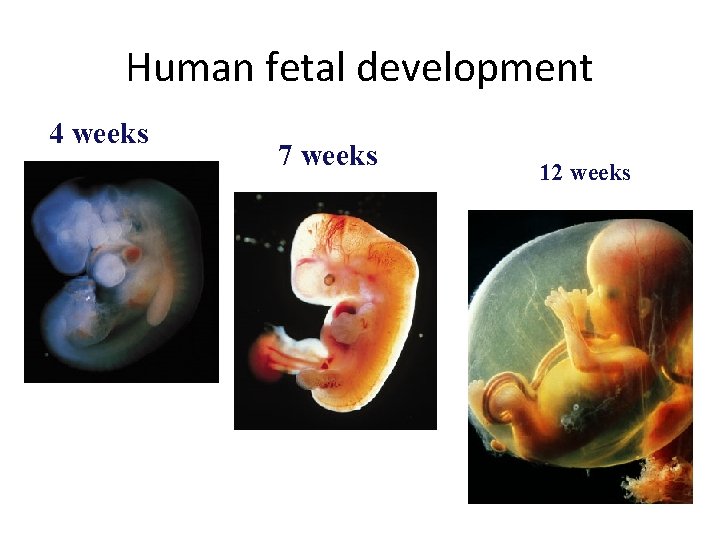
Human fetal development 4 weeks 7 weeks 12 weeks
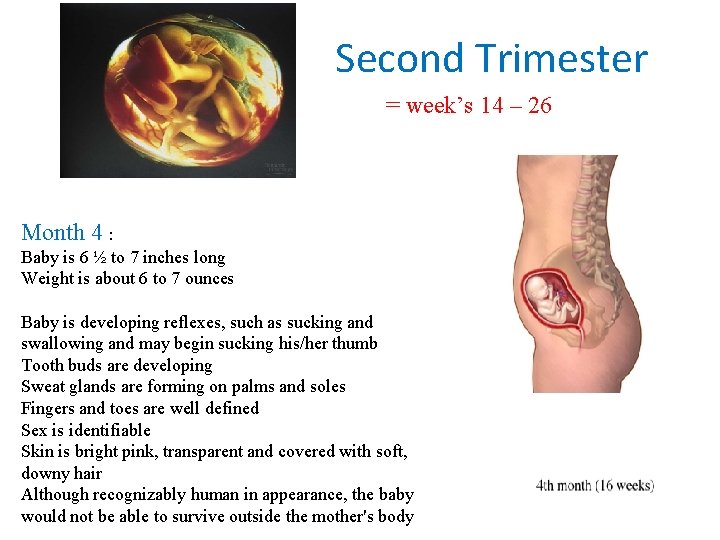
Second Trimester = week’s 14 – 26 Month 4 : Baby is 6 ½ to 7 inches long Weight is about 6 to 7 ounces Baby is developing reflexes, such as sucking and swallowing and may begin sucking his/her thumb Tooth buds are developing Sweat glands are forming on palms and soles Fingers and toes are well defined Sex is identifiable Skin is bright pink, transparent and covered with soft, downy hair Although recognizably human in appearance, the baby would not be able to survive outside the mother's body
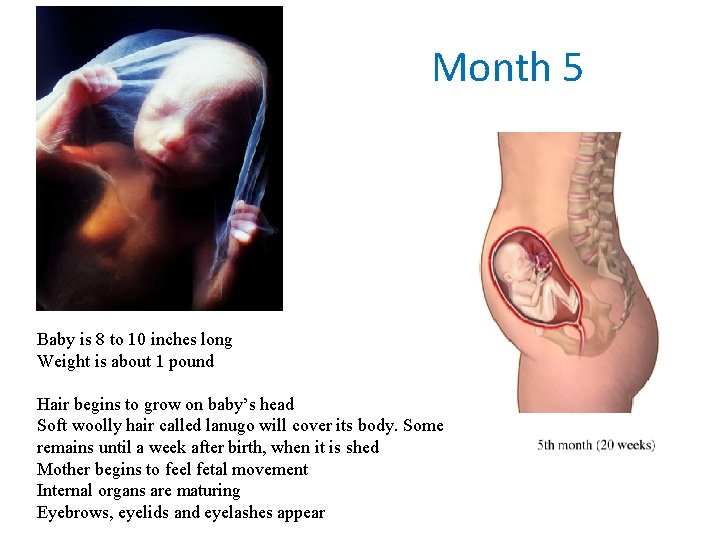
Month 5 Baby is 8 to 10 inches long Weight is about 1 pound Hair begins to grow on baby’s head Soft woolly hair called lanugo will cover its body. Some remains until a week after birth, when it is shed Mother begins to feel fetal movement Internal organs are maturing Eyebrows, eyelids and eyelashes appear
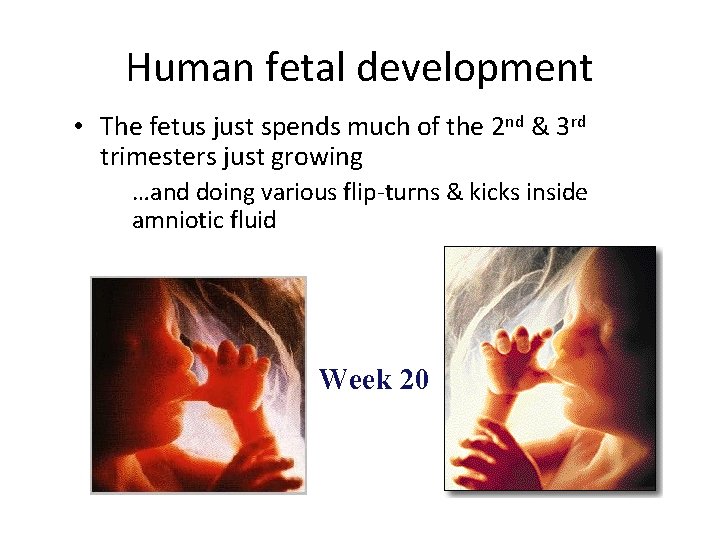
Human fetal development • The fetus just spends much of the 2 nd & 3 rd trimesters just growing …and doing various flip-turns & kicks inside amniotic fluid Week 20
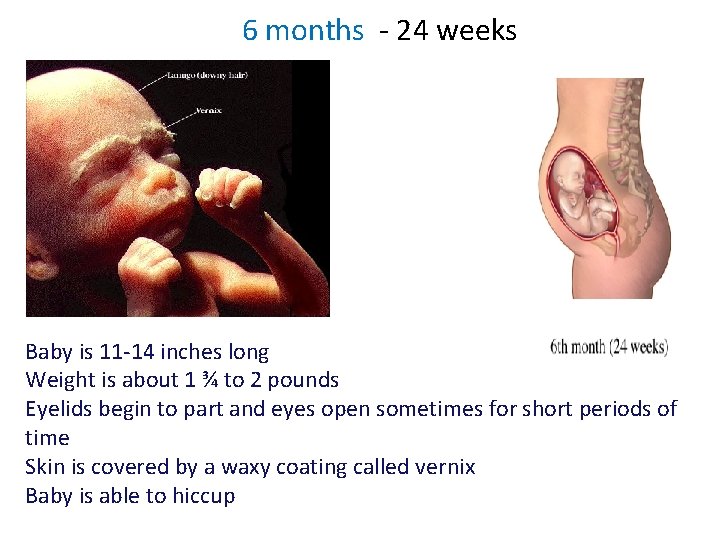
6 months - 24 weeks Baby is 11 -14 inches long Weight is about 1 ¾ to 2 pounds Eyelids begin to part and eyes open sometimes for short periods of time Skin is covered by a waxy coating called vernix Baby is able to hiccup
Third Trimester = week’s 27 and on Fetus grows rapidly and is very active. Terminates with parturition ( BIRTH) 30 weeks (7. 5 months)
Getting crowded in there!! • 32 weeks (8 months) The fetus sleeps 90 -95% of the day & sometimes experiences REM sleep, an indication of dreaming