AngloSaxons and Scots Year One Anglo Saxon Jewelry
- Slides: 11
Anglo-Saxons and Scots Year One
Anglo Saxon Jewelry
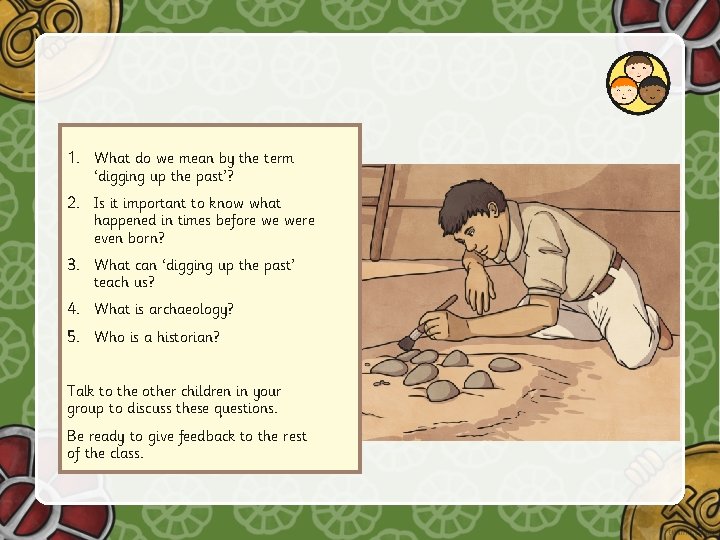
1. What do we mean by the term ‘digging up the past’? 2. Is it important to know what happened in times before we were even born? 3. What can ‘digging up the past’ teach us? 4. What is archaeology? 5. Who is a historian? Talk to the other children in your group to discuss these questions. Be ready to give feedback to the rest of the class.
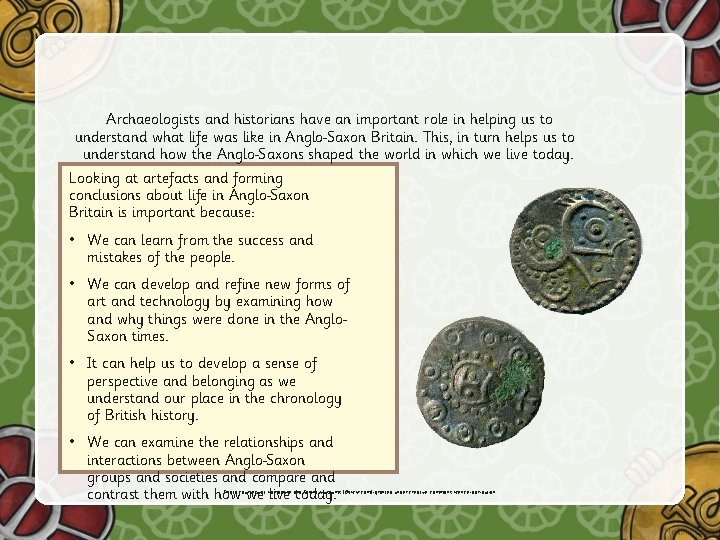
Archaeologists and historians have an important role in helping us to understand what life was like in Anglo Saxon Britain. This, in turn helps us to understand how the Anglo Saxons shaped the world in which we live today. Looking at artefacts and forming conclusions about life in Anglo Saxon Britain is important because: • We can learn from the success and mistakes of the people. • We can develop and refine new forms of art and technology by examining how and why things were done in the Anglo Saxon times. • It can help us to develop a sense of perspective and belonging as we understand our place in the chronology of British history. • We can examine the relationships and interactions between Anglo Saxon groups and societies and compare and contrast them with how we live today. Photo courtesy of Hampshire and Solent Museums (@flickr. com)-granted under creative commons licence-attribution
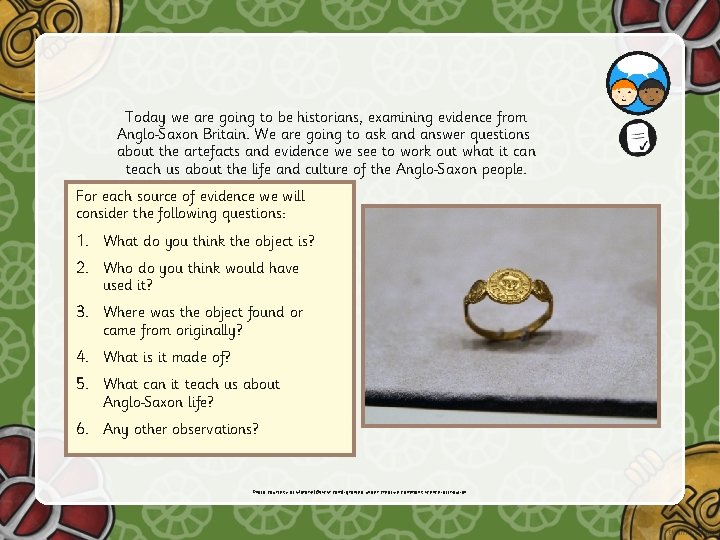
Today we are going to be historians, examining evidence from Anglo Saxon Britain. We are going to ask and answer questions about the artefacts and evidence we see to work out what it can teach us about the life and culture of the Anglo Saxon people. For each source of evidence we will consider the following questions: 1. What do you think the object is? 2. Who do you think would have used it? 3. Where was the object found or came from originally? 4. What is it made of? 5. What can it teach us about Anglo Saxon life? 6. Any other observations? Photo courtesy of Mararie(@flickr. com)-granted under creative commons licence-attribution
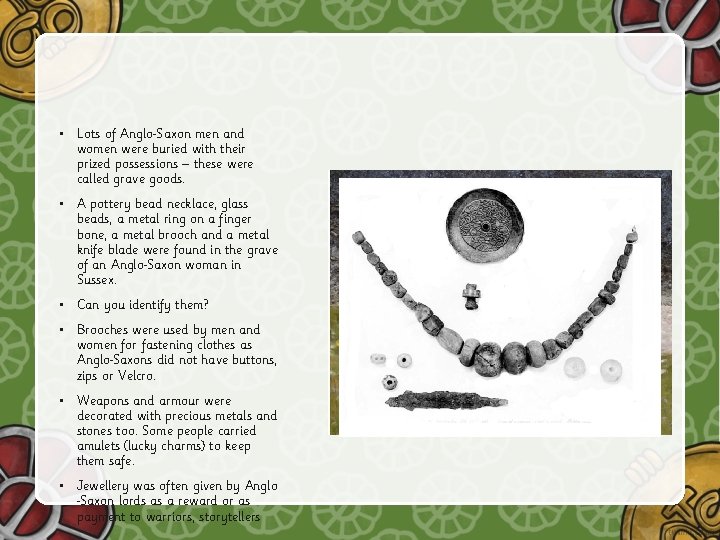
• Lots of Anglo Saxon men and women were buried with their prized possessions – these were called grave goods. • A pottery bead necklace, glass beads, a metal ring on a finger bone, a metal brooch and a metal knife blade were found in the grave of an Anglo Saxon woman in Sussex. • Can you identify them? • Brooches were used by men and women for fastening clothes as Anglo Saxons did not have buttons, zips or Velcro. • Weapons and armour were decorated with precious metals and stones too. Some people carried amulets (lucky charms) to keep them safe. • Jewellery was often given by Anglo Saxon lords as a reward or as payment to warriors, storytellers
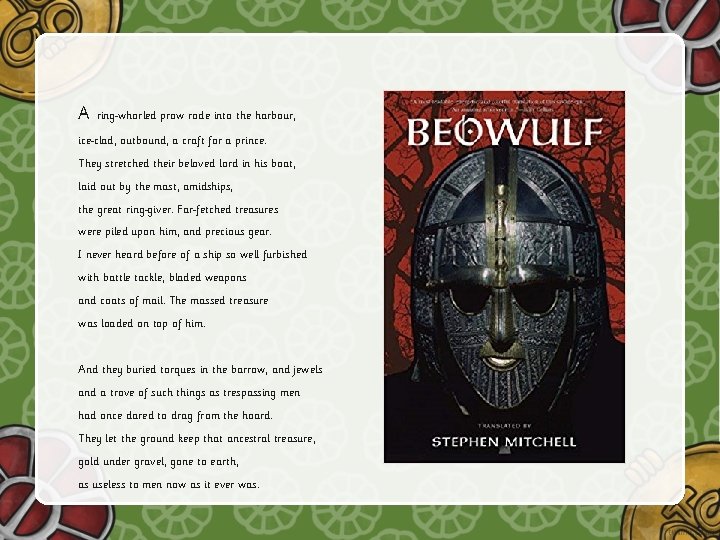
A ring whorled prow rode into the harbour, ice clad, outbound, a craft for a prince. They stretched their beloved lord in his boat, laid out by the mast, amidships, the great ring giver. Far fetched treasures were piled upon him, and precious gear. I never heard before of a ship so well furbished with battle tackle, bladed weapons and coats of mail. The massed treasure was loaded on top of him. And they buried torques in the barrow, and jewels and a trove of such things as trespassing men had once dared to drag from the hoard. They let the ground keep that ancestral treasure, gold under gravel, gone to earth, as useless to men now as it ever was.
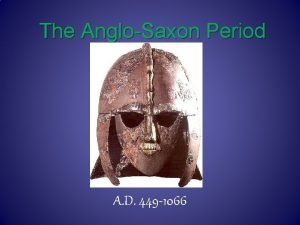
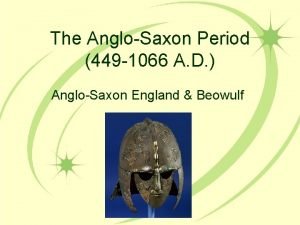
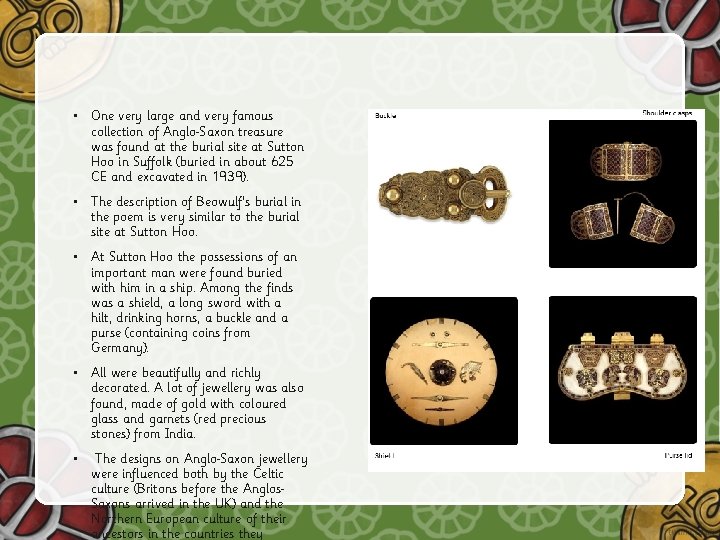
• One very large and very famous collection of Anglo Saxon treasure was found at the burial site at Sutton Hoo in Suffolk (buried in about 625 CE and excavated in 1939). • The description of Beowulf’s burial in the poem is very similar to the burial site at Sutton Hoo. • At Sutton Hoo the possessions of an important man were found buried with him in a ship. Among the finds was a shield, a long sword with a hilt, drinking horns, a buckle and a purse (containing coins from Germany). • All were beautifully and richly decorated. A lot of jewellery was also found, made of gold with coloured glass and garnets (red precious stones) from India. • The designs on Anglo Saxon jewellery were influenced both by the Celtic culture (Britons before the Anglos Saxons arrived in the UK) and the Northern European culture of their ancestors in the countries they
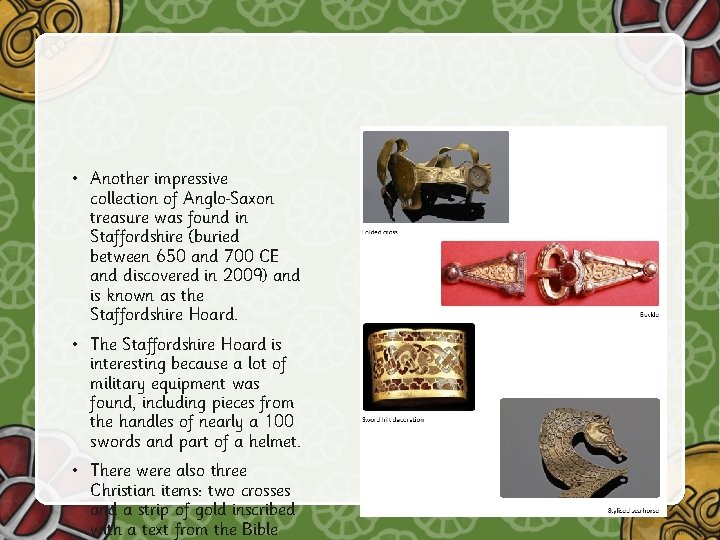
• Another impressive collection of Anglo Saxon treasure was found in Staffordshire (buried between 650 and 700 CE and discovered in 2009) and is known as the Staffordshire Hoard. • The Staffordshire Hoard is interesting because a lot of military equipment was found, including pieces from the handles of nearly a 100 swords and part of a helmet. • There were also three Christian items: two crosses and a strip of gold inscribed with a text from the Bible
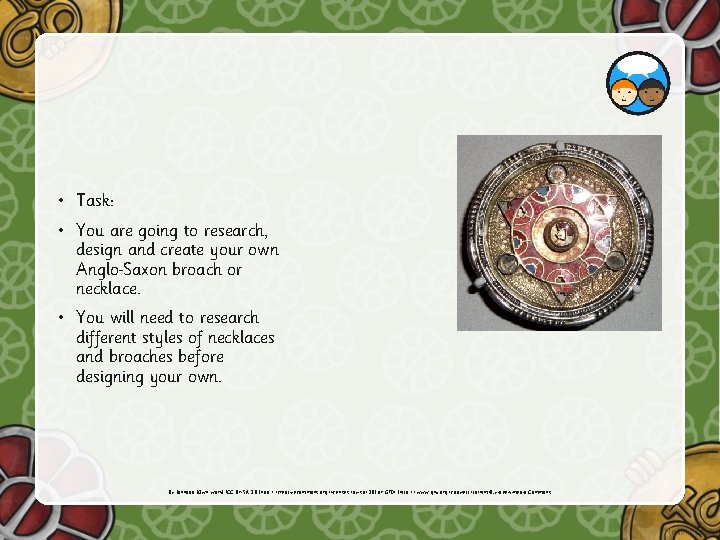
• Task: • You are going to research, design and create your own Anglo Saxon broach or necklace. • You will need to research different styles of necklaces and broaches before designing your own. By Johnbod (Own work) [CC BY-SA 3. 0 (http: //creativecommons. org/licenses/by-sa/3. 0) or GFDL (http: //www. gnu. org/copyleft/fdl. html)], via Wikimedia Commons