Amateur Radio On The International Space Station ARISS


- Slides: 19
Amateur Radio On The International Space Station (ARISS) History, Status & Future Plans Press Briefing 2 August 2000 Frank H. Bauer, ka 3 hdo@amsat. org AMSAT-NA V. P. for Human Spaceflight Programs 301 -286 -8496
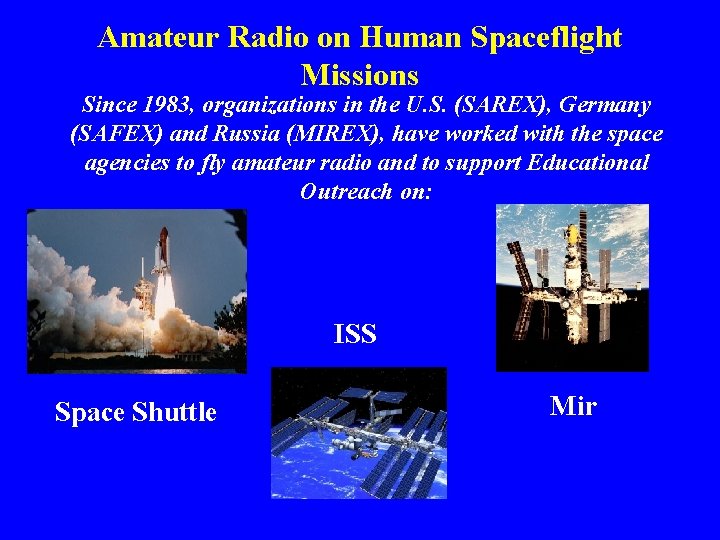
Amateur Radio on Human Spaceflight Missions Since 1983, organizations in the U. S. (SAREX), Germany (SAFEX) and Russia (MIREX), have worked with the space agencies to fly amateur radio and to support Educational Outreach on: ISS Space Shuttle Mir
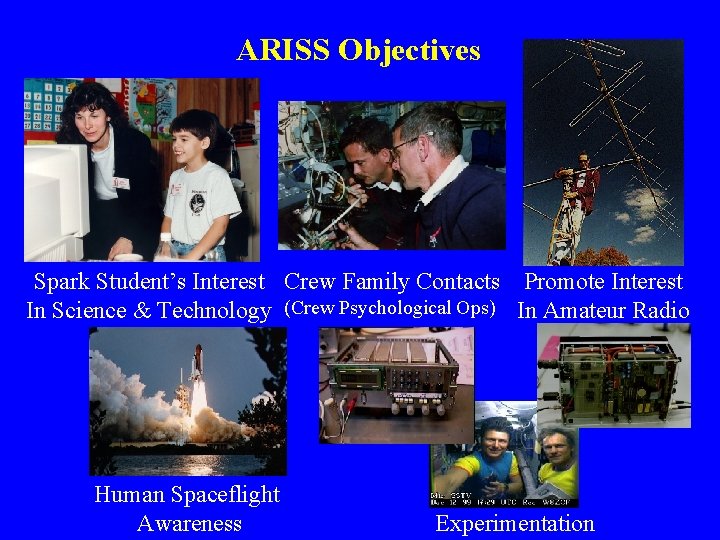
ARISS Objectives Spark Student’s Interest Crew Family Contacts Promote Interest In Science & Technology (Crew Psychological Ops) In Amateur Radio Human Spaceflight Awareness Experimentation
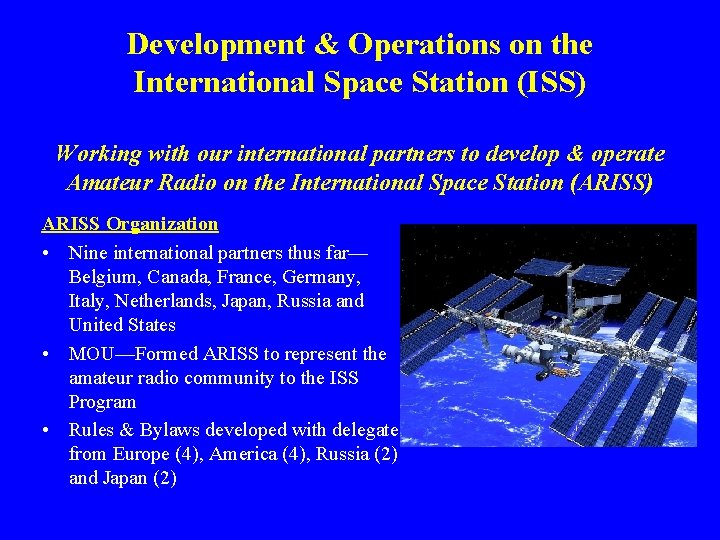
Development & Operations on the International Space Station (ISS) Working with our international partners to develop & operate Amateur Radio on the International Space Station (ARISS) ARISS Organization • Nine international partners thus far— Belgium, Canada, France, Germany, Italy, Netherlands, Japan, Russia and United States • MOU—Formed ARISS to represent the amateur radio community to the ISS Program • Rules & Bylaws developed with delegates from Europe (4), America (4), Russia (2) and Japan (2)
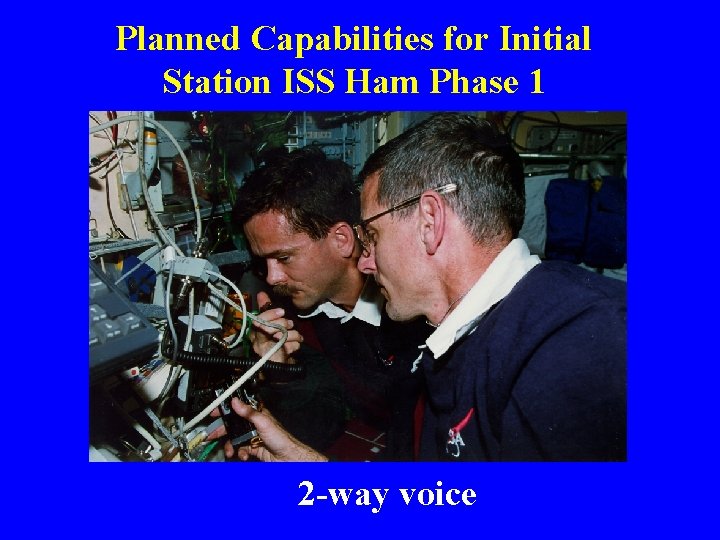
Planned Capabilities for Initial Station ISS Ham Phase 1 2 -way voice
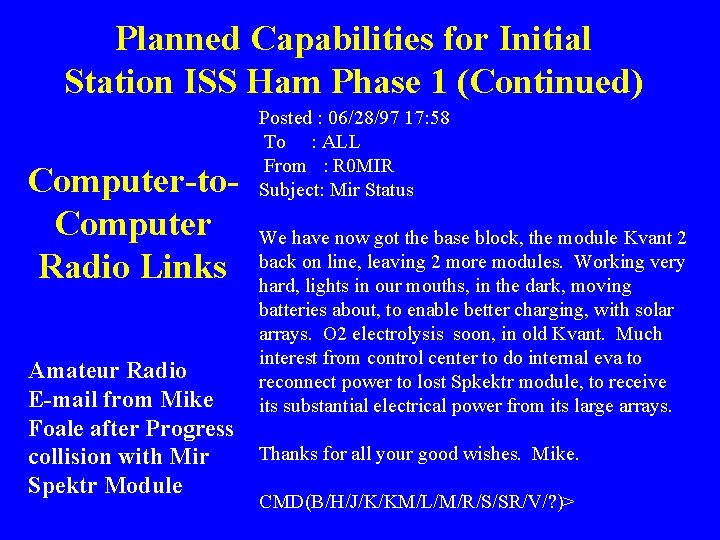
Planned Capabilities for Initial Station ISS Ham Phase 1 (Continued) Computer-to. Computer Radio Links Amateur Radio E-mail from Mike Foale after Progress collision with Mir Spektr Module Posted : 06/28/97 17: 58 To : ALL From : R 0 MIR Subject: Mir Status We have now got the base block, the module Kvant 2 back on line, leaving 2 more modules. Working very hard, lights in our mouths, in the dark, moving batteries about, to enable better charging, with solar arrays. O 2 electrolysis soon, in old Kvant. Much interest from control center to do internal eva to reconnect power to lost Spkektr module, to receive its substantial electrical power from its large arrays. Thanks for all your good wishes. Mike. CMD(B/H/J/K/KM/L/M/R/S/SR/V/? )>
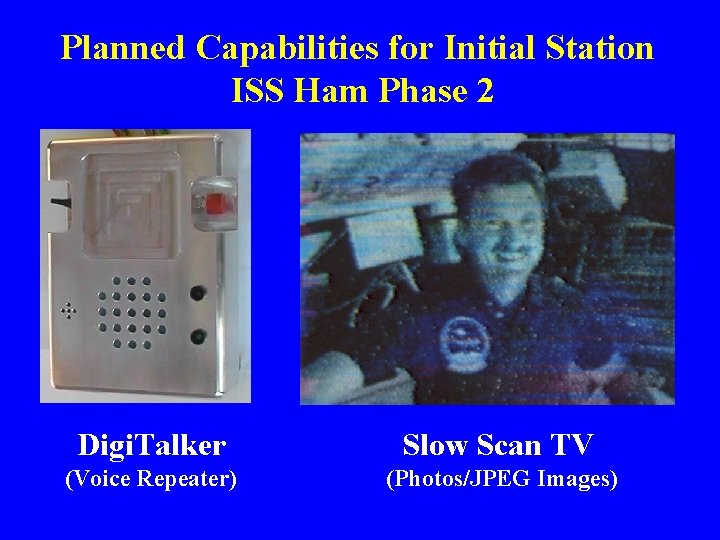
Planned Capabilities for Initial Station ISS Ham Phase 2 Digi. Talker Slow Scan TV (Voice Repeater) (Photos/JPEG Images)
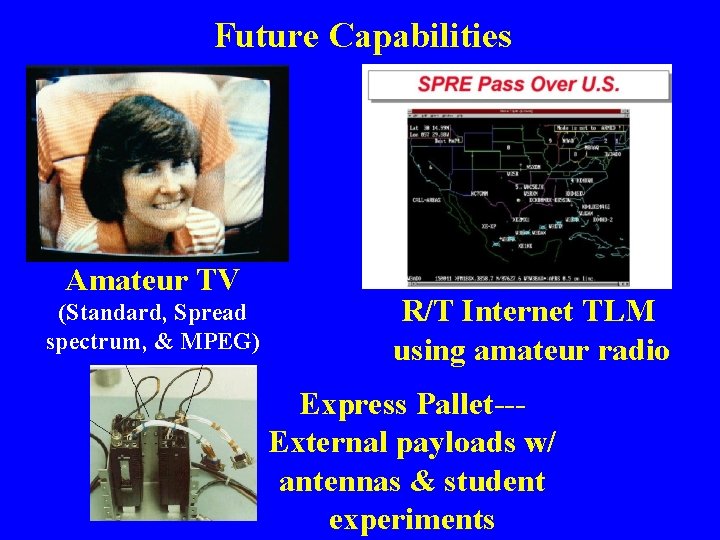
Future Capabilities Amateur TV (Standard, Spread spectrum, & MPEG) R/T Internet TLM using amateur radio Express Pallet--External payloads w/ antennas & student experiments
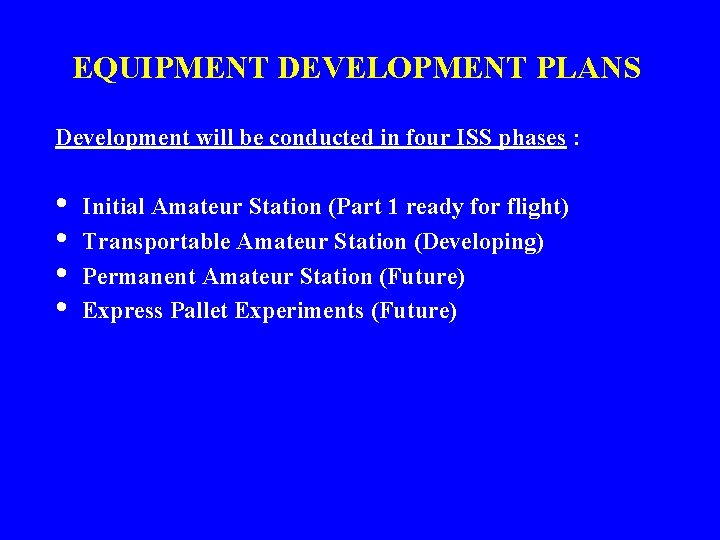
EQUIPMENT DEVELOPMENT PLANS Development will be conducted in four ISS phases : • • Initial Amateur Station (Part 1 ready for flight) Transportable Amateur Station (Developing) Permanent Amateur Station (Future) Express Pallet Experiments (Future)
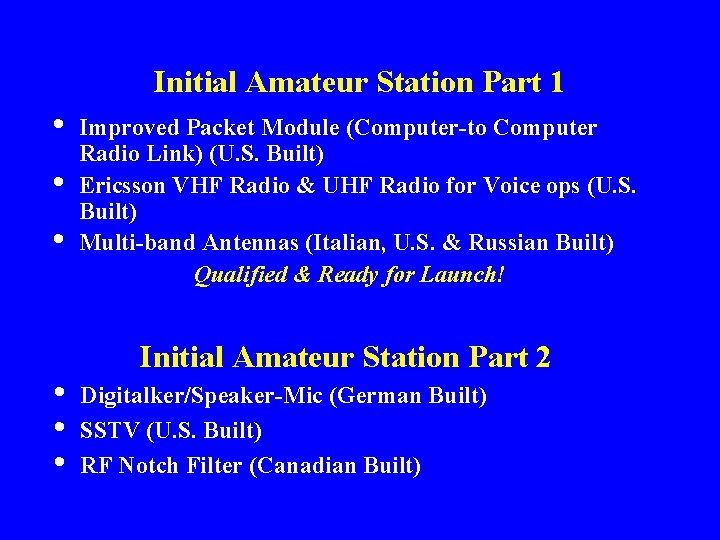
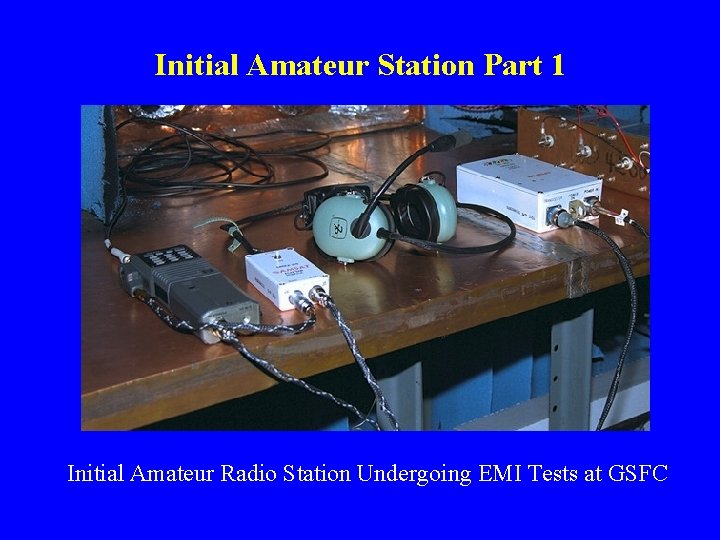
Initial Amateur Station Part 1 • • • Improved Packet Module (Computer-to Computer Radio Link) (U. S. Built) Ericsson VHF Radio & UHF Radio for Voice ops (U. S. Built) Multi-band Antennas (Italian, U. S. & Russian Built) Qualified & Ready for Launch! Initial Amateur Station Part 2 Digitalker/Speaker-Mic (German Built) SSTV (U. S. Built) RF Notch Filter (Canadian Built)
Initial Amateur Station Part 1 Initial Amateur Radio Station Undergoing EMI Tests at GSFC
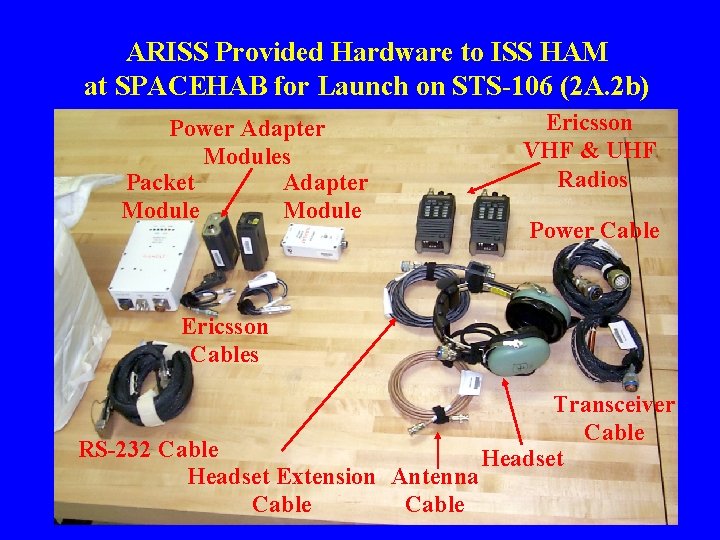
ARISS Provided Hardware to ISS HAM at SPACEHAB for Launch on STS-106 (2 A. 2 b) Power Adapter Modules Packet Adapter Module Ericsson VHF & UHF Radios Power Cable Ericsson Cables RS-232 Cable Headset Extension Antenna Cable Transceiver Cable Headset
Antenna System Installation VHF/UHF Antenna L/S Antenna Diplexer Service Module Handrail EVA Clamp Antenna System Mockup EVA Clamp (Side View)
Antenna System w/ VHF/UHF Antenna Installed (1 of 4) Internationally Developed VHF/UHF Antenna L/S Glisser Antenna Diplexer Tuning Stubs Italian Contribution: Microwave Antennas Diplexer US Contribution: Mounting Plate VHF/UHF Antenna Russian Contribution: Handrail Clamp Interconnecting Cables EVA Tether Handrail Clamp Mounting Plate
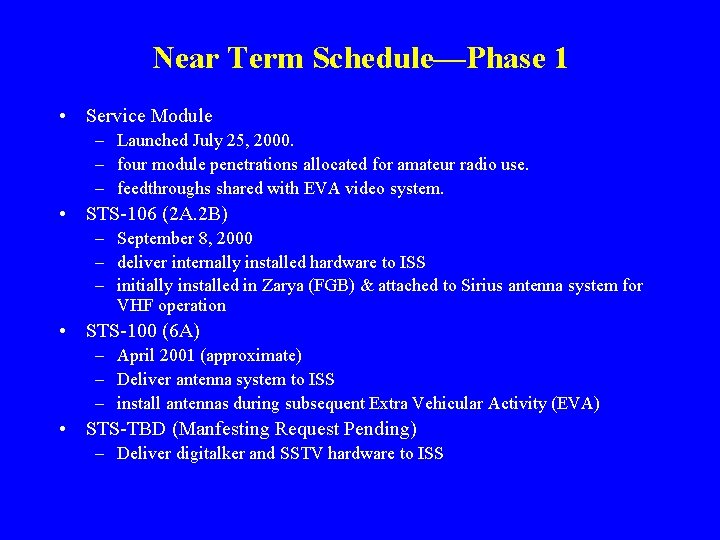
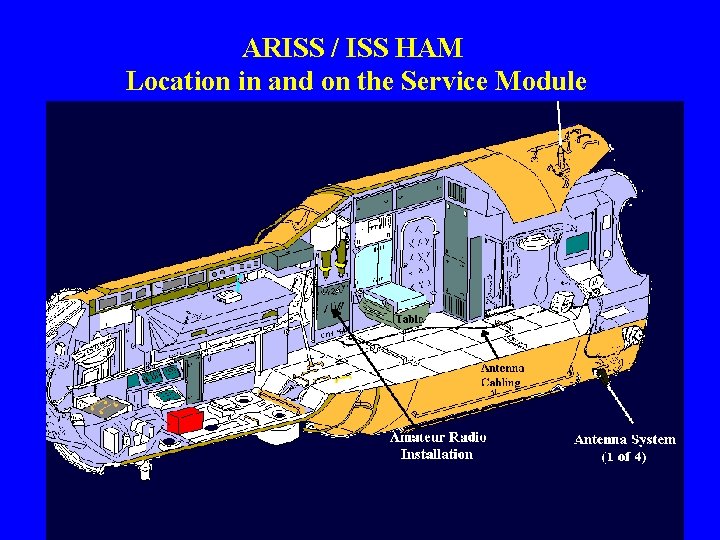
Near Term Schedule—Phase 1 • Service Module – Launched July 25, 2000. – four module penetrations allocated for amateur radio use. – feedthroughs shared with EVA video system. • STS-106 (2 A. 2 B) – September 8, 2000 – deliver internally installed hardware to ISS – initially installed in Zarya (FGB) & attached to Sirius antenna system for VHF operation • STS-100 (6 A) – April 2001 (approximate) – Deliver antenna system to ISS – install antennas during subsequent Extra Vehicular Activity (EVA) • STS-TBD (Manfesting Request Pending) – Deliver digitalker and SSTV hardware to ISS
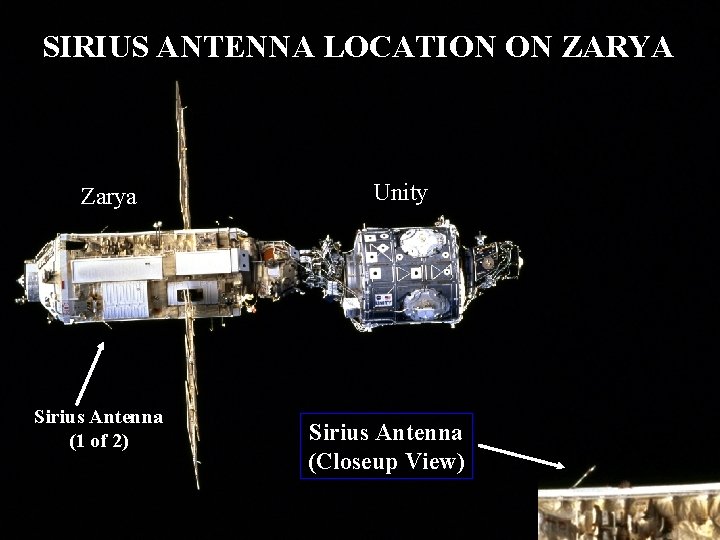
SIRIUS ANTENNA LOCATION ON ZARYA Zarya Sirius Antenna (1 of 2) Unity Sirius Antenna (Closeup View)
ARISS / ISS HAM Location in and on the Service Module
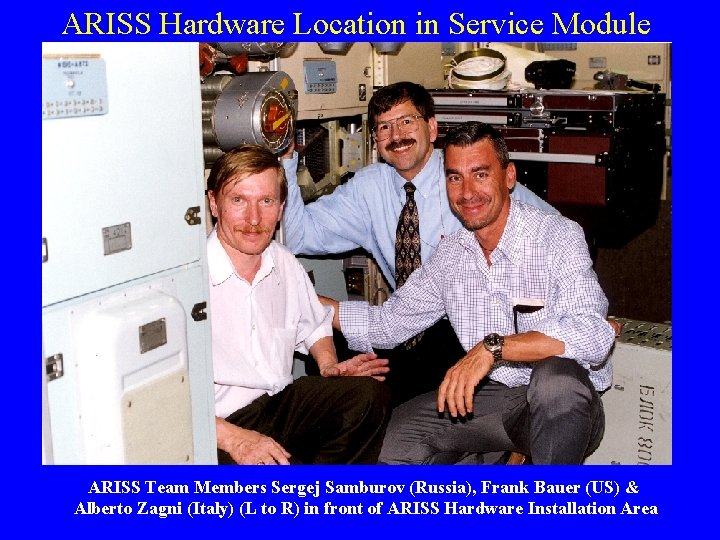
ARISS Hardware Location in Service Module ARISS Team Members Sergej Samburov (Russia), Frank Bauer (US) & Alberto Zagni (Italy) (L to R) in front of ARISS Hardware Installation Area
Conclusions • ARISS Team expects that multi-band, multi-mode operations with the crew and regularly scheduled school group contacts will be the norm • Together, the international ARISS consortium is developing a hardware and operations system that will enable exciting, new human-tended amateur radio operations on the ISS