Aim How did imperialism affect the development of
- Slides: 6
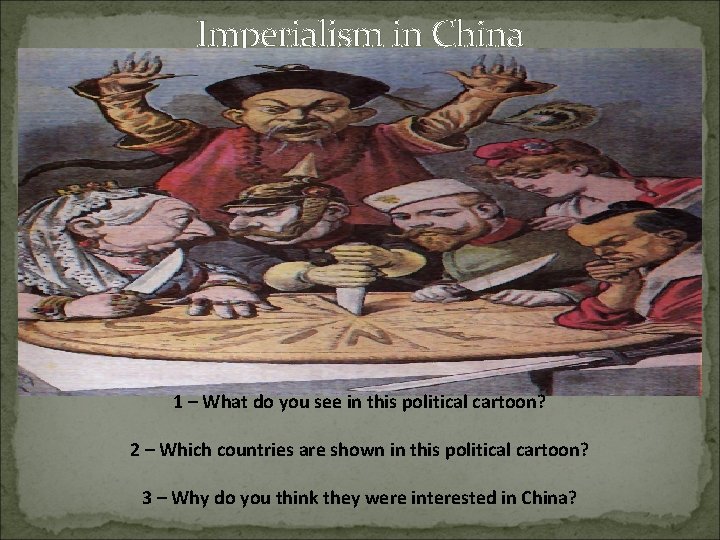
Aim: How did imperialism affect the development of China? Do Now: examine the political cartoon & answer the 3 questions that follow
Imperialism in China 1 – What do you see in this political cartoon? 2 – Which countries are shown in this political cartoon? 3 – Why do you think they were interested in China?
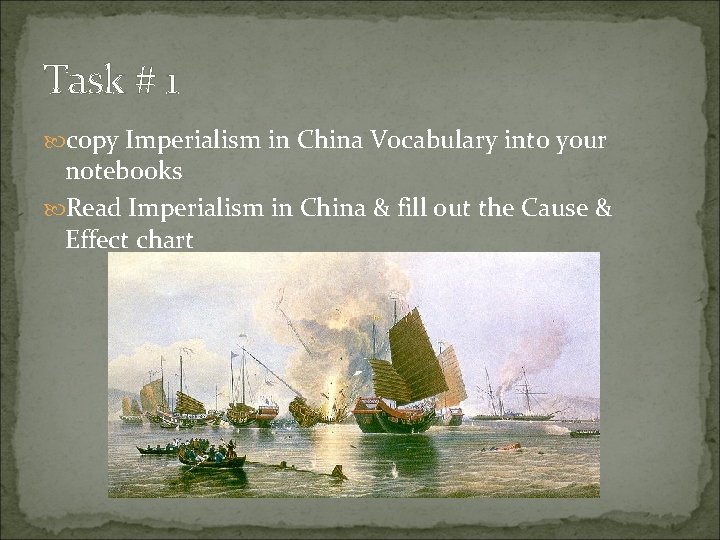
Task # 1 copy Imperialism in China Vocabulary into your notebooks Read Imperialism in China & fill out the Cause & Effect chart
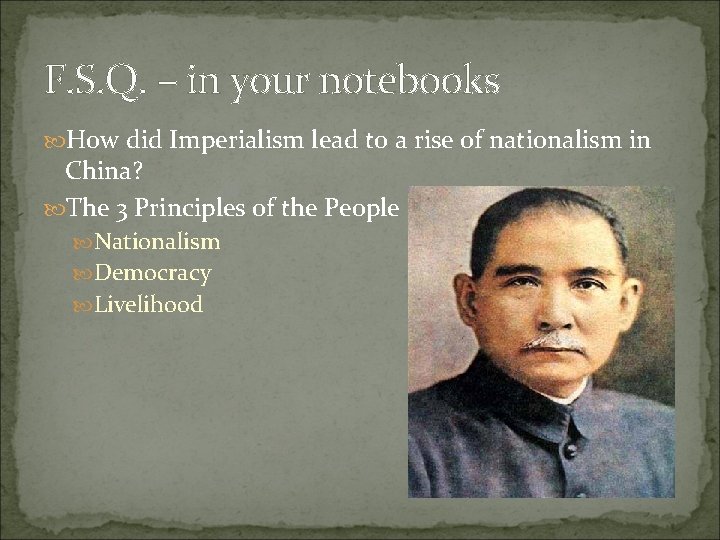
Imperialism in China Vocabulary Opium War – conflict between Britain & China in 1839 over the opium trade. Britain’s superior military & industrial strength led to a quick victory. Treaty of Nanjing – treaty signed in 1842 that ended the Opium War, Britain forced China to pay for Britain’s war costs, open ports to British trade & give Britain the island of Hong Kong Spheres of Influence – an area in which an outside power claims exclusive trade privileges. Taiping Rebellion – peasant rebellion in China occurring between 1850 & 1864 Boxer Rebellion – event in 1900 in which a group known as Boxers assaulted foreign communities across China Sun Yat-sen – Chinese Nationalist leader who called for an end to foreign domination, a form of representative government & economic security for the Chinese people. Named the 1 st President of the Chinese Republic
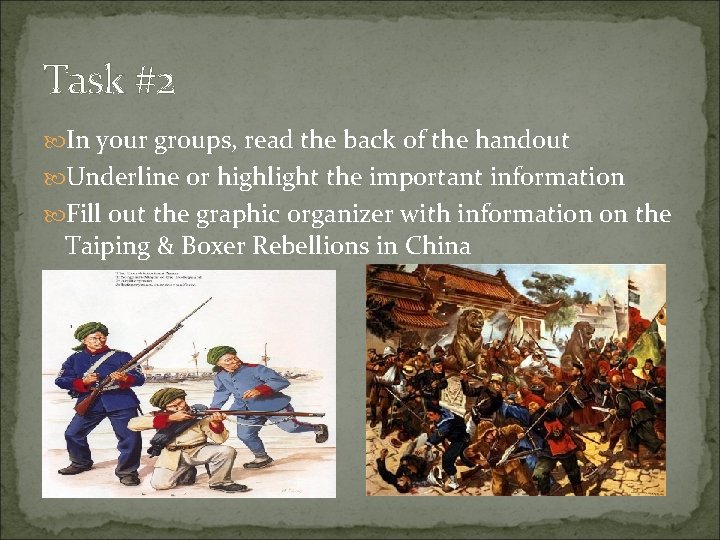
Task #2 In your groups, read the back of the handout Underline or highlight the important information Fill out the graphic organizer with information on the Taiping & Boxer Rebellions in China
F. S. Q. – in your notebooks How did Imperialism lead to a rise of nationalism in China? The 3 Principles of the People Nationalism Democracy Livelihood