Age of Empresario The Colonies Grow p 172
- Slides: 7
Age of Empresario The Colonies Grow p. 172
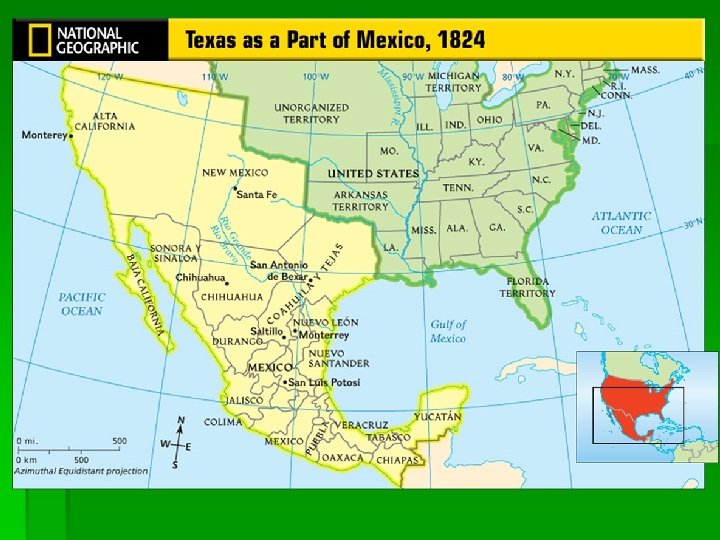
The Constitution of 1824 § In 1823, Mexican emperor Augustin de Iturbide was overthrown. § Federalists, people who believe in sharing power between the states and national government, formed a new government. § Their opponents, Centralists, believed that power should be concentrated in the national government of Mexico City. § The Federalists wrote a constitution that divided the nation into 19 states and 4 territories. Texas and Coahuila were united as one state.
How State Colonization Laws Worked § In 1825 a law stating foreigners were invited to immigrate to Texas. § Colonists had to show evidence of good moral character. § They must be Roman Catholic, however the Mexican authorities did not bother settlers who practiced other religions because there was a shortage of Catholic priests.
How State Colonization Laws Worked § Most settlers came to Texas as part of an empresario contract for 2 reasons: § 1. Most settlers could not speak Spanish and therefore had trouble getting title to their land without an empresario’s help. § 2. Most desirable lands were held by an empresario.
Why Austin’s Colonies Succeeded § Stephen F. Austin was the most successful empresario because: § He dealt successfully with Mexican authorities. § Austin’s contract included land with fertile soil for growing cotton § He made it easy to get land
Why Come to Texas? § Cheap land § Fresh land for cotton growing—land in the east was worn out § Land was well watered § Lumber for homes and fuel § Roads and rivers provided transportation § Allowed slavery, but not slave trading