23 4 Flatworms Mollusks and Annelids KEY CONCEPT
- Slides: 10
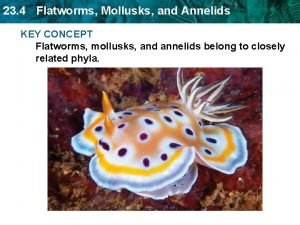
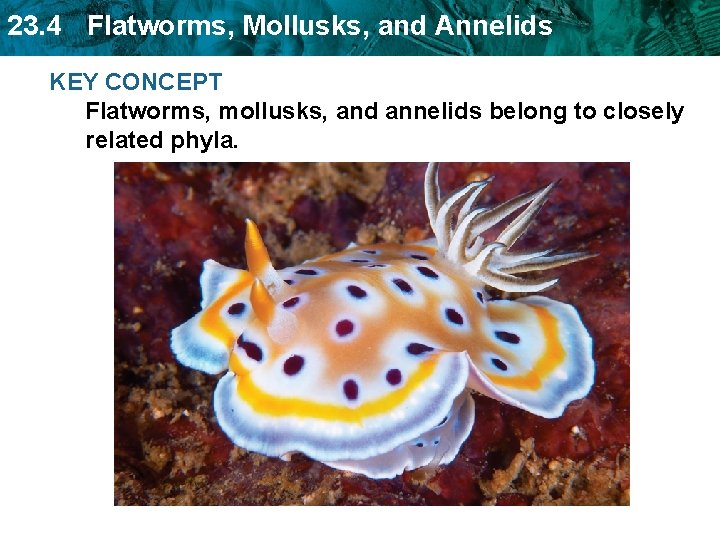
23. 4 Flatworms, Mollusks, and Annelids KEY CONCEPT Flatworms, mollusks, and annelids belong to closely related phyla.
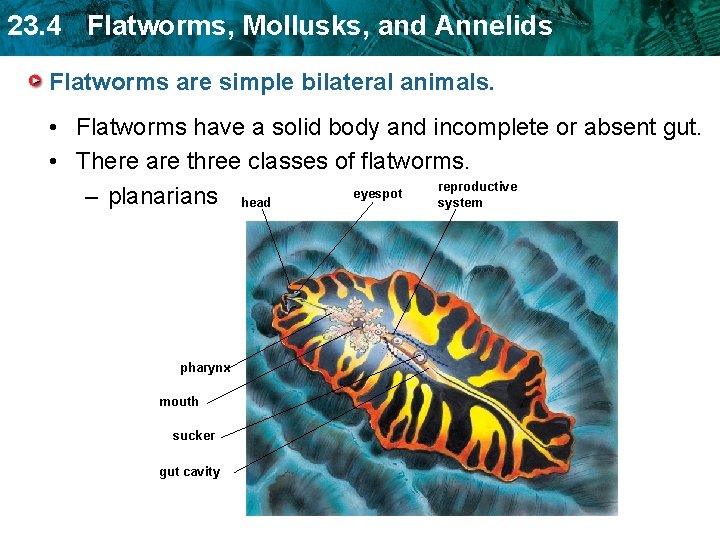
23. 4 Flatworms, Mollusks, and Annelids Flatworms are simple bilateral animals. • Flatworms have a solid body and incomplete or absent gut. • There are three classes of flatworms. reproductive eyespot – planarians head system pharynx mouth sucker gut cavity
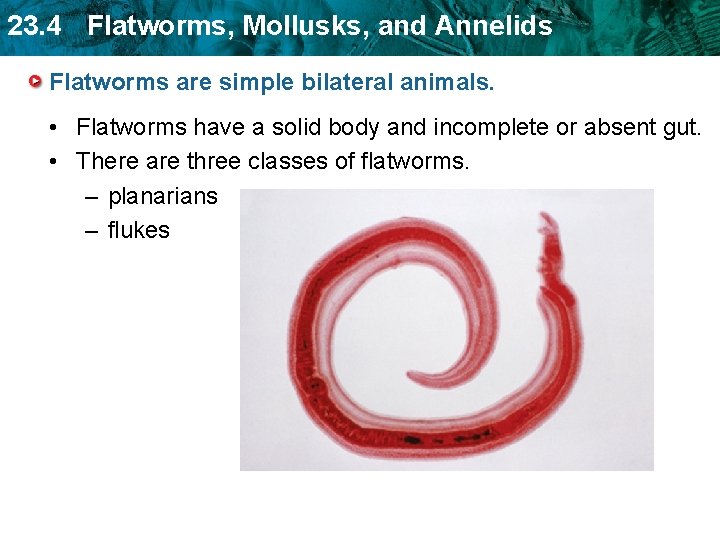
23. 4 Flatworms, Mollusks, and Annelids Flatworms are simple bilateral animals. • Flatworms have a solid body and incomplete or absent gut. • There are three classes of flatworms. – planarians – flukes
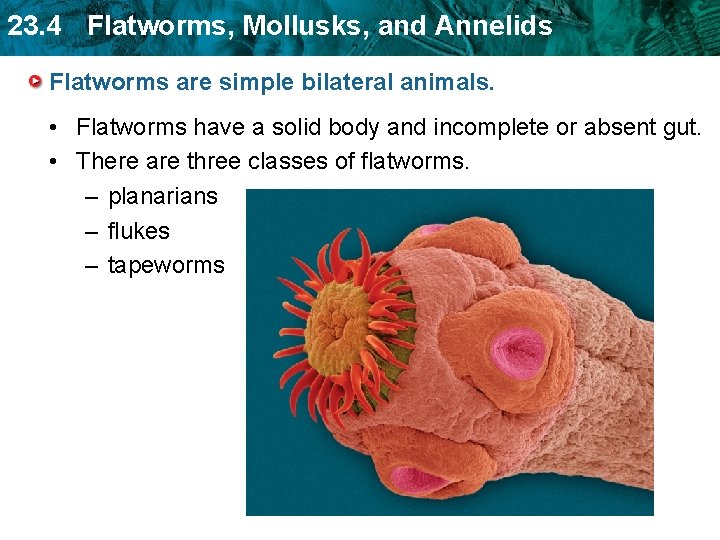
23. 4 Flatworms, Mollusks, and Annelids Flatworms are simple bilateral animals. • Flatworms have a solid body and incomplete or absent gut. • There are three classes of flatworms. – planarians – flukes – tapeworms
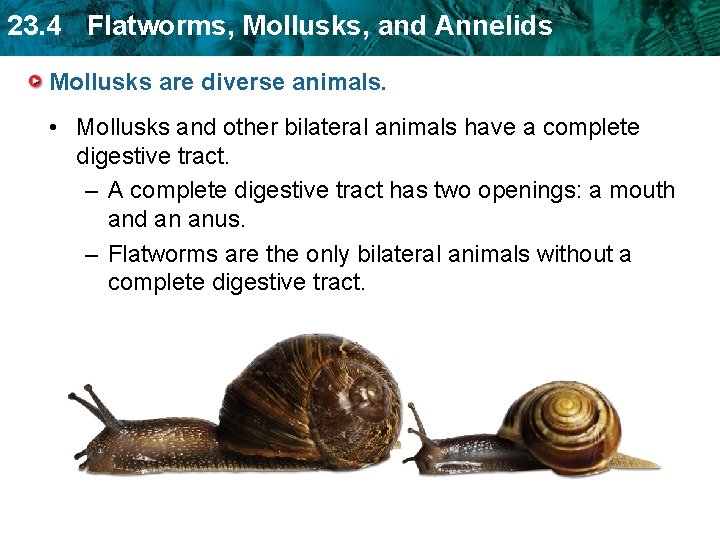
23. 4 Flatworms, Mollusks, and Annelids Mollusks are diverse animals. • Mollusks and other bilateral animals have a complete digestive tract. – A complete digestive tract has two openings: a mouth and an anus. – Flatworms are the only bilateral animals without a complete digestive tract.
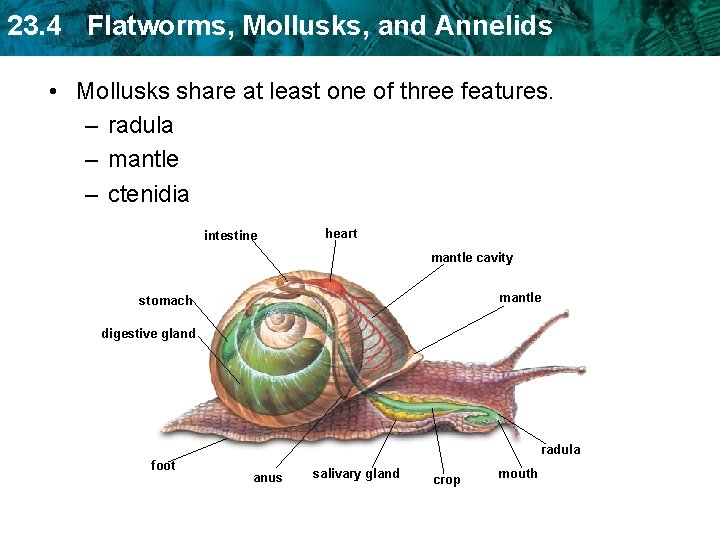
23. 4 Flatworms, Mollusks, and Annelids • Mollusks share at least one of three features. – radula – mantle – ctenidia intestine heart mantle cavity mantle stomach digestive gland radula foot anus salivary gland crop mouth
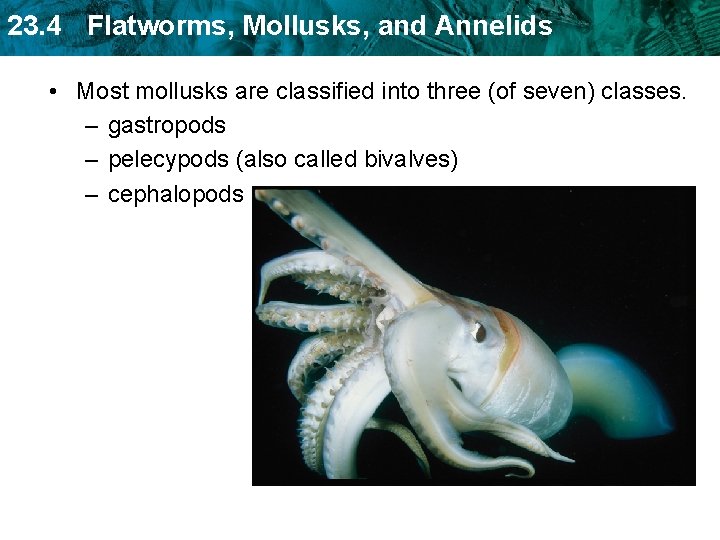
23. 4 Flatworms, Mollusks, and Annelids • Most mollusks are classified into three (of seven) classes. – gastropods – pelecypods (also called bivalves) – cephalopods
23. 4 Flatworms, Mollusks, and Annelids • Mollusks have a variety of reproductive strategies. – Most strategies involve sexual reproduction. – Some species are hermaphrodites.
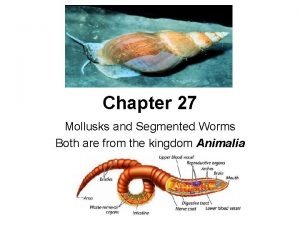
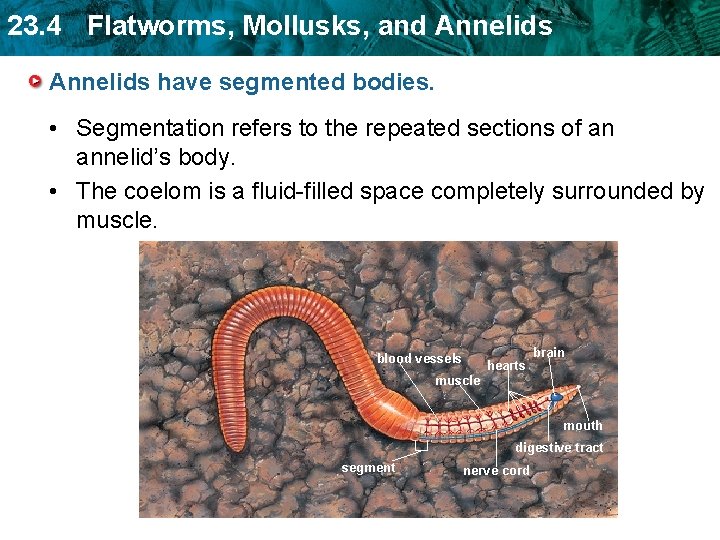
23. 4 Flatworms, Mollusks, and Annelids have segmented bodies. • Segmentation refers to the repeated sections of an annelid’s body. • The coelom is a fluid-filled space completely surrounded by muscle. blood vessels hearts brain muscle mouth digestive tract segment nerve cord
23. 4 Flatworms, Mollusks, and Annelids • There are three groups of annelids. – earthworms – marine worms – leeches