19 5 Diversity of Fungi KEY CONCEPT Fungi

- Slides: 16
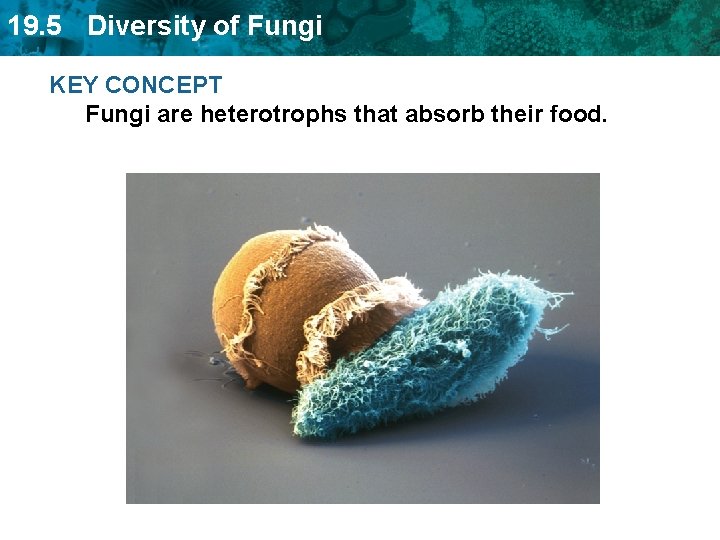
19. 5 Diversity of Fungi KEY CONCEPT Fungi are heterotrophs that absorb their food.
19. 5 Diversity of Fungi are adapted to absorb their food from the environment. • Plants and fungi have different traits. – Fungal cell walls are made of chitin (polysaccharide). – Plant cell walls are made of cellulose (polysaccharide). – Plants have chlorophyll and photosynthesize. (autotrophs) – Fungi absorb food through hyphae. (heterotrophs)
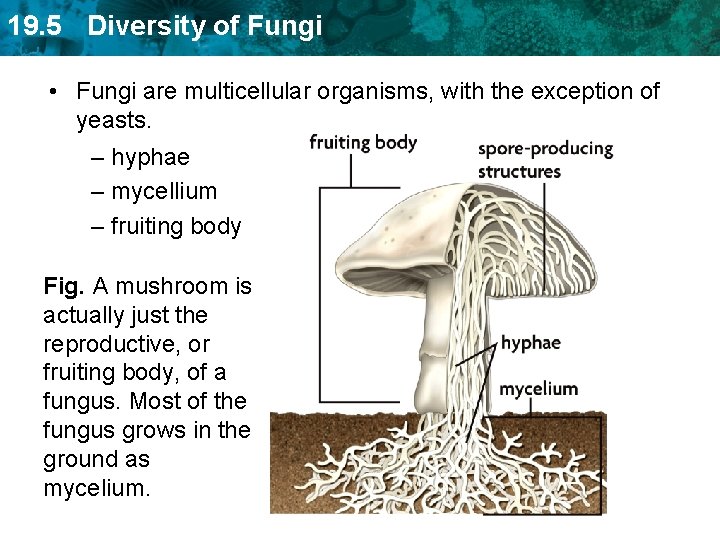
19. 5 Diversity of Fungi • Fungi are multicellular organisms, with the exception of yeasts. – hyphae – mycellium – fruiting body Fig. A mushroom is actually just the reproductive, or fruiting body, of a fungus. Most of the fungus grows in the ground as mycelium.
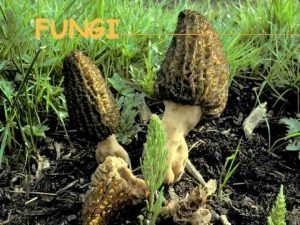
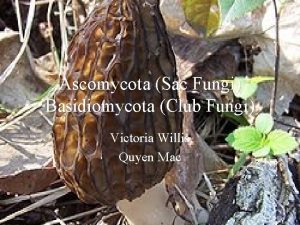
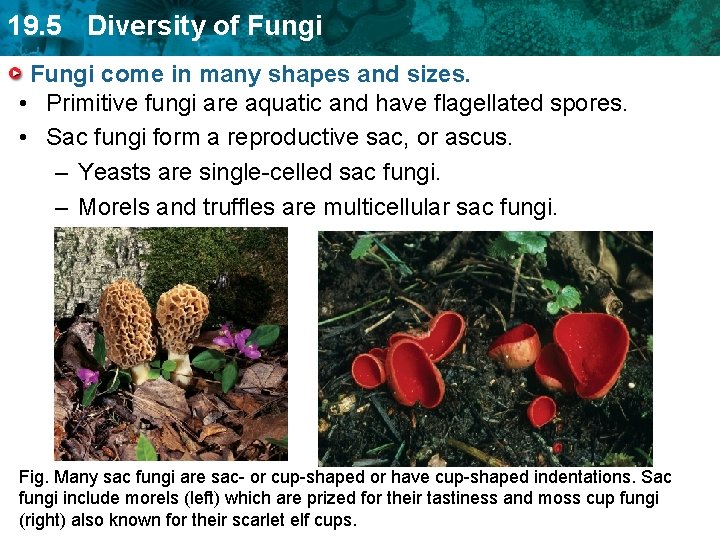
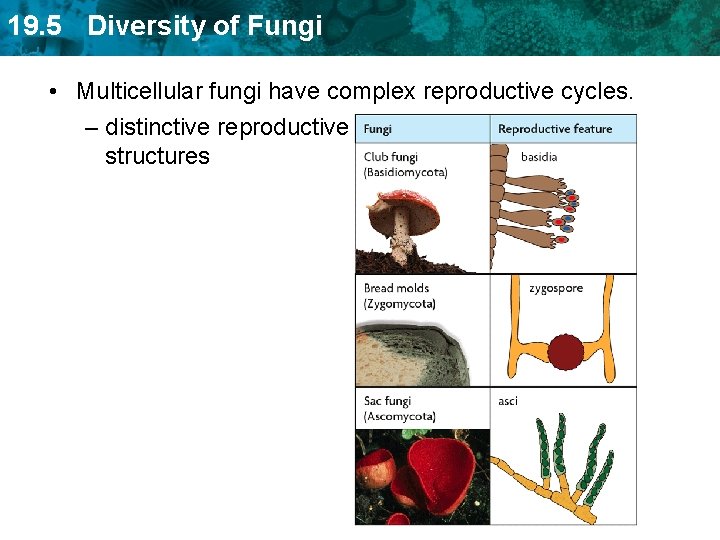
19. 5 Diversity of Fungi come in many shapes and sizes. • Primitive fungi are aquatic and have flagellated spores. • Sac fungi form a reproductive sac, or ascus. – Yeasts are single-celled sac fungi. – Morels and truffles are multicellular sac fungi. Fig. Many sac fungi are sac- or cup-shaped or have cup-shaped indentations. Sac fungi include morels (left) which are prized for their tastiness and moss cup fungi (right) also known for their scarlet elf cups.
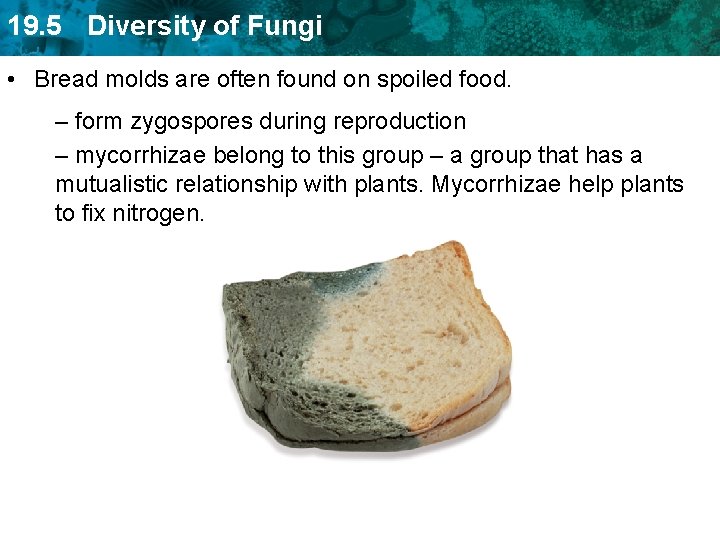
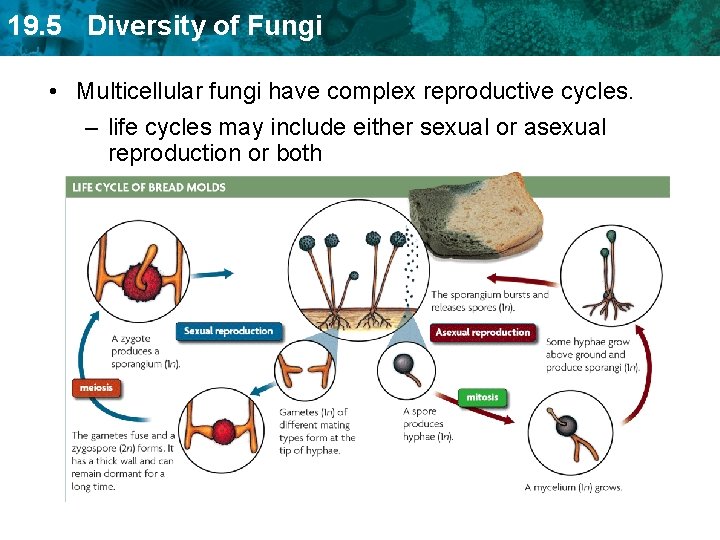
19. 5 Diversity of Fungi • Bread molds are often found on spoiled food. – form zygospores during reproduction – mycorrhizae belong to this group – a group that has a mutualistic relationship with plants. Mycorrhizae help plants to fix nitrogen.
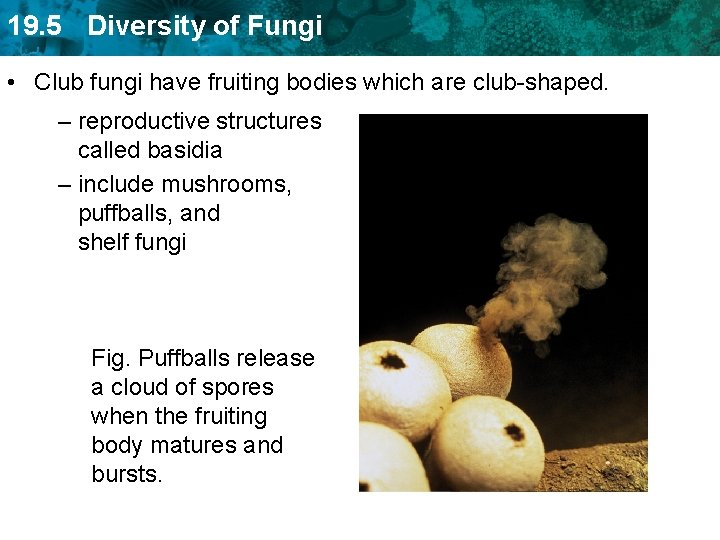
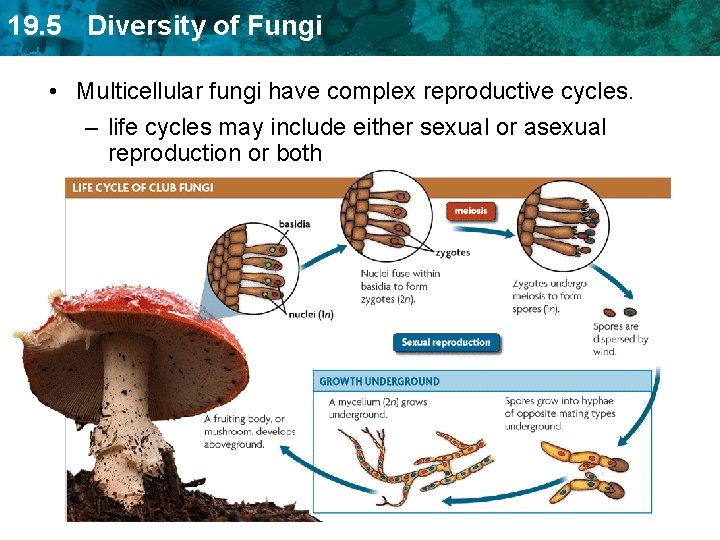
19. 5 Diversity of Fungi • Club fungi have fruiting bodies which are club-shaped. – reproductive structures called basidia – include mushrooms, puffballs, and shelf fungi Fig. Puffballs release a cloud of spores when the fruiting body matures and bursts.
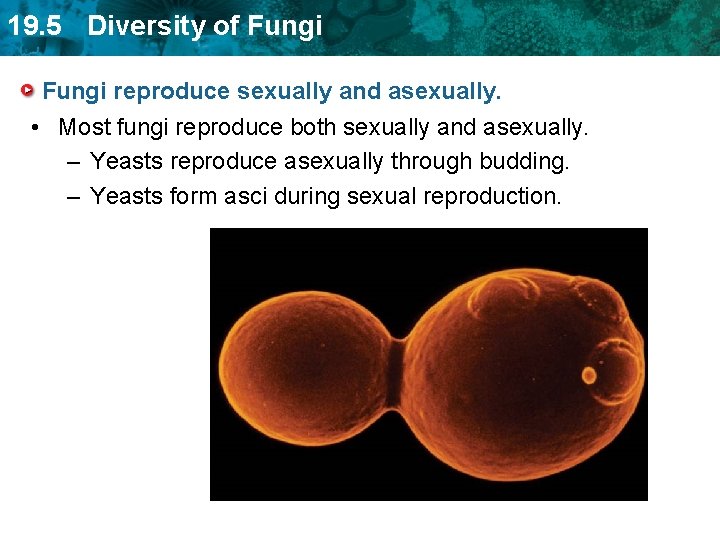
19. 5 Diversity of Fungi reproduce sexually and asexually. • Most fungi reproduce both sexually and asexually. – Yeasts reproduce asexually through budding. – Yeasts form asci during sexual reproduction.
19. 5 Diversity of Fungi • Multicellular fungi have complex reproductive cycles. – distinctive reproductive structures
19. 5 Diversity of Fungi • Multicellular fungi have complex reproductive cycles. – life cycles may include either sexual or asexual reproduction or both
19. 5 Diversity of Fungi • Multicellular fungi have complex reproductive cycles. – life cycles may include either sexual or asexual reproduction or both
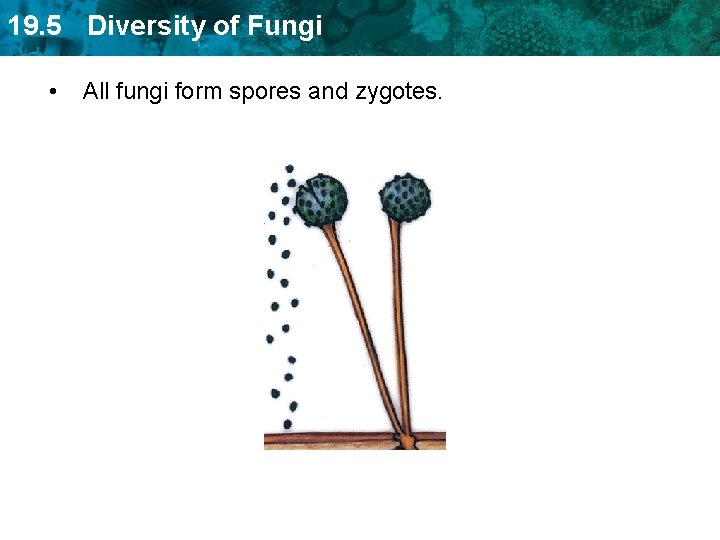
19. 5 Diversity of Fungi • All fungi form spores and zygotes.
19. 5 Diversity of Fungi may be decomposers, pathogens, or mutualists. • Fungi and bacteria are the main decomposers in any ecosystem. – decompose dead leaves, twigs, logs, and animals – return nutrients to the soil – can damage fruit trees and wooden structures Fig. Fungi produce enzymes that help break down the complex molecules in wood to simpler molecules that fungi can absorb and use.
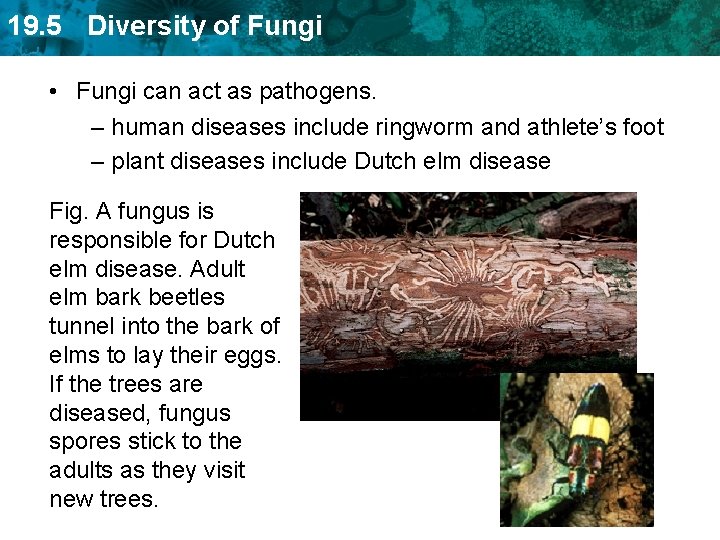
19. 5 Diversity of Fungi • Fungi can act as pathogens. – human diseases include ringworm and athlete’s foot – plant diseases include Dutch elm disease Fig. A fungus is responsible for Dutch elm disease. Adult elm bark beetles tunnel into the bark of elms to lay their eggs. If the trees are diseased, fungus spores stick to the adults as they visit new trees.
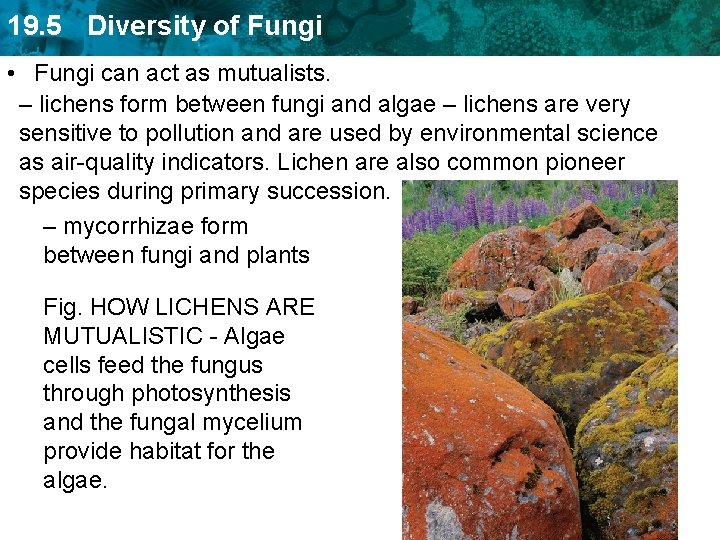
19. 5 Diversity of Fungi • Fungi can act as mutualists. – lichens form between fungi and algae – lichens are very sensitive to pollution and are used by environmental science as air-quality indicators. Lichen are also common pioneer species during primary succession. – mycorrhizae form between fungi and plants Fig. HOW LICHENS ARE MUTUALISTIC - Algae cells feed the fungus through photosynthesis and the fungal mycelium provide habitat for the algae.
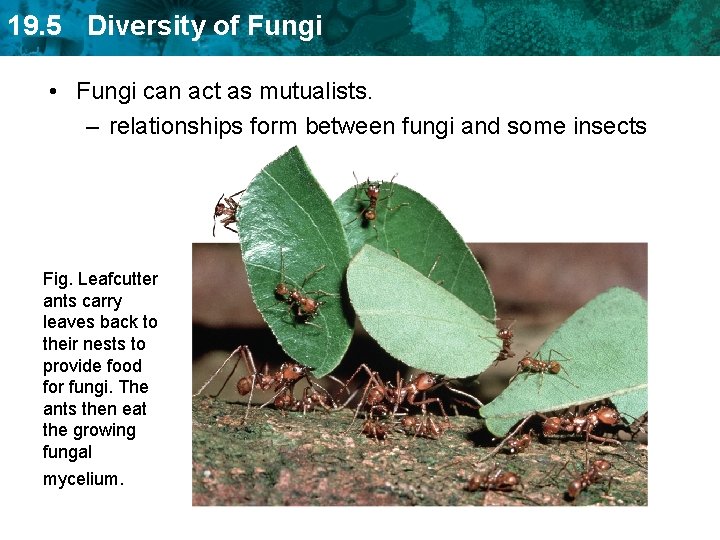
19. 5 Diversity of Fungi • Fungi can act as mutualists. – relationships form between fungi and some insects Fig. Leafcutter ants carry leaves back to their nests to provide food for fungi. The ants then eat the growing fungal mycelium.
19. 5 Diversity of Fungi are studied for many purposes. • Fungi are useful in several ways. – as food – Soy sauce is fermented first with the mold Aspergilus oryz and then with yeast Saccharomyces rouxii. – The blue streaks and pungent flavor of blue cheese such as Roquefort and Gorgonzola result from inoculation with Pencillium roquefortii. – Chocolate is made from cacao beans, which are fermented with the yeasts Candida krusei and Geotrichum. – as antibiotics – like penicillin and many others – bacteria and fungi are natural competitors – as model systems for molecular biology – yeast are common models – they have similar genes and proteins as found in other plants and animals and they also grow quickly and easily.