
ZTF Filter Mechanism Design Concept Proposal M Porter


- Slides: 35
ZTF Filter Mechanism Design Concept Proposal M. Porter 2016 -01 -22 1
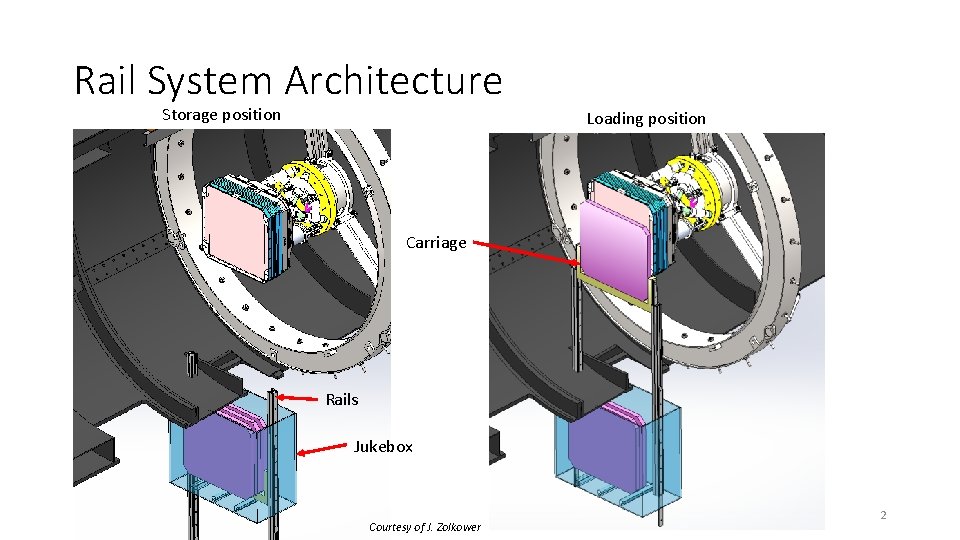
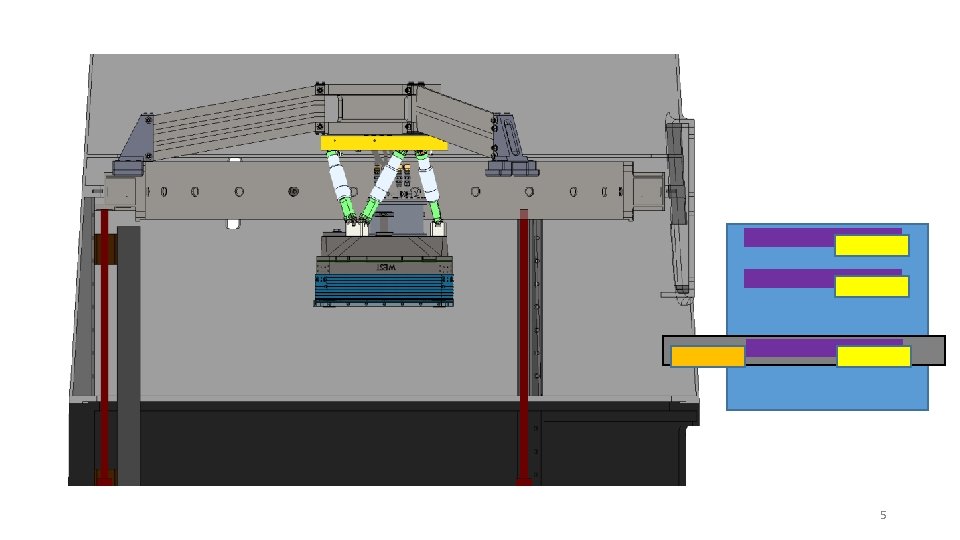
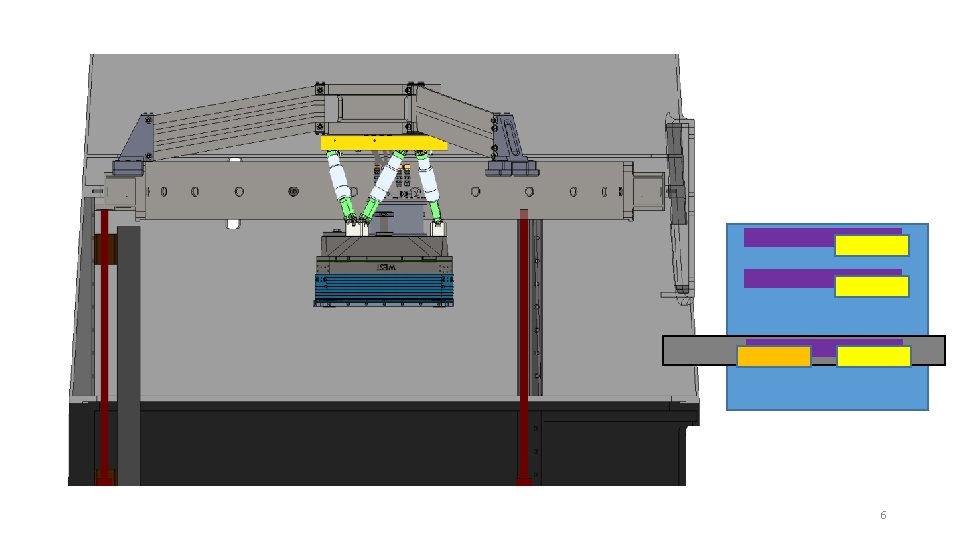
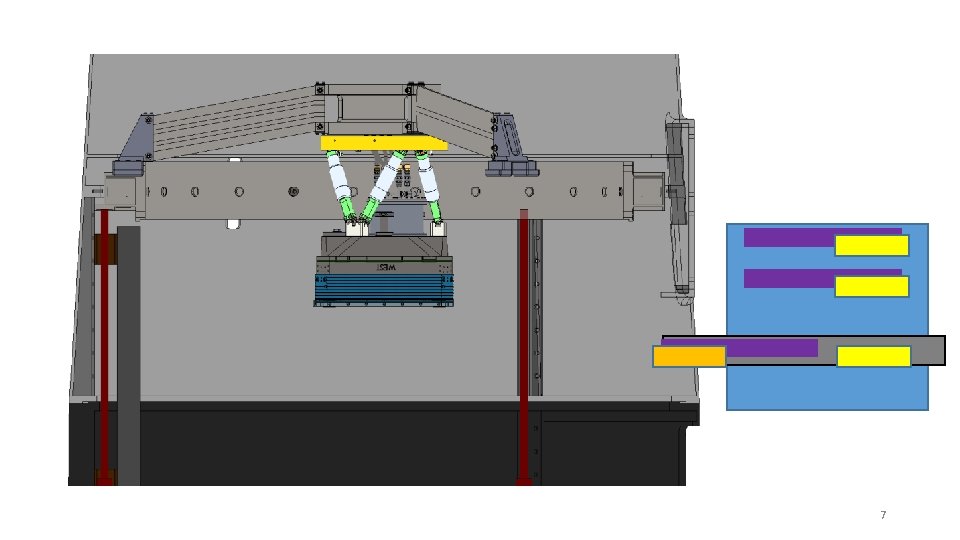
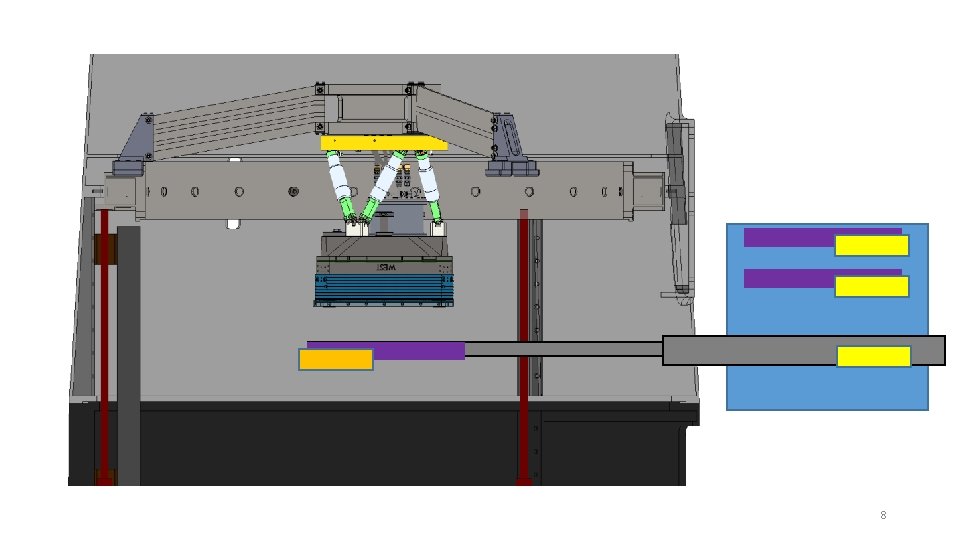
Rail System Architecture Storage position Loading position Carriage Rails Jukebox Courtesy of J. Zolkower 2
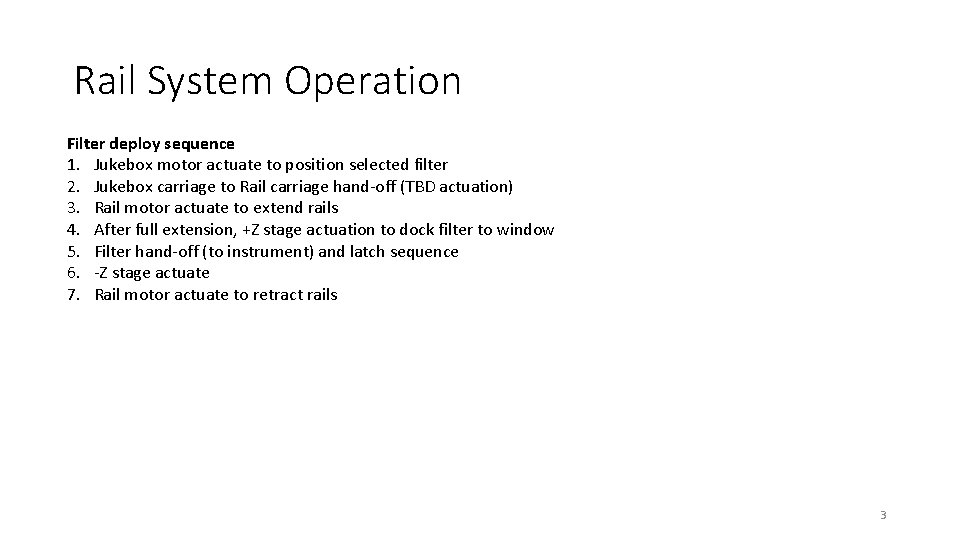
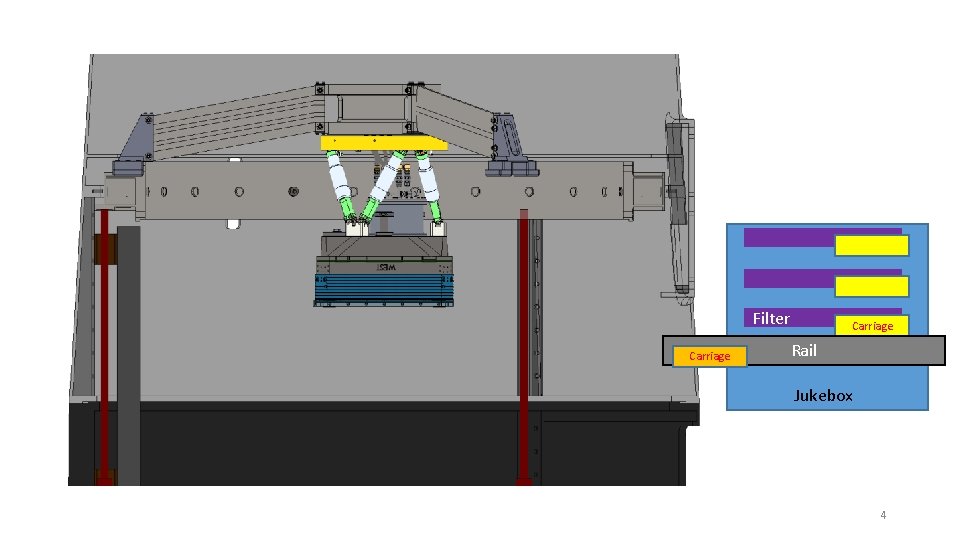
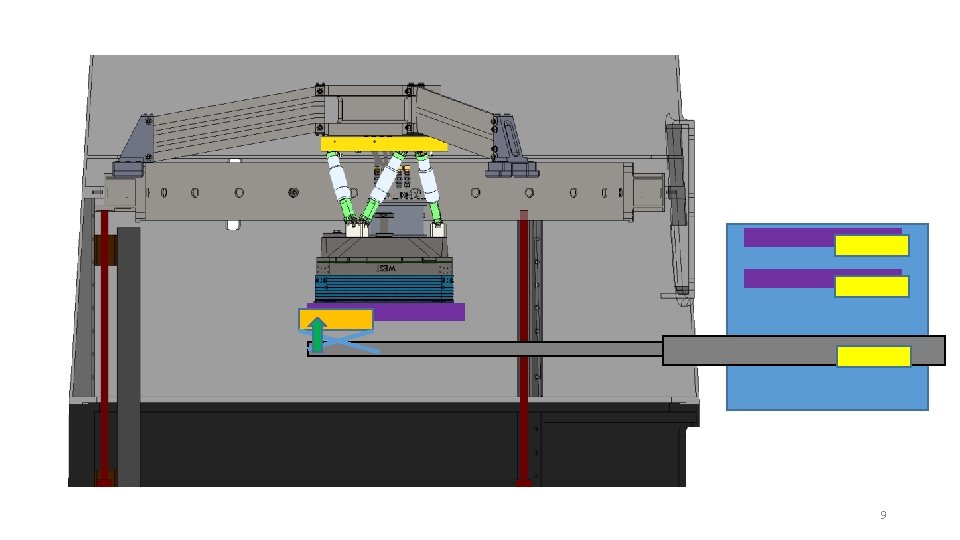
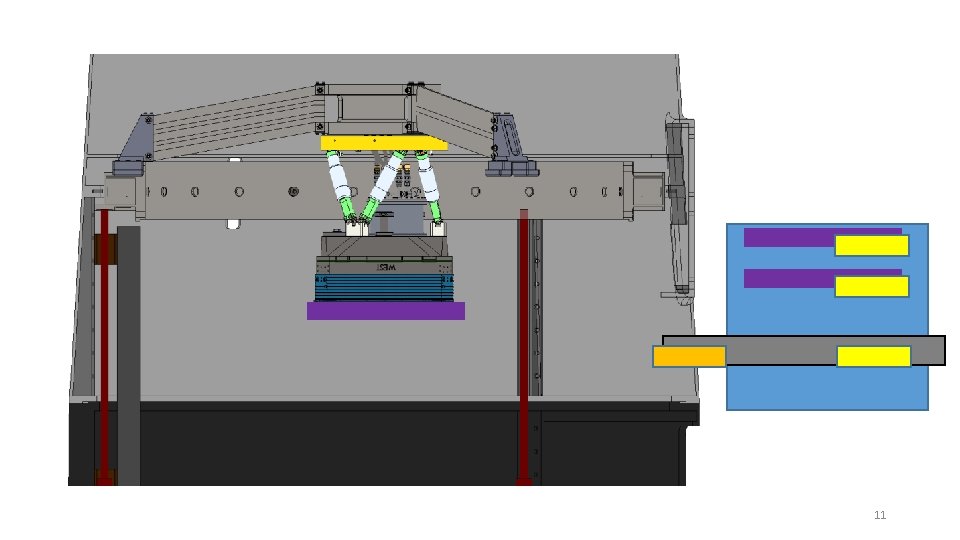
Rail System Operation Filter deploy sequence 1. Jukebox motor actuate to position selected filter 2. Jukebox carriage to Rail carriage hand-off (TBD actuation) 3. Rail motor actuate to extend rails 4. After full extension, +Z stage actuation to dock filter to window 5. Filter hand-off (to instrument) and latch sequence 6. -Z stage actuate 7. Rail motor actuate to retract rails 3
Filter Carriage Rail Jukebox 4
5
6
7
8
9
10
11
Rail System Operation (Con’t) Filter retrieve sequence 1. Jukebox motor actuate to position unoccupied filter carriage 2. Rail motor actuate to extend rails 3. After full extension, +Z stage actuation to dock filter to window 4. Filter hand-off (to rail-side carriage) and latch sequence 5. -Z stage actuate 6. Rail motor actuate to retract rails 7. Rail carriage to Jukebox carriage hand-off (TBD actuation) 12
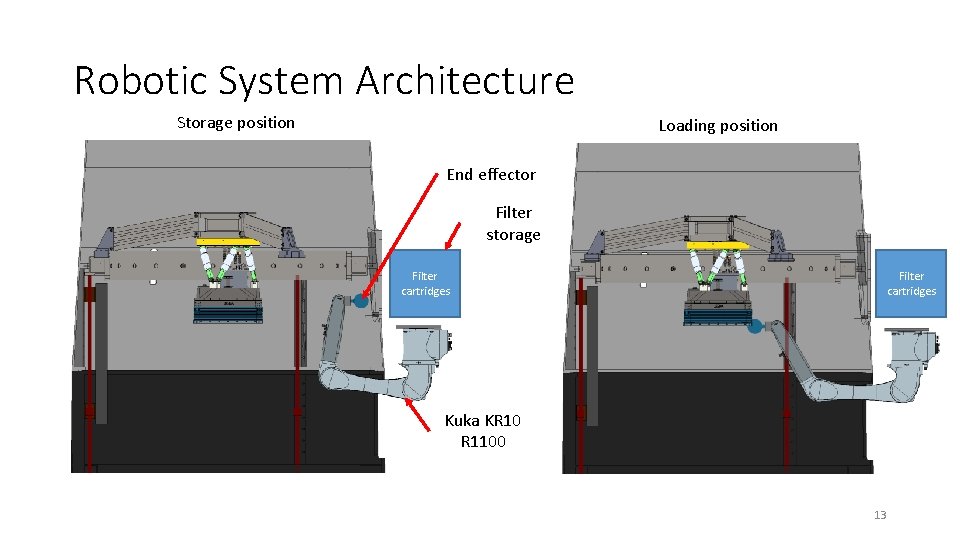
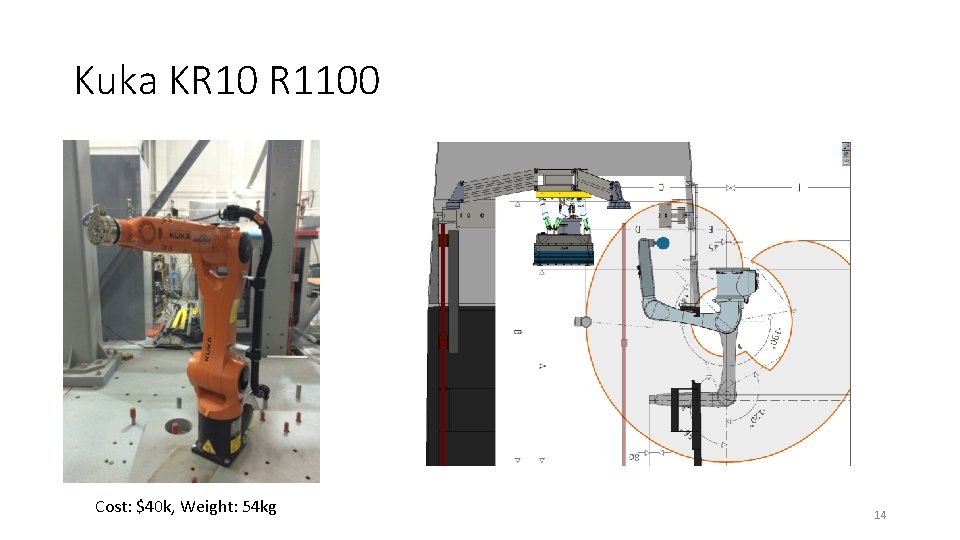
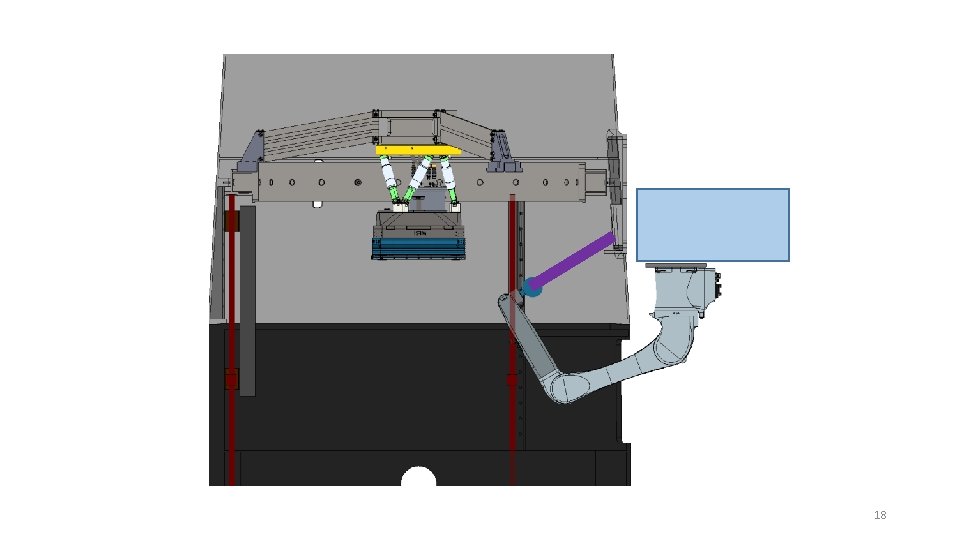
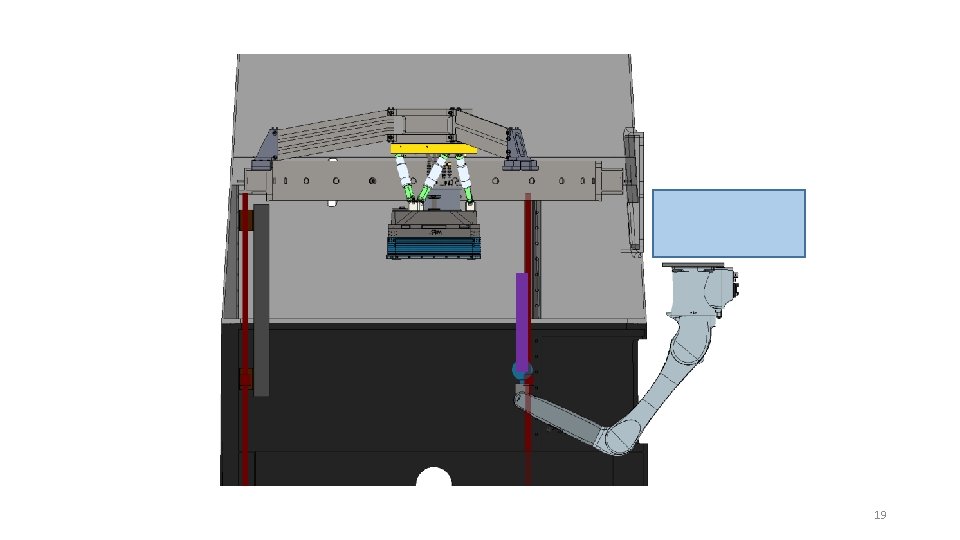
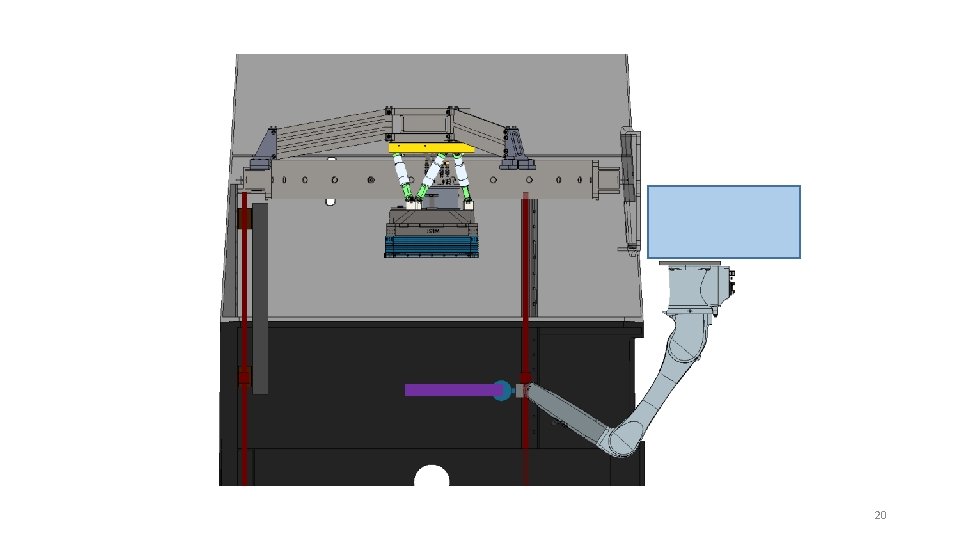
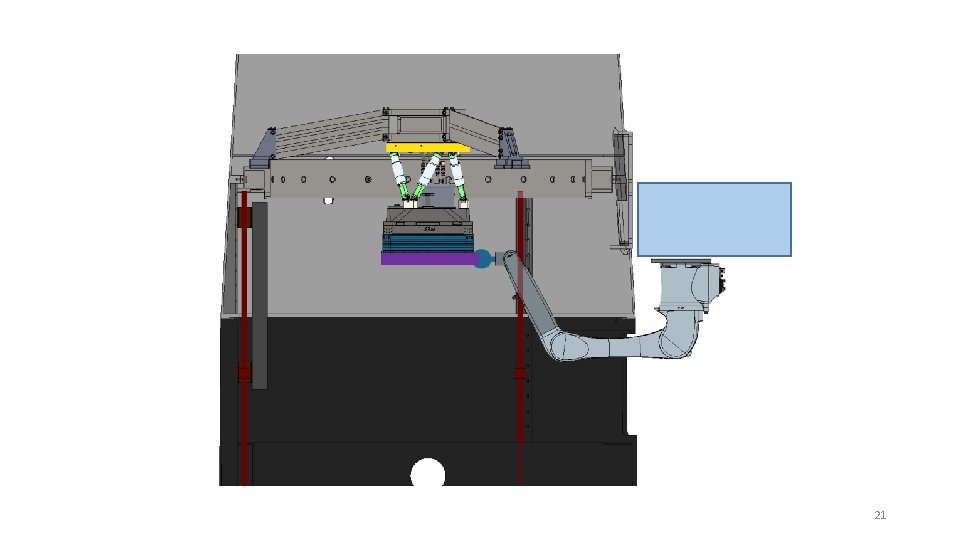
Robotic System Architecture Storage position Loading position End effector Filter storage Filter cartridges Kuka KR 10 R 1100 13
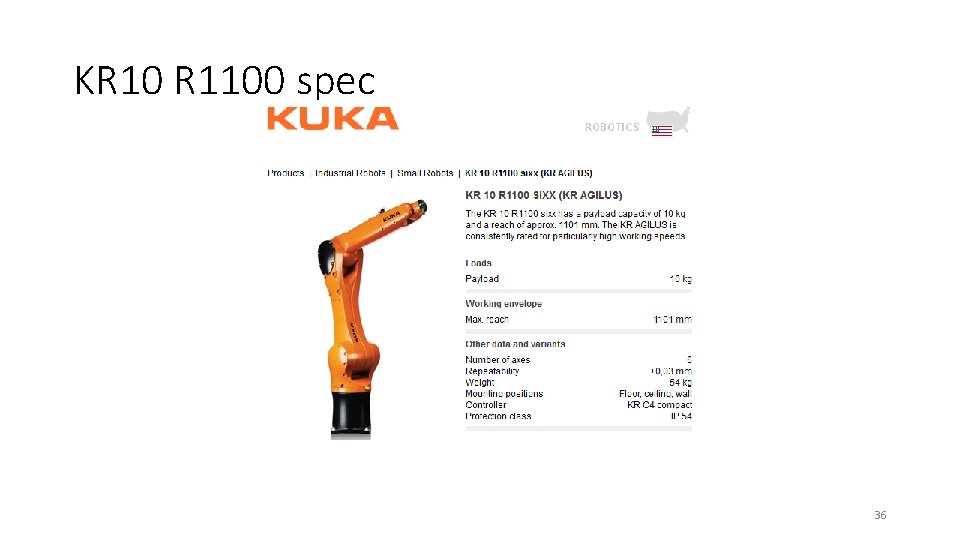
Kuka KR 10 R 1100 Cost: $40 k, Weight: 54 kg 14
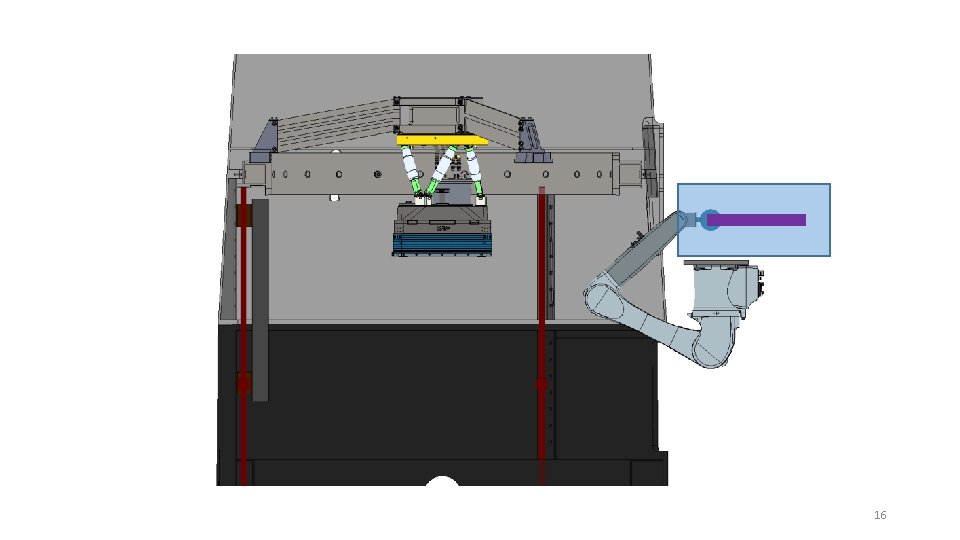
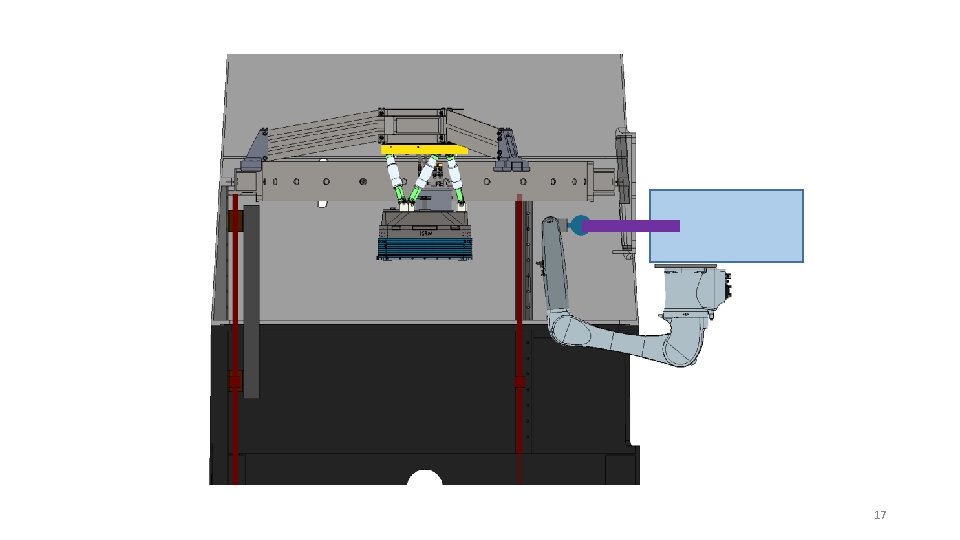
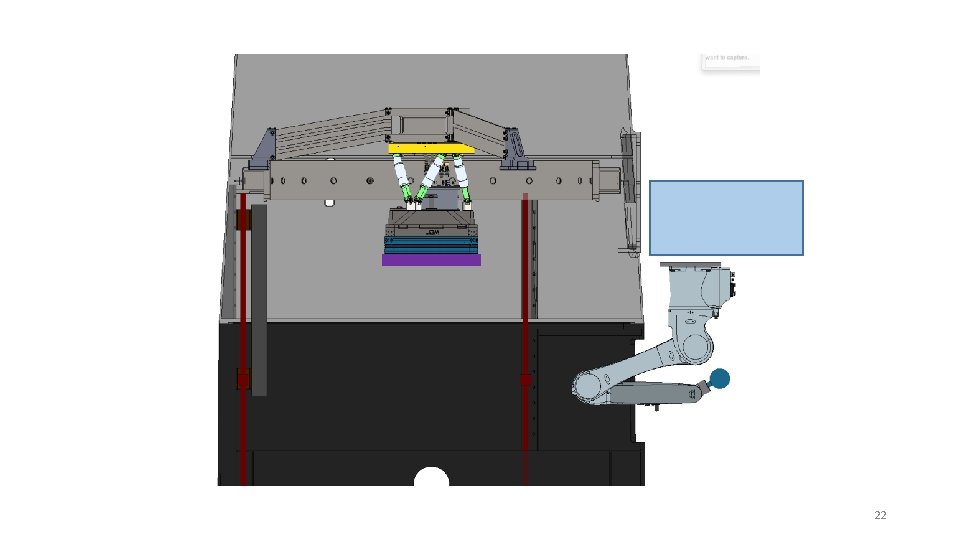
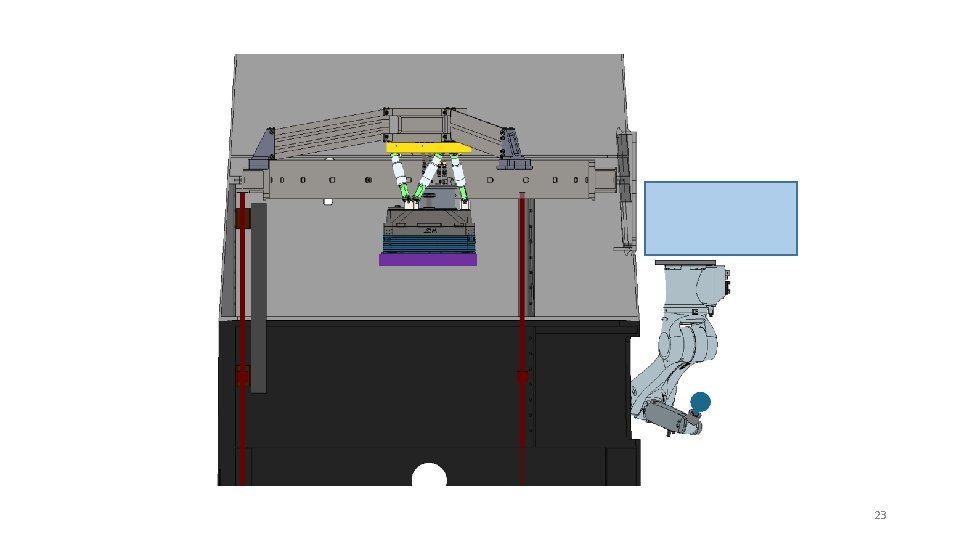
Robotic System Operation Filter deploy sequence 1. Robot arm maneuver to selected filter 2. Filter storage to end effector hand-off (TBD actuation) 3. Robot arm extracts filter and position under instrument window 4. Filter hand-off (to instrument) and latch sequence 5. “Handshake” confirmation before end effector release 6. Robot move to stowed position 15
16
17
18
19
20
21
22
23
Robotic System Operation (Cont’d) Filter retrieve sequence 1. Robot arm position under filter window 2. End effector engage and latch onto filter 3. Filter hand-off (to robot) and interlock sequence 4. Robot arm extract filter and maneuver to selected filter slot 5. Robot to filter storage (TBD actuation) 6. “Handshake” confirmation before end effector release 7. Robot move to stowed position 24
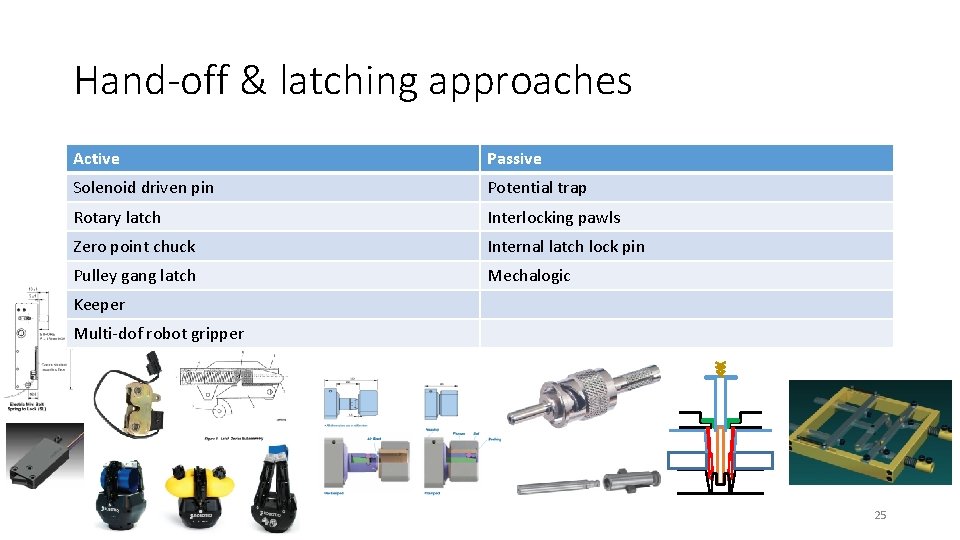
Hand-off & latching approaches Active Passive Solenoid driven pin Potential trap Rotary latch Interlocking pawls Zero point chuck Internal latch lock pin Pulley gang latch Mechalogic Keeper Multi-dof robot gripper 25
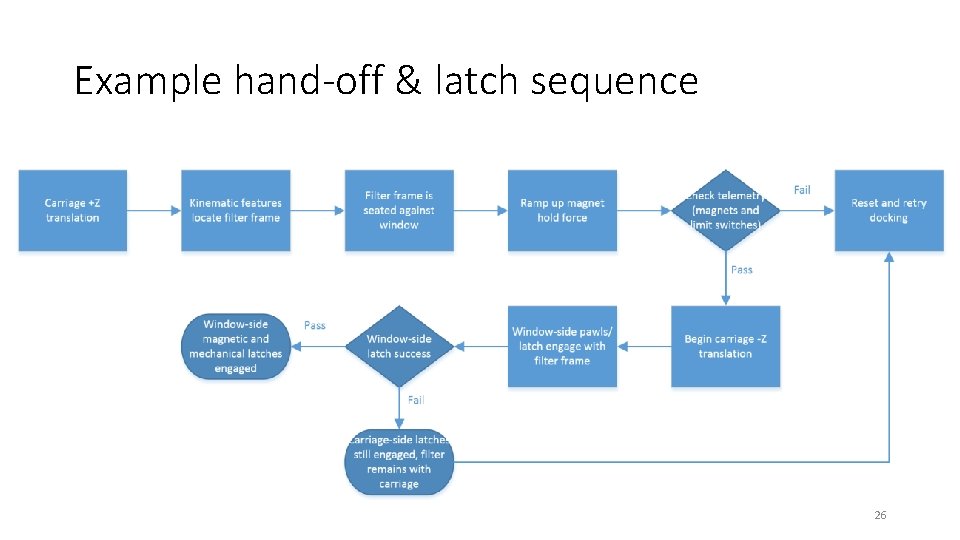
Example hand-off & latch sequence 26
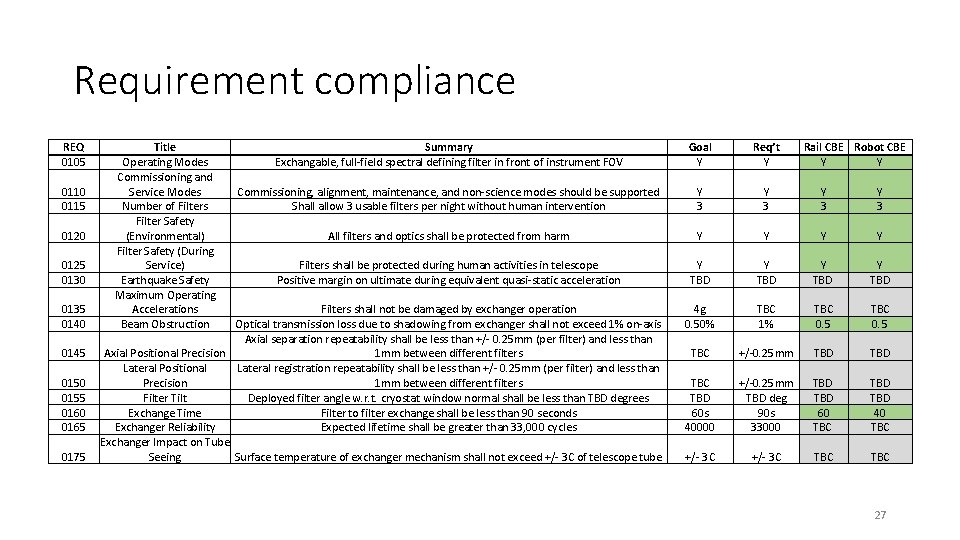
Requirement compliance REQ 0105 0110 0115 0120 0125 0130 0135 0140 0145 0150 0155 0160 0165 0175 Title Operating Modes Commissioning and Service Modes Number of Filters Filter Safety (Environmental) Filter Safety (During Service) Earthquake Safety Maximum Operating Accelerations Beam Obstruction Summary Exchangable, full-field spectral defining filter in front of instrument FOV Goal Y Req’t Y Commissioning, alignment, maintenance, and non-science modes should be supported Shall allow 3 usable filters per night without human intervention Y 3 Y 3 All filters and optics shall be protected from harm Y Y Filters shall be protected during human activities in telescope Positive margin on ultimate during equivalent quasi-static acceleration Y TBD 4 g 0. 50% TBC 1% TBC 0. 5 TBC +/-0. 25 mm TBD TBC TBD 60 s 40000 +/-0. 25 mm TBD deg 90 s 33000 TBD 60 TBC TBD 40 TBC +/- 3 C TBC Filters shall not be damaged by exchanger operation Optical transmission loss due to shadowing from exchanger shall not exceed 1% on-axis Axial separation repeatability shall be less than +/- 0. 25 mm (per filter) and less than Axial Positional Precision 1 mm between different filters Lateral Positional Lateral registration repeatability shall be less than +/- 0. 25 mm (per filter) and less than Precision 1 mm between different filters Filter Tilt Deployed filter angle w. r. t. cryostat window normal shall be less than TBD degrees Exchange Time Filter to filter exchange shall be less than 90 seconds Exchanger Reliability Expected lifetime shall be greater than 33, 000 cycles Exchanger Impact on Tube Seeing Surface temperature of exchanger mechanism shall not exceed +/- 3 C of telescope tube Rail CBE Robot CBE Y Y 27
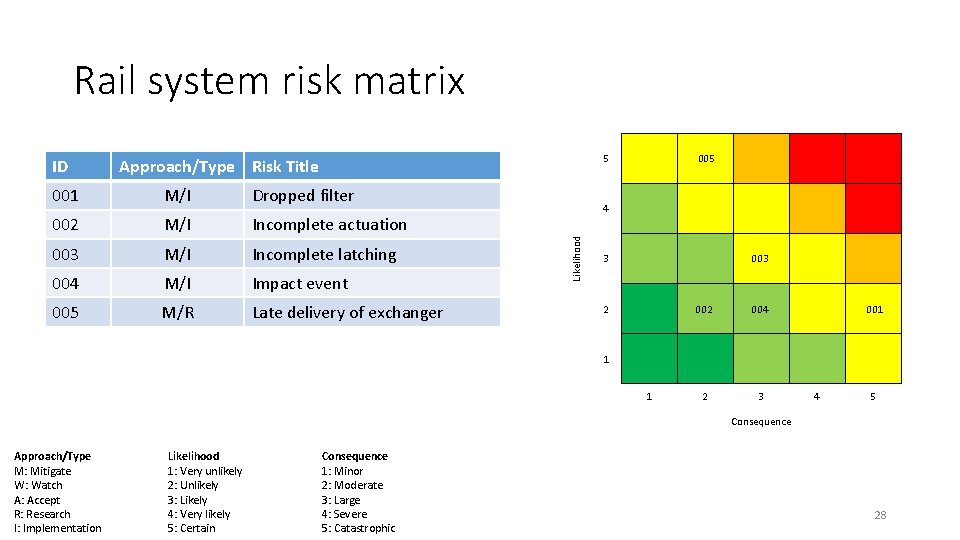
Rail system risk matrix 5 Approach/Type Risk Title 001 M/I Dropped filter 002 M/I Incomplete actuation 003 M/I Incomplete latching 004 M/I Impact event 005 M/R Late delivery of exchanger 005 4 Likelihood ID 3 003 2 004 2 3 001 1 1 4 5 Consequence Approach/Type M: Mitigate W: Watch A: Accept R: Research I: Implementation Likelihood 1: Very unlikely 2: Unlikely 3: Likely 4: Very likely 5: Certain Consequence 1: Minor 2: Moderate 3: Large 4: Severe 5: Catastrophic 28
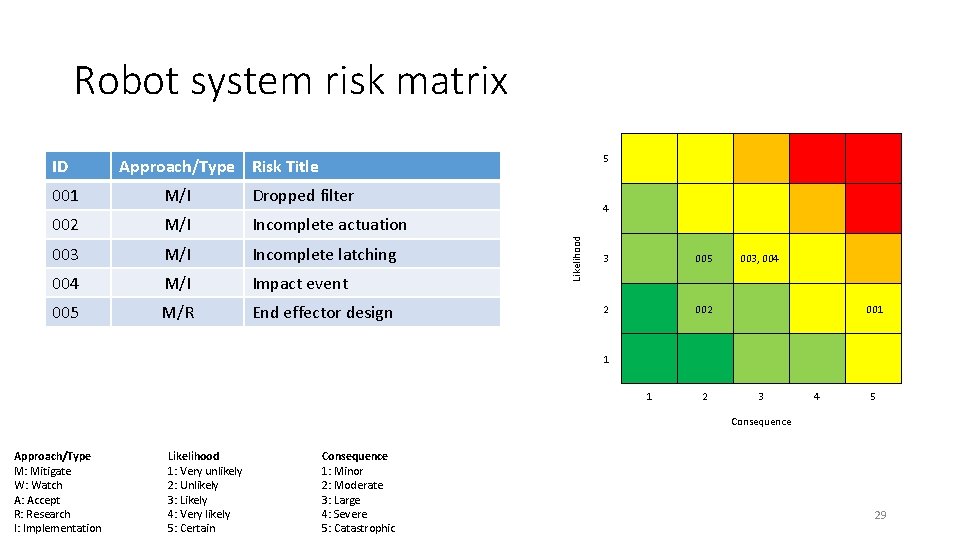
Robot system risk matrix 5 Approach/Type Risk Title 001 M/I Dropped filter 002 M/I Incomplete actuation 003 M/I Incomplete latching 004 M/I Impact event 005 M/R End effector design 4 Likelihood ID 3 005 2 003, 004 001 1 1 2 3 4 5 Consequence Approach/Type M: Mitigate W: Watch A: Accept R: Research I: Implementation Likelihood 1: Very unlikely 2: Unlikely 3: Likely 4: Very likely 5: Certain Consequence 1: Minor 2: Moderate 3: Large 4: Severe 5: Catastrophic 29
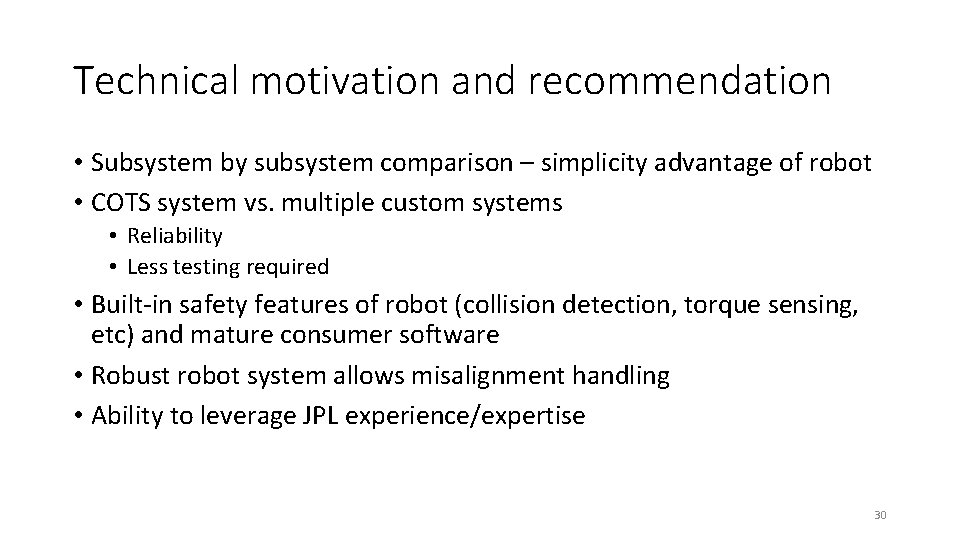
Technical motivation and recommendation • Subsystem by subsystem comparison – simplicity advantage of robot • COTS system vs. multiple custom systems • Reliability • Less testing required • Built-in safety features of robot (collision detection, torque sensing, etc) and mature consumer software • Robust robot system allows misalignment handling • Ability to leverage JPL experience/expertise 30
Backup slides 31
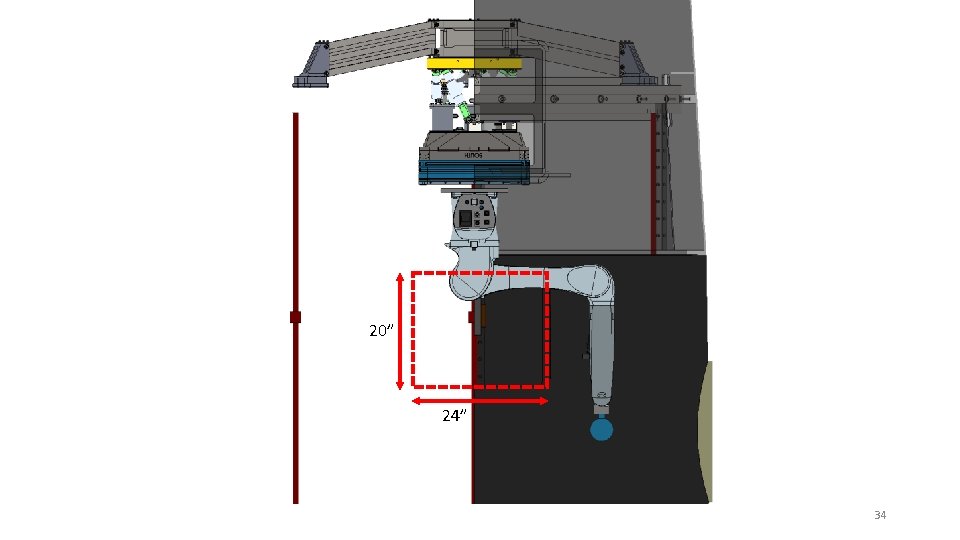
20” 24” 34
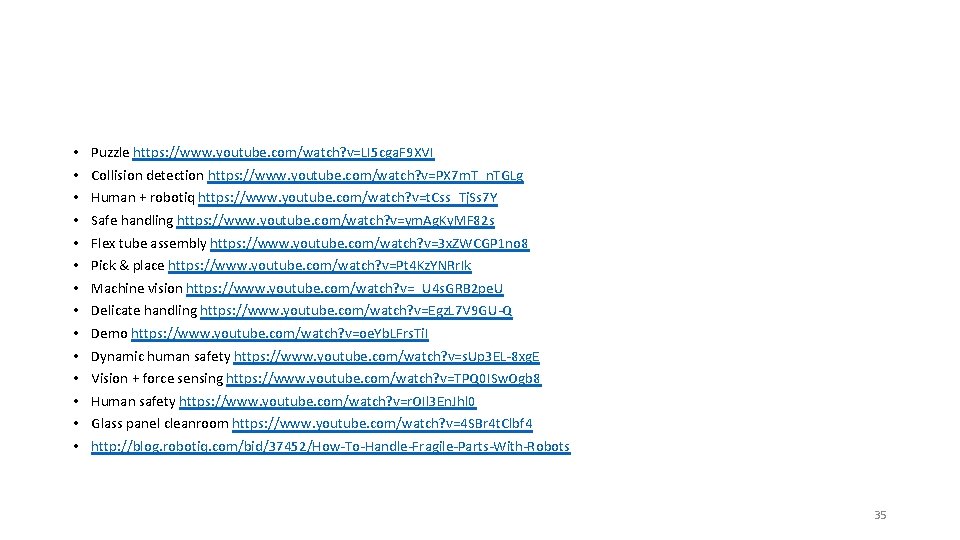
• • • • Puzzle https: //www. youtube. com/watch? v=LI 5 cga. F 9 XVI Collision detection https: //www. youtube. com/watch? v=PX 7 m. T_n. TGLg Human + robotiq https: //www. youtube. com/watch? v=t. Css_Tj. Ss 7 Y Safe handling https: //www. youtube. com/watch? v=ym. Ag. Ky. MF 82 s Flex tube assembly https: //www. youtube. com/watch? v=3 x. ZWCGP 1 no 8 Pick & place https: //www. youtube. com/watch? v=Pt 4 Kz. YNRr. Ik Machine vision https: //www. youtube. com/watch? v=_U 4 s. GRB 2 pe. U Delicate handling https: //www. youtube. com/watch? v=Egz. L 7 V 9 GU-Q Demo https: //www. youtube. com/watch? v=oe. Yb. LFrs. Ti. I Dynamic human safety https: //www. youtube. com/watch? v=s. Up 3 EL-8 xg. E Vision + force sensing https: //www. youtube. com/watch? v=TPQ 0 ISw. Ogb 8 Human safety https: //www. youtube. com/watch? v=r. OIl 3 En. Jhl 0 Glass panel cleanroom https: //www. youtube. com/watch? v=4 SBr 4 t. Clbf 4 http: //blog. robotiq. com/bid/37452/How-To-Handle-Fragile-Parts-With-Robots 35
KR 10 R 1100 spec 36
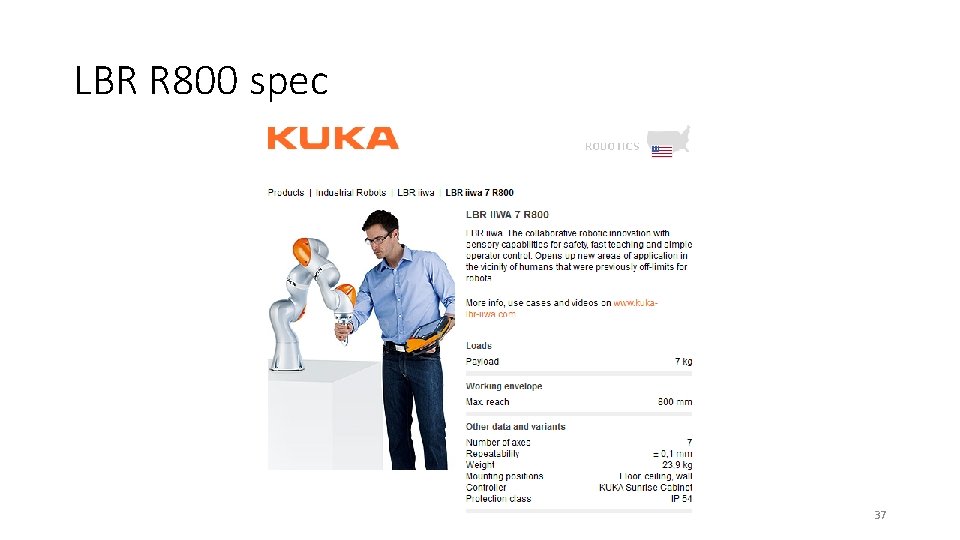
LBR R 800 spec 37