
ZoroasterZarathustra Founder of Zoroastrianism date unknown but by
Zoroaster/Zarathustra • Founder of Zoroastrianism, date unknown, but by the time of Cyrus it was widespread in Persia and Media • Monotheistic with a belief in free will, Hegel considers its influence on Persia the basis of Persia’s place as the first world historical empire • The creator and source of good/light is Ahura Mazda, the source of evil, darkness, and destruction is Ahriman. • Zoroastrianism would serve as the basis for Manicheanism in the West and the Parsi faith in India; the Magi from the New Testament were Zoroastrian • No Ruz, the most festive holiday in the Iranian calendar, is the Zoroastrian new year
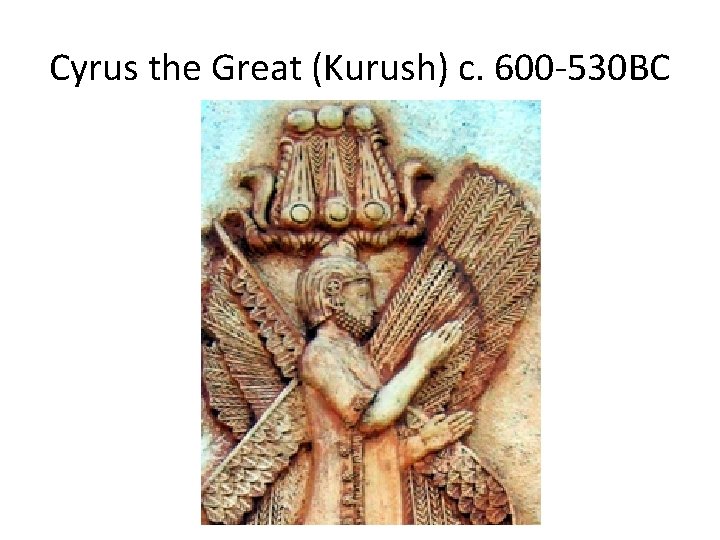
Cyrus the Great (Kurush) c. 600 -530 BC
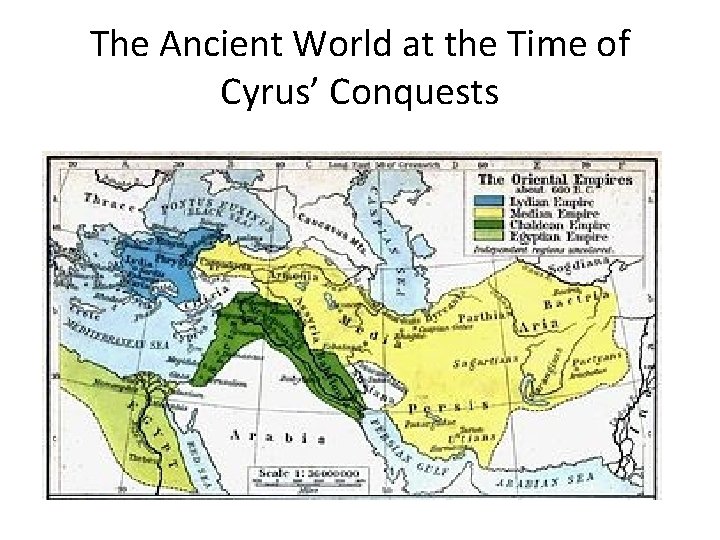
The Ancient World at the Time of Cyrus’ Conquests
Cyrus’ Conquests • 552 -546 Cyrus conquers Media • 547 (? ) defeats Croesus, conquers Lydia • 540 conquers Babylon
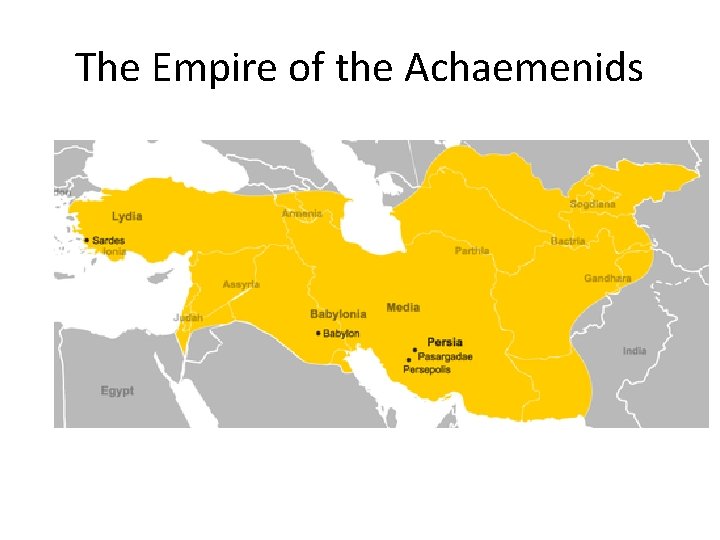
The Empire of the Achaemenids
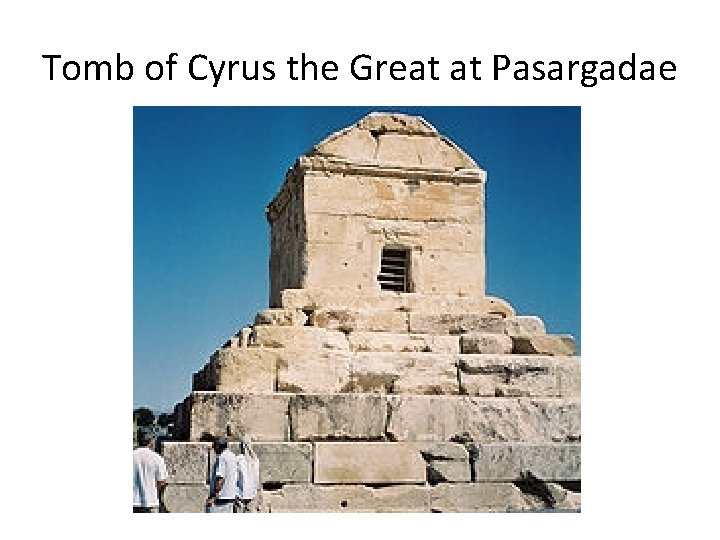
Tomb of Cyrus the Great at Pasargadae
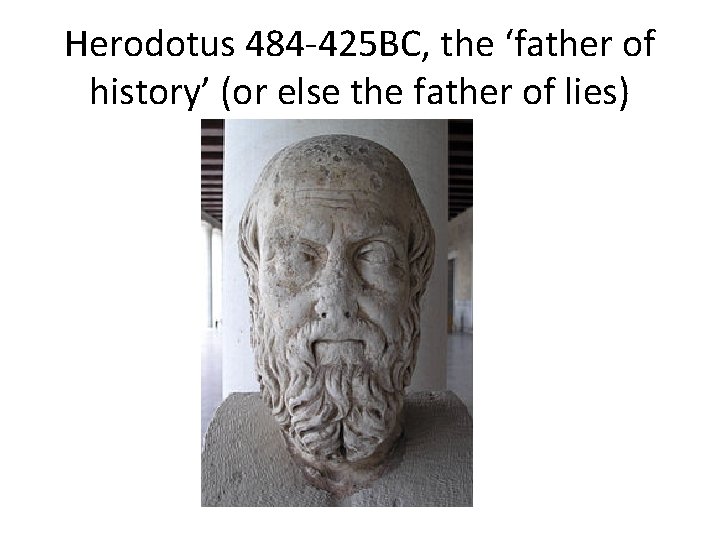
Herodotus 484 -425 BC, the ‘father of history’ (or else the father of lies)
Herodotus’ The Histories • A description of the conflicts of Greece and Persia, beginning with a history of Lydia, its conquest by Cyrus, and subsequent Persian leaders, culminating in the Persian Wars initiated by Xerxes • A series of quasi-mythical vignettes describing not only historical events and leaders, but also the cultures of the ancient world, although it is considered unreliable it is nevertheless the most complete history from this time
Recurring Themes in Herodotus • Wealth will lead to weakness • Sybil’s warnings are always correct and need to be heeded carefully • In striving for a balance, Herodotus seems not only willing to blame the Greeks for the conflicts, but even assign them inordinate blame • Persian leaders are hubristic and irrational • Hubris will be punished – Pride/Arrogance comes before a downfall, note especially when a king or emperor laughs at a warning – Excessive acts of revenge will also be punished
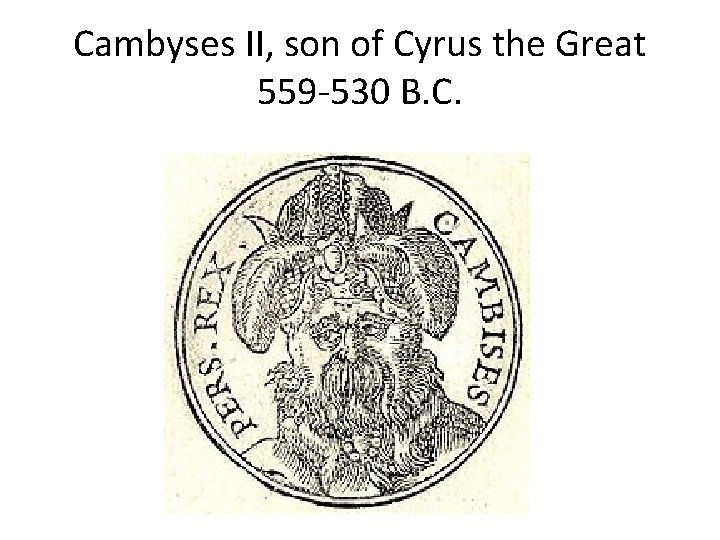
Cambyses II, son of Cyrus the Great 559 -530 B. C.
Cambyses’ Career • Successfully invaded and conquered Egypt, adding it to the Persian Empire • Was unsuccessful in his campaign against Ethiopia • Reputedly killed his brother Smerdis (or Bardiya) • During his campaign in Africa he was deposed in Persia by Magi (Zoroastrian Priests) one of whom pretended to be his dead brother Smerdis/Bardiya • Became increasingly insane and erratic, dying in Egypt before he could return to overthrow the impostor Smerdis
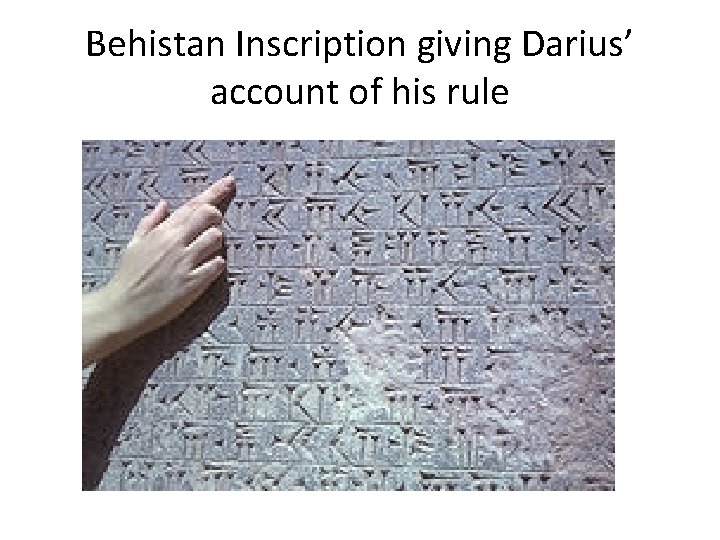
Behistan Inscription giving Darius’ account of his rule
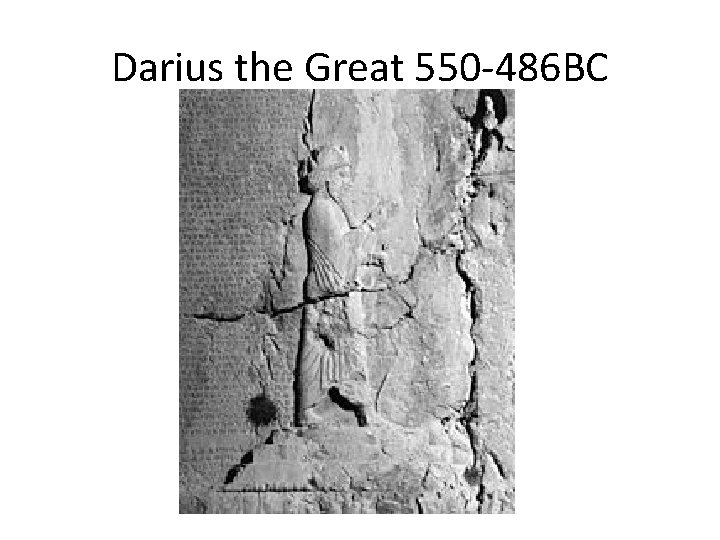
Darius the Great 550 -486 BC
Darius’ Achievements • Took power, according to Herodotus’ account with the aid of six other powerful families from the impostor Gaumata • Put down rebellions in various parts of his empire, including Greece (The Ionian Rebellion) • Sought to extend his empire by invading Scythia, but this invasion was unsuccessful • Developed a more efficient method for ruling Persia’s vast domain • Built the city of Persepolis, whose foundation had been laid by Cyrus the Great
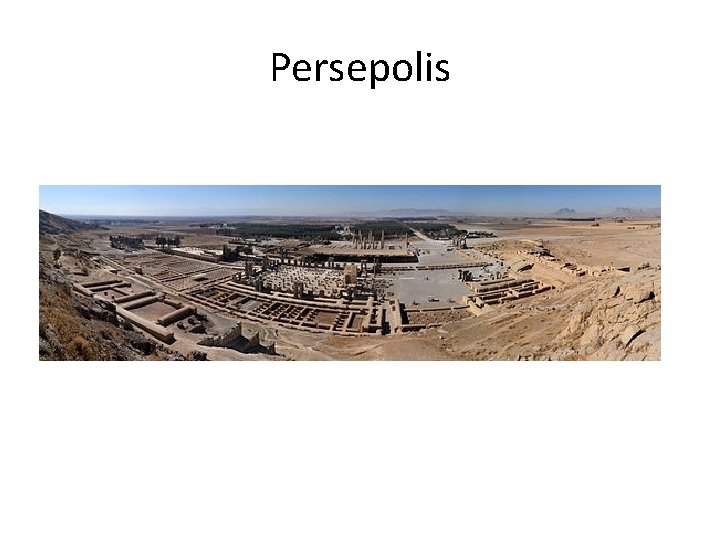
Persepolis
Persepolis • The site of Persepolis was reputedly chosen by Cyrus the Great • Darius I decided to move the capital of Persia from Pasargadae to Persepolis (City of the Persians in Greek) • Xerxes I continued the construction of Persepolis, ultimately the construction of the city would last 150 years and make it the most magnificent city of the ancient world at the time. Master builders and sculptors from Greece and elsewhere worked on the city. • The completed capital only existed for 30 years before it was destroyed by Alexander the Great
Book Four of the Histories by Herodotus • This is mainly a series of remarks on Darius’ unsuccessful campaign against the Scythians and Scythian customs. • One notable story is about a message sent to Darius by the Scythians: a bird, frog, mouse, and five arrows. It is delivered without explanation, and two explanations are given; one, by Darius, argues that it is a sign of submission, the other, given by one of his advisors, argues that it is a warning that he should flee while he has the chance.
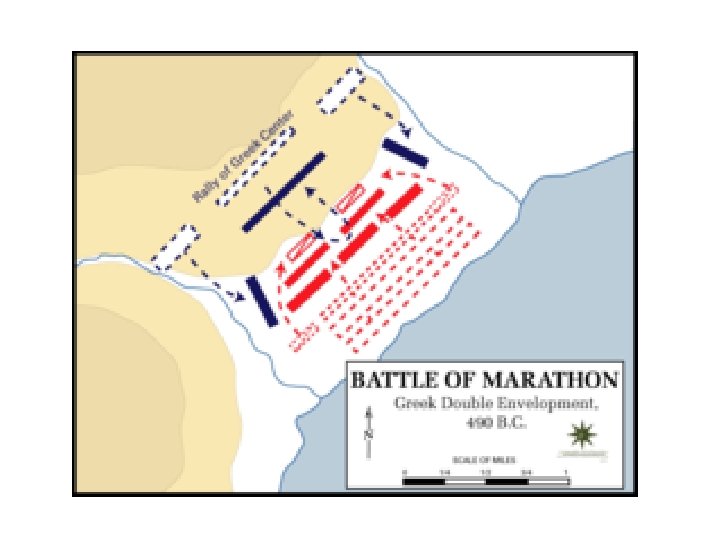
The Ionian Revolt (Book Five of the Histories) • A group of rebels from the island of Naxos appeals to Aristagoras, acting tyrant of Miletus (in Ionia), for help to ovethrow the Naxian government • Aristagoras sees this as a chance to gain Naxos for himself and appeals to Darius’ brother Artaphernes, satrap of Lydia for help • Aristagoras’ plan is betrayed and the mission fails, leading Aristagoras to himself rebel against the Persians in order to prevent his dismissal as tyrant • In the course of this rebellion, Ion receives help from other Greek ‘brother’ cities, including Athens, who burn the Lydian capital at Sardis, for which Darius will seek revenge. • At the Battle of Marathon, the Athenians fight heroically against the Persians. This will be a turning point in the conflicts between Greece and Persia as previously Greeks had viewed the Persians as invincible.
The Athenians accordingly increased in power; and it is evident, not by one instance only but in every way, that equality is an excellent thing, since the Athenians while they were ruled by despots were not better in war than any of those who dwelt about them, whereas after they had got rid of despots they became far the first. This proves that when they were kept down they were wilfully slack, because they were working for a master, whereas when they had been set free each one was eager to achieve something for himself.
Book Six of the Histories • With Aristagoras dead, the Ionian rebellion is continued under Histiaeus, but the Ionian cities are eventually subdued. Miletus is effectively depopulated (Herodotus seems to be exaggerating; he will mention inhabitants at Miletus in the later books) • Demaratus, the son of the Spartan tyrant is accused of being the son of his mother’s previous husband deposed. He flees to Persia where he becomes an advisor to Xerxes. He always gives good advice but it is never followed.
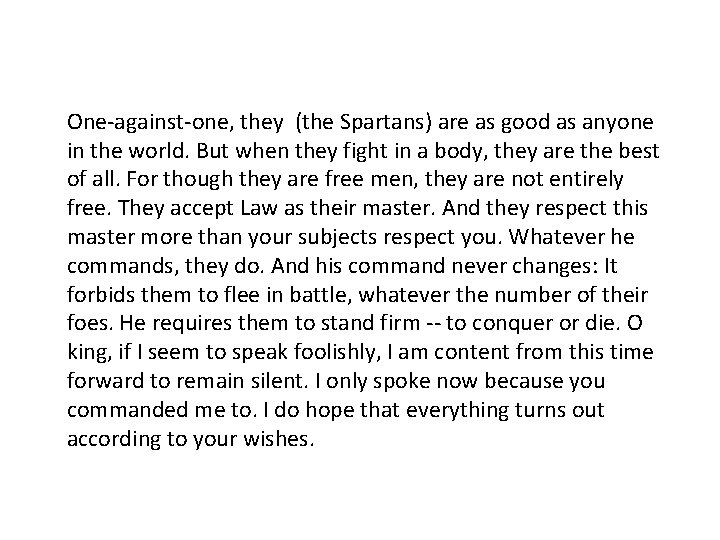
One-against-one, they (the Spartans) are as good as anyone in the world. But when they fight in a body, they are the best of all. For though they are free men, they are not entirely free. They accept Law as their master. And they respect this master more than your subjects respect you. Whatever he commands, they do. And his command never changes: It forbids them to flee in battle, whatever the number of their foes. He requires them to stand firm -- to conquer or die. O king, if I seem to speak foolishly, I am content from this time forward to remain silent. I only spoke now because you commanded me to. I do hope that everything turns out according to your wishes.
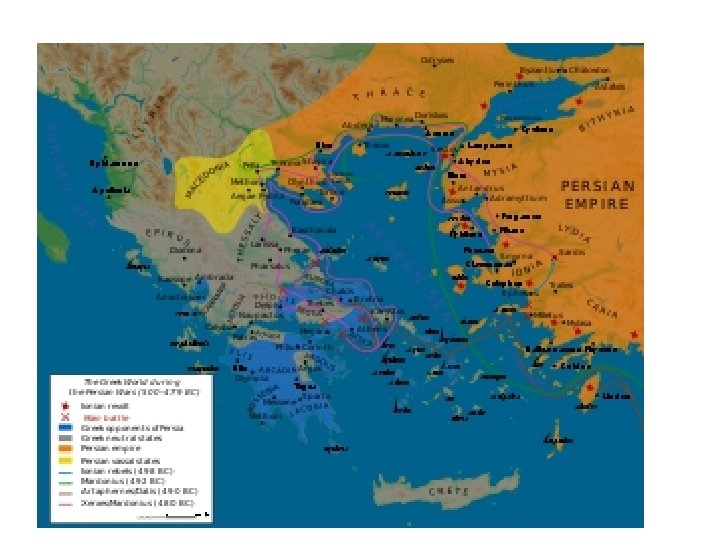
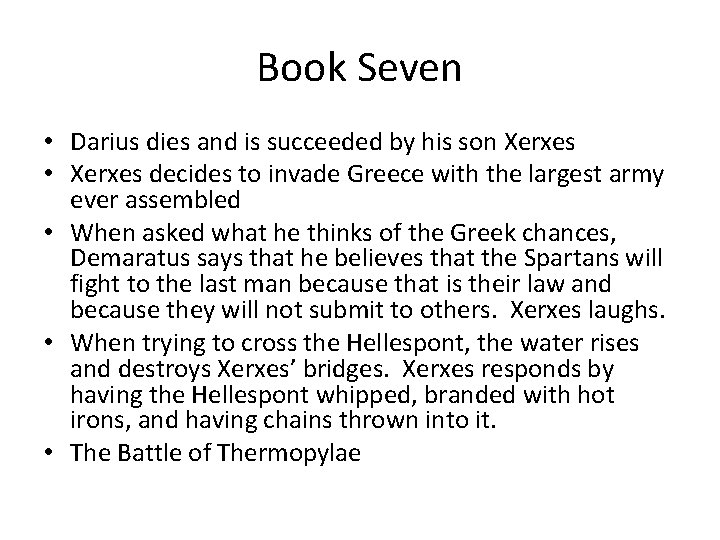
Book Seven • Darius dies and is succeeded by his son Xerxes • Xerxes decides to invade Greece with the largest army ever assembled • When asked what he thinks of the Greek chances, Demaratus says that he believes that the Spartans will fight to the last man because that is their law and because they will not submit to others. Xerxes laughs. • When trying to cross the Hellespont, the water rises and destroys Xerxes’ bridges. Xerxes responds by having the Hellespont whipped, branded with hot irons, and having chains thrown into it. • The Battle of Thermopylae
When, therefore, the channel had been bridged successfully, it happened that a great storm arising broke the whole work to pieces, and destroyed all that had been done. So when Xerxes heard of it he was full of wrath, and straightway gave orders that the Hellespont should receive three hundred lashes, and that a pair of fetters should be cast into it. Nay, I have even heard it said that he bade the branders take their irons and therewith brand the Hellespont. It is certain that he commanded those who scourged the waters to utter, as they lashed them, these barbarian and wicked words: "Thou bitter water, thy lord lays on thee this punishment because thou hast wronged him without a cause, having suffered no evil at his hands. Verily King Xerxes will cross thee, whether thou wilt or no. Well dost thou deserve that no man should honour thee with sacrifice; for thou art of a truth a treacherous and unsavoury river. " While the sea was thus punished by his orders, he likewise commanded that the overseers of the work should lose their heads.
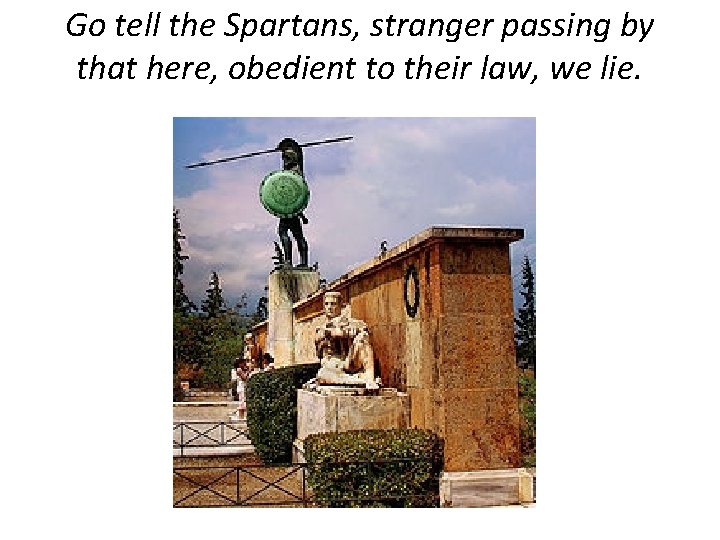
Go tell the Spartans, stranger passing by that here, obedient to their law, we lie.
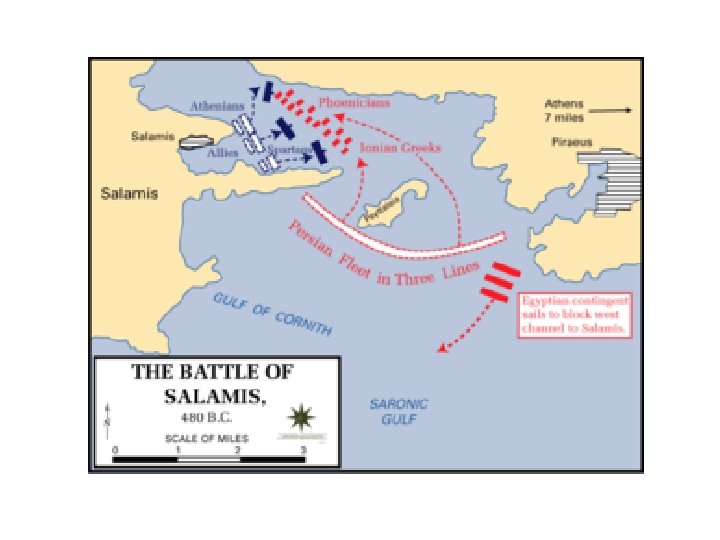
Book Eight • The Battle of Salamis: the mainly Athenian fleet defeats a much larger but ill-coordinated navy of Persian ships. • Fearing that the Hellespont bridges will be destroyed by the pursuing Athenians, Xerxes flees back to Persia, leaving command of the Persian army to Mardonius
Book Nine • Mardonius captures and burns Athens • Battles of Plataea and Mycale, with Athens and Spartan troops playing the major role and Persia is effectively defeated
Persian Emperors in Herodotus • • • Cyrus the Great 600 -530 BC Cambyses II 550 -521 Smerdis/Bardiya (? ) 522 Darius I 550 -486 Xerxes I 519 -465
Subsequent Persian Emperors • Artaxerxes (died 424 BC) continued hostilities with the Greeks, seeking to bribe Greece’s enemies. This led to renewed fighting, further defeats of Persia and Persia being forced to accept humiliating terms, limiting its influence over the Western territories • Xerxes II (died 424 BC) murdered after only 45 days as emperor • Darius II (died 405 BC) half brother of the murdered Xerxes II • Artaxerxes II (436 -358) during his reign he allied with Sparta, Egypt regains its independence briefly • Artaxerxes III (died 338) during his reign Philip of Macedon was in ascendance and tried to get Greek cities to revolt against Persia, Egypt is once more under Persian control • Artaxerxes IV (died 336) during his brief reign hostilities with Philip of Macedon and Alexander the Great continue • Darius III (380 -330) inherits a weak and unstable government with satrapies in rebellion, Alexander the Great takes advantage of this situation to invade and conquer Persia
Alexander the Great 356 -323 BC • Son of Philip of Macedon, student of the philosopher Aristotle, Hegel considered the alliance of the philosopher and the conqueror to signal Europe’s ascendance as the world’s political and cultural leader • Undefeated in battle, he created one of the largest empires in the ancient world • Like the Persians, he gave autonomy to local administrators, but his successors would try to inculcate Alexander’s territories with Greek culture • Burned Persepolis • As he approaches India, his officers threaten to mutiny and he is forced to turn back • After his death his body was preserved in Egypt and he was worshipped by many as a god.
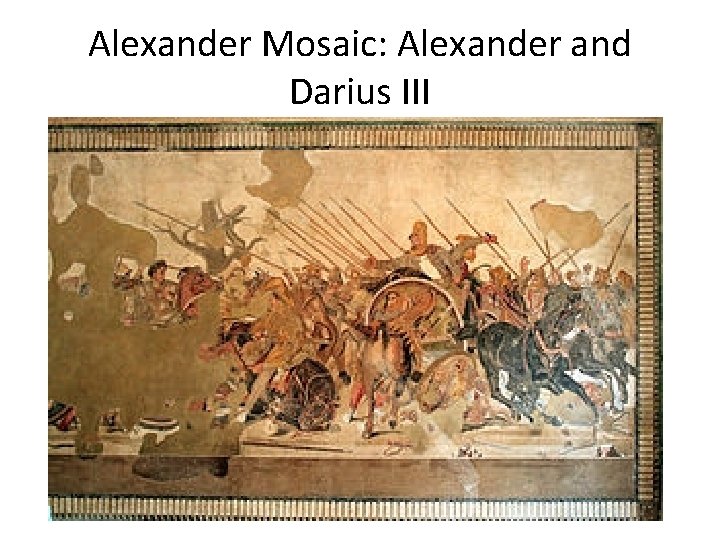
Alexander Mosaic: Alexander and Darius III
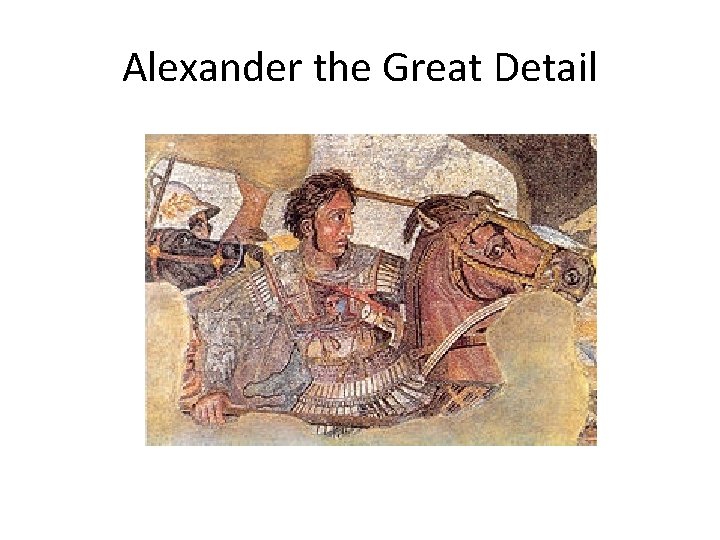
Alexander the Great Detail
Battles of Alexander against Persia • River Granicus 334 B. C. • Issus (Darius flees the battlefield) 333 B. C. • Gaugamela 331 B. C. – A decisive defeat for the Persians, once more Darius fled the field. Later he would be murdered by his own soldiers.
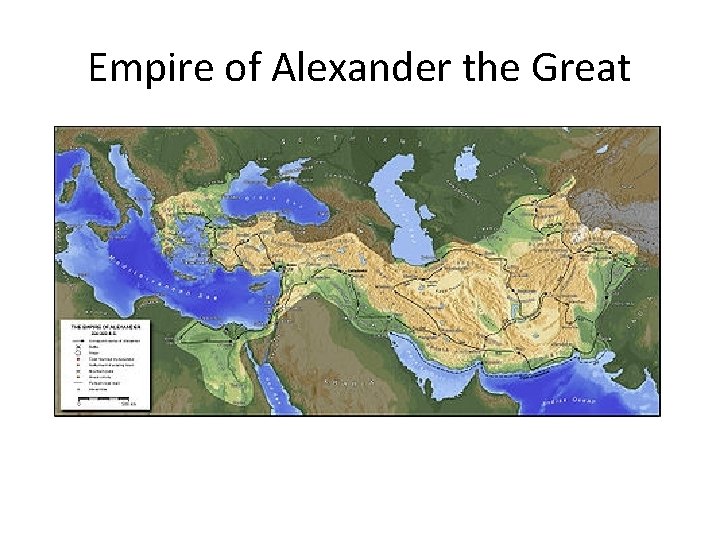
Empire of Alexander the Great
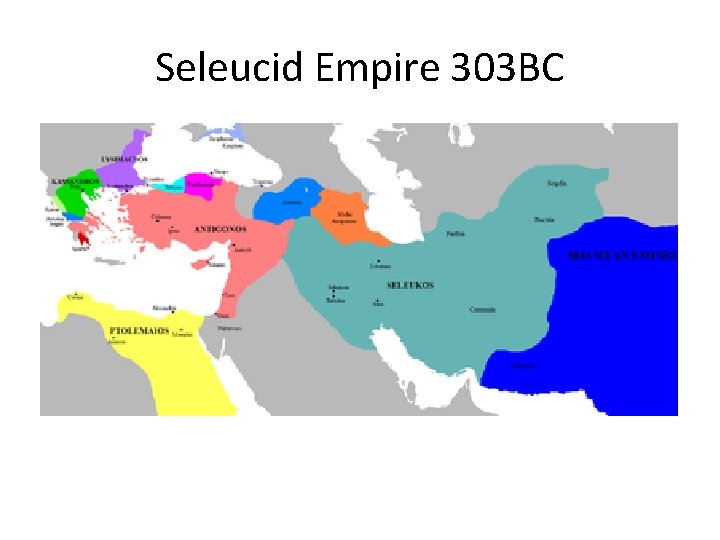
Seleucid Empire 303 BC
Seleucid Empire • After the death of Alexander, his generals divided up his realm, creating enclaves of Greek culture • Persia was under the Seleucid Dynasty from c. 323 -139 BC, when it was overthrown by the Parthians
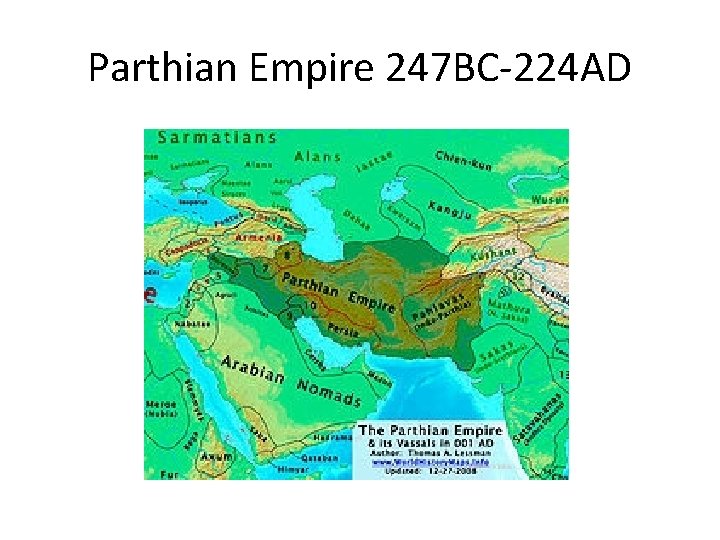
Parthian Empire 247 BC-224 AD
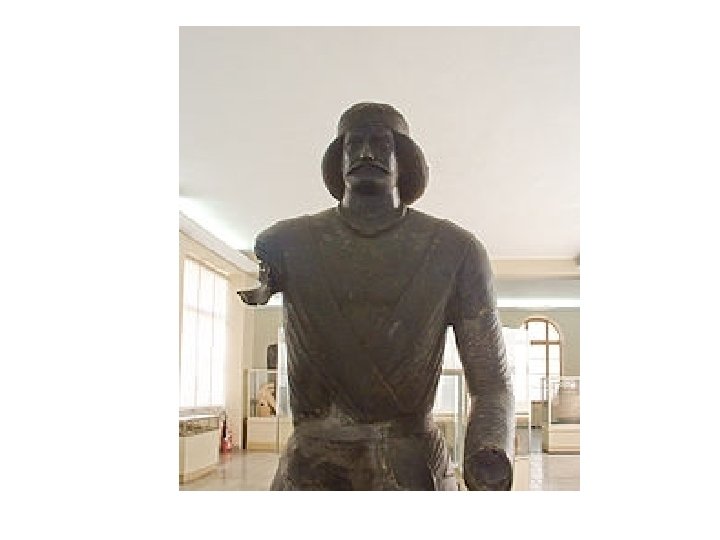
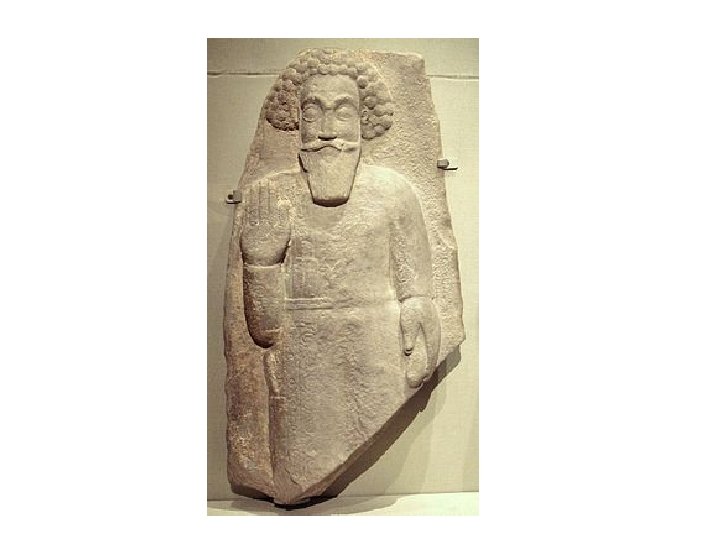
Parthian Era • The Parthian expansion westward led to their overthrow of the Macedonian Seleucids, but eventually brought them into contact/conflict with the eastward expansion of the Roman Empire • Parthians for the most part were satisfied to adopt Greek and Iranian culture rather than seeking to impose their own culture on their territory. The result was an eclectic mix of cultures and the revival of some Persian/Iranian customs.
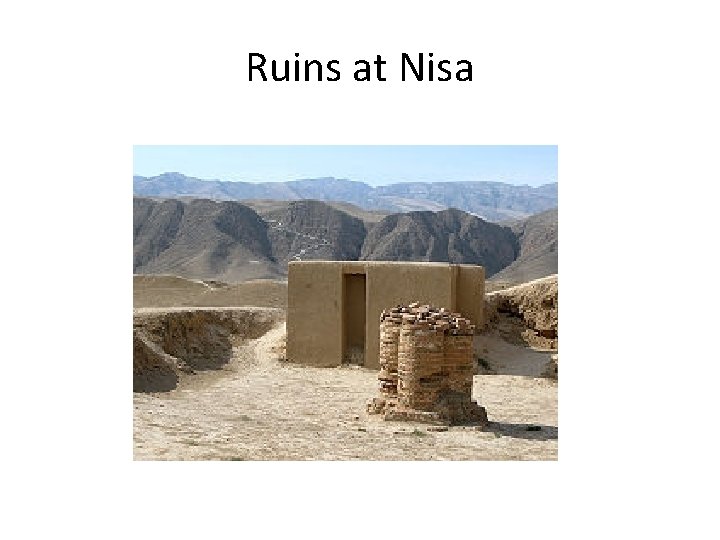
Ruins at Nisa
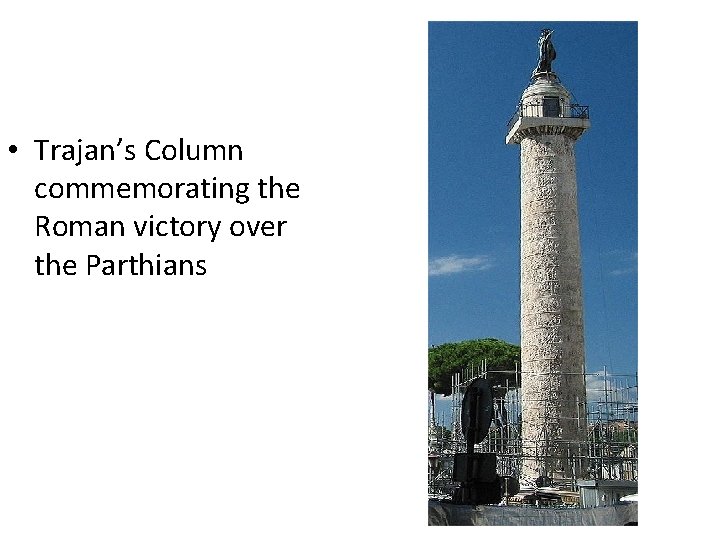
• Trajan’s Column commemorating the Roman victory over the Parthians
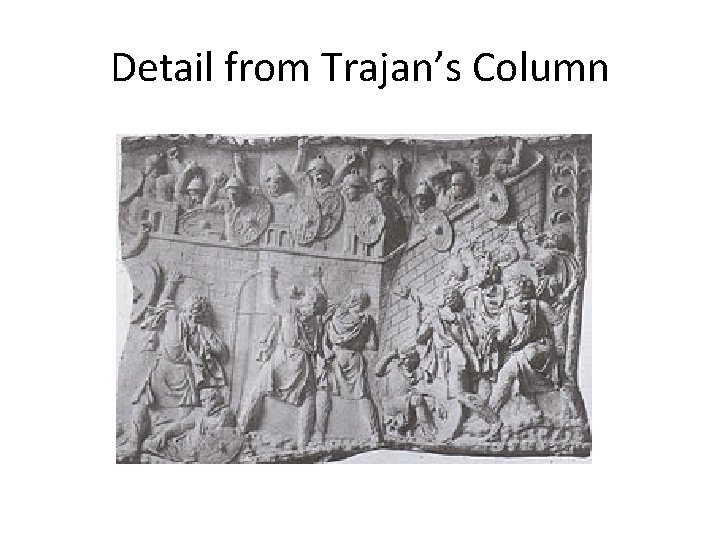
Detail from Trajan’s Column
Sassanid Empire 224 -651 AD • As the Roman Empire went into decline, the Sassanid Empire fluorished, along with Persian culture up to the time of the Islamic invasions. This is also the high point of Iranian influence on Roman culture. • Manichaeism and Mithraism were religious influences on the Romans, competing with Christianity
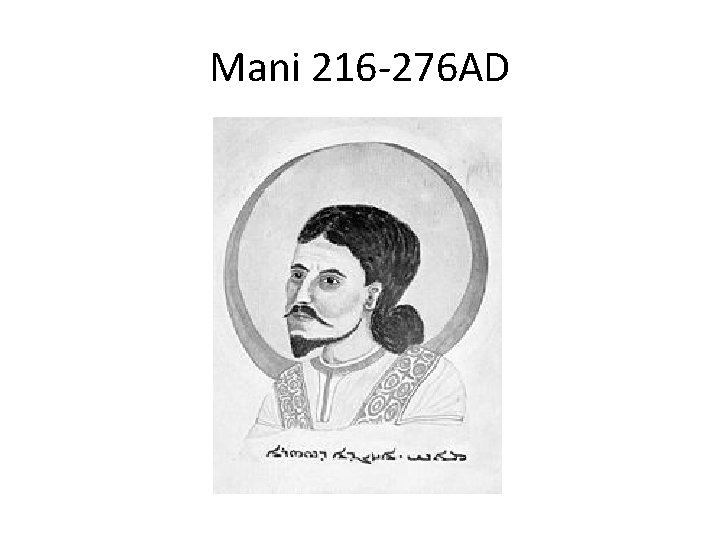
Mani 216 -276 AD
Manichaeism • A gnostic sect which apparently derived its teachings from Zoroastrian, Buddhist, and Christian sources, while opposing all three. • It taught strict self-discipline and purification and the absolute separation of good and evil. • St. Augustine, originally a Manichaean himself, made opposition to Manichaeism a key element in his Christian theology.
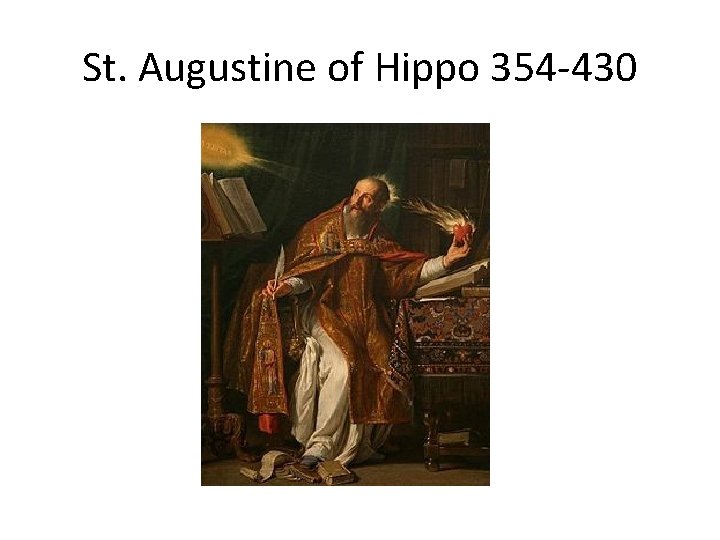
St. Augustine of Hippo 354 -430

Augustine contra Manichaeanism • Two early events from his life, the fact that he enjoyed stealing pears from his neighbor’s orchard (though his father would have freely given him better ones) and his unwilling pleasure at gladiator games cause him to think about the nature of sin. • He orginally turned to the Manichaeans because their concept of the duality of good and evil, and their belief in purging oneself of evil, appealed to him. • Ultimately, however, he thought that the Manichaean notion of a fight between the good and evil principles seemed to limit the power and perfection of God. • He combined Platonic and Christian concepts in his theology and developed the ideas of original sin and the necessity of God’s grace.
Early Sassanid Rulers • Sasan, founder of the Sasanid Dynasty, a descendant of Darius III • Babak, son of Sasan and father of Ardashir • Ardashir d. 242 AD, considered by some the true founder of the Sassanid Dynasty • Shapur I 242 -272, conquered Bactria and defeated the Romans, capturing the emperor Valerian, friend to Mani, but also sought to revive Zoroastrianism by reassembling the Avesta, its sacred text. • Hormuzd I 272 -273 • Bahram I 273 -276 Persecuted Mani, putting him to death
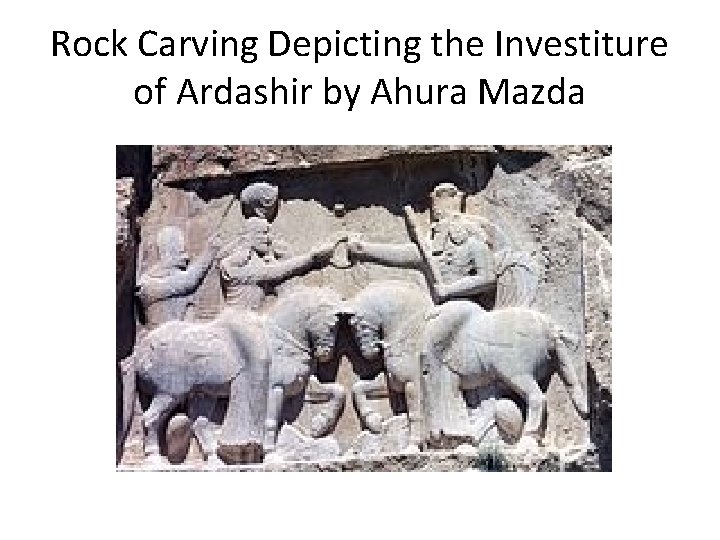
Rock Carving Depicting the Investiture of Ardashir by Ahura Mazda
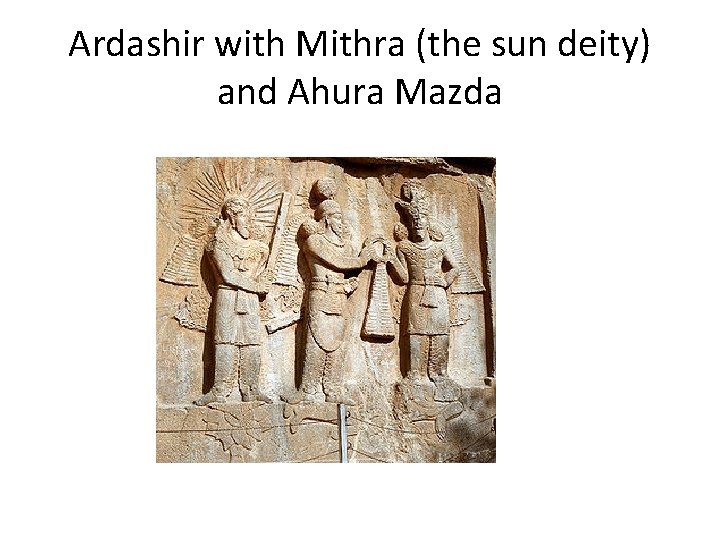
Ardashir with Mithra (the sun deity) and Ahura Mazda
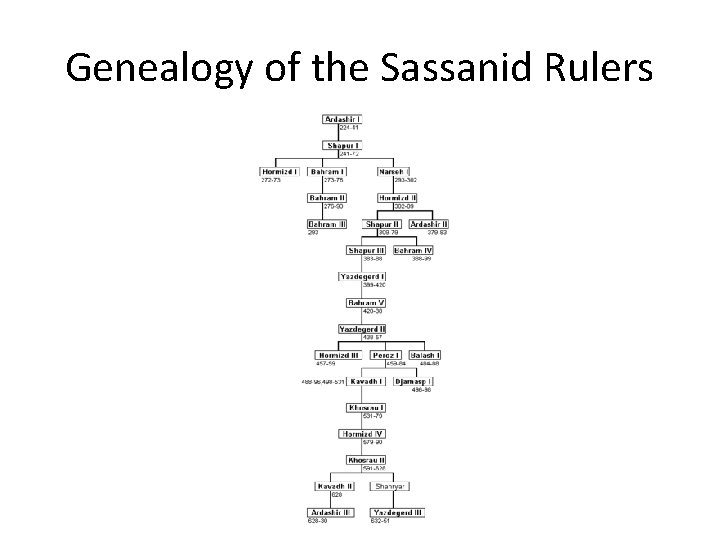
Genealogy of the Sassanid Rulers
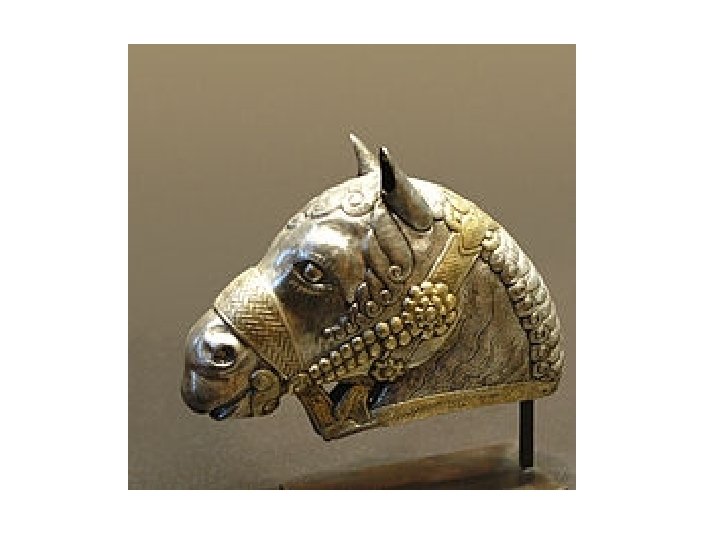
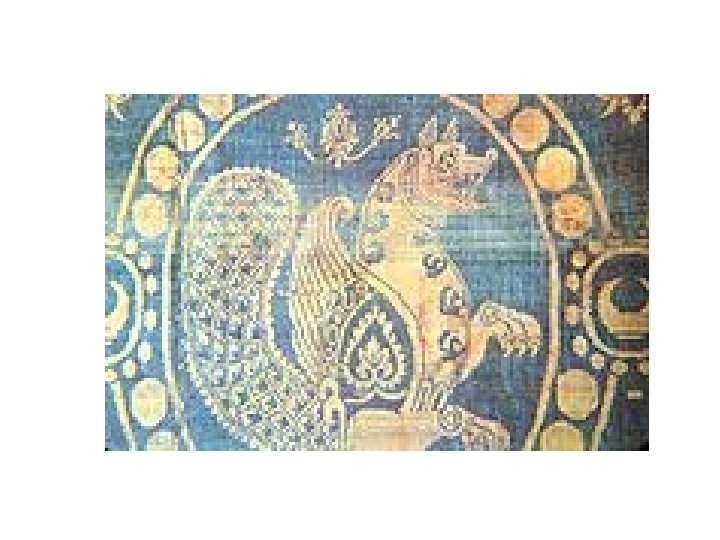
Sassanid Empire • Revived Persian arts, language, and culture, supporting specifically Persian styles in architecture, poetry, sculpture, metalworking, weaving (rugs), and painting (miniatures) • Fought a series of wars against Rome/Byzantium • In the early Middle Ages, the Silk Road trade was dominated by Arab and Persian traders • In its decline it was quickly overrun by a Muslim army under the Caliph Umar (Omar)
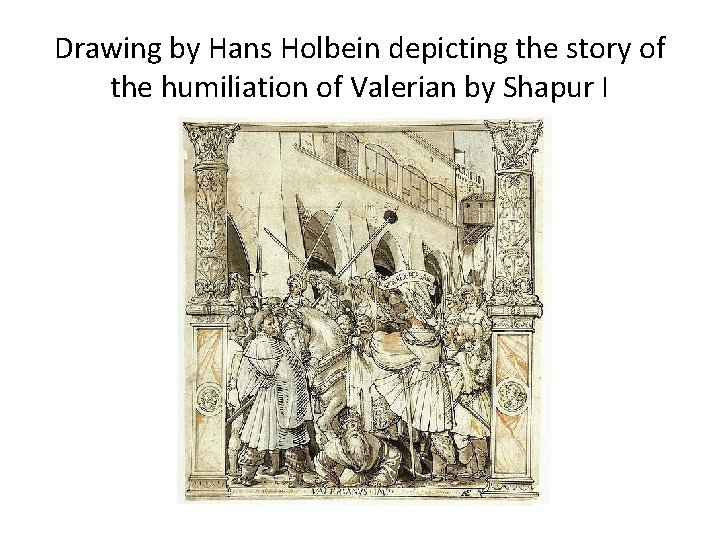
Drawing by Hans Holbein depicting the story of the humiliation of Valerian by Shapur I
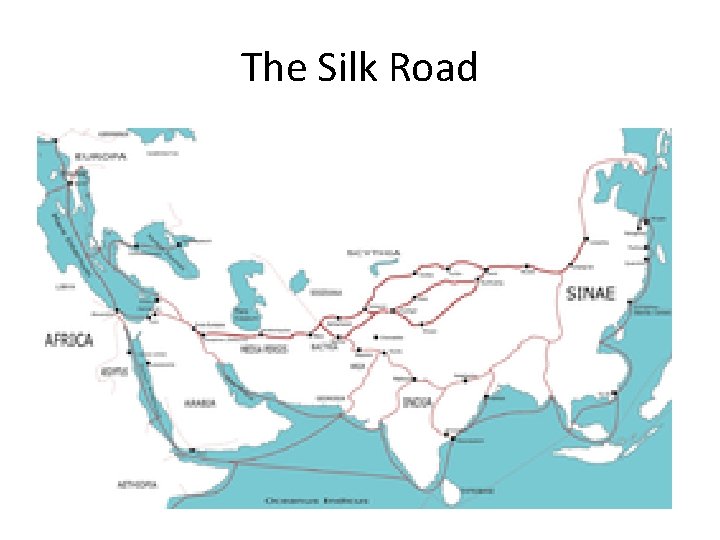
The Silk Road
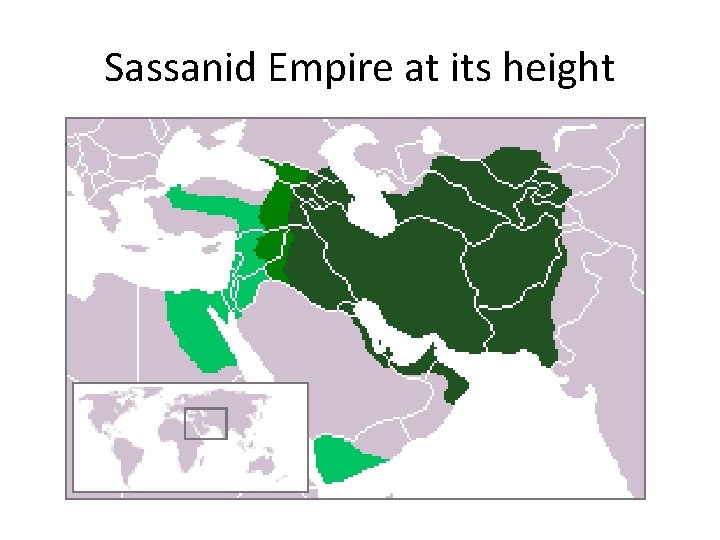
Sassanid Empire at its height
Mohammed and the First Caliphs • Mohammed, receives revelation in 610 in Mecca, leaves Mecca with his followers to set up a community in Medina in 622, conquers Mecca in 627, dies 632 • Abu Bakr, first caliph, 632 -634, united Saudi Peninsula • Omar 634 -644, conquered Sassanid Persia, is killed by a Persian prisoner of war • Uthman 644 -656 • Ali, 656 -661 cousin and son in law of the Prophet, married to Fatima, the prophet’s favorite daughter, one of Mohammed’s first converts, overthrown by Muawiyah • Hasan, Ali’s son, abdicated to Muawiyah I • Muawiyah I 661 -680 • Yazid I 680 -683, the refusal of Hussein, Hasan’s brother and Ali’s son, to swear allegiance to him led to his martyrdom at Karbala, commemorated by Ashura
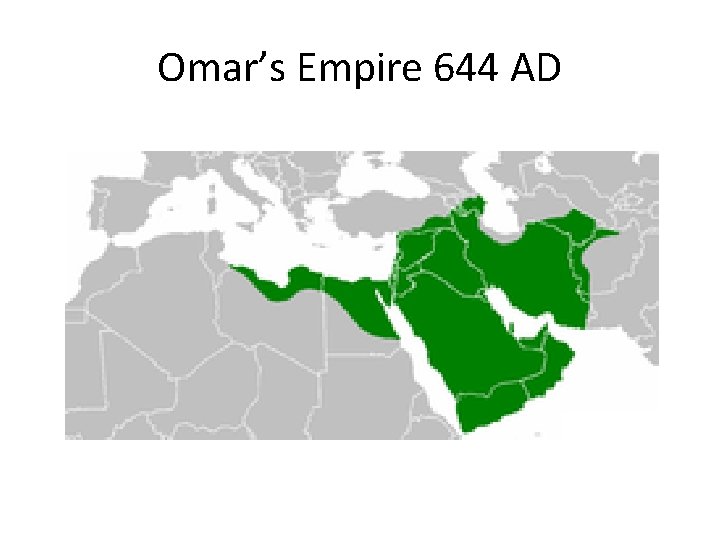
Omar’s Empire 644 AD
Umayyads • A dynastic family who had been opponents of Mohammed in Mecca • The family gains ascendance with the Caliphate of Muawiyah I, who institutes a hereditary monarchy • His son, Yazid, defeated Ali’s son Hussein at Karbala • Under the Umayyads, the Islamic Caliphate would reach the peak of its expansion, though expansion into Europe would be halted by the Battle of Poitiers (Tours) in 732, and by the Byzantine Empire • The preference for Arabs in administration led to tensions in their empire, and its leaders were often considered corrupt • Arabic became the language of administration, gaining worldwide significance for the first time
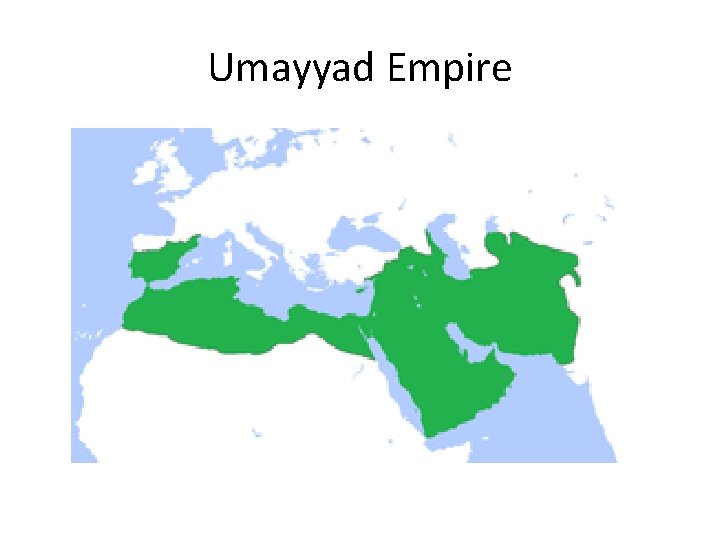
Umayyad Empire
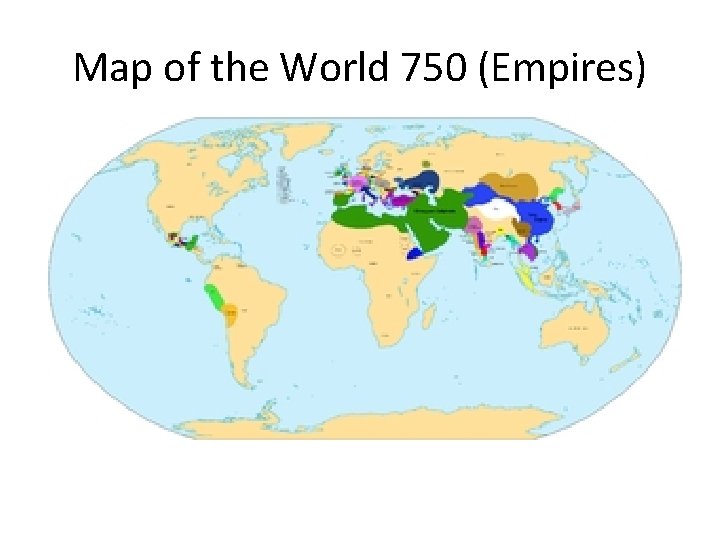
Map of the World 750 (Empires)
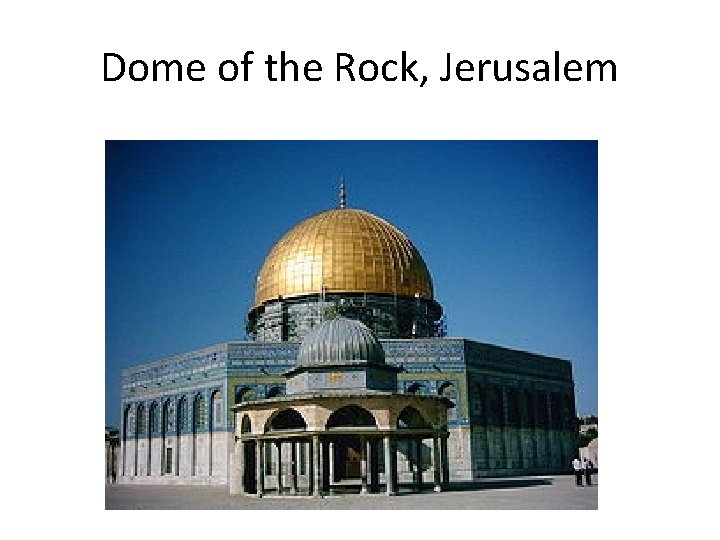
Dome of the Rock, Jerusalem
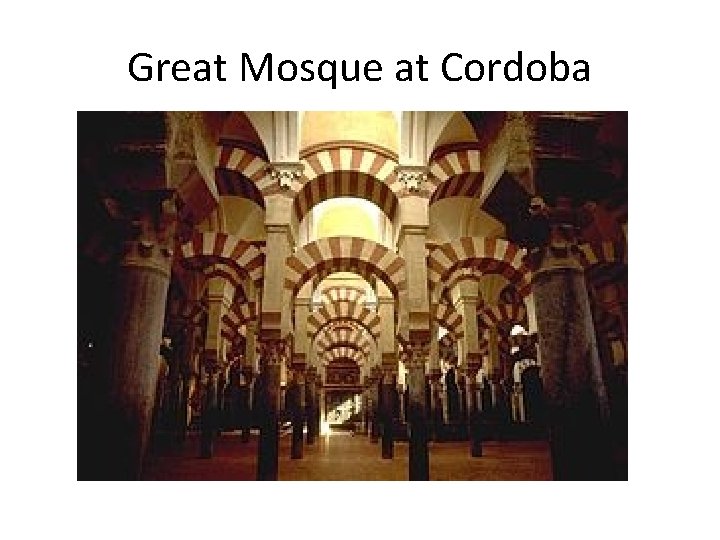
Great Mosque at Cordoba
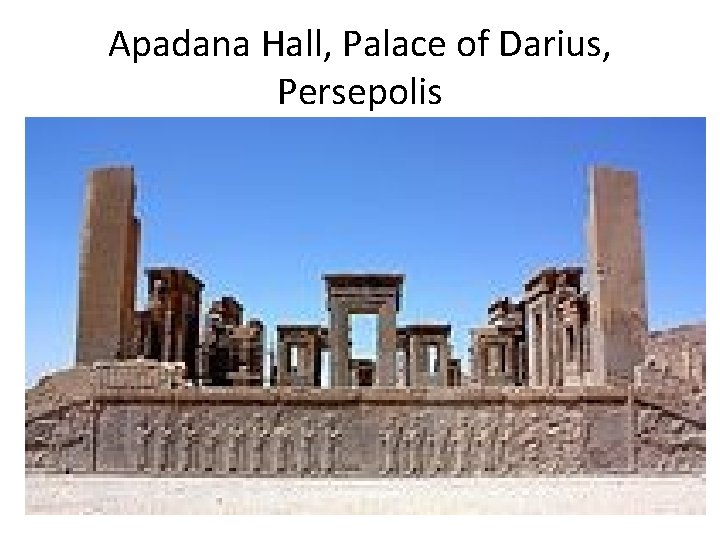
Apadana Hall, Palace of Darius, Persepolis
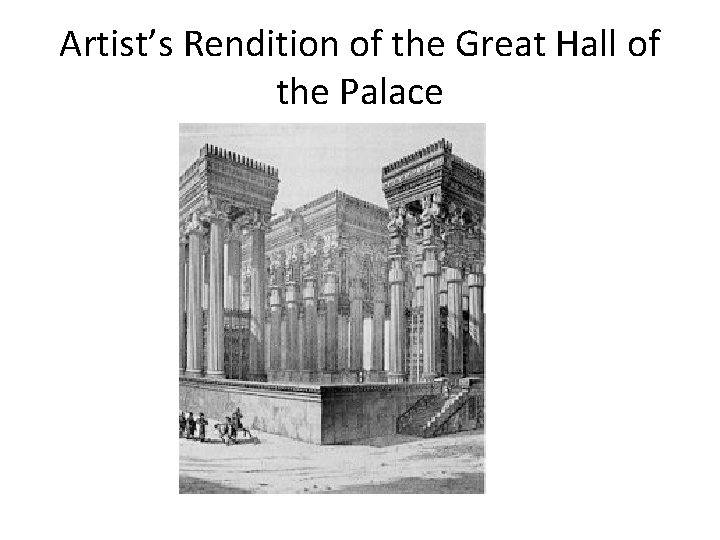
Artist’s Rendition of the Great Hall of the Palace
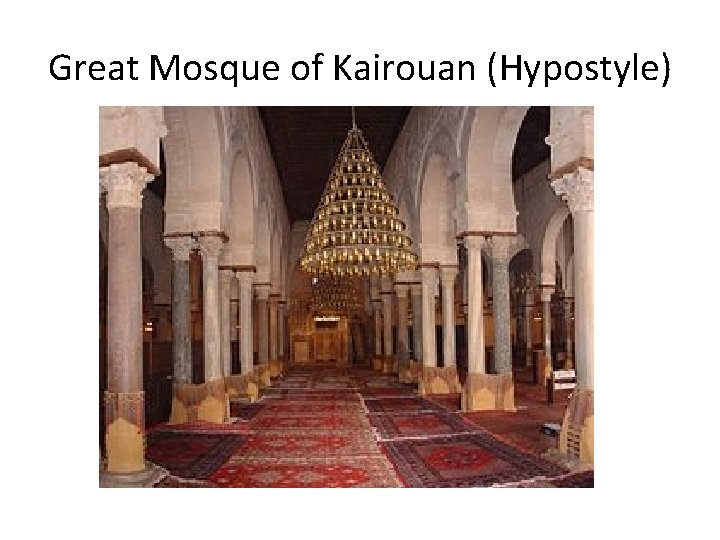
Great Mosque of Kairouan (Hypostyle)
Abbasids 750 -1258/1261 -1517 • The Abbasid Caliphate took a more accomodating attitude towards non-Arab Muslims • Moved the capital from Damascus to (Persian) Baghdad • Science and the arts fluorished under the Abbasids, leading to the ‘Islamic Golden Age’
Early Works of Persian Literature • The Arabian Nights or The 1001 Nights, originally tales taken from the Sassanid and Indian traditions (Shahryar and Scheherazade are Persian) but later Arab stories were also added and became its major content • Ferdowsi’s Shahnameh (Book of the Shahs) composed 977 -1010, became the national epic of Persia and played an important role in preserving the Persian language
"Come now, for all is ready. " And Zal followed after her. And when they were come to the house of the women Zal beheld the daughter of the King standing upon the roof, and her beauty was like unto a cypress on which the full moon shineth. And when she beheld him, she spake and said- "I bid thee welcome, O young man, son of a hero, and may the blessing of Heaven rest upon thee. " And Zal answered her benison, and prayed that he might enter into nearer converse, for he was on the ground and she was on the roof. Then the Peri-faced loosened her tresses, and they were long, so that they fell from the battlements unto the ground. And she said unto Zal- "Here hast thou a cord without flaw. Mount, O Pehliva, and seize my black locks, for it is fitting that I should be a snare unto thee. " But Zal cried, "Not so, O fair one, it would beseem me ill to do thee hurt. " And he covered her hair with kisses. Then he called for a cord and made a running knot, and threw it upwards and fastened it to the battlements. And with a bound he swung himself upon the roof. Then Rudabeh took his hand they stepped down together into the golden chambers, and the slaves stood round about them. And they gazed upon each other and knew that they excelled in beauty, and the hours slipped by in sweet talk, while love was fanned in their hearts. Then Zal cried-
Islamic Institutions of Study and Research • The Academy of Jondishapur, originally the main institution of learning for the Sassanid Empire, advanced the study of medicine, and worked to translate learning from around the world into Persian, but was largely replaced under the Abbasids by • The House of Wisdom, in Baghdad, collected and translated major works of science and philosophy from India, Persia, and Greece into Arabic, facilitating the preservation and spread of texts from the ancient world • “If knowledge were suspended from the heavens, the people of Fars (Persia) would reach up to take it” (Mohammed)
From How Greek Science Passed to the Arabs by De Lacy O’Leary The 'Abbasids had been set upon the throne by a rebellion which had its source in Khurasan and which drew its chief support from that province. The Marw family of the Barmakids supplied the all-powerful ministers who guided and to a great extent controlled the 'Abbasid government. Many Persians, especially those of Khurasan, had flocked west to share in the triumph of the revolution and claim their share in its spoils. At the 'Abbasid court Persian influence very much thrust the Arab element into the background. The Persians were not modest about this: the Arabs had been. arrogant, now the Persians repaid them with greater arrogance, deriding the Arabs as semi-barbarous nomads of the desert, parvenus without a history behind them, devoid of culture. This anti. Arab demonstration, open and plainly expressed, went by the name of the Shu'ubiya, an organized, virulent, and outspoken expression of anti. Arab feeling.
Sufism • Mystical ascetic movement within Islam, it preaches the rejection of pleasure, earthly power, and material wealth, in favor of simplicity, humility, and the search for harmony. The mystic seeks an unmediated feeling of unity with God. • It was often viewed as a dissident movement, both in terms of its theology and its politics. • The name is either derived from Safa (purity) or Suf (wool), the latter perhaps referring to the simple wool garments favored by its followers.
Notable Early Persian Sufis • Hasan of Basra 642 -728, preached a doctrine of free will and criticized the administration of the Umayyads • Rabia of Basra 717 -801, a woman sold into slavery, she became a poet and preached that one should not follow Islam out of fear of punishment or hope for reward in the afterlife, but of a pure love of God
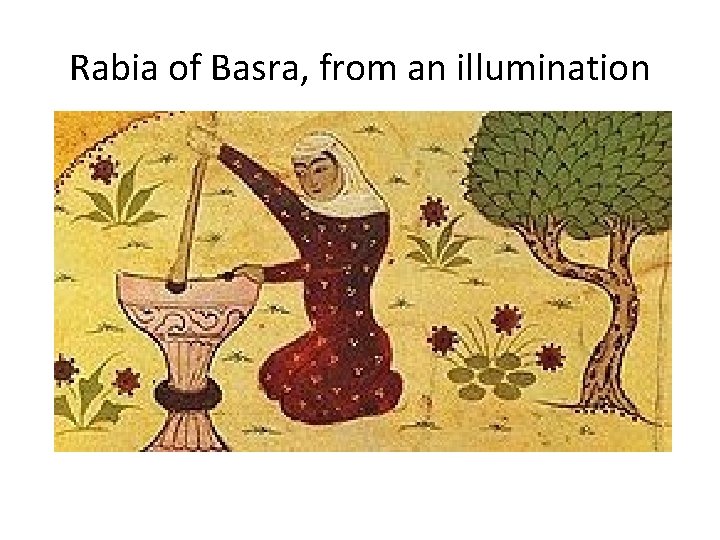
Rabia of Basra, from an illumination
Noted Persian Sufi Poets • Omar Khayyam 1048 -1131 • Rumi 1207 -1273 • Hafez (of Shiraz) 1325 -1390
Omar Khayyam • He was most noted in his own time as an astronomer and mathematician. He wrote his technical, exoteric works in Arabic, but his poetry was written in Persian • While some believe him to be a hedonist, others believe that his work is meant to be allegorical, hiding mystical truths. Some see him as a Sufi, others as an opponent to Sufism • His poetry is especially renowned in the English speaking world due to the famous translation of his Rubaiyat by Edward Fitzgerald
From Fitzgerald’s translation of The Rubaiyat of Omar Khayyam "A Book of Verses underneath the Bough, A Jug of Wine, a Loaf of Bread--and Thou Beside me singing in the Wilderness-Oh, Wilderness were Paradise enow!"
Some for the pleasures here below Others yearn for The Prophet's Paradise to come; Ah, take the cash and let the credit go, Nor heed the rumble of a distant drum
ARISTOTLE dominated the later school of Alexandria and his influence inevitably passed over to the Christian world and so to Islam. The Syriac study of Aristotle took form in the school of Edessa in the fifth century, his teaching then being chiefly confined to logic. With Aristotle's logical works were associated the Isagoge of Porphyry and his philosophy generally by the summary of the Syrian writer Damascius. Fuller study was reached by the use of commentaries, first by that of the Syriac Probus, then by the Alexandrians Ammonius and John Philoponus. Now it will be noted that these works used to interpret Aristotle were predominantly neo-Platonic, and that neo-Platonic strain remained in Arabic philosophy and influenced both it and Muslim theology. This influence was further increased by the acceptance of the abridgment of Plotinus' Enneads, iv-vi, as "the Theology of Aristotle" and so a genuinely Aristotelian work.
Islamic Philosophers of the Early Middle Ages • Abu Yusuf Ya'qub ibn Ishaq al-Kindi c. 801 -873 – Established the study of Aristotelian logic as the main branch of philosophy in the Middle Ages • Abū Nasr Muhammad al. Fārābī c. 872 -951 – Argued that sound philosophy should be the basis of religion and theology • Abū Alī al-Husayn ibn Abd Allāh ibn Sīnā (Avicenna) c. 980 -1037 It is especially through the influence of Avicenna that Aristotle became the most important influence in Medieval philosophy in the West (e. g. for St. Thomas Aquinas)
Abu Hāmed Mohammad ibn Mohammad al-Ghazzālī (or al-Ghazali) 1058 -1111 • A Persian, son and brother of Sufis, he himself was instrumental in making Sufism an accepted theological movement • He is considered to be the most influential Moslem scholar • His main works were – The Rescuer from Error • This includes an autobiographical sketch in which he describes a kind of breakdown which is only overcome when he becomes a mystic – The Incoherence of the Philosophers • This elaborates a form of Occasionalism • This work would later be attacked by Ibn Rushd (Averroes) in his work The Incoherence of the Incoherence. While Averroes was more favored by Western philosophers like Thomas Aquinas, al-Ghazali was preferred by Islamic scholars – The Alchemy of Happiness • A validation of the mystical approach to God
The Rescuer from Error by Al-Ghazali • Mathematics can be taken as a model for knowledge which is absolutely certain • Knowledge taken from the senses, on the other hand, is fallible (an example is given in which he observes a shadow in the course of the day: he knows that it moves but he cannot perceive the movement through his senses) • Further, he knows that he sometimes believes that he is awake when he is actually sleeping • The fact that all things are in doubt led him into a crisis in which he became physically sick as well as mentally troubled • He gives an argument that anticipates Pascal’s Wager: why would you trade a finite number of days for an infinite one?
The Ways to Truth • Theology: While theology prevents some from being seduced by heresies, this is not the answer to the vital questions which the author seeks • Philosophy: Philosophy tends towards scepticism and the rejection of God. At the same time it is incorrect to reject what the philosophers say all the time. Sometimes they are obviously right. The problem is that while some of their observations are demonstrable, others are merely speculative (e. g. metaphysical theories). • Mysticism, entailing a purification of the soul, brought the salvation of the soul which the author sought.
Types of Knowledge • Knowledge from the senses • Knowledge from reason, after the age of 7 • Knowledge of prophecy (just as some who have no reasoning powers reject what is discovered through reason, some without the gift of prophecy reject prophets)
Sufi Allegories • Treatise on the Birds by Ahmad Ghazali, younger brother of the author of The Rescuer from Error • The Conference of the Birds, by Farid ud-Din Attar (1177)
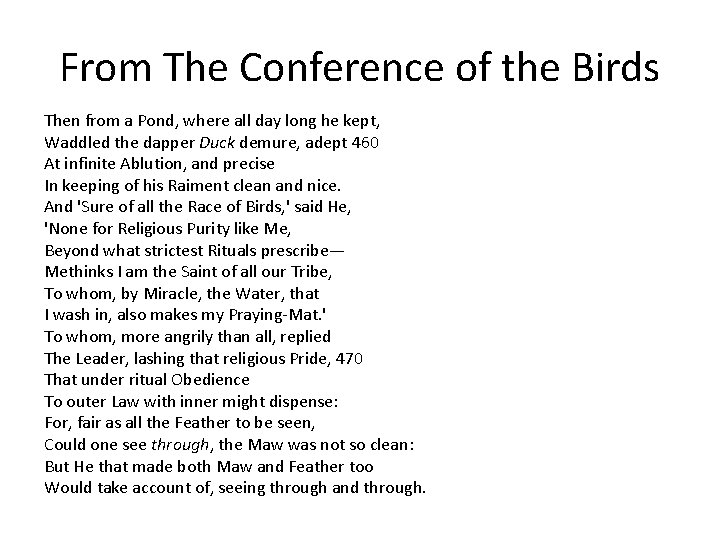
From The Conference of the Birds Then from a Pond, where all day long he kept, Waddled the dapper Duck demure, adept 460 At infinite Ablution, and precise In keeping of his Raiment clean and nice. And 'Sure of all the Race of Birds, ' said He, 'None for Religious Purity like Me, Beyond what strictest Rituals prescribe— Methinks I am the Saint of all our Tribe, To whom, by Miracle, the Water, that I wash in, also makes my Praying-Mat. ' To whom, more angrily than all, replied The Leader, lashing that religious Pride, 470 That under ritual Obedience To outer Law with inner might dispense: For, fair as all the Feather to be seen, Could one see through, the Maw was not so clean: But He that made both Maw and Feather too Would take account of, seeing through and through.
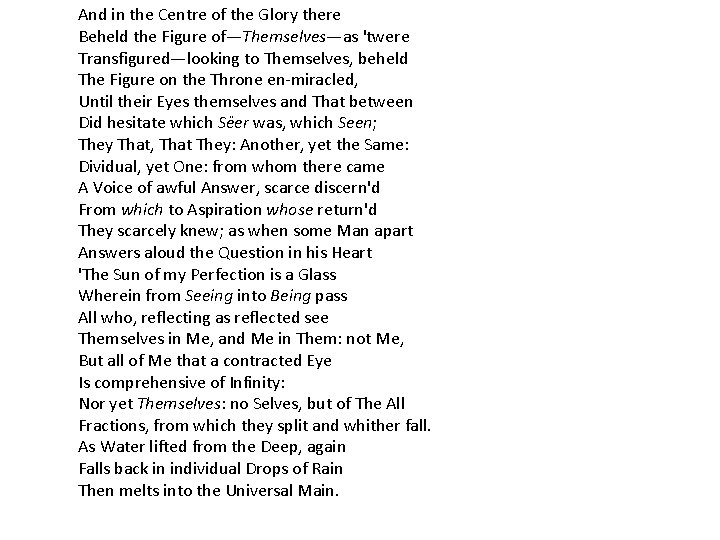
And in the Centre of the Glory there Beheld the Figure of—Themselves—as 'twere Transfigured—looking to Themselves, beheld The Figure on the Throne en-miracled, Until their Eyes themselves and That between Did hesitate which Sëer was, which Seen; They That, That They: Another, yet the Same: Dividual, yet One: from whom there came A Voice of awful Answer, scarce discern'd From which to Aspiration whose return'd They scarcely knew; as when some Man apart Answers aloud the Question in his Heart 'The Sun of my Perfection is a Glass Wherein from Seeing into Being pass All who, reflecting as reflected see Themselves in Me, and Me in Them: not Me, But all of Me that a contracted Eye Is comprehensive of Infinity: Nor yet Themselves: no Selves, but of The All Fractions, from which they split and whither fall. As Water lifted from the Deep, again Falls back in individual Drops of Rain Then melts into the Universal Main.
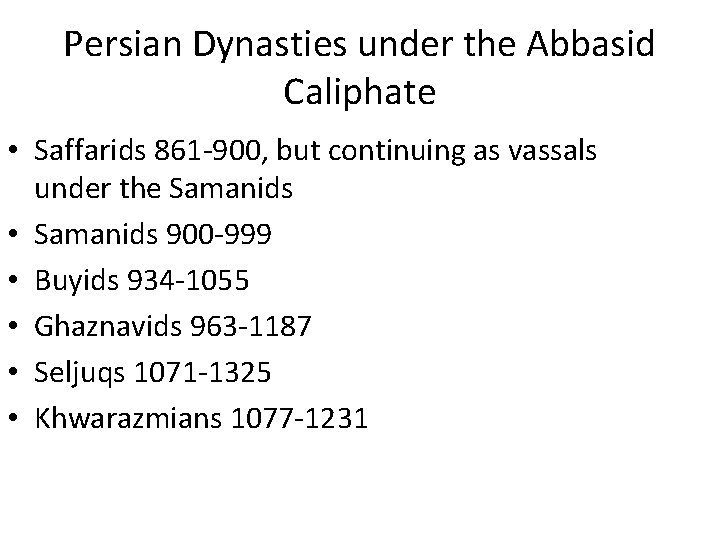
Persian Dynasties under the Abbasid Caliphate • Saffarids 861 -900, but continuing as vassals under the Samanids • Samanids 900 -999 • Buyids 934 -1055 • Ghaznavids 963 -1187 • Seljuqs 1071 -1325 • Khwarazmians 1077 -1231
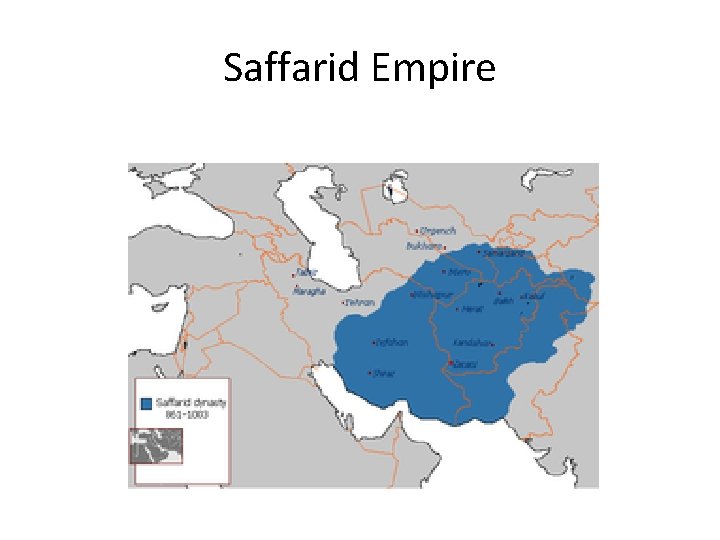
Saffarid Empire
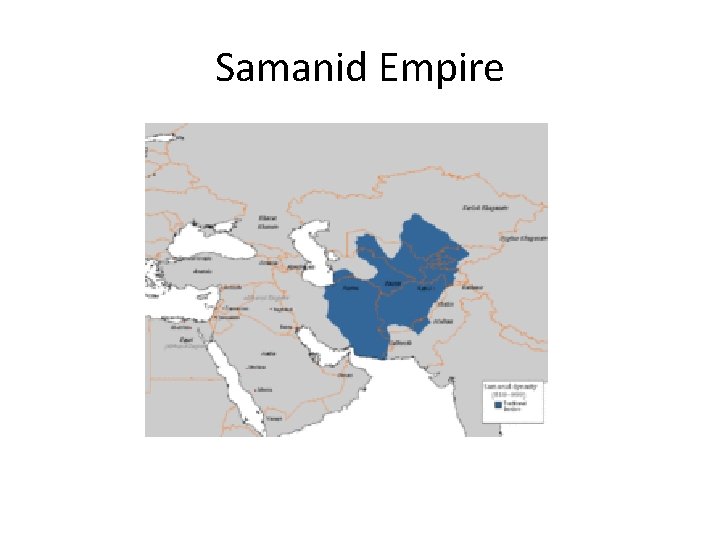
Samanid Empire
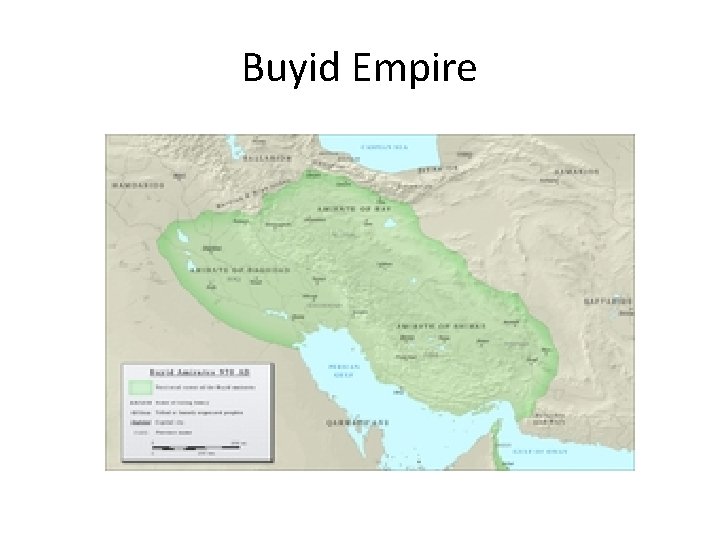
Buyid Empire
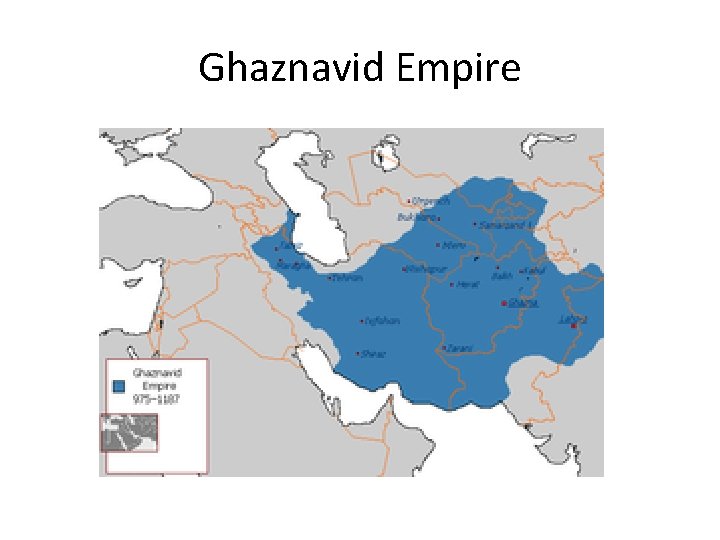
Ghaznavid Empire
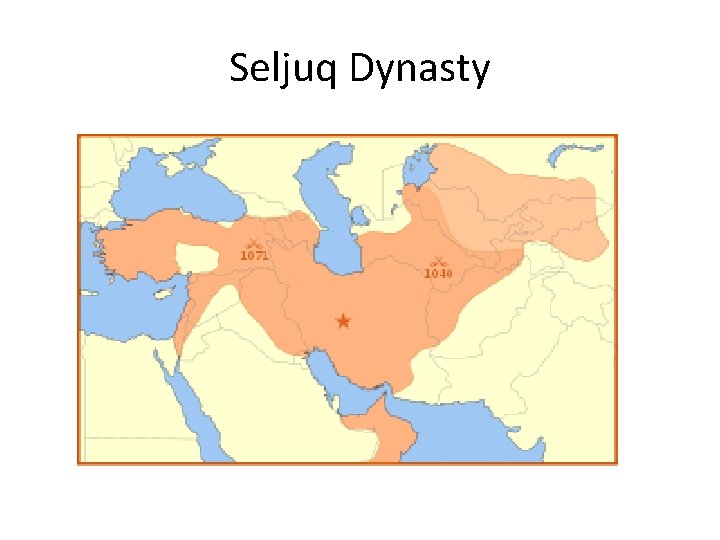
Seljuq Dynasty
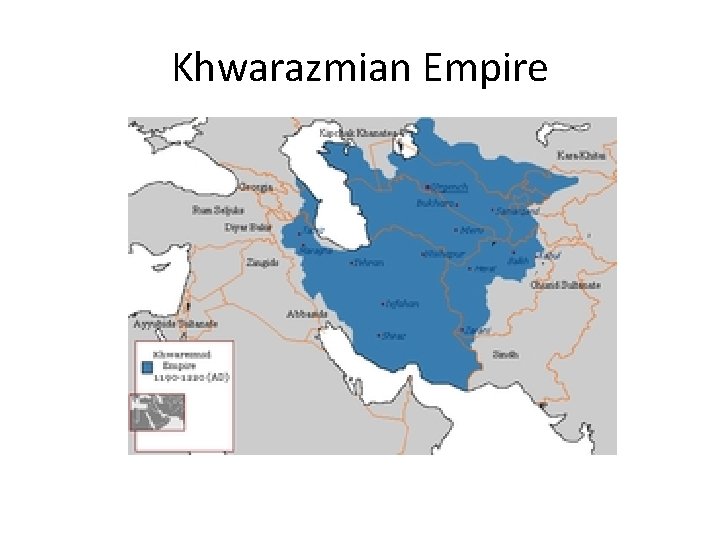
Khwarazmian Empire
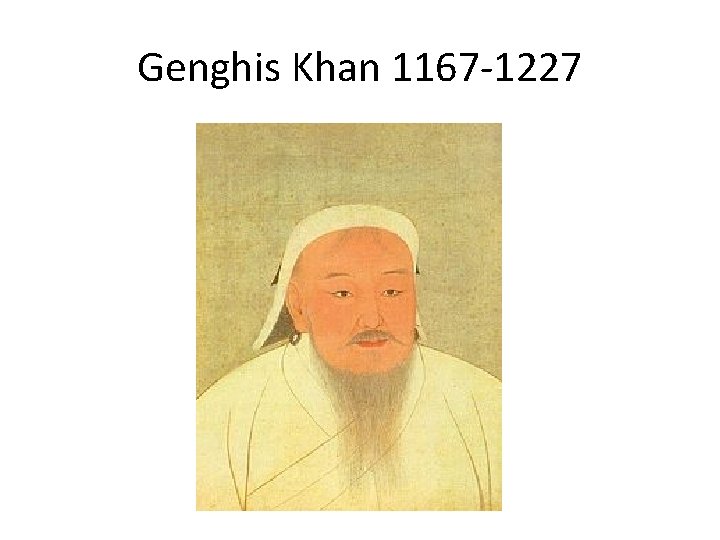
Genghis Khan 1167 -1227
Mongol Invasions • Proportionally, Genghis Khan killed a larger population than any ruler in history • The conquest of Khwarazmian Persia was, however, even more bloody and brutal than any of his other conquests. Whole cities were massacred and Iran did not reach the previous level of population again until the midtwentieth century according to some estimates.
Ilkhanate 1256 -1336 • Established by the grandson of Genghis Khan, Hulagu • Mahmud Ghazan converted to Islam and was an important patron of the arts. He ruled Persia from 1295 -1304
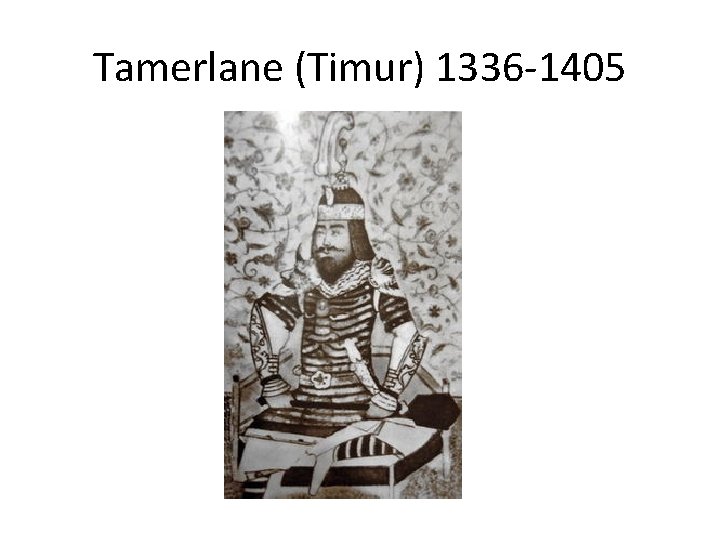
Tamerlane (Timur) 1336 -1405
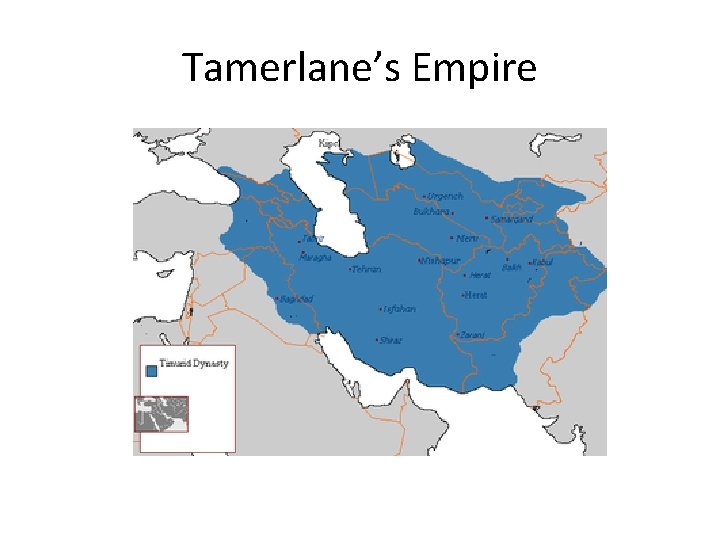
Tamerlane’s Empire
Tamerlane • He was a Mongol with a Turkish culture • Claimed to be the successor to Genghis Khan, though his family was no relation • Established the Timurid Dynasty 1370 -1526 • Was an important patron of the arts, including the poet Hafez of Shiraz, and made important additions to his capital in Samarkand
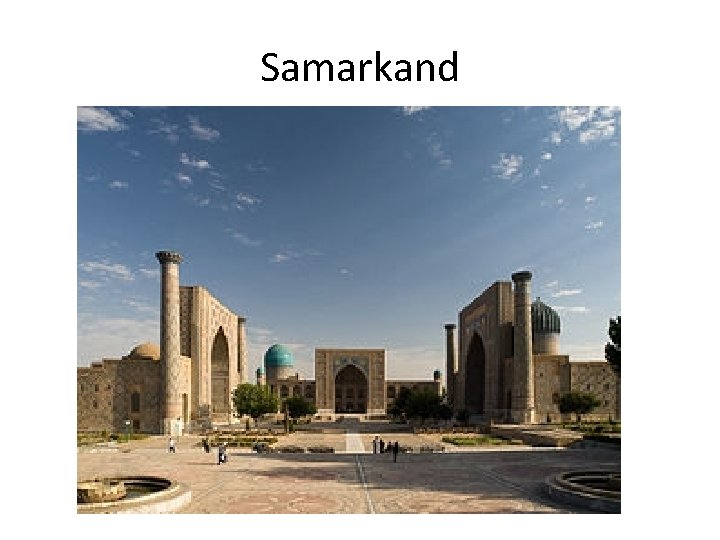
Samarkand
Safavid Dynasty 1501 -1736 • Sheikh Sufi ud-Din founded a Sufi Safavid order in 1301 which won a large following from Turkoman tribes • Under Sheikh Junaid (d. 1460) they switched from Sunni to Shi’ism, the faith of many of their Turkoman followers • Shah Ismail I (1501 -1524) conquers Iran with Turkoman support and begins to convert Persia to Shi’ism • Shah Tahmasp (1524 -1576) helped the Moghul Humayan regain his throne in exchange for Kandahar, and invaded Georgia, but in later life became obsessed with religion, letting his empire crumble
Safavids • Ismail II reigned for a short time (1576 -1577) but had many of his family killed or blinded so that they could not rule, Abbas was to be killed as well, but his guardian disobeyed the order and Ismail died of an overdose of opium or by poisoning. • Shah Khodaband is put on the throne in spite of his blindness • Shah Abbas 1588 -1629
Shah Abbas • Broke the power of the Qizilbash (‘Red Heads’ Shi’ite Turkic tribesmen who had originally been instrumental in bringing the Safavids to power, and often influenced the succession of Shahs) • Defeated the Ottoman Empire and took Baghdad • Defeated the Uzbeks • Made alliances with Western powers, including the Dutch East Indies Company, and the British East Indies Company • Was a great patron of the arts, especially architecture, he built up Isfahan to rival Istanbul, in his time it was called ‘half the world’ and is still known as the ‘city of Abbas’
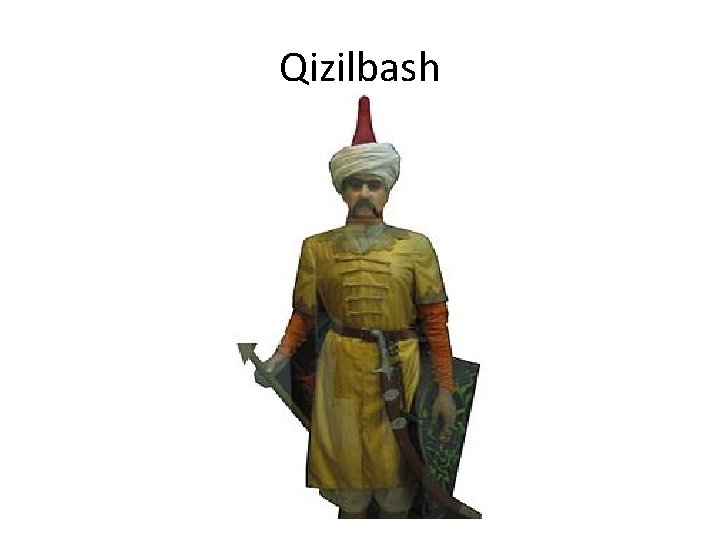
Qizilbash
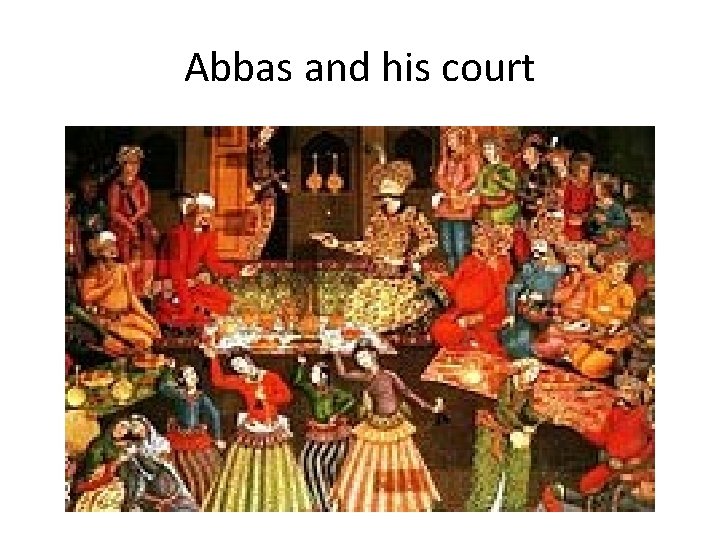
Abbas and his court
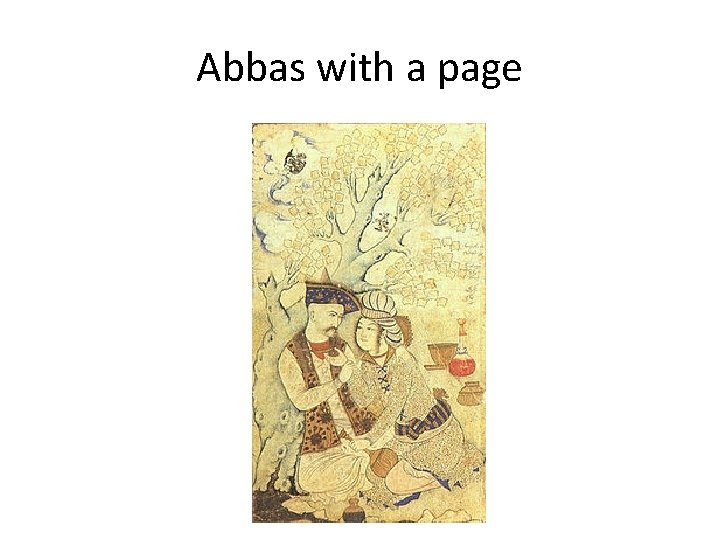
Abbas with a page
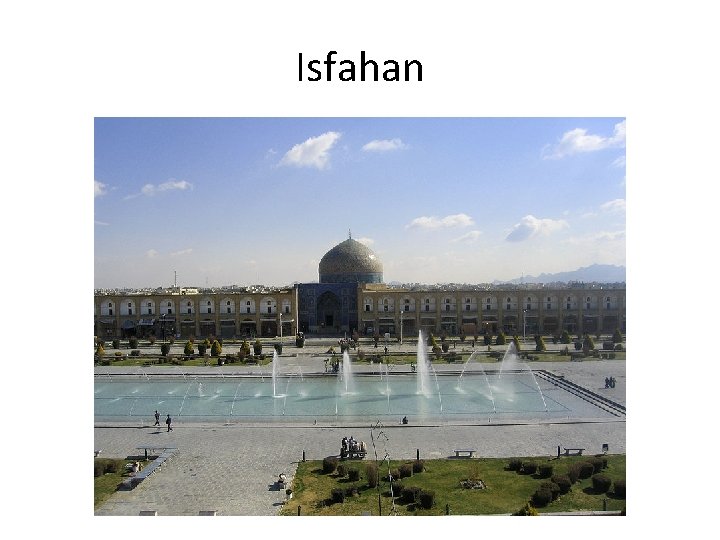
Isfahan
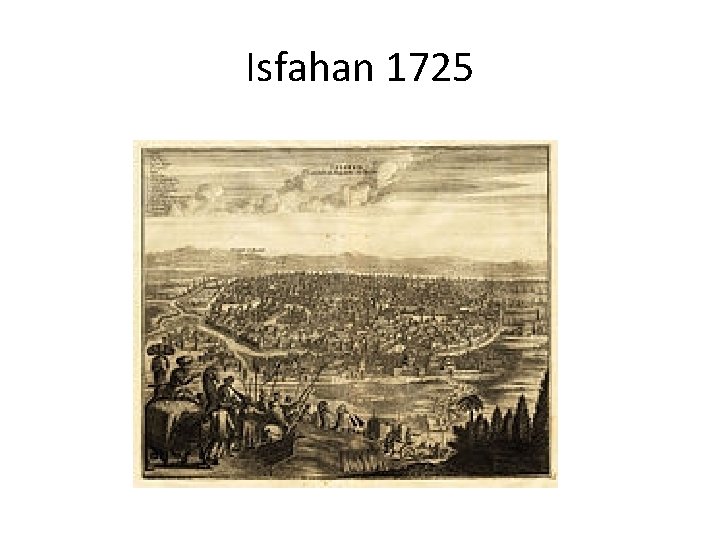
Isfahan 1725
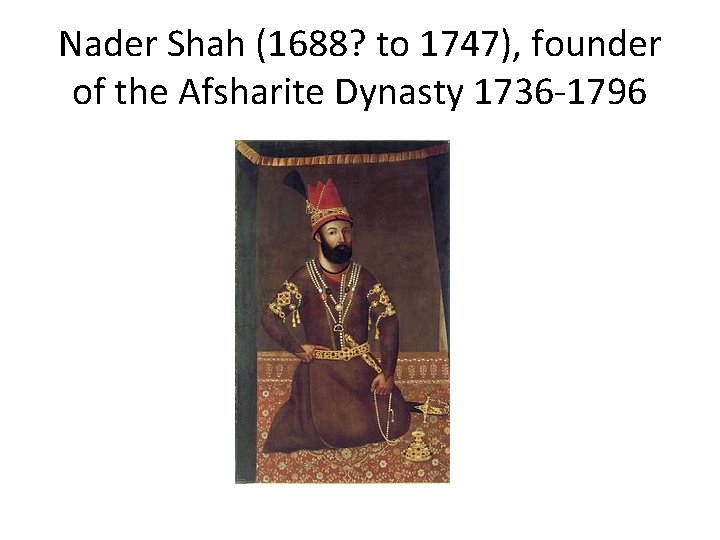
Nader Shah (1688? to 1747), founder of the Afsharite Dynasty 1736 -1796
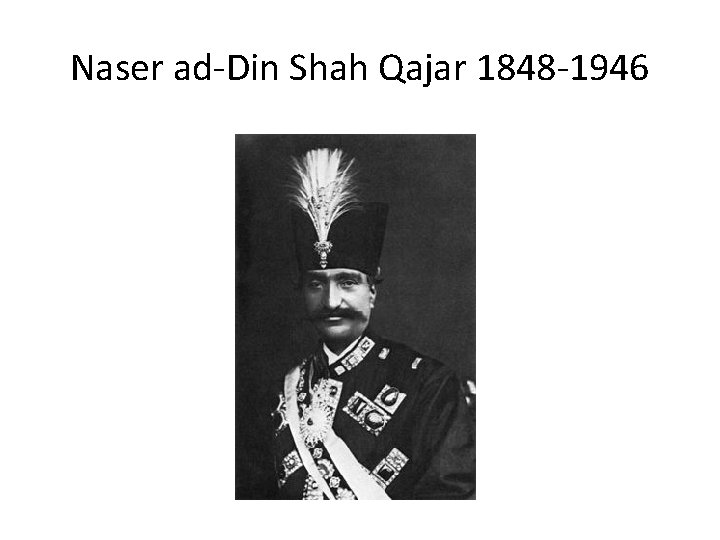
Naser ad-Din Shah Qajar 1848 -1946

Jamal al-Din al-Afghani
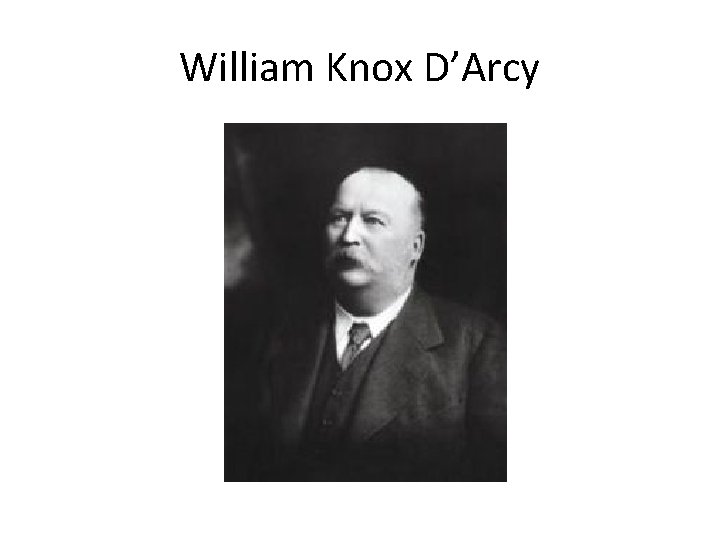
William Knox D’Arcy
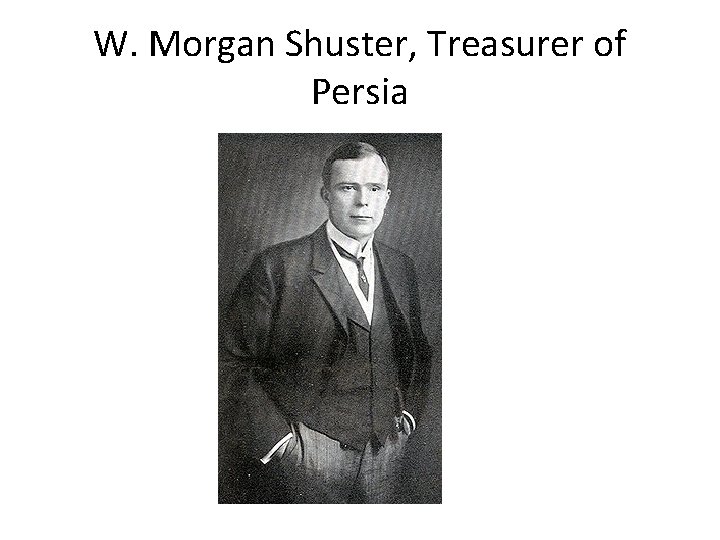
W. Morgan Shuster, Treasurer of Persia
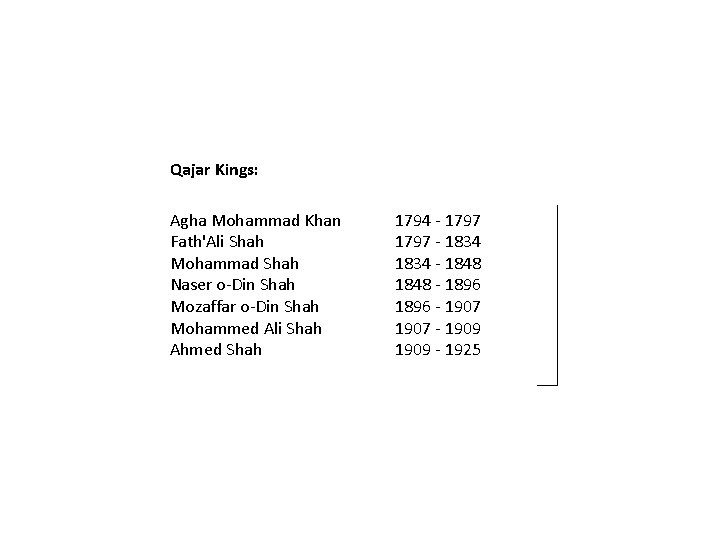
Qajar Kings: Agha Mohammad Khan Fath'Ali Shah Mohammad Shah Naser o-Din Shah Mozaffar o-Din Shah Mohammed Ali Shah Ahmed Shah 1794 - 1797 - 1834 - 1848 - 1896 - 1907 - 1909 - 1925
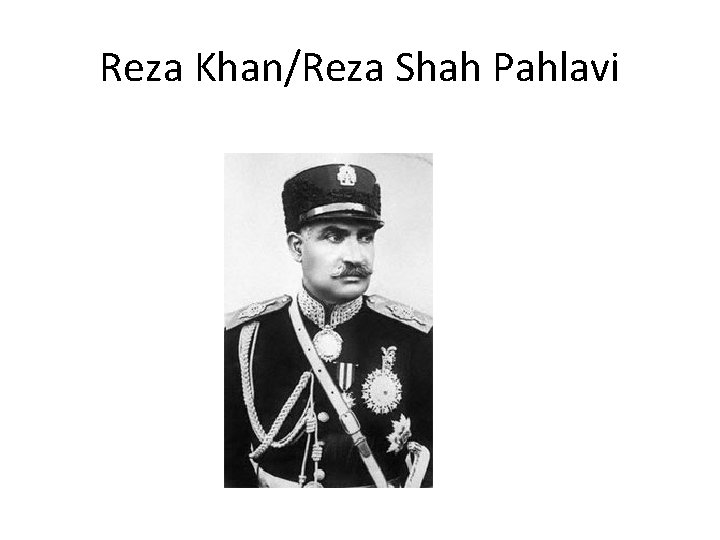
Reza Khan/Reza Shah Pahlavi
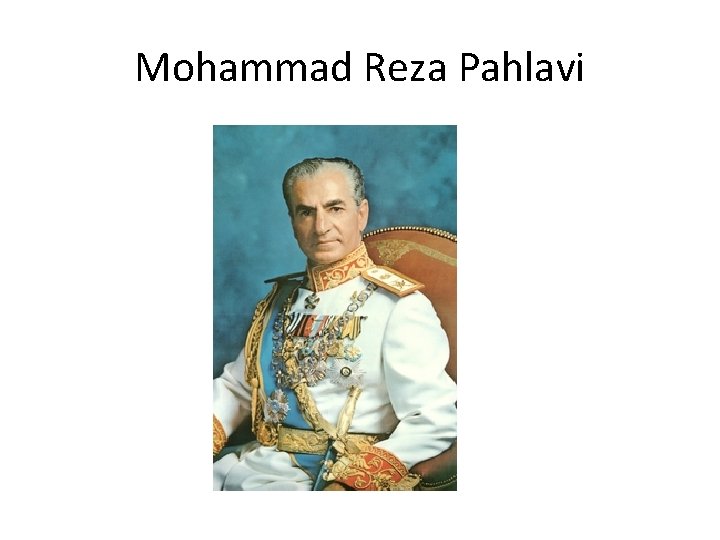
Mohammad Reza Pahlavi
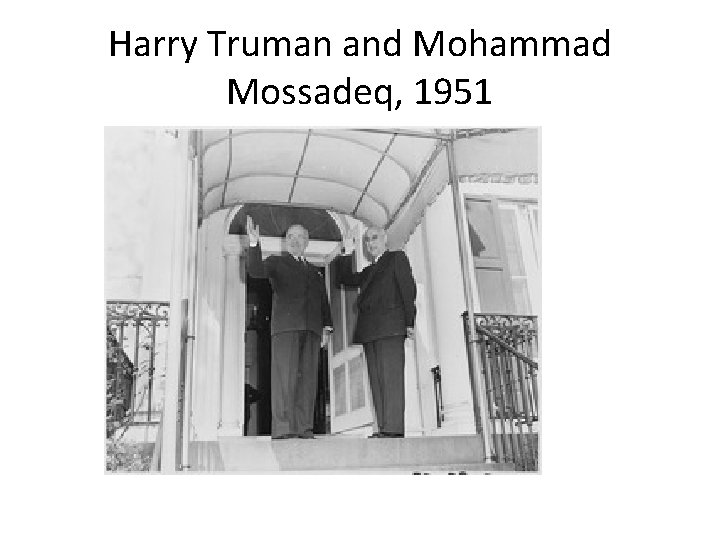
Harry Truman and Mohammad Mossadeq, 1951
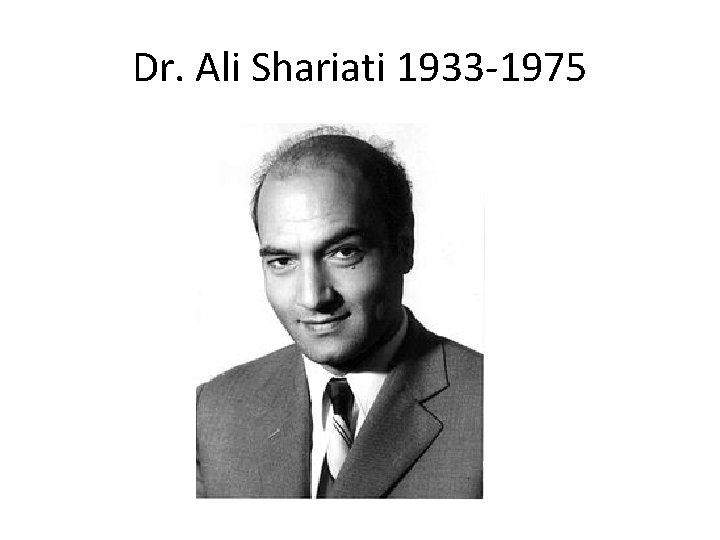
Dr. Ali Shariati 1933 -1975

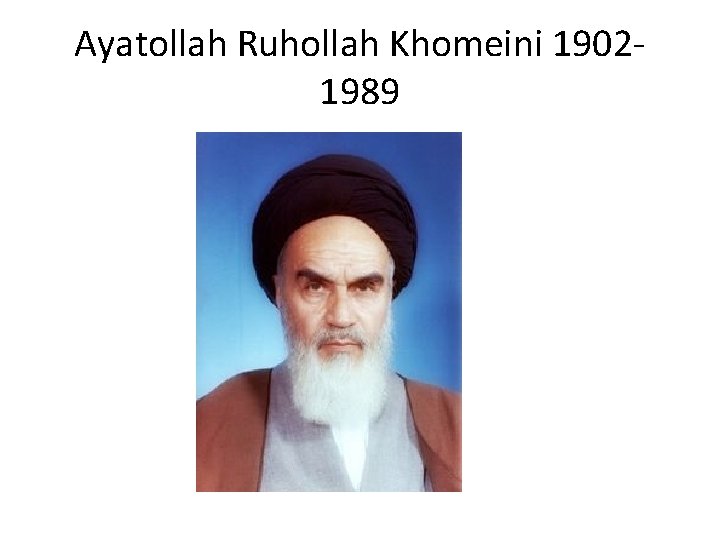
Ayatollah Ruhollah Khomeini 19021989
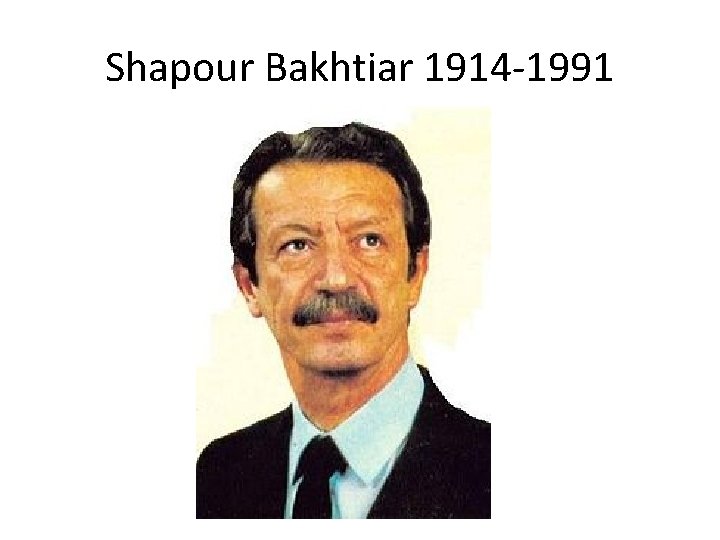
Shapour Bakhtiar 1914 -1991
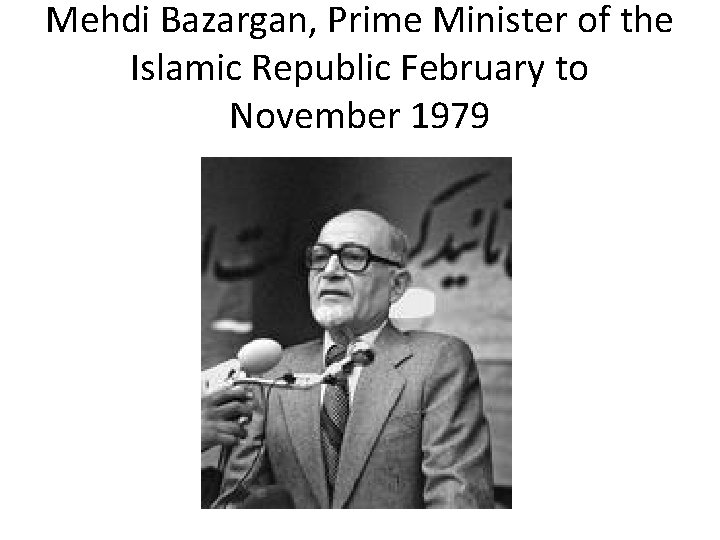
Mehdi Bazargan, Prime Minister of the Islamic Republic February to November 1979
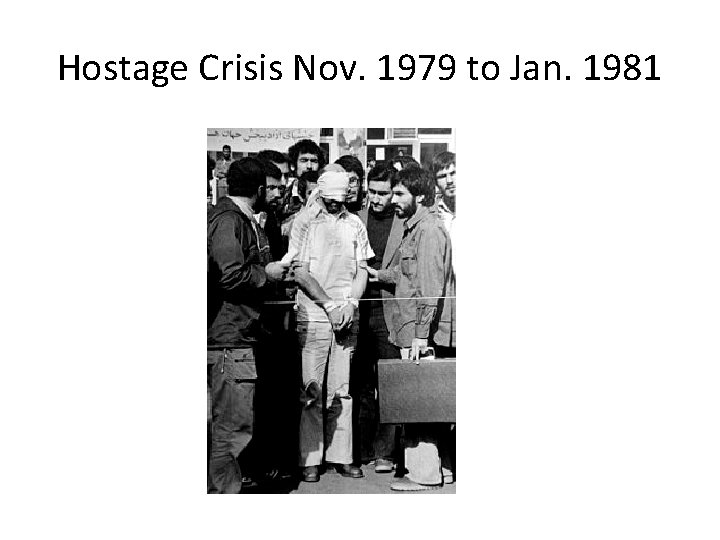
Hostage Crisis Nov. 1979 to Jan. 1981
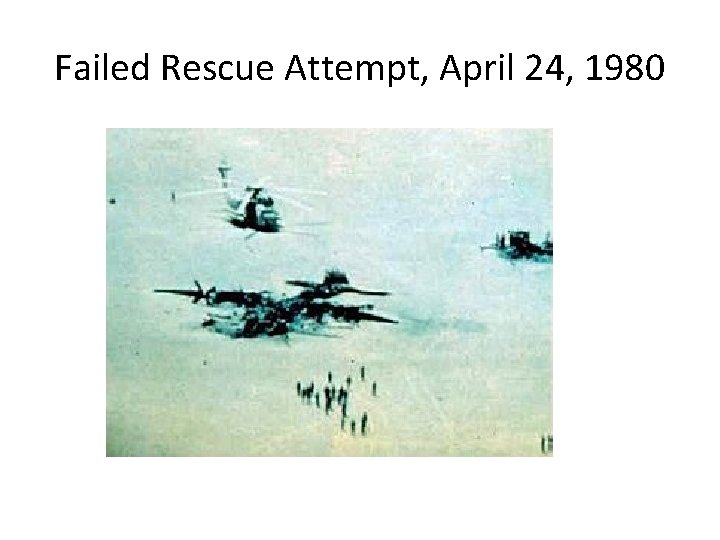
Failed Rescue Attempt, April 24, 1980
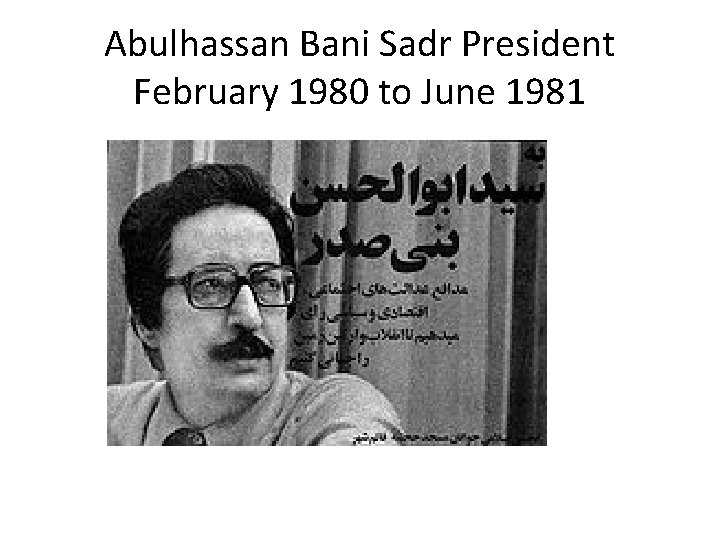
Abulhassan Bani Sadr President February 1980 to June 1981
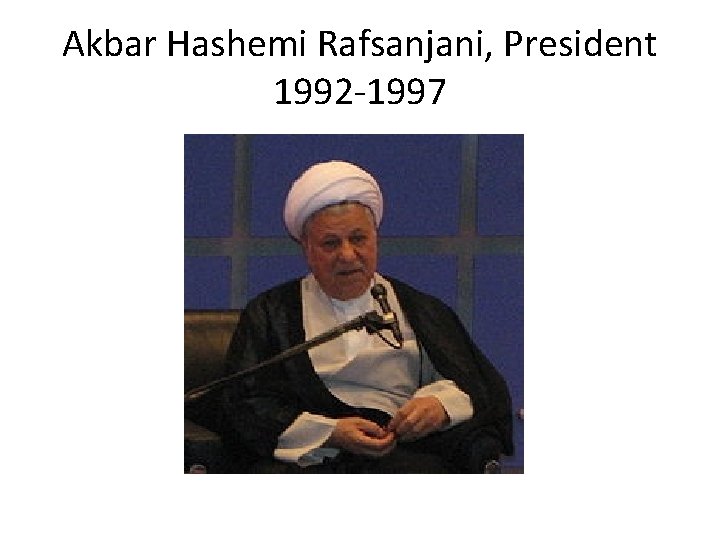
Akbar Hashemi Rafsanjani, President 1992 -1997
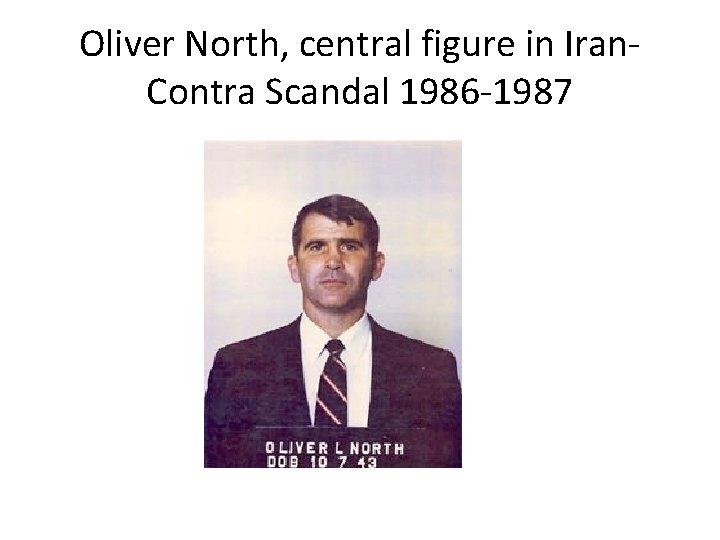
Oliver North, central figure in Iran. Contra Scandal 1986 -1987
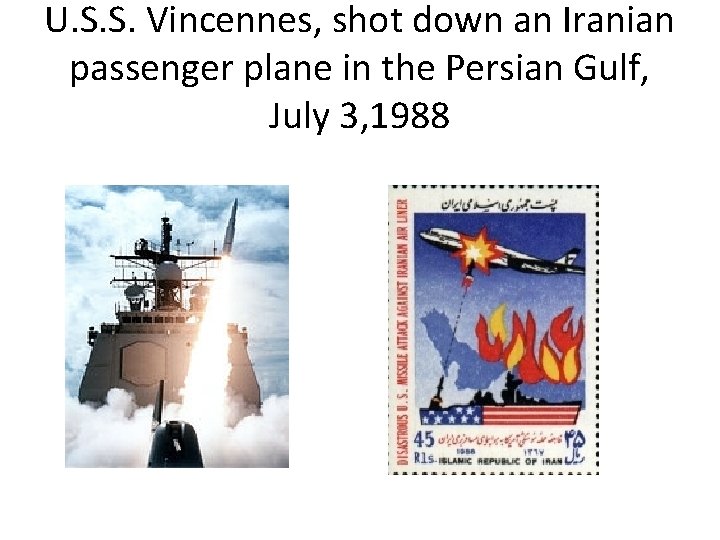
U. S. S. Vincennes, shot down an Iranian passenger plane in the Persian Gulf, July 3, 1988
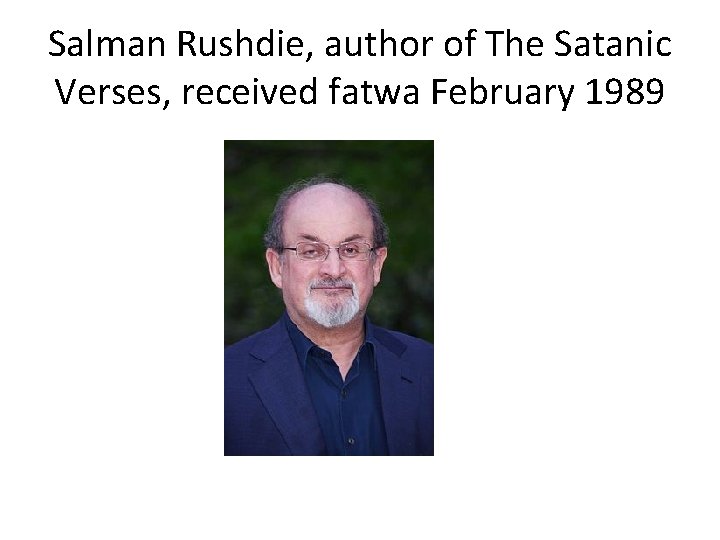
Salman Rushdie, author of The Satanic Verses, received fatwa February 1989
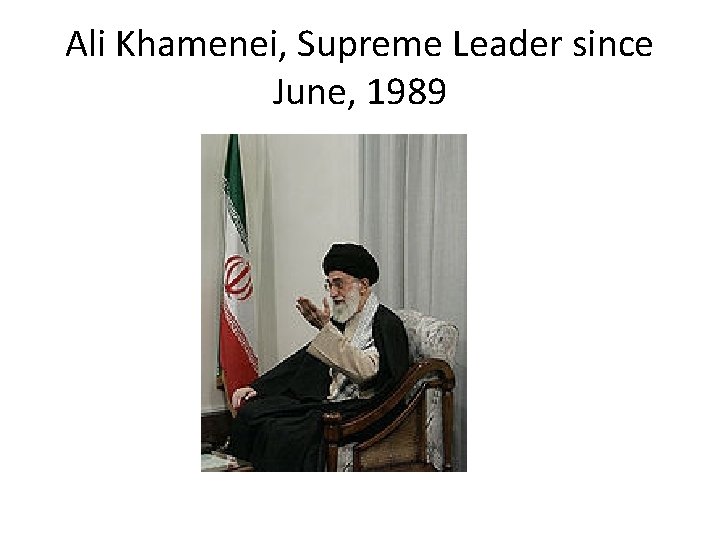
Ali Khamenei, Supreme Leader since June, 1989
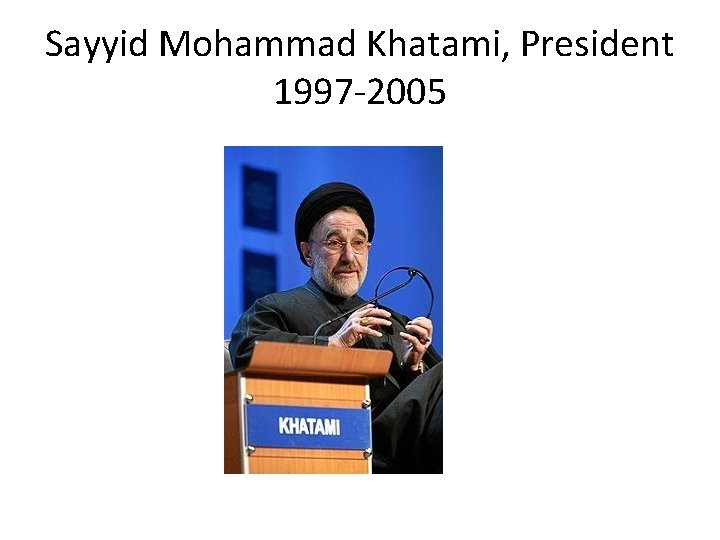
Sayyid Mohammad Khatami, President 1997 -2005
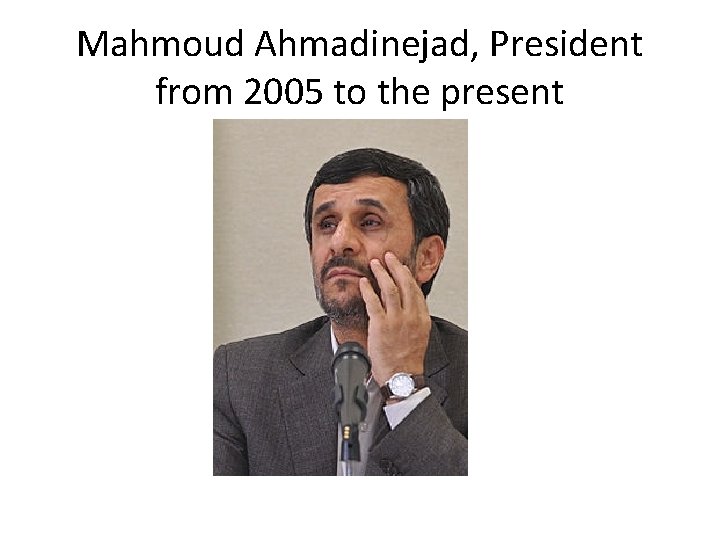
Mahmoud Ahmadinejad, President from 2005 to the present
- Slides: 139