
Zoons balanitis Erythroplasia de Queyrat Squamous cell carcinoma

Zoon’s balanitis Erythroplasia de Queyrat Squamous cell carcinoma

Zoon’s balanitis • Zoon balanitis (ZB) is one of the nonvenereal conditions, which usually affects middle-aged to older men who are uncircumcised. • It is an idiopathic, chronic, benign inflammatory mucositis of the genitalia that clinically presents as: a solitary shiny well-defined erythematous plaque on the glans.
Epidemiology • In a recent study by Pearce et al. , out of 226 patients examined in a genitourinary medicine clinic over a period of 3 years, 26 (10%) patients had ZB Pearce J, Fernando I. The value of a multi-specialty service, including genitourinary medicine, dermatology and urology input, in the management of male genital dermatoses. Int J STD AIDS. 2015; 26: 716– 22 .
Etiology • Etiology and pathogenesis of this condition are still speculative. • As it is mostly seen in uncircumcised men, it is thought to be because of irritation, due to retention of urine and smegma in context of “dysfunctional prepuce, ” leading to poor genital hygiene and repeated local infection. • In addition, trauma, friction, heat, and constant rubbing may be a contributory factors. • Thus, the two most important triggering factors are the constant exposure of the mucosa to humid condition and to chronic irritation. This explains why lesions of ZB undergo prolonged remission after circumcision.
Clinical feature Symptoms • It is usually asymptomatic and patient only presents with change in appearance of the genitalia. • However, sometimes, it might be accompanied with symptoms such as pruritus, dysuria, pain, and burning sensation. Rarely blood-stained discharge or dyspareunia has been described
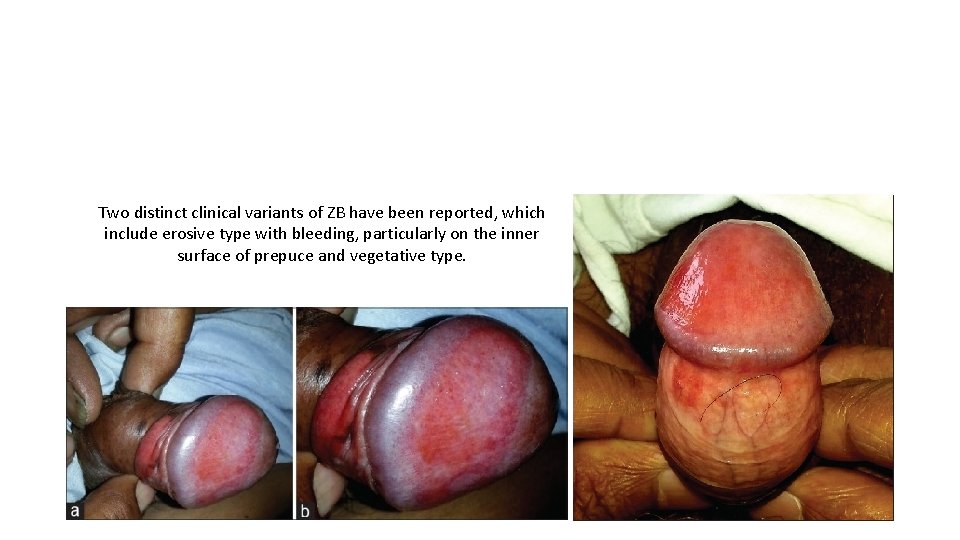
Two distinct clinical variants of ZB have been reported, which include erosive type with bleeding, particularly on the inner surface of prepuce and vegetative type.
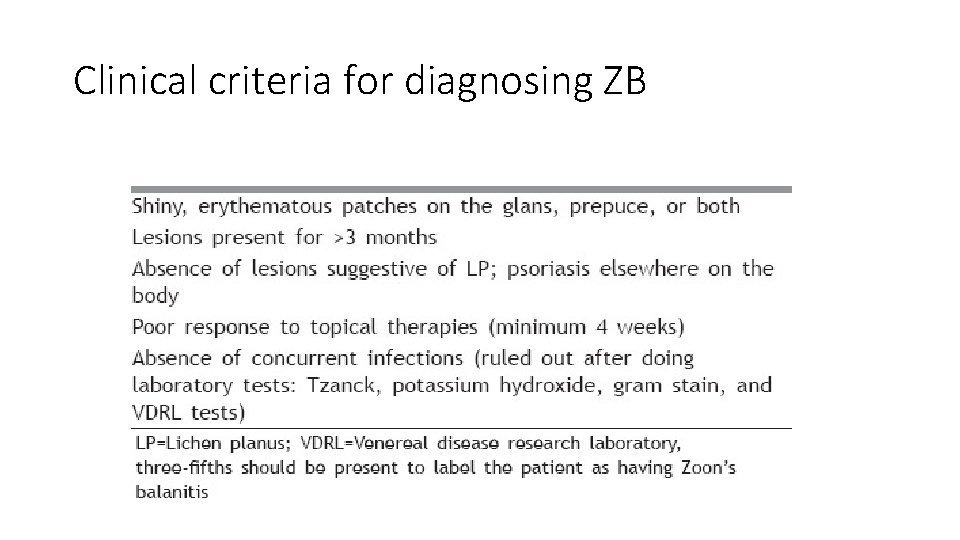
Clinical criteria for diagnosing ZB
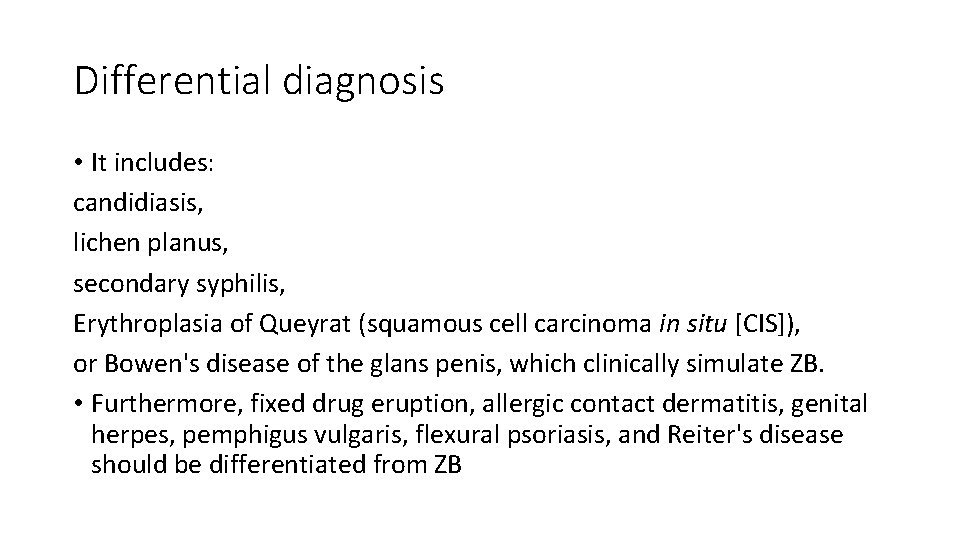
Differential diagnosis • It includes: candidiasis, lichen planus, secondary syphilis, Erythroplasia of Queyrat (squamous cell carcinoma in situ [CIS]), or Bowen's disease of the glans penis, which clinically simulate ZB. • Furthermore, fixed drug eruption, allergic contact dermatitis, genital herpes, pemphigus vulgaris, flexural psoriasis, and Reiter's disease should be differentiated from ZB
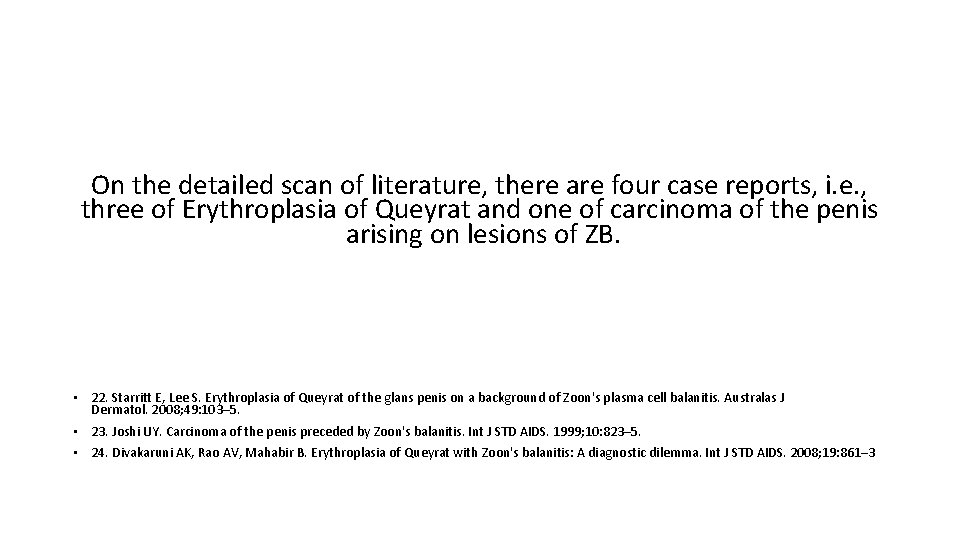
On the detailed scan of literature, there are four case reports, i. e. , three of Erythroplasia of Queyrat and one of carcinoma of the penis arising on lesions of ZB. • 22. Starritt E, Lee S. Erythroplasia of Queyrat of the glans penis on a background of Zoon's plasma cell balanitis. Australas J Dermatol. 2008; 49: 103– 5. • 23. Joshi UY. Carcinoma of the penis preceded by Zoon's balanitis. Int J STD AIDS. 1999; 10: 823– 5. • 24. Divakaruni AK, Rao AV, Mahabir B. Erythroplasia of Queyrat with Zoon's balanitis: A diagnostic dilemma. Int J STD AIDS. 2008; 19: 861– 3
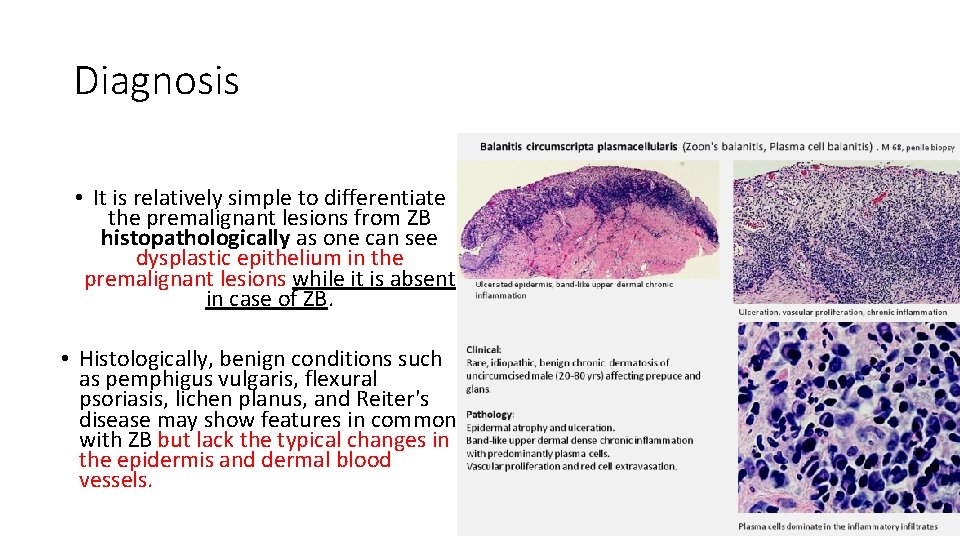
Diagnosis • It is relatively simple to differentiate the premalignant lesions from ZB histopathologically as one can see dysplastic epithelium in the premalignant lesions while it is absent in case of ZB. • Histologically, benign conditions such as pemphigus vulgaris, flexural psoriasis, lichen planus, and Reiter's disease may show features in common with ZB but lack the typical changes in the epidermis and dermal blood vessels.
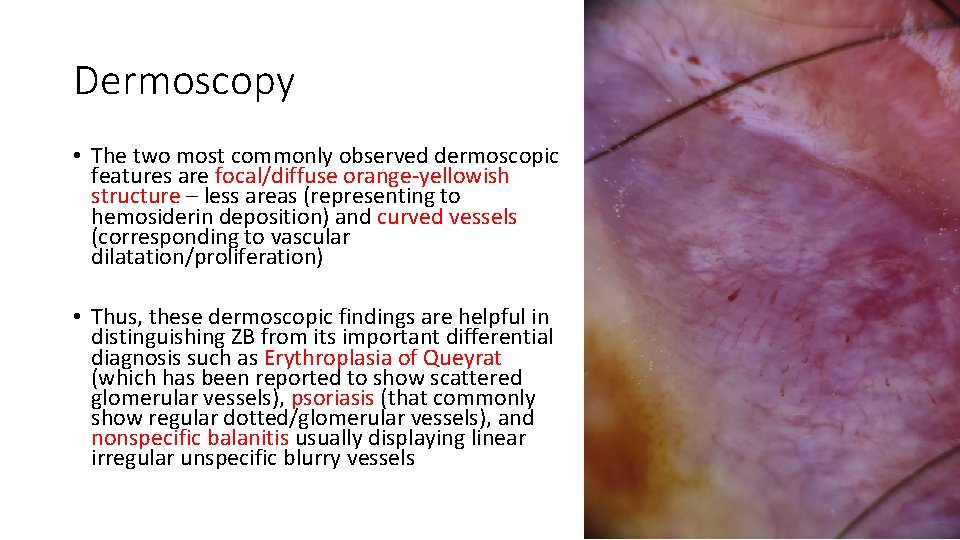
Dermoscopy • The two most commonly observed dermoscopic features are focal/diffuse orange-yellowish structure – less areas (representing to hemosiderin deposition) and curved vessels (corresponding to vascular dilatation/proliferation) • Thus, these dermoscopic findings are helpful in distinguishing ZB from its important differential diagnosis such as Erythroplasia of Queyrat (which has been reported to show scattered glomerular vessels), psoriasis (that commonly show regular dotted/glomerular vessels), and nonspecific balanitis usually displaying linear irregular unspecific blurry vessels

Management
Circumcision is the definite treatment of ZB according to the 2013 European guidelines for the management of balanoposthitis. Resolution of symptoms after circumcision might be due to the removal of factors, i. e. , chronic irritation, along with constant friction and poor hygiene caused by the overlying prepuce. Edwards SK, Bunker CB, Ziller F, van der Meijden WI. 2013 European guideline for the management of balanoposthitis. Int J STD AIDS. 2014; 25: 615– 26
Other treatment options • Carbon dioxide (CO 2) laser - There are only two reports showing efficacy of CO 2 laser in ZB. First, CO 2 laser was used by Baldwin et al. • This is a well-tolerated procedure and re-epithelialization is achieved in 1– 2 weeks without any postsurgical complication. Thus, CO 2 laser can be used as a viable alternative and certainly less traumatic surgical therapy for treatment of ZB than circumcision • Erbium (Er): YAG laser - Few studies have reported Er: YAG laser to produce complete resolution in ZB. Irradiation by Er: YAG laser produces relatively pure ablation with minimal thermal damage. Because ablation is directly proportional to fluence, Er: YAG laser can be finely adapted to this clinical scenario. Thus, it offers a precise superficial ablation with low thermal injury, low risk of scarring, low pain, and rapid healing.
Follow up • The exact follow-up regime for ZB after treatment is still unclear. Although it is described as benign in nature, its association with premalignant conditions such as Erythroplasia of Queyrat really puts the clinician in a great dilemma. • For Erythroplasia of Queyrat, a minimum of 5 years follow-up is recommended. • Thus, a logical and standard protocol should be used for ZB also, especially due to its risk of recurrence and risk of malignant transformation. Patients should be followed up for at least 5 years although lifelong follow-up would be better as it will give a precise insight about the natural course of this condition.
Erythroplasia de Quyerat • Erythroplasia of Queyrat (EQ) is an in situ squamous cell carcinoma of the penis. • The glans and prepuce are most commonly involved. Erythroplasia of Queyrat is seen almost exclusively in uncircumcised men. • Progression to invasive carcinoma may occur, and spontaneous regression is unlikely. • Kirnbauer R, Lenz P, Bolognia J, Jorizzo J, and Schaffer J. Human Papillomaviruses. Dermatology. 3 rd ed. Philadelphia, Pa: Elsevier Saunders; 2012. Vol 2: 1309 -20. • Maranda EL, Nguyen AH, Lim VM, Shah VV, Jimenez JJ. Erythroplasia of Queyrat treated by laser and light modalities: a systematic review. Lasers Med Sci. 2016 Dec. 31 (9): 1971 -1976. • Micali G, Innocenzi D, Nasca MR, Musumeci ML, Ferrau F, Greco M. Squamous cell carcinoma of the penis. J Am Acad Dermatol. 1996 Sep. 35(3 Pt 1): 432 -51. • Henquet CJ. Anogenital malignancies and pre-malignancies. J Eur Acad Dermatol Venereol. 2011 Aug. 25(8): 885 -95.
Etiology The etiology of Erythroplasia of Queyrat remains unclear. The following have been proposed to contribute to the development and progression of Erythroplasia of Queyrat: • Lack of circumcision • Chronic irritation, inflammation, or infection: Includes urine, smegma, trauma, herpes simplex viral infection, bacteria, heat, friction, trauma • Zoon balanitis • Human papillomavirus infection (HPV) types 8 and 16: In 2010, however, Nasca et al failed to detect HPV in lesions of 11 patients with Erythroplasia of Queyrat • Immunosuppression (including HIV infection) • UV light • Phimosis • Multiple sexual partners • Smoking • Chronic underlying diseases (lichen sclerosis, lichen planus) • Social/cultural habits, hygiene, religious practices
Epidemiology • Erythroplasia of Queyrat is a rarely reported disorder. It makes up less than 1% of malignancies in males. • It is a disease of middle-aged to elderly males. It has been described in males ranging from age 20 -80 years
Prognosis • The cure rate for Erythroplasia of Queyrat is high if lesions are identified and treated early. • If urethral involvement is noted, treatment may be both more challenging and lead to higher recurrence rates. • Transformation to invasive carcinoma is possible within Erythroplasia of Queyrat lesions. Graham and Helwig reported 10% of Erythroplasia of Queyrat cases progressing to malignant disease. • Others report progression rates as high as 33%. Cases of Erythroplasia of Queyrat metastatic to local lymph nodes have also been reported. • Graham JH, Helwig EB. Erythroplasia of Queyrat. A clinicopathologic and histochemical study. Cancer. 1973 Dec. 32(6): 1396414. [Medline]. • Kim B, Garcia F, Toma N, et al. A rare case of penile cancer in siu metastasizing to lymph nodes. Can Urol Assoc J. 2007. 1: 404 -7.
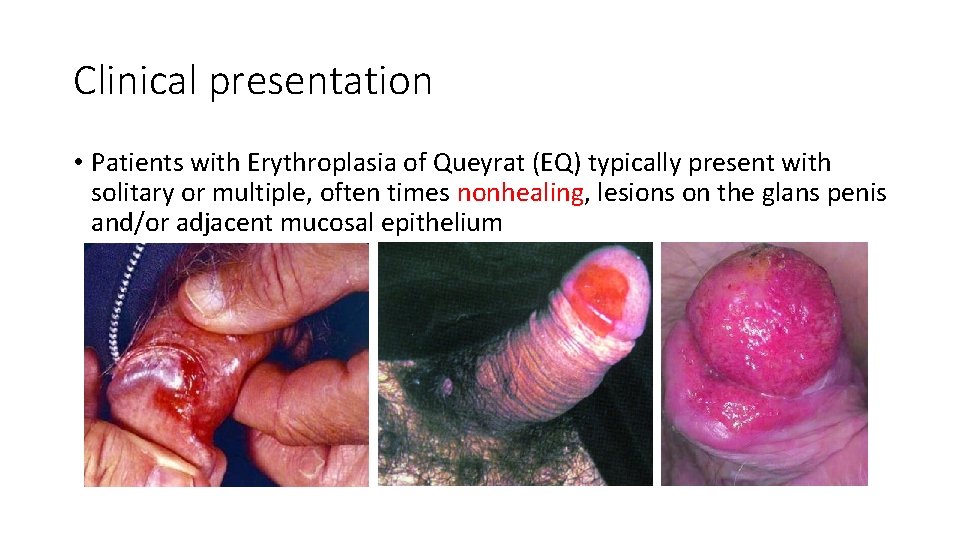
Clinical presentation • Patients with Erythroplasia of Queyrat (EQ) typically present with solitary or multiple, often times nonhealing, lesions on the glans penis and/or adjacent mucosal epithelium
Symptoms • • • Presenting symptoms can vary and may include the following: Redness Crusting Scaling Ulceration Bleeding Pain Itching Dysuria Penile discharge Difficulty retracting the foreskin
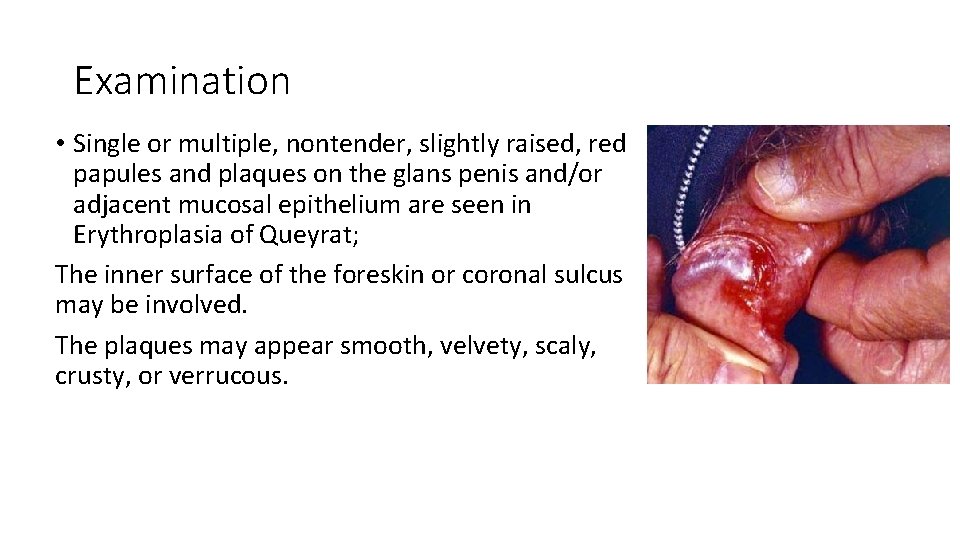
Examination • Single or multiple, nontender, slightly raised, red papules and plaques on the glans penis and/or adjacent mucosal epithelium are seen in Erythroplasia of Queyrat; The inner surface of the foreskin or coronal sulcus may be involved. The plaques may appear smooth, velvety, scaly, crusty, or verrucous.
Differential diagnosis • • • • Allergic Contact Dermatitis Balanitis Circumscripta Plasmacellularis Balanitis Xerotica Obliterans Balanoposthitis Basal Cell Carcinoma Cicatricial (Mucous Membrane) Pemphigoid Cutaneous Melanoma Cutaneous Squamous Cell Carcinoma Drug-Induced Bullous Disorders Fixed Drug Eruptions Irritant Contact Dermatitis Lichen Planus Mucosal Candidiasis Plaque Psoriasis
Diagnosis • The diagnosis of Erythroplasia of Queyrat (EQ) is made via histological examination. Specifically, biopsy should be performed on any areas with signs of bleeding, ulceration, or papillomatous change. Additionally, biopsy should be performed on therapyresistant lesions. The following diagnostic procedures may be useful in excluding other infectious processes: • Tzanck preparation • Bacterial/viral/fungal culture • Potassium hydroxide examination • Gram stain
• Failure to carefully evaluate any patient, especially uncircumcised patients, presenting with a subacute or chronic balanitis is a potential medicolegal pitfall. • The threshold for performing skin biopsy of any lesion should be very low. • In addition, a failure to diagnose Erythroplasia of Queyrat expediently can easily result in disease that progresses to frank squamous cell carcinoma of the penis.
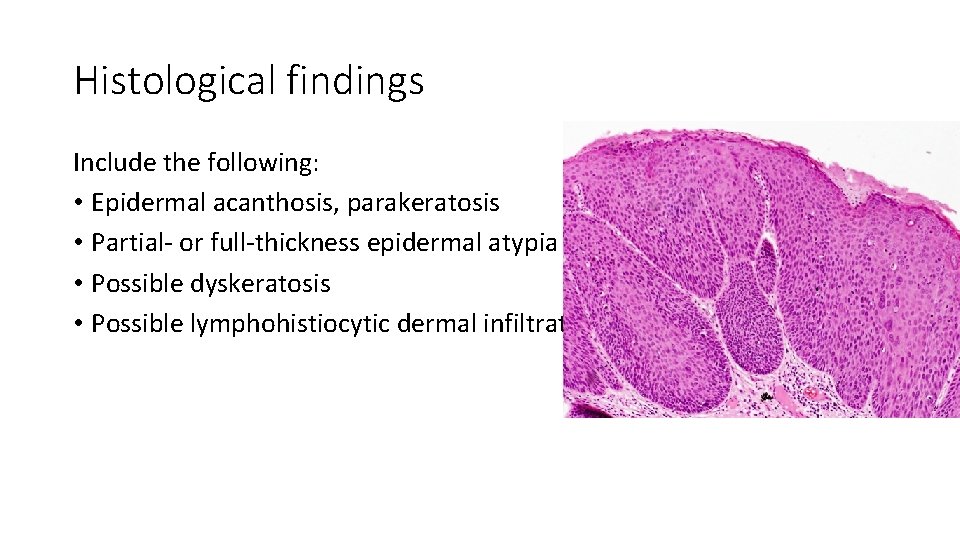
Histological findings Include the following: • Epidermal acanthosis, parakeratosis • Partial- or full-thickness epidermal atypia • Possible dyskeratosis • Possible lymphohistiocytic dermal infiltrate
Medical treatment • Cases of Erythroplasia of Queyrat (EQ) have been treated with the following: • 5 -Fluorouracil - Limited success • Imiquimod - Variable response with limited data on long-term efficacy • Harrington KJ, Price PM, Fry L, Witherow RO. Erythroplasia of Queyrat treated with isotretinoin. Lancet. 1993 Oct 16. 342(8877): 994 -5. [Medline]. • Micali G, Nasca MR, De Pasquale R. Erythroplasia of Queyrat treated with imiquimod 5% cream. J Am Acad Dermatol. 2006 Nov. 55(5): 901 -3. [Medline]. • Conejo-Mir JS, Munoz MA, Linares M, Rodriguez L, Serrano A. Carbon dioxide laser treatment of Erythroplasia of Queyrat: a revisited treatment to this condition. J Eur Acad Dermatol Venereol. 2005 Sep. 19(5): 643 -4. [Medline]. • Arlette JP. Treatment of Bowen's disease and Erythroplasia of Queyrat. Br J Dermatol. 2003 Nov. 149 Suppl 66: 43 -9. [Medline]. • Orengo I, Rosen T, Guill CK. Treatment of squamous cell carcinoma in situ of the penis with 5% imiquimod cream: a case report. J Am Acad Dermatol. 2002 Oct. 47(4 Suppl): S 225 -8. [Medline]. • Micali G, Lacarrubba F, Dinotta F, Massimino D, Nasca MR. Treating skin cancer with topical cream. Expert Opin Pharmacother. 2010 Jun. 11(9): 1515 -27. [Medline]. • Deen K, Burdon-Jones D. Imiquimod in the treatment of penile intraepithelial neoplasia: An update. Australas J Dermatol. 2016 Mar 8. [Medline].
![Surgical treatment • Surgical treatments for Erythroplasia of Queyrat include the following [23] :](http://slidetodoc.com/presentation_image_h2/8fc9ec42f1d52ce376d6d6349a3aad56/image-28.jpg "Surgical treatment • Surgical treatments for Erythroplasia of Queyrat include the following [23] :")
Surgical treatment • Surgical treatments for Erythroplasia of Queyrat include the following [23] : • Mohs micrographic surgery : Five-year cure rate up to 90% [1] • Surgical excision : Recurrence rate of 2% for total glansectomy ; penis preserving strategies recommended for small lesions [6, 9] ; may include partial glansectomy and circumcision with skin grafting • Cryotherapy • Electrodesiccation and curettage • Radiation • Carbon dioxide laser ablation • Nd: YAG laser ablation • Photodynamic therapy with aminolevulinic acid: Multiple treatments may be required for clearance • Photodynamic therapy with methyl-aminolevulinate: Multiple treatments may be required for clearance ; studies have shown up to 83% of patients with clinical remission, [33, 34] but rates as low as 27% reported (2011); may lead to preservation of function and good cosmesis ; may be used in cases of recurrence or if surgery not desired; adverse effects include redness, burning, pain, swelling, dysuria, ulceration, blistering, and pigment changes [25, 33] • Circumcision is recommended.
Squamous cell carcinoma • Among malignant neoplasms of the penis, squamous cell carcinoma (SCC) is the most common. • Primary SCC may occur at any anatomic site on the penis. It most often occurs on the glans, although it may also develop on the prepuce, both the glans and the prepuce, the coronal sulcus, and the shaft. Invasion of the shaft by a tumor originating from more distant sites may also be observed.
Pathophysiology • The cause of penile squamous cell carcinoma (SCC) is unclear, although human papillomavirus (HPV) appears to play a major role. • In situ carcinomas may progress to invasive lesions. Other associations considered to play a role in the development of penile SCC include pre-existing dermatoses, lack of circumcision, and other factors, including environmental exposures.
• In situ carcinomas include Bowen disease, Erythroplasia of Queyrat, and bowenoid papulosis. • If untreated, these conditions may evolve to invasive carcinomas. Bowen disease and Erythroplasia of Queyrat share similar histologic appearance and biological behavior and therefore are now usually considered different aspects of a single preneoplastic disorder. • They are also defined as penile intraepithelial neoplasia, whereas the abbreviation Tis is used in the tumor-node-metastasis (TNM) classification.
Epidemiology • Squamous cell carcinoma (SCC) accounts for at least 95% of all penile malignancies. It represents approximately 2% of all cancers of the male genitalia and is found in 0. 3 -0. 5% of the cancer-bearing male population. • The overall incidence of primary malignant penile cancers (mean: 0. 69 case per 100, 000 population) has been reported as constantly decreasing from 1973 to 2002. However, more recently, an increased incidence has been reported in Denmark and the United Kingdom. • Burgers JK, Badalament RA, Drago JR. Penile cancer. Clinical presentation, diagnosis, and staging. Urol Clin North Am. 1992 May. 19(2): 247 -56.
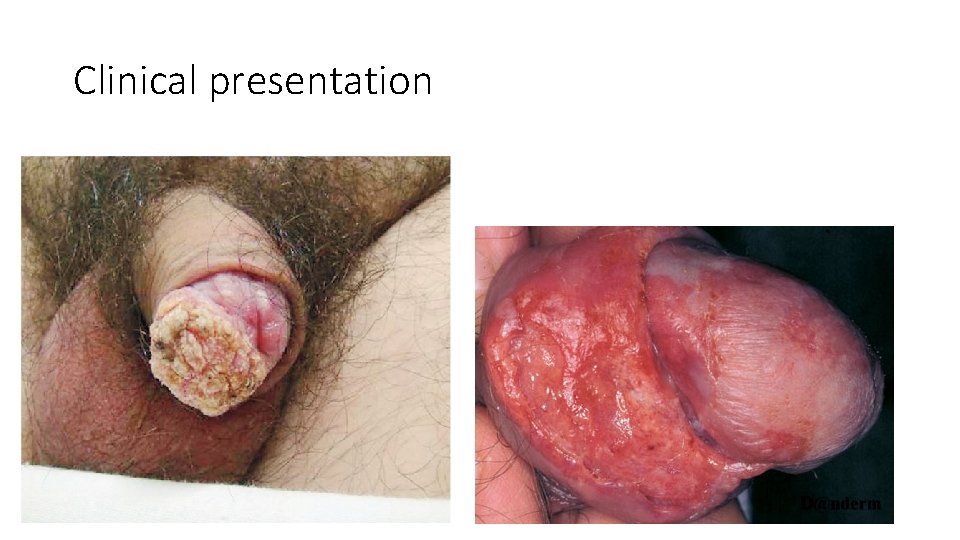
Clinical presentation
Differential diagnosis • The differential diagnosis for penile squamous cell carcinoma (SCC) includes the following: • Erythroplasia of Queyrat (Bowen Disease of the Glans Penis) • Metastatic Carcinoma of the Skin • Verruciform Xanthoma • Verrucous Carcinoma • Warts, Genital
Diagnosis • Initial biopsy of the primary penile lesion is necessary to confirm the diagnosis and to assess the grade and the invasiveness of the tumor, although a 2004 study has shown that it may fail to correctly assess the histologic grade (30% of cases) and deepest point of tumor invasion (91% of cases) when used alone. • Biopsy usually consists of a 1 -cm elliptical wedge excision centered on the margin of the lesion. The mucosal application of 1% toluidine blue may aid in the identification of the best area from which to obtain a biopsy specimen. • Velazquez EF, Barreto JE, Rodriguez I, Piris A, Cubilla AL. Limitations in the interpretation of biopsies in patients with penile squamous cell carcinoma. Int J Surg Pathol. 2004 Apr. 12(2): 139 -46 • Micali G, Nasca MR, Innocenzi D, Schwartz RA. Penile cancer. J Am Acad Dermatol. 2006 Mar. 54(3): 369 -91; quiz 391 -4.
Imaging studies • Ultrasonography has the advantages of low cost, noninvasiveness, easy availability, and reliability in assessing extension of the primary tumor and the lymph nodes. When performed by a skilled physician, it is extremely sensitive in predicting infiltration of cavernous bodies. It may also have a role in determining whether metastatic nodes are resectable • CT scanning is widely performed and may be used in the staging of clinically positive lymph nodes, but it is not recommended for clinically node-negative patients and is of limited help in the assessment of primary penile lesions.
Imaging studies (2) • MRI improves soft tissue contrast and provides multiplanar high-resolution images, yielding the greatest accuracy in the evaluation of both the penile primary tumor and the lymph nodes. [83, 84] However, it is less sensitive in assessing urethral invasion and has some contraindications (eg, presence of vascular stents, pacing devices, prosthetic implants). Other imaging studies: • Positron emission tomography (PET): This may be able to provide early evidence of metastatic disease, but it does not reliably detect micrometastases. It may be more reliable in the assessment of pelvic nodal disease. • Single-photon emission computed tomography (SPECT/CT): Based on the use of a Tc 99 m-labeled nanocolloid as a radiotracer, it has shown to be useful for improving inguinal lymph node metastases detection.
Histological findings • Low-grade (grades I-II), well-differentiated lesions show a thickened, hyperkeratotic, and papillomatous epidermis, with a downward, fingerlike projection of atypical squamous cells, which often appear as concentrically arranged nests of cells surrounding keratin accumulations (keratin pearls). • Epithelial cells show intact desmosomes and slight atypia, with enlarged and pleomorphic nuclei and 1 or more prominent nucleoli. Mitotic figures are present. Individual cells may become dyskeratotic, appearing deeply eosinophilic. In the dermis, a dense lymphocytic or mixed inflammatory infiltrate may be present. [13] • Poorly differentiated SCC (grades III-IV) shows little or no keratinization, increased nuclear pleomorphism and hyperchromasia, and deeper invasion, and it may have areas of necrosis or superinfection. [13]
Staging • The staging systems currently used for penile SCC are the Jackson anatomic classification and the tumor-node-metastasis (TNM) system (Union Internationale Contre le Cancer). • The current TNM staging system was questioned in 2008, and has been subjected to external validation in 2011.
Treatment and management • Treatment includes radiation therapy, medical therapy (local and systemic), and surgery, alone or in combination. Currently, multimodality combined treatment is recommended. Laser therapy may also be used. • Because of the generally limited experience with SCC of the penis, considerable controversy exists as to the best form of treatment, specifically treatment for regional lymph nodes.
Prognosis • Penile squamous cell carcinoma (SCC) is the cause of fewer than 1 -2% of all deaths from cancer in men in the United States. [67] • In the absence of inguinal metastases, patients with invasive SCC of the penis involving the glans or the distal part of the shaft who undergo adequate partial amputation have a long-term survival rate of 70 -80%. Of patients with involved lymph nodes, 40 -50% can be cured with lymph node dissection, whereas untreated patients usually die within 2 -3 years. • Das S. Penile amputations for the management of primary carcinoma of the penis. Urol Clin North Am. 1992 May. 19(2): 277 -82
Prognosis (2) • Old age, increasing primary tumor stage and grade, and lymph nodal status are associated with a lower survival rate. The clinical stage of the inguinal lymph nodes is the most powerful predictor of prognosis. In a study of 118 patients with penile SCC, survival appeared to be strictly related to lymph node status. The 5 year survival rate was 93% for stage I, T 1 -3, N 0, M 0; 55% for stage II, T 1 -3, N 1 -2, M 0; and 30% for stage III, T 4 or N 3 or M 1. • In patients with pelvic lymph node metastases, the 3 -year survival rate approximates 12%. Distant metastases occur in advanced disease and are predominantly found in liver, lungs, and heart. • Ornellas AA, Nóbrega BL, Wei Kin Chin E, Wisnescky A, da Silva PC, de Santos Schwindt AB. Prognostic factors in invasive squamous cell carcinoma of the penis: analysis of 196 patients treated at the Brazilian National Cancer Institute. J Urol. 2008 Oct. 180(4): 1354 -9. [Medline]. • Cubilla AL. The role of pathologic prognostic factors in squamous cell carcinoma of the penis. World J Urol. 2009 Apr. 27(2): 169 -77. [Medline]. • Kattan MW, Ficarra V, Artibani W, Cunico SC, Fandella A, Martignoni G, et al. Nomogram predictive of cancer specific survival in patients undergoing partial or total amputation for squamous cell carcinoma of the penis. J Urol. 2006 Jun. 175(6): 2103 -8; discussion 2108. [Medline]. • Chaux A, Cubilla AL. Stratification systems as prognostic tools for defining risk of lymph node metastasis in penile squamous cell carcinomas. Semin Diagn Pathol. 2012 May. 29(2): 83 -9. [Medline]. • Lughezzani G, Catanzaro M, Torelli T, Piva L, Biasoni D, Stagni S, et al. Relationship between lymph node ratio and cancer-specific survival in a contemporary series of patients with penile cancer and lymph node metastases. BJU Int. 2015 Nov. 116 (5): 727 -33.
- Slides: 42