
ZOO 115 Invertebrate Zoology Platyhelminthes Parasites Parasitism Adaptations
ZOO 115 Invertebrate Zoology Platyhelminthes Parasites
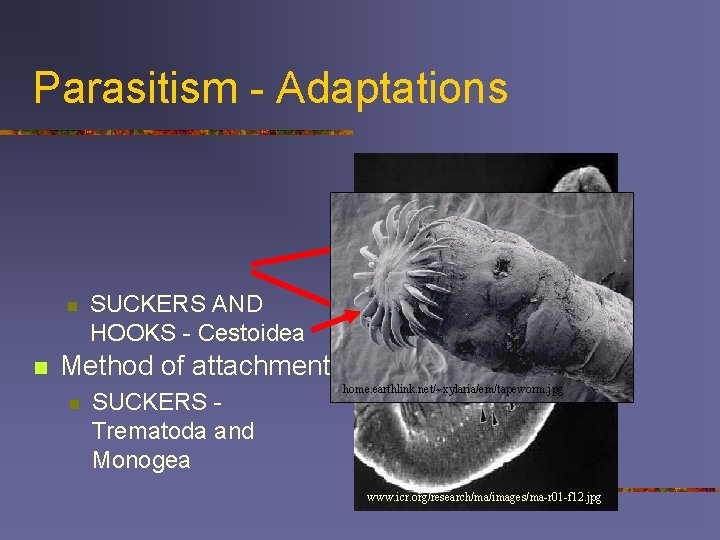
Parasitism - Adaptations n n SUCKERS AND HOOKS - Cestoidea Method of attachment n SUCKERS Trematoda and Monogea home. earthlink. net/~xylaria/em/tapeworm. jpg www. icr. org/research/ma/images/ma-r 01 -f 12. jpg
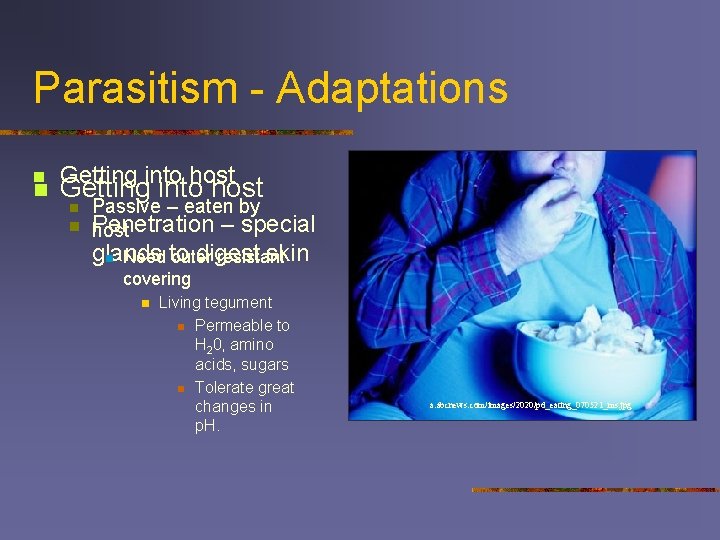
Parasitism - Adaptations n n Getting into host Passive – eaten by n Penetration – special host n glands digest skin n Need to outer resistant covering n Living tegument n Permeable to H 20, amino acids, sugars n Tolerate great changes in p. H. static. howstuffworks. com/gif/mosquito 6 a. jpg a. abcnews. com/images/2020/pd_eating_070521_ms. jpg
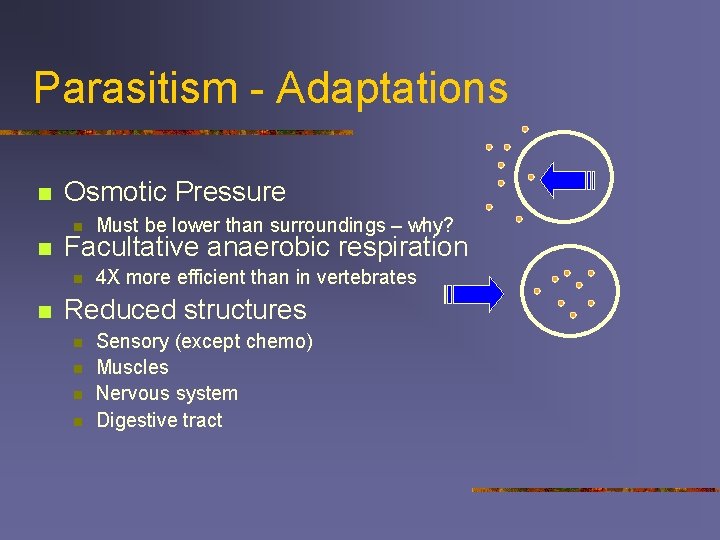
Parasitism - Adaptations n n n Osmotic Pressure n Must be lower than surroundings – why? n 4 X more efficient than in vertebrates Facultative anaerobic respiration Reduced structures n n Sensory (except chemo) Muscles Nervous system Digestive tract
Parasitism - Adaptations n Increased reproduction n Produce many eggs n n e. g. Fish tapeworm 2 million eggs/day and can live for 15 yrs (100 trillion eggs in lifetime) Polyembryony – many young from one egg. n n Asexual stages amplify numbers e. g. Fasciola hepatica produces 500, 000 eggs in a lifetime that produce 42 trillion offspring.

Parasitism - Adaptations n Host reactions to parasites n Susceptibility varies with life cycle and health of host n n n Single host – parasite usually becomes more commensal n Castration Multiple hosts – parasite can kill the host n Snails n Ants Internal parasites – develop ways of hiding from immune system www. semioticon. com/seo/M/images/mimicry_2. jpg
Parasitism - Adaptations n Host specificity varies n n Some are completely specific to their hosts Problems with non-specificity n n Swimmer’s itch Nematode and encephalitis
Class - Trematoda n n n Common Name - Flukes Common parasites of all major vertebrate taxa. >11, 000 species
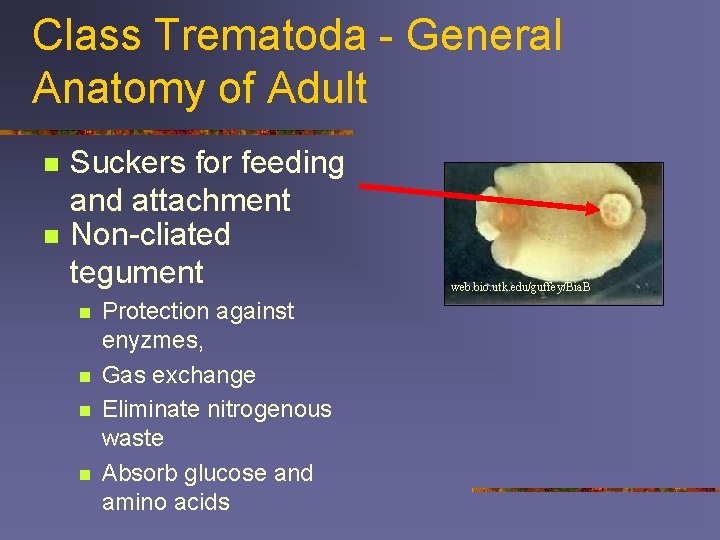
Class Trematoda - General Anatomy of Adult n n Suckers for feeding and attachment Non-cliated tegument n n Protection against enyzmes, Gas exchange Eliminate nitrogenous waste Absorb glucose and amino acids web. bio. utk. edu/guffey/Bia. B
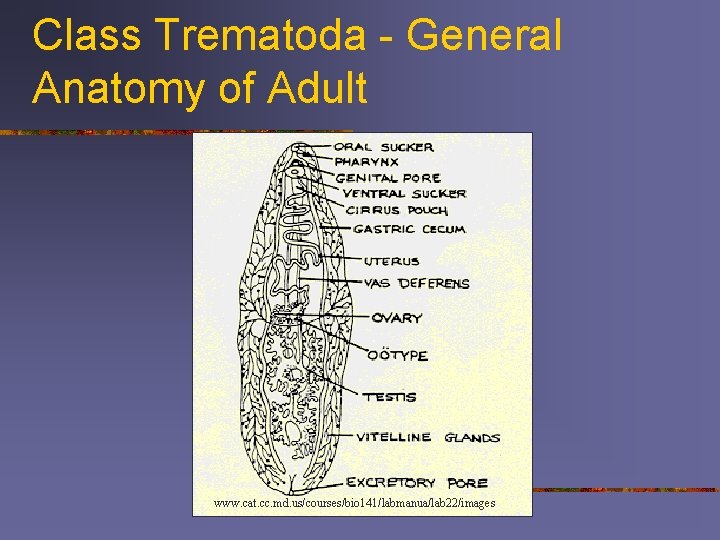
www. cat. cc. md. us/courses/bio 141/labmanua/lab 22/images Class Trematoda - General Anatomy of Adult www. cat. cc. md. us/courses/bio 141/labmanua/lab 22/images
Class Trematoda – Life Cycles n Chinese Liver Fluke (Opisthorchis or Clonorchis) n n n Infests 20 million E. Asians Adult ~ 2. 5 cm in length Live 8 yrs Produce 4000 eggs per day for 6 mo Symptoms: Jaundice, gallstones, debilitation and liver cancer
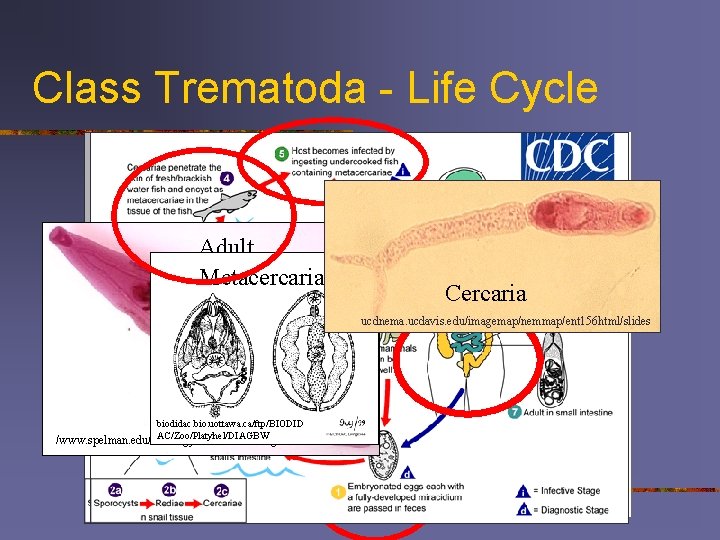
Class Trematoda - Life Cycle Amplification Sporocyst Redia Adult Metacercaria Miracidium Cercaria ucdnema. ucdavis. edu/imagemap/nemmap/ent 156 html/slides www. cdc. gov/ncidod/eid/vol 5 no 5/images www. biology. ualberta. ca/courses. hp/zool 250/Labs/Lab 05 / bio. winona. msus. edu/bates/Parasitology/Images/ biodidac. bio. uottawa. ca/ftp/BIODID AC/Zoo/Platyhel/DIAGBW /www. spelman. edu/~biology/bio 112/lab/images Cercaria ucdnema. ucdavis. edu/imagemap/nemmap/ent 15 6 html/slides
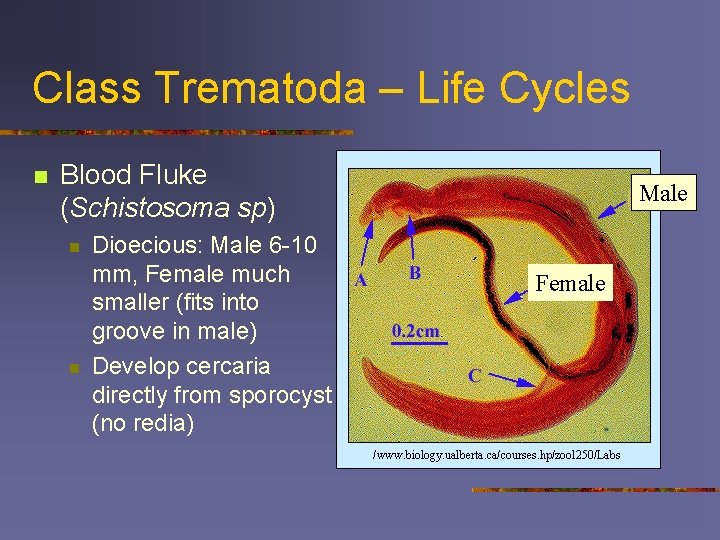
Class Trematoda – Life Cycles n Blood Fluke (Schistosoma sp) n n Dioecious: Male 6 -10 mm, Female much smaller (fits into groove in male) Develop cercaria directly from sporocyst (no redia) Male Female /www. biology. ualberta. ca/courses. hp/zool 250/Labs
Class Trematoda - Reproduction n n Why is amplification important? What impact might the multiple host strategy of the parasite have on the hosts?
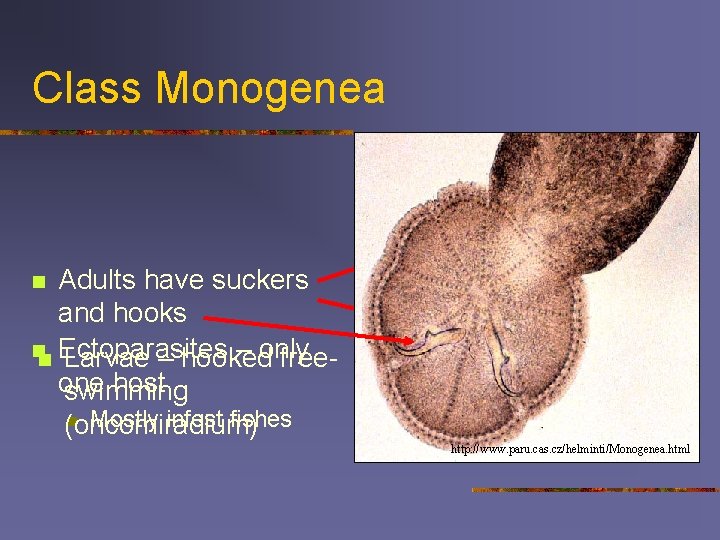
Class Monogenea www. pubs. royalsoc. ac. uk/proc_bio_content/images/ Adults have suckers and hooks nn Ectoparasites – only Larvae – hooked freeone host swimming n bioweb. uwlax. edu/zoolab/Table_of_Cont ents/Lab-4 a/Class_Monogenea n Mostly infest fishes (oncomiradium) http: //www. paru. cas. cz/helminti/Monogenea. html
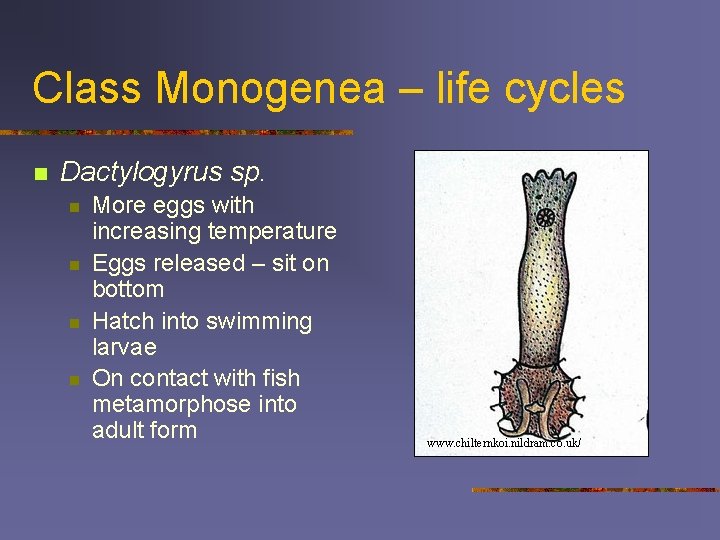
Class Monogenea – life cycles n Dactylogyrus sp. n n More eggs with increasing temperature Eggs released – sit on bottom Hatch into swimming larvae On contact with fish metamorphose into adult form www. chilternkoi. nildram. co. uk/
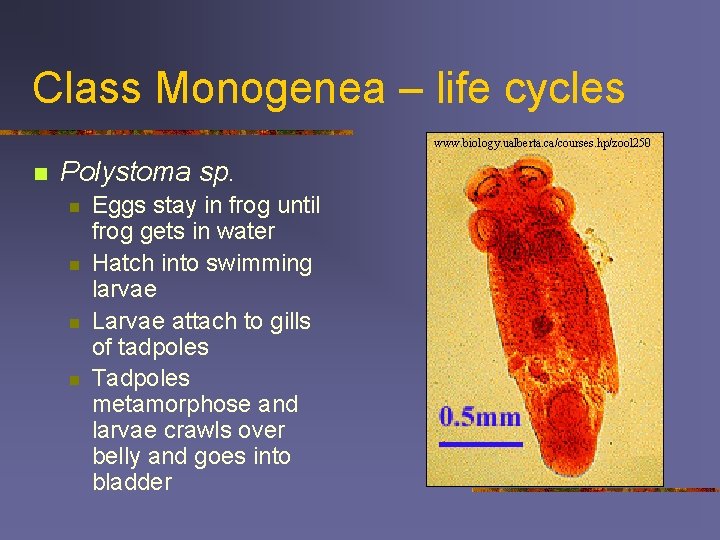
Class Monogenea – life cycles www. biology. ualberta. ca/courses. hp/zool 250 n Polystoma sp. n n Eggs stay in frog until frog gets in water Hatch into swimming larvae Larvae attach to gills of tadpoles Tadpoles metamorphose and larvae crawls over belly and goes into bladder
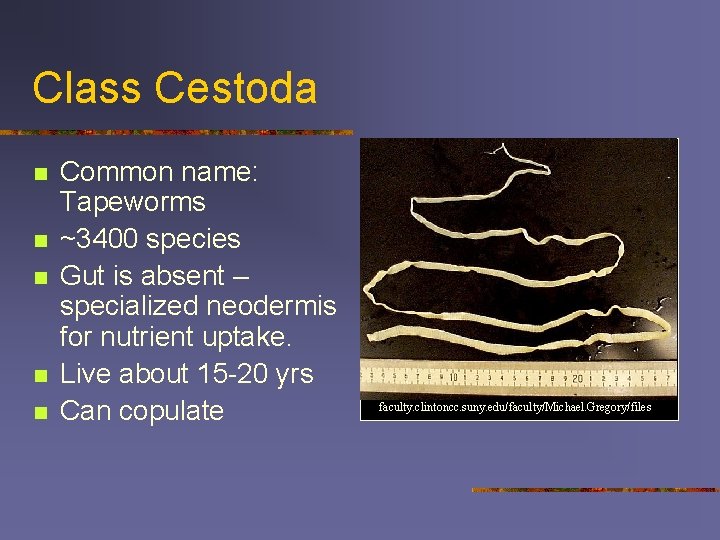
Class Cestoda n n n Common name: Tapeworms ~3400 species Gut is absent – specialized neodermis for nutrient uptake. Live about 15 -20 yrs Can copulate faculty. clintoncc. suny. edu/faculty/Michael. Gregory/files
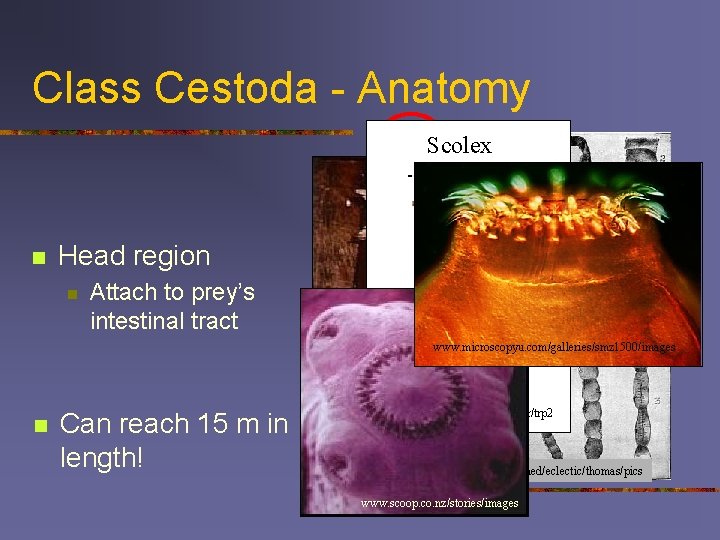
Class Cestoda - Anatomy Scolex news. bbc. co. uk/media/images/ Hooks Suckers n Head region n Attach to prey’s intestinal tract Neck www. microscopyu. com/galleries/smz 1500/images n Can reach 15 m in length! www. personal. psu. edu/users/t/r/trp 2 www. ibiblio. org/herbmed/eclectic/thomas/pics www. scoop. co. nz/stories/images
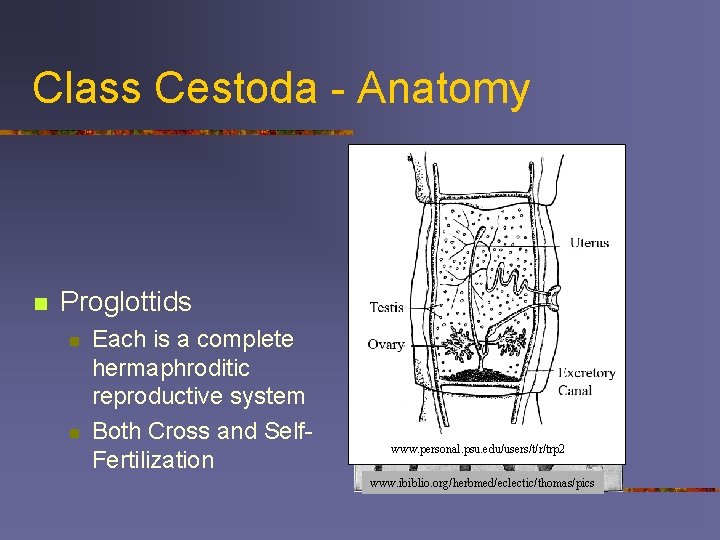
Class Cestoda - Anatomy biodidac. bio. uottawa. ca/ftp/BIODIDA C/ZOO/PLATYHEL/PHOTO/ n Proglottids n n Each is a complete hermaphroditic reproductive system Both Cross and Self. Fertilization www. personal. psu. edu/users/t/r/trp 2 www. ibiblio. org/herbmed/eclectic/thomas/pics
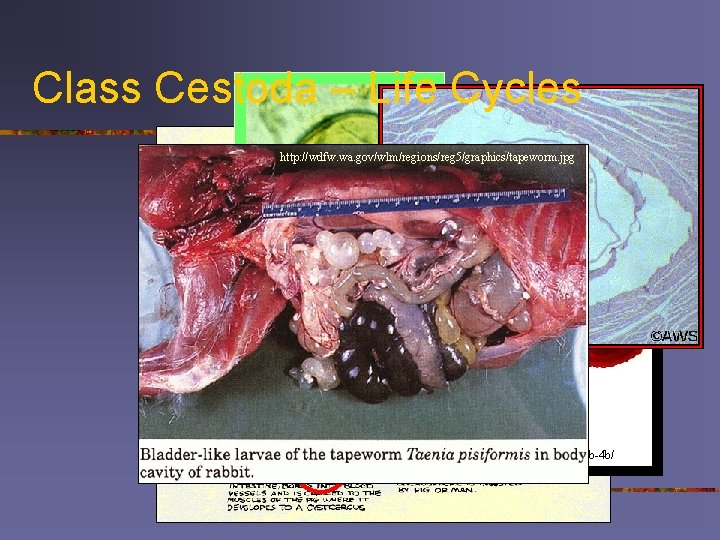
Class Cestoda – Life Cycles biodidac. bio. uottawa. ca/ftp/BIODIDAC/Z http: //wdfw. wa. gov/wlm/regions/reg 5/graphics/tapeworm. jpg OO/PLATYHEL/PH OTO/ www. path. cam. ac. uk/~schisto/Pict ures/Eggs/Other_helminth_eggs bioweb. uwlax. edu/zoolab/Table_of_Contents/Lab-4 b/
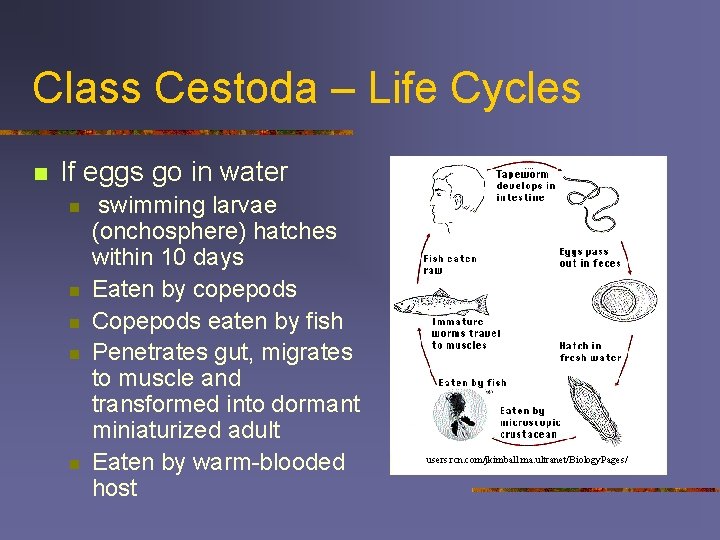
Class Cestoda – Life Cycles n If eggs go in water n n n swimming larvae (onchosphere) hatches within 10 days Eaten by copepods Copepods eaten by fish Penetrates gut, migrates to muscle and transformed into dormant miniaturized adult Eaten by warm-blooded host users. rcn. com/jkimball. ma. ultranet/Biology. Pages/
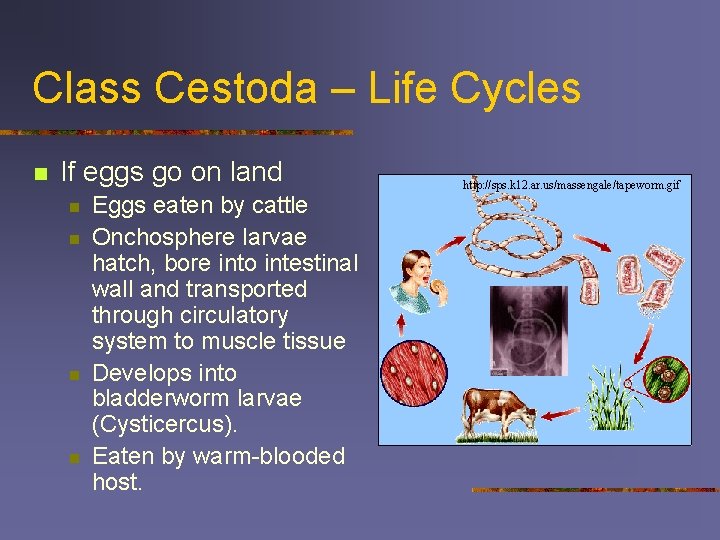
Class Cestoda – Life Cycles n If eggs go on land n n Eggs eaten by cattle Onchosphere larvae hatch, bore into intestinal wall and transported through circulatory system to muscle tissue Develops into bladderworm larvae (Cysticercus). Eaten by warm-blooded host. http: //sps. k 12. ar. us/massengale/tapeworm. gif
Class Cestoda n n Causes Diarrhea, Weight loss and inflammation Biggest problem is accidental infestations n n Bladder worm will develop into tissue other than muscle. Cyst can contain liters of fluid which could cause severe infection if released
- Slides: 24