
Zone 5 Southern 2016 Bahiagrass Referee Results Paspalum
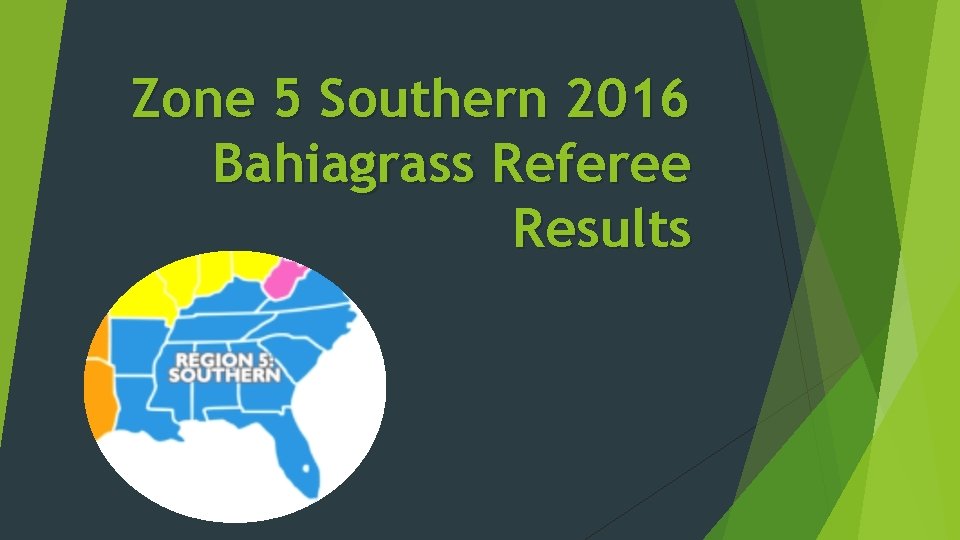
Zone 5 Southern 2016 Bahiagrass Referee Results
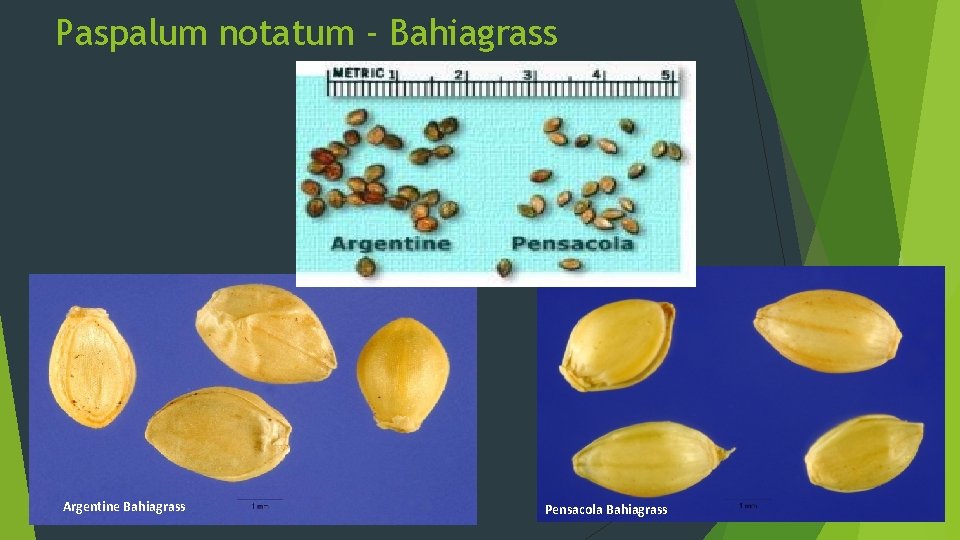
Paspalum notatum - Bahiagrass Argentine Bahiagrass Pensacola Bahiagrass
Background Pensacola and Argentine Bahiagrass (Paspalum notatum Flugge) are forage grasses commonly grown in the Southeastern U. S. Thick outer seed coats that cause difficulty determining endosperm presence, high occurrence of ergotized seed and subsequent high percentages of inert matter present unique seed testing concerns when conducting purity analysis on these species. Recent coating or encrusting of Bahiagrass has only added to testing challenges and lack of uniformity between labs. The occurrence of a species of Paspalum (Brunswickgrass; Paspalum nicorae) which is undesirable as forage to cattle and commonly misidentified in Southeastern fields has also created concern in the Seed Industry and the need for uniform identification of this objectionable weed species.
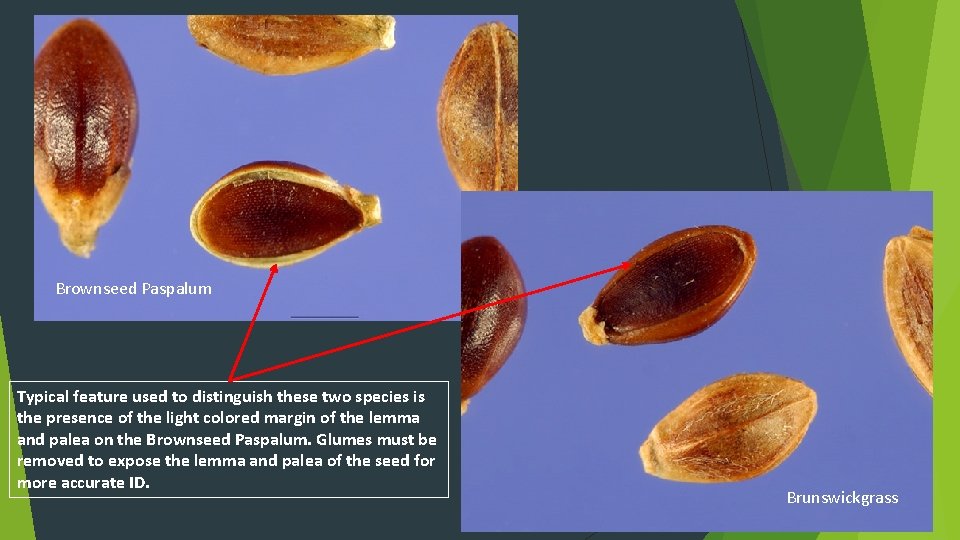
Brownseed Paspalum Typical feature used to distinguish these two species is the presence of the light colored margin of the lemma and palea on the Brownseed Paspalum. Glumes must be removed to expose the lemma and palea of the seed for more accurate ID. Brunswickgrass
Proposal Addressing the concerns outlined in the Background Section, it was proposed by the Zone 5 Southern referee committee to initiate a referee consisting of four samples of Bahiagrass, two Pensacola and two Argentine, one coated and one raw. Each sample contained Brunswickgrass as the purity referee. A germination test was also conducted by each participating seed lab as a referee project.
Procedure Each participating lab was sent four Bahiagrass samples for Purity and Germination testing. There were two 25 g. coated samples and two 10 g. raw samples one each Pensacola and Argentine. The AOSA Rules for Testing Seeds Volume 1 section 6. 8 b. special procedures for Argentine instruct to remove the enclosing structures (glumes, lemma & palea) commonly known as a hand peel, to expose caryopsis for germination testing. Chemical (aka acid) scarification could also be used if that was your normal testing method.
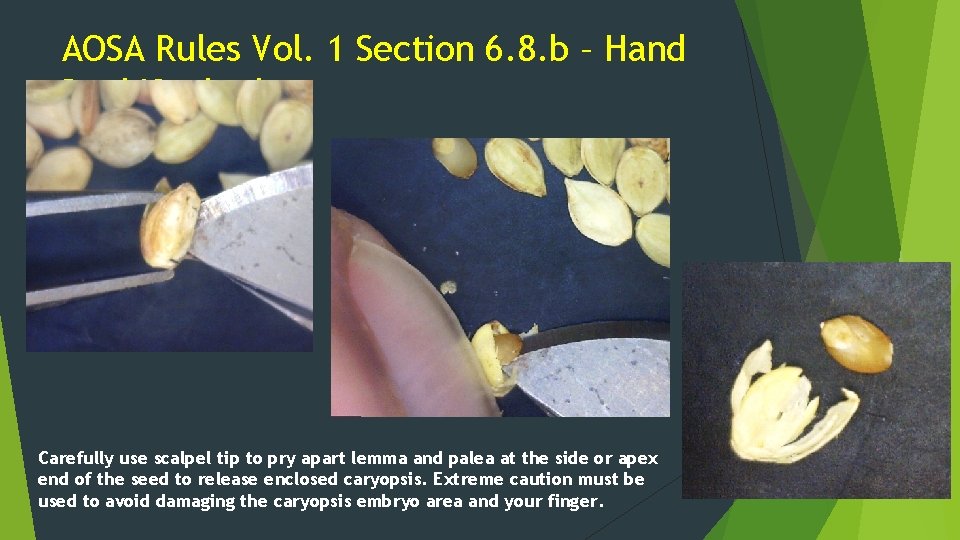
AOSA Rules Vol. 1 Section 6. 8. b – Hand Peel/Scalpel Carefully use scalpel tip to pry apart lemma and palea at the side or apex end of the seed to release enclosed caryopsis. Extreme caution must be used to avoid damaging the caryopsis embryo area and your finger.
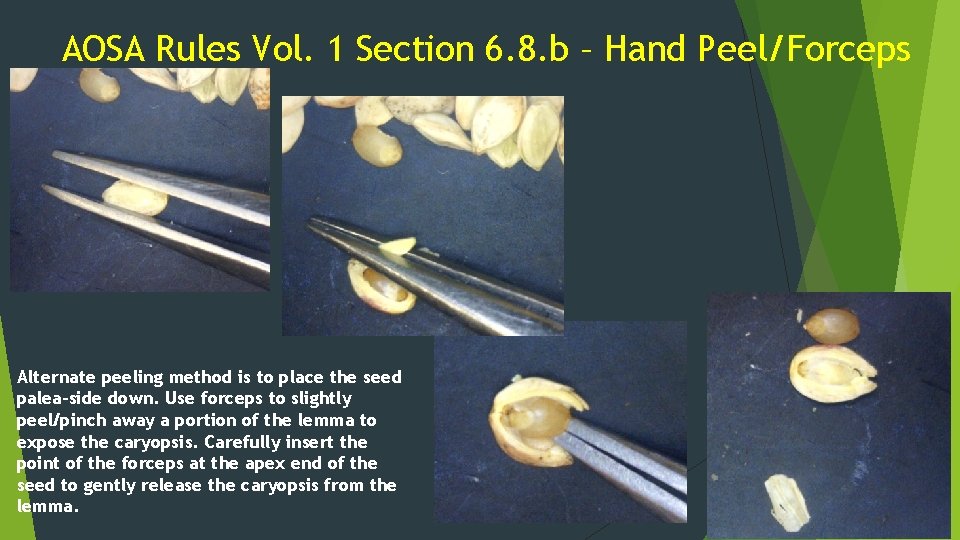
AOSA Rules Vol. 1 Section 6. 8. b – Hand Peel/Forceps Alternate peeling method is to place the seed palea-side down. Use forceps to slightly peel/pinch away a portion of the lemma to expose the caryopsis. Carefully insert the point of the forceps at the apex end of the seed to gently release the caryopsis from the lemma.
Procedure The coated Bahiagrass samples were tested coated for germination and de-coated prior to purity testing to determine coating percentage as a portion of the inert matter. Included in the Zone 5 referee were seeds of Brunswickgrass (Paspalum nicorae Parodi), a common weed frequently misidentified as Brownseed Paspalum (Paspalum plicatulum Michx. ). This species is undesirable to cattle and has become prevalent and problematic in Bahiagrass fields in the Southeastern USA. The intent of including Brunswickgrass in this referee was to familiarize analysts with this objectionable weed species and to create uniform occurrence reporting as number pound on all Bahiagrass samples tested from this point forward.

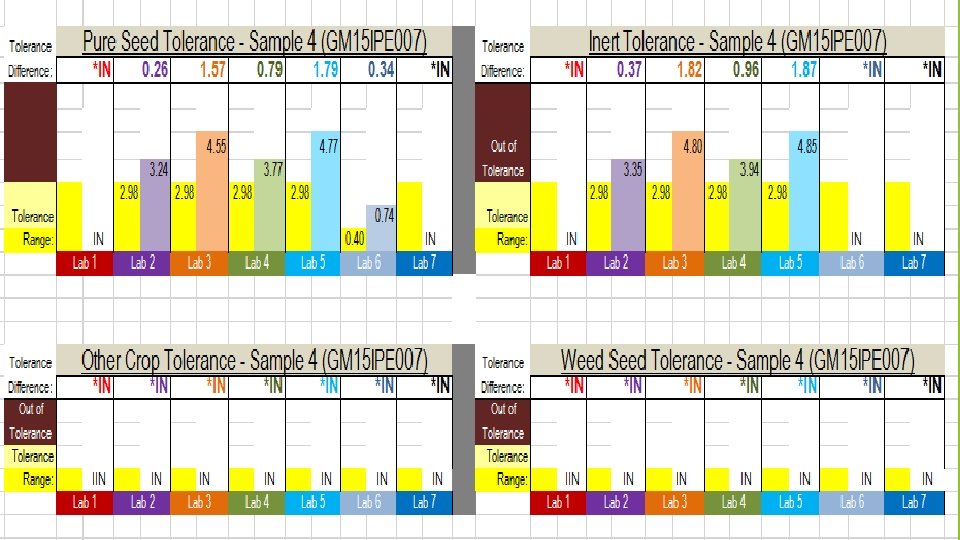
RESULTS
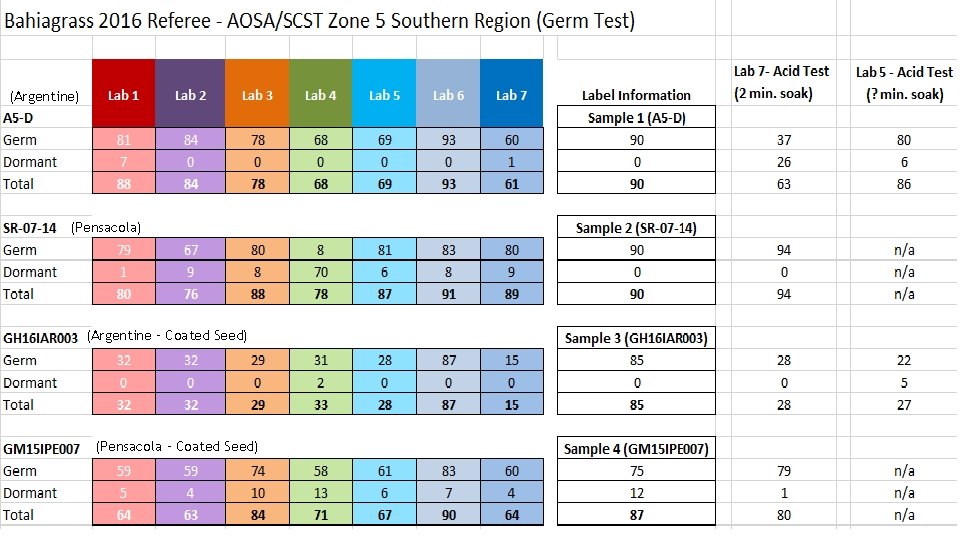
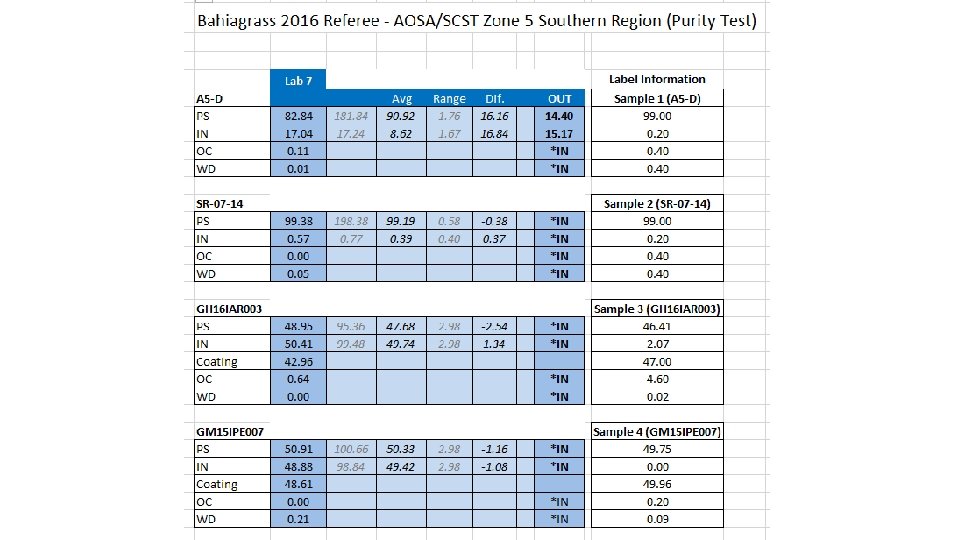
(Argentine) (Pensacola) (Argentine – Coated Seed) (Pensacola – Coated Seed)
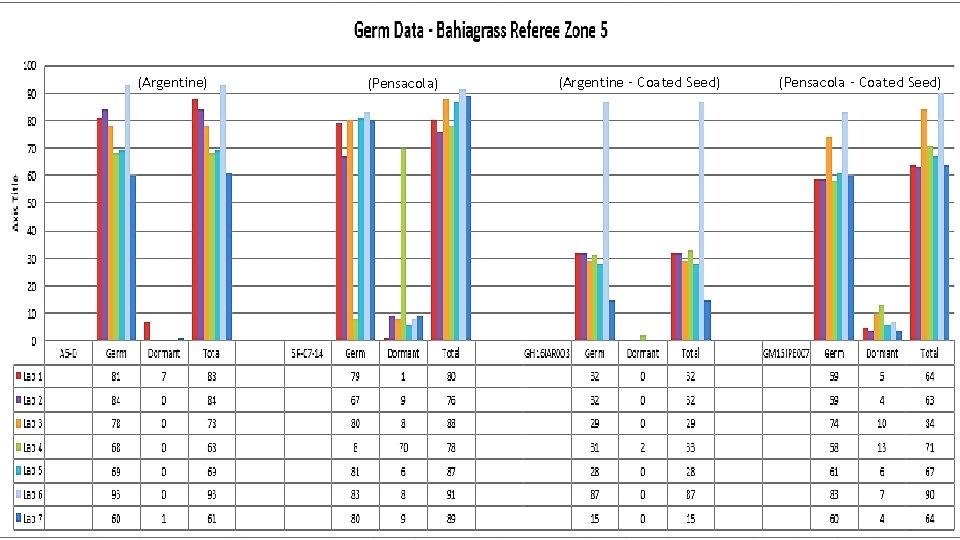
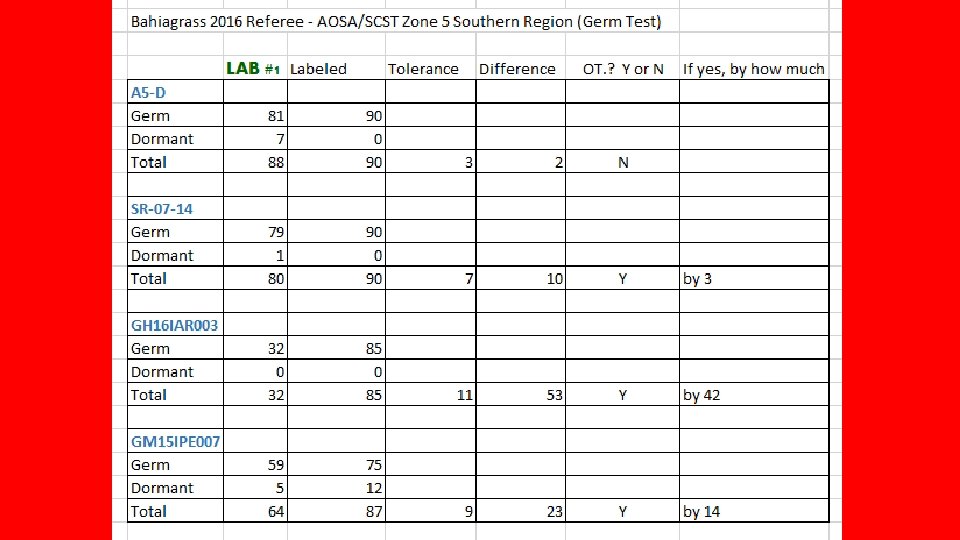
(Argentine) (Pensacola) (Argentine – Coated Seed) (Pensacola – Coated Seed)
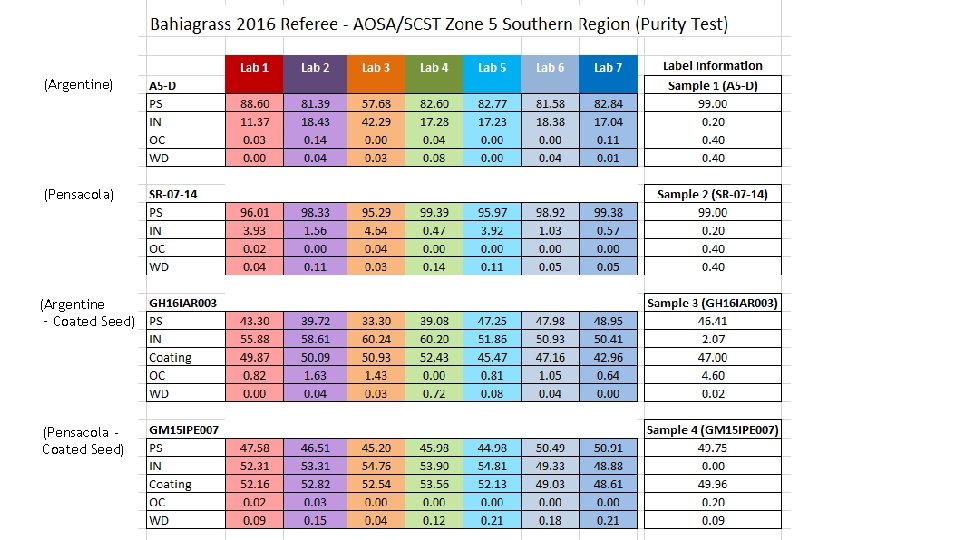
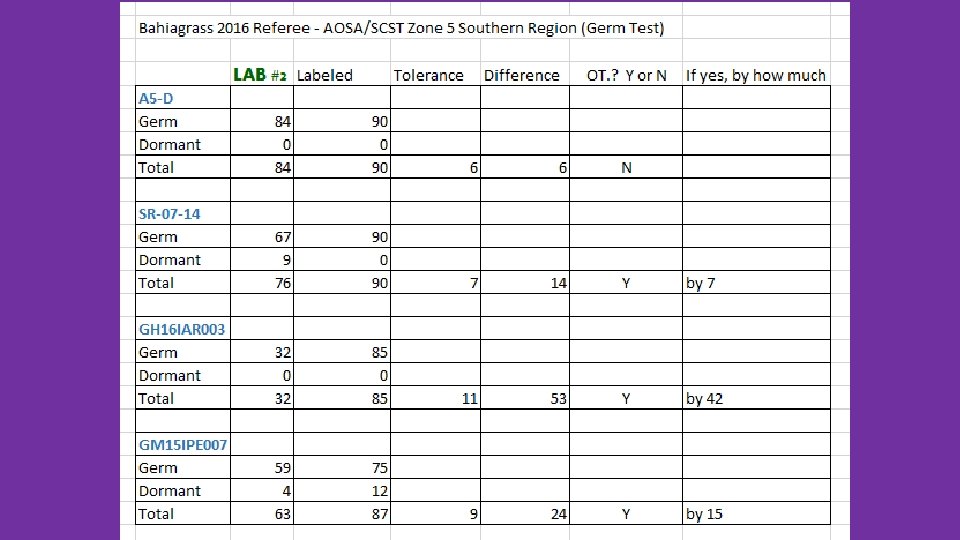
(Argentine) (Pensacola) (Argentine – Coated Seed) (Pensacola Coated Seed)
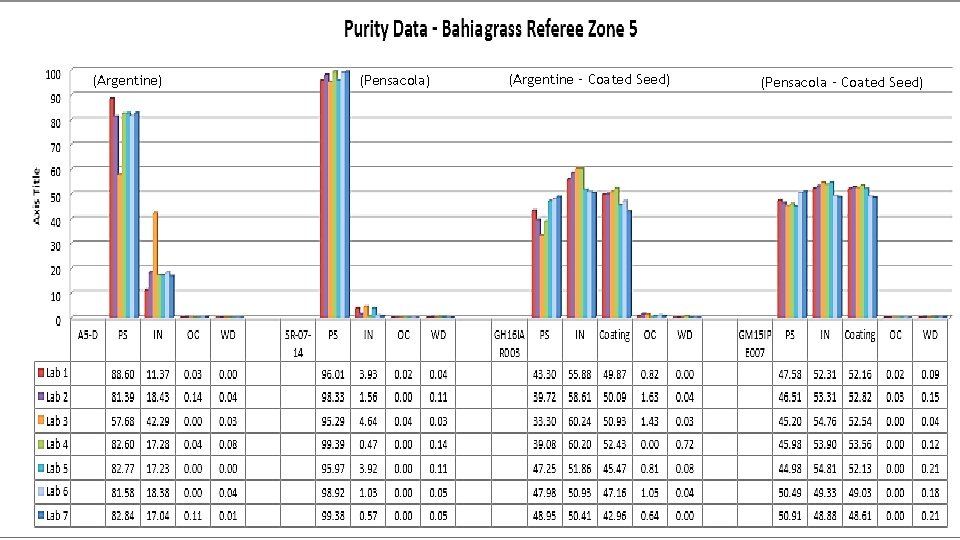
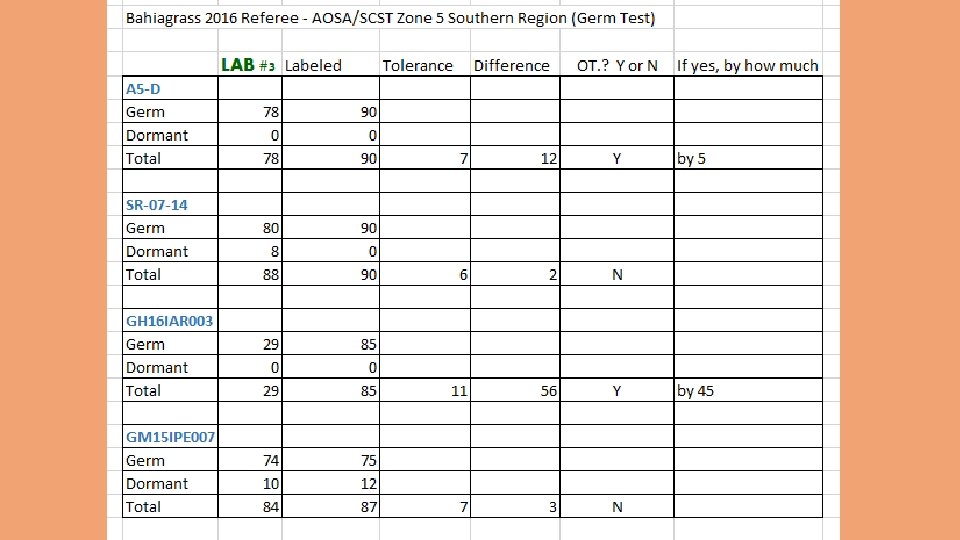
(Argentine) (Pensacola) (Argentine – Coated Seed) (Pensacola – Coated Seed)
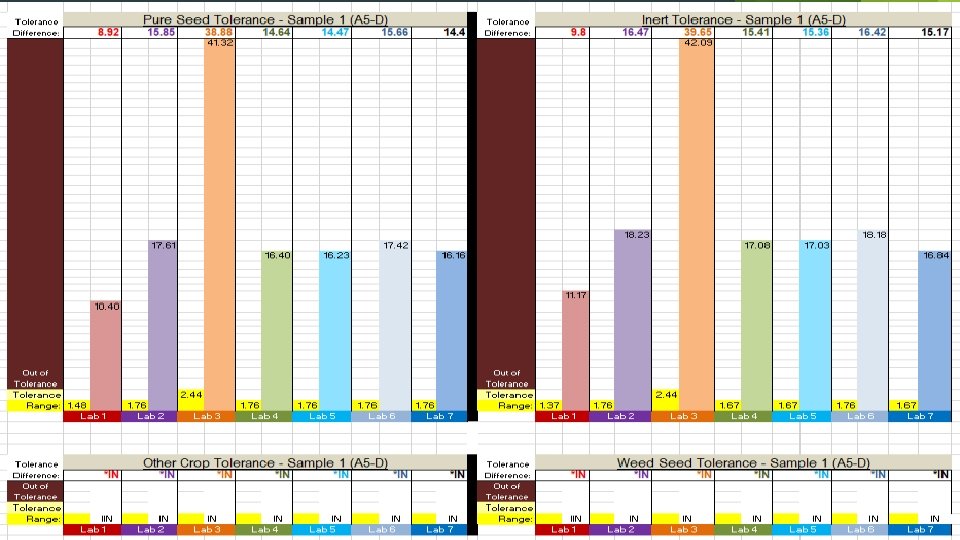
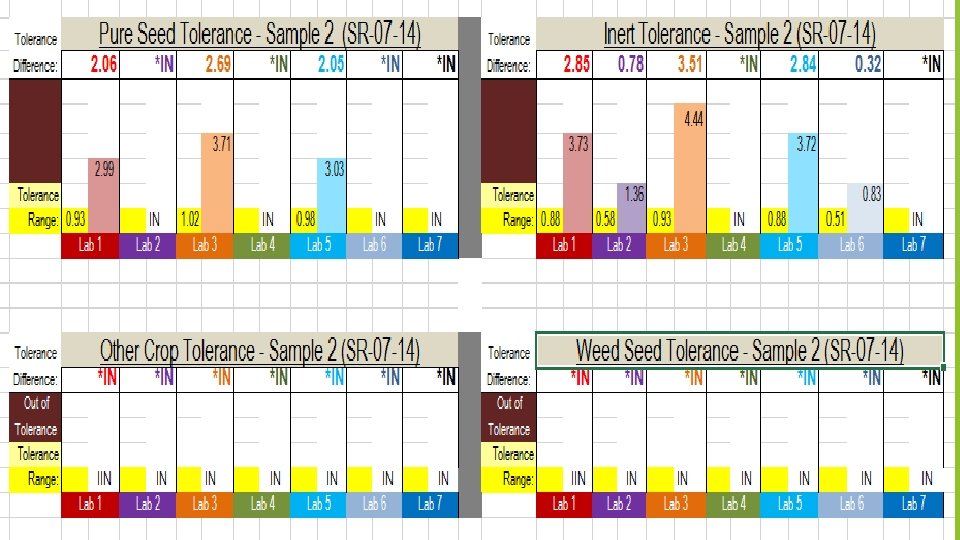
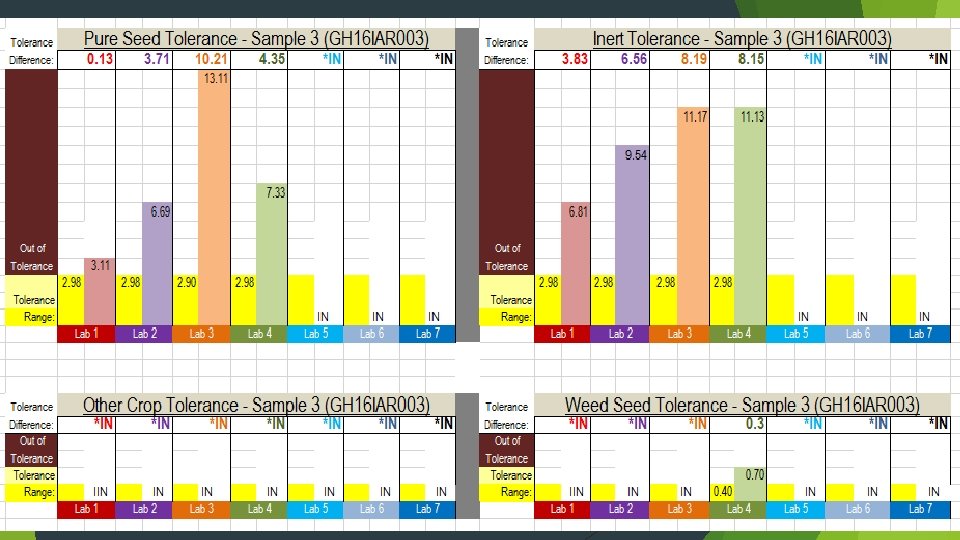
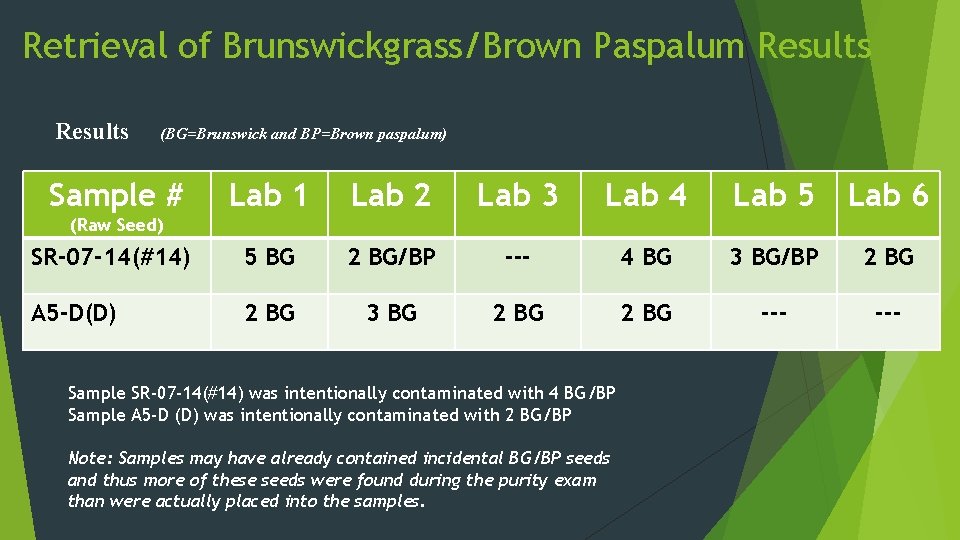
Retrieval of Brunswickgrass/Brown Paspalum Results (BG=Brunswick and BP=Brown paspalum) Sample # Lab 1 Lab 2 Lab 3 Lab 4 Lab 5 Lab 6 SR-07 -14(#14) 5 BG 2 BG/BP --- 4 BG 3 BG/BP 2 BG A 5 -D(D) 2 BG 3 BG 2 BG --- (Raw Seed) Sample SR-07 -14(#14) was intentionally contaminated with 4 BG/BP Sample A 5 -D (D) was intentionally contaminated with 2 BG/BP Note: Samples may have already contained incidental BG/BP seeds and thus more of these seeds were found during the purity exam than were actually placed into the samples.
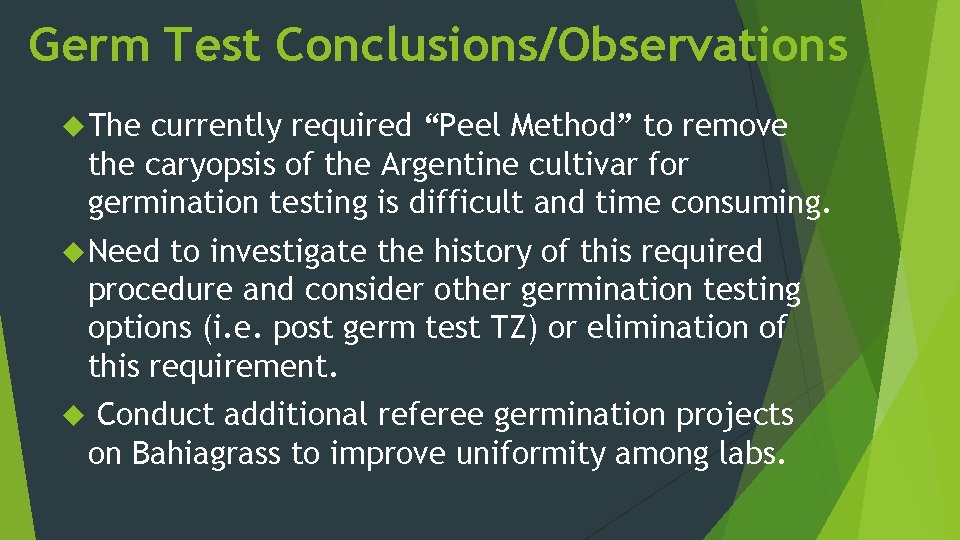
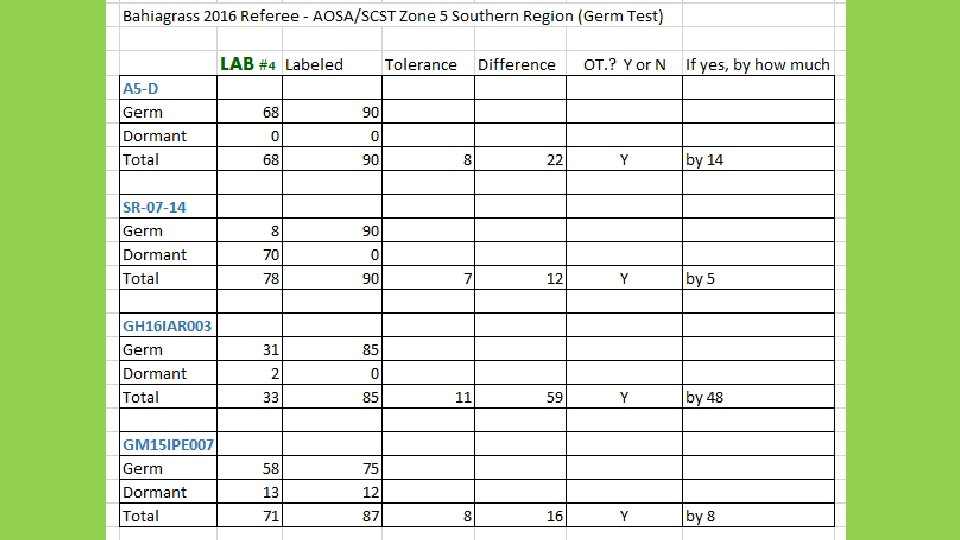
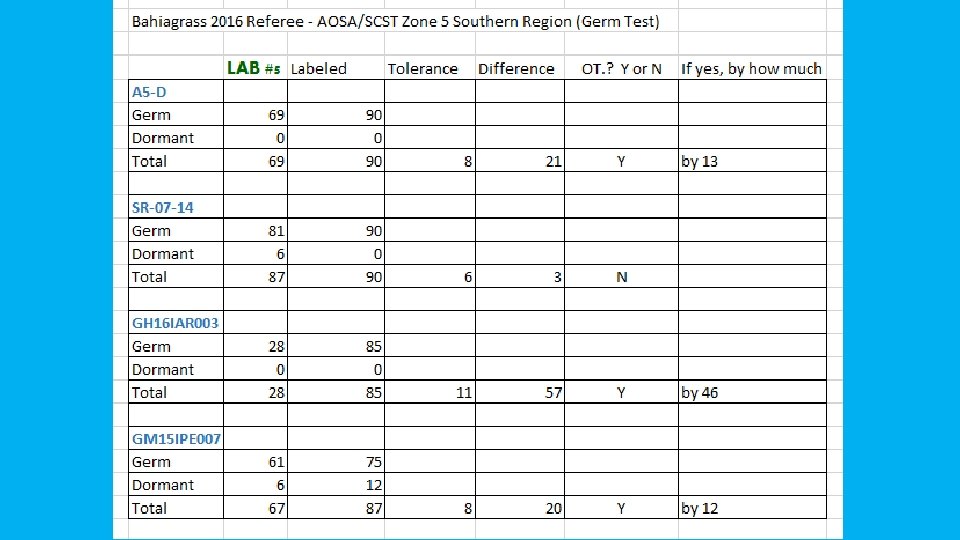
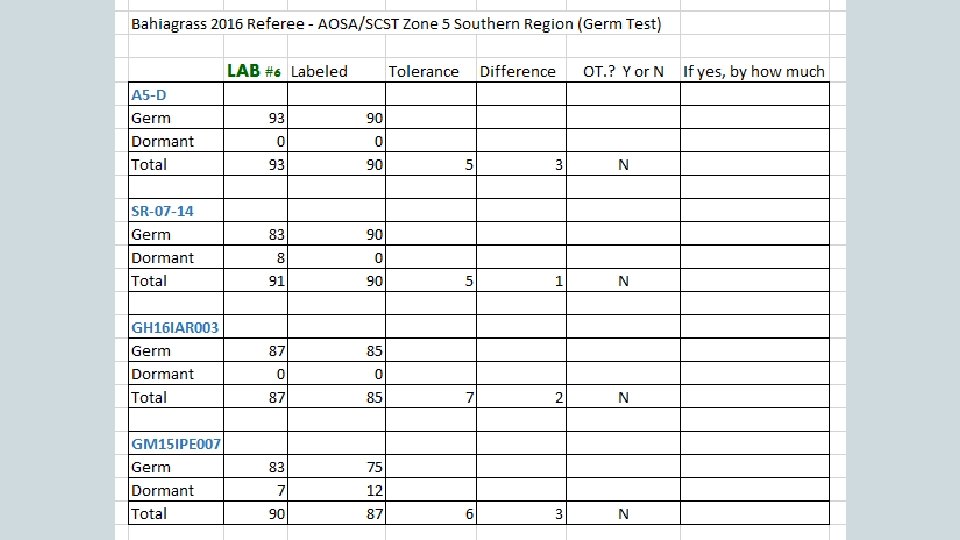
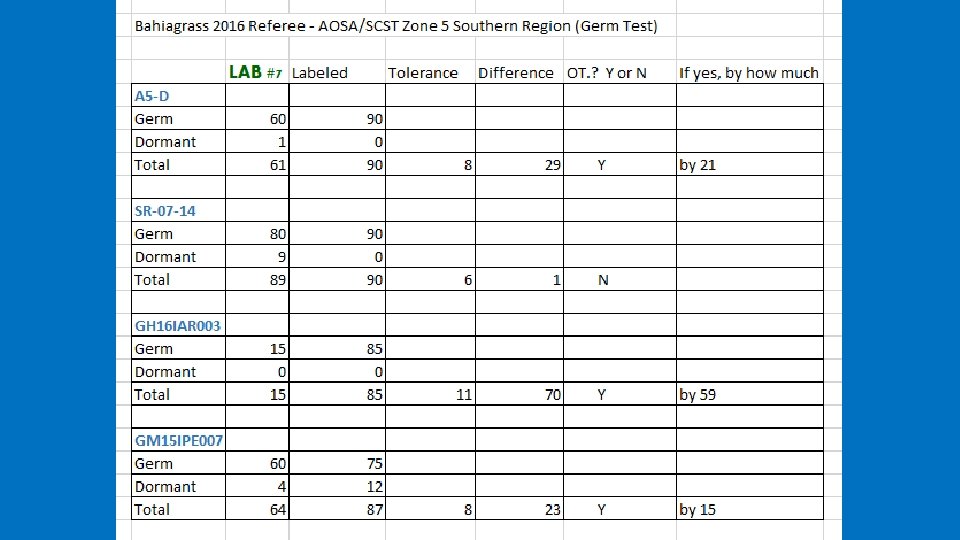
Germ Test Conclusions/Observations The currently required “Peel Method” to remove the caryopsis of the Argentine cultivar for germination testing is difficult and time consuming. Need to investigate the history of this required procedure and consider other germination testing options (i. e. post germ test TZ) or elimination of this requirement. Conduct additional referee germination projects on Bahiagrass to improve uniformity among labs.
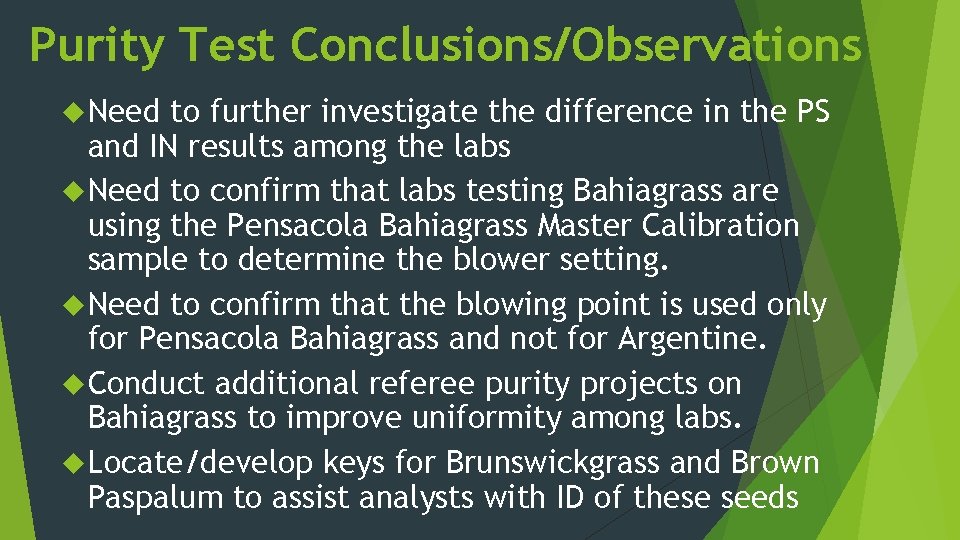
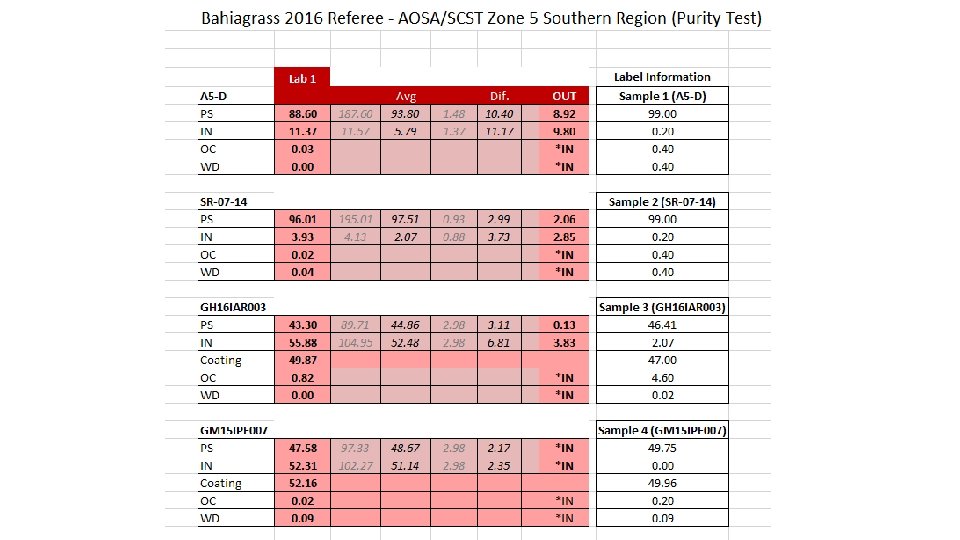
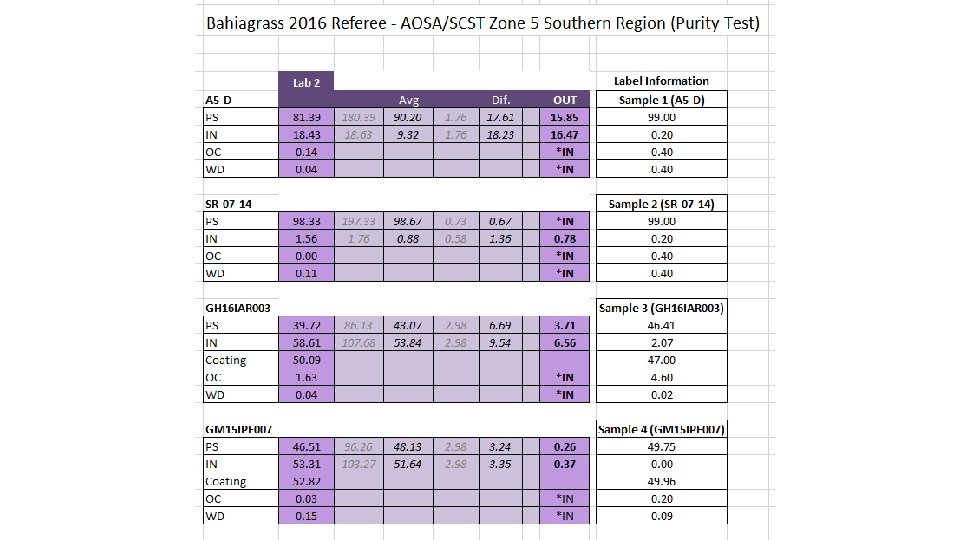
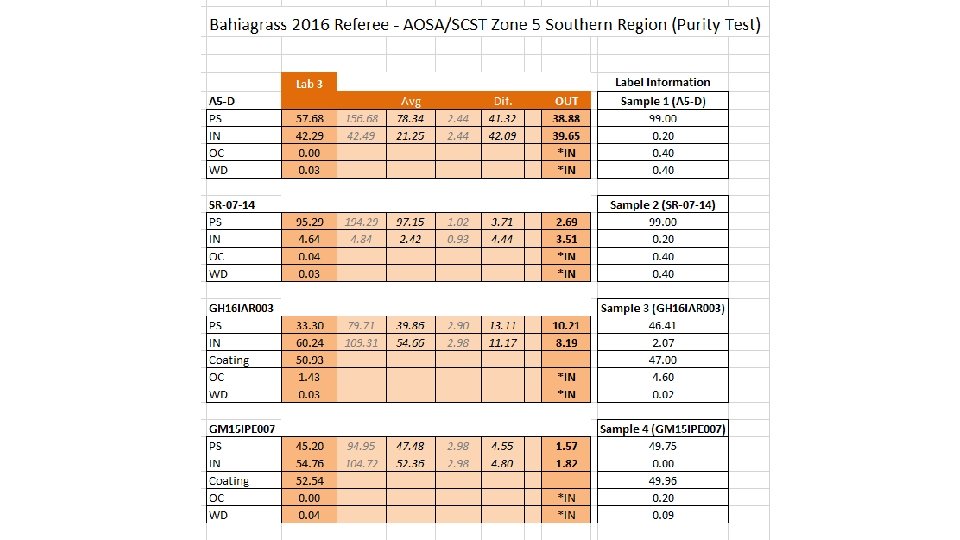
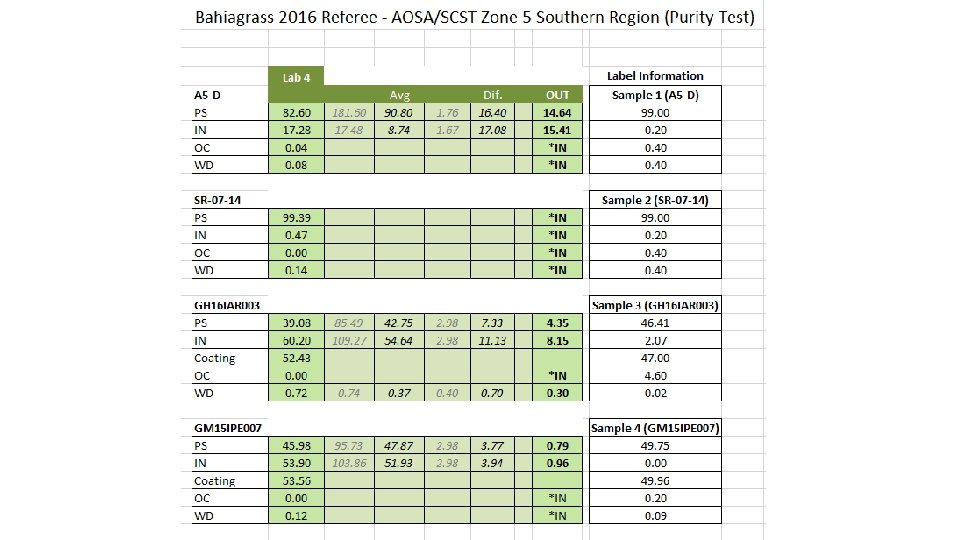
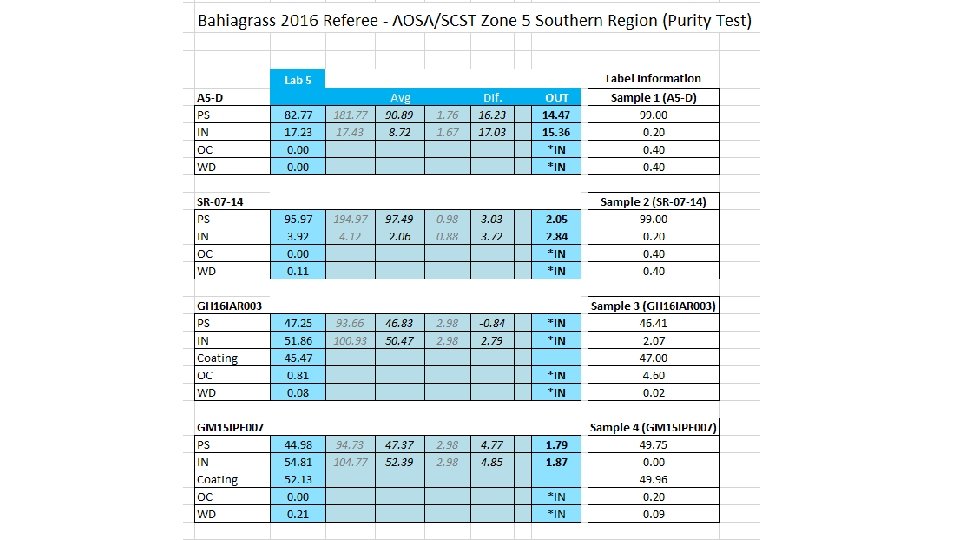
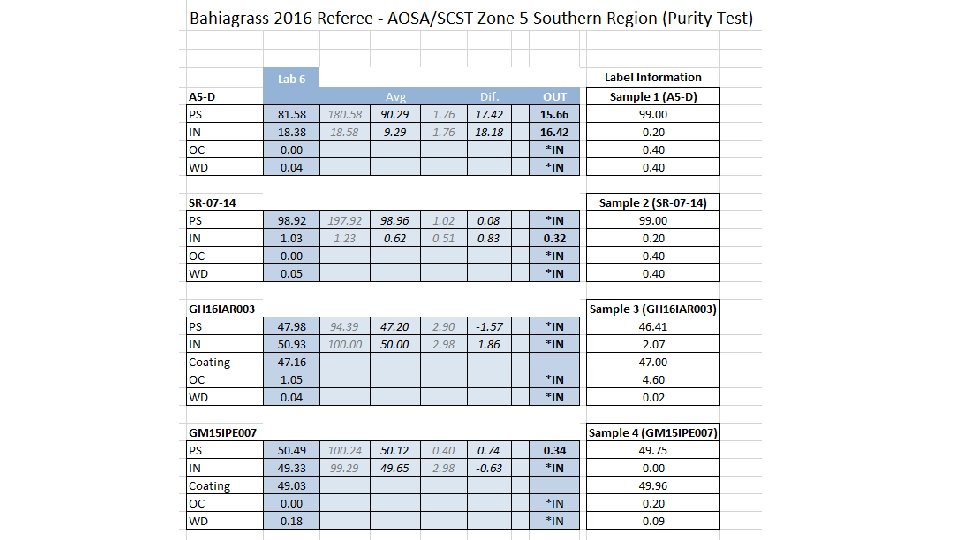
Purity Test Conclusions/Observations Need to further investigate the difference in the PS and IN results among the labs Need to confirm that labs testing Bahiagrass are using the Pensacola Bahiagrass Master Calibration sample to determine the blower setting. Need to confirm that the blowing point is used only for Pensacola Bahiagrass and not for Argentine. Conduct additional referee purity projects on Bahiagrass to improve uniformity among labs. Locate/develop keys for Brunswickgrass and Brown Paspalum to assist analysts with ID of these seeds
Thank you!!! Thank you for the hard work of all of the analyst.
The following slides contain individual lab results and other data to be published in the referee report.
- Slides: 37