
ZirconiumIV containing organic frameworks as a novel class


- Slides: 22
Zirconium(IV) containing organic frameworks as a novel class of artificial proteases Alexandra Loosen Laboratory of bio-inorganic chemistry - KULeuven
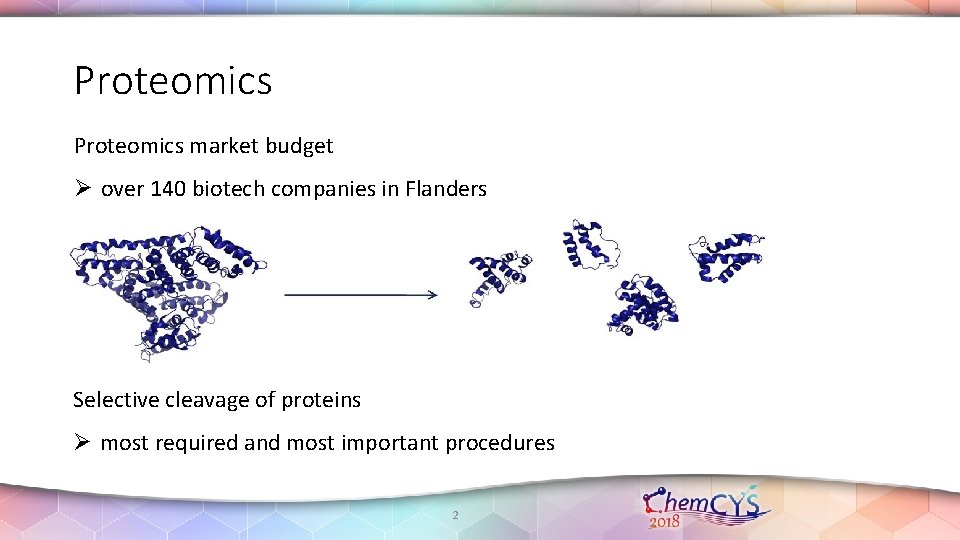
Proteomics market budget Ø over 140 biotech companies in Flanders Selective cleavage of proteins Ø most required and most important procedures 2
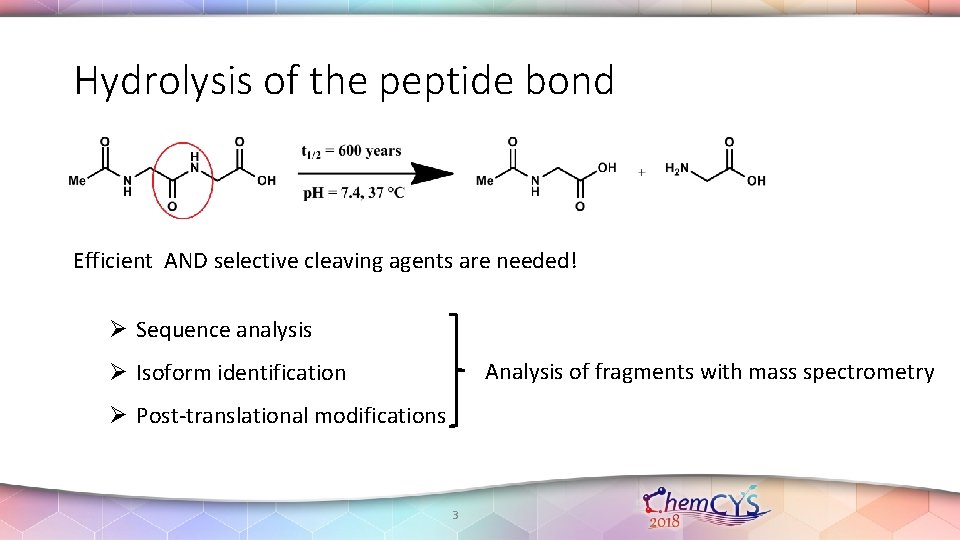
Hydrolysis of the peptide bond Efficient AND selective cleaving agents are needed! Ø Sequence analysis Analysis of fragments with mass spectrometry Ø Isoform identification Ø Post-translational modifications 3
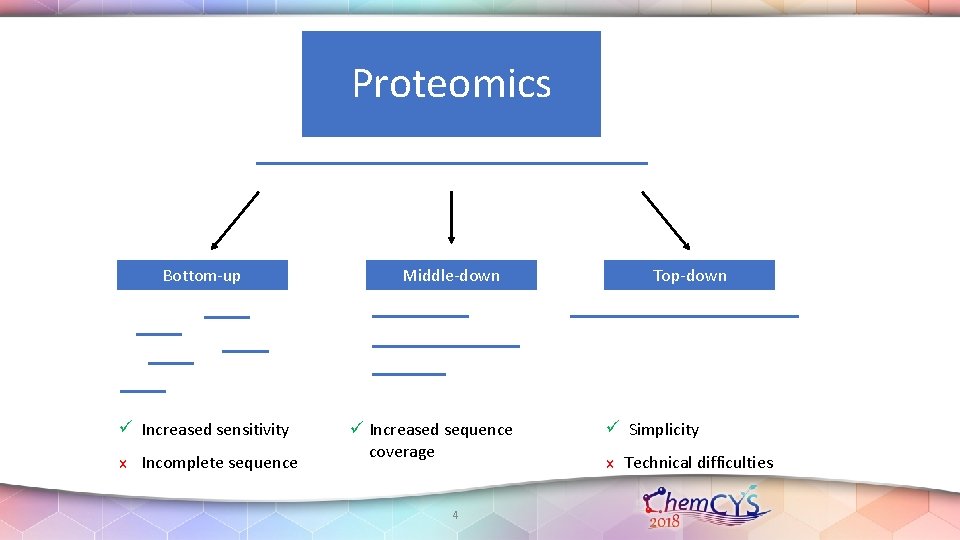
Proteomics Bottom-up ü Increased sensitivity x Incomplete sequence Middle-down ü Increased sequence coverage 4 Top-down ü Simplicity x Technical difficulties
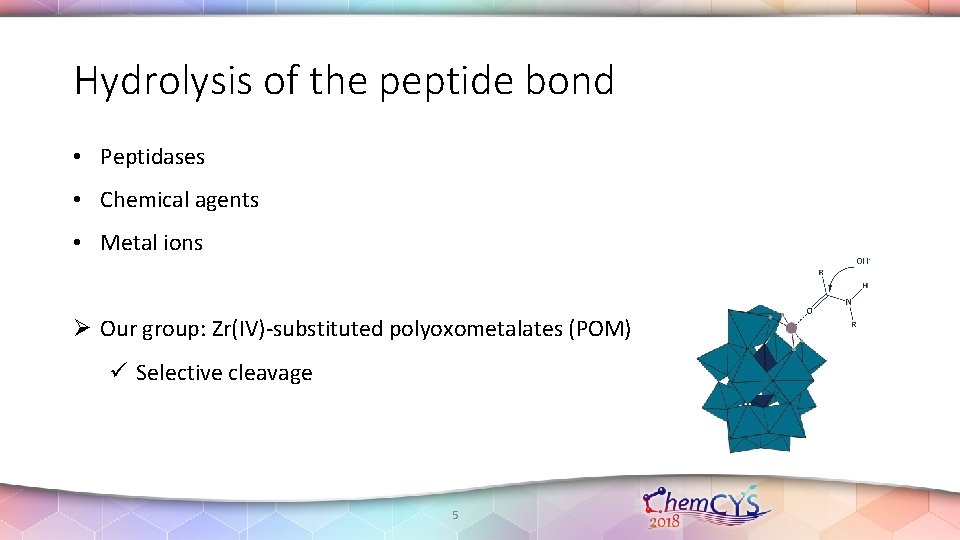
Hydrolysis of the peptide bond • Peptidases • Chemical agents • Metal ions Ø Our group: Zr(IV)-substituted polyoxometalates (POM) ü Selective cleavage 5
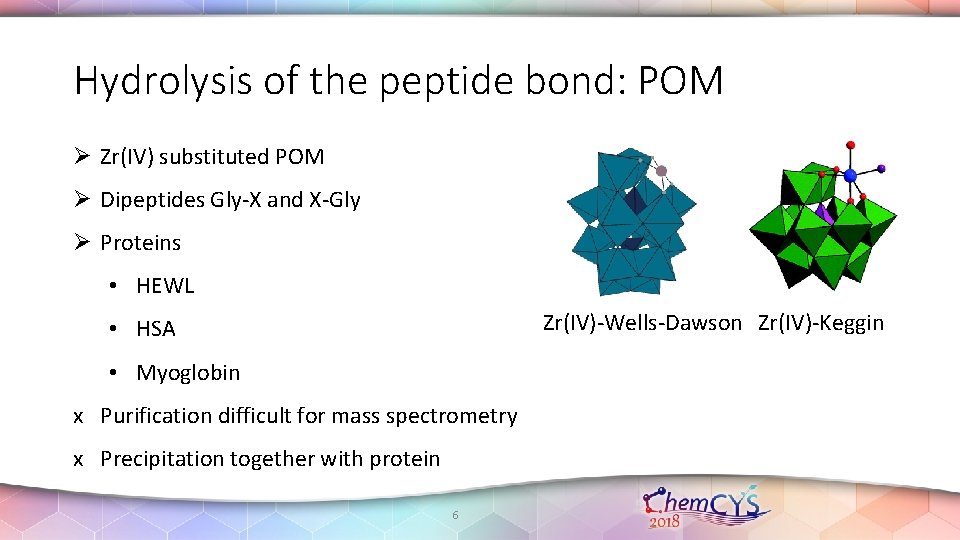
Hydrolysis of the peptide bond: POM Ø Zr(IV) substituted POM Ø Dipeptides Gly-X and X-Gly Ø Proteins • HEWL Zr(IV)-Wells-Dawson Zr(IV)-Keggin • HSA • Myoglobin x Purification difficult for mass spectrometry x Precipitation together with protein 6
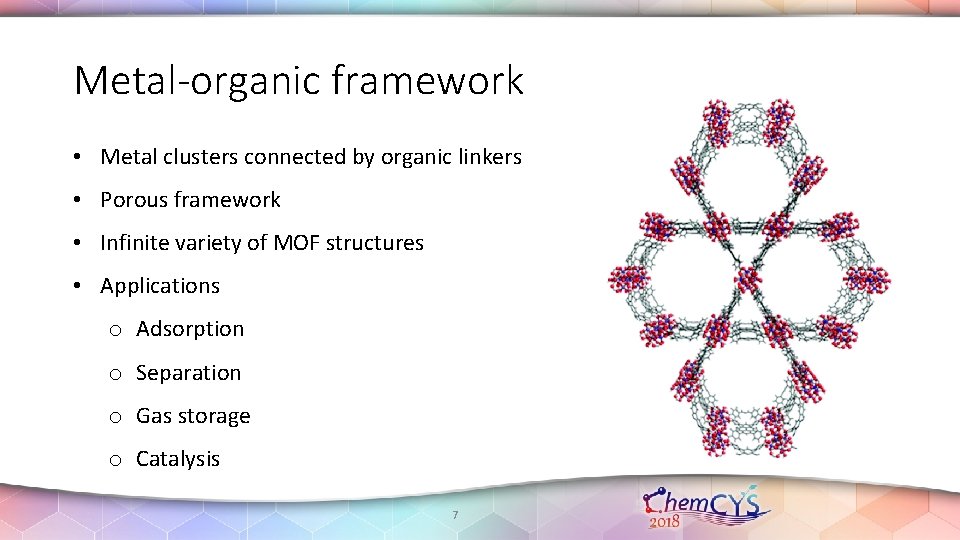
Metal-organic framework • Metal clusters connected by organic linkers • Porous framework • Infinite variety of MOF structures • Applications o Adsorption o Separation o Gas storage o Catalysis 7
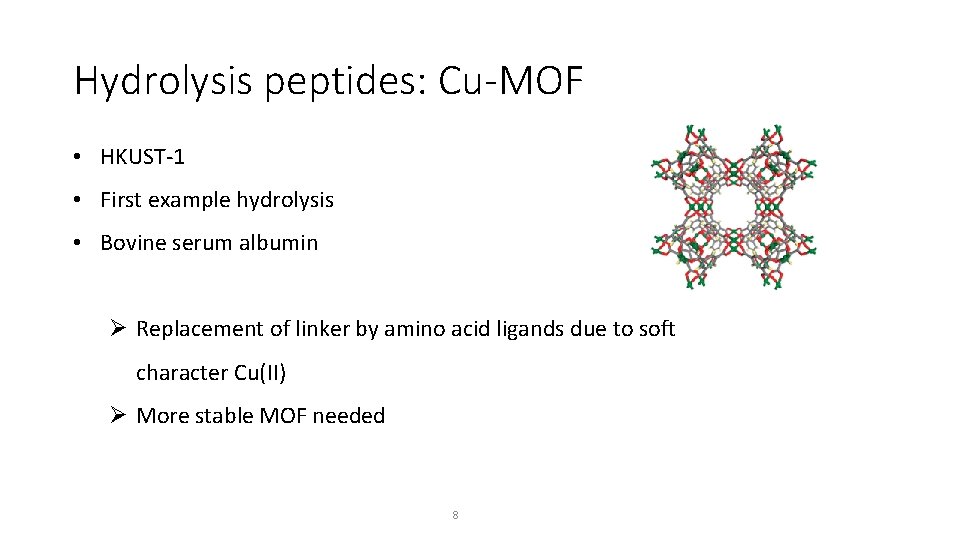
Hydrolysis peptides: Cu-MOF • HKUST-1 • First example hydrolysis • Bovine serum albumin Ø Replacement of linker by amino acid ligands due to soft character Cu(II) Ø More stable MOF needed 8
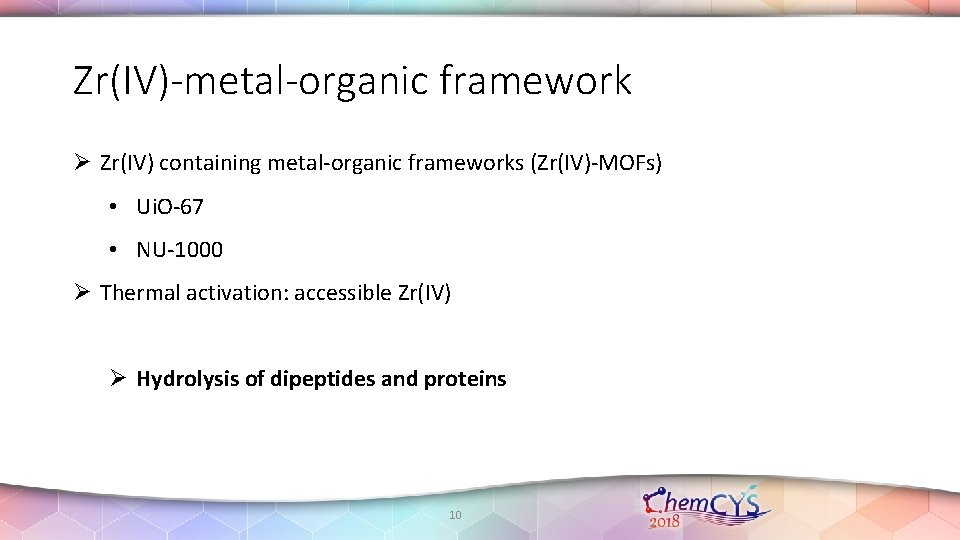
Zr(IV)-metal-organic framework Ø Zr(IV) • • Lewis acid High coordination number and flexible geometries Oxophilic Rapid ligand-exchange kinetics Ø Metal-organic framework • Heterogeneous catalysis: easy purification 9
Zr(IV)-metal-organic framework Ø Zr(IV) containing metal-organic frameworks (Zr(IV)-MOFs) • Ui. O-67 • NU-1000 Ø Thermal activation: accessible Zr(IV) Ø Hydrolysis of dipeptides and proteins 10
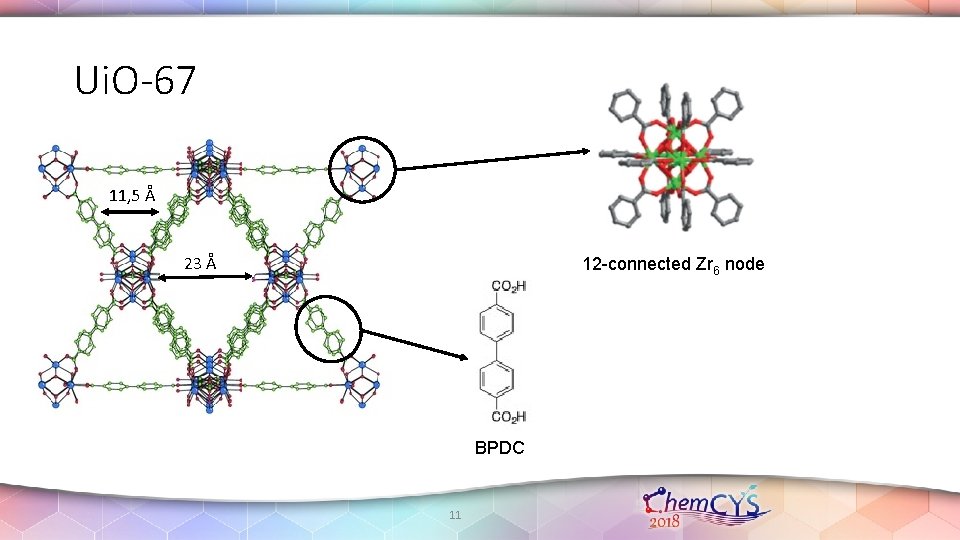
Ui. O-67 11, 5 Å 23 Å 12 -connected Zr 6 node BPDC 11
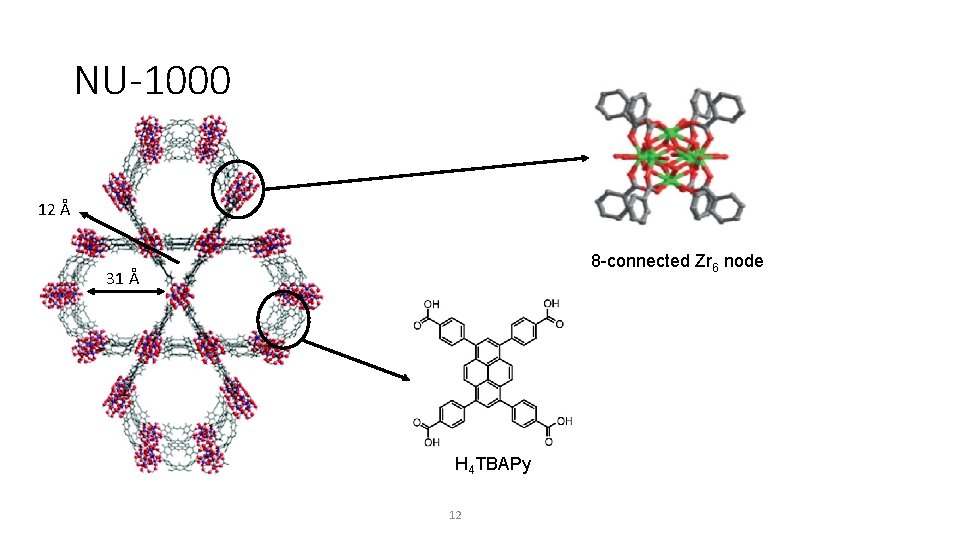
NU-1000 12 Å 8 -connected Zr 6 node 31 Å H 4 TBAPy 12
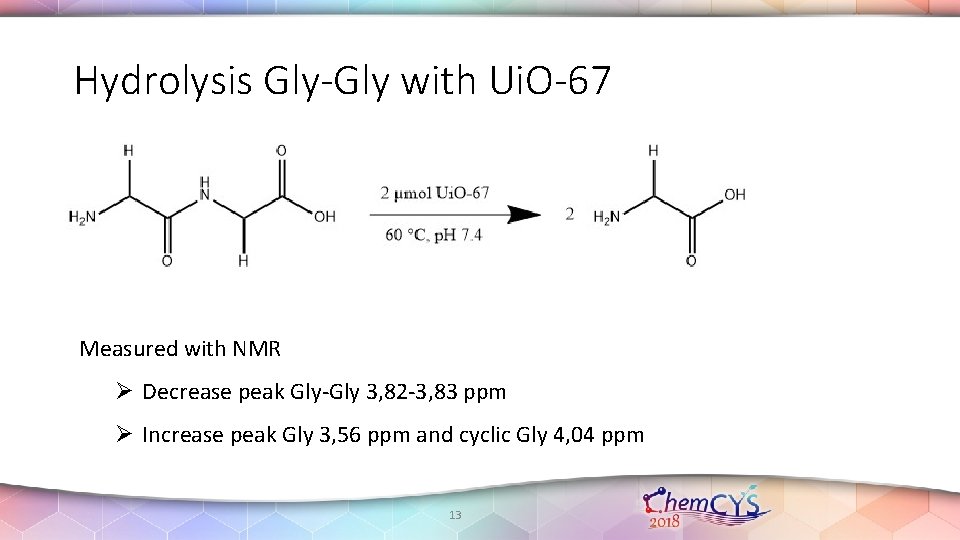
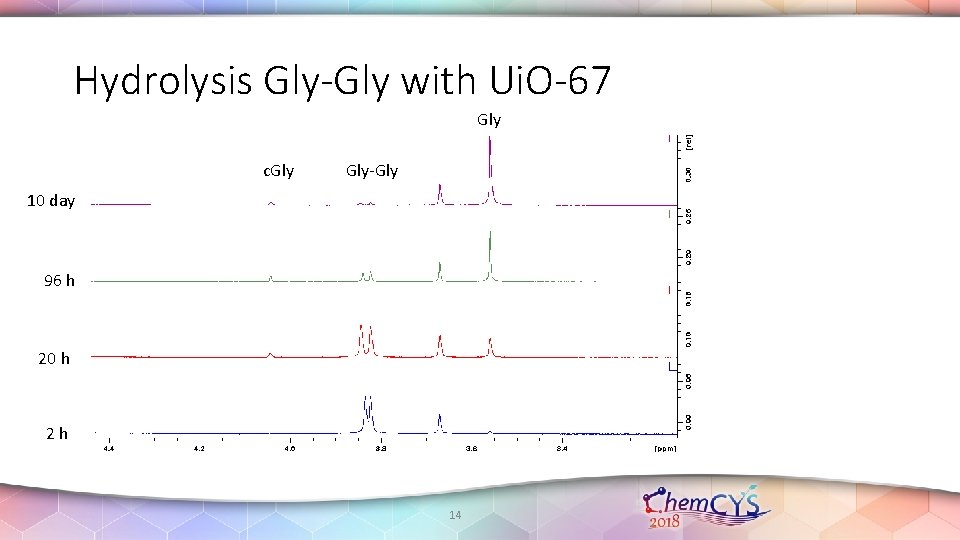
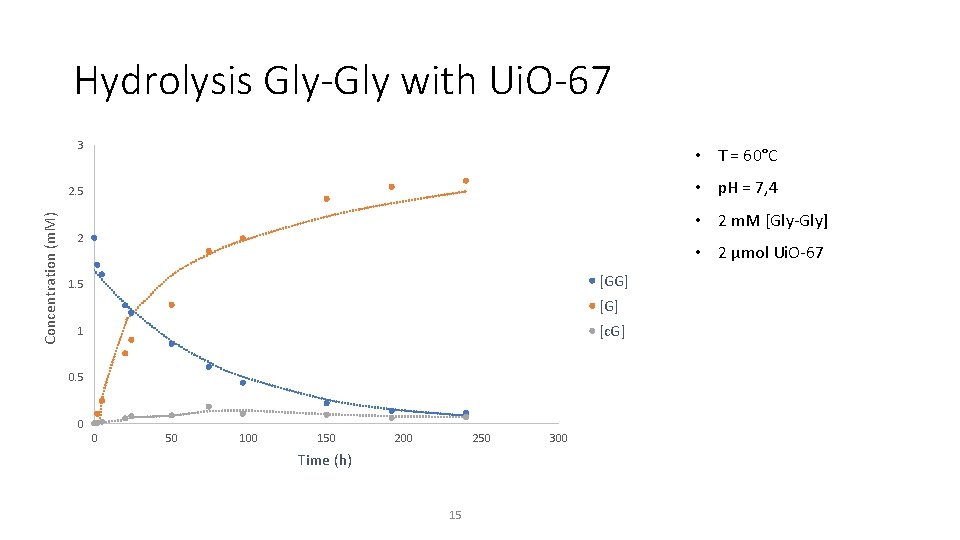
Hydrolysis Gly-Gly with Ui. O-67 Measured with NMR Ø Decrease peak Gly-Gly 3, 82 -3, 83 ppm Ø Increase peak Gly 3, 56 ppm and cyclic Gly 4, 04 ppm 13
Hydrolysis Gly-Gly with Ui. O-67 Gly c. Gly-Gly 10 day 96 h 20 h 2 h 14
Hydrolysis Gly-Gly with Ui. O-67 • T = 60°C • p. H = 7, 4 Concentration (m. M) • 2 m. M [Gly-Gly] • 2 μmol Ui. O-67 Time (h)
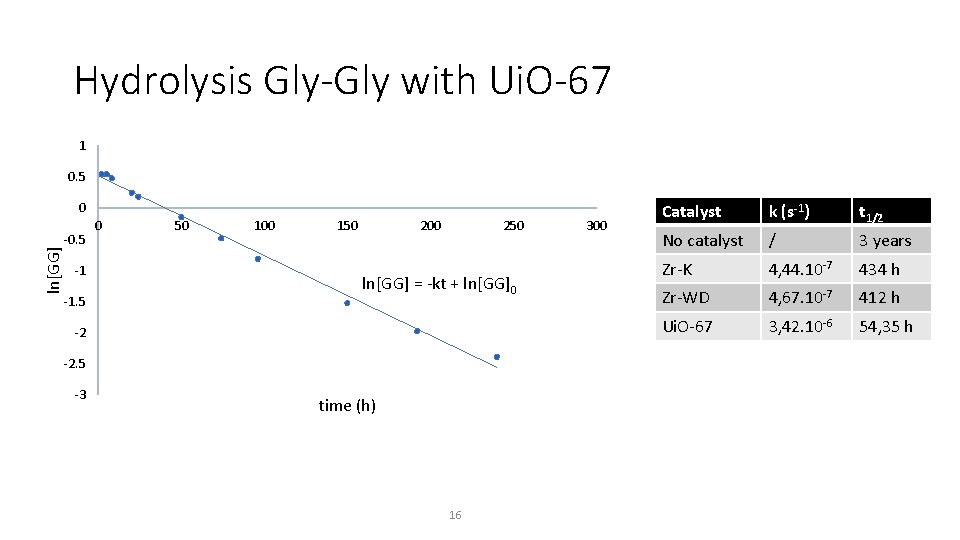
Hydrolysis Gly-Gly with Ui. O-67 1 0. 5 ln[GG] 0 -0. 5 -1 -1. 5 0 50 100 150 200 250 ln[GG] = -kt + ln[GG]0 -2 -2. 5 -3 time (h) 16 300 Catalyst k (s-1) t 1/2 No catalyst / 3 years Zr-K 4, 44. 10 -7 434 h Zr-WD 4, 67. 10 -7 412 h Ui. O-67 3, 42. 10 -6 54, 35 h
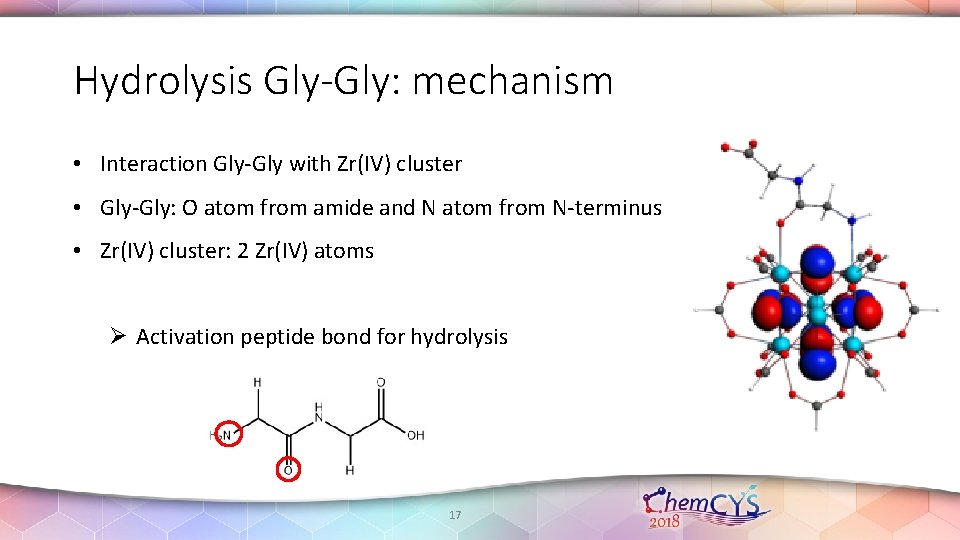
Hydrolysis Gly-Gly: mechanism • Interaction Gly-Gly with Zr(IV) cluster • Gly-Gly: O atom from amide and N atom from N-terminus • Zr(IV) cluster: 2 Zr(IV) atoms Ø Activation peptide bond for hydrolysis 17
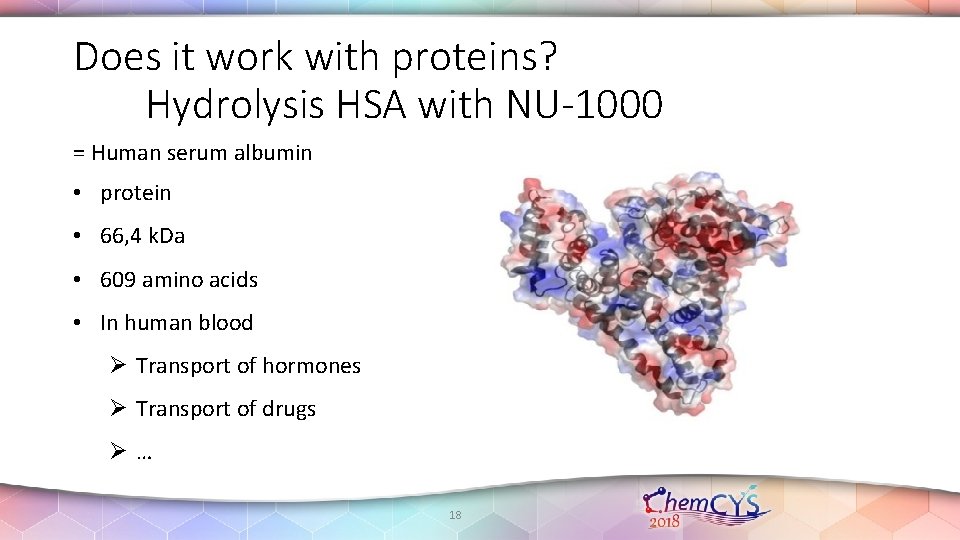
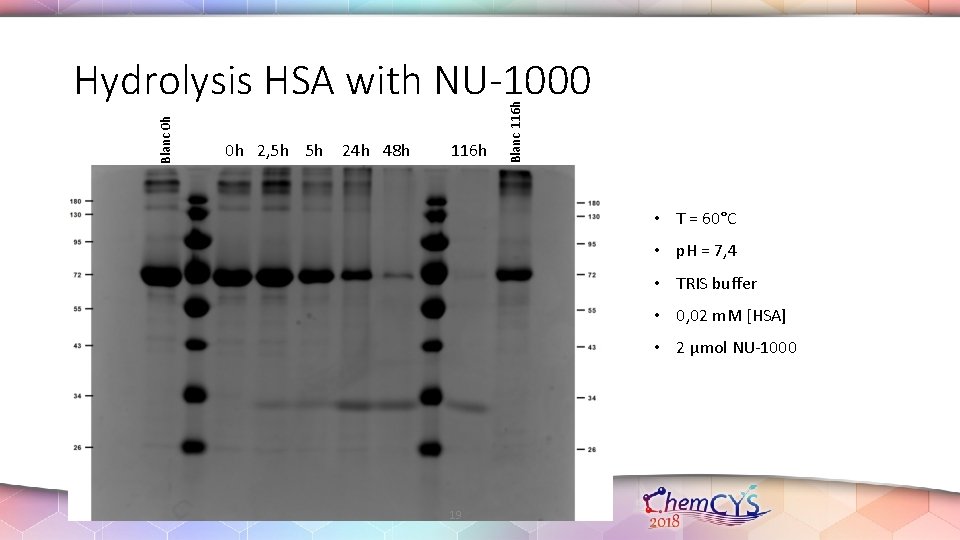
Does it work with proteins? Hydrolysis HSA with NU-1000 = Human serum albumin • protein • 66, 4 k. Da • 609 amino acids • In human blood Ø Transport of hormones Ø Transport of drugs Ø… 18
0 h 2, 5 h 5 h 24 h 48 h 116 h Blanc 0 h Hydrolysis HSA with NU-1000 • T = 60°C • p. H = 7, 4 • TRIS buffer • 0, 02 m. M [HSA] • 2 μmol NU-1000 19
Conclusion First example of hydrolysis with MOF Efficient cleavage of dipeptides and proteins Ø Gly-Gly Ø Human serum albumin 20
Acknowledgement Prof. Tatjana Parac-Vogt Prof. Dirk De Vos LBC members 21
Thank you! Questions?