
Zinc Injection from Hot Functional Test in Tomari
- Slides: 22
Zinc Injection from Hot Functional Test in Tomari Unit 3 Nov. 2008 MITSUBISHI HEAVY INDUSTRIES, LTD. HOKKAIDO ELECTRIC POWER CO. , INC
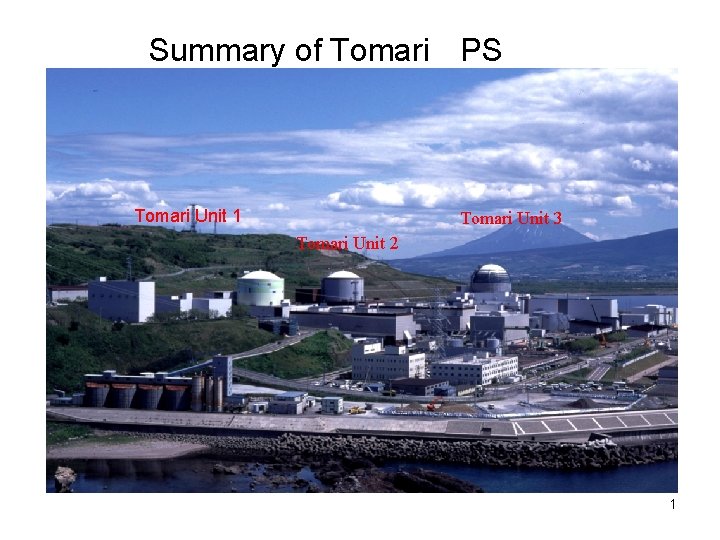
Summary of Tomari PS Tomari Unit 1 Tomari Unit 3 Tomari Unit 2 1
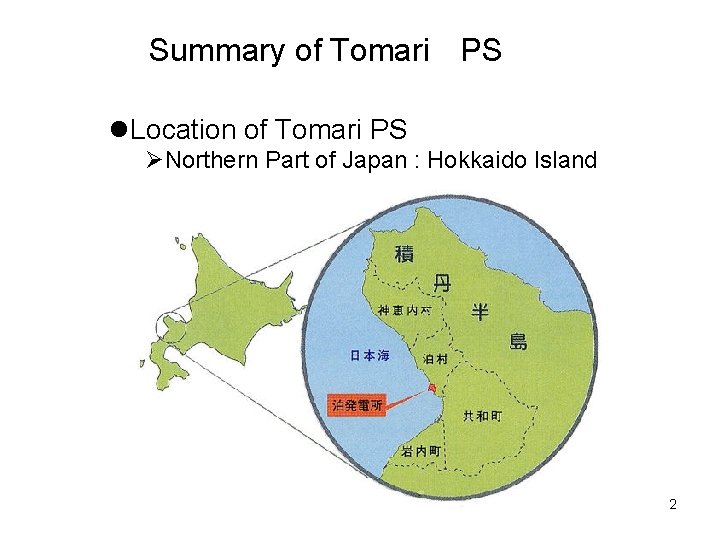
Summary of Tomari PS l. Location of Tomari PS ØNorthern Part of Japan : Hokkaido Island 2
Summary of Tomari PS-3 l Rated Electrical Output: 912 MWe l Reactor Type:PWR(3 Loop Plant) l Hot Function Test: It is from September to November 2008. l Core loadings : Scheduled in February, 2009 l Commercial Operation: Scheduled in December, 2009 3
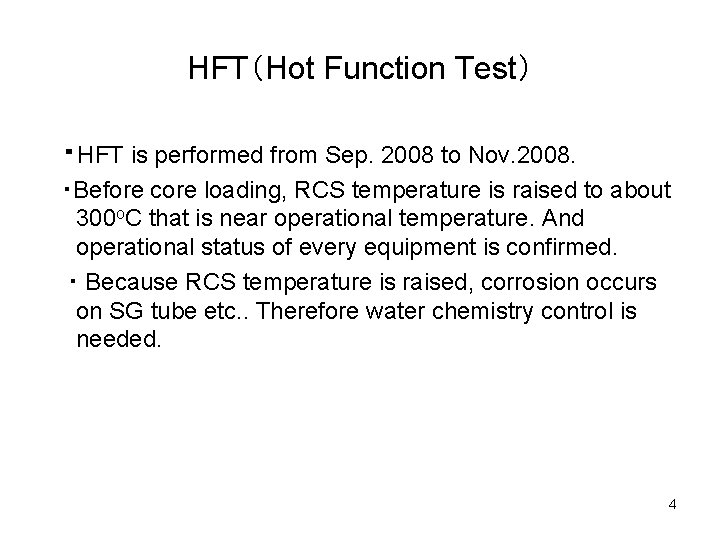
HFT(Hot Function Test) ・HFT is performed from Sep. 2008 to Nov. 2008. ・Before core loading, RCS temperature is raised to about 300 o. C that is near operational temperature. And operational status of every equipment is confirmed. ・Because RCS temperature is raised, corrosion occurs on SG tube etc. . Therefore water chemistry control is needed. 4
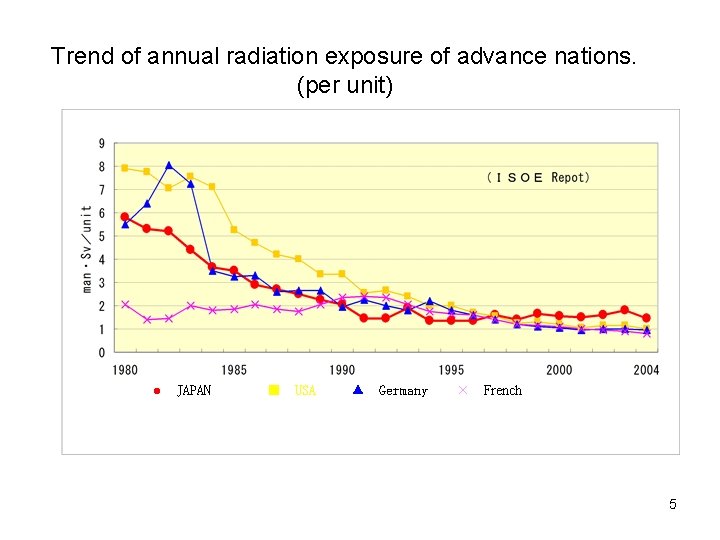
Trend of annual radiation exposure of advance nations. (per unit) ● JAPAN ■ USA ▲ Germany × French 5
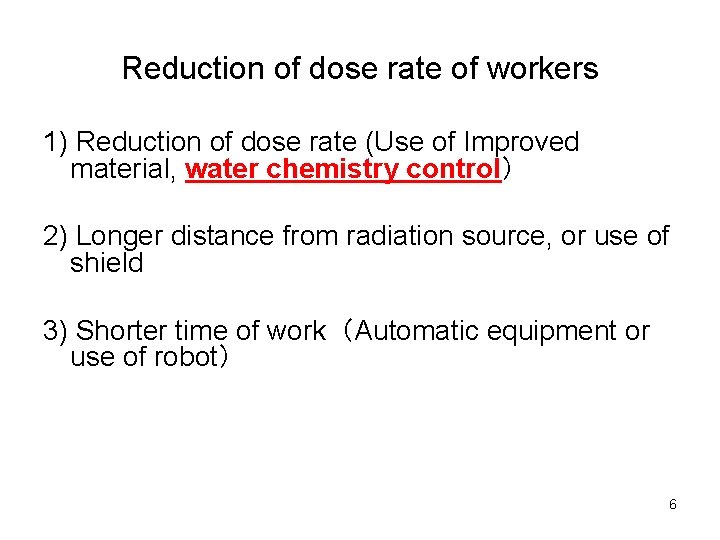
Reduction of dose rate of workers 1) Reduction of dose rate (Use of Improved material, water chemistry control) 2) Longer distance from radiation source, or use of shield 3) Shorter time of work(Automatic equipment or use of robot) 6
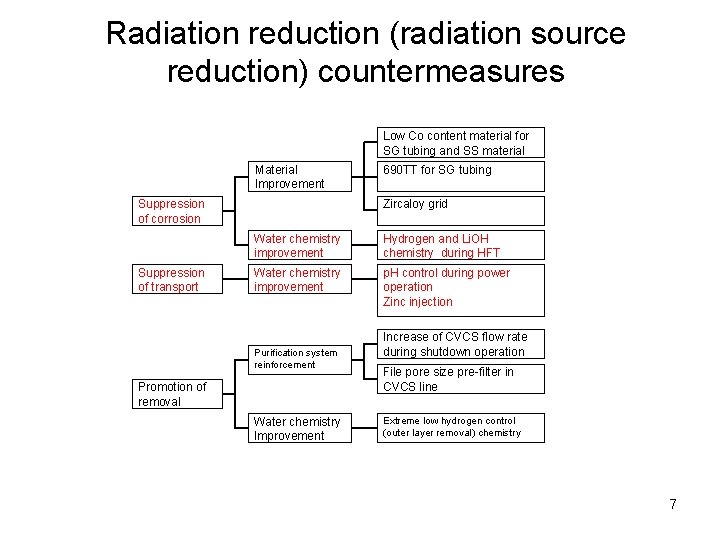
Radiation reduction (radiation source reduction) countermeasures Low Co content material for SG tubing and SS material Material Improvement Suppression of corrosion Suppression of transport 690 TT for SG tubing Zircaloy grid Water chemistry improvement Hydrogen and Li. OH chemistry during HFT Water chemistry improvement p. H control during power operation Zinc injection Purification system reinforcement Promotion of removal Water chemistry Improvement Increase of CVCS flow rate during shutdown operation File pore size pre-filter in CVCS line Extreme low hydrogen control (outer layer removal) chemistry 7
Suppression of corrosion 1) Improvement of material • Low Co content material for SG tubing and SS material • 690 TT for SG tube was used in Tomari unit 3 2) Improvement of water chemistry control • Improvement of water chemistry control during hot function test (HFT) • Zinc injection from HFT 8
Improved HFT water chemistry control • In usual HFT chemistry, deaerated water was used. • In 1988, improved HFT chemistry (hydrogen + lithium addition) was at first adopted in Tomari unit 1. This is the first case in Japan. 9
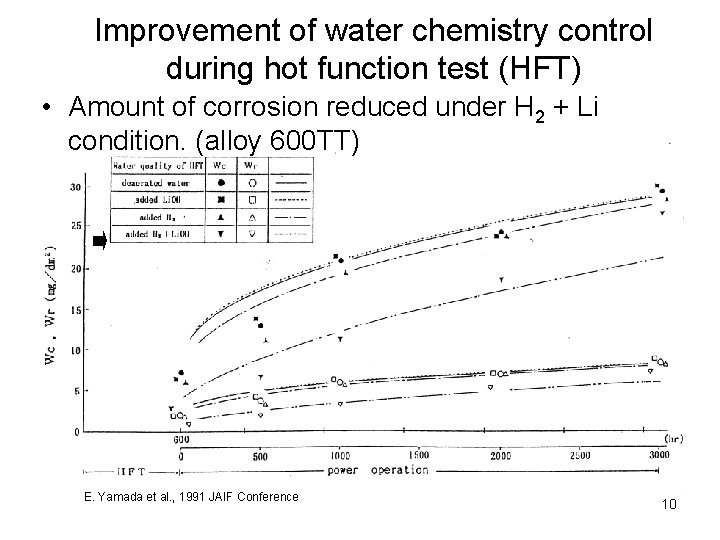
Improvement of water chemistry control during hot function test (HFT) • Amount of corrosion reduced under H 2 + Li condition. (alloy 600 TT) E. Yamada et al. , 1991 JAIF Conference 10
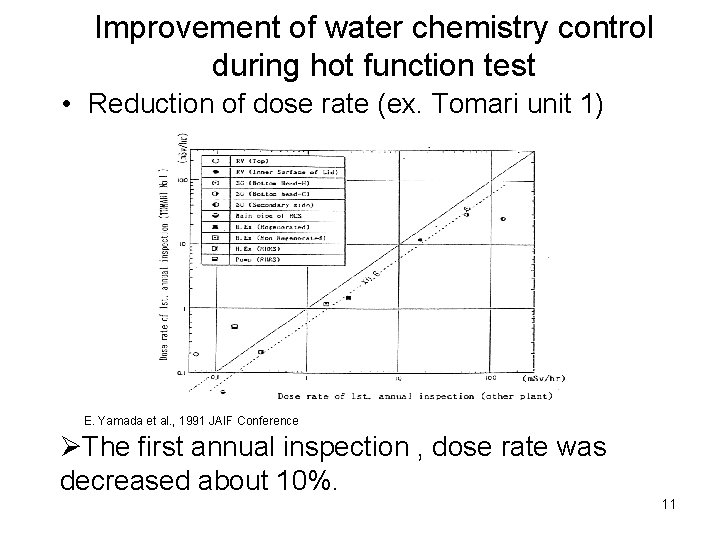
Improvement of water chemistry control during hot function test • Reduction of dose rate (ex. Tomari unit 1) E. Yamada et al. , 1991 JAIF Conference ØThe first annual inspection , dose rate was decreased about 10%. 11
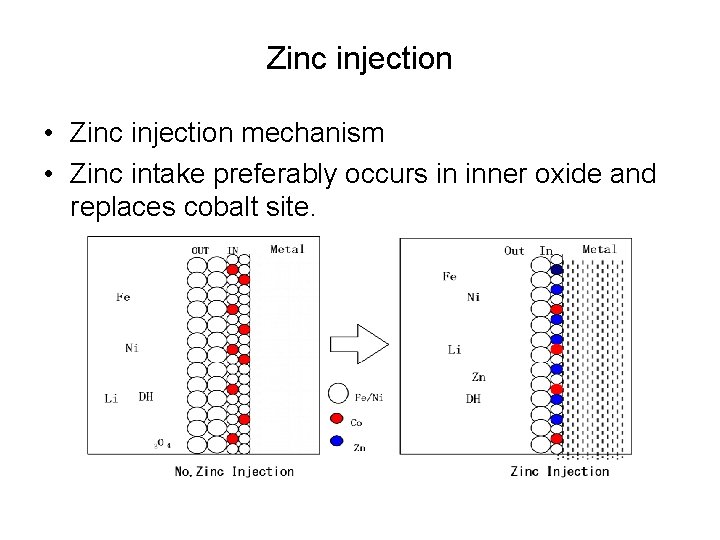
Zinc injection • Zinc injection mechanism • Zinc intake preferably occurs in inner oxide and replaces cobalt site.
Status of zinc injection • In 1994, zinc injection was started in Farley-2 (USA) • Recently, in Tsurga unit 2 and other plant also start zinc injection. • By adopting zinc injection, reduction of dose rate can be about 50%
Zinc injection in test operation • In 2000, Angra-2 (Brazil) Zinc injection was started after 2 days later of initial critical, and dose rate decreased remarkably.
Zinc injection beginning of hot function test in Tomari unit 3 • Amount of corrosion on SG tube (Ni base alloy) reduced by zinc injection at start of HFT Reduction of Ni amount generated from SG Reduction of Co-58 generated from Ni Reduction of dose rate from Co-58 Ø Reduction of dose rate is assumed to be about 10%.
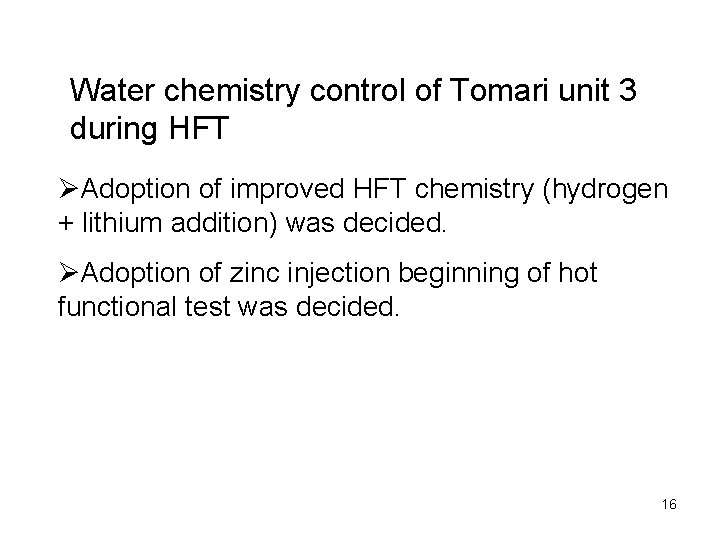
Water chemistry control of Tomari unit 3 during HFT ØAdoption of improved HFT chemistry (hydrogen + lithium addition) was decided. ØAdoption of zinc injection beginning of hot functional test was decided. 16
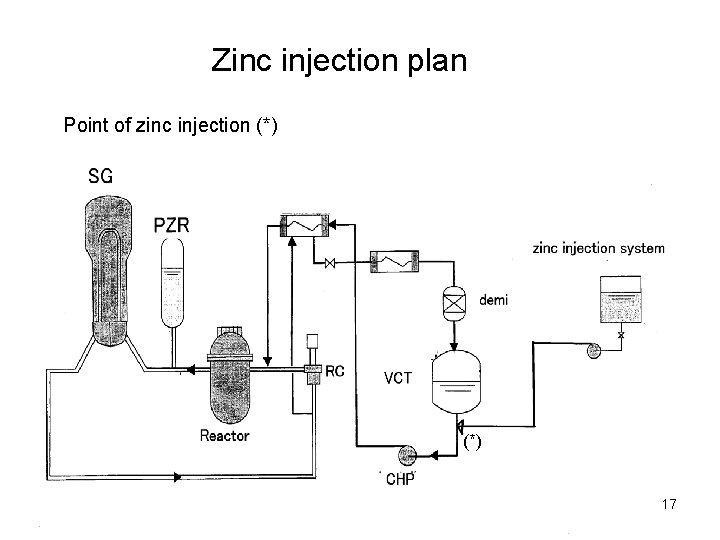
Zinc injection plan Point of zinc injection (*) 17
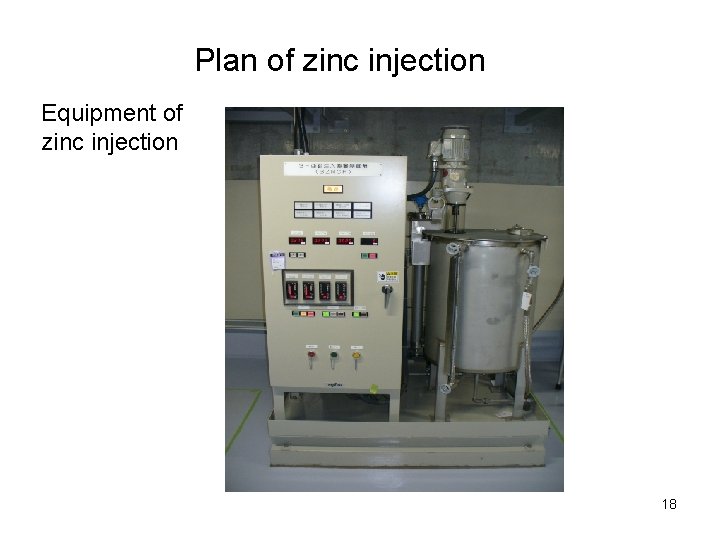
Plan of zinc injection Equipment of zinc injection 18
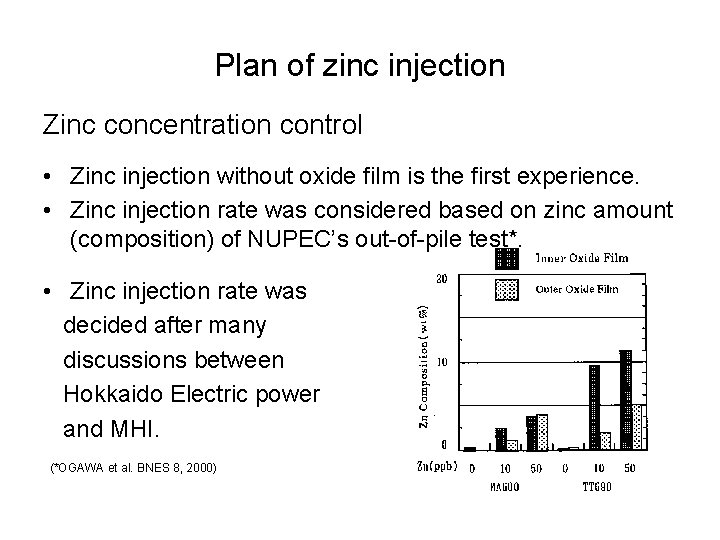
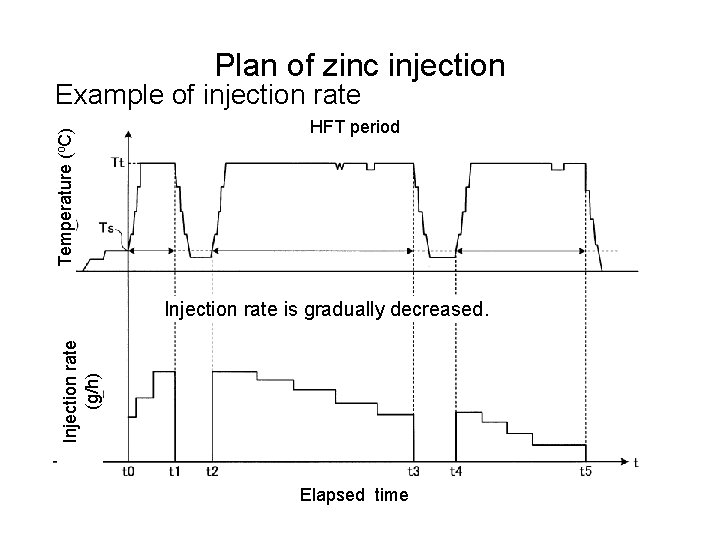
Plan of zinc injection Zinc concentration control • Zinc injection without oxide film is the first experience. • Zinc injection rate was considered based on zinc amount (composition) of NUPEC’s out-of-pile test*. • Zinc injection rate was decided after many discussions between Hokkaido Electric power and MHI. (*OGAWA et al. BNES 8, 2000)
Plan of zinc injection Temperature (o. C) Example of injection rate HFT period Injection rate (g/h) Injection rate is gradually decreased. Elapsed time
Future plan ・Comparison of corrosion product concentration and dose rate between Tomari unit 3 and reference plant (without zinc injection).