
Zero Waste Poland A Challenge or Utopia Lecturer
- Slides: 44
“Zero Waste” Poland: A Challenge or Utopia? Lecturer: Andrzej Bujak Summer School 2016 ŠKODA AUTO University Mladá Boleslav Czech Republic 1
Lecture Content Theoretical and Legal Foundations for “’Zero Waste’’ What is the Circular Economy and the “Zero Waste” Concept? Waste Management System in Poland EPR – Extended Producer Responsibility “Zero waste” City and Different Solutions 2
Theoretical Foundations What is green supply chain management? It can include: Reduction of energy use & renewable alternatives Cutting water volumes & countering contamination Reducing, purifying or sequestering GHGs Decreasing quantities of waste Recycling Packaging material reductions Reverse logistics 3
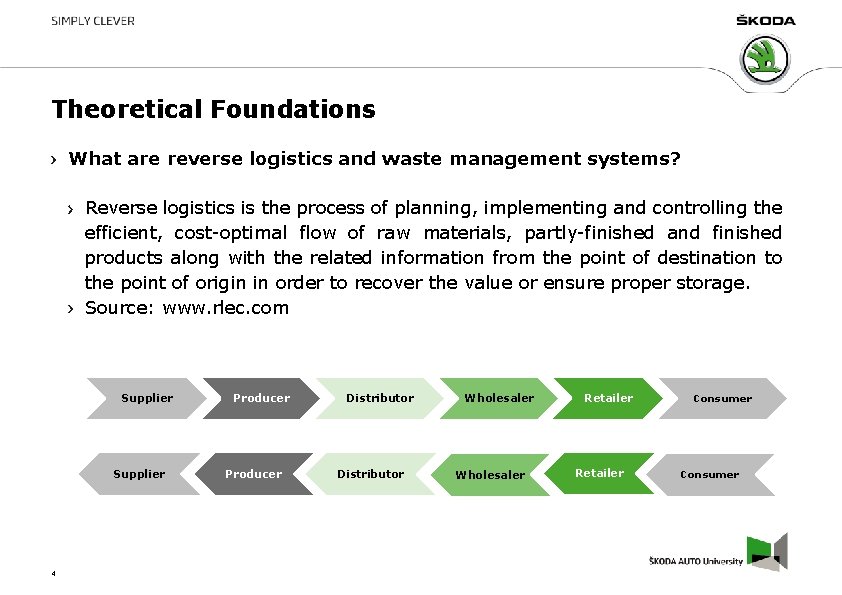
Theoretical Foundations What are reverse logistics and waste management systems? Reverse logistics is the process of planning, implementing and controlling the efficient, cost-optimal flow of raw materials, partly-finished and finished products along with the related information from the point of destination to the point of origin in order to recover the value or ensure proper storage. Source: www. rlec. com Supplier 4 Producer Distributor Wholesaler Retailer Consumer
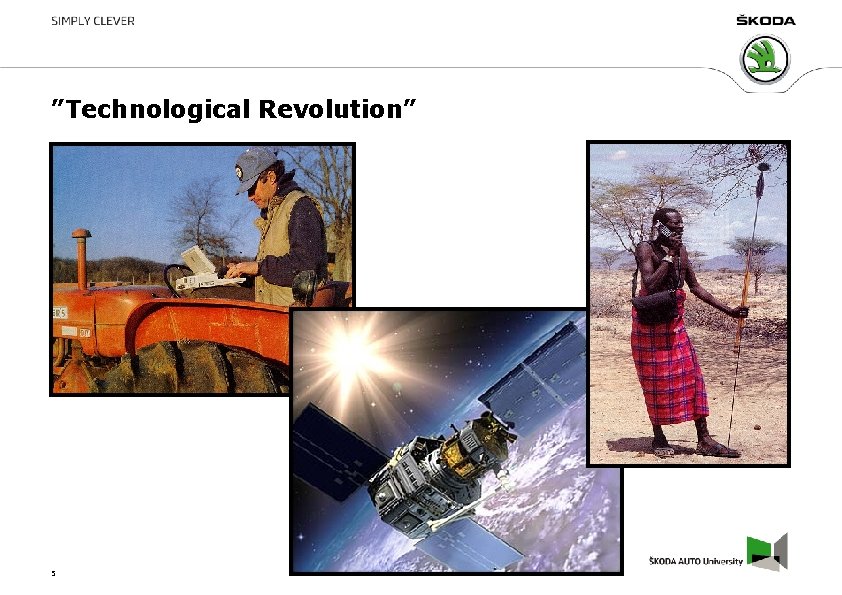
”Technological Revolution” 5
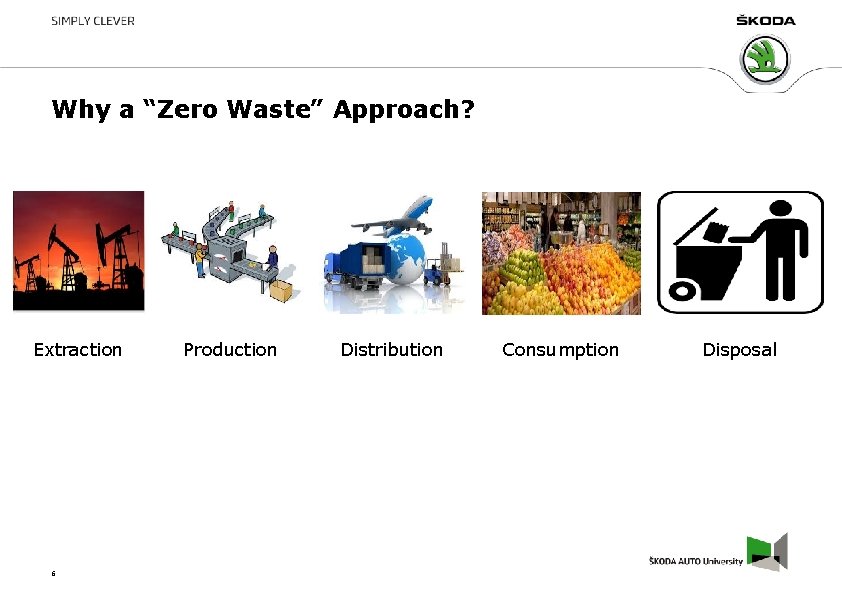
Why a “Zero Waste” Approach? Extraction 6 Production Distribution Consumption Disposal
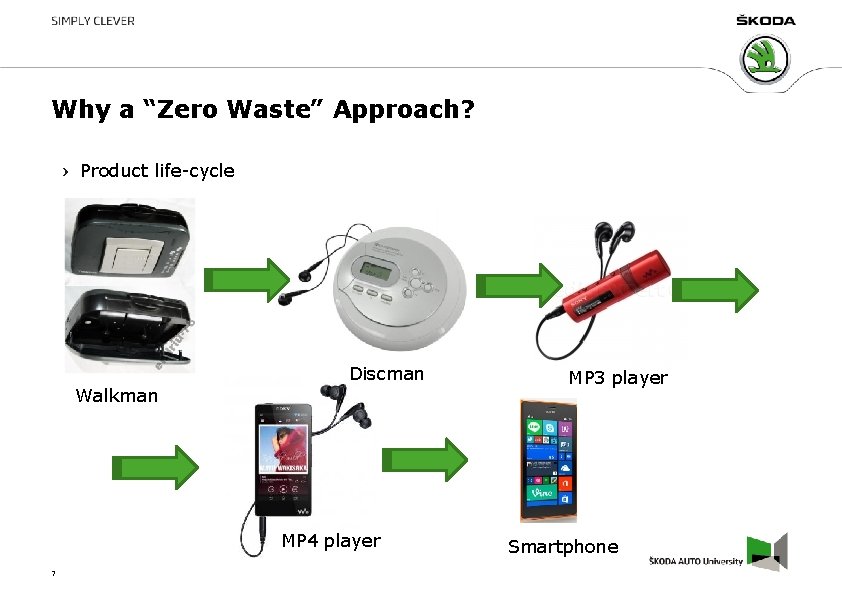
Why a “Zero Waste” Approach? Product life-cycle Discman Walkman MP 4 player 7 MP 3 player Smartphone
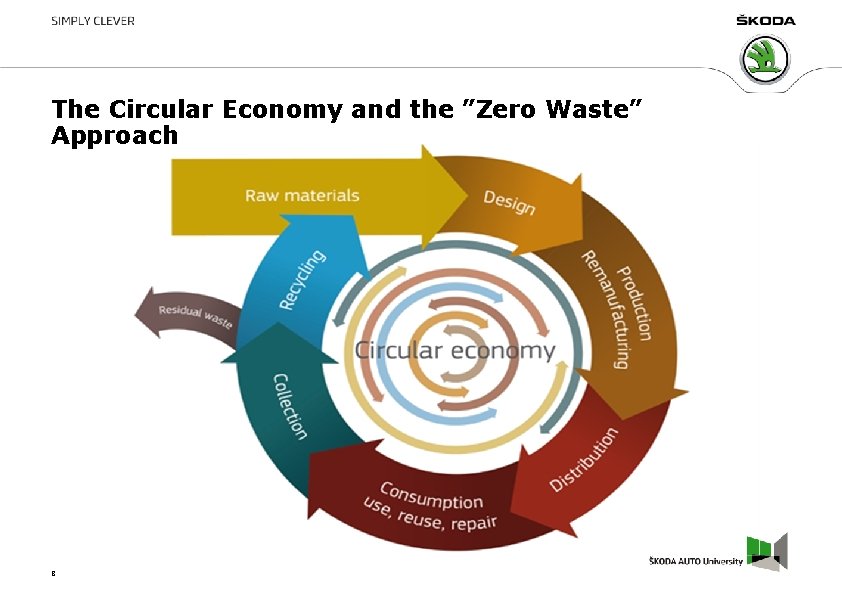
The Circular Economy and the ”Zero Waste” Approach 8
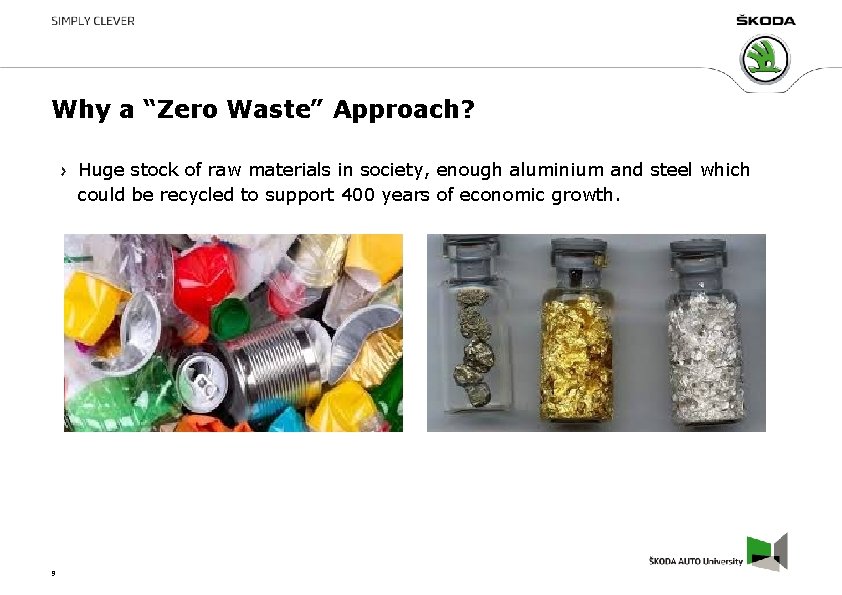
Why a “Zero Waste” Approach? Huge stock of raw materials in society, enough aluminium and steel which could be recycled to support 400 years of economic growth. 9
EU Legislation Inducements at the EU level Landfill Directive (1999) Biodegradable municipal waste going to landfill must be reduced to 35 % of the total amount (base year 1995) by 2016. All waste should undergo pre-treatment operations. Waste Framework Directive (2010) Waste hierarchy Recycling targets 50 % for 2020 10
EU Legislation - Future The future of EU waste and resource policy Circular Economy Products Toxics Energy Waste package: 70% recycling for 2030 No burning or landfilling of recyclables 11
Change of perspective Major changes in the EU policy 20 th century WASTE MANAGEMENT ”How to get rid of waste efficiently with minimum damage to our health and the environment? ” 21 st century RESOURCE MANAGEMENT ”How to handle the resources in ways where the value and embodied energy are preserved for future generations? ” It’s not about the environment and health anymore. It is about economics, reindustrialization, resource dependency, jobs, competitiveness… 12
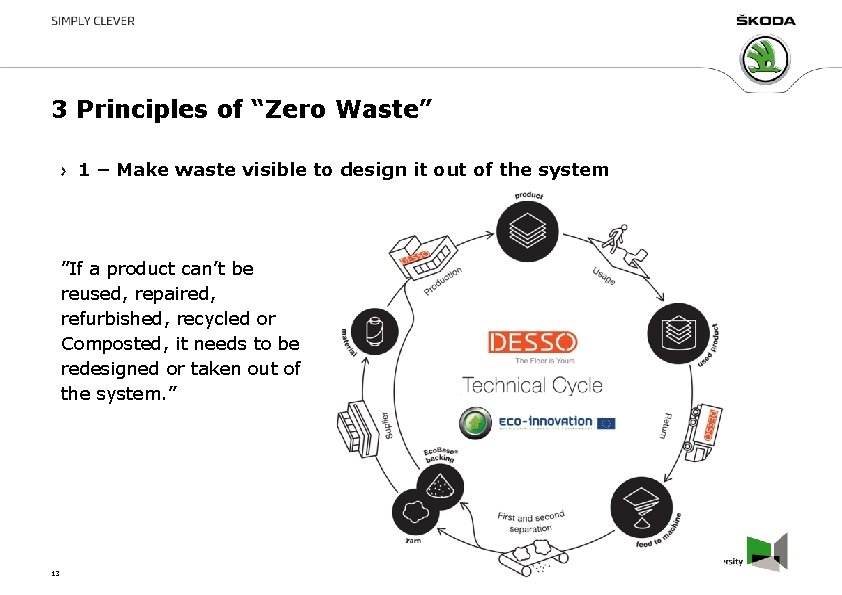
3 Principles of “Zero Waste” 1 – Make waste visible to design it out of the system ”If a product can’t be reused, repaired, refurbished, recycled or Composted, it needs to be redesigned or taken out of the system. ” 13
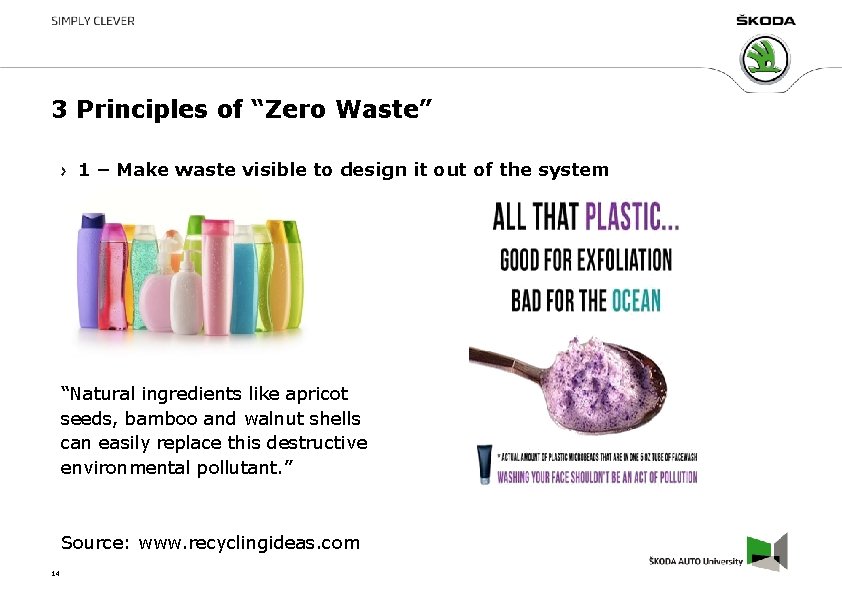
3 Principles of “Zero Waste” 1 – Make waste visible to design it out of the system “Natural ingredients like apricot seeds, bamboo and walnut shells can easily replace this destructive environmental pollutant. ” Source: www. recyclingideas. com 14
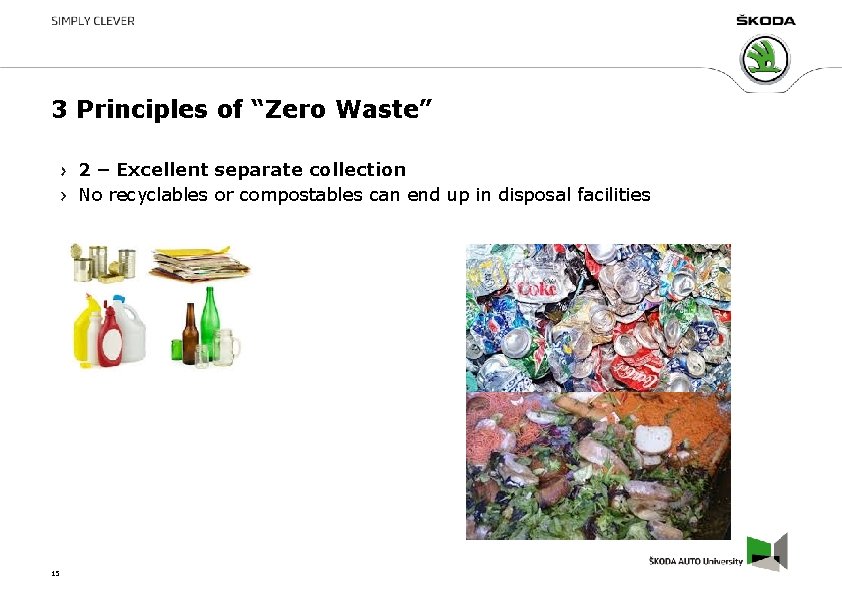
3 Principles of “Zero Waste” 2 – Excellent separate collection No recyclables or compostables can end up in disposal facilities 15
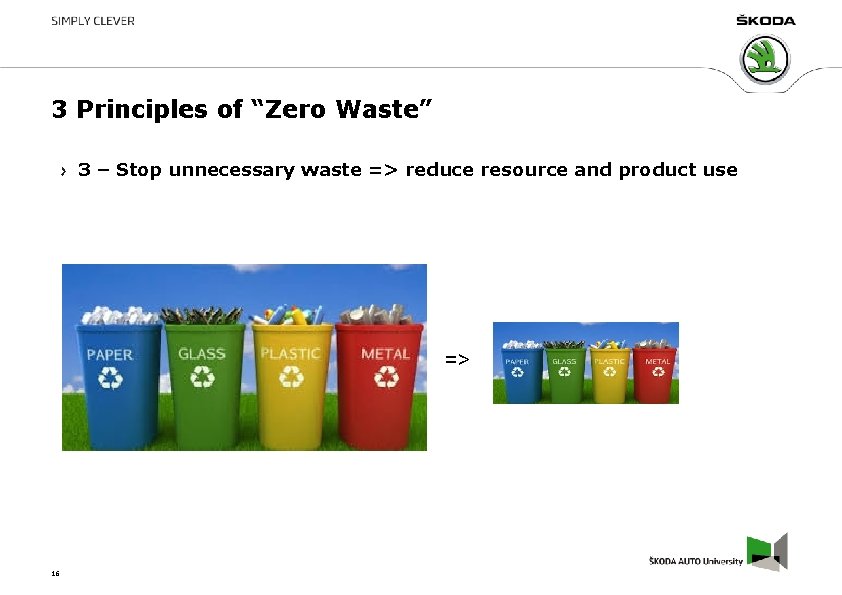
3 Principles of “Zero Waste” 3 – Stop unnecessary waste => reduce resource and product use => 16
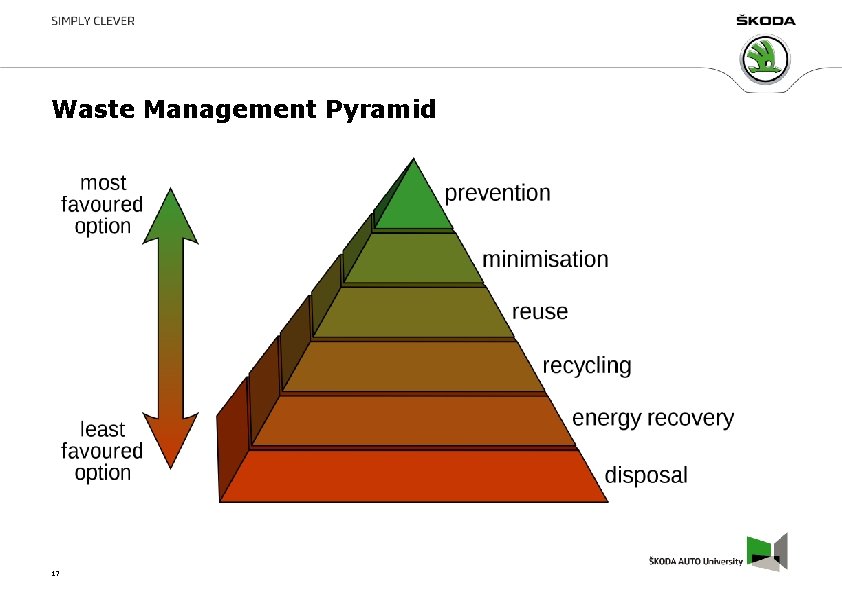
Waste Management Pyramid 17
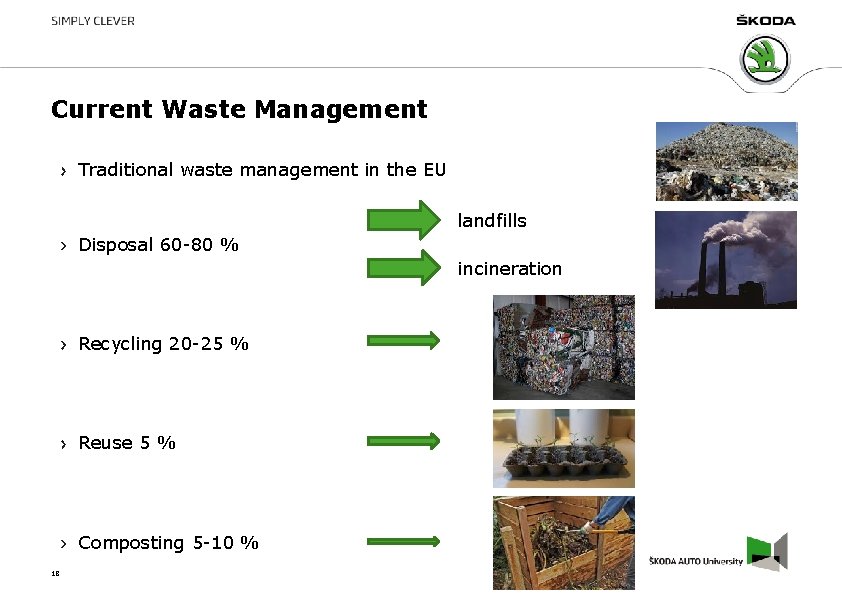
Current Waste Management Traditional waste management in the EU landfills Disposal 60 -80 % Recycling 20 -25 % Reuse 5 % Composting 5 -10 % 18 incineration
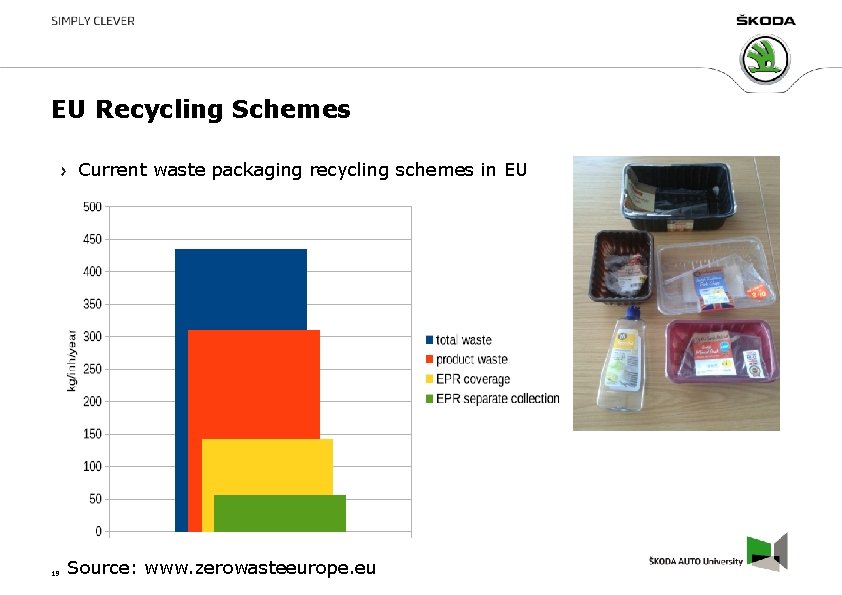
EU Recycling Schemes Current waste packaging recycling schemes in EU 19 Source: www. zerowasteeurope. eu
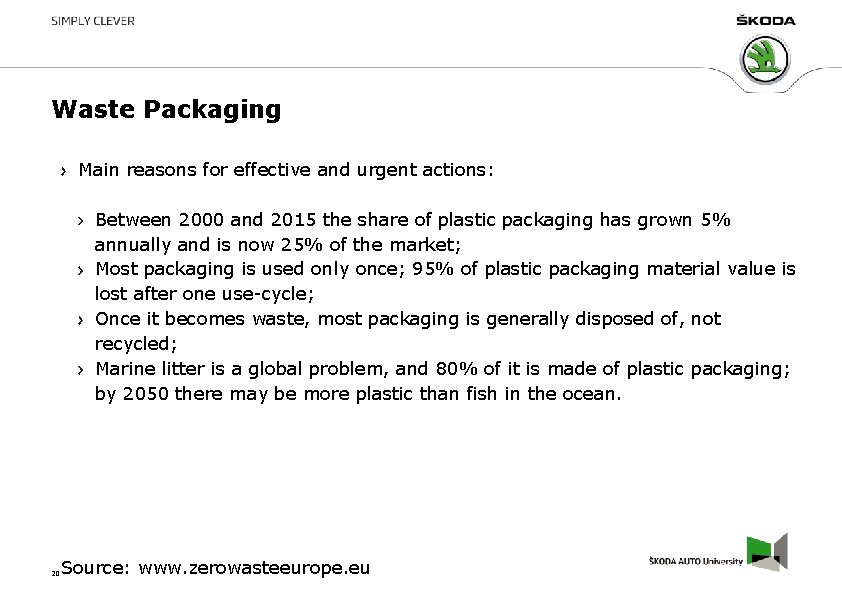
Waste Packaging Main reasons for effective and urgent actions: Between 2000 and 2015 the share of plastic packaging has grown 5% annually and is now 25% of the market; Most packaging is used only once; 95% of plastic packaging material value is lost after one use-cycle; Once it becomes waste, most packaging is generally disposed of, not recycled; Marine litter is a global problem, and 80% of it is made of plastic packaging; by 2050 there may be more plastic than fish in the ocean. 20 Source: www. zerowasteeurope. eu
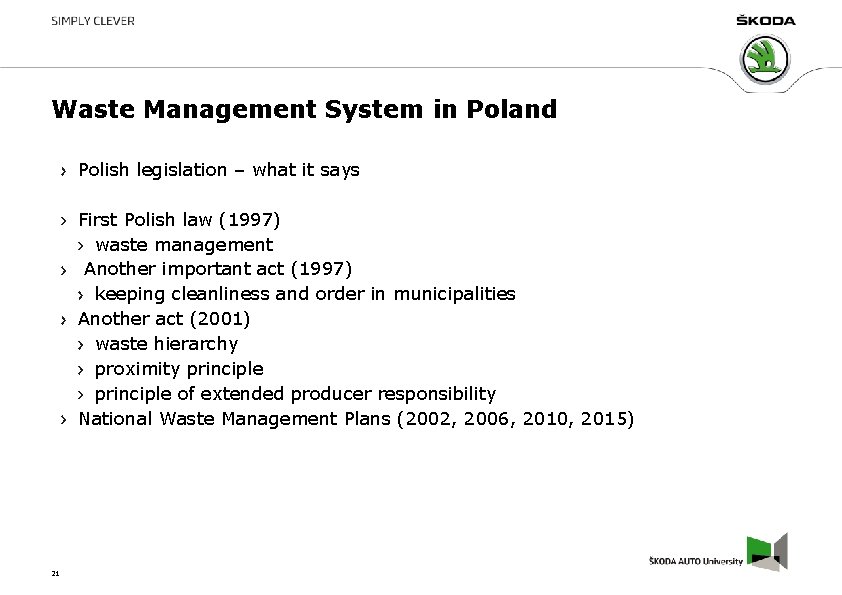
Waste Management System in Poland Polish legislation – what it says First Polish law (1997) waste management Another important act (1997) keeping cleanliness and order in municipalities Another act (2001) waste hierarchy proximity principle of extended producer responsibility National Waste Management Plans (2002, 2006, 2010, 2015) 21
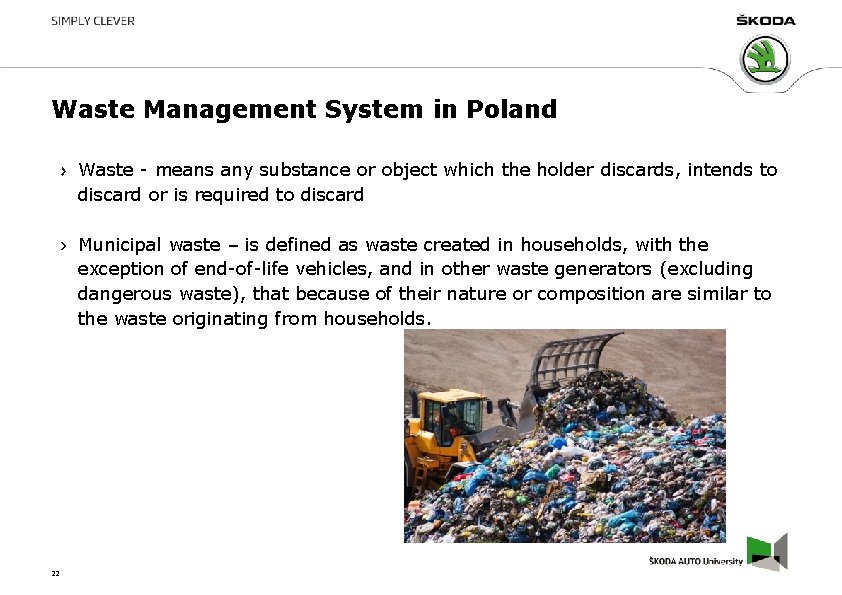
Waste Management System in Poland Waste - means any substance or object which the holder discards, intends to discard or is required to discard Municipal waste – is defined as waste created in households, with the exception of end-of-life vehicles, and in other waste generators (excluding dangerous waste), that because of their nature or composition are similar to the waste originating from households. 22
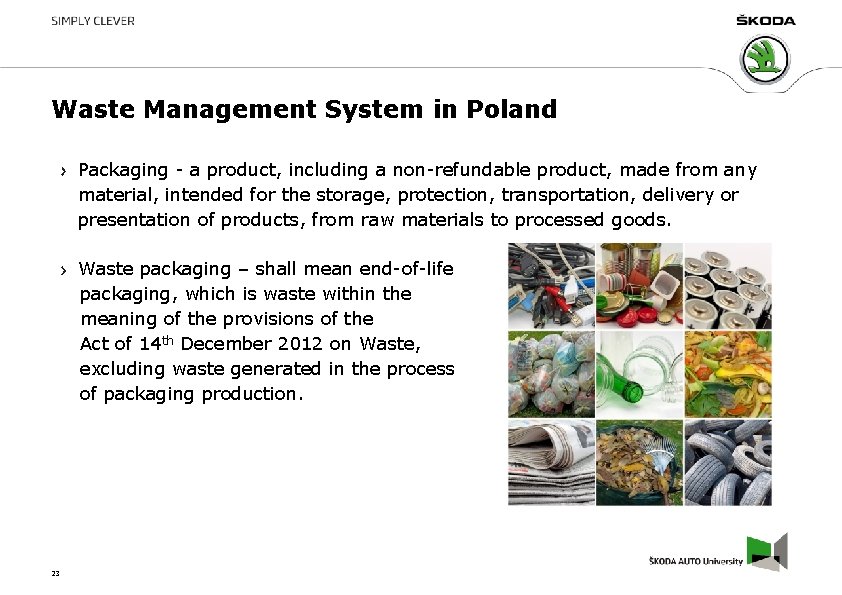
Waste Management System in Poland Packaging - a product, including a non-refundable product, made from any material, intended for the storage, protection, transportation, delivery or presentation of products, from raw materials to processed goods. Waste packaging – shall mean end-of-life packaging, which is waste within the meaning of the provisions of the Act of 14 th December 2012 on Waste, excluding waste generated in the process of packaging production. 23
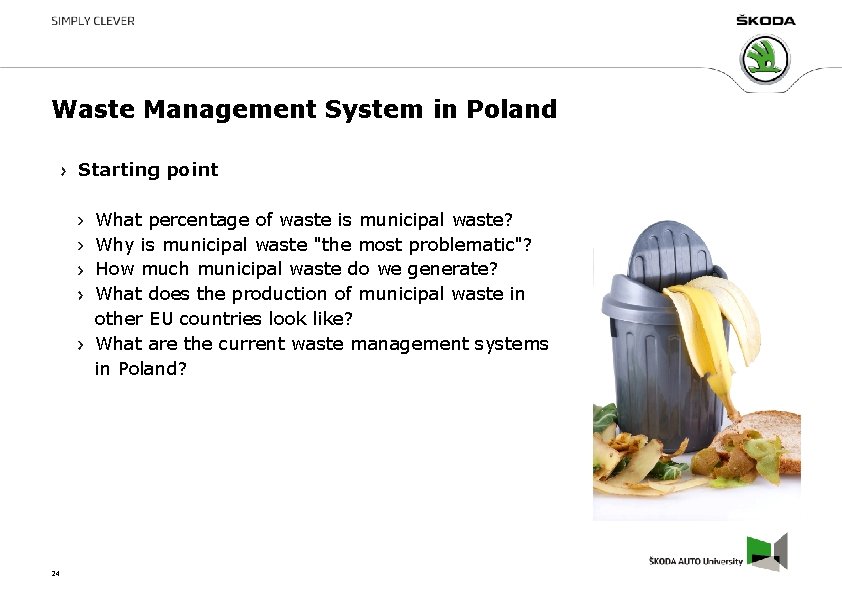
Waste Management System in Poland Starting point What percentage of waste is municipal waste? Why is municipal waste "the most problematic"? How much municipal waste do we generate? What does the production of municipal waste in other EU countries look like? What are the current waste management systems in Poland? 24
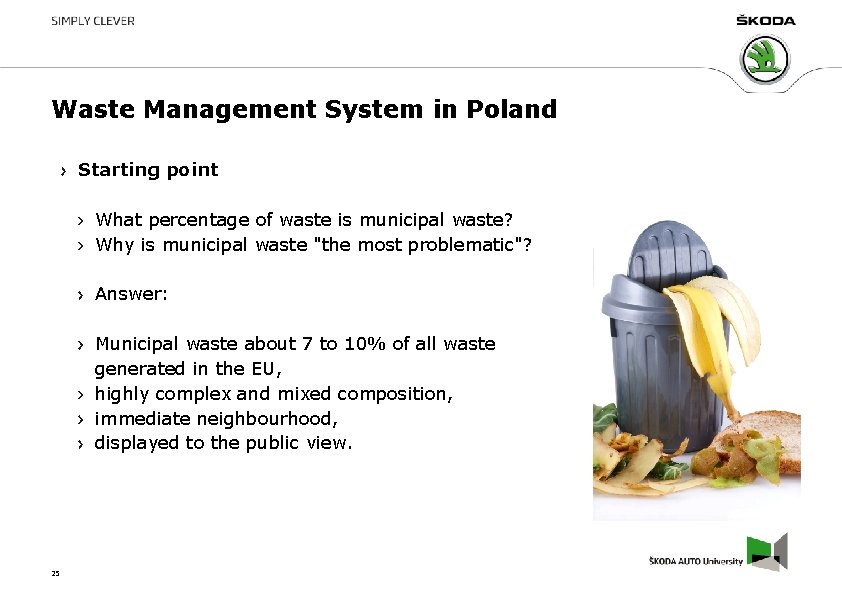
Waste Management System in Poland Starting point What percentage of waste is municipal waste? Why is municipal waste "the most problematic"? Answer: Municipal waste about 7 to 10% of all waste generated in the EU, highly complex and mixed composition, immediate neighbourhood, displayed to the public view. 25
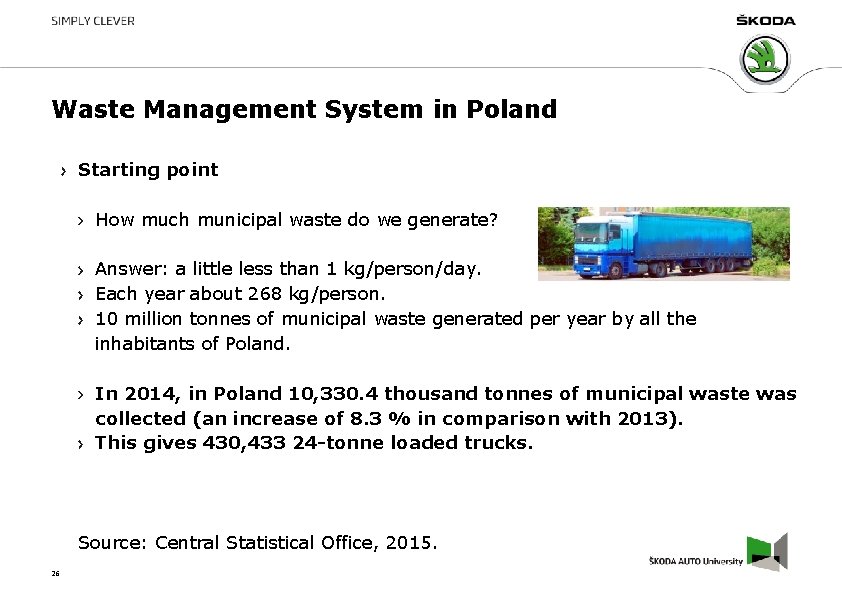
Waste Management System in Poland Starting point How much municipal waste do we generate? Answer: a little less than 1 kg/person/day. Each year about 268 kg/person. 10 million tonnes of municipal waste generated per year by all the inhabitants of Poland. In 2014, in Poland 10, 330. 4 thousand tonnes of municipal waste was collected (an increase of 8. 3 % in comparison with 2013). This gives 430, 433 24 -tonne loaded trucks. Source: Central Statistical Office, 2015. 26
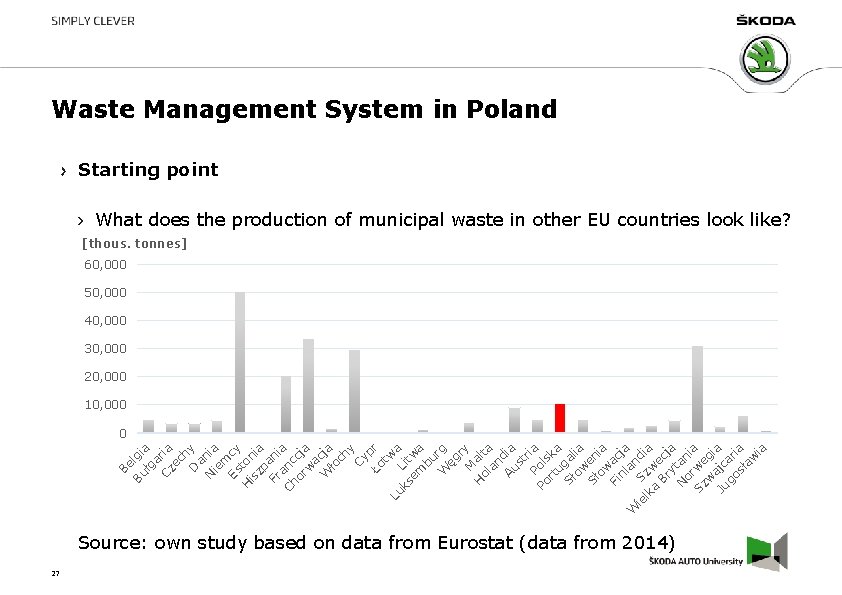
Be Bu lgi łg a a Cz ria ec h D y a N nia ie m Es cy H ton is zp ia Fr ani a Ch anc or cja w a W cja ło ch y Cy p Ło r tw Lu a ks Lit em wa bu W rg ęg r M y H alt ol an a Au dia st r Po ia Po ls rt ka u Sł gal ow ia Sł en ow ia Fi ac nl ja a W ie S ndi lk zw a a Br ecj y a N tan o i Sz rwe a w gi Ju ajc a go ar sł ia aw ia Waste Management System in Poland Starting point What does the production of municipal waste in other EU countries look like? [thous. tonnes] 60, 000 50, 000 40, 000 30, 000 20, 000 10, 000 0 Source: own study based on data from Eurostat (data from 2014) 27
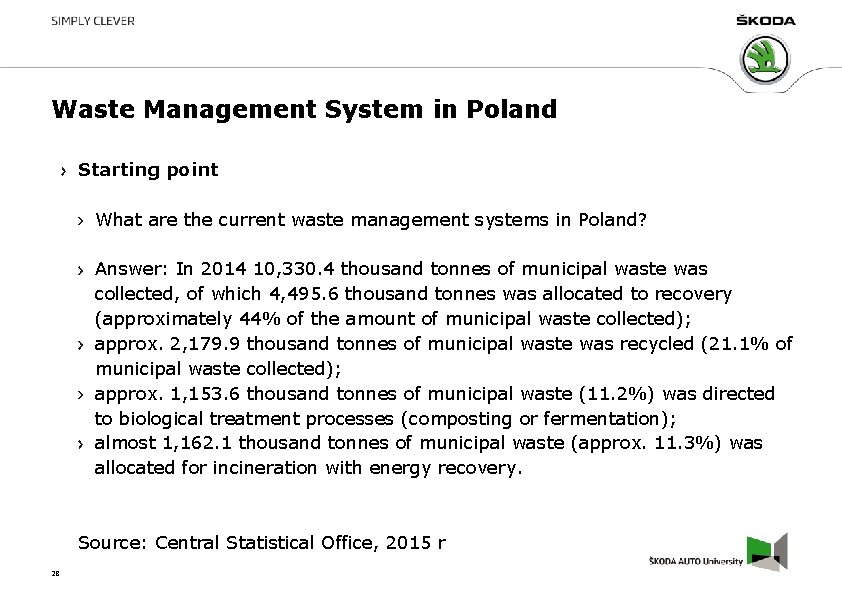
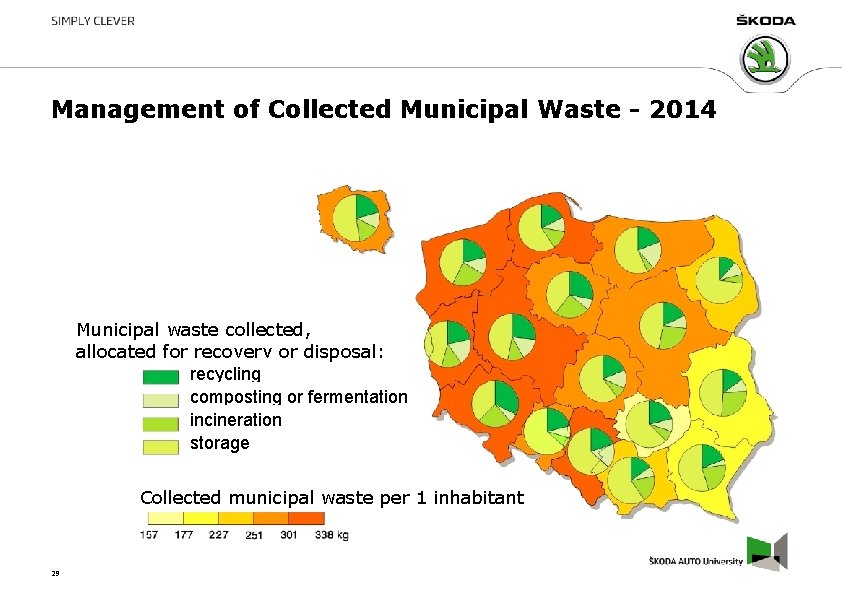
Waste Management System in Poland Starting point What are the current waste management systems in Poland? Answer: In 2014 10, 330. 4 thousand tonnes of municipal waste was collected, of which 4, 495. 6 thousand tonnes was allocated to recovery (approximately 44% of the amount of municipal waste collected); approx. 2, 179. 9 thousand tonnes of municipal waste was recycled (21. 1% of municipal waste collected); approx. 1, 153. 6 thousand tonnes of municipal waste (11. 2%) was directed to biological treatment processes (composting or fermentation); almost 1, 162. 1 thousand tonnes of municipal waste (approx. 11. 3%) was allocated for incineration with energy recovery. Source: Central Statistical Office, 2015 r 28
Management of Collected Municipal Waste - 2014 Municipal waste collected, allocated for recovery or disposal: recycling composting or fermentation incineration storage Collected municipal waste per 1 inhabitant 29
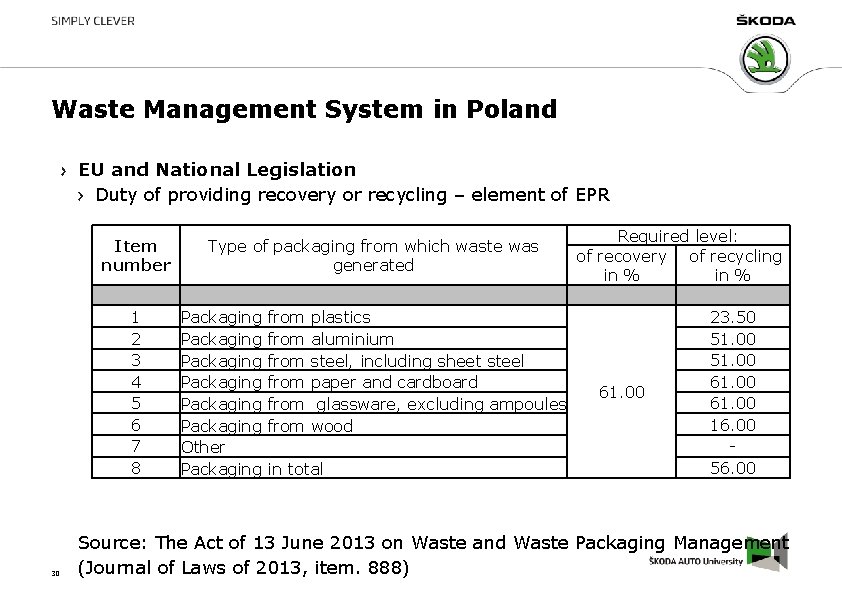
Waste Management System in Poland EU and National Legislation Duty of providing recovery or recycling – element of EPR 30 Item number Type of packaging from which waste was generated 1 2 3 4 5 6 7 8 Packaging from plastics Packaging from aluminium Packaging from steel, including sheet steel Packaging from paper and cardboard Packaging from glassware, excluding ampoules Packaging from wood Other Packaging in total Required level: of recovery of recycling in % 61. 00 23. 50 51. 00 61. 00 16. 00 56. 00 Source: The Act of 13 June 2013 on Waste and Waste Packaging Management (Journal of Laws of 2013, item. 888)
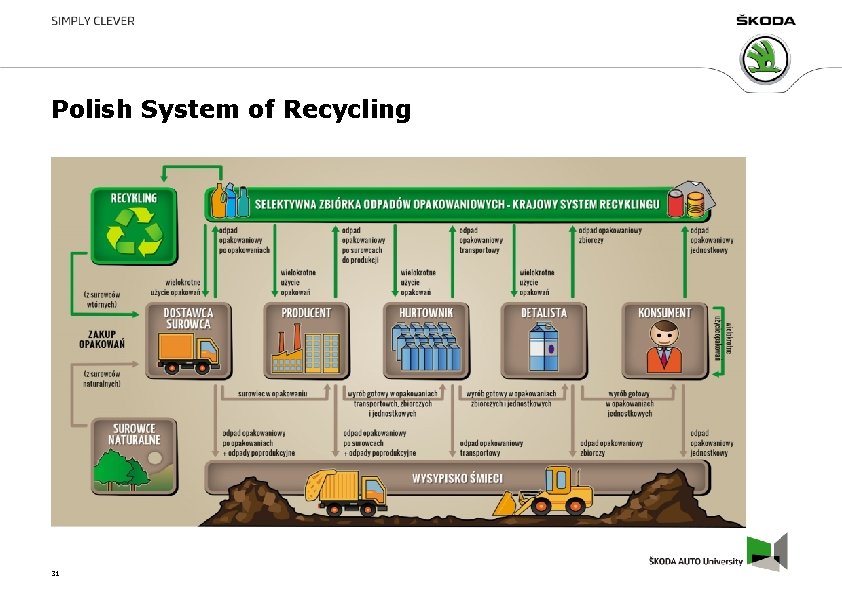
Polish System of Recycling 31
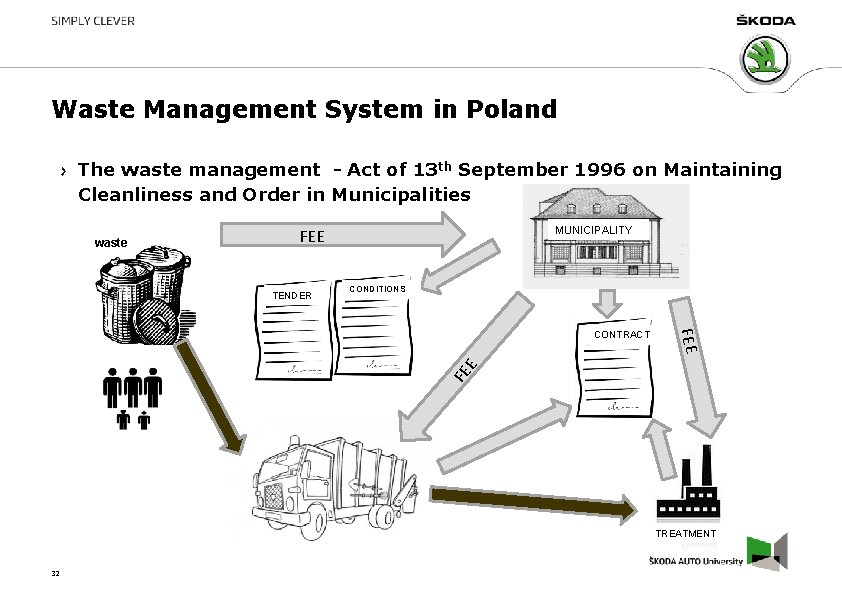
Waste Management System in Poland The waste management - Act of 13 th September 1996 on Maintaining Cleanliness and Order in Municipalities waste MUNICIPALITY FEE TENDER CONDITIONS FE E FEE CONTRACT Modlińska 129, 03 -186 Warszawa ul. Modlińska 129, 03 -186 Warszawa tel. e-mail: katarzyna. michniewska@ekocykl. org 32 ekocykl. org TREATMENT
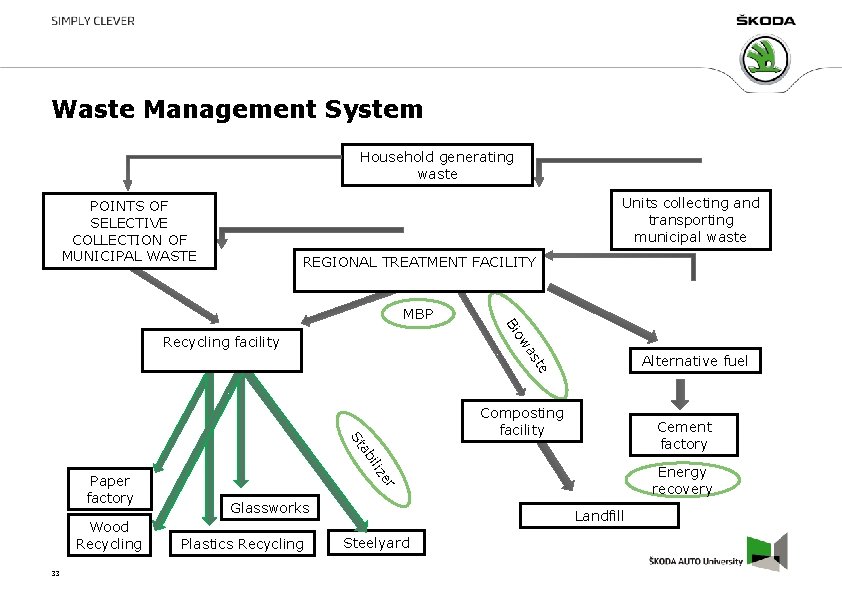
Waste Management System Household generating waste Units collecting and transporting municipal waste POINTS OF SELECTIVE COLLECTION OF MUNICIPAL WASTE REGIONAL TREATMENT FACILITY MBP Bi as ow Recycling facility te Alternative fuel St Wood Recycling 33 Cement factory er iliz ab Paper factory Composting facility Glassworks Plastics Recycling Energy recovery Landfill Steelyard
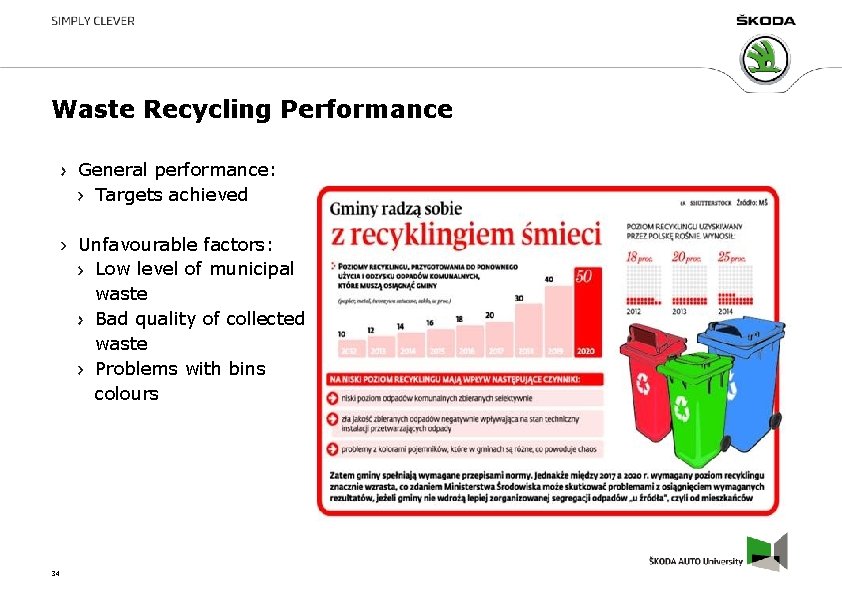
Waste Recycling Performance General performance: Targets achieved Unfavourable factors: Low level of municipal waste Bad quality of collected waste Problems with bins colours 34
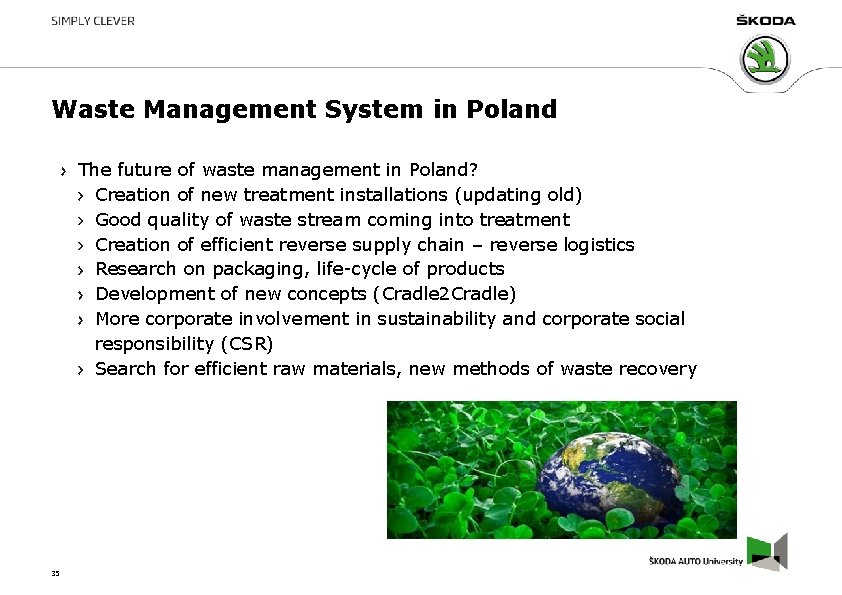
Waste Management System in Poland The future of waste management in Poland? Creation of new treatment installations (updating old) Good quality of waste stream coming into treatment Creation of efficient reverse supply chain – reverse logistics Research on packaging, life-cycle of products Development of new concepts (Cradle 2 Cradle) More corporate involvement in sustainability and corporate social responsibility (CSR) Search for efficient raw materials, new methods of waste recovery 35
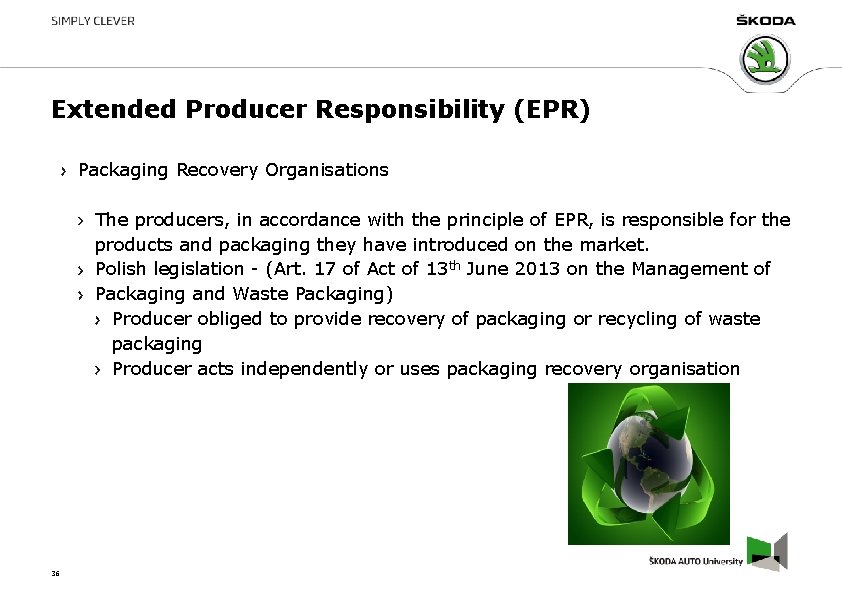
Extended Producer Responsibility (EPR) Packaging Recovery Organisations The producers, in accordance with the principle of EPR, is responsible for the products and packaging they have introduced on the market. Polish legislation - (Art. 17 of Act of 13 th June 2013 on the Management of Packaging and Waste Packaging) Producer obliged to provide recovery of packaging or recycling of waste packaging Producer acts independently or uses packaging recovery organisation 36
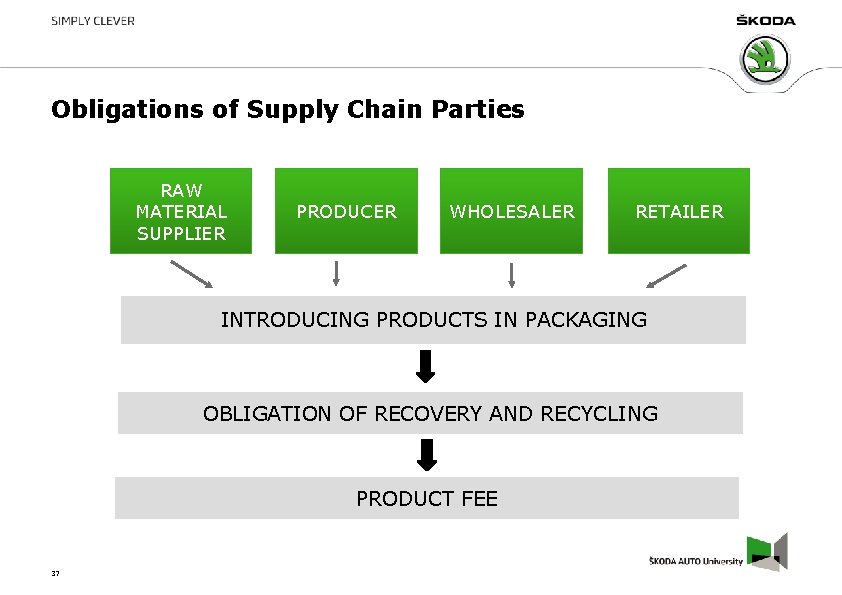
Obligations of Supply Chain Parties RAW MATERIAL SUPPLIER PRODUCER WHOLESALER RETAILER INTRODUCING PRODUCTS IN PACKAGING OBLIGATION OF RECOVERY AND RECYCLING PRODUCT FEE 37
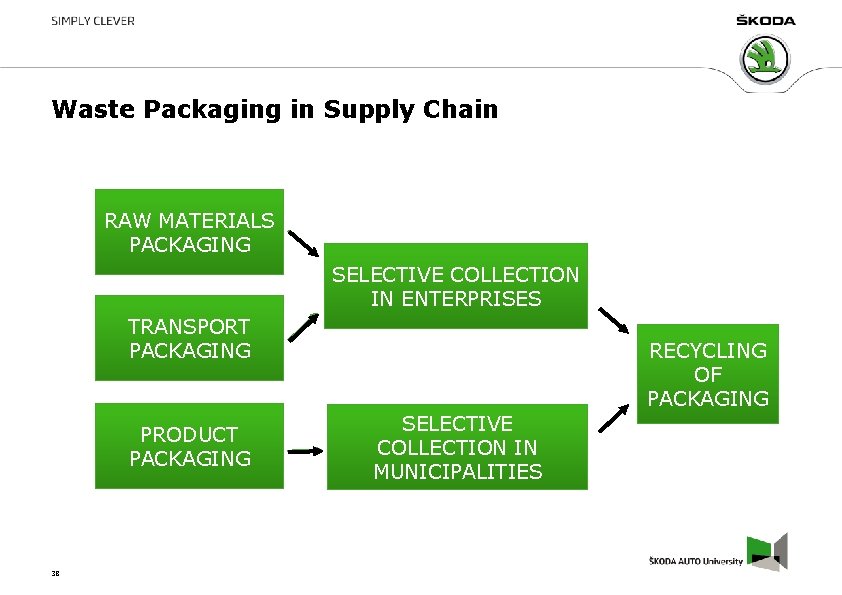
Waste Packaging in Supply Chain RAW MATERIALS PACKAGING SELECTIVE COLLECTION IN ENTERPRISES TRANSPORT PACKAGING PRODUCT PACKAGING 38 RECYCLING OF PACKAGING SELECTIVE COLLECTION IN MUNICIPALITIES
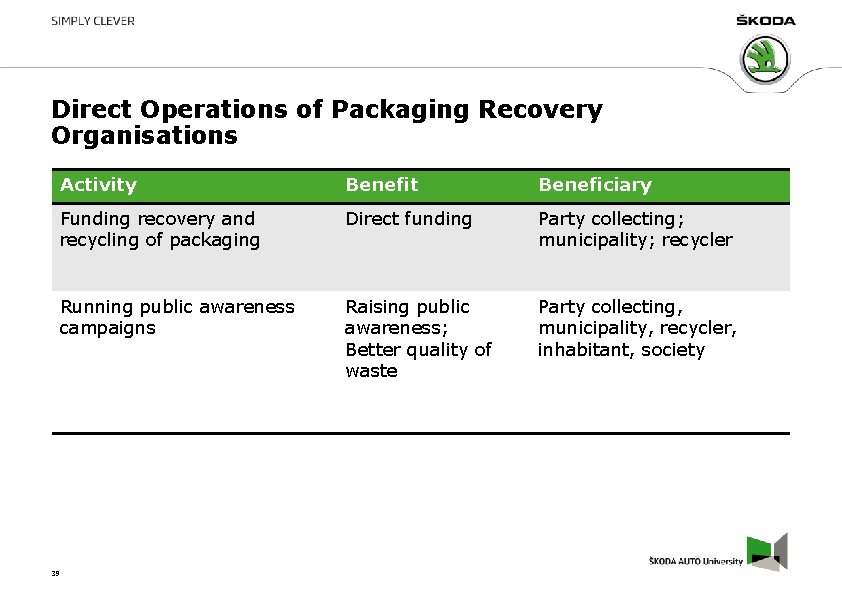
Direct Operations of Packaging Recovery Organisations Activity Benefit Beneficiary Funding recovery and recycling of packaging Direct funding Party collecting; municipality; recycler Raising public awareness; Better quality of waste Party collecting, municipality, recycler, inhabitant, society Running public awareness campaigns 39
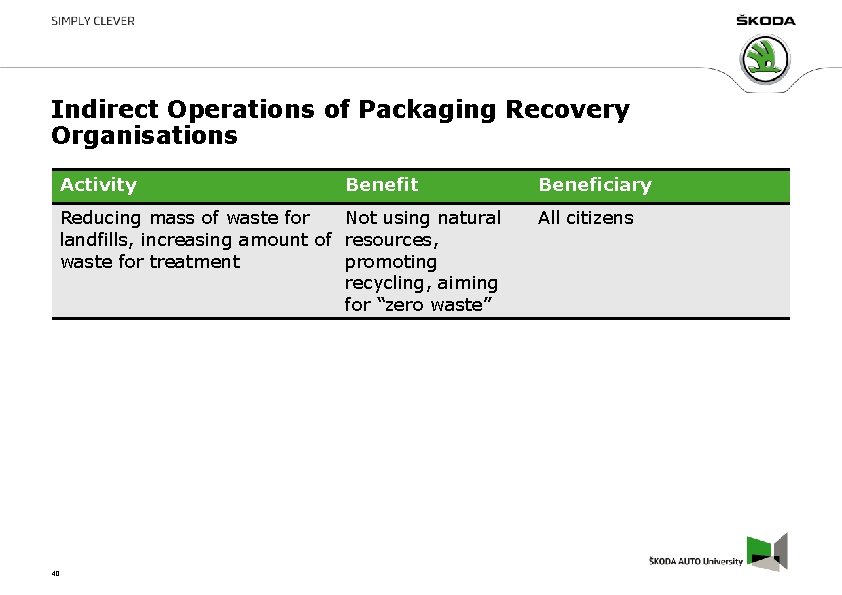
Indirect Operations of Packaging Recovery Organisations Activity Reducing mass of waste for landfills, increasing amount of waste for treatment 40 Benefit Beneficiary Not using natural resources, promoting recycling, aiming for “zero waste” All citizens
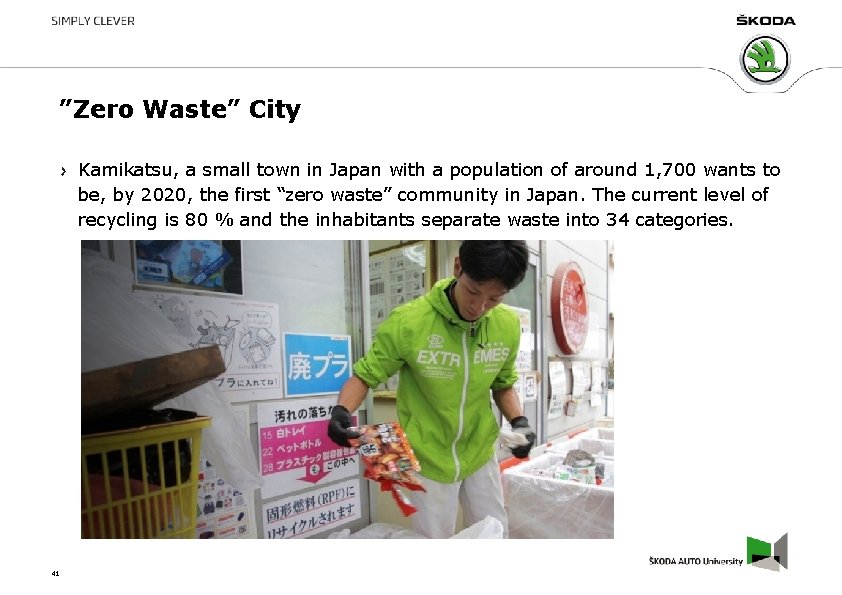
”Zero Waste” City Kamikatsu, a small town in Japan with a population of around 1, 700 wants to be, by 2020, the first “zero waste” community in Japan. The current level of recycling is 80 % and the inhabitants separate waste into 34 categories. 41
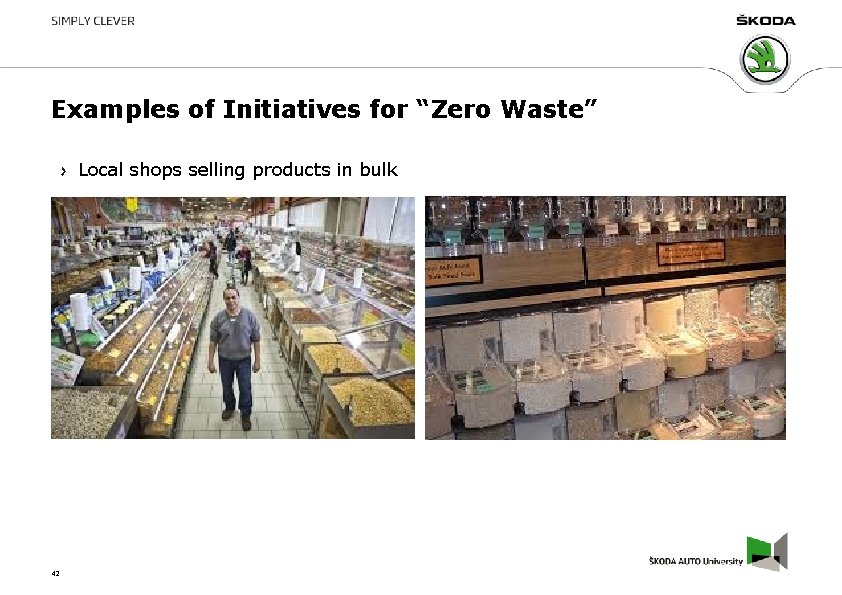
Examples of Initiatives for “Zero Waste” Local shops selling products in bulk 42
Game Changing Solutions Change of objective The objective is to empower communities to rethink their relationships with resources. We need to advocate for zero waste strategies in Europe and beyond, and organise the local groups who have the potential to drive change in their region. 43
Thanks for your attention 44