
Zero Waste Master Plan an Overview December 18
Zero Waste Master Plan – an Overview December 18, 2018

What is Zero Waste? § “Zero Waste is a goal that envisions…all discarded materials are designed to become resources for others to use. ” § But we must reduce & reuse first Zero Waste International Alliance http: //zwia. org/standards/zw-definition/

Purpose of the Plan • Meet City’s waste reduction goals • Continue to maintain high quality public services • Maximize operational efficiency • Protect employee health & safety • Reduce GHG emissions • Reduce costs

Current Waste Management System Trash Recycling Yard Waste Curbside Organics Household Hazardous Waste § Electronics § Bulky Waste § Recycling Center § § §
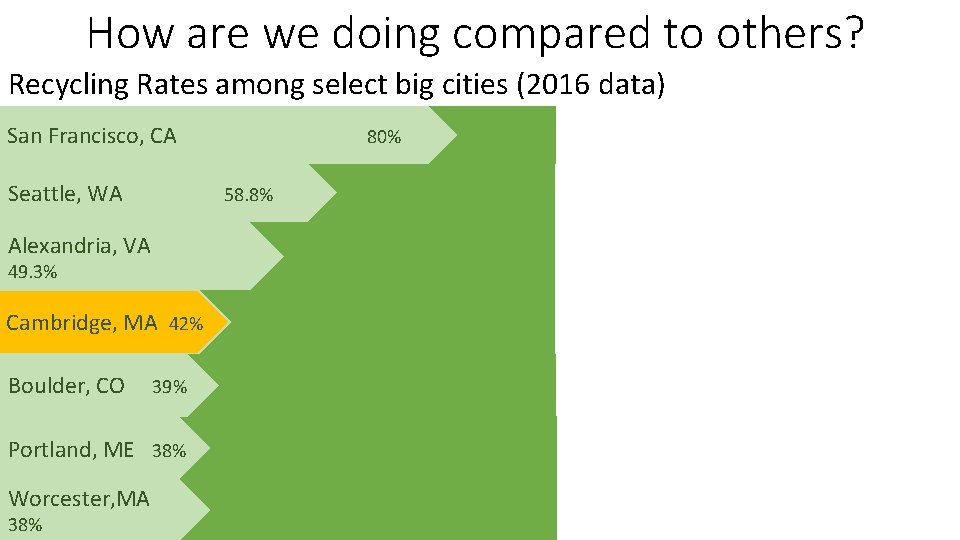
How are we doing compared to others? Recycling Rates among select big cities (2016 data) San Francisco, CA Seattle, WA 58. 8% Alexandria, VA 49. 3% Cambridge, MA 42% Boulder, CO 39% Portland, ME 38% Worcester, MA 38% 80%
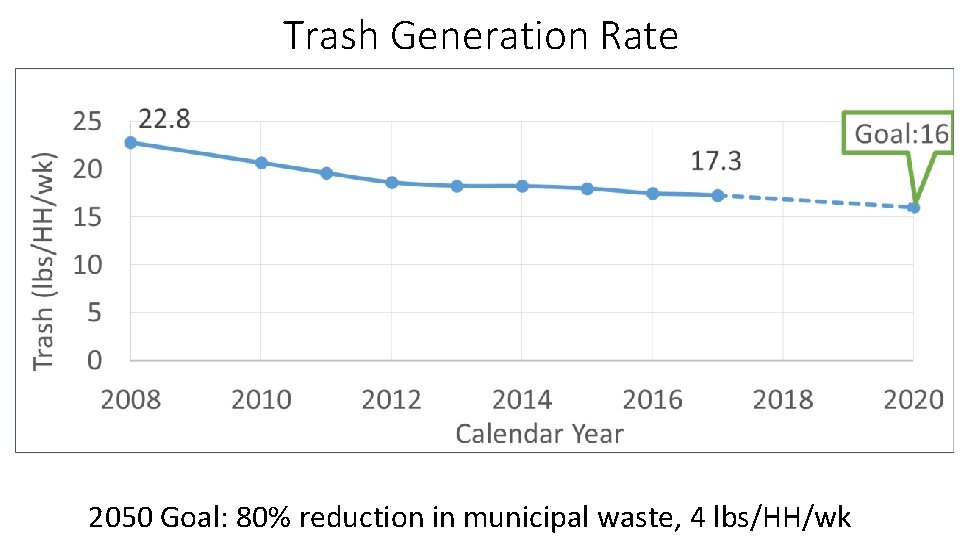
Trash Generation Rate 2050 Goal: 80% reduction in municipal waste, 4 lbs/HH/wk
![What’s still in our trash barrels? “Trash”; 30% [CATEGORY NAME]**, [VALUE] **Other: Textiles, Electronics,](http://slidetodoc.com/presentation_image_h2/0798041f2523b9d6825b1864003a16ae/image-7.jpg "What’s still in our trash barrels? “Trash”; 30% [CATEGORY NAME]**, [VALUE] **Other: Textiles, Electronics,")
What’s still in our trash barrels? “Trash”; 30% [CATEGORY NAME]**, [VALUE] **Other: Textiles, Electronics, Scrap metal Compostables; 41% Recycling; 16% DATA: 2016 waste audit
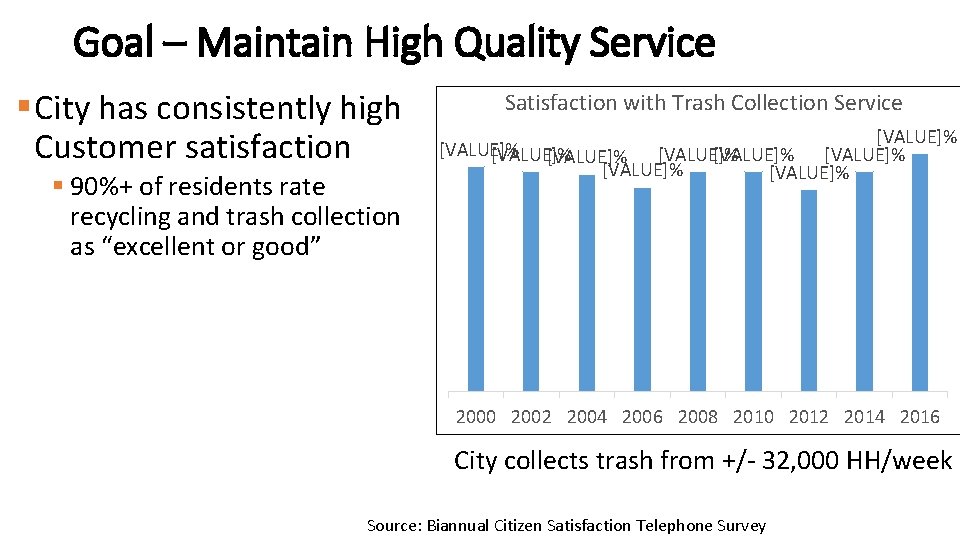
Goal – Maintain High Quality Service § City has consistently high Customer satisfaction § 90%+ of residents rate recycling and trash collection as “excellent or good” Satisfaction with Trash Collection Service [VALUE]% [VALUE]% [VALUE]% 2000 2002 2004 2006 2008 2010 2012 2014 2016 City collects trash from +/- 32, 000 HH/week Source: Biannual Citizen Satisfaction Telephone Survey
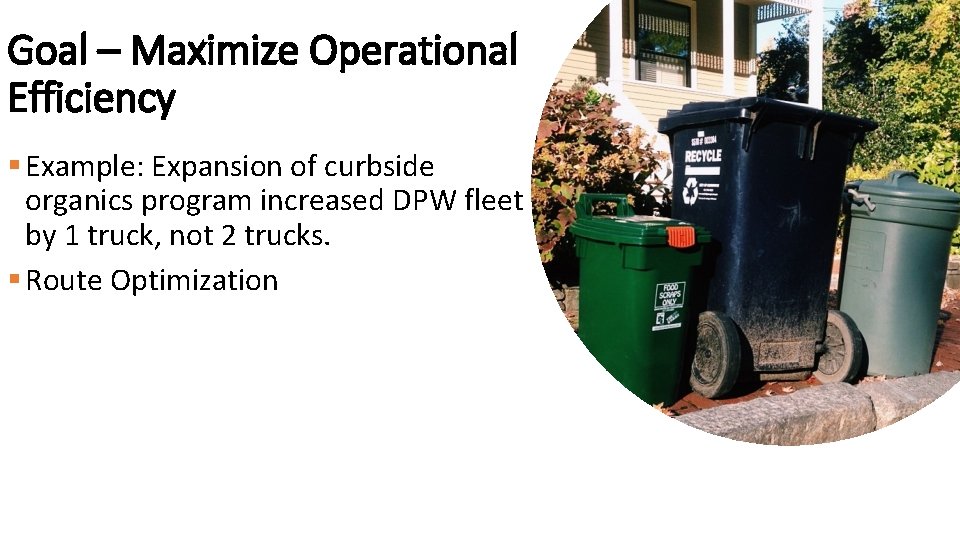
Goal – Maximize Operational Efficiency § Example: Expansion of curbside organics program increased DPW fleet by 1 truck, not 2 trucks. § Route Optimization
Goal – Protect Employee Health & Safety § Example: reduce lifting impacts with semiautomated curbside trash collection
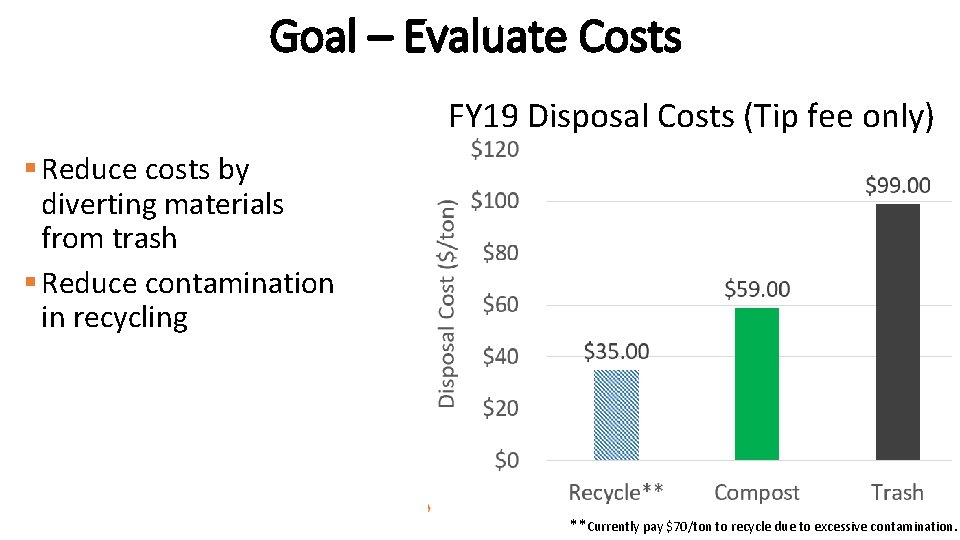
Goal – Evaluate Costs FY 19 Disposal Costs (Tip fee only) § Reduce costs by diverting materials from trash § Reduce contamination in recycling **Currently pay $70/ton to recycle due to excessive contamination.
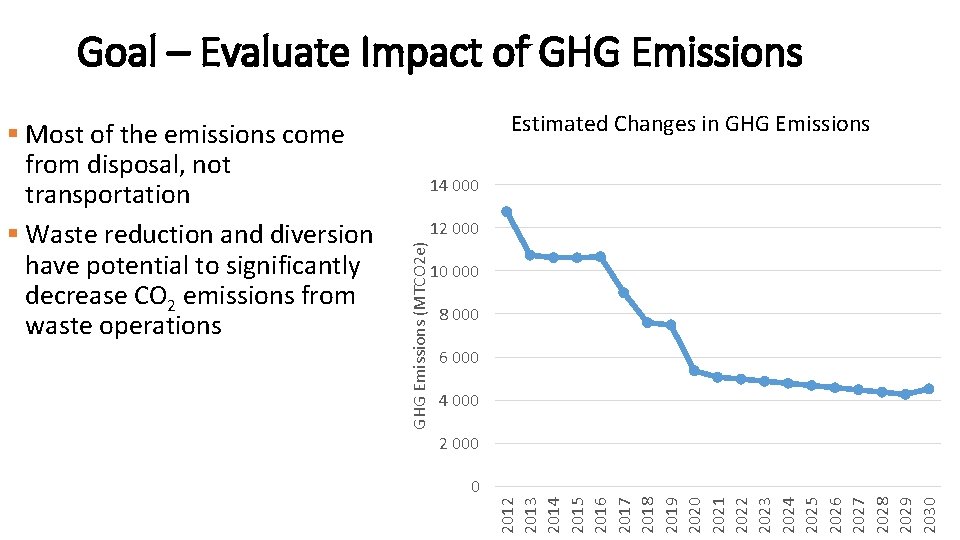
Goal – Evaluate Impact of GHG Emissions Estimated Changes in GHG Emissions 14 000 12 000 10 000 8 000 6 000 4 000 2 000 0 2012 2013 2014 2015 2016 2017 2018 2019 2020 2021 2022 2023 2024 2025 2026 2027 2028 2029 2030 GHG Emissions (MTCO 2 e) § Most of the emissions come from disposal, not transportation § Waste reduction and diversion have potential to significantly decrease CO 2 emissions from waste operations
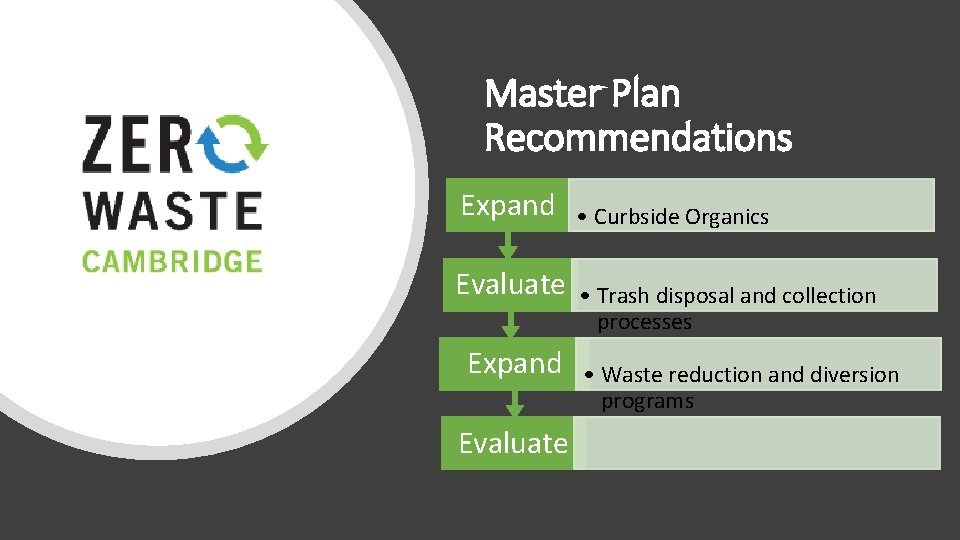
Master Plan Recommendations Expand Evaluate • Curbside Organics • Trash disposal and collection processes • Waste reduction and diversion programs
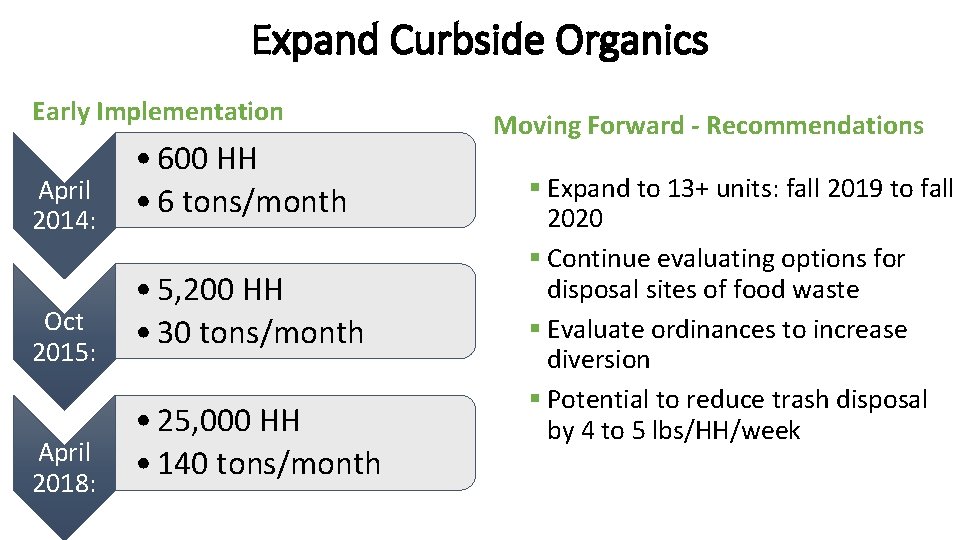
Expand Curbside Organics Early Implementation April 2014: Oct 2015: April 2018: • 600 HH • 6 tons/month • 5, 200 HH • 30 tons/month • 25, 000 HH • 140 tons/month Moving Forward - Recommendations § Expand to 13+ units: fall 2019 to fall 2020 § Continue evaluating options for disposal sites of food waste § Evaluate ordinances to increase diversion § Potential to reduce trash disposal by 4 to 5 lbs/HH/week
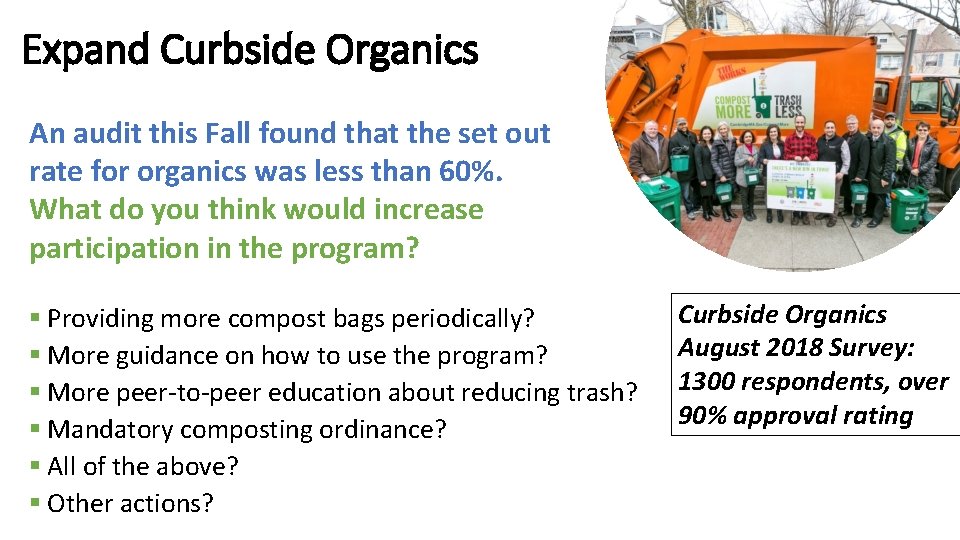
Expand Curbside Organics An audit this Fall found that the set out rate for organics was less than 60%. What do you think would increase participation in the program? § Providing more compost bags periodically? § More guidance on how to use the program? § More peer-to-peer education about reducing trash? § Mandatory composting ordinance? § All of the above? § Other actions? Curbside Organics August 2018 Survey: 1300 respondents, over 90% approval rating
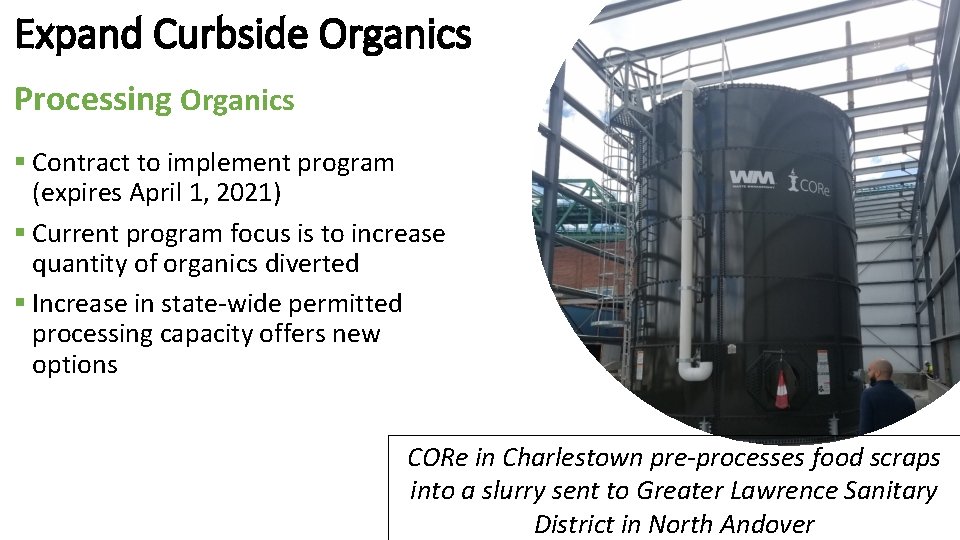
Expand Curbside Organics Processing Organics § Contract to implement program (expires April 1, 2021) § Current program focus is to increase quantity of organics diverted § Increase in state-wide permitted processing capacity offers new options CORe in Charlestown pre-processes food scraps into a slurry sent to Greater Lawrence Sanitary District in North Andover
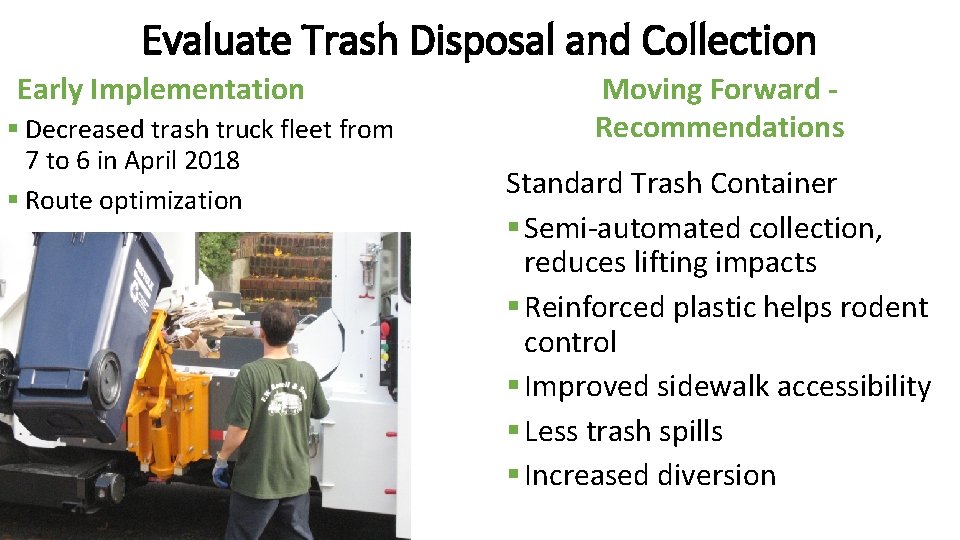
Evaluate Trash Disposal and Collection Early Implementation § Decreased trash truck fleet from 7 to 6 in April 2018 § Route optimization Moving Forward Recommendations Standard Trash Container § Semi-automated collection, reduces lifting impacts § Reinforced plastic helps rodent control § Improved sidewalk accessibility § Less trash spills § Increased diversion
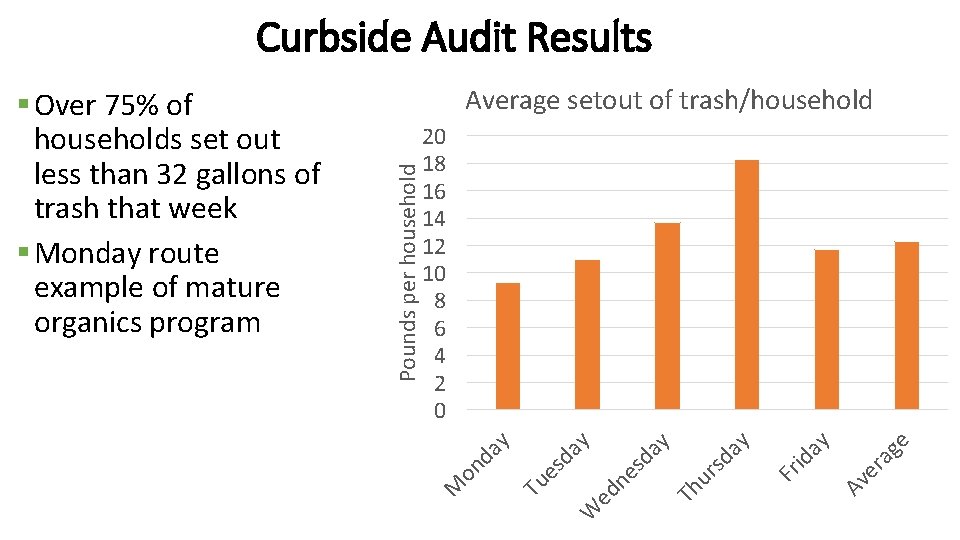
Curbside Audit Results Average setout of trash/household ag e er Av id ay Fr da y Th ur s ay sd W ed ne sd ay Tu e on da y 20 18 16 14 12 10 8 6 4 2 0 M Pounds per household § Over 75% of households set out less than 32 gallons of trash that week § Monday route example of mature organics program
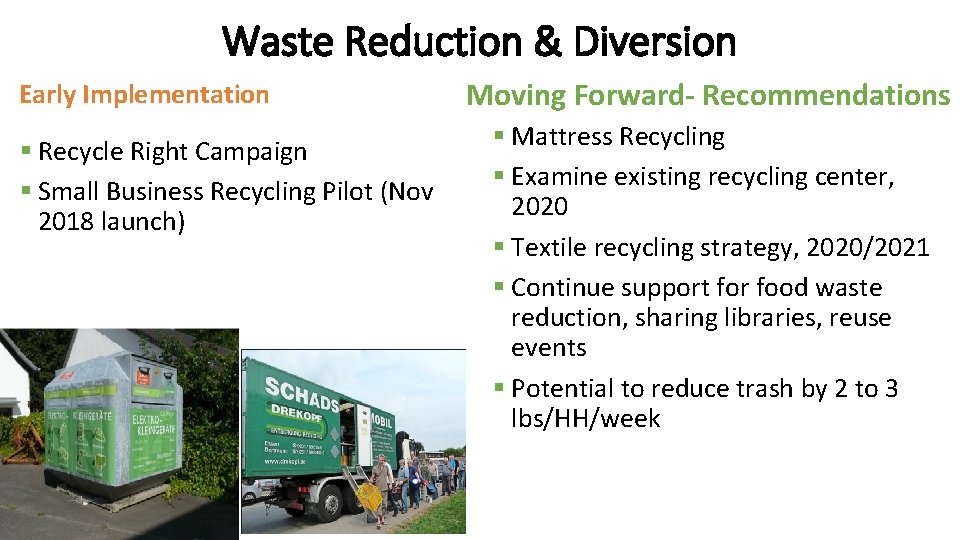
Waste Reduction & Diversion Early Implementation § Recycle Right Campaign § Small Business Recycling Pilot (Nov 2018 launch) Moving Forward- Recommendations § Mattress Recycling § Examine existing recycling center, 2020 § Textile recycling strategy, 2020/2021 § Continue support for food waste reduction, sharing libraries, reuse events § Potential to reduce trash by 2 to 3 lbs/HH/week
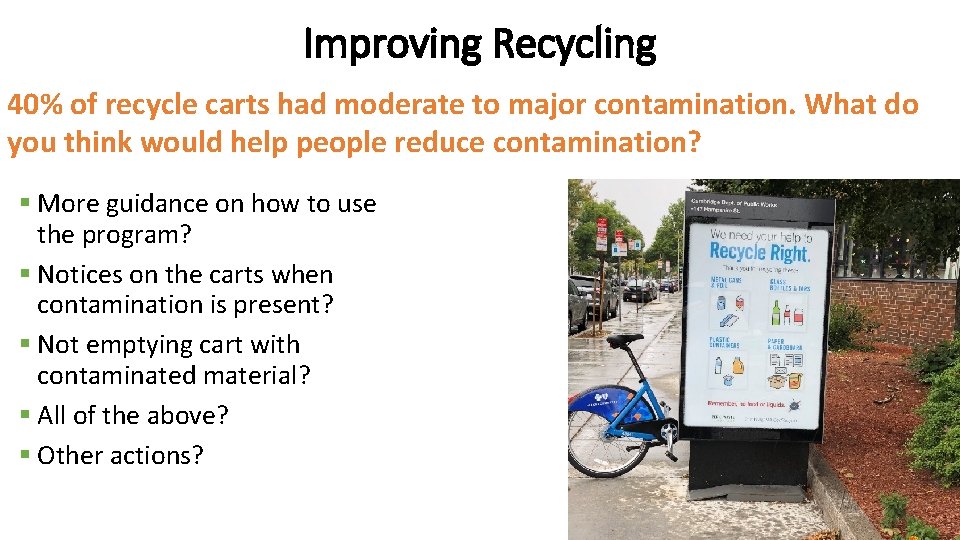
Improving Recycling 40% of recycle carts had moderate to major contamination. What do you think would help people reduce contamination? § More guidance on how to use the program? § Notices on the carts when contamination is present? § Not emptying cart with contaminated material? § All of the above? § Other actions?
Evaluate Existing City Policies Early Implementation § BYOB and Polystyrene Ordinances, 2016 (50 to 80% reduction in singleuse bag consumption) § Mandatory Recycling Ordinance Moving Forward- Recommendations § Reduction in Trash Setout (from 150 gallons/HH to one standard trash container)
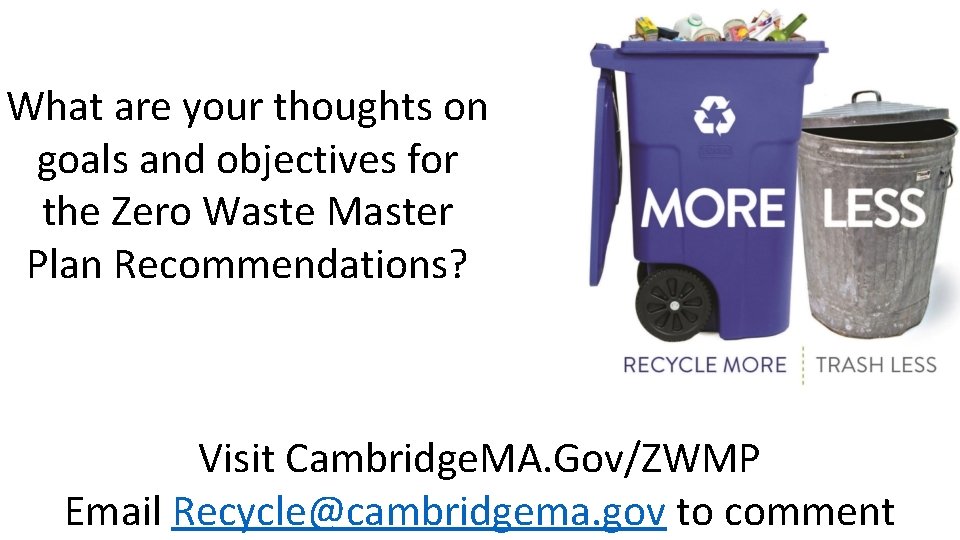
What are your thoughts on goals and objectives for the Zero Waste Master Plan Recommendations? Visit Cambridge. MA. Gov/ZWMP Email Recycle@cambridgema. gov to comment
- Slides: 22