
ZARA Leader Of Best Practices in Fast Fashion

ZARA – Leader Of Best Practices in Fast Fashion Dong Chen Ceyla Özdemir Xin Chen
Agenda 1 - Overview of ‘Fast Fashion’ 2 - Facts & Figures – Historic development of Zara 3 - Zara’s Organization of Operations & Supply Chain 4 - Comparison with H&M 5 - Assessment of best practices in SCM 6 - Future Development 7 - Conclusion

1 - Fast Fashion 1. Short life-cycles 2. High volatility 3. 4. Low predictability High impulse purchasing • Consumers are empowered and demand a continuous supply of new products • Empty shelves channels consumers to other products in the store • Perception of a small purchasing window motivates people to visit frequently • Avoidance of costly overproduction and subsequent sales and discounting “This business is all about reducing stock time. In fashion stock is like food. It goes bad quick. ” - Former CEO of Inditex, Jose Maria Castellano
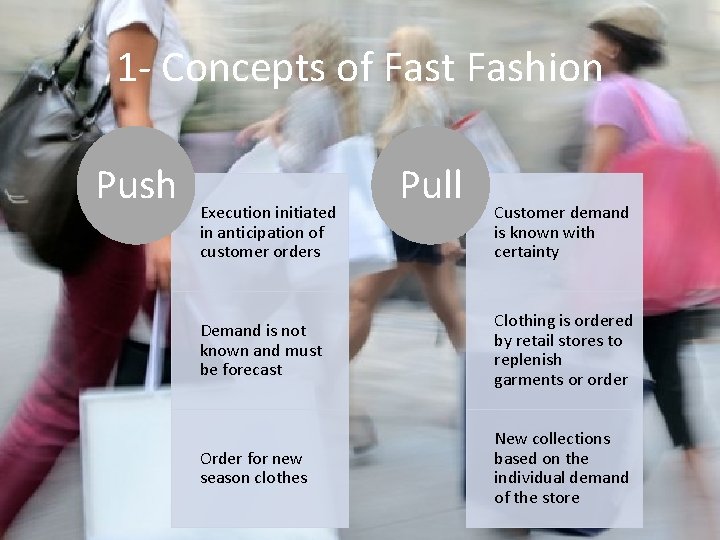
1 - Concepts of Fast Fashion Push Execution initiated in anticipation of customer orders Pull Customer demand is known with certainty Demand is not known and must be forecast Clothing is ordered by retail stores to replenish garments or order Order for new season clothes New collections based on the individual demand of the store
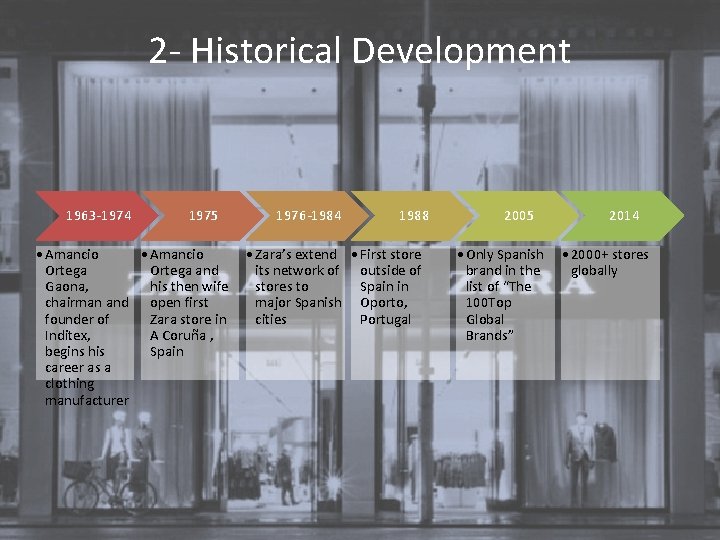
2 - Historical Development 1963 -1974 1975 • Amancio Ortega and Gaona, his then wife chairman and open first founder of Zara store in Inditex, A Corun a , begins his Spain career as a clothing manufacturer 1976 -1984 1988 • Zara’s extend • First store its network of outside of stores to Spain in major Spanish Oporto, cities Portugal 2005 • Only Spanish brand in the list of “The 100 Top Global Brands” 2014 • 2000+ stores globally

3 - Zara’s Operations & SCM

Creative departments: 3 areas, 300 + staff Samples: prototypes made inhouse and by suppliers Delivery: garments arrive in store within 48 hours of ordering Shipping: from logistic centers to stores via planes and trucks (3 in Spain) DESIGN/PRODUCT/MARKET CYCLE: Final Design = 1 day Manufacture = 3 -8 days Transport = 1 -2 days Selling = 17 -20 days Total = 22 -30 days Mattress: material for garments laid out in layers and marked Cutting: a machine cuts the fabric according to the patterns (own automated facilities) Finishing: garments are pressed, dressed and quality checked Sewing: cut fabric is shipped to workshops to be stitched (outsourced)
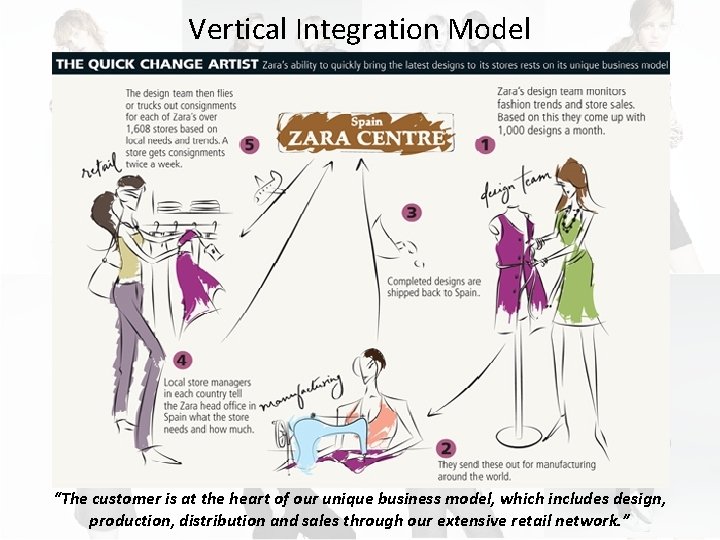
Vertical Integration Model “The customer is at the heart of our unique business model, which includes design, production, distribution and sales through our extensive retail network. ”
VIDEO: https: //www. youtube. com/watch? v=qh. CM 0 F 81 v. Eg
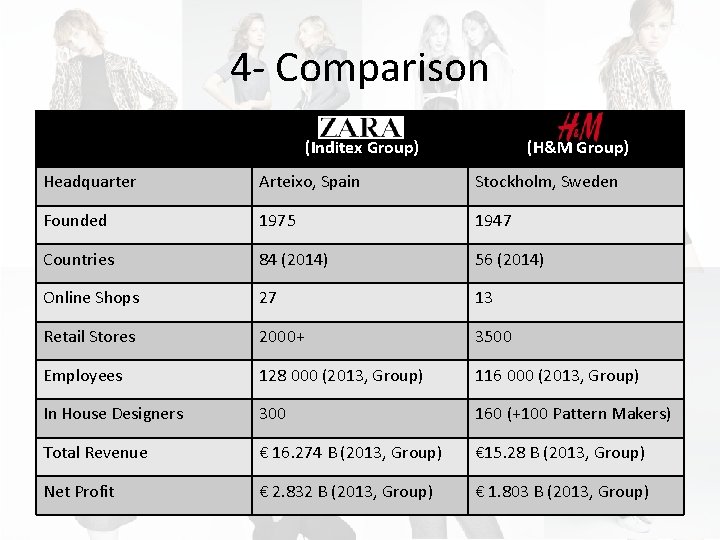
4 - Comparison (Inditex Group) (H&M Group) Headquarter Arteixo, Spain Stockholm, Sweden Founded 1975 1947 Countries 84 (2014) 56 (2014) Online Shops 27 13 Retail Stores 2000+ 3500 Employees 128 000 (2013, Group) 116 000 (2013, Group) In House Designers 300 160 (+100 Pattern Makers) Total Revenue € 16. 274 B (2013, Group) € 15. 28 B (2013, Group) Net Profit € 2. 832 B (2013, Group) € 1. 803 B (2013, Group)
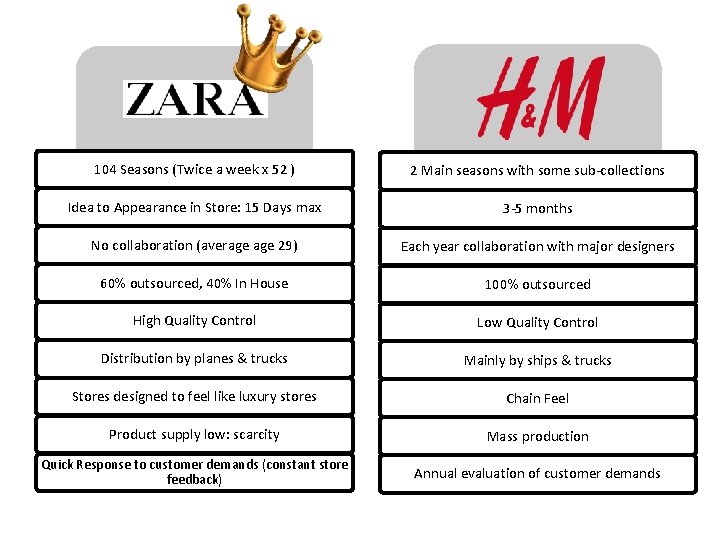
104 Seasons (Twice a week x 52 ) 2 Main seasons with some sub-collections Idea to Appearance in Store: 15 Days max 3 -5 months No collaboration (average 29) Each year collaboration with major designers 60% outsourced, 40% In House 100% outsourced High Quality Control Low Quality Control Distribution by planes & trucks Mainly by ships & trucks Stores designed to feel like luxury stores Chain Feel Product supply low: scarcity Mass production Quick Response to customer demands (constant store feedback) Annual evaluation of customer demands

5 - Assessment of best SCM practices Automated Layouts The design team electronically sends the patterns to the production facility, where a prototype is made. The patterns are optimized via computer so that no fabric is wasted.
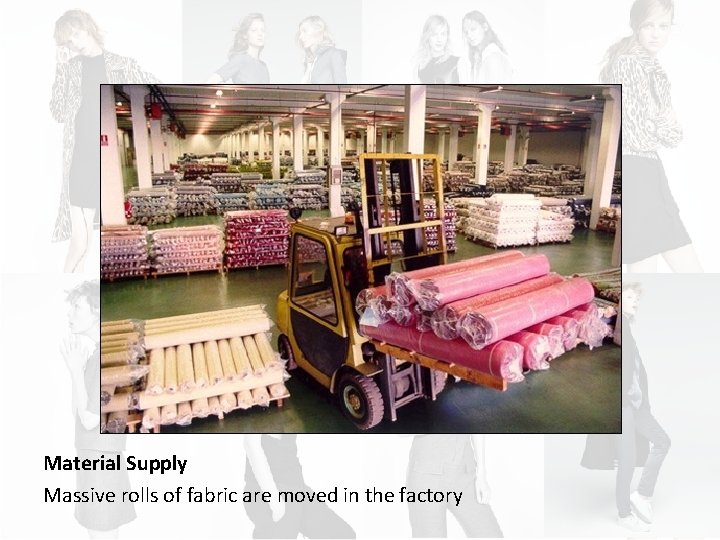
Material Supply Massive rolls of fabric are moved in the factory
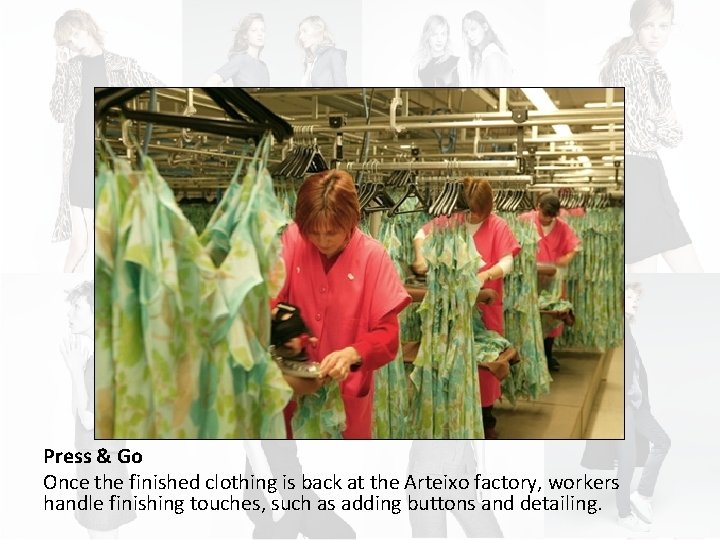
Press & Go Once the finished clothing is back at the Arteixo factory, workers handle finishing touches, such as adding buttons and detailing.
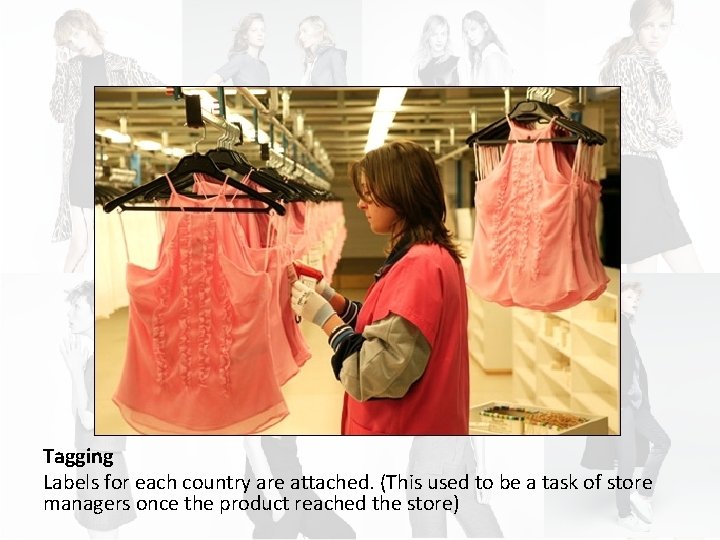
Tagging Labels for each country are attached. (This used to be a task of store managers once the product reached the store)

Underground Journey Once tagged, the garments are sent to Zara’s nearby distribution center via tunnel.
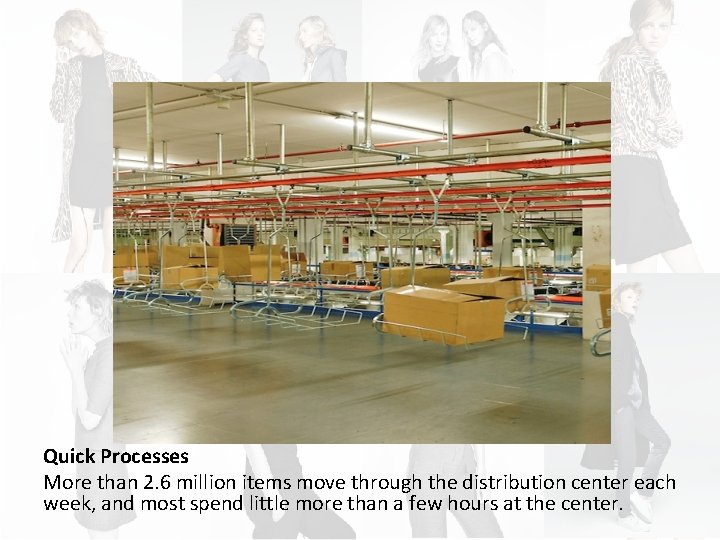
Quick Processes More than 2. 6 million items move through the distribution center each week, and most spend little more than a few hours at the center.
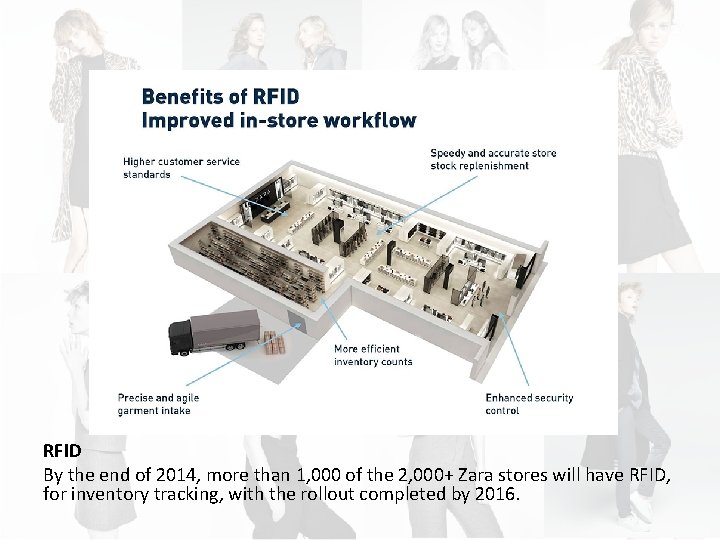
RFID By the end of 2014, more than 1, 000 of the 2, 000+ Zara stores will have RFID, for inventory tracking, with the rollout completed by 2016.
6 - Future Recommendations Setting up local design centers to design products for the own region product with regional Aesthetic and cut. eg. ZARA is not that successful in China although they expanded fast in China. Setup own production center with high effiency and high speed operation nearby important market like Asia and America. Setup local distribution centers to save the expensive air freight costs and custom taxes. eg in China ZARA is 30% more expensive than in Europe. Marketing and advertisement in a unkown market like China and US.
7 - Conclusion Design, speed and responsiveness are more important than costs Smart marketing concept, no more than 2 extra orders, even for best sellers. Centralized production nearby Spain was the key for speed Creating more and more the look/feel of luxury stores Encourages customer to buy immediately Creates scarcity of its products and therefore can maintain the price No advertisement on public channel, only through the store and the loyal customers Small production volume leads to less than 10% of leftover stock High cost Supply chain management with low inventory and higher profit margins, which maximizes revenues
- Slides: 21