
YWAM Belo Horizonte HIVAIDS School HIVAIDS Training Adults
YWAM Belo Horizonte HIV/AIDS School HIV/AIDS Training
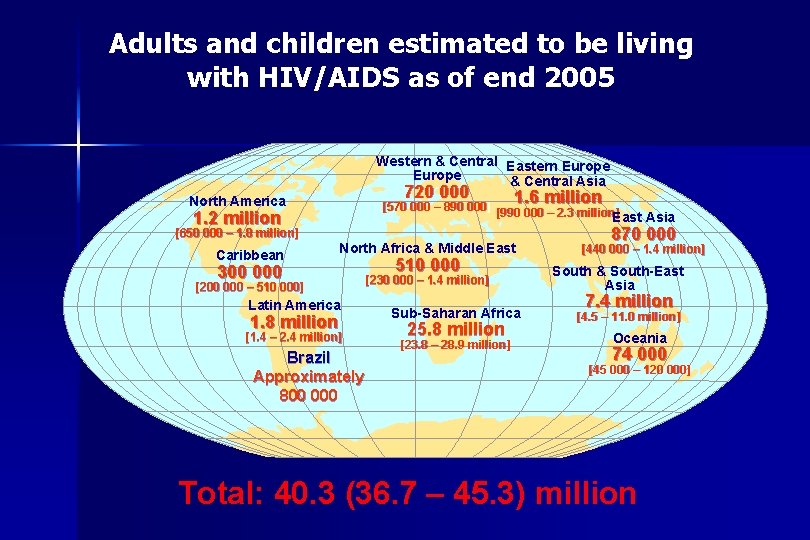
Adults and children estimated to be living with HIV/AIDS as of end 2005 Western & Central Eastern Europe & Central Asia 720 000 North America 1. 6 million [570 000 – 890 000] [990 000 – 2. 3 million] East Asia 1. 2 million [650 000 – 1. 8 million] Caribbean North Africa & Middle East 300 000 [200 000 – 510 000] Latin America 1. 8 million [1. 4 – 2. 4 million] Brazil Approximately 800 000 510 000 [230 000 – 1. 4 million] Sub-Saharan Africa 25. 8 million [23. 8 – 28. 9 million] 870 000 [440 000 – 1. 4 million] South & South-East Asia 7. 4 million [4. 5 – 11. 0 million] Oceania 74 000 [45 000 – 120 000] Total: 40. 3 (36. 7 – 45. 3) million
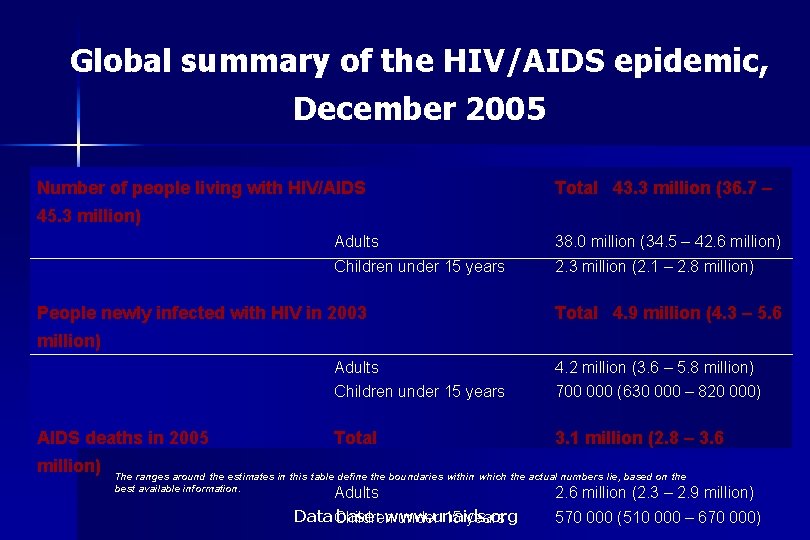
Global summary of the HIV/AIDS epidemic, December 2005 Number of people living with HIV/AIDS Total 43. 3 million (36. 7 – 45. 3 million) Adults 38. 0 million (34. 5 – 42. 6 million) Children under 15 years 2. 3 million (2. 1 – 2. 8 million) People newly infected with HIV in 2003 Total 4. 9 million (4. 3 – 5. 6 million) AIDS deaths in 2005 million) Adults 4. 2 million (3. 6 – 5. 8 million) Children under 15 years 700 000 (630 000 – 820 000) Total 3. 1 million (2. 8 – 3. 6 The ranges around the estimates in this table define the boundaries within which the actual numbers lie, based on the best available information. Adults Data Children base: www. unaids. org under 15 years 2. 6 million (2. 3 – 2. 9 million) 570 000 (510 000 – 670 000)
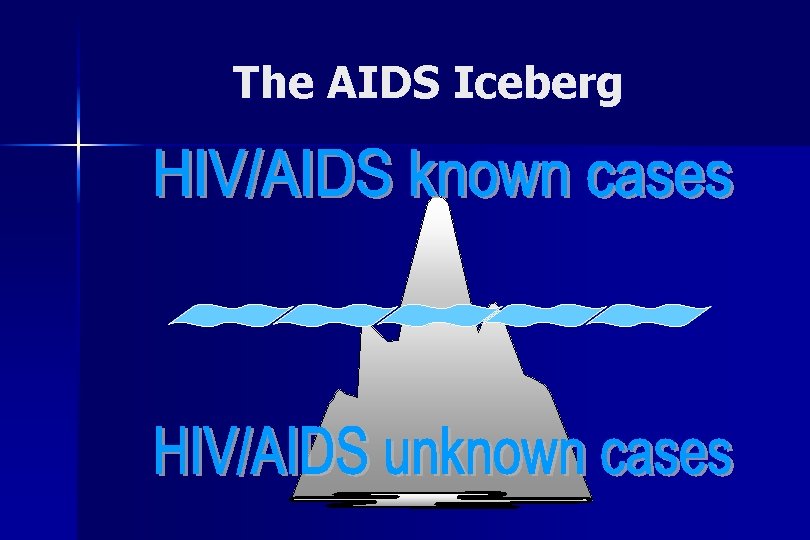
The AIDS Iceberg
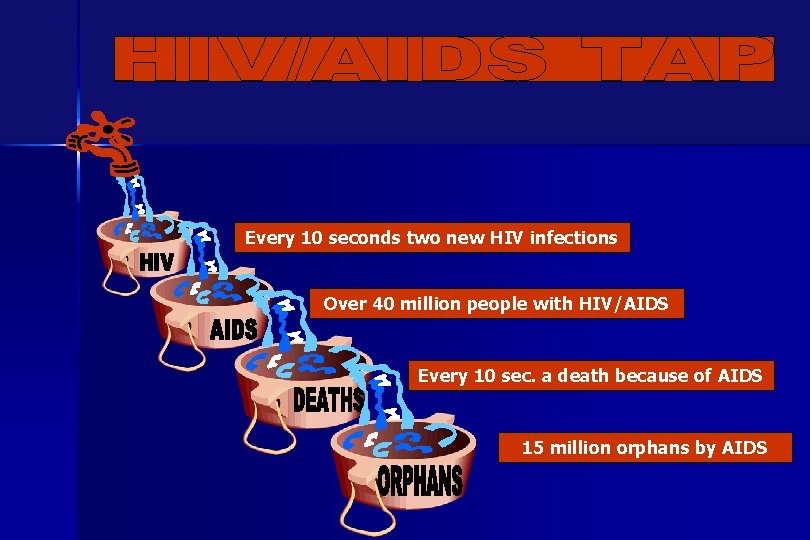
Every 10 seconds two new HIV infections Over 40 million people with HIV/AIDS Every 10 sec. a death because of AIDS 15 million orphans by AIDS
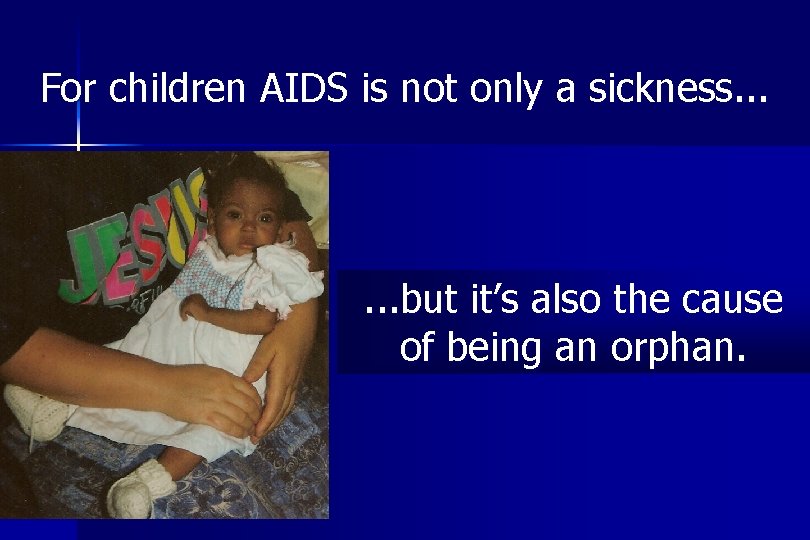
For children AIDS is not only a sickness. . . but it’s also the cause of being an orphan.
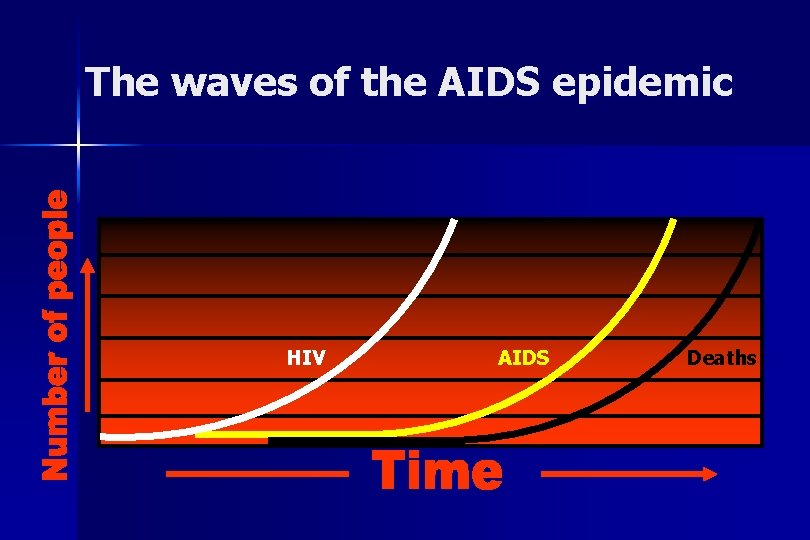
The waves of the AIDS epidemic HIV AIDS Deaths
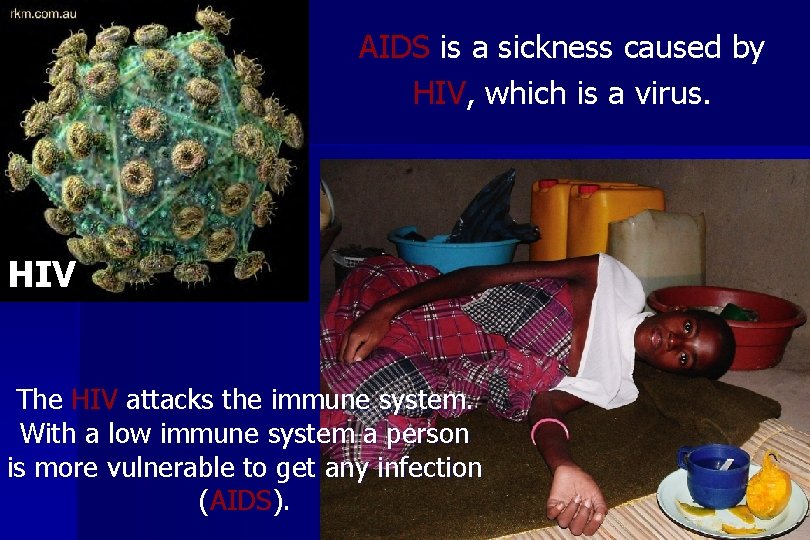
AIDS is a sickness caused by HIV, which is a virus. HIV The HIV attacks the immune system. With a low immune system a person is more vulnerable to get any infection (AIDS).
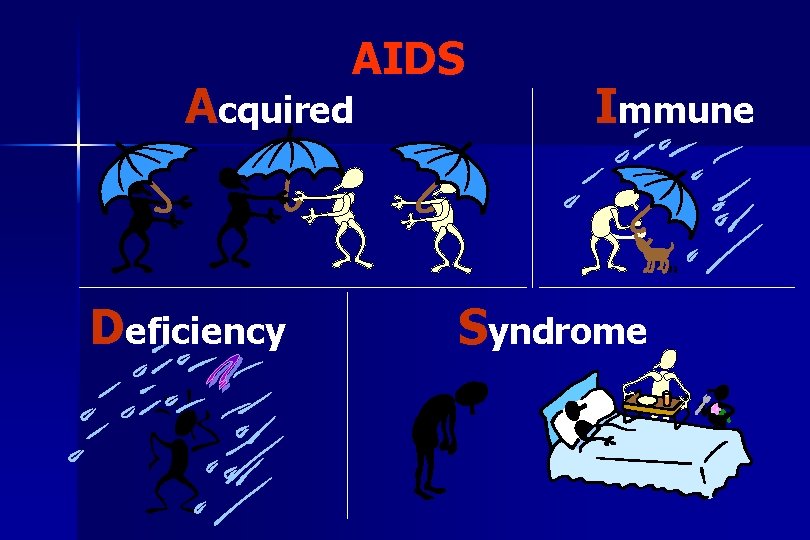
AIDS Acquired Deficiency Immune Syndrome
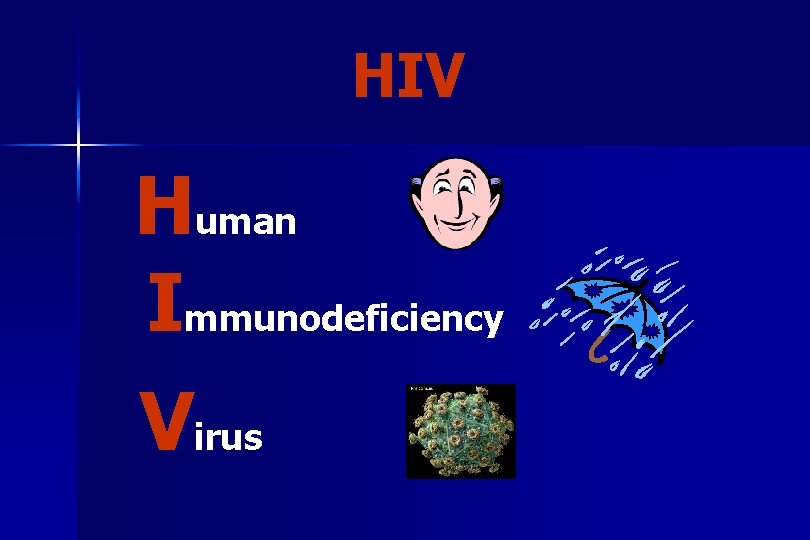
HIV Human Immunodeficiency Virus
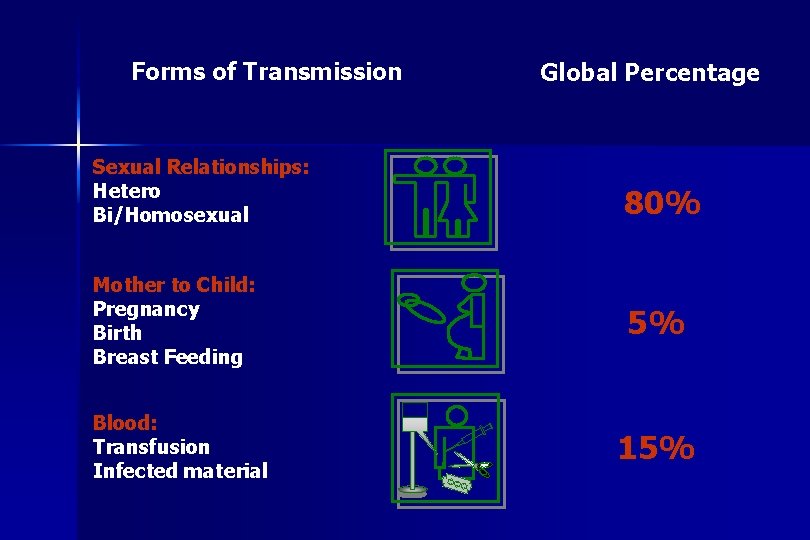
Forms of Transmission Sexual Relationships: Hetero Bi/Homosexual Mother to Child: Pregnancy Birth Breast Feeding Blood: Transfusion Infected material Global Percentage 80% 5% 15%
Body fluids that can transmit HIV Blood Semen Vaginal fluid Breast milk
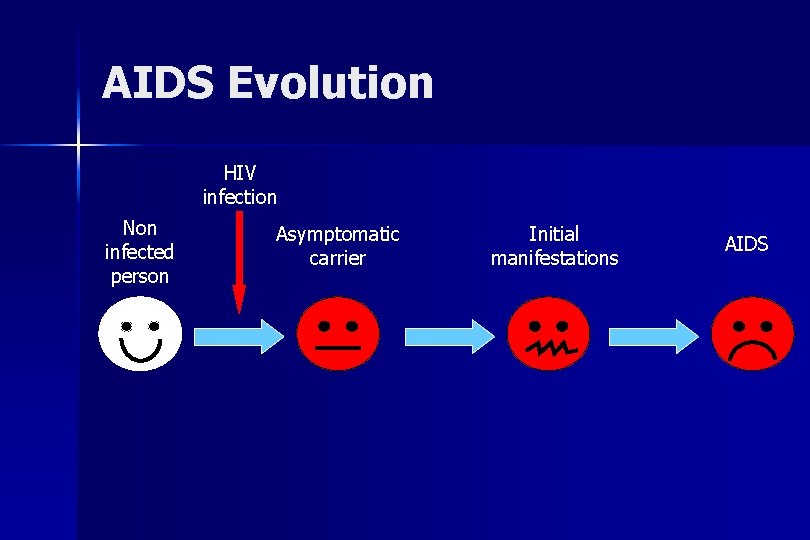
AIDS Evolution HIV infection Non infected person Asymptomatic carrier Initial manifestations AIDS

Initial Manifestations Headache Weakness Losing weight Diarrhoea Fever Sweating Swollen lymph nodes
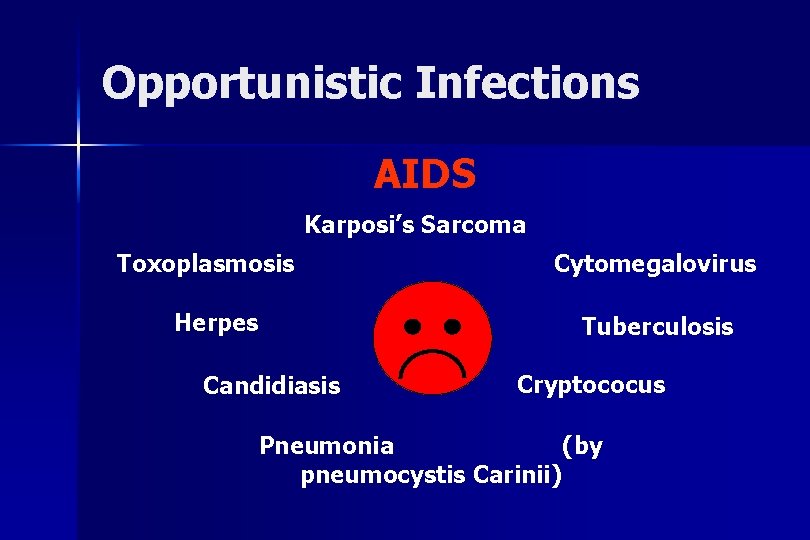
Opportunistic Infections AIDS Karposi’s Sarcoma Toxoplasmosis Herpes Candidiasis Cytomegalovirus Tuberculosis Cryptococus Pneumonia (by pneumocystis Carinii)
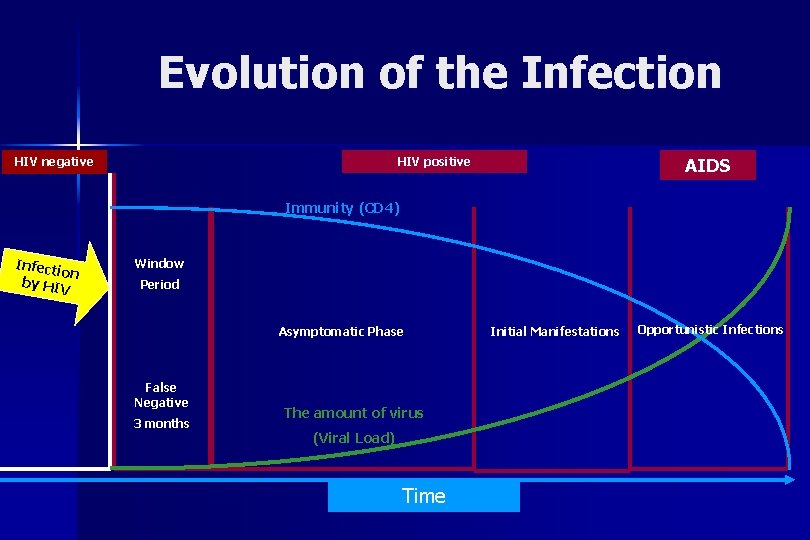
Evolution of the Infection HIV negative AIDS HIV positive Immunity (CD 4) Infect ion by HIV Window Period Asymptomatic Phase False Negative 3 months The amount of virus (Viral Load) Time Initial Manifestations Opportunistic Infections
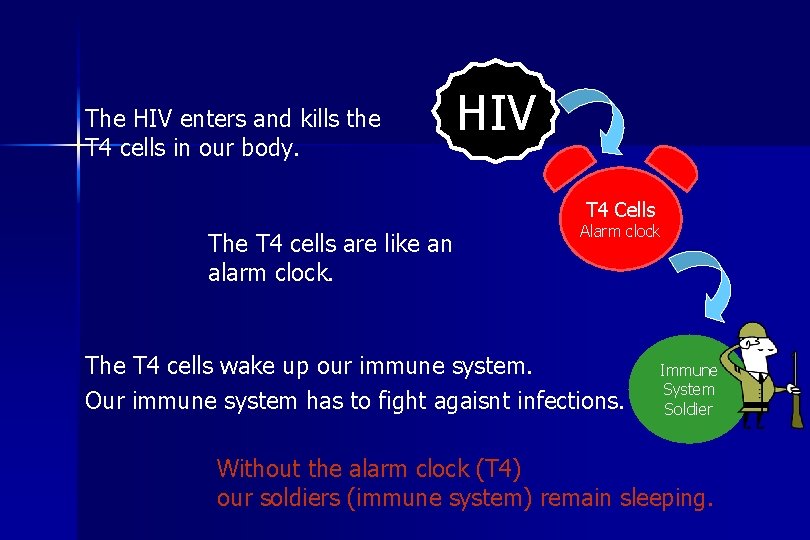
The HIV enters and kills the T 4 cells in our body. HIV T 4 Cells The T 4 cells are like an alarm clock. Alarm clock The T 4 cells wake up our immune system. Our immune system has to fight agaisnt infections. Immune System Soldier Without the alarm clock (T 4) our soldiers (immune system) remain sleeping.
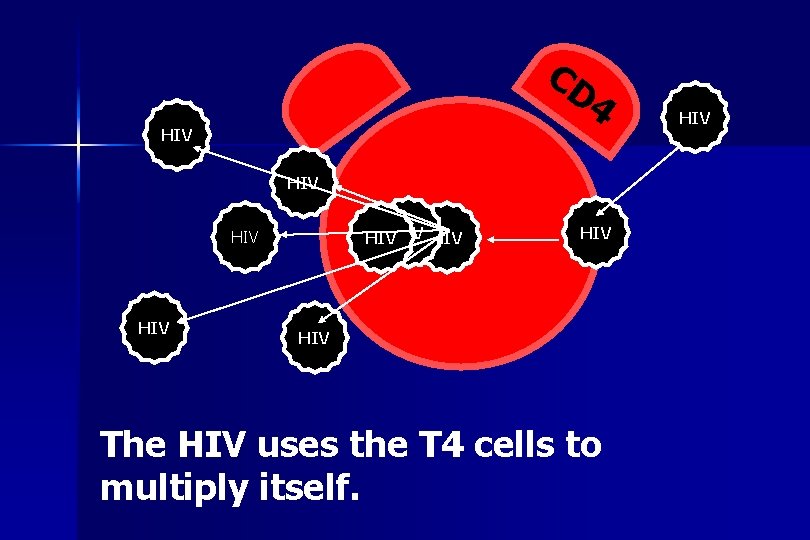
CD 4 HIV HIVHIV HIV HIV The HIV uses the T 4 cells to multiply itself. HIV
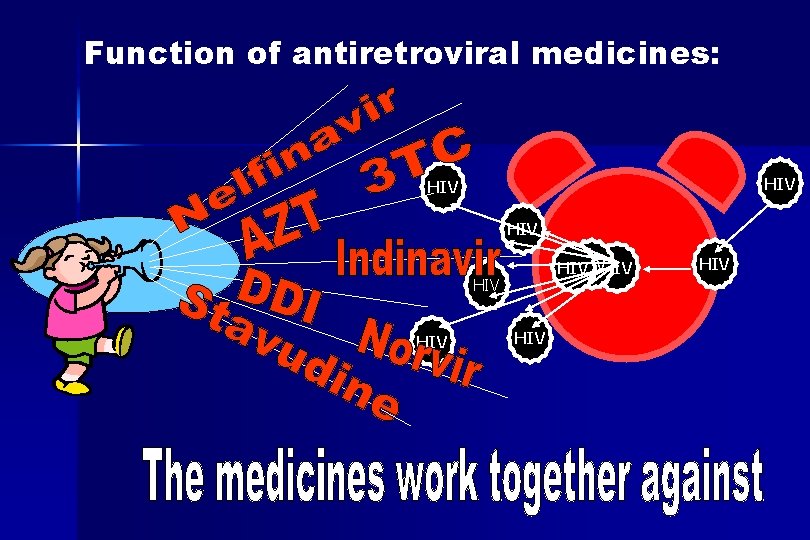
Function of antiretroviral medicines: HIV HIVHIV HIV HIV
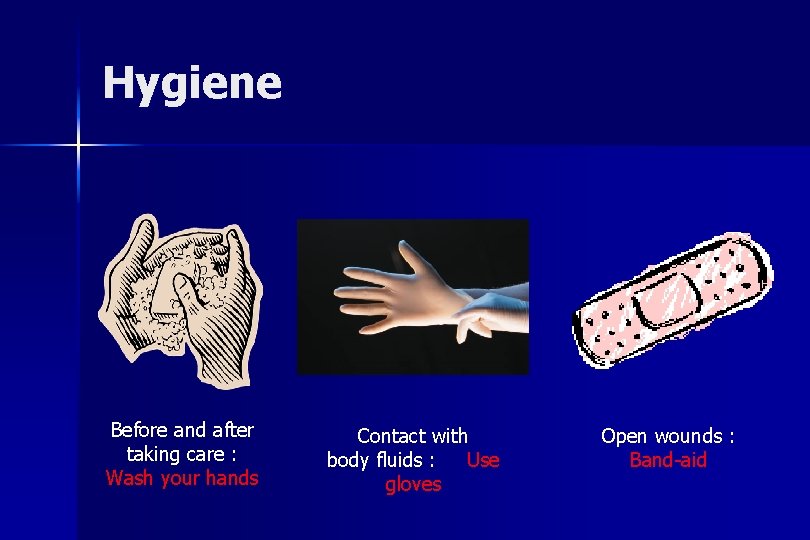
Hygiene Before and after taking care : Wash your hands Contact with body fluids : Use gloves Open wounds : Band-aid
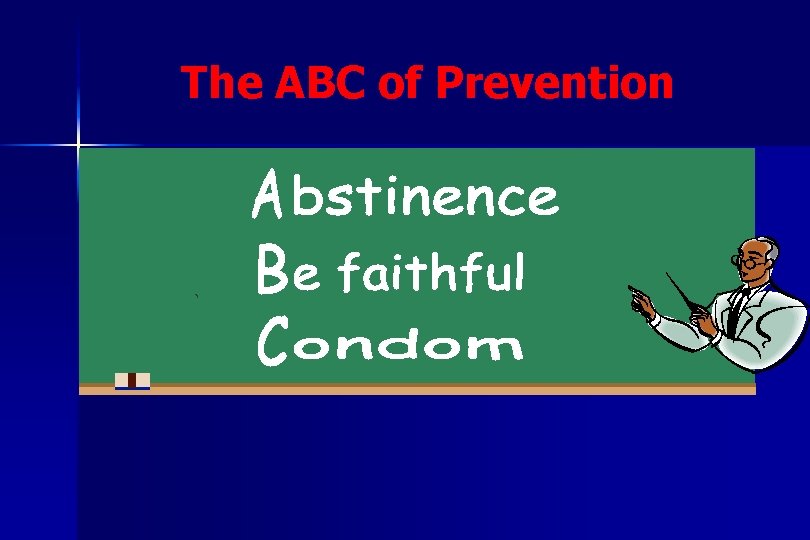
The ABC of Prevention
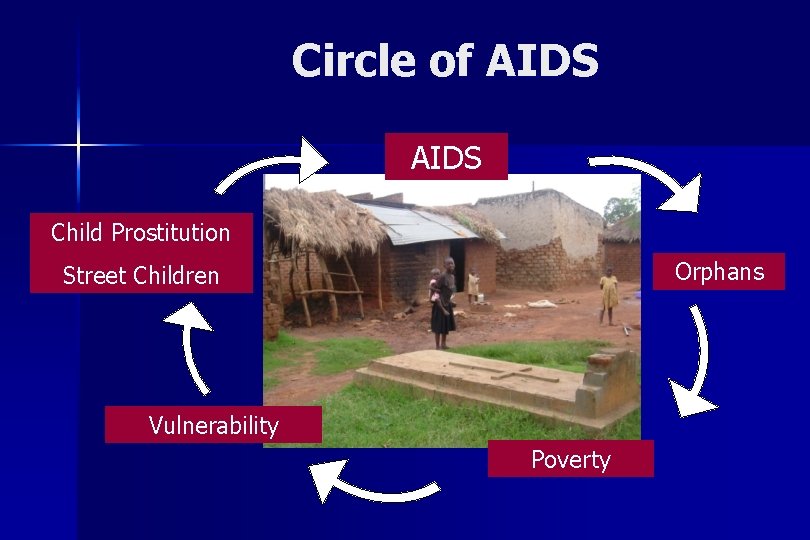
Circle of AIDS Child Prostitution Orphans Street Children Vulnerability Poverty
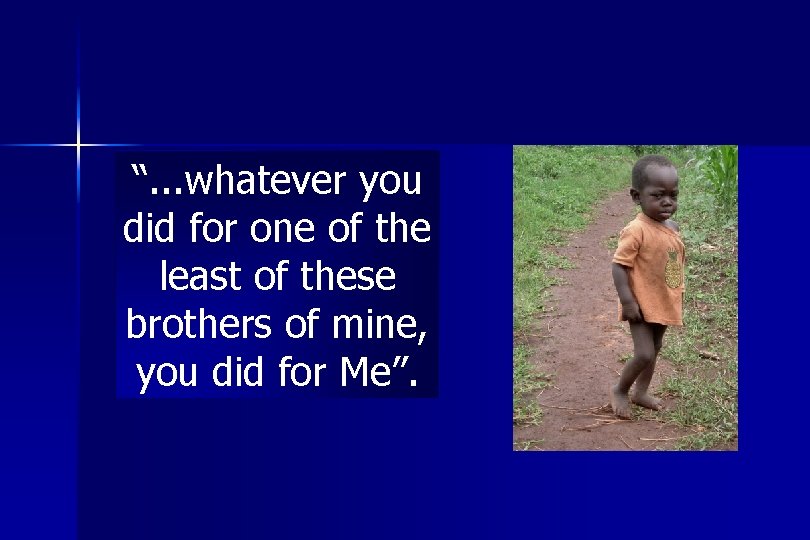
“. . . whatever you did for one of the least of these brothers of mine, you did for Me”.
Contacts HIV/AIDS School – YWAM BH/Centro Caixa Postal 438 CEP 30. 123 -970 Belo Horizonte – MG Brazil Fone: (031) 3463 8116 E-mail: bhcentro@jocum. org. br Website: www. bhcentro. jocum. org. br This material was produced by: Carla van der Kooij José Wilson Gaudêncio Ramos
- Slides: 24