
YSZ Pellets for Solid Oxide Fuel Cells Final
- Slides: 20
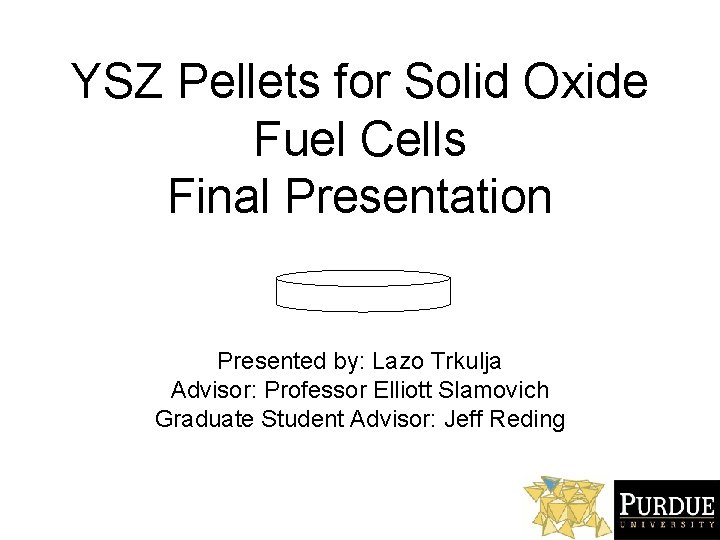
YSZ Pellets for Solid Oxide Fuel Cells Final Presentation Presented by: Lazo Trkulja Advisor: Professor Elliott Slamovich Graduate Student Advisor: Jeff Reding
Outline • Overview of SOFC’s • Showing how research fits into big picture • YSZ pellet processes • Ball milling, pressing, bisquing • Obtaining Data for comparisons • Profilometer and peak edge removal measurements • Results and Conclusions
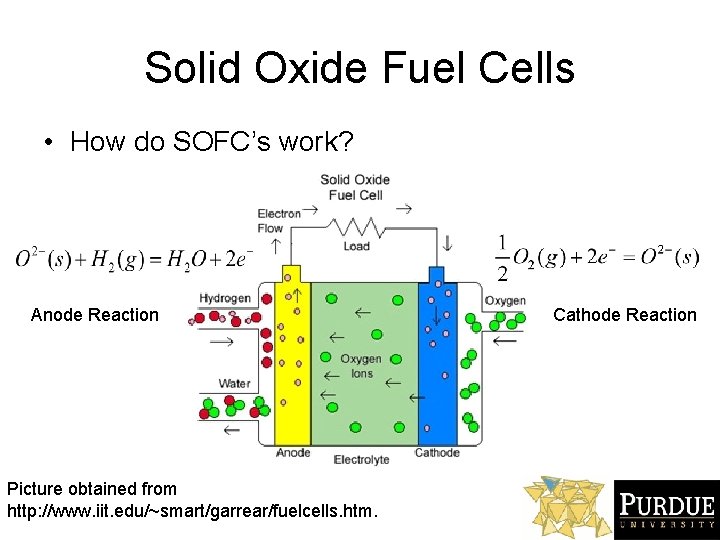
Solid Oxide Fuel Cells • How do SOFC’s work? Anode Reaction Picture obtained from http: //www. iit. edu/~smart/garrear/fuelcells. htm. Cathode Reaction
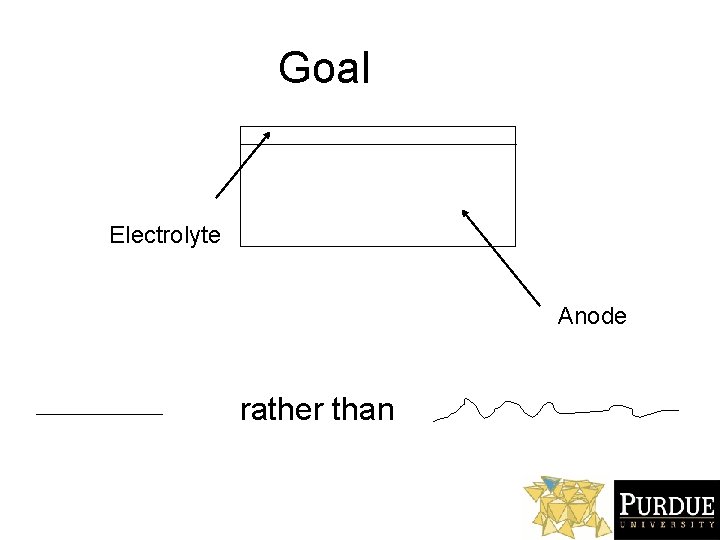
Goal Electrolyte Anode rather than
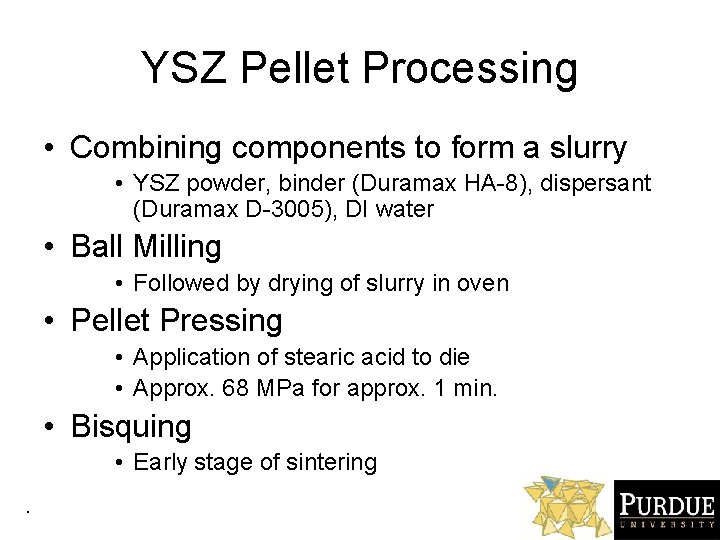
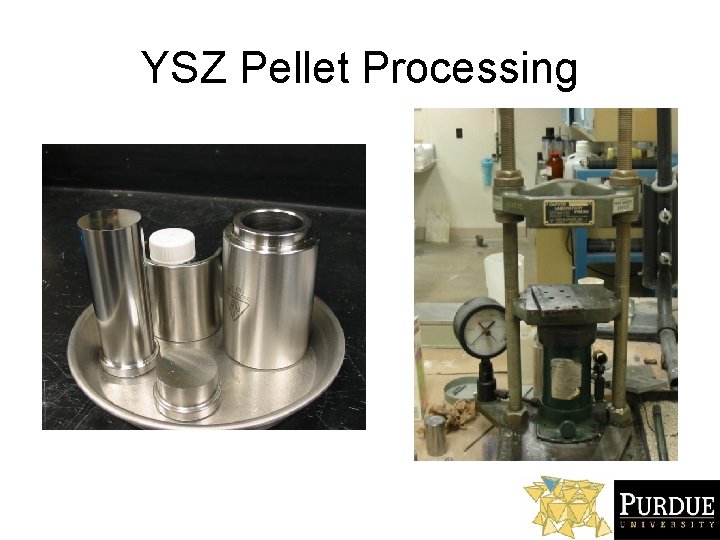
YSZ Pellet Processing • Combining components to form a slurry • YSZ powder, binder (Duramax HA-8), dispersant (Duramax D-3005), DI water • Ball Milling • Followed by drying of slurry in oven • Pellet Pressing • Application of stearic acid to die • Approx. 68 MPa for approx. 1 min. • Bisquing • Early stage of sintering.
YSZ Pellet Processing
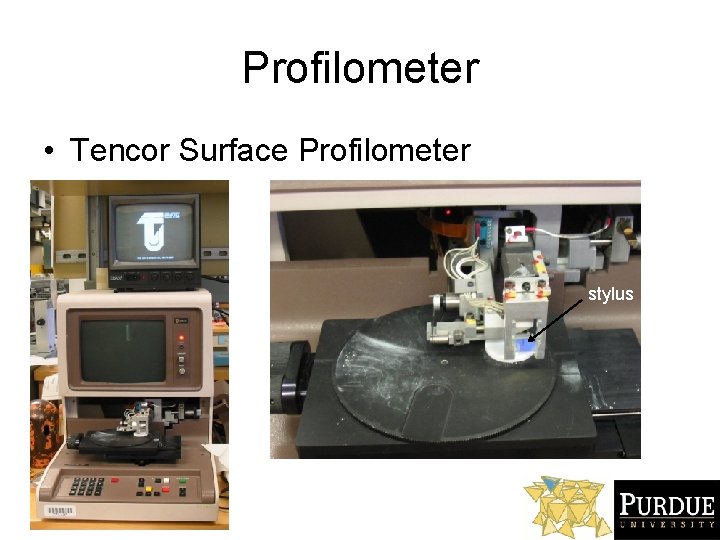
Profilometer • Tencor Surface Profilometer stylus
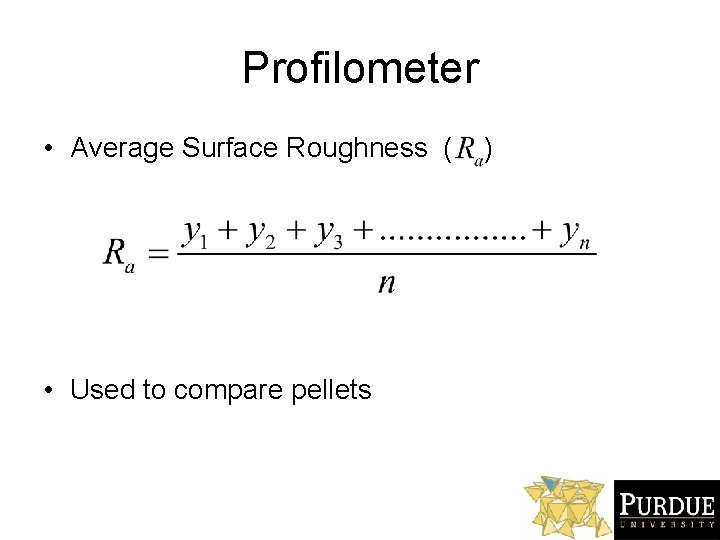
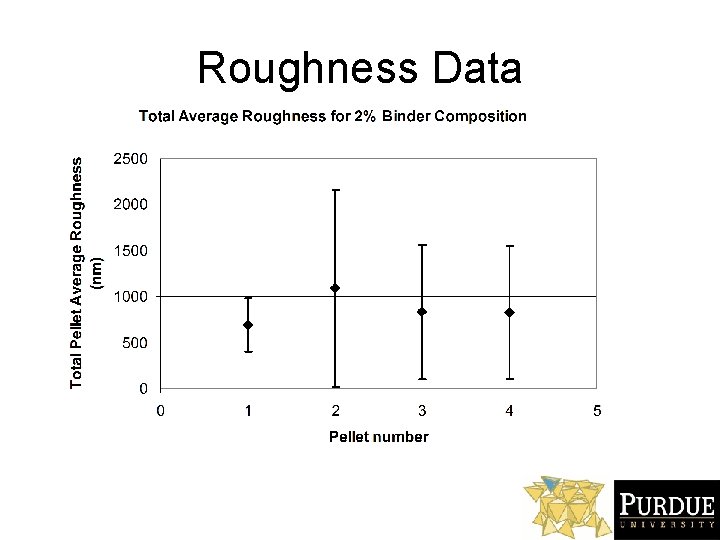
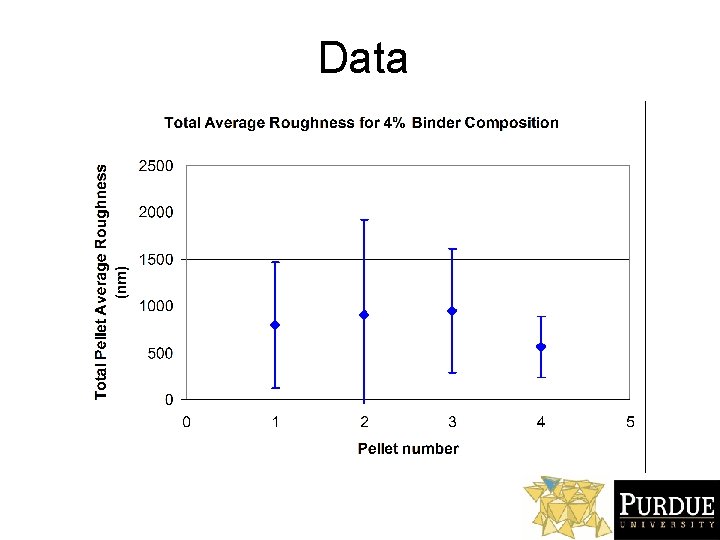
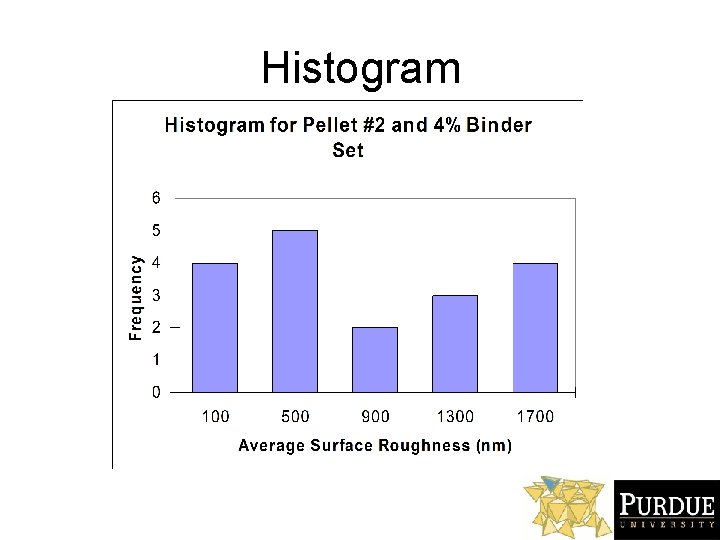
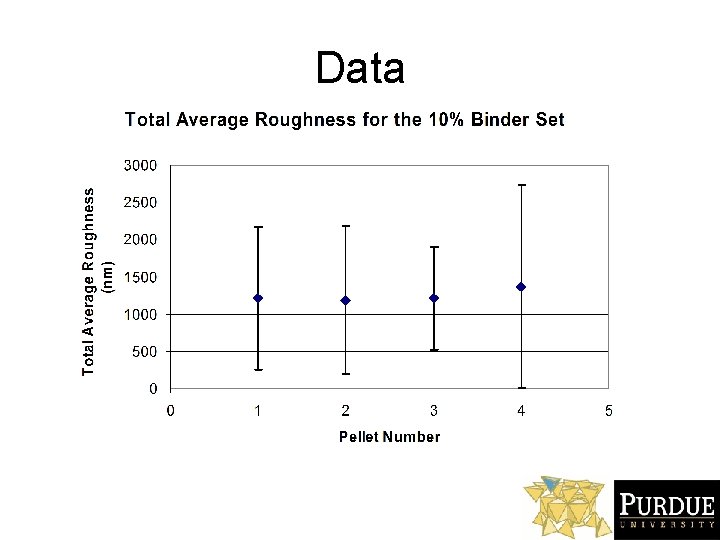
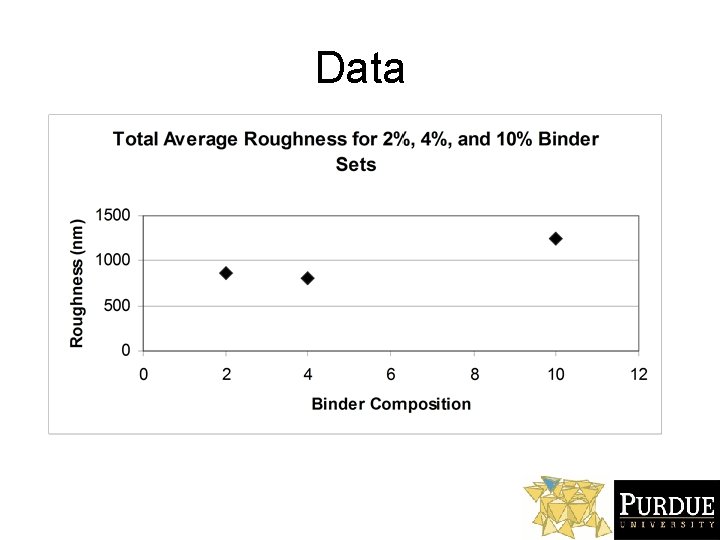
Profilometer • Average Surface Roughness ( • Used to compare pellets )
Roughness Data
Data
Histogram
Data
Data
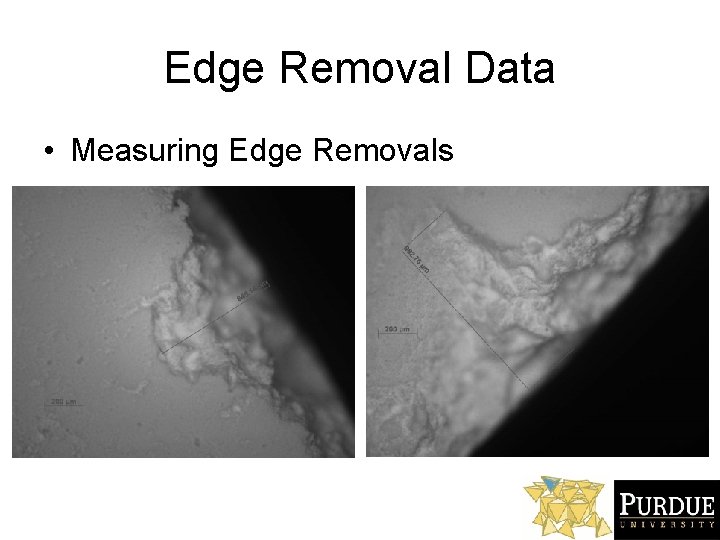
Edge Removal Data • Measuring Edge Removals
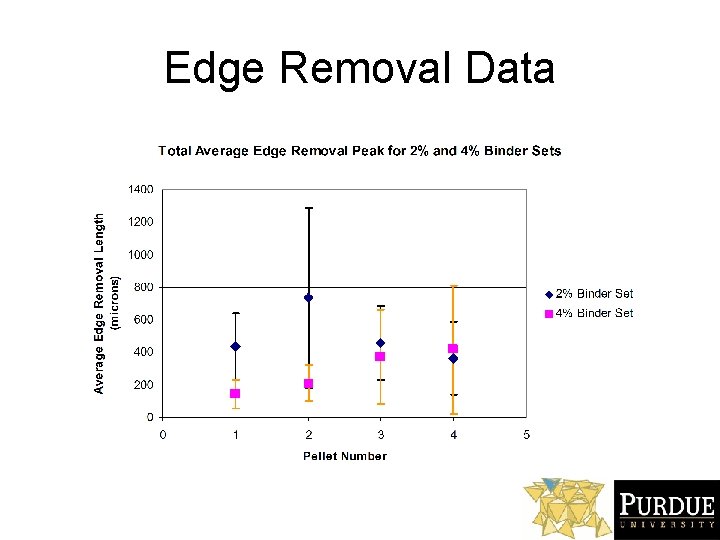
Edge Removal Data
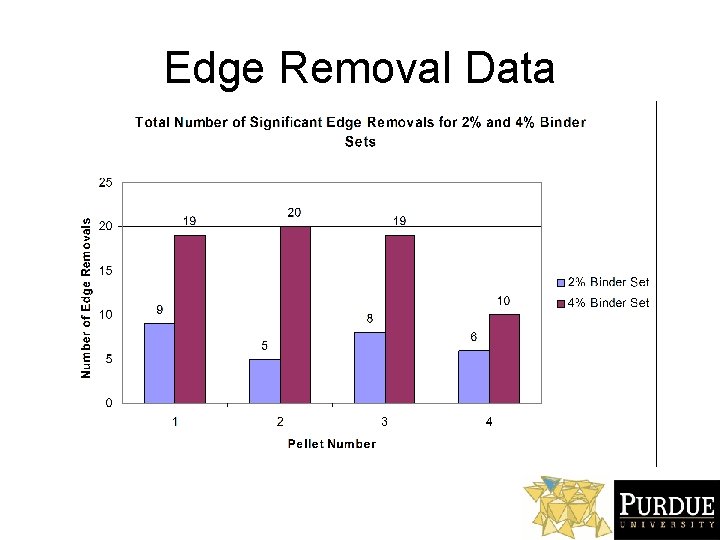
Edge Removal Data
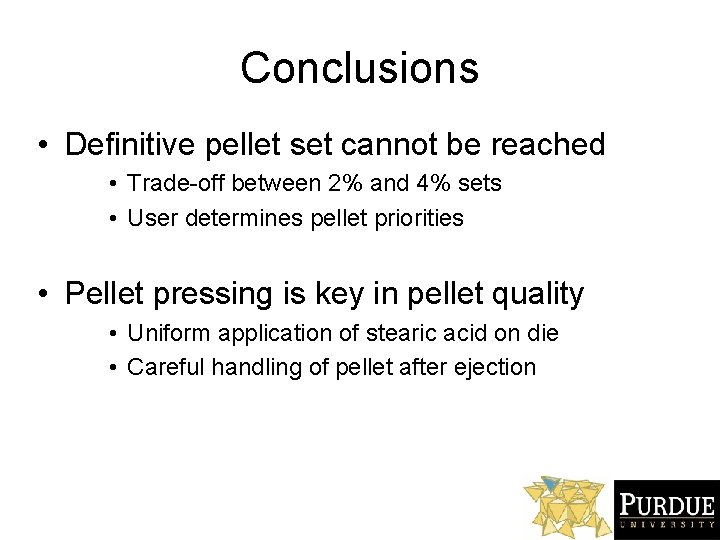
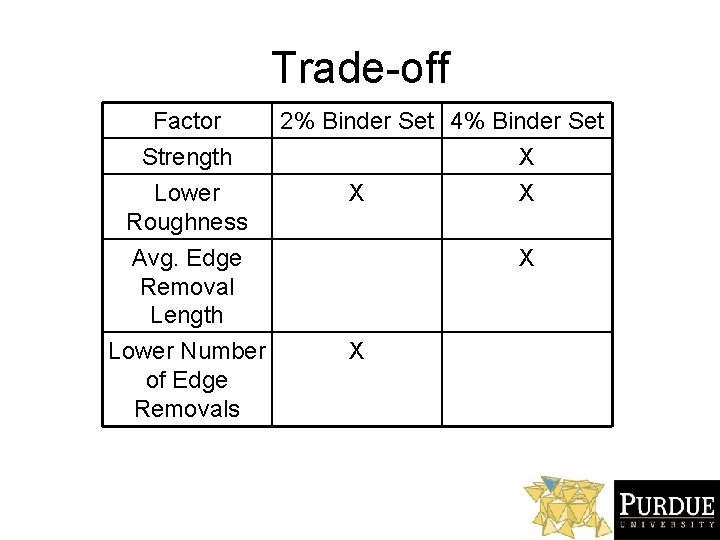
Conclusions • Definitive pellet set cannot be reached • Trade-off between 2% and 4% sets • User determines pellet priorities • Pellet pressing is key in pellet quality • Uniform application of stearic acid on die • Careful handling of pellet after ejection
Acknowledgements • Professor Elliot Slamovich • Jeff Reding • MSE faculty, staff, and students
Questions?
Trade-off Factor Strength Lower Roughness Avg. Edge Removal Length Lower Number of Edge Removals 2% Binder Set 4% Binder Set X X X