
Youth with disabilities and Sexuality LEAVING NO ONE
Youth with disabilities and Sexuality LEAVING NO ONE BEHIND Dance 4 Life Experience 2020 27 October 2020 Dr. Toyin Aderemi-Ige
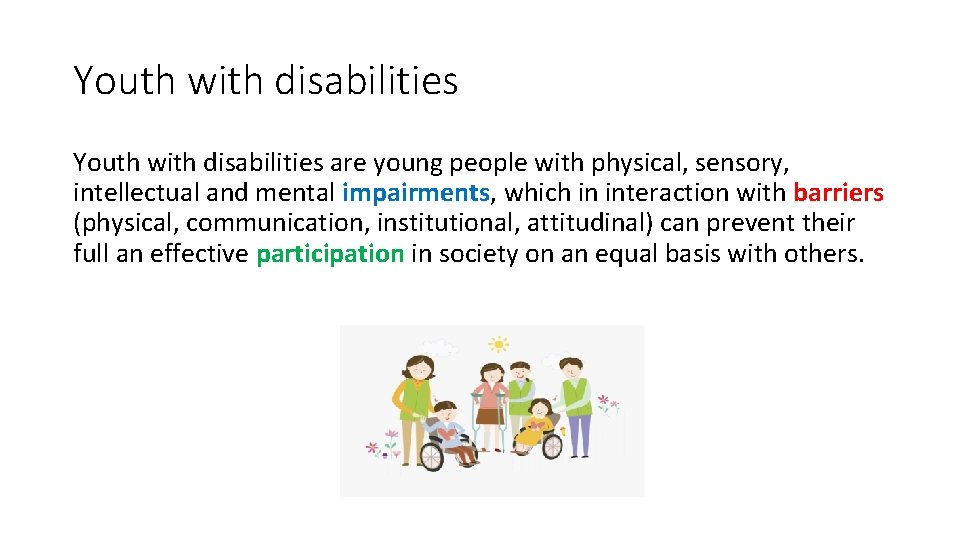
Youth with disabilities are young people with physical, sensory, intellectual and mental impairments, which in interaction with barriers (physical, communication, institutional, attitudinal) can prevent their full an effective participation in society on an equal basis with others.
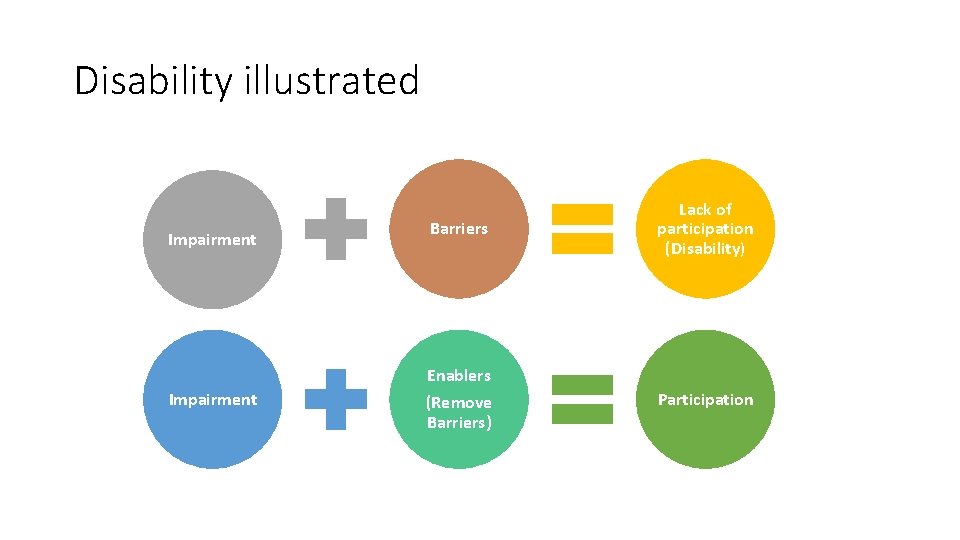
Disability illustrated Impairment Barriers Lack of participation (Disability) Enablers (Remove Barriers) Participation
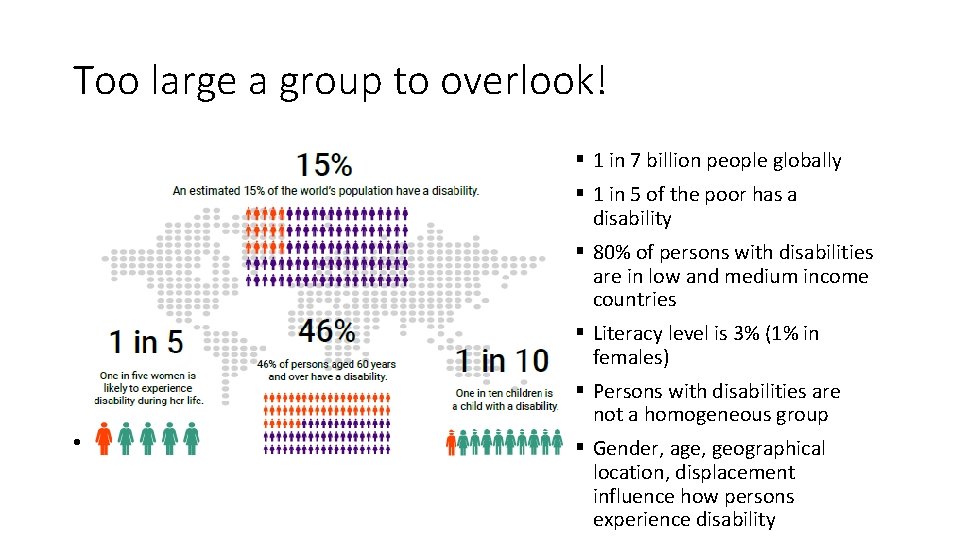
Too large a group to overlook! § 1 in 7 billion people globally § 1 in 5 of the poor has a disability § 80% of persons with disabilities are in low and medium income countries § Literacy level is 3% (1% in females) • Source: IASC (2019) § Persons with disabilities are not a homogeneous group § Gender, age, geographical location, displacement influence how persons experience disability

Intersectionality Other social factors (age, location, displacement etc) Gender Disability
Disability and sexuality • Disability does not take away sexual desires • Young people with disabilities have the same sexual development as their peers without disabilities • Young people with disabilities are humans, and have the rights to explore their sexuality and the rights to sexual health • Most often, their sexual health needs are not met
Vulnerability of young people with disabilities to SRH challenges • Low knowledge of sexuality and sexual health, resulting in lack of life skills and inadequate social/relationship skills • Negative attitudes towards sexuality of young people with disabilities – e. g. , asexuality • Cultural / traditional beliefs and stigma • Denial of sexuality education • Inaccessible sexuality education and information • Girls with disabilities are often targets of sexual gender-based violence • Perpetrators perceive them as ‘weaker’ preys • High dependence on perpetrators – financial, physical • Lack or non-implementation of disability-inclusive sexual and reproductive health and rights policies
What we can do to improve access to sexuality education/information for youth with disabilities Apply the following principles at every stage of your project cycle – design/planning, implementation, monitoring and evaluation, reporting • Accessibility – identify and remove barriers that prevent access to sexuality education and information by making such information, including feedback mechanisms, available in accessible formats (Braille, large font, easy-toread language, sign language) • Meaningful participation – consult young people with disabilities; listen to their needs and priorities; include them as trainers & project committee members; consult them for feedback on the project • Empowerment – expose youth with disabilities to sexuality education, information and rights; build capacity of SRH and gender actors in disability inclusion • Intersectionality/diversity – pay attention across age, gender, impairments • Data – disaggregate your project data by disability, age and gender
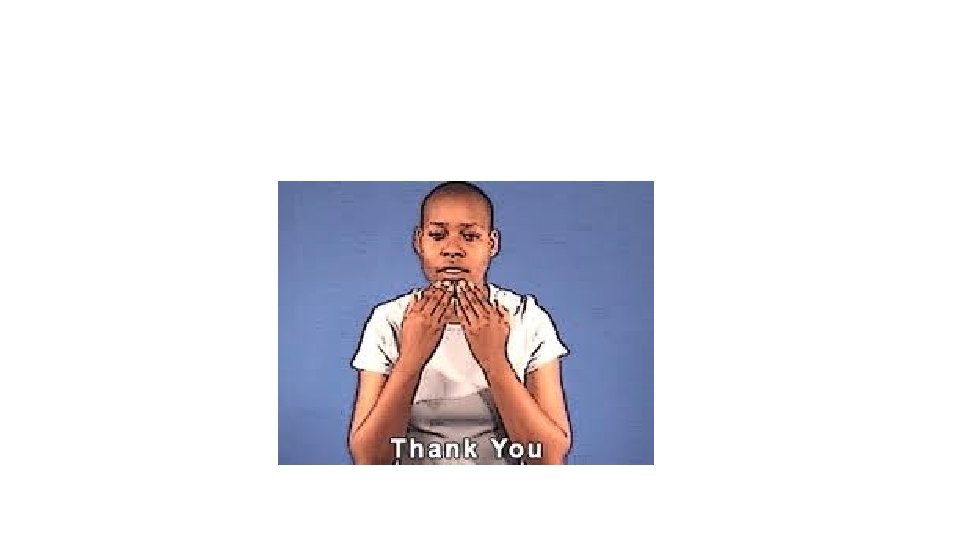
Online platforms • The online platforms can be useful to include youth with disabilities who ordinarily may find it difficult to attend the physical events/meetings for accessibility reasons. • Choose platforms with accessibility features e. g. , live captions on MS Teams for the Deaf • Explore the accessibility features of the current online platforms you use to deliver your programme • Identify more online platforms with accessibility features to accommodate youth with different types of disabilities e. g. , Whats. App is great for groups that include Deaf youth • Sub-title of videos or use of videos with superimposed sign interpretation • Describe images in your presentation or posts for the benefits of the Blind • Use contrasting colours and large font size in your presentations • If you want to share documents for reading, ask persons with vision impairments for their accessibility requirements • When you have a sign interpreter onboard, do not be too fast with your speech • It is also good practice to share your presentation with sign interpreters a few days ahead
- Slides: 10