
Youth precarity and inequitable transitions Professor Geoff Hayward
Youth, precarity and inequitable transitions Professor Geoff Hayward Faculty of Education University of Cambridge

Youth Precarity

Inequality and precarity A Policy Problem
A Tory view on Education However specious in theory the project might be of giving education to the labouring classes of the poor, it would, in effect, be found to be prejudicial to their morals and happiness; it would teach them to despise their lot in life, instead of making them good servants in agriculture and other laborious employments to which their rank in society had destined them; instead of teaching them the virtue of subordination, it would render them factious and refractory, as is evident in the manufacturing counties; it would enable them to read seditious pamphlets, vicious books and publications against Christianity; it would render them insolent to their superiors; and, in a few years, the result would be that the legislature would find it necessary to direct the strong arm of power towards them and to furnish the executive magistrates with more vigorous powers than are now in force. Besides, if this Bill were to pass into law, it would go to burthen the country with a most enormous and incalculable expense, and to load the industrious orders with still heavier imposts. (Derek Gillard MP, Hansard, House of Commons, Vol. 9, Col. 798, 13 July 1807, quoted in Chitty 2007: 15 -16)
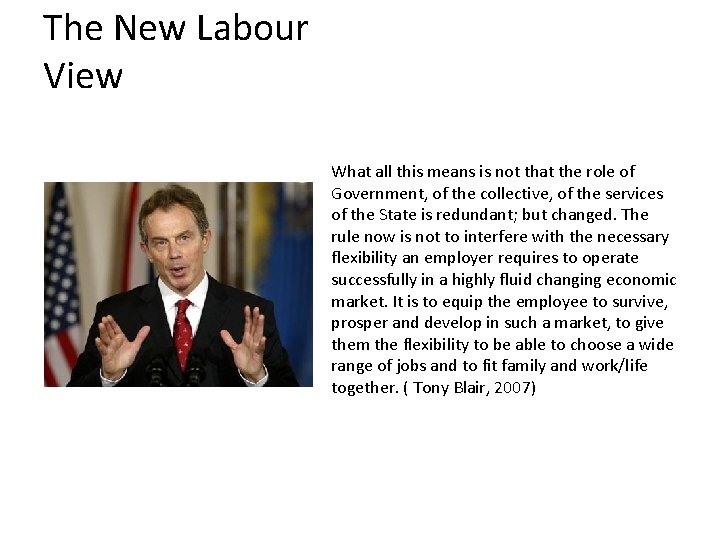
The New Labour View What all this means is not that the role of Government, of the collective, of the services of the State is redundant; but changed. The rule now is not to interfere with the necessary flexibility an employer requires to operate successfully in a highly fluid changing economic market. It is to equip the employee to survive, prosper and develop in such a market, to give them the flexibility to be able to choose a wide range of jobs and to fit family and work/life together. ( Tony Blair, 2007)
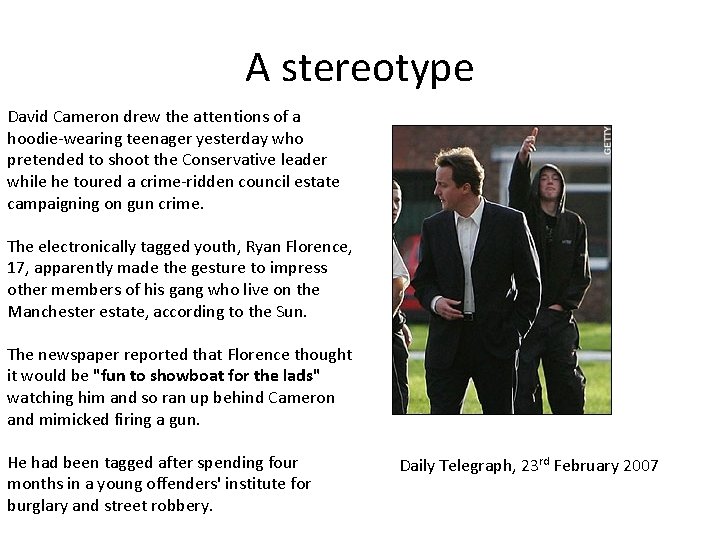
A stereotype David Cameron drew the attentions of a hoodie-wearing teenager yesterday who pretended to shoot the Conservative leader while he toured a crime-ridden council estate campaigning on gun crime. The electronically tagged youth, Ryan Florence, 17, apparently made the gesture to impress other members of his gang who live on the Manchester estate, according to the Sun. The newspaper reported that Florence thought it would be "fun to showboat for the lads" watching him and so ran up behind Cameron and mimicked firing a gun. He had been tagged after spending four months in a young offenders' institute for burglary and street robbery. Daily Telegraph, 23 rd February 2007

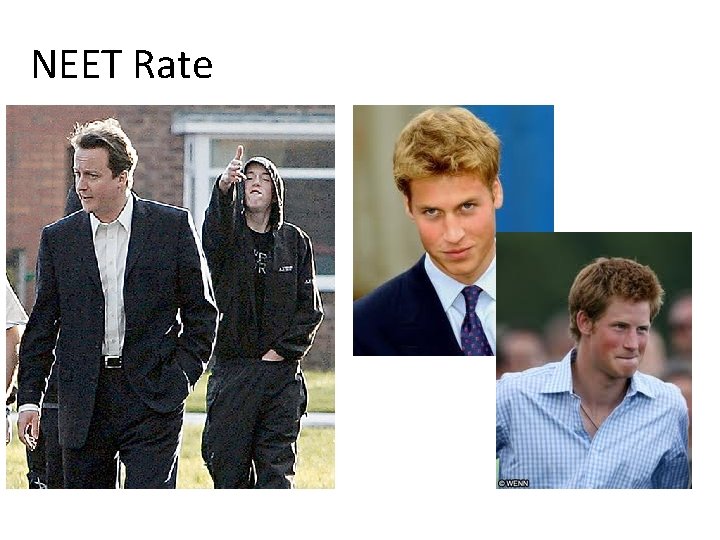
NEET Rate
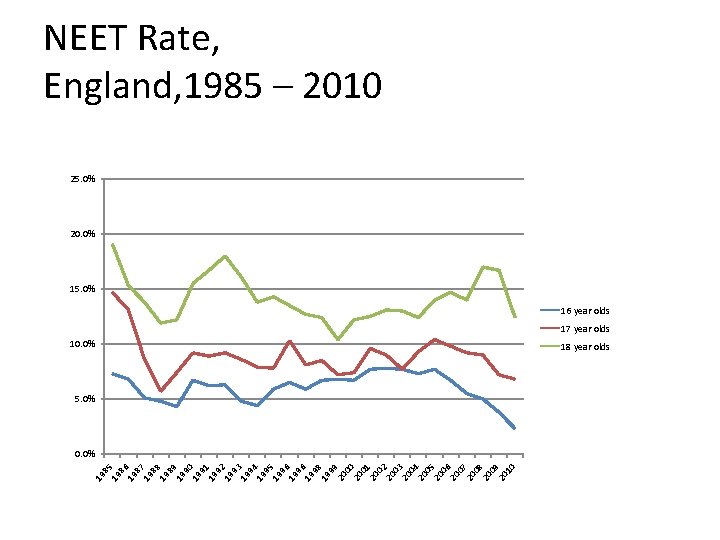
19 85 19 86 19 87 19 88 19 89 19 90 19 91 19 92 19 93 19 94 19 95 19 96 19 98 19 99 20 00 20 01 20 02 20 03 20 04 20 05 20 06 20 07 20 08 20 09 20 10 NEET Rate, England, 1985 – 2010 25. 0% 20. 0% 15. 0% 16 year olds 17 year olds 10. 0% 5. 0% 0. 0% 18 year olds
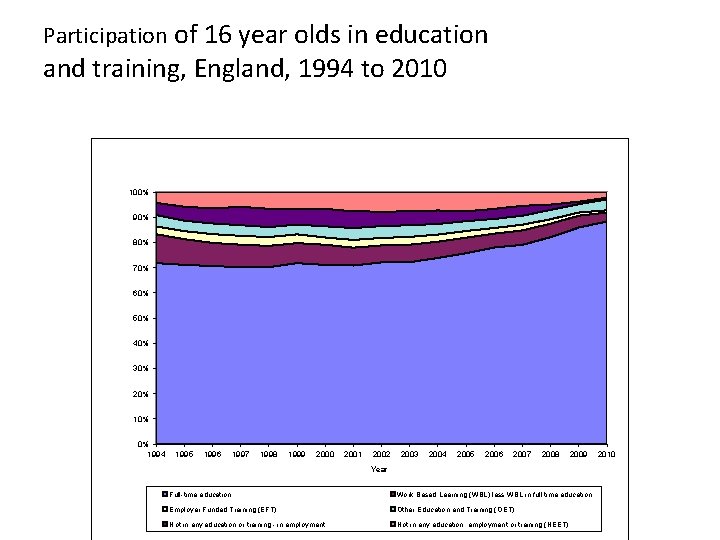
Participation of 16 year olds in education and training, England, 1994 to 2010 100% 90% 80% 70% 60% 50% 40% 30% 20% 10% 0% 1994 1995 1996 1997 1998 1999 2000 2001 2002 2003 2004 2005 2006 2007 2008 2009 Year Full-time education Work Based Learning (WBL) less WBL in full time education Employer Funded Training (EFT) Other Education and Training (OET) Not in any education or training - in employment Not in any education, employment or training (NEET) 2010
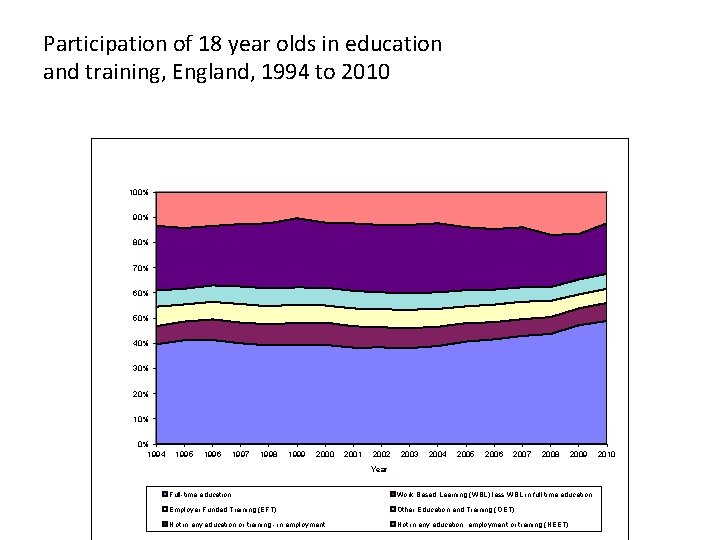
Participation of 18 year olds in education and training, England, 1994 to 2010 100% 90% 80% 70% 60% 50% 40% 30% 20% 10% 0% 1994 1995 1996 1997 1998 1999 2000 2001 2002 2003 2004 2005 2006 2007 2008 2009 Year Full-time education Work Based Learning (WBL) less WBL in full time education Employer Funded Training (EFT) Other Education and Training (OET) Not in any education or training - in employment Not in any education, employment or training (NEET) 2010
Aspiration, aspiration ‘Bell and his associates maintained that if a high degree of equality of opportunity could be established, and especially of educational opportunity, and if social selection became based primarily on educational attainment, then a wide range of inequalities of outcome, in incomes, wealth and status etc. , could be defended. These inequalities of outcome would reflect the differing levels of reward that individuals obtained - and indeed deserved or ‘merited’ - in return for their efforts in securing educational qualifications and applying these productively in their working lives’ (Bukodi & Goldthorpe, 2008)
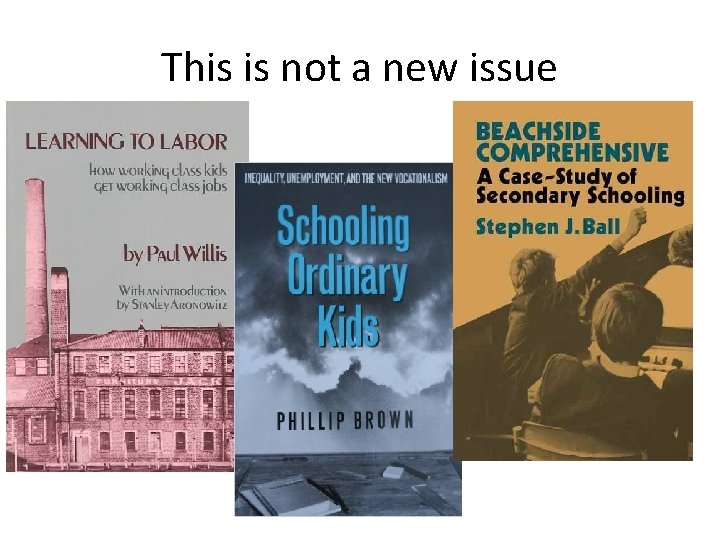
This is not a new issue
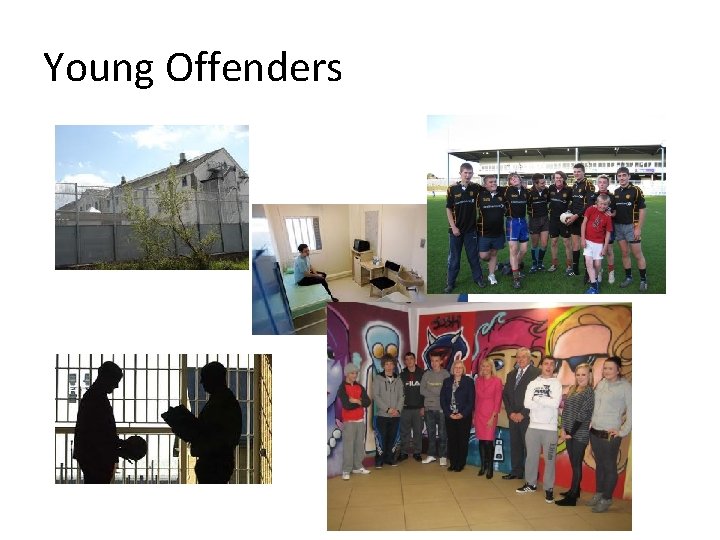
Young Offenders
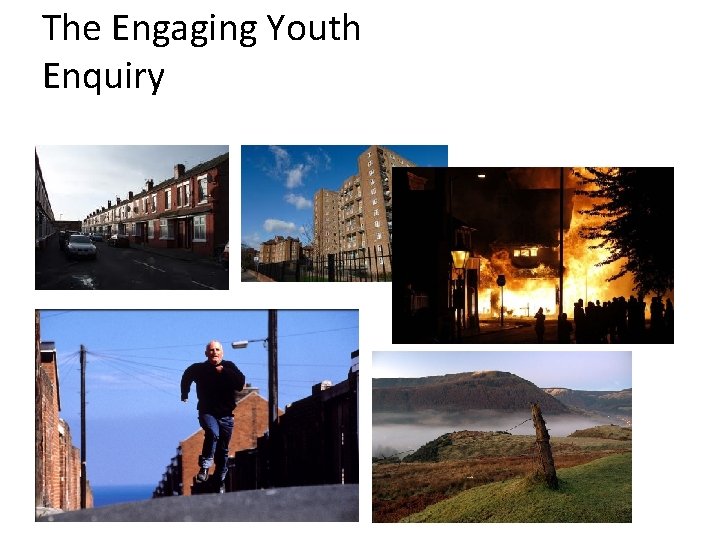
The Engaging Youth Enquiry
Apprenticeship
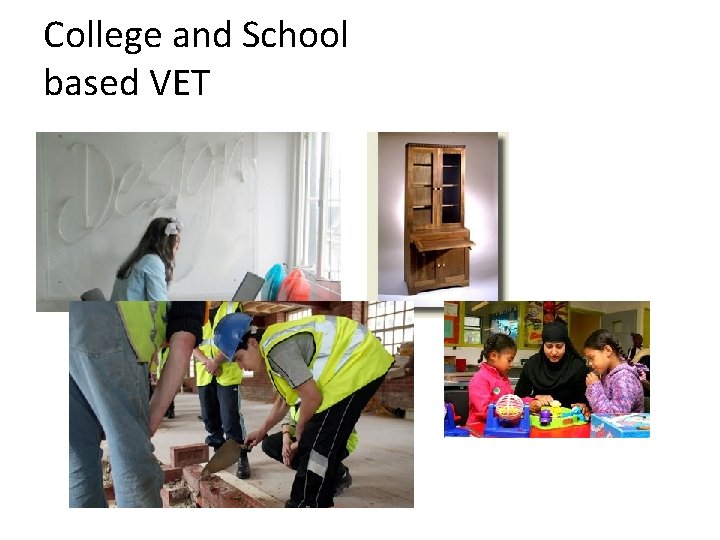
College and School based VET
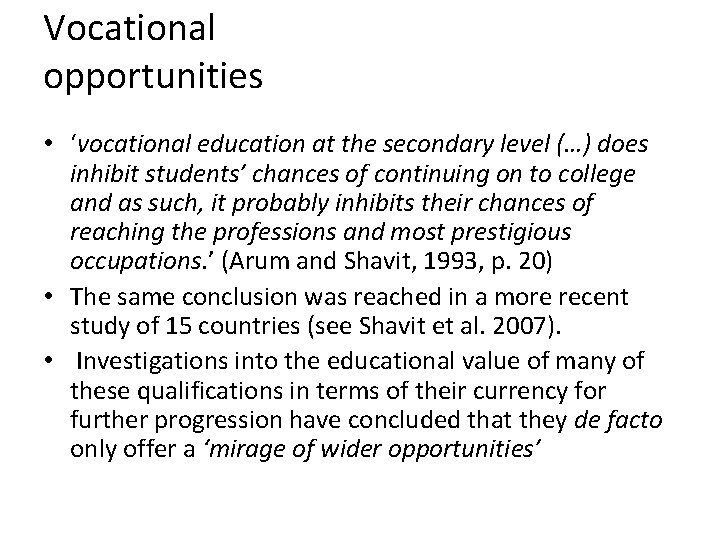
Vocational opportunities • ‘vocational education at the secondary level (…) does inhibit students’ chances of continuing on to college and as such, it probably inhibits their chances of reaching the professions and most prestigious occupations. ’ (Arum and Shavit, 1993, p. 20) • The same conclusion was reached in a more recent study of 15 countries (see Shavit et al. 2007). • Investigations into the educational value of many of these qualifications in terms of their currency for further progression have concluded that they de facto only offer a ‘mirage of wider opportunities’
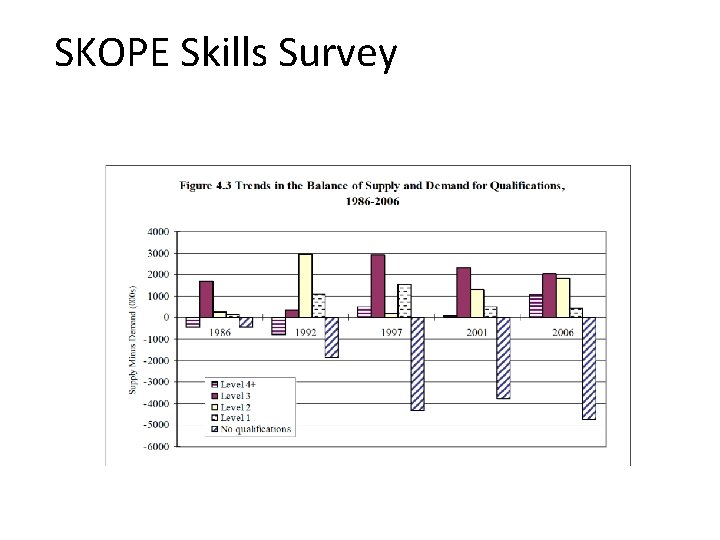
SKOPE Skills Survey

Thank you gfh 22@cam. ac. uk
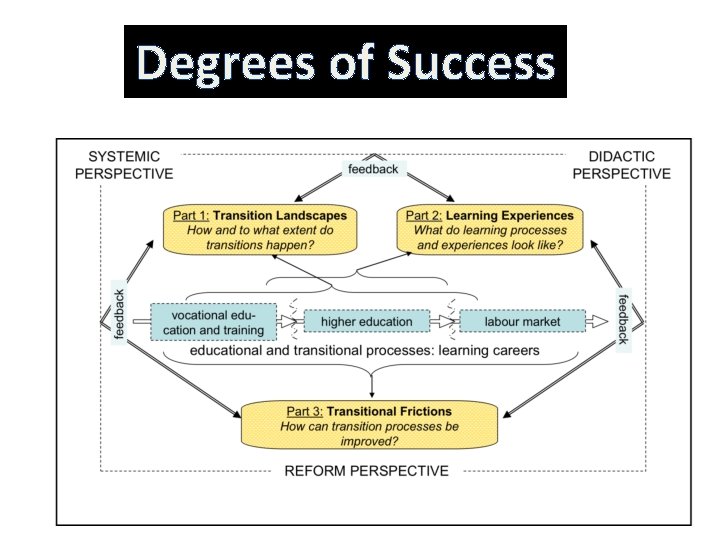
Degrees of Success
Degrees of Success
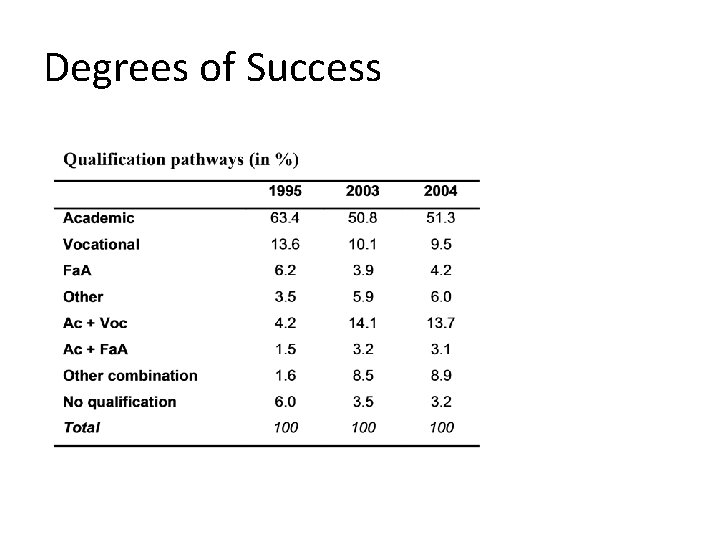
Degrees of Success
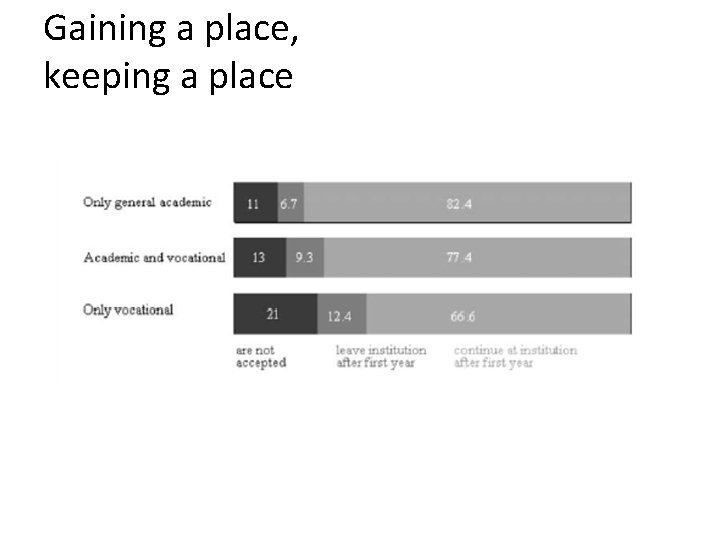
Gaining a place, keeping a place
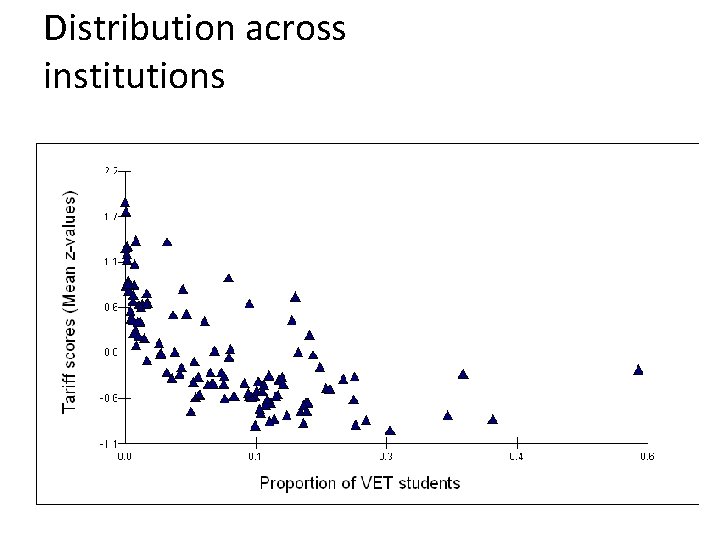
Distribution across institutions

(With thanks to Vikki Boliver, 2008)
- Slides: 28