
Youth Justice Ontario Annual Conference Paul Dub Ombudsman
Youth Justice Ontario Annual Conference Paul Dubé Ombudsman of Ontario Thursday, September 26, 2019 Niagara-on-the-Lake
In brief: 1. Introduction to the Ombudsman’s Office 2. How we deal with children and youth in care 3. Our work in youth justice since May 1 4. What’s next?
Ontario Ombudsman: How did we get here? On May 1, 2019, the investigative function of the Office of the Provincial Advocate for Children and Youth was transferred to the Ontario Ombudsman New Children and Youth Unit created within Ombudsman’s Office, following Nova Scotia Ombudsman model Ombudsman already had jurisdiction over youth justice and other areas affecting children and youth
What is the Ombudsman? Office first established in 1975 Appointed by an all-party committee Independent, impartial Reviews administrative processes Power to conduct investigations, based on complaints or on own initiative
Our jurisdiction Oversight of ~1, 000 public sector bodies including: 500+ ministries, agencies, commissions, tribunals 72 school boards (+10 school authorities) 21 universities 444 municipalities Children’s Aid Societies and children/youth in care (as of May 1, 2019) French language services (as of May 1, 2019) 27, 419 complaints in 2018 -2019
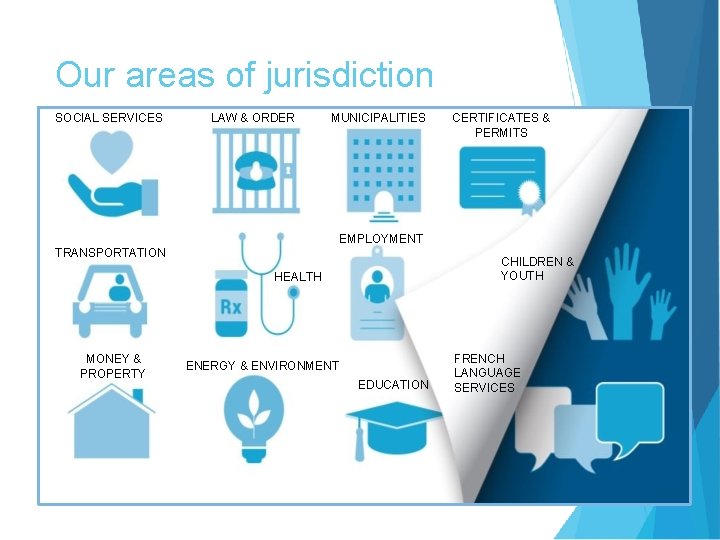
Our areas of jurisdiction SOCIAL SERVICES LAW & ORDER MUNICIPALITIES CERTIFICATES & PERMITS EMPLOYMENT TRANSPORTATION CHILDREN & YOUTH HEALTH MONEY & PROPERTY ENERGY & ENVIRONMENT EDUCATION FRENCH LANGUAGE SERVICES
Mandate areas affecting children and youth School boards and Ministry of Education Office of the Children’s Lawyer Child and Family Services Review Board Programs for children with special needs, including autism ODSP, OSAP, OHIP Ontario Works Ontario public drug programs Service. Ontario (issues with driver’s licences, birth certificates, etc. )
We do not oversee: Judges; decisions of any court Private matters Politicians; policy decisions Federal government Private business Regulated professions Hospitals and long-term care homes (we do oversee the Patient Ombudsman)
How we work We assess and resolve complaints about government and public sector bodies We refer people to relevant, existing mechanisms and help them get to where they need to go if we aren’t able to help them directly We validate processes that are working well
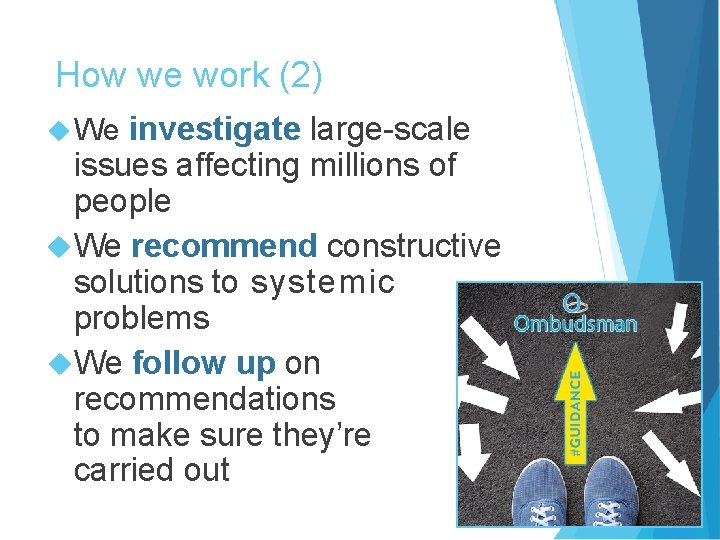
How we work (2) investigate large-scale issues affecting millions of people We recommend constructive solutions to systemic problems We follow up on recommendations to make sure they’re carried out We
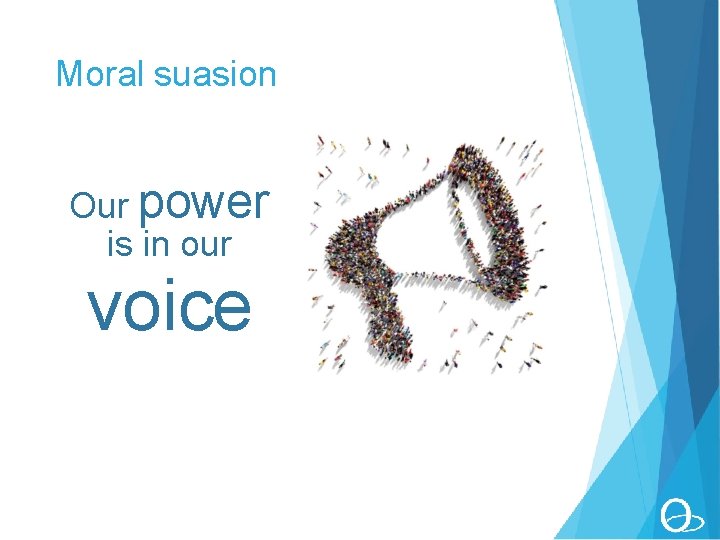
Moral suasion Our power is in our voice
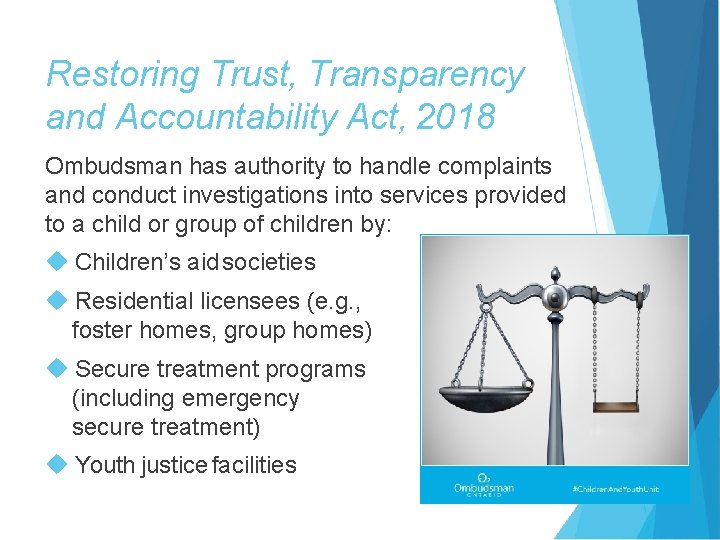
Restoring Trust, Transparency and Accountability Act, 2018 Ombudsman has authority to handle complaints and conduct investigations into services provided to a child or group of children by: Children’s aid societies Residential licensees (e. g. , foster homes, group homes) Secure treatment programs (including emergency secure treatment) Youth justice facilities
Death and serious bodily harm Children’s aid societies and residential licensees (foster home, group home, youth justice facility or secure mental health treatment centre) MUST inform the Ombudsman in writing and without unreasonable delay if they learn of the death or serious bodily harm to a child or young person who had sought or received a children’s aid society service within 12 months before the death or the day on which the harm occurred. Societies and licensees must also inform the child or young person, and any person with lawful custody or a lawful right of access to the child, about the Ombudsman and provide them with the Ombudsman’s contact information.
Children and youth: What we do Answer questions Handle complaints and investigations related to children’s aid societies, residential licensees (foster homes, group homes), mental health treatment centres and/or youth custody facilities Promote, protect and provide information on the rights of children and youth
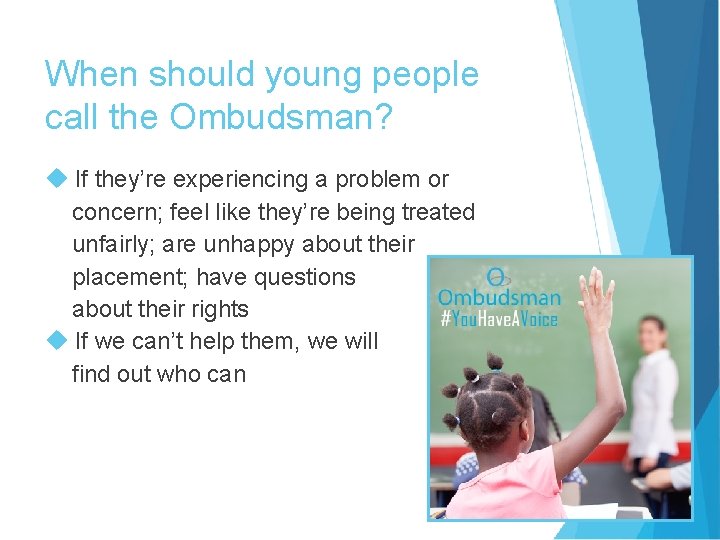
When should young people call the Ombudsman? If they’re experiencing a problem or concern; feel like they’re being treated unfairly; are unhappy about their placement; have questions about their rights If we can’t help them, we will find out who can
We can: Take complaints from young people, adults, professionals, whistleblowers and service providers Look into individual and systemic issues and recommend constructive solutions
What we don’t do… Community development advocacy Rights advice to children and youth entering emergency secure treatment Attend case conferences on behalf of children/youth
Our process 1 Young person contacts us 2 We document details about the case 3 We assist the young person by guiding them through the next steps they need to take 4 We follow up with the young person and service provider 5 We help try and resolve the issue quickly and informally
Since May 1, we have: Notified service providers of their obligations to let youth know how to contact the Ombudsman Provided posters and brochures to facilities on youth rights and how we work Posted intro video for youth in care Consulted with senior youth justice officials Visited youth justice facilities Children and Youth Unit has handled more than 1, 000 cases
Top topics of complaint: Directly operated facilities Conduct of youth service officers (e. g. , threats or excessive use of force) Living conditions (e. g. , lockdowns, disturbances, uncomfortable temperatures) Requests for transfers (e. g. , to open custody, to an adult facility, closer to home and family, to access better programming, or for safety reasons)
Top topics of complaint: Directly operated facilities (2) Restrictions on programming (e. g. , due to violent outbursts or illness) Denial of approved visits or calls Medical care (e. g. , adequacy of care in the facility, delays in seeing a doctor) Disagreement with disciplinary actions
Top topics of complaint: Transfer payment agencies Medical care (e. g. , delays in seeing a doctor, or dentist, medication concerns) Requests for transfers (e. g. , to secure custody, closer to home and family) Safety concerns (e. g. , lack of security measures or response to threats and bullying)
Top topics of complaint: Transfer payment agencies (2) Living conditions (e. g. , lockdowns, lack of cleanliness) Delayed responses to requests Conduct of youth service officers (e. g. , rudeness) Missing property Denial of religious rights or other accommodations
What’s next? Visits to youth justice facilities across Ontario General outreach with young people and specific communities Regular meetings with Ministry officials and service providers Investigations – ongoing and new Reporting on resolutions, best practices and outreach
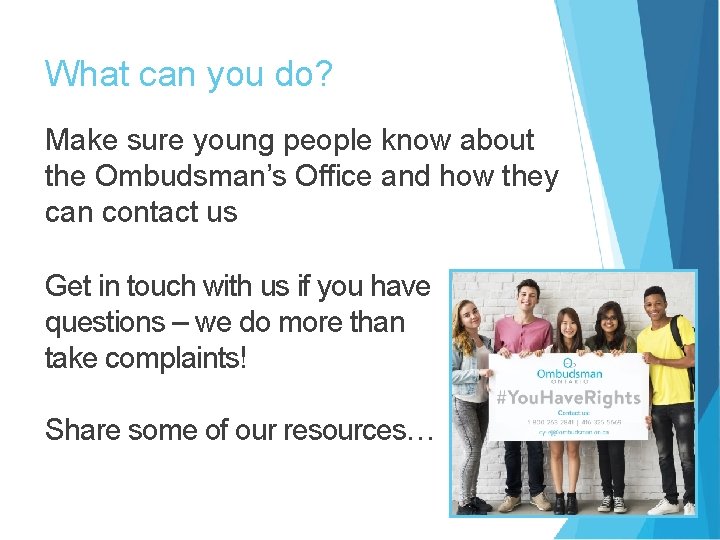
What can you do? Make sure young people know about the Ombudsman’s Office and how they can contact us Get in touch with us if you have questions – we do more than take complaints! Share some of our resources…
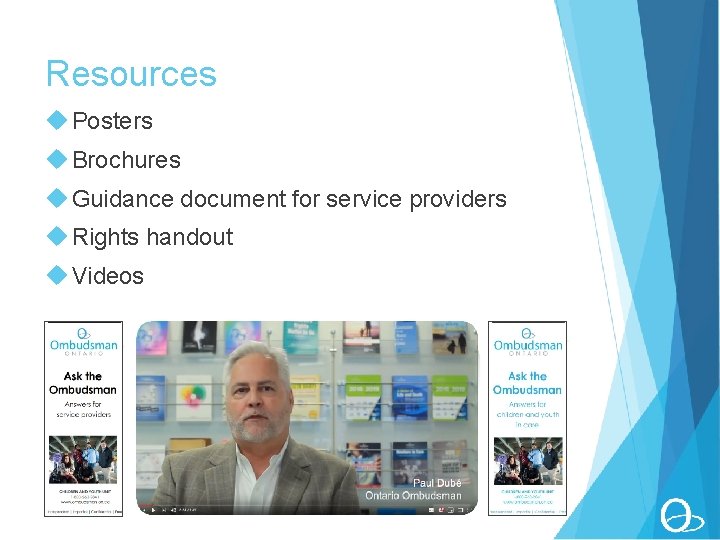
Resources Posters Brochures Guidance document for service providers Rights handout Videos
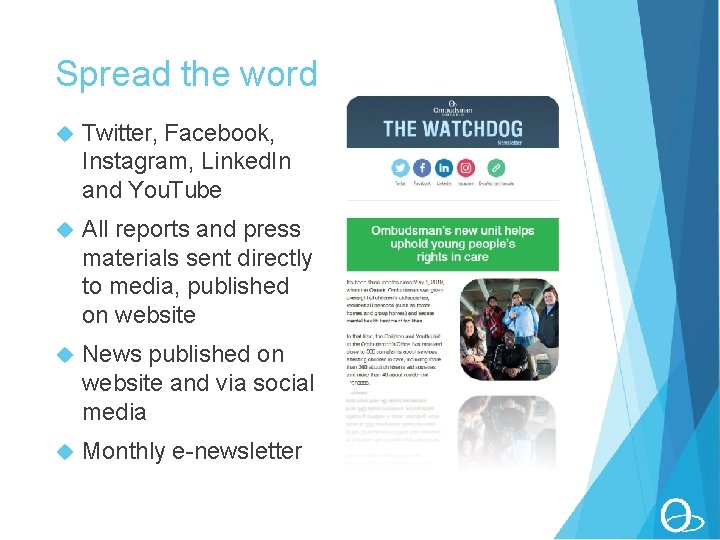
Spread the word Twitter, Facebook, Instagram, Linked. In and You. Tube All reports and press materials sent directly to media, published on website News published on website and via social media Monthly e-newsletter
Find us, follow us, watch us @Ont_Ombudsman. FR @Ontario. Ombudsman @Ont. Ombuds Ontario Ombudsman Sign up for the e-newsletter: www. ombudsman. on. ca thewatchdog@ombudsman. on. ca Ombudsman Ontario p: 1 -800 -263 -1830 e: info@ombudsman. on. ca Children & Youth Unit p: 1 -800 -263 -2841 e: cy-ej@ombudsman. on. ca
Questions?
- Slides: 29