
Youth Engagement A Framework for Building Youth Resilience
Youth Engagement: A Framework for Building Youth Resilience and Leadership Jo. Anne Malloy Heidi Cloutier Kimm Phillips Justin Tilbe August 16, 2018 3/4/2021

Learning Objectives Ø Describe the Youth Engagement Project Ø Describe the importance and examples of engaging youth. Ø Review the draft: NH Youth Engagement Framework Ø Identify how you might engage youth in your schools or communities 3/4/2021
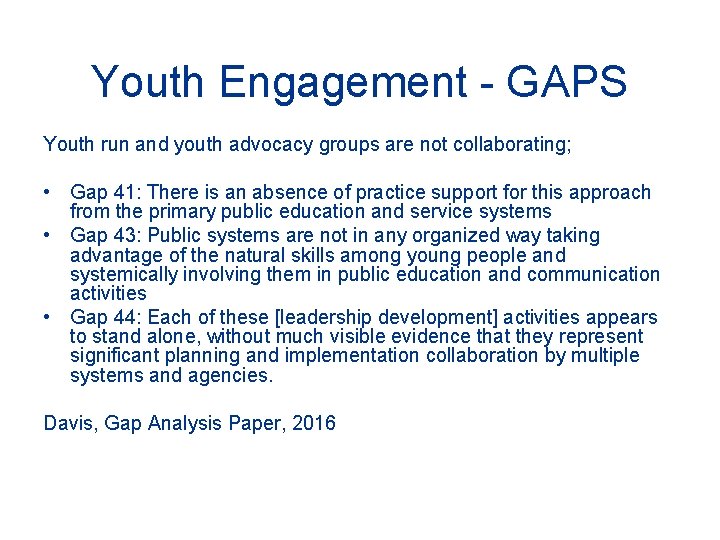
Youth Engagement - GAPS Youth run and youth advocacy groups are not collaborating; • Gap 41: There is an absence of practice support for this approach from the primary public education and service systems • Gap 43: Public systems are not in any organized way taking advantage of the natural skills among young people and systemically involving them in public education and communication activities • Gap 44: Each of these [leadership development] activities appears to stand alone, without much visible evidence that they represent significant planning and implementation collaboration by multiple systems and agencies. Davis, Gap Analysis Paper, 2016 3/4/2021 3
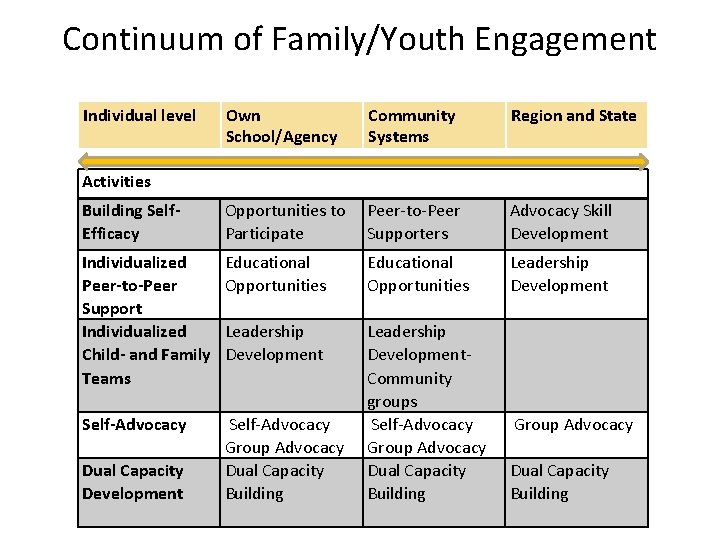
Continuum of Family/Youth Engagement Individual level Own School/Agency Community Systems Region and State Activities Building Self. Efficacy Opportunities to Peer-to-Peer Participate Supporters Advocacy Skill Development Individualized Peer-to-Peer Support Individualized Child- and Family Teams Educational Opportunities Leadership Development Self-Advocacy Group Advocacy Dual Capacity Building Leadership Development- Community groups Self-Advocacy Group Advocacy Dual Capacity Building Dual Capacity Development Group Advocacy Dual Capacity Building

Youth Engagement Project Background • Youth participation and involvement in program design, implementation, and evaluation. • Positive environments and safe and structured places. • Skill and asset development opportunities. • Opportunities to serve others. • Positive relationships with adults. • RESILIENCY • POSITIVE YOUTH DEVELOPMENT Davis, Gap Analysis, 2016, p. 30 3/4/2021 5
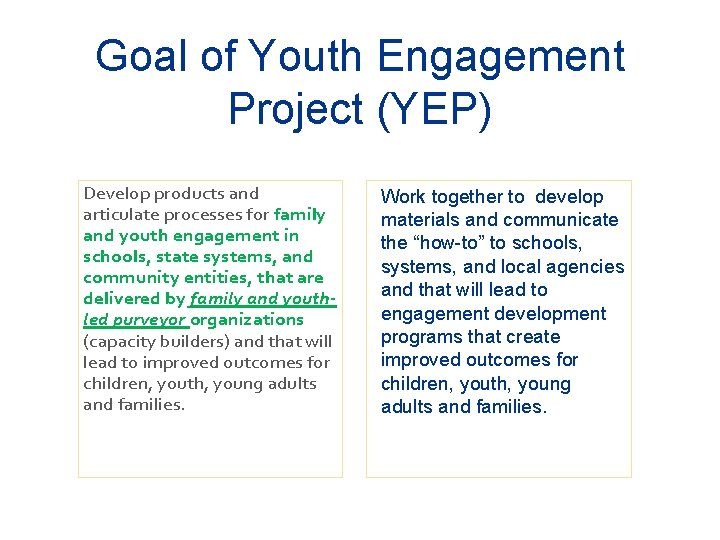
Goal of Youth Engagement Project (YEP) Develop products and articulate processes for family and youth engagement in schools, state systems, and community entities, that are delivered by family and youthled purveyor organizations (capacity builders) and that will lead to improved outcomes for children, youth, young adults and families. Work together to develop materials and communicate the “how-to” to schools, systems, and local agencies and that will lead to engagement development programs that create improved outcomes for children, youth, young adults and families.
Youth Engagement Project Team • • • 3/4/2021 YOU of Granite State Organizing project Youth. MOVE NH Youth Leadership Through Adventure Community Action for Safe Teens Teen Institute YEAH Council American Civil Liberties Union New Futures Institute on Disability at UNH Children’s Behavioral Health Collaborative 7
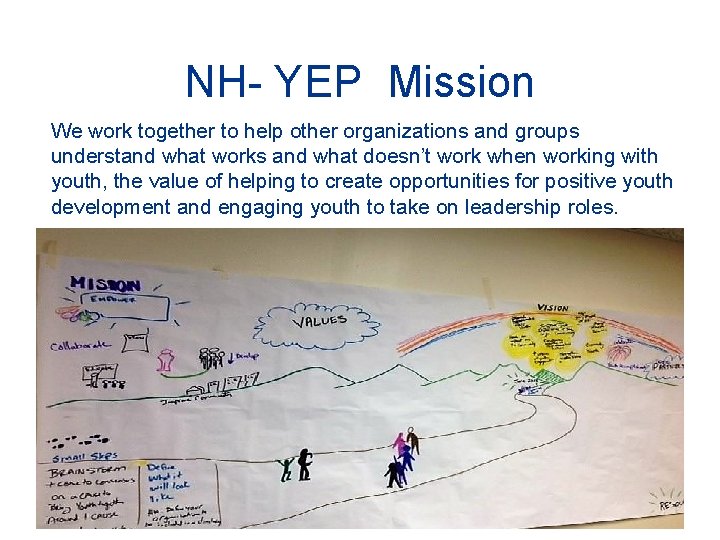
NH- YEP Mission We work together to help other organizations and groups understand what works and what doesn’t work when working with youth, the value of helping to create opportunities for positive youth development and engaging youth to take on leadership roles.
Youth Engagement Project (YEP) • Initial meeting Summer 2017 • Last full meeting Summer 2018 • Barriers • Time • Transportation • Engagement 3/4/2021 9
YEP Accomplishments • Created an opportunity for groups to share • Created a draft practice profile • Collected information from member organizations • Collaborated to share information outside of the group 3/4/2021 10
Next Steps • September 19, 2018 • Discuss creating the statewide map • A website for promoting youth leadership activities • Discuss potential funding sources/ability to continue meeting as a group/out reaching to other youth organizations 3/4/2021 11
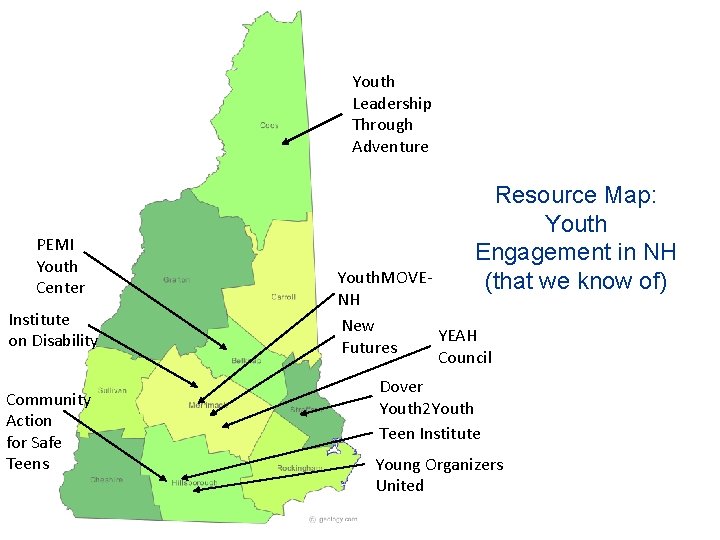
Youth Leadership Through Adventure Resource Map: Youth Engagement in NH (that we know of) PEMI Youth Center Youth. MOVENH New YEAH Futures Council Institute on Disability Dover Youth 2 Youth Teen Institute Community Action for Safe Teens 3/4/2021 Young Organizers United 12
Student Voice to Improve School Culture • Increasing student voice in schools helps create a shift towards a more positive school climate (Mitra, 2003) • Schools with a positive school culture are more effective (Engles et al, 2008) • Finding ways to seek student input and involve students provides opportunities for student leadership • When the voice of students is heard it makes the message more FUN !!!!!
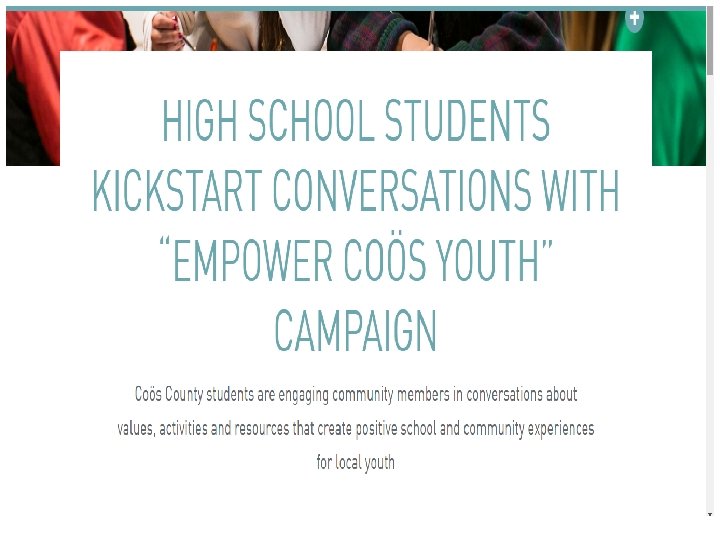
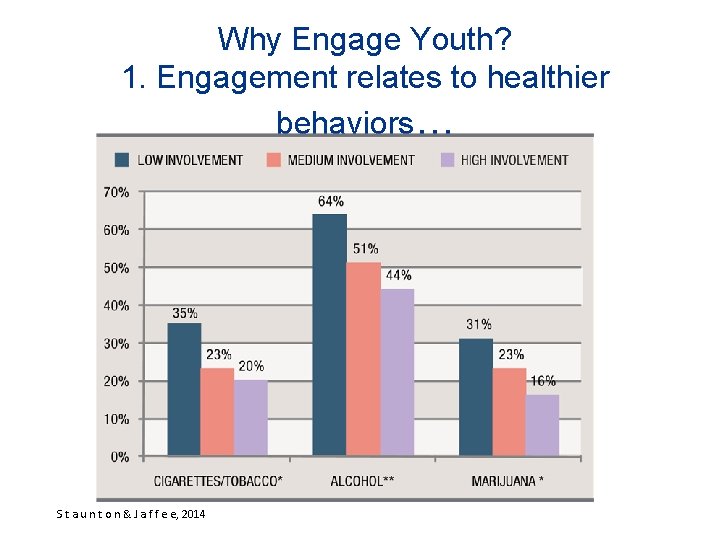
Why Engage Youth? 1. Engagement relates to healthier behaviors… S t a u n t o n & J a f f e e, 2014

2. Engagement builds positive youth development, and reduces problem behaviors. (Guerra & Bradshaw, 2008) (1) positive sense of self, (2) Self control, (3) decision-making skills, (4) a moral system of belief, and, (5) prosocial connectedness

3. Engagement builds youth resiliency skills Center for the Developing Child, Harvard University Positive Influences can tip the scale: 1. facilitating supportive adult-child relationships; 2. building a sense of selfefficacy and perceived control; 3. providing opportunities to strengthen adaptive skills and self-regulatory capacities; and, 4. mobilizing sources of faith, hope, and cultural traditions.
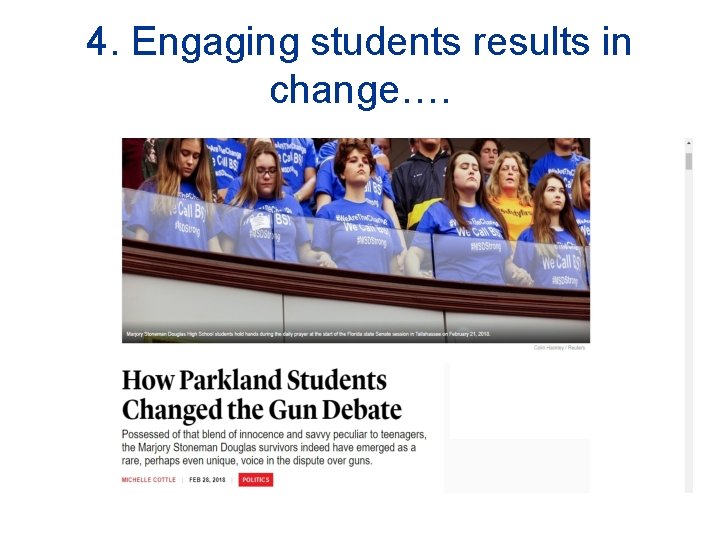
4. Engaging students results in change….

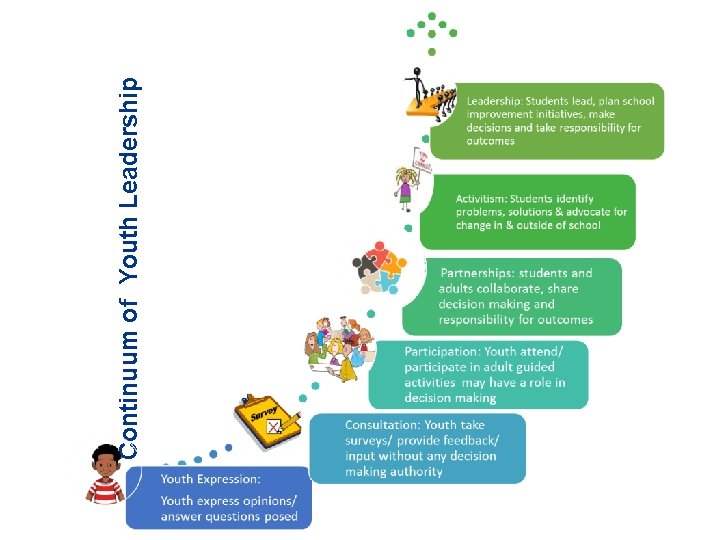
Continuum of Youth Leadership
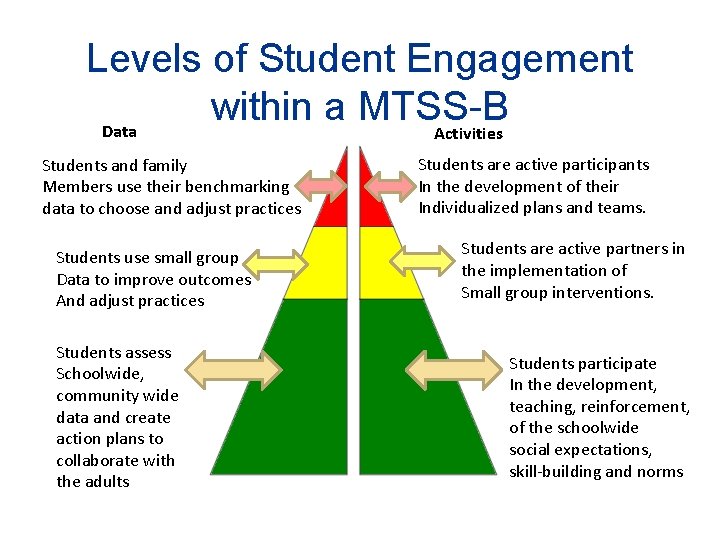
Levels of Student Engagement within a MTSS-B Data Activities Students and family Members use their benchmarking data to choose and adjust practices Students use small group Data to improve outcomes And adjust practices Students assess Schoolwide, community wide data and create action plans to collaborate with the adults Students are active participants In the development of their Individualized plans and teams. Students are active partners in the implementation of Small group interventions. Students participate In the development, teaching, reinforcement, of the schoolwide social expectations, skill-building and norms
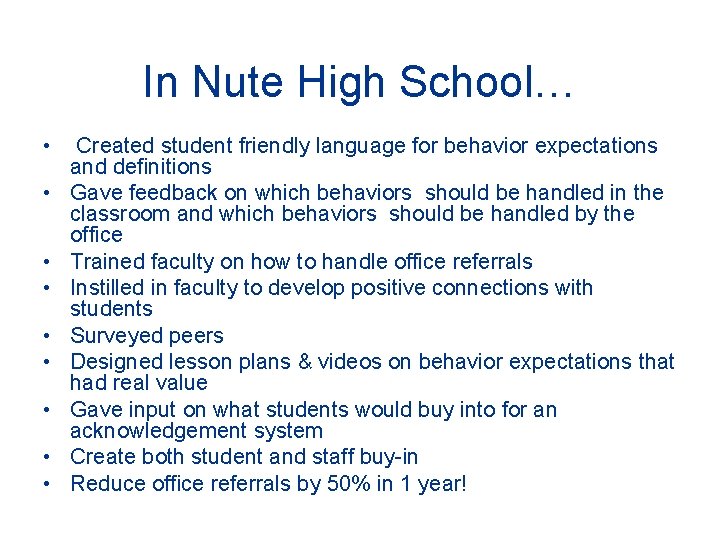
In Nute High School… • • • Created student friendly language for behavior expectations and definitions Gave feedback on which behaviors should be handled in the classroom and which behaviors should be handled by the office Trained faculty on how to handle office referrals Instilled in faculty to develop positive connections with students Surveyed peers Designed lesson plans & videos on behavior expectations that had real value Gave input on what students would buy into for an acknowledgement system Create both student and staff buy-in Reduce office referrals by 50% in 1 year!
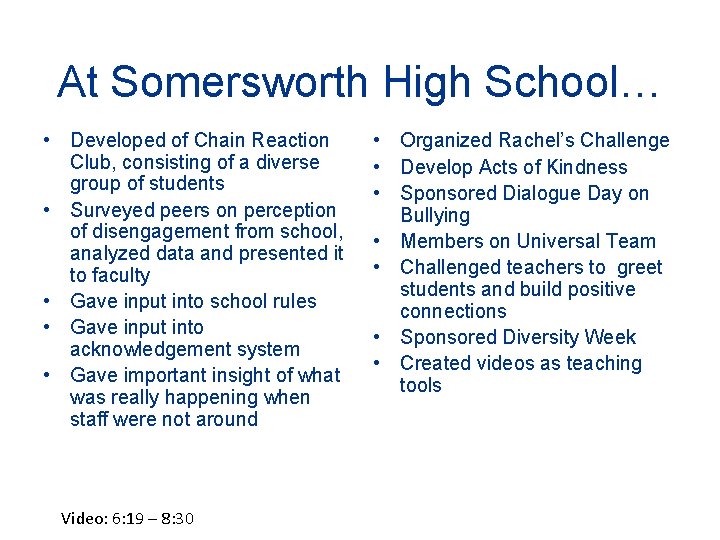
At Somersworth High School… • Developed of Chain Reaction Club, consisting of a diverse group of students • Surveyed peers on perception of disengagement from school, analyzed data and presented it to faculty • Gave input into school rules • Gave input into acknowledgement system • Gave important insight of what was really happening when staff were not around Video: 6: 19 – 8: 30 • Organized Rachel’s Challenge • Develop Acts of Kindness • Sponsored Dialogue Day on Bullying • Members on Universal Team • Challenged teachers to greet students and build positive connections • Sponsored Diversity Week • Created videos as teaching tools
Framework • Read through the # your group has been assigned ie #1 Strengths based • Discuss whether the levels of implementation make sense, is there anything missing or needs to be changed? • What Tools / Resources would you need to implement at each stage? • Report out • Have 1 person take notes and hand this in before the end of the session. 3/4/2021 24
Thank you! 3/4/2021 25
- Slides: 25