
youth culture and mission What is culture How

- Slides: 29
youth, culture and mission
What is culture? How is culture formed?
culture
Features of Definition of Culture 1. Human activity or product 2. About ‘ways of living’ or ‘patterns of behaviour’ 3. Shared or group activity 4. Transmitted through people, socialisation 5. Context is critical 6. Constantly changing
321 RIQ 3 recalls 2 insights 1 questions
cultural Formation
Socialisation Context
Socialisation “is the process by which individuals acquire the knowledge, skills and character traits that enable them to participate as effective members of groups and society” Berns 2013
“within any culture or subculture, settings of a given kind – such as homes, streets or offices – tend to be very much alike, whereas between cultures they are distinctly different’ (Bronfenbrenner, 1979, p. 4)
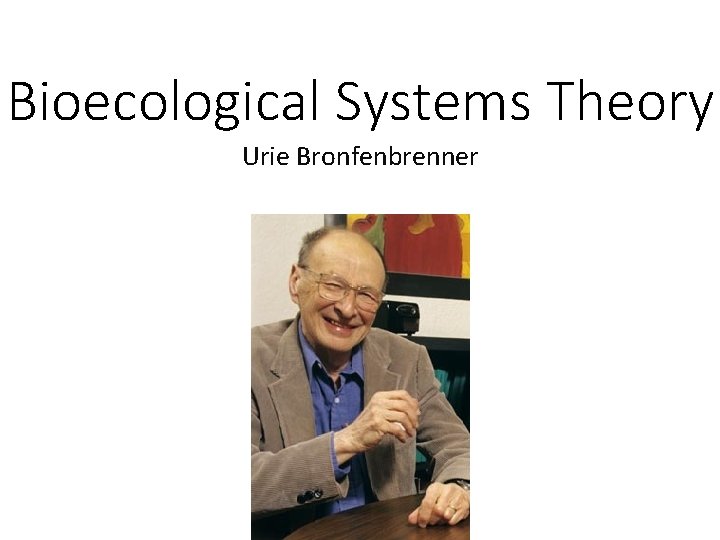
Bioecological Systems Theory Urie Bronfenbrenner
Who we are, and the actions that we may take, is largely influenced by our external environment
human development occurs through “progressively more complex reciprocal interactions between an active evolving biopsychological human organism and the persons, objects and symbols in its immediate external environment” (Bronfenbrenner, 2004, p. 150)
“if we want to change behaviour we have to change environments” (Bronfenbrenner, 1979, p. x).
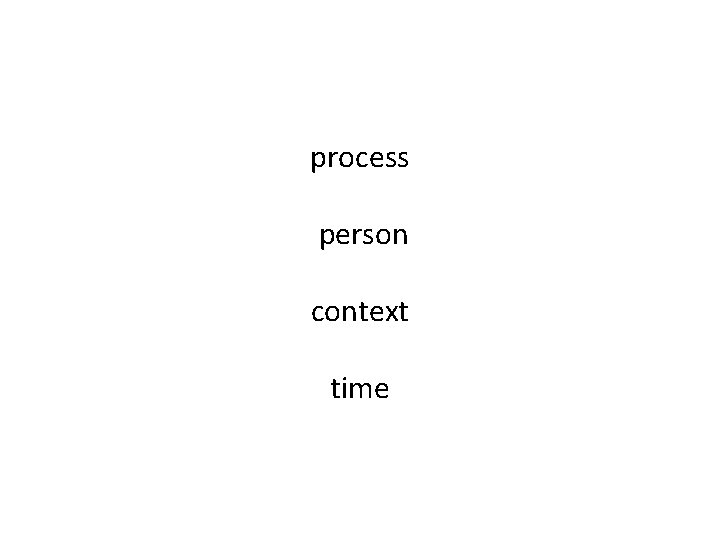
process person context time
Bronfenbrenner defines proximal processes which are interactions between individuals and their environment. These occur over time and are the “primary mechanism producing human development” (Bronfenbrenner & Morris, 2006, p. 795) The power of such processes to influence development is presumed, and shown, to vary substantially as a function of the characteristics of the developing person, of the immediate and more remote environmental contexts, and the time periods, in which the proximal processes take place (Bronfenbrenner, 1995, p. 795).
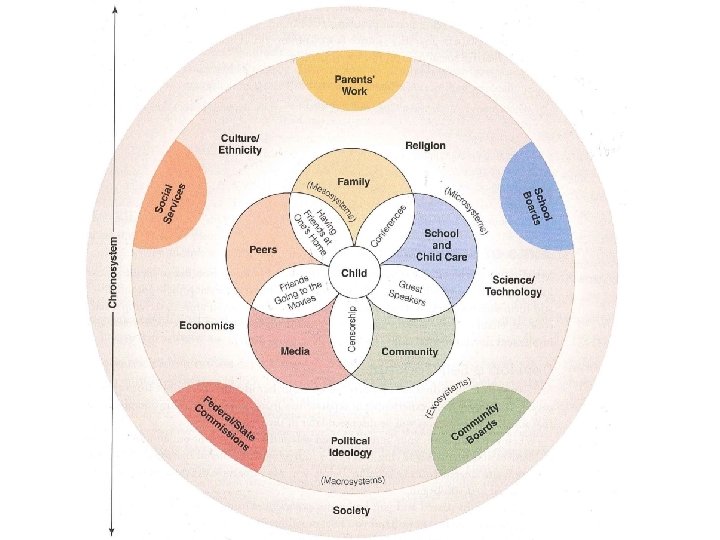
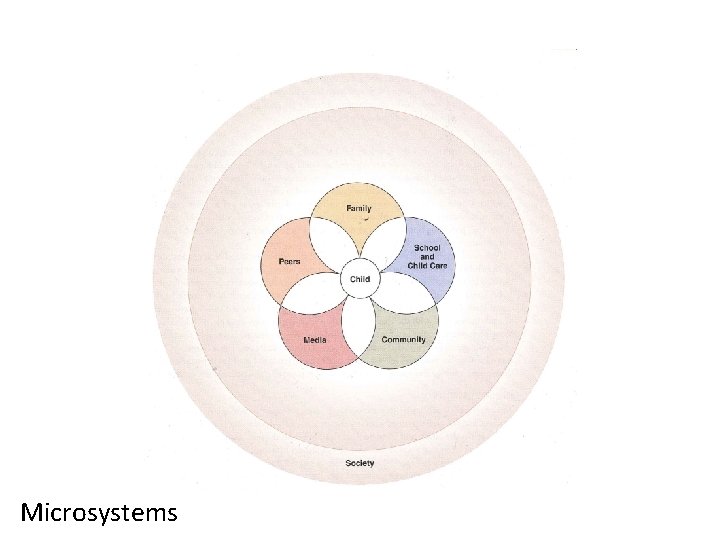
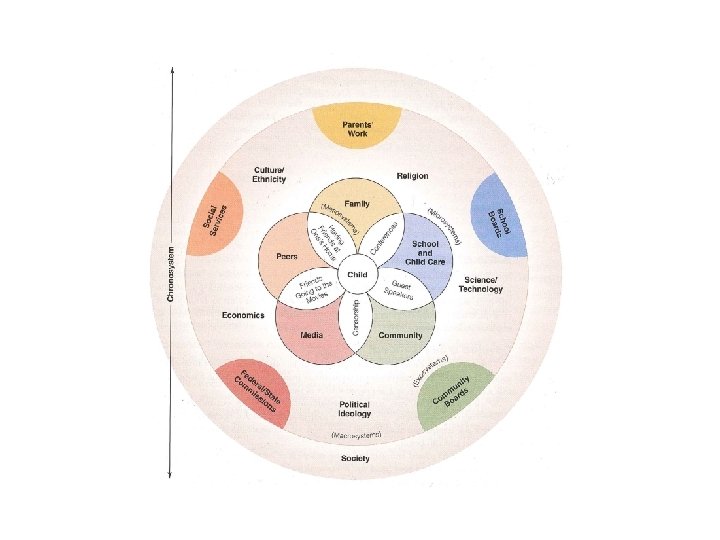
1. Microsystem Includes the immediate surroundings of an individual (family, school, peer group, neighbourhood), and also one’s personal biological make-up
Microsystems
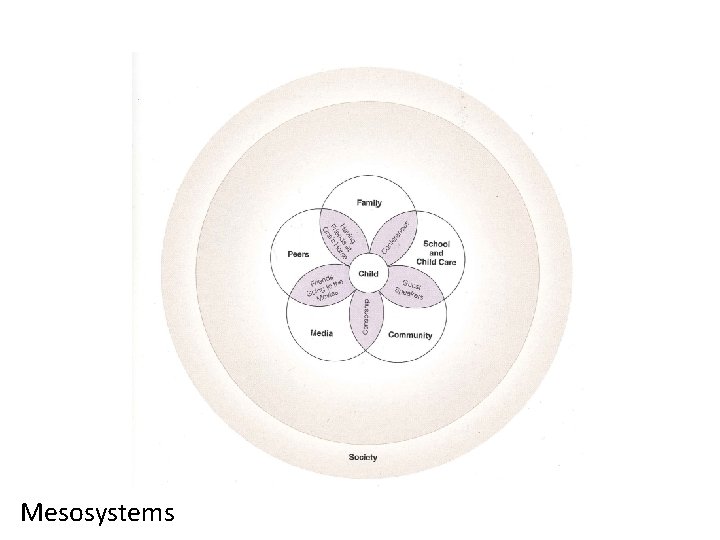
2. Mesosystem Composed of connections between one’s immediate environments; i. e. – between the home and school
Mesosystems
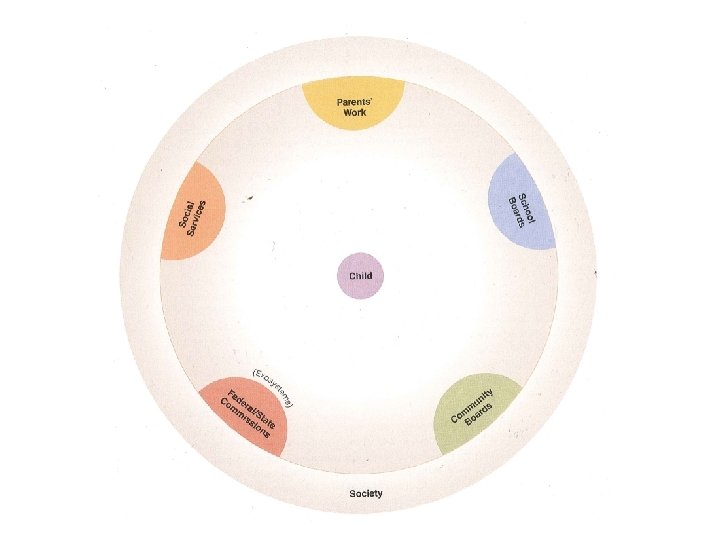
3. Exosystem Made up of external environmental settings that only indirectly affect development but of which, the individual is not part; i. e. one’s parents’ workplace
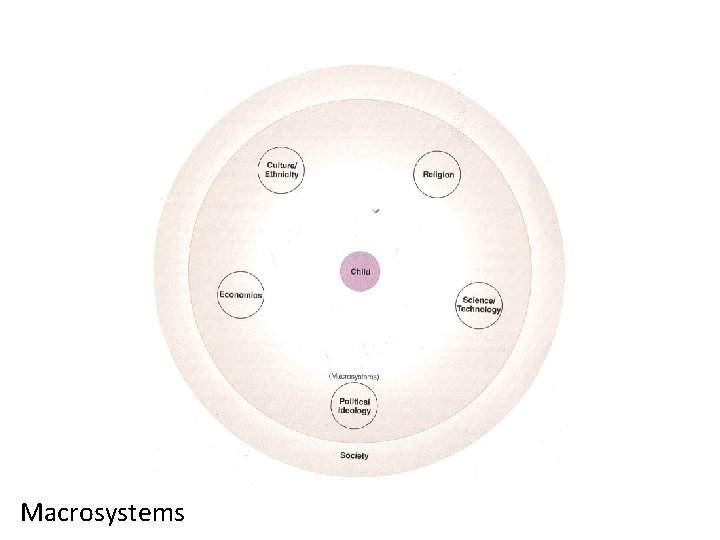
4. Macrosystem Comprised of the larger cultural context; the values, customs, laws, beliefs, traditions of the surrounding culture; i. e. – national economy, Eastern/Western culture, political culture, sub-culture
Macrosystems
5. Chronosystem change over time; the patterning of environmental events and transitions over the course of a life
Socialisation
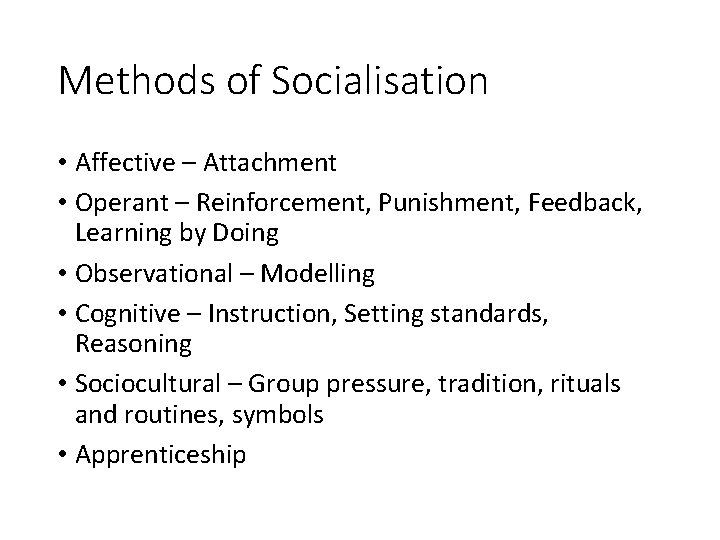
Methods of Socialisation • Affective – Attachment • Operant – Reinforcement, Punishment, Feedback, Learning by Doing • Observational – Modelling • Cognitive – Instruction, Setting standards, Reasoning • Sociocultural – Group pressure, tradition, rituals and routines, symbols • Apprenticeship