
Youre the Radiologist Diagnosing Bone Joint Injuries Your
You’re the Radiologist! Diagnosing Bone & Joint Injuries
Your Task Today, you will learn how doctor’s diagnose bone & joint injuries. n As you go through the powerpoint, follow along on your worksheet. n n Fill in any missing notes. Answer all questions. Good Luck!
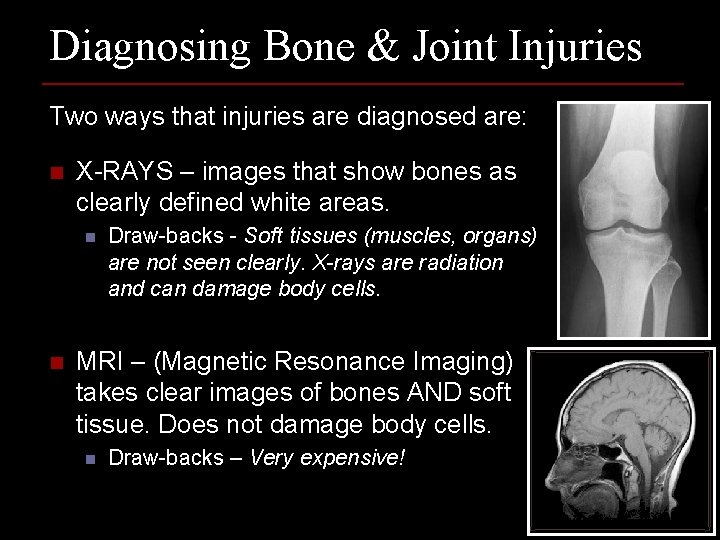
Diagnosing Bone & Joint Injuries Two ways that injuries are diagnosed are: n X-RAYS – images that show bones as clearly defined white areas. n n Draw-backs - Soft tissues (muscles, organs) are not seen clearly. X-rays are radiation and can damage body cells. MRI – (Magnetic Resonance Imaging) takes clear images of bones AND soft tissue. Does not damage body cells. n Draw-backs – Very expensive!
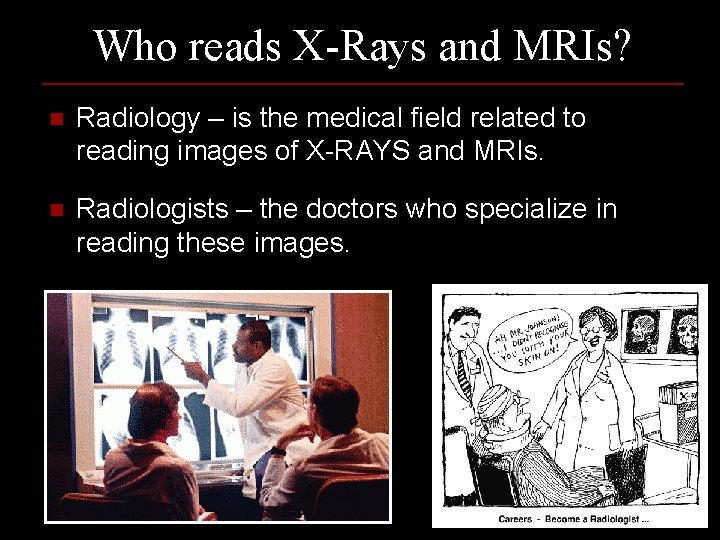
Who reads X-Rays and MRIs? n Radiology – is the medical field related to reading images of X-RAYS and MRIs. n Radiologists – the doctors who specialize in reading these images.
Common types of skeletal injuries n Fractures – A break in the bone. n Dislocation – A bone comes out of its joint. n Sprain – Ligaments are stretched too far and tear in places. (most common injury) n Arthritis – A disease of the joints that makes movement painful. (usually occurs later in life).
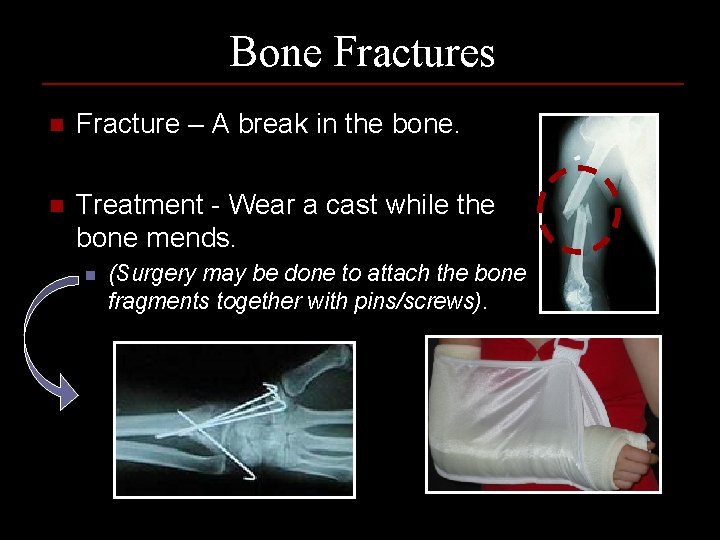
Bone Fractures n Fracture – A break in the bone. n Treatment - Wear a cast while the bone mends. n (Surgery may be done to attach the bone fragments together with pins/screws).
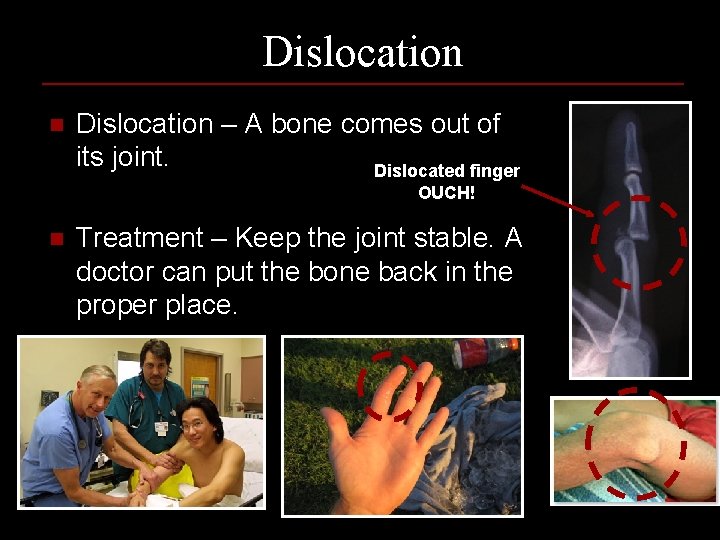
Dislocation n Dislocation – A bone comes out of its joint. Dislocated finger OUCH! n Treatment – Keep the joint stable. A doctor can put the bone back in the proper place.
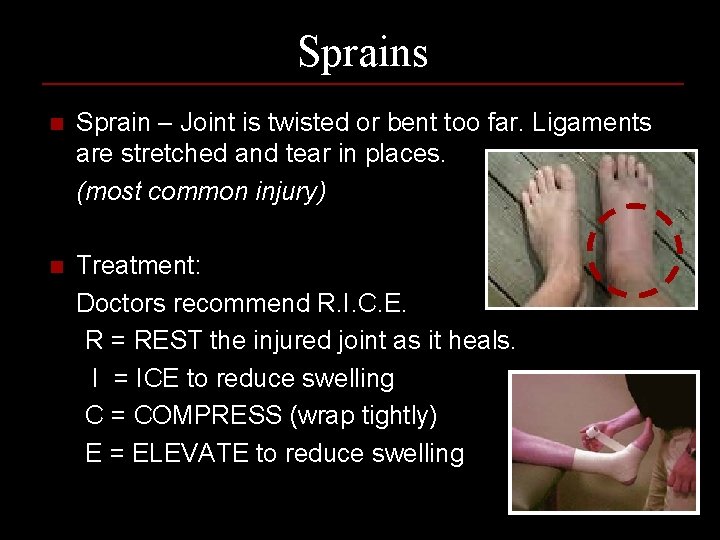
Sprains n Sprain – Joint is twisted or bent too far. Ligaments are stretched and tear in places. (most common injury) n Treatment: Doctors recommend R. I. C. E. R = REST the injured joint as it heals. I = ICE to reduce swelling C = COMPRESS (wrap tightly) E = ELEVATE to reduce swelling
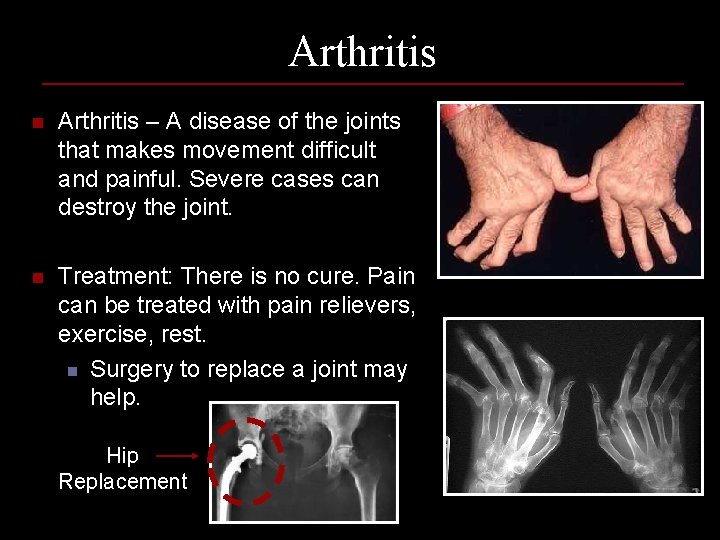
Arthritis n Arthritis – A disease of the joints that makes movement difficult and painful. Severe cases can destroy the joint. n Treatment: There is no cure. Pain can be treated with pain relievers, exercise, rest. n Surgery to replace a joint may help. Hip Replacement
You’re the Radiologist! n Look at the images on the following slides. n Try to diagnose the injury! n n n What bones/joints are shown? Is there an injury? If yes, what type of injury? What treatment do you recommend? (Use your textbook pg. 311 and this website: http: //www. accessexcellence. org/RC/VL/xrays/index. html to identify the bones and injuries) n Answer all questions on your worksheet. (Try to answer 8 out of 15)
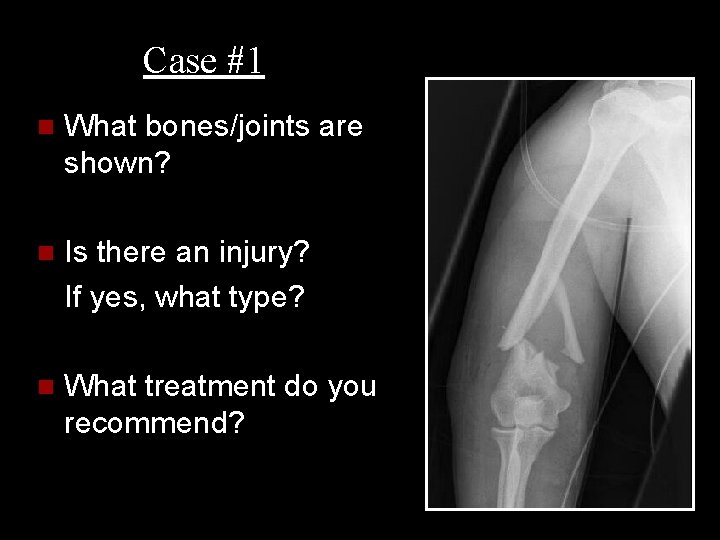
Case #1 n What bones/joints are shown? n Is there an injury? If yes, what type? n What treatment do you recommend?
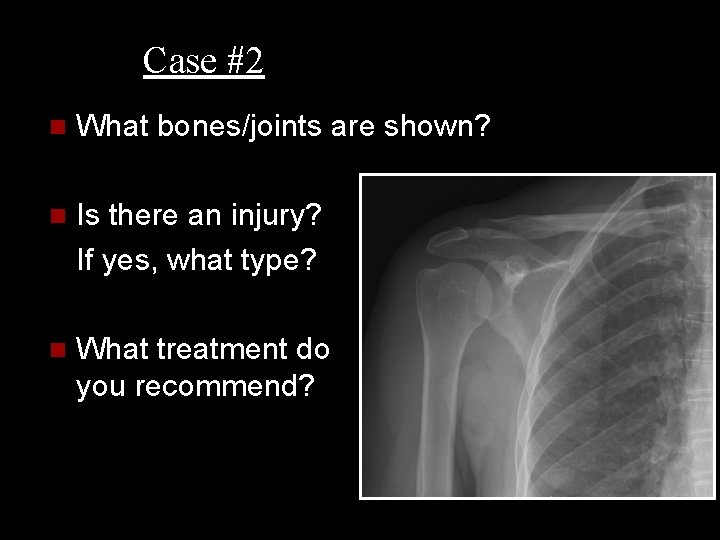
Case #2 n What bones/joints are shown? n Is there an injury? If yes, what type? n What treatment do you recommend?
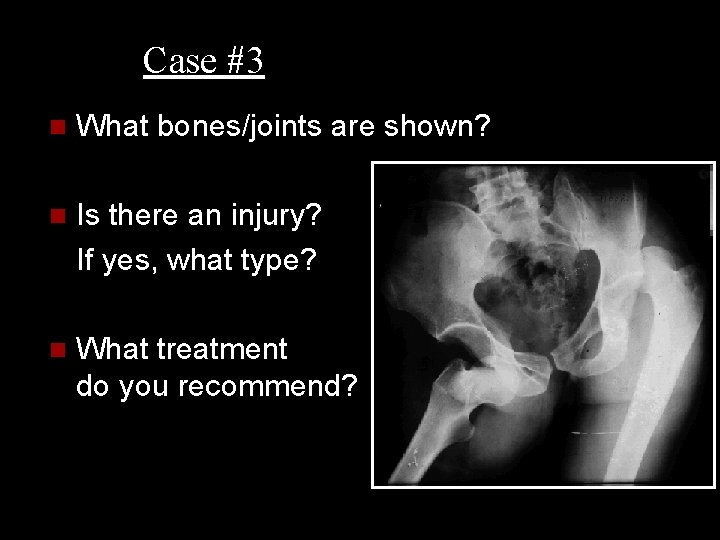
Case #3 n What bones/joints are shown? n Is there an injury? If yes, what type? n What treatment do you recommend?
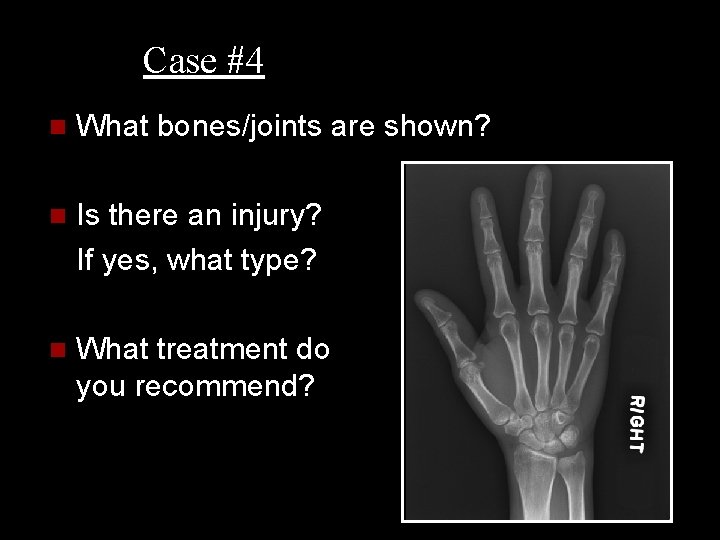
Case #4 n What bones/joints are shown? n Is there an injury? If yes, what type? n What treatment do you recommend?
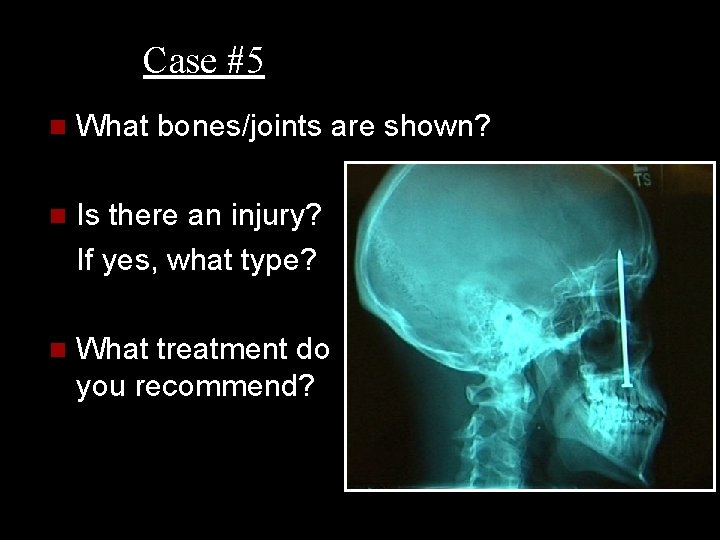
Case #5 n What bones/joints are shown? n Is there an injury? If yes, what type? n What treatment do you recommend?
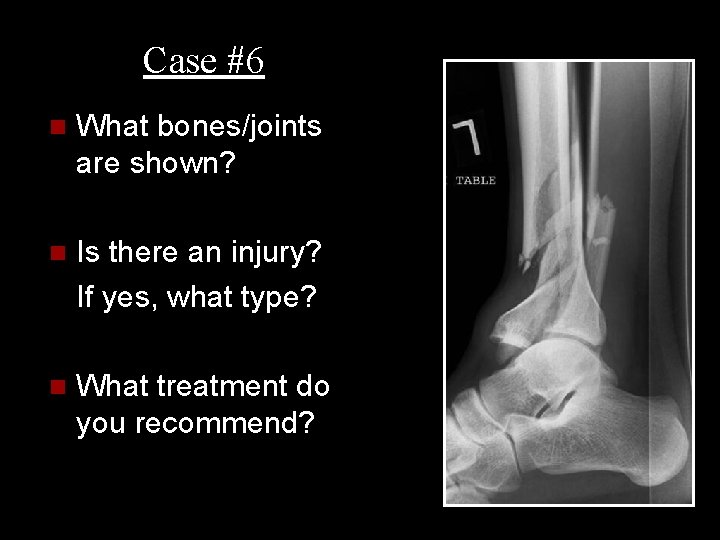
Case #6 n What bones/joints are shown? n Is there an injury? If yes, what type? n What treatment do you recommend?
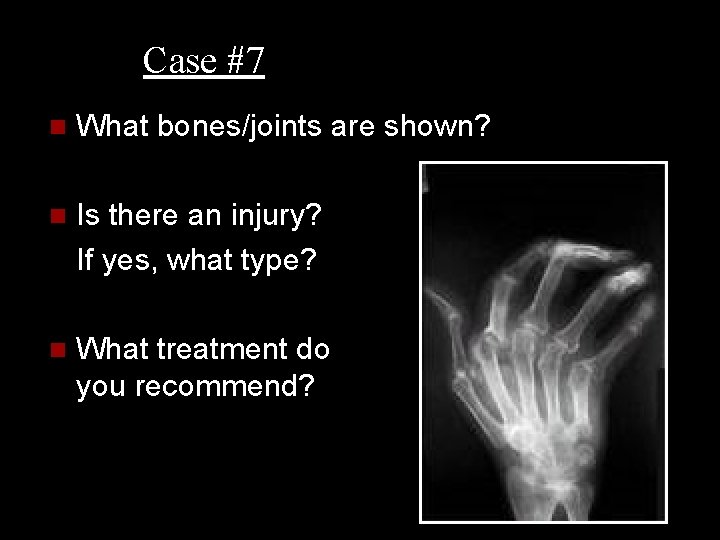
Case #7 n What bones/joints are shown? n Is there an injury? If yes, what type? n What treatment do you recommend?
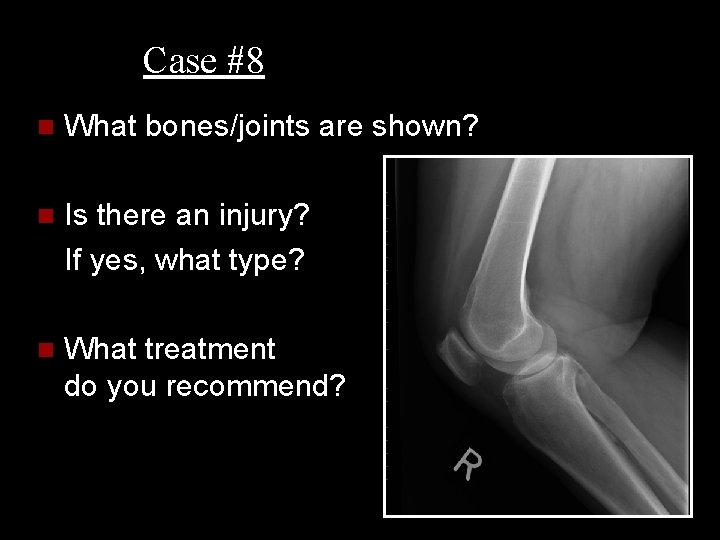
Case #8 n What bones/joints are shown? n Is there an injury? If yes, what type? n What treatment do you recommend?
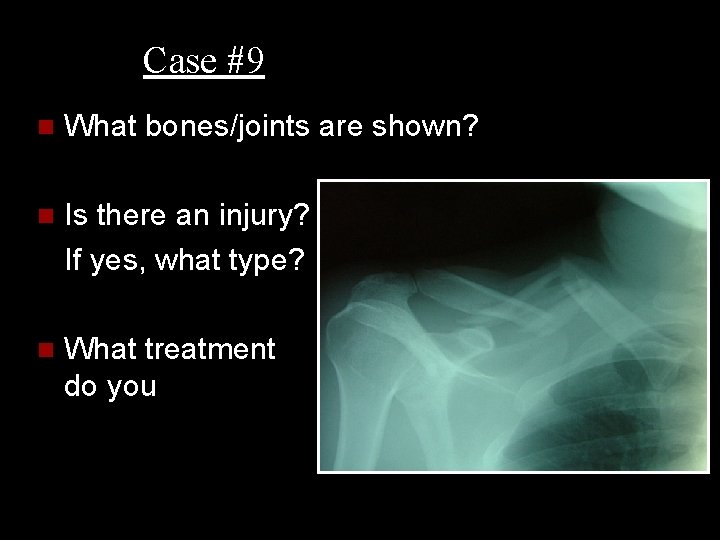
Case #9 n What bones/joints are shown? n Is there an injury? If yes, what type? n What treatment do you recommend?
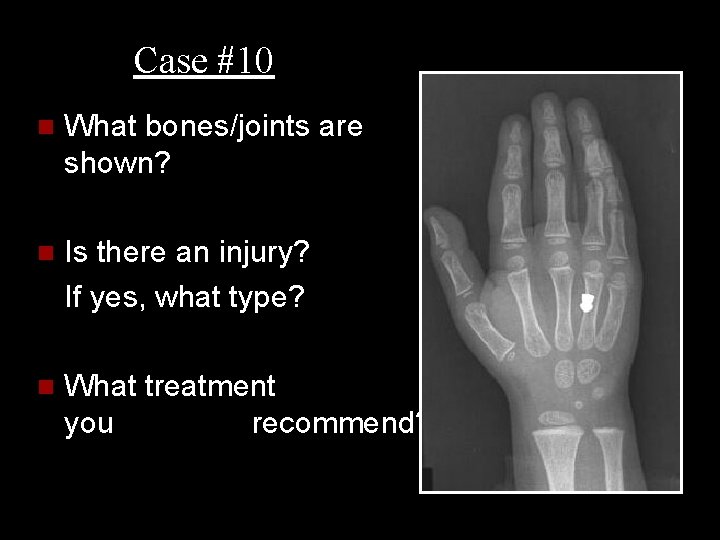
Case #10 n What bones/joints are shown? n Is there an injury? If yes, what type? n What treatment do you recommend?
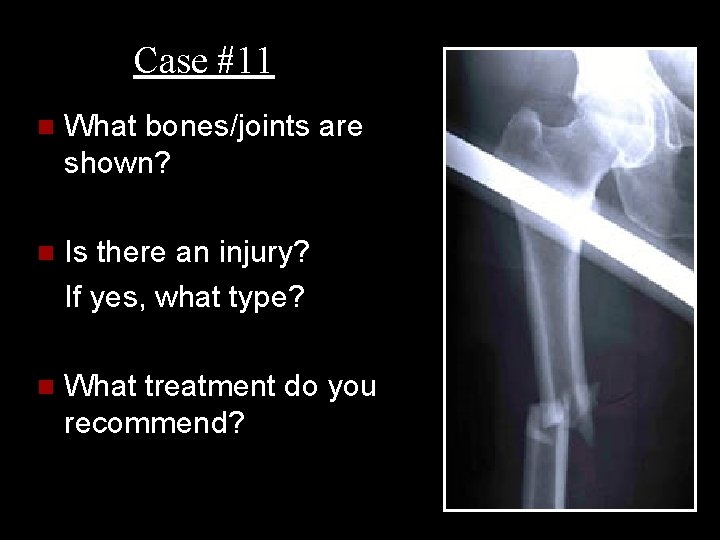
Case #11 n What bones/joints are shown? n Is there an injury? If yes, what type? n What treatment do you recommend?
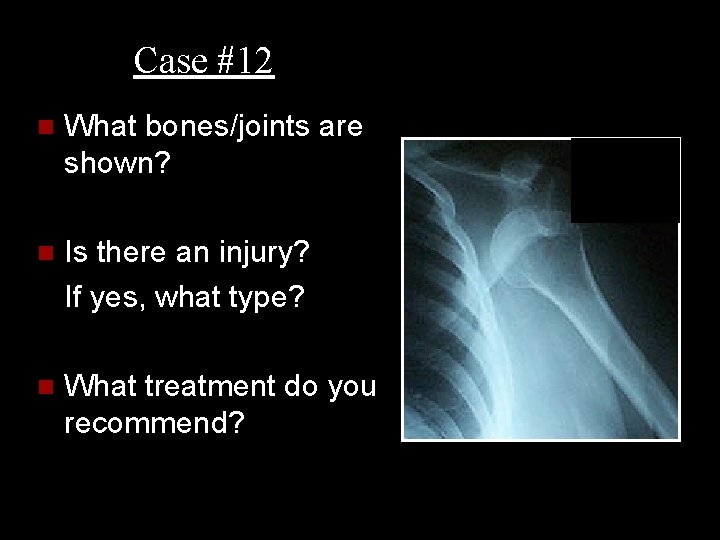
Case #12 n What bones/joints are shown? n Is there an injury? If yes, what type? n What treatment do you recommend?
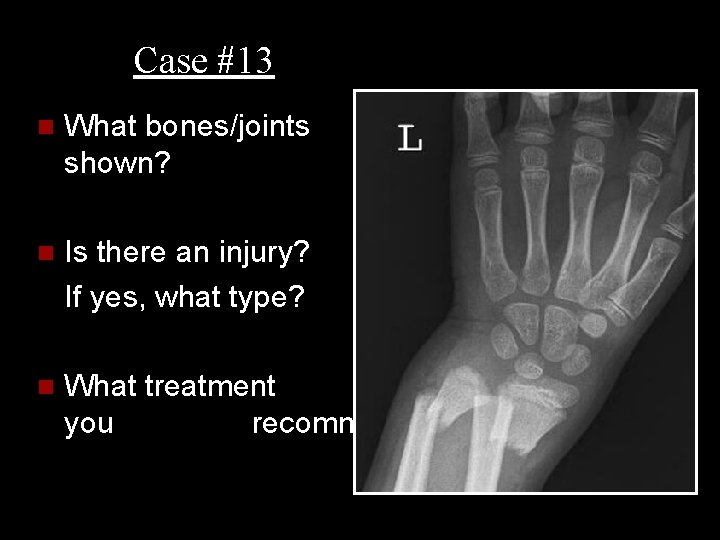
Case #13 n What bones/joints shown? are n Is there an injury? If yes, what type? n What treatment do you recommend?
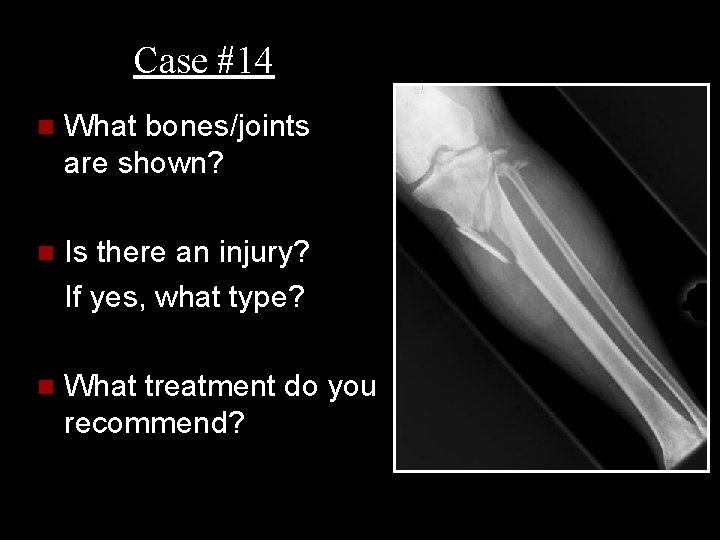
Case #14 n What bones/joints are shown? n Is there an injury? If yes, what type? n What treatment do you recommend?
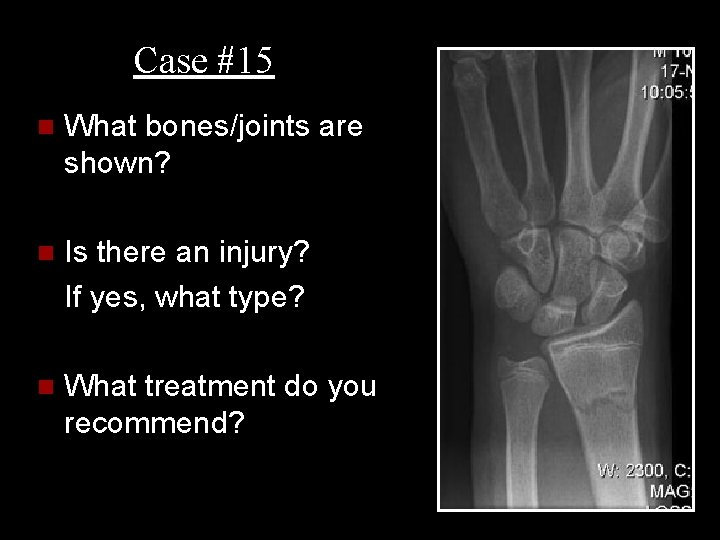
Case #15 n What bones/joints are shown? n Is there an injury? If yes, what type? n What treatment do you recommend?
- Slides: 25