
Your values as an enginner The value I

- Slides: 20
Your values as an enginner The value I hold above all else is the value of courtesy and politeness. Treating others with respect and kindness is something we should do if we are to expect something of the kind in return. Besides, it is much easier to get along with others if you are polite. Thus, one key point of my ethics is that I try to be as polite and kind as possible.
Your values as an engineer For me it is primarily important with equality considering gender and skin color. As a woman I want to be paid as much as a man working with the same task. I would not be comfortable with working in a company that produces guns for private buyers. Possibly I could work with producing guns for the Finnish army, but I rather do something different.
Your values as an engineer …hiding mistakes, altering facts and stealing the hard work of other engineers proves an engineer is unprofessional. Lastly, I am strictly against accepting bribes from outside agents trying to personally benefit from changing the outcome of a project.
Your values as an engineer When hiring group of new people from relatively similar educational and working background they should all be paid the same amount. However, as time goes on their pay should differ based on their performance or achievements. This is why I don’t think complete equality is fair for everyone.
You values as an engineer I value peace, critical thinking and open discussion. It is natural to regard own ideas better than others, but I will try my best to value peoples well-reasoned opinions and advice as much as my own. As an engineer I want to be honest and trustworthy, but sometimes people overreact and want to be difficult, so I wouldn’t hesitate to be strategically silent. In my opinion work is a value by itself. It is about making the world a better place.
National Assoc. Prof. Engineers code of ethics https: //www. nspe. org/resources/ethic s/code-ethics Take a look at the code and see if there is anything you could add to your values AND/OR consider if there any salient engineering values you do not subscribe to (i. e not agree with).
The Engineer’s Oath! As a Professional Engineer, I dedicate my professional knowledge and skill to the advancement and betterment of human welfare. I pledge: To give the utmost of performance; To participate in none but honest enterprise; To live and work according to the laws of man and the highest standards of professional conduct; To place service before profit, the honor and standing of the profession before personal advantage, and the public welfare above all other considerations. In humility and with need for Divine Guidance, I make this pledge. Are your values represented by this oath?
Peer feedback on your writing 1) 2) 3) 4) 5) 6) 7) 8) Is the paragraphing logical? Are connectors used to add flow? Is the style professional? (formal) Does the author avoid repetition? Does the author provide evidence or examples for any claims? Is the writing coherent? Is the opening inspiring? Does the ending make you remember this essay?
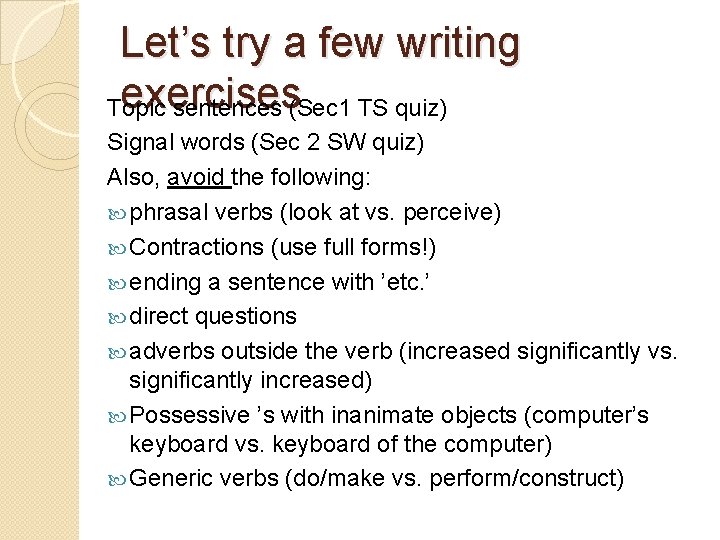
Let’s try a few writing exercises Topic sentences (Sec 1 TS quiz) Signal words (Sec 2 SW quiz) Also, avoid the following: phrasal verbs (look at vs. perceive) Contractions (use full forms!) ending a sentence with ’etc. ’ direct questions adverbs outside the verb (increased significantly vs. significantly increased) Possessive ’s with inanimate objects (computer’s keyboard vs. keyboard of the computer) Generic verbs (do/make vs. perform/construct)
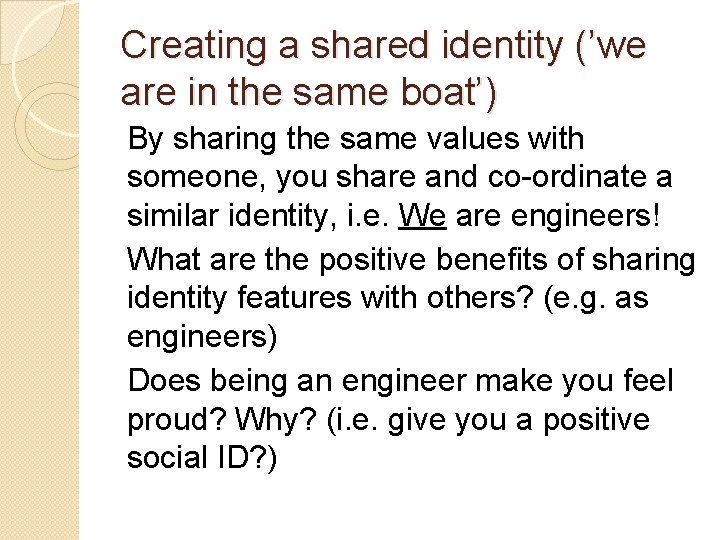
Creating a shared identity (’we are in the same boat’) By sharing the same values with someone, you share and co-ordinate a similar identity, i. e. We are engineers! What are the positive benefits of sharing identity features with others? (e. g. as engineers) Does being an engineer make you feel proud? Why? (i. e. give you a positive social ID? )
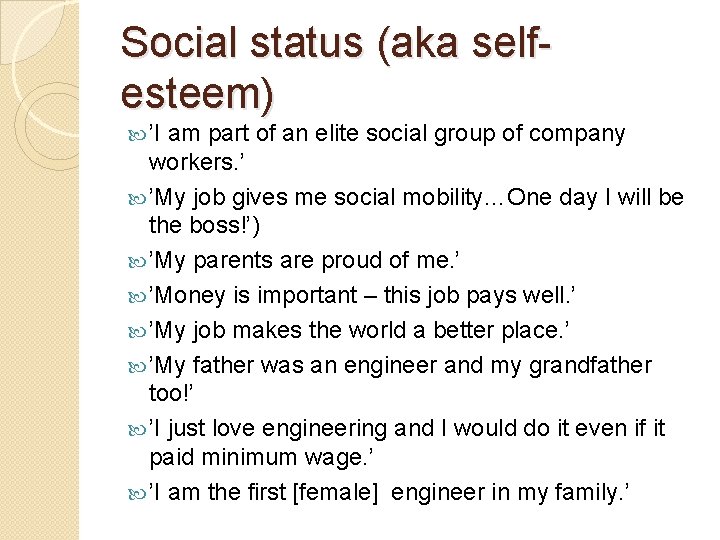
Social status (aka selfesteem) ’I am part of an elite social group of company workers. ’ ’My job gives me social mobility…One day I will be the boss!’) ’My parents are proud of me. ’ ’Money is important – this job pays well. ’ ’My job makes the world a better place. ’ ’My father was an engineer and my grandfather too!’ ’I just love engineering and I would do it even if it paid minimum wage. ’ ’I am the first [female] engineer in my family. ’
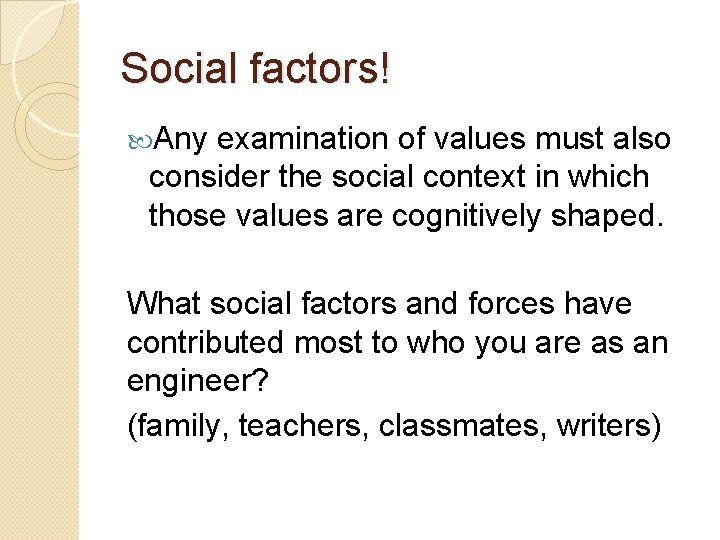
Social factors! Any examination of values must also consider the social context in which those values are cognitively shaped. What social factors and forces have contributed most to who you are as an engineer? (family, teachers, classmates, writers)
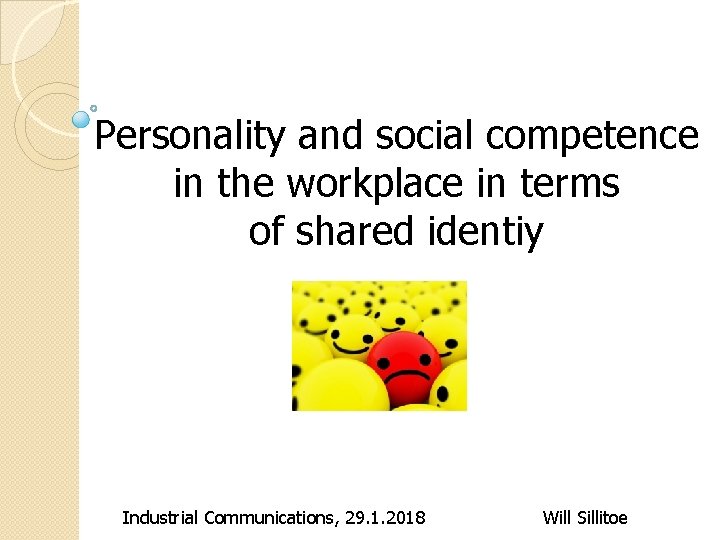
Personality and social competence in the workplace in terms of shared identiy Industrial Communications, 29. 1. 2018 Will Sillitoe
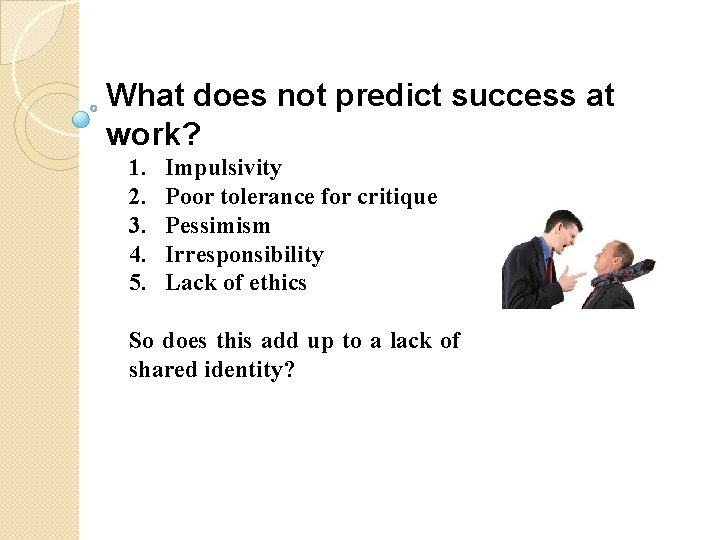
What does not predict success at work? 1. 2. 3. 4. 5. Impulsivity Poor tolerance for critique Pessimism Irresponsibility Lack of ethics So does this add up to a lack of shared identity?
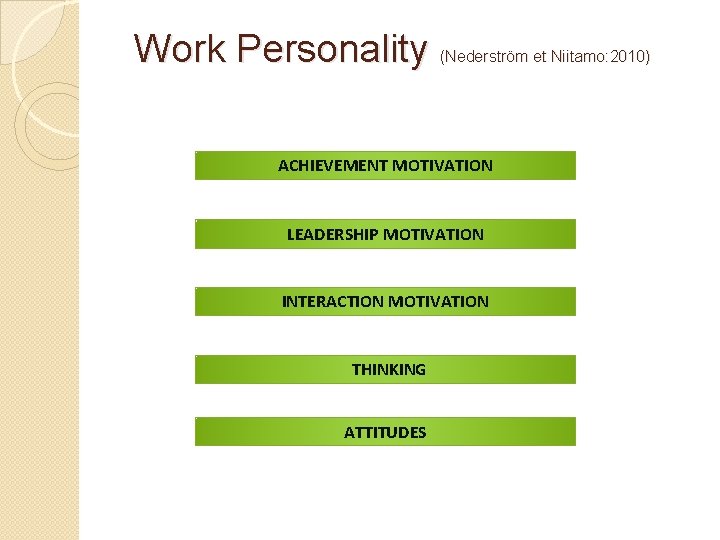
Work Personality (Nederström et Niitamo: 2010) ACHIEVEMENT MOTIVATION LEADERSHIP MOTIVATION INTERACTION MOTIVATION THINKING ATTITUDES
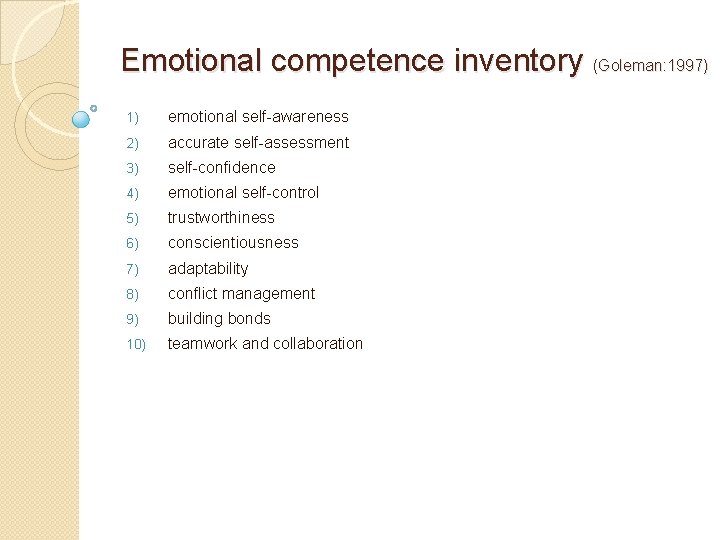
Emotional competence inventory (Goleman: 1997) 1) emotional self-awareness 2) accurate self-assessment 3) self-confidence 4) emotional self-control 5) trustworthiness 6) conscientiousness 7) adaptability 8) conflict management 9) building bonds 10) teamwork and collaboration
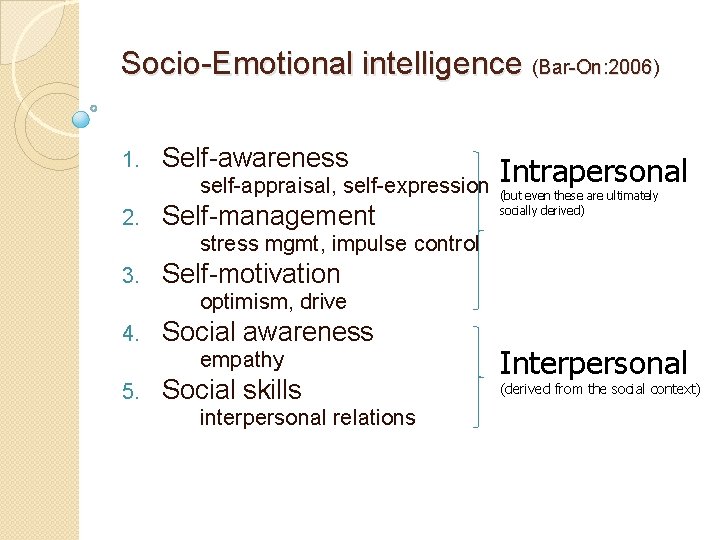
Socio-Emotional intelligence (Bar-On: 2006) 1. Self-awareness self-appraisal, self-expression 2. Self-management Intrapersonal (but even these are ultimately socially derived) stress mgmt, impulse control 3. Self-motivation optimism, drive 4. Social awareness empathy 5. Social skills interpersonal relations Interpersonal (derived from the social context)
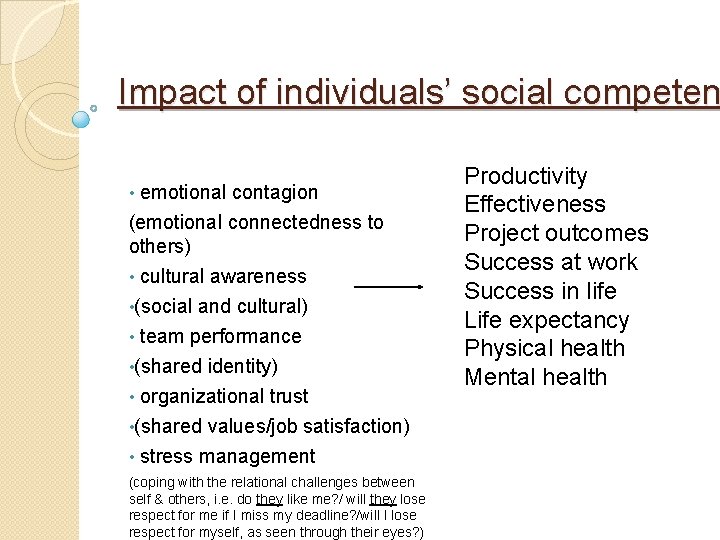
Impact of individuals’ social competen emotional contagion (emotional connectedness to others) • cultural awareness • (social and cultural) • team performance • (shared identity) • organizational trust • (shared values/job satisfaction) • stress management • (coping with the relational challenges between self & others, i. e. do they like me? / will they lose respect for me if I miss my deadline? /will I lose respect for myself, as seen through their eyes? ) Productivity Effectiveness Project outcomes Success at work Success in life Life expectancy Physical health Mental health
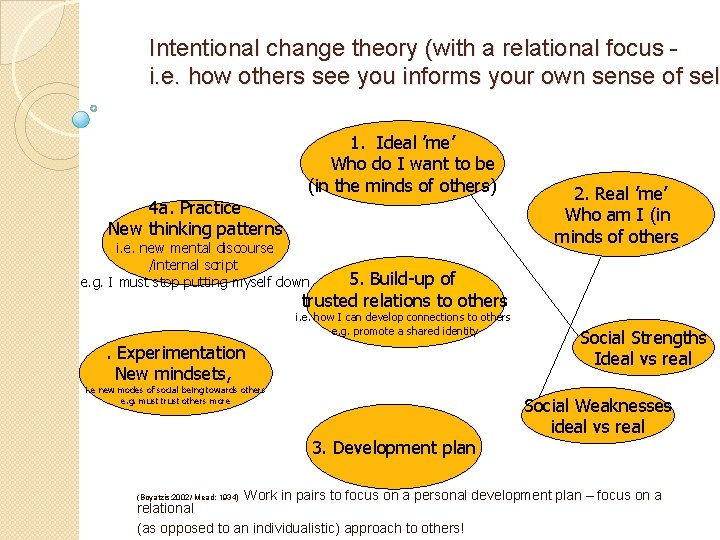
Intentional change theory (with a relational focus i. e. how others see you informs your own sense of sel 1. Ideal ’me’ Who do I want to be (in the minds of others) 4 a. Practice New thinking patterns i. e. new mental discourse /internal script e. g. I must stop putting myself down 2. Real ’me’ Who am I (in minds of others) 5. Build-up of trusted relations to others i. e. how I can develop connections to others e. g. promote a shared identity . Experimentation New mindsets, i. e new modes of social being towards others e. g. must trust others more 3. Development plan Social Strengths Ideal vs real Social Weaknesses ideal vs real Work in pairs to focus on a personal development plan – focus on a relational (as opposed to an individualistic) approach to others! (Boyatzis: 2002/ Mead: 1934)
Homework b. Rewrite your values essay (300 words) to make it more stylish. Focus on expressing your commitment to the values that form the basis of your salient social identity (i. e. I am an engineer). Upload to the Assignment Two link on Mycourses by Friday. (Note. upload your first assignment to the Assignment One link too!) b. Look out for my email this Friday about your group-organised lesson next week!